
If you walk around a busy city, you will notice a rather odd thing: most people are looking at everything while ignoring the things directly in front of them. A wall picks up a slice of afternoon light. A stranger crosses an empty stretch of pavement. A staircase forms a perfect rhythm of lines and shadows. For photographer Leon Yu, such ordinary moments can become something far more beautiful.
Yu, from Beijing, began his street photography career in August 2023 after coming across the work of some excellent street photographers on Instagram. It was then that he realized photography could be more than a way of recording what was going on around him; it could also be about seeing things differently.
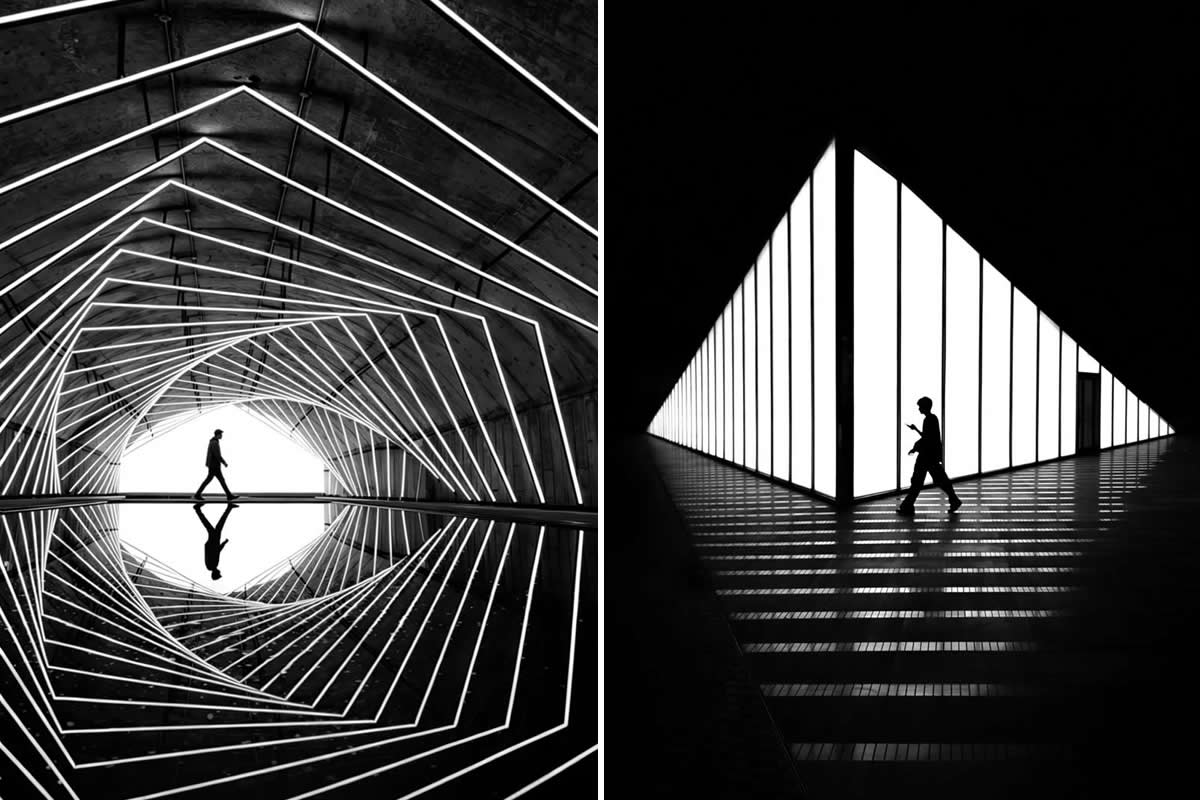
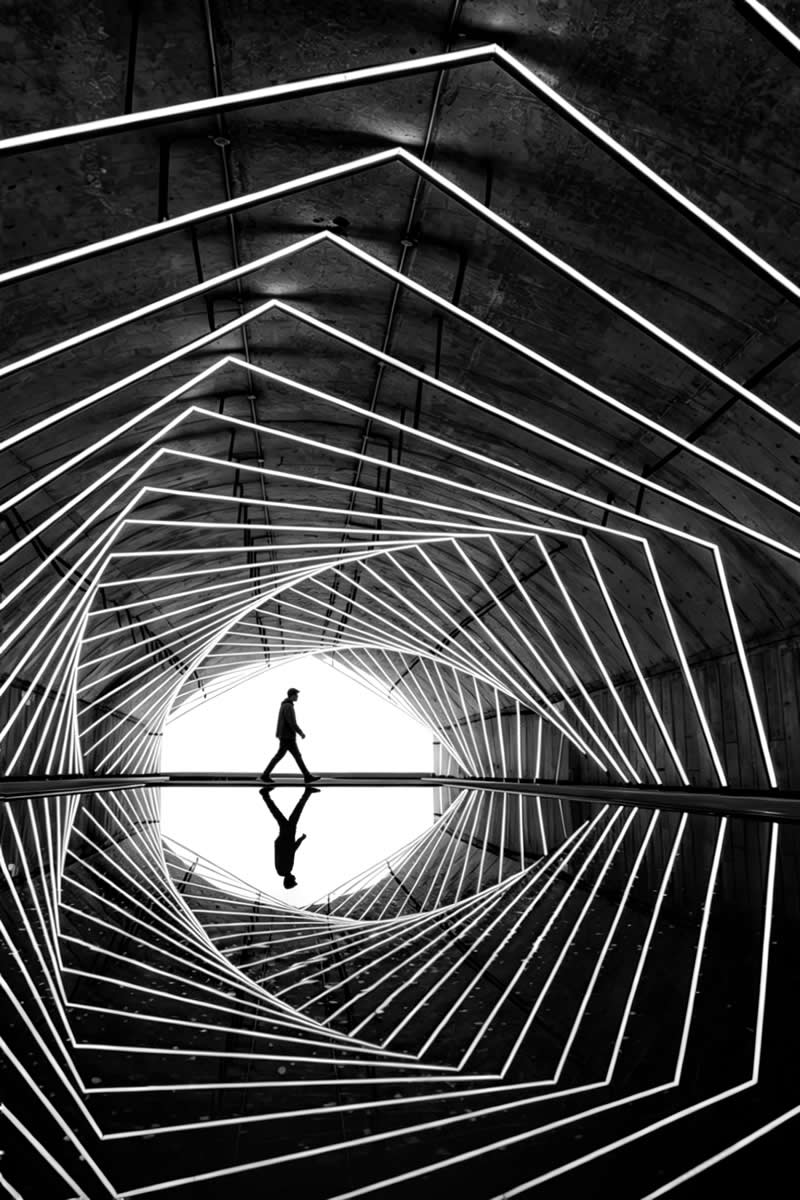
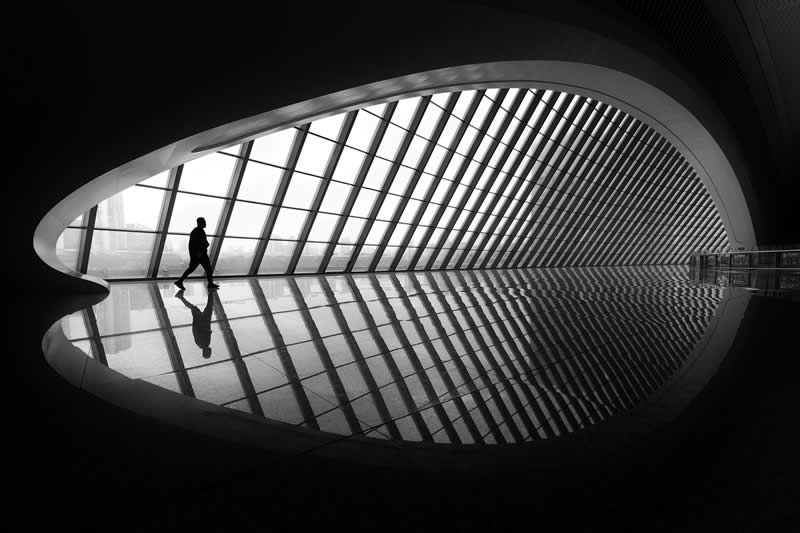
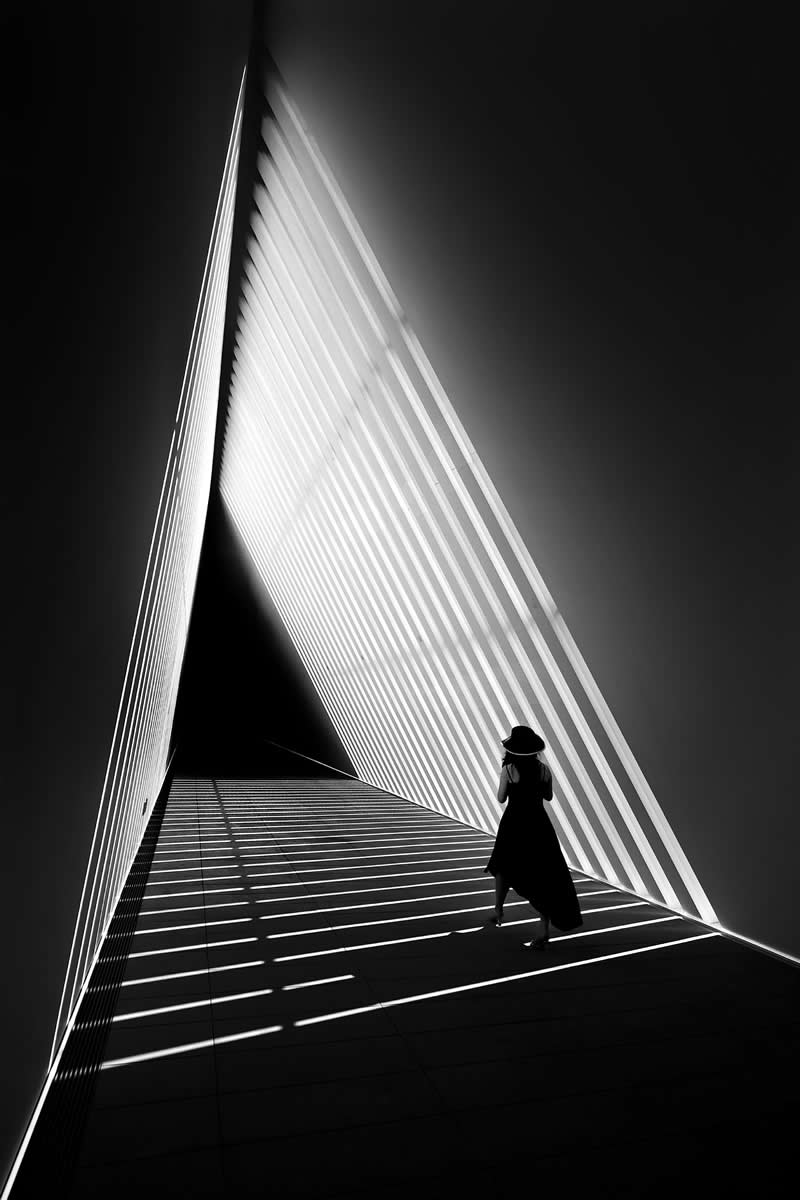
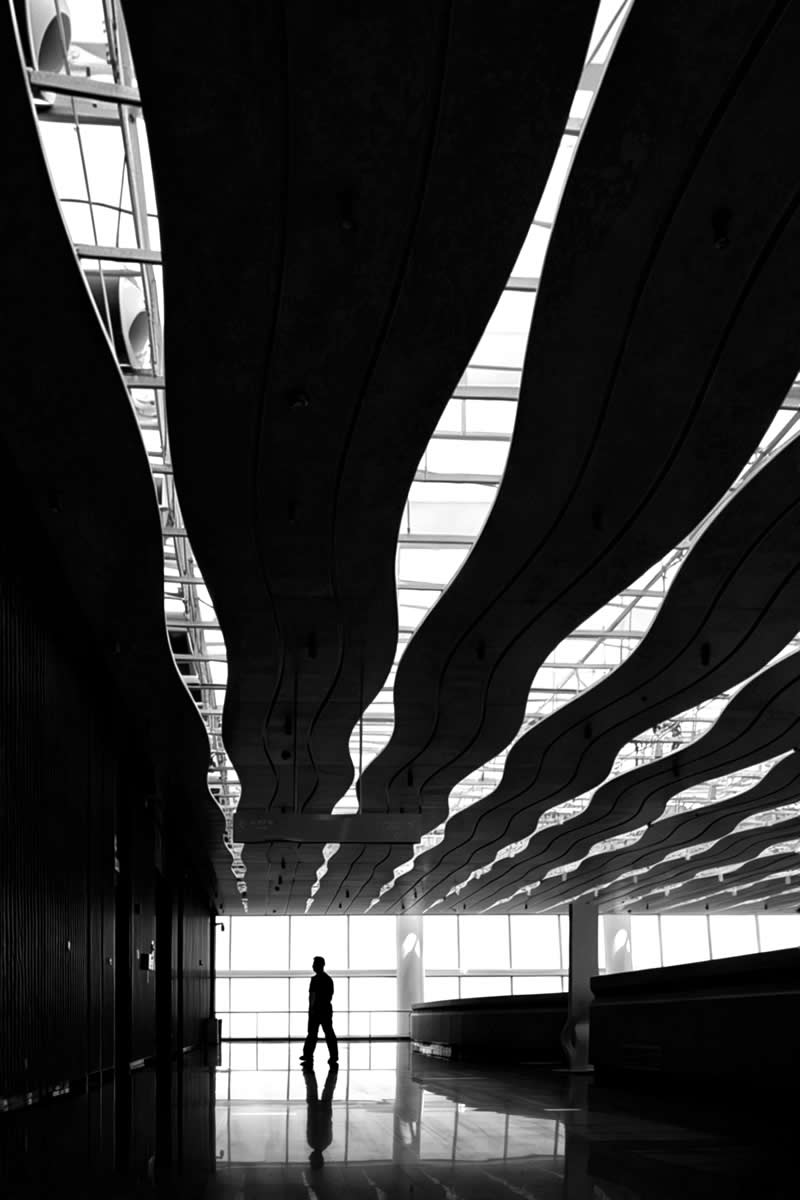
That idea is very clear in his black and white street photography. Rather than pursuing visual chaos, Yu looks for order among it. Geometry, negative space, leading lines, silhouettes, shadows, and minimalism all form his visual vocabulary, and a few shapes arranged correctly can express more than a crowded frame ever could.
His method also has a most pleasant simplicity. He likes simple compositions and says that a simple yet interesting frame is able to make him happy. Isn’t that really one of the greatest little joys of photography? When you come across a scene that works, take the photograph and at that moment an ordinary corner seems almost cinematic.
You can find more info about Leon Yu:
#1
#2
#3
#4
#5
#6
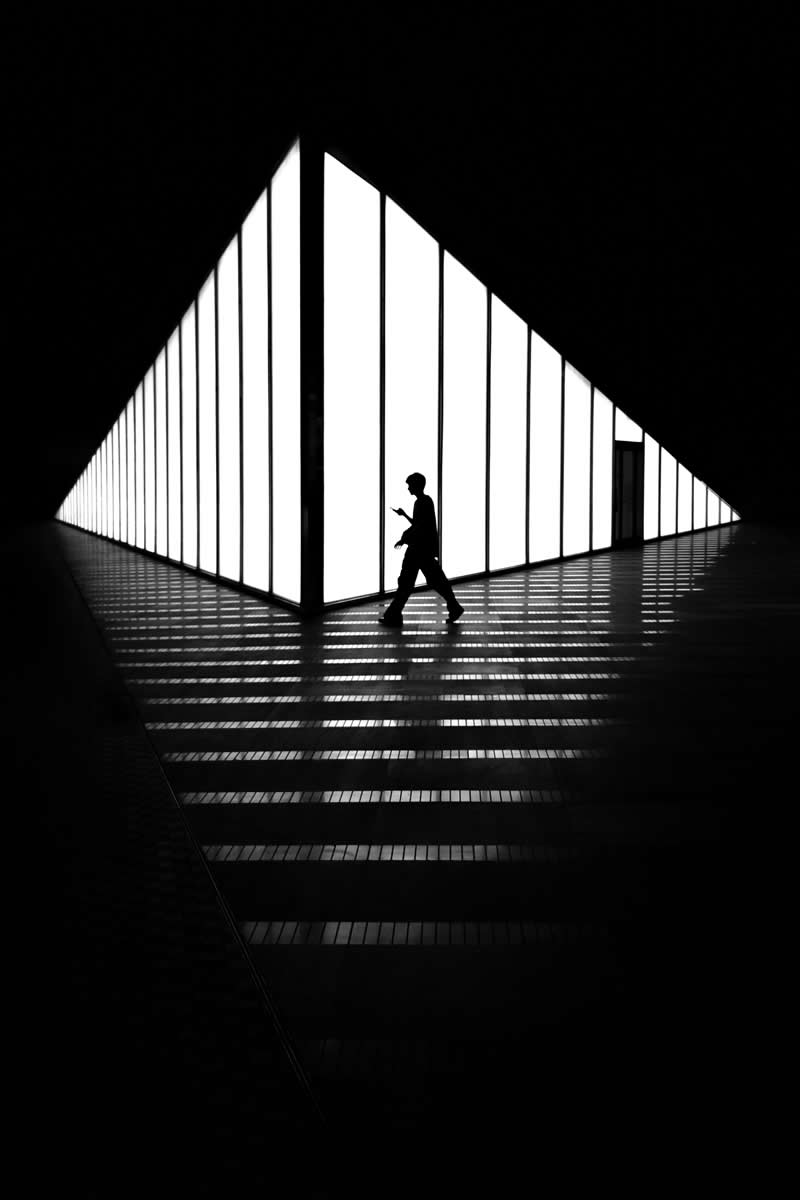
Geometry Turns Ordinary Streets Into Art
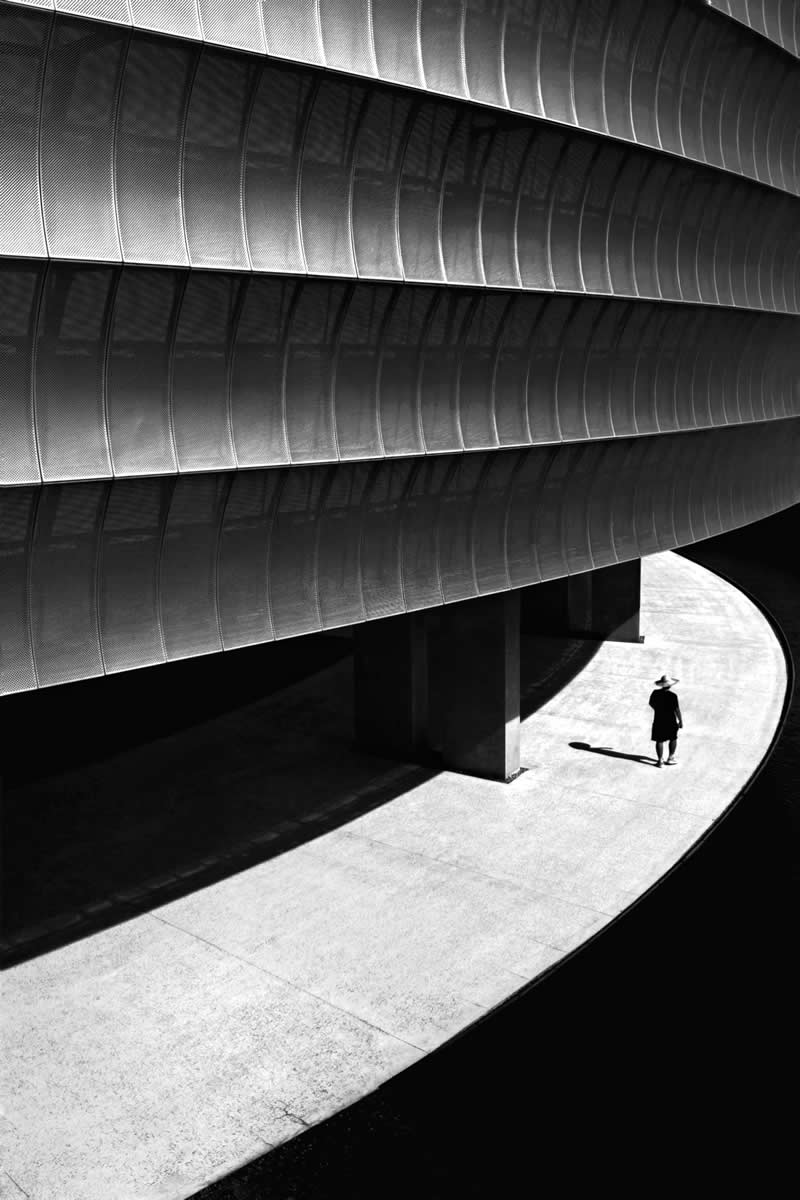
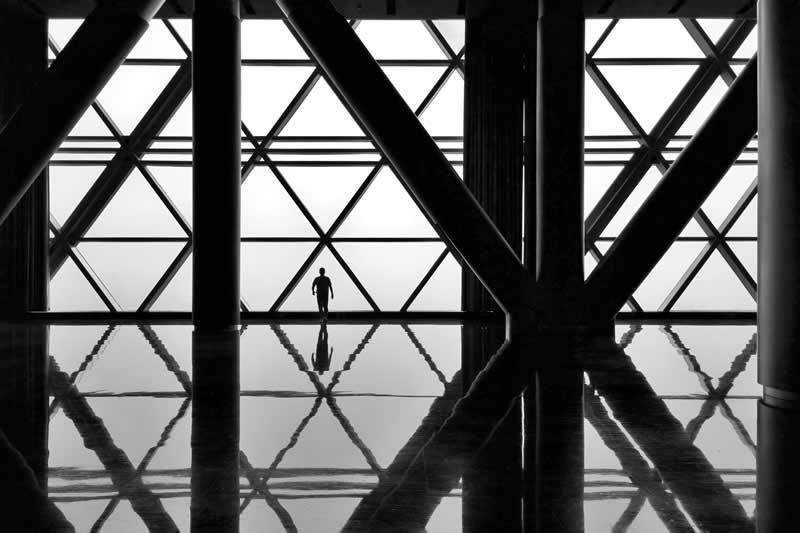
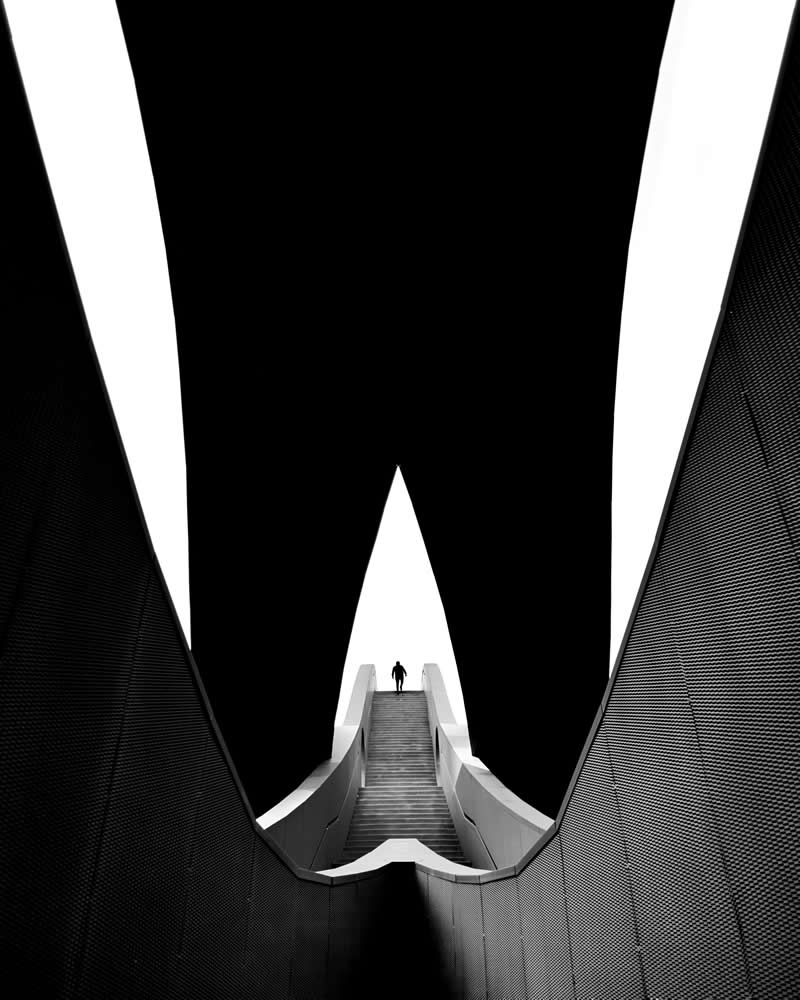
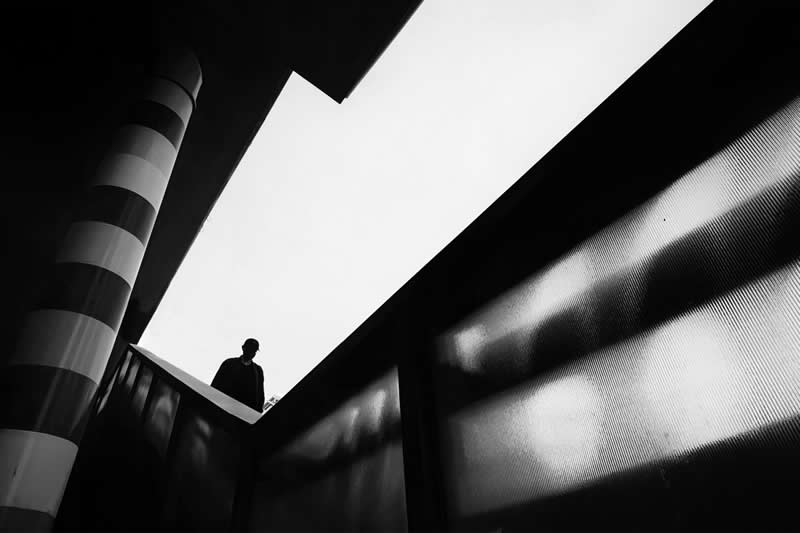
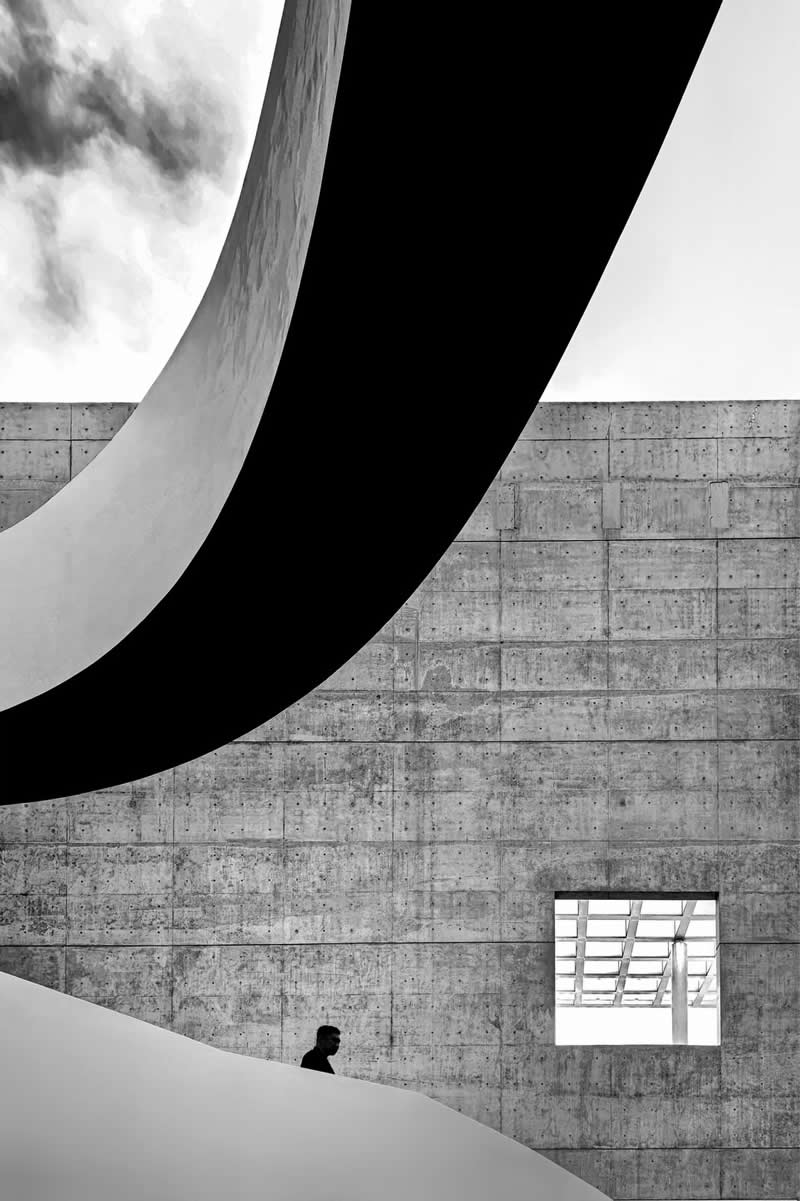
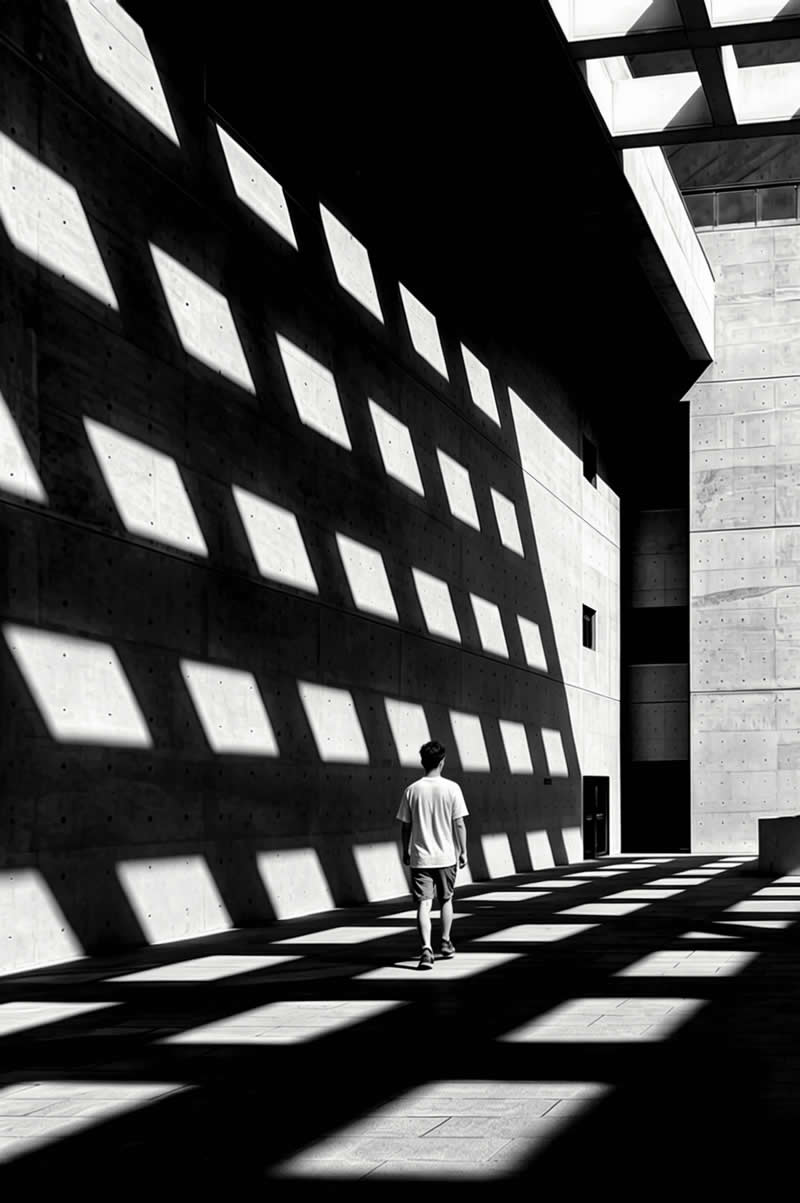
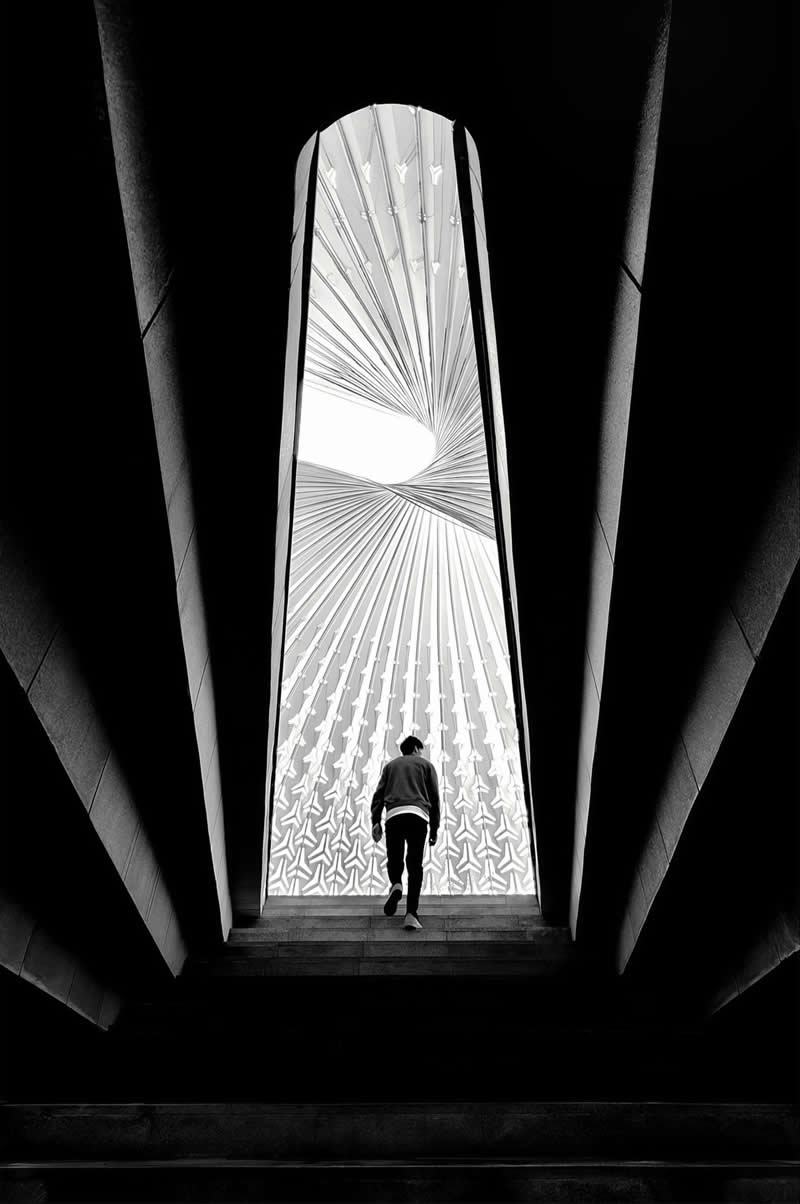
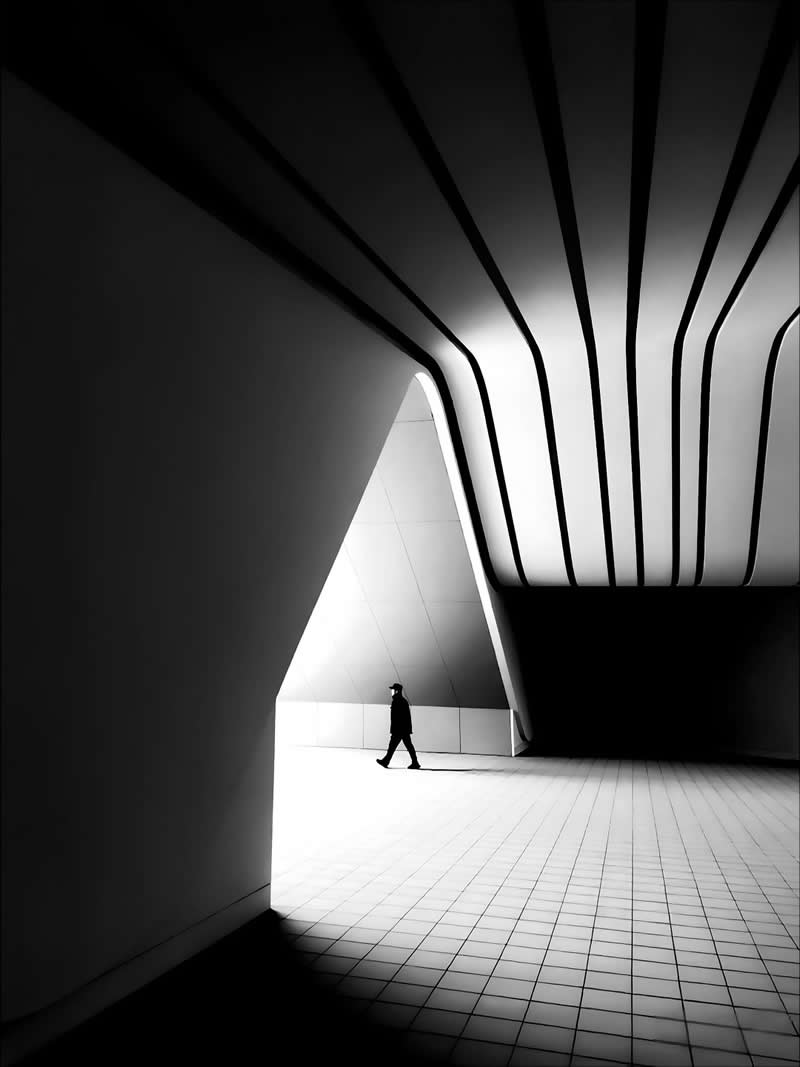
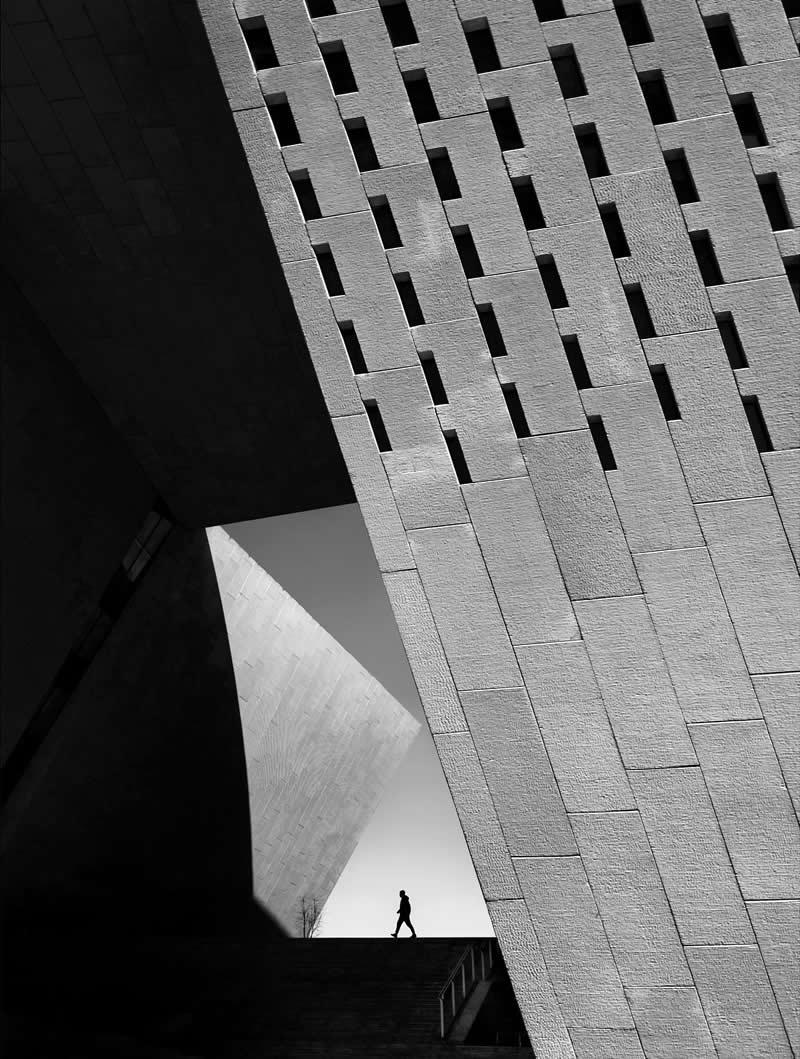
One of the first things you notice in Leon Yu’s photographs is geometry. Instead of serving as background scenery, buildings, staircases, windows, poles, roads, and walls become graphic elements; he views the city as if it were a huge sketchbook, looking for shapes that naturally go together.
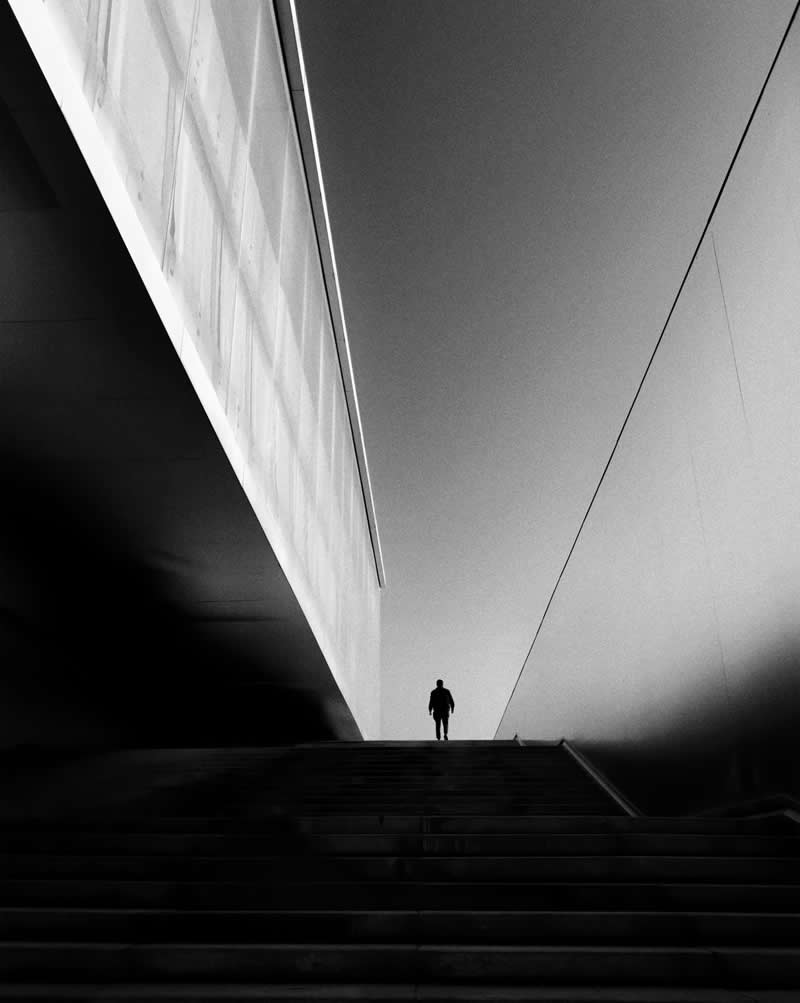
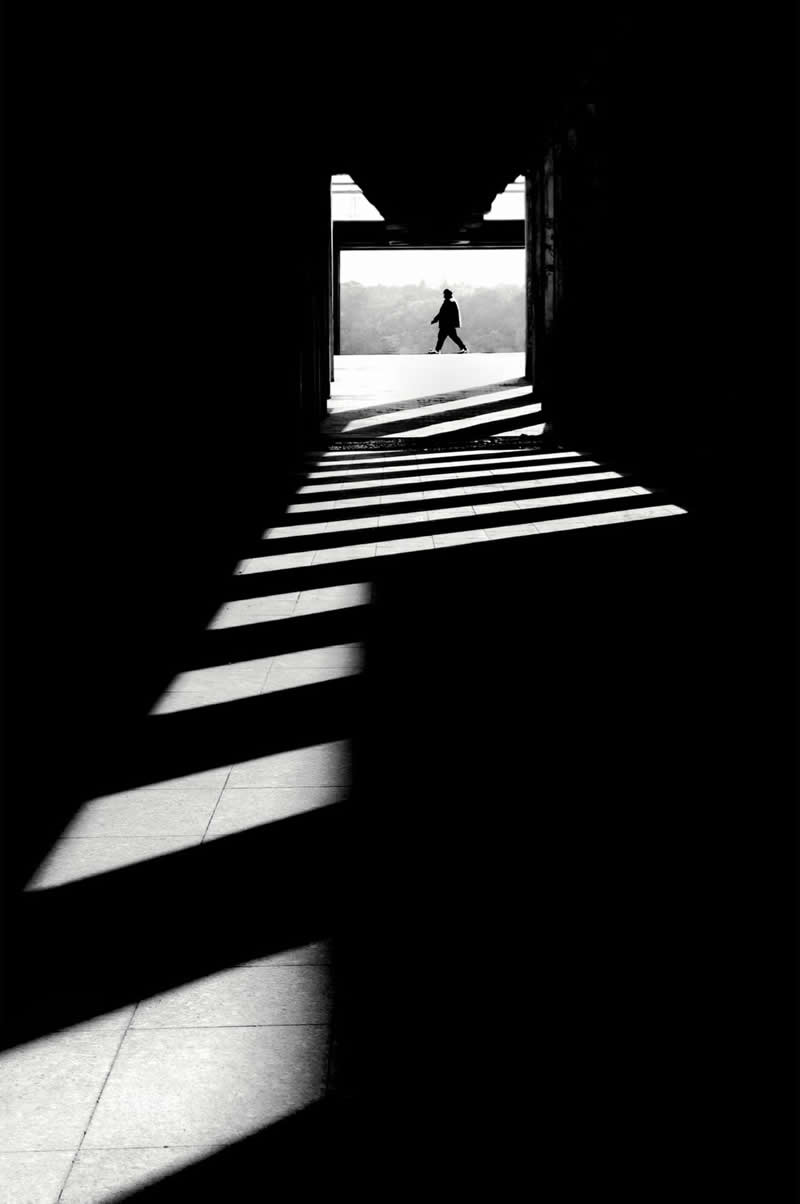
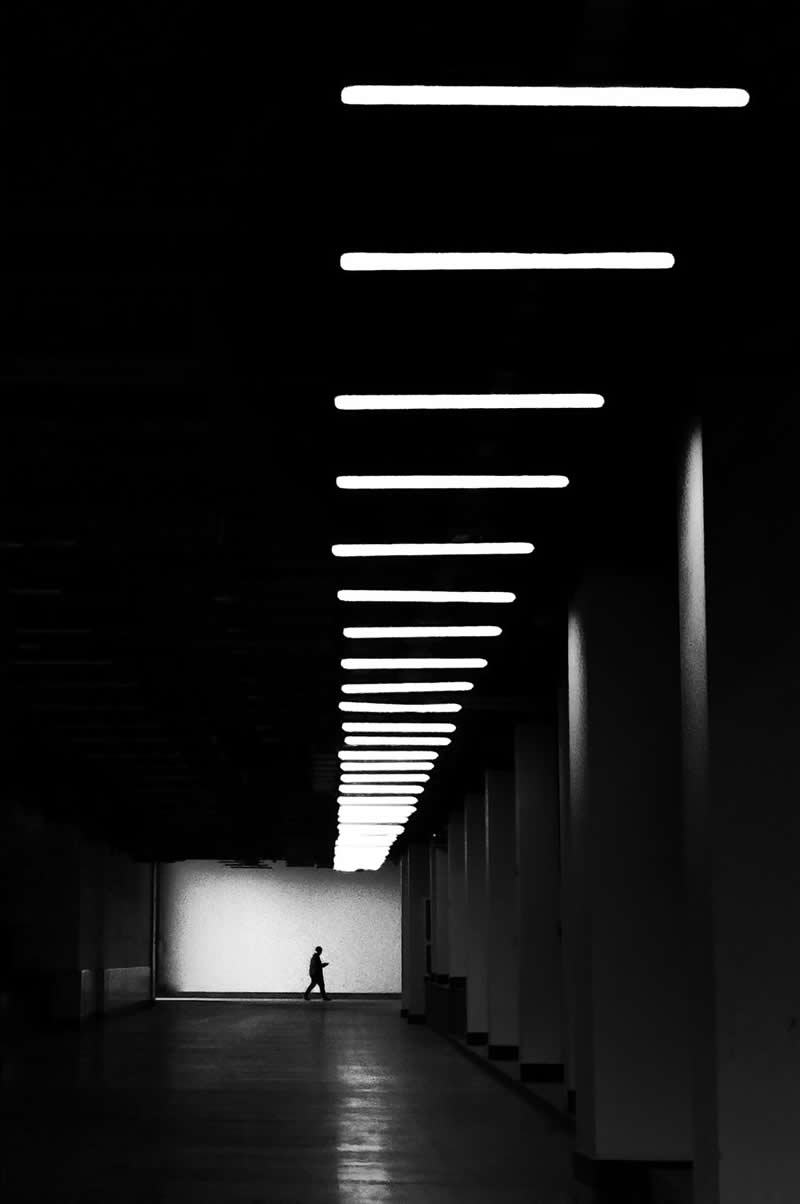
It is in this regard that his clean compositions truly excel; rather than filling up every part of the frame with details, Yu usually allows the composition to have some breathing room. The use of negative space gives the subject room to exist, and leading lines gently lead the viewer’s eyes across the photograph.
Imagine passing a modern building and observing the repeated windows. Instead of carrying on, Yu comes to a halt. He detects a sense of rhythm, balance, and potential.
It is this attitude that makes his work so satisfying since nothing demands attention and the composition gradually draws you in, line by line.
#7
#8
#9
#10
#11
#12
Shadows, Silhouettes, and the Drama of Light
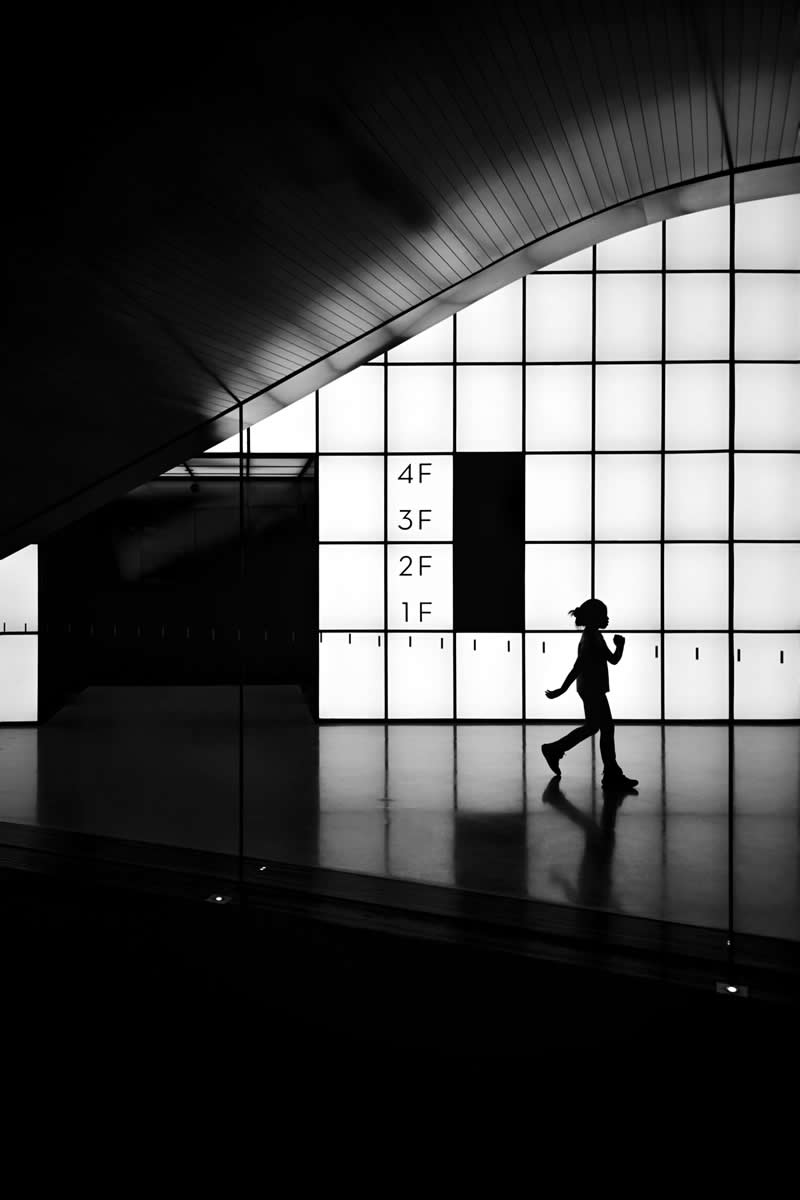
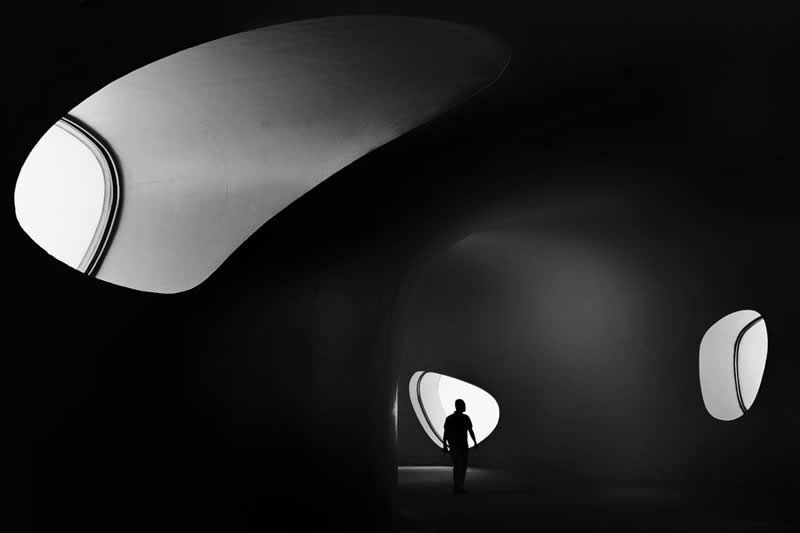
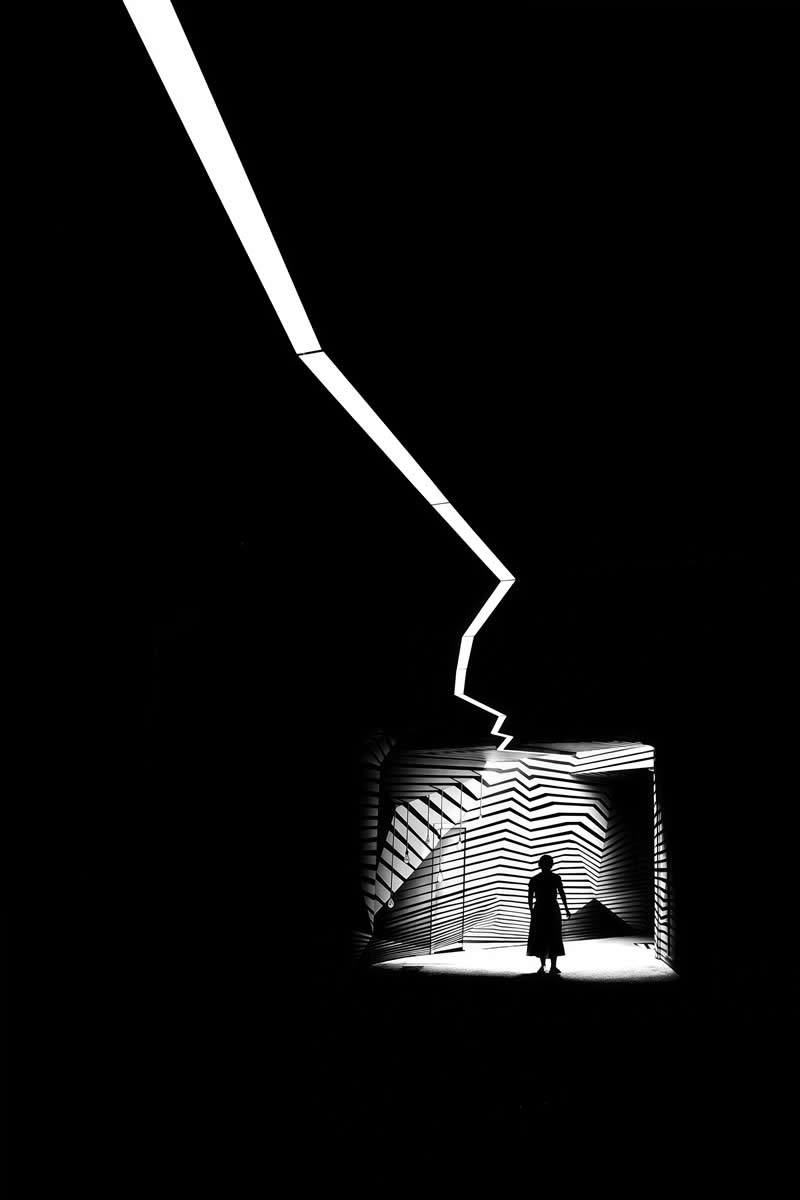
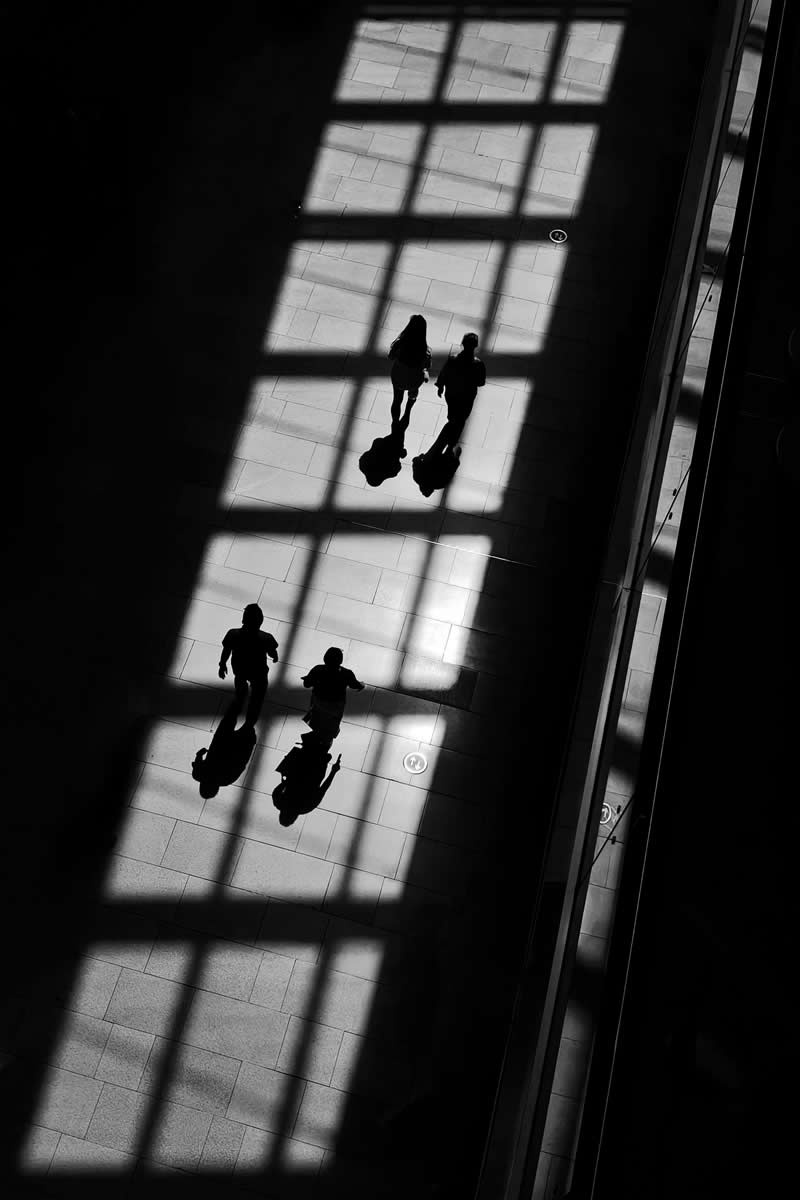
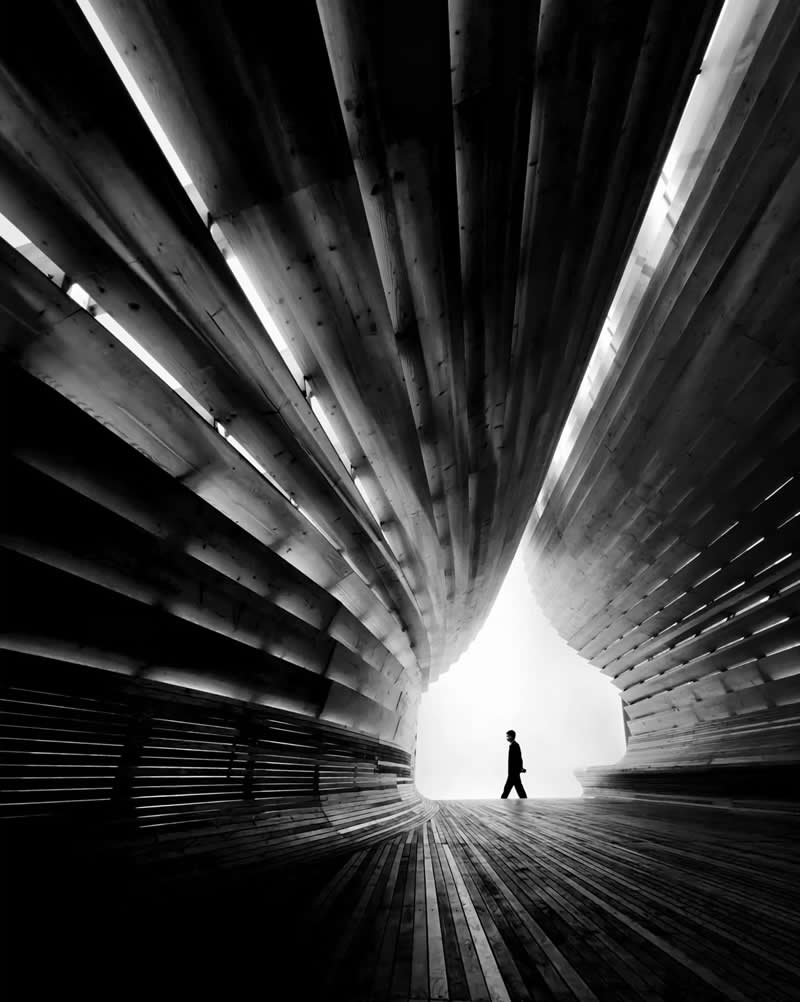
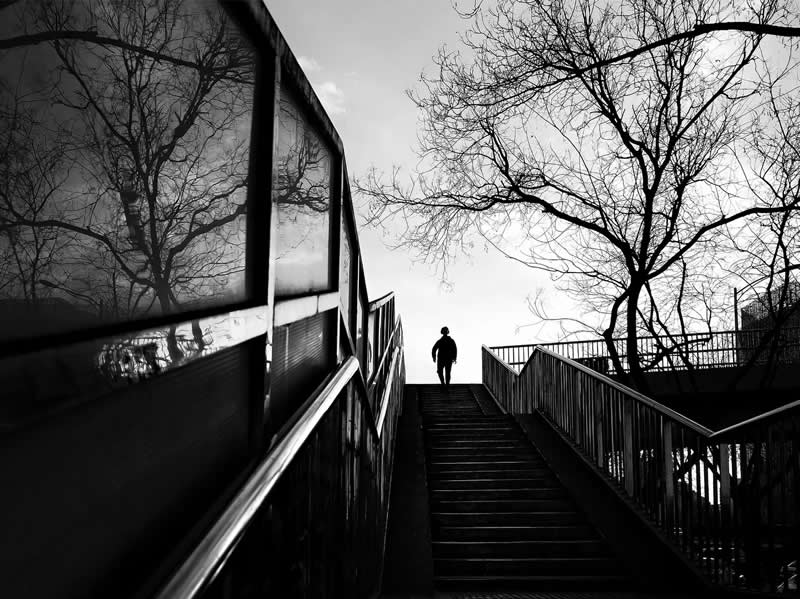
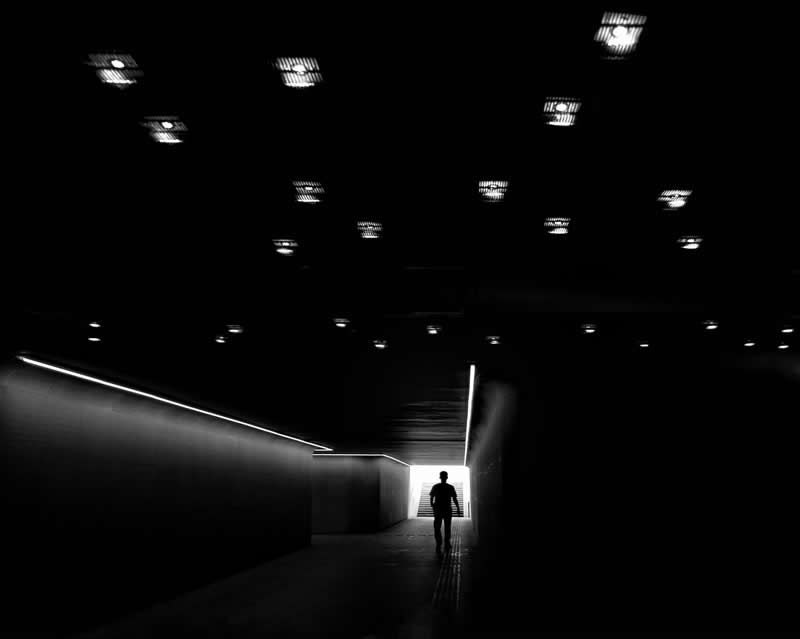
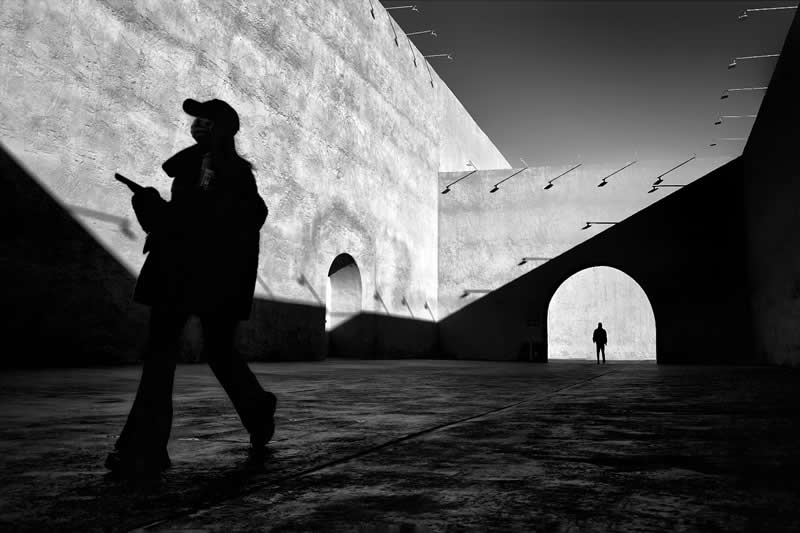
Black-and-white photography has a special connection with light; when color is taken away from a scene, shadows appear more prominent, silhouettes take on a mysterious quality, a bright wall can seem almost abstract, and a person walking through the dark can, in fact, become the whole story.
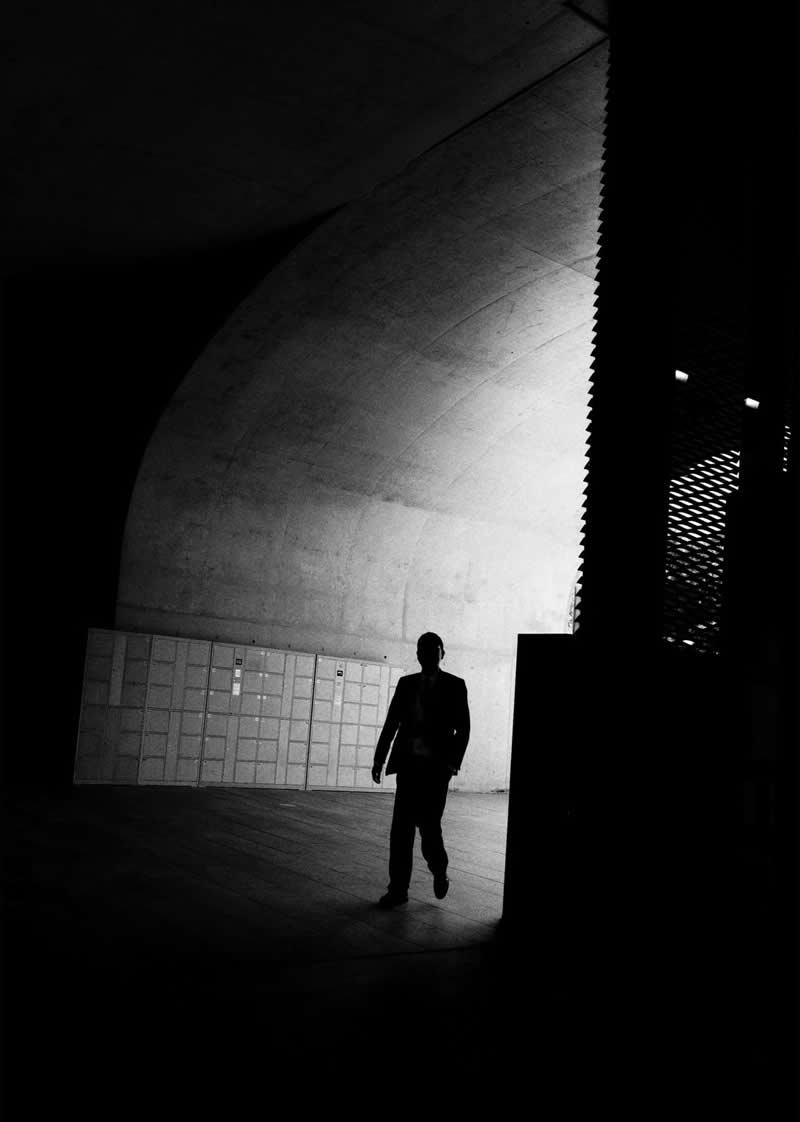
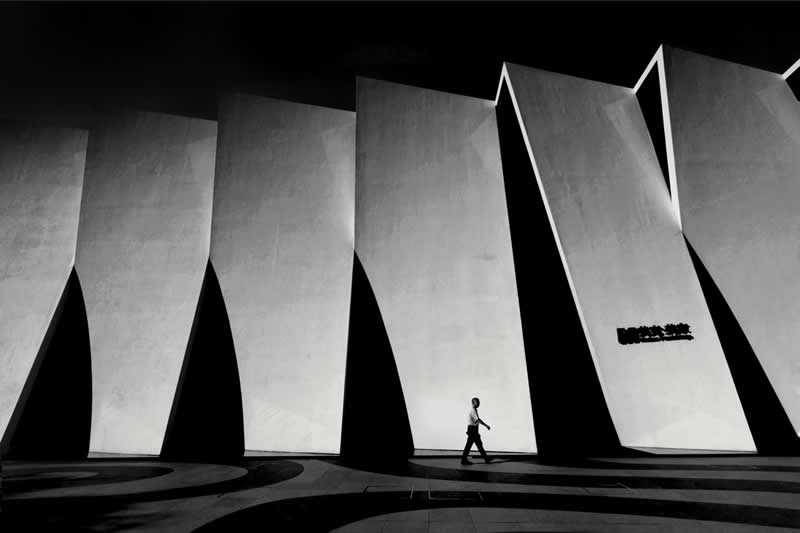
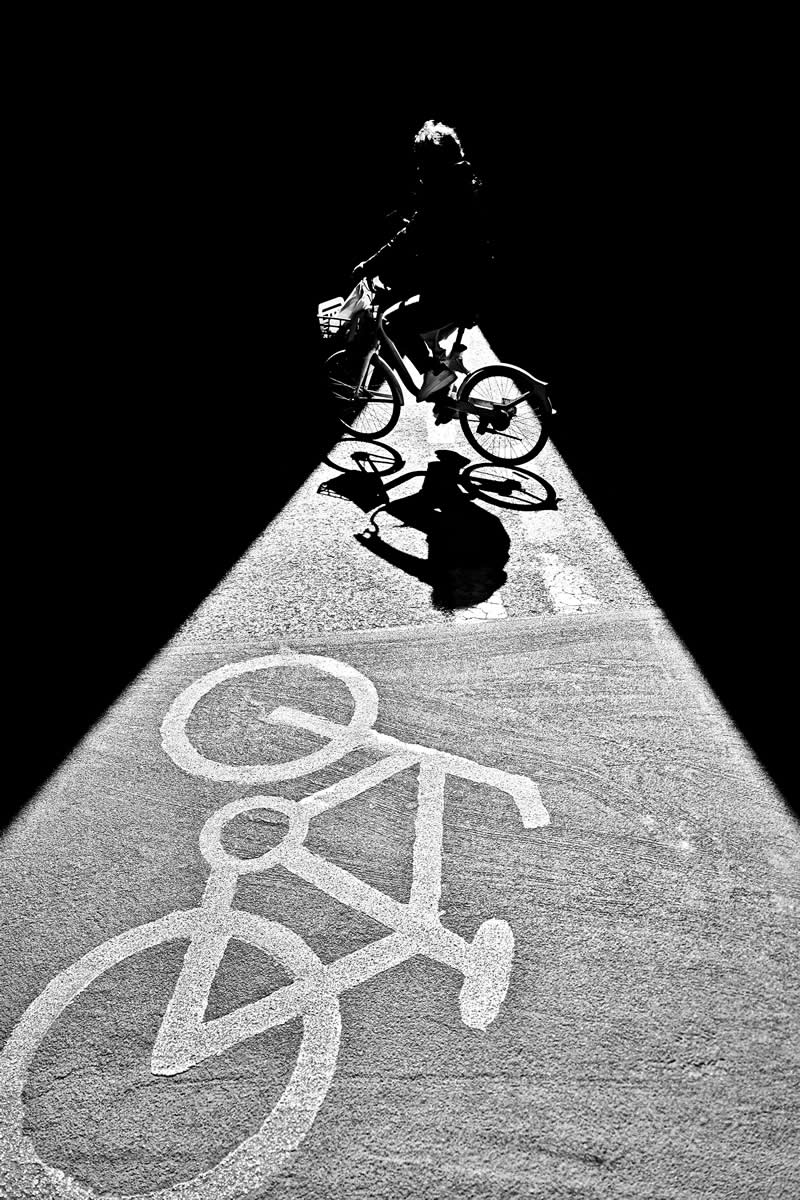
Yu has a wonderful understanding of tension. In his photographs, he frequently uses strong contrast to set people apart from their surroundings, producing scenes with both a simple and cinematic quality. For example, you could see someone crossing a patch of sunlight, standing under an architectural shape, or vanishing into a field of shadow.
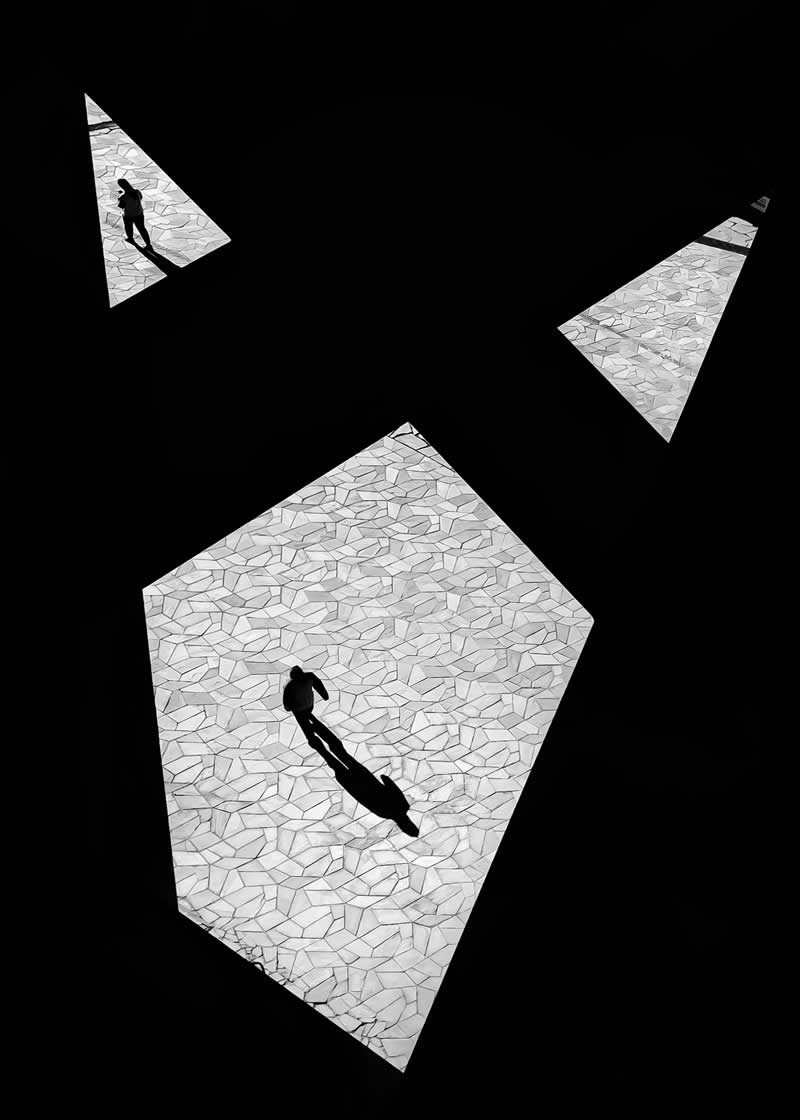
What is interesting is the small amount of information that is sometimes sufficient. A silhouette will not tell you who a person is, where they are going, or what they are thinking. And that is precisely the point.
You fill in the gaps yourself, for the photograph holds the secret.
#13
#14
#15
#16
#17
#18
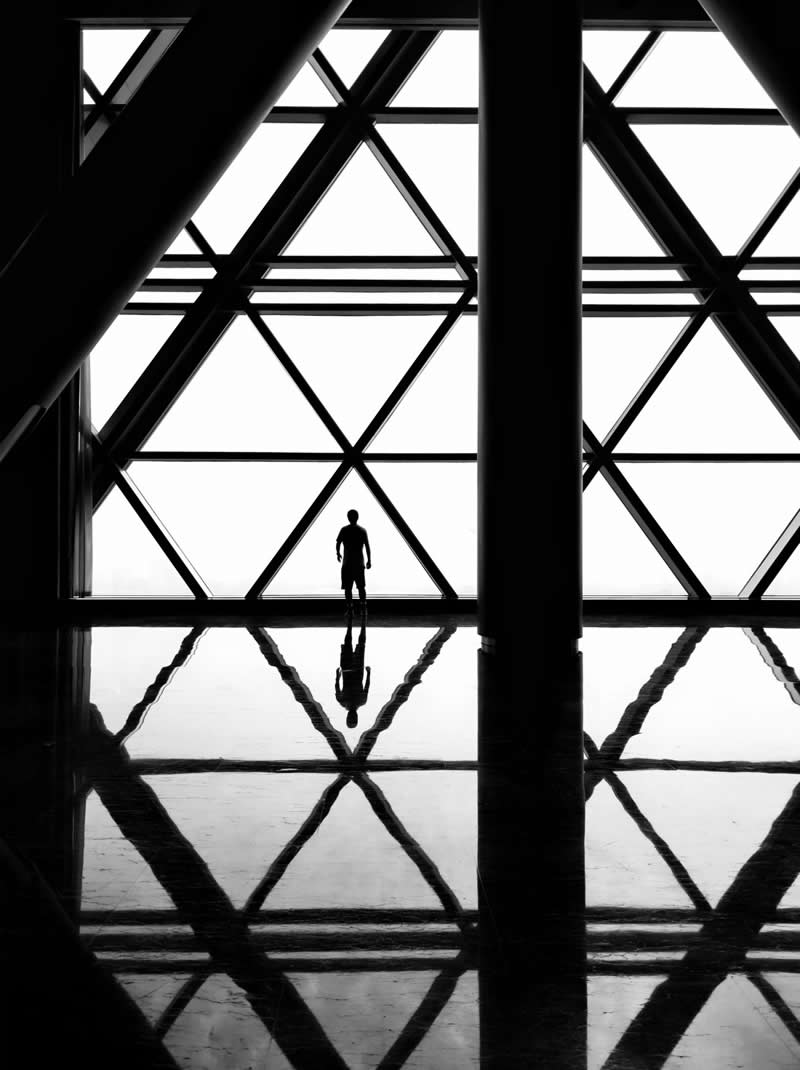
Minimalism Gives His Images Room to Breathe
Minimalism may seem intimidating, but Yu makes it feel entirely natural; his method isn’t primarily about removing elements for style’s sake, but about recognizing that a scene often has everything it needs.
There is a single person, one wall, a few strong lines, and perhaps a shadow stretching over the pavement.
That’s enough.
His photos show that negative space can play an active role in the composition, rather than just leaving it as empty ground. It provides room to breathe and gives the viewer a place to pause. In a world in which we are always scrolling, that pause seems rather valuable.
Yu says he is happy when he sees a simple, interesting composition, and this philosophy is evident in his work; there is no need to complicate the composition too much, for at times the most powerful photograph is the one that knows when to stop.
#19
#20
#21
#22
#23
#24
Finding Poetry in the Everyday City
What I like best about Leon Yu’s photography is that his photographs do not require extraordinary locations; the city supplies the necessary material. Once you take the time to slow down and really look, you will find architecture, people, light, shadows, and open spaces all around you.
Yu started taking street photographs after coming across photographers on Instagram who inspired him, and his experience serves as a pleasant reminder that creative inspiration can show up suddenly. You’re just browsing one moment and the next you’re thinking, "I want to give that a go."
His gear is also important. Generally, Yu takes his photos with an OPPO Find X9, though sometimes he uses a Leica Q2. But the camera doesn’t produce the photograph; what matters is seeing the right geometry, waiting for the right person to appear in the shot, and spotting that perfect combination of light and shadow.
After you begin to notice those moments, the city will never appear the same again.
#25
#26
#27
#28
#29
#30
Summary: Why Leon Yu’s Street Photography Stands Out
The black-and-white street photographs of Leon Yu discover beauty in structure, simplicity, and in brief human moments. By making use of geometry, composition, negative space, leading lines, shadows, silhouettes, and minimalism he turns ordinary urban scenes into thoughtful visual poetry.