
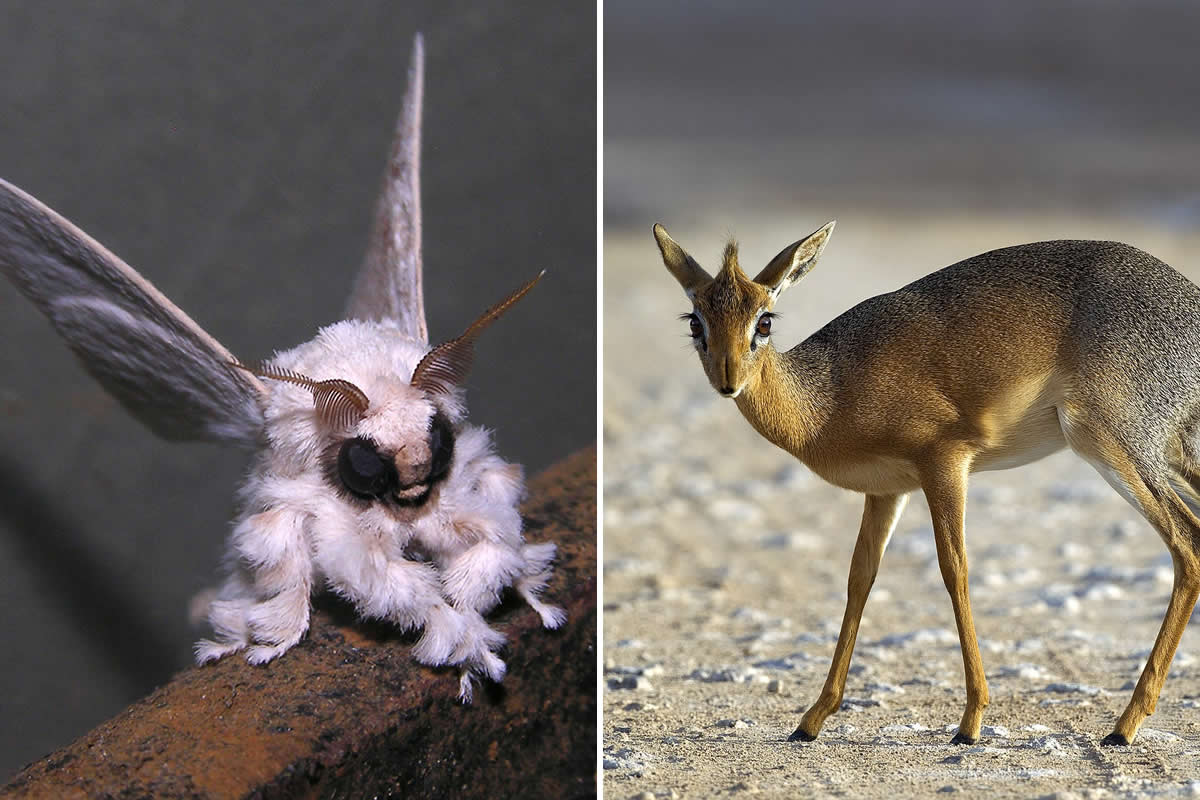
Earth is basically one giant sci-fi movie when you really stop and look at the creatures sharing this planet with us. With more than 8 million species roaming forests, oceans, deserts, and underground worlds, it’s no surprise most people have never even heard of some of these bizarre animals. Honestly, if you tried looking at photos of every living creature on Earth, you’d probably spend the next decade glued to your screen without sleep, snacks, or sunlight. Yeah, hard pass.
That’s exactly why this collection exists. We’ve rounded up some of the strangest, coolest, and downright weird animals hiding across the globe. From deep-sea nightmares to oddly adorable mammals, these creatures look like they were designed by an alien artist having way too much fun.
You’ll meet the okapi, a wild animal that looks like a giraffe collided with a zebra. Then there’s the legendary blobfish, famous for looking permanently disappointed with life. And let’s not forget the thorny devil, a reptile that looks straight out of a fantasy video game.
Some are cute, some are creepy, and some are so weird they barely seem real. But every single one proves nature has an imagination way bigger than ours. These unusual animals remind us that our planet is still packed with hidden wonders waiting to be discovered.
1. Venezuelan Poodle Moth – Unusual Animal Or Alien?
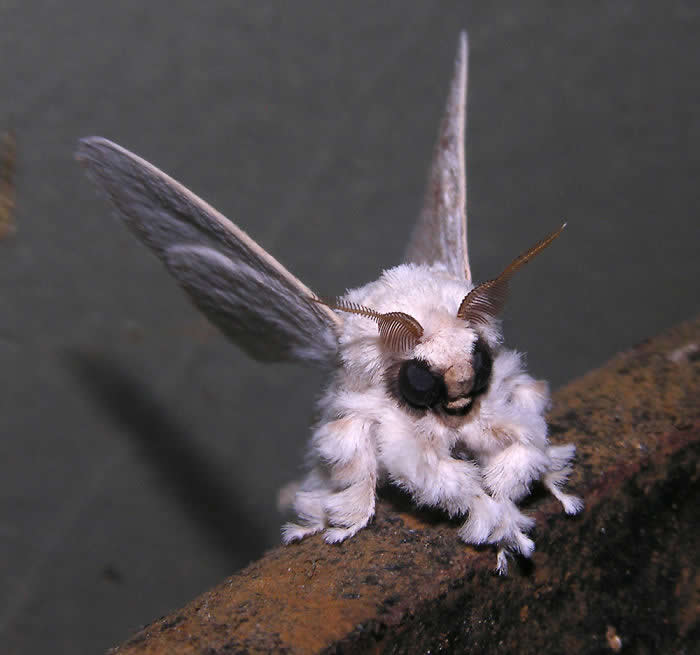
Image Source: Arthur Anker
Discovered in Venezuela in 2009, this new species of alien-looking moth has poodle-like fur covering its head, thorax, abdomen, and even its wings.
2. Glaucus Atlanticus
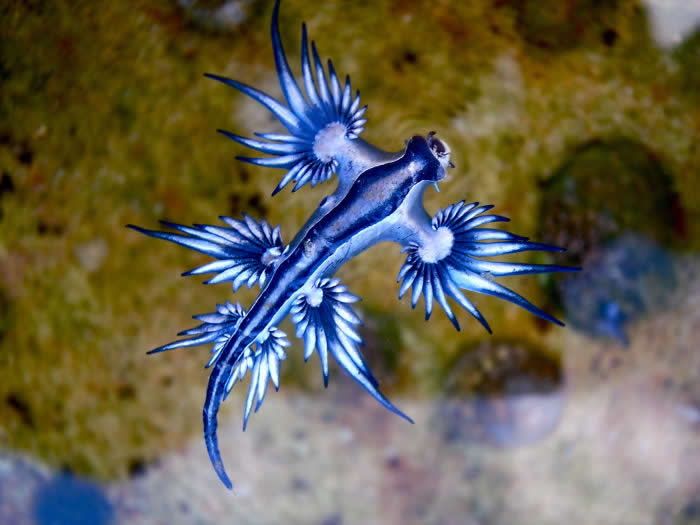
Image Source: Sylke Rohrlach
Also known as the blue dragon, this creature is a species of blue sea slug. You could find it in warm waters of the oceans, as it floats on the surface because of a gas-filled sack in its stomach.
3. Dumbo Octopus
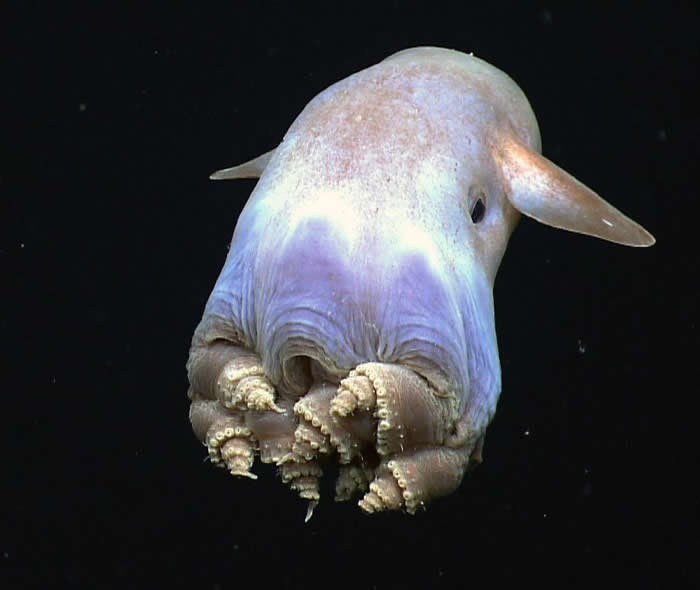
Image Source: NOAA Okeanos Explorer
Dumbo octopus is an umbrella octopus found all around the world. Its name comes from Disney’s "Dumbo" because of the creature’s ears bearing similarity to the movies’ title character.
4. Macropinna Microstoma
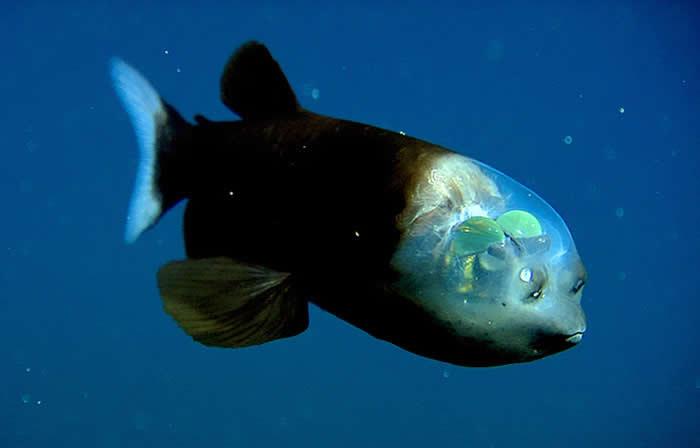
Image Source: MBARI
Macropinna microstoma is a species of fish that lives at a depth of about 600 metres (2,000 ft) to 800 metres (2,600 ft), hanging nearly motionless in the water. It is quite unusual with a transparent, fluid-filled dome on its head, through which the lenses of its eyes can be seen.
5. Naked Mole-Rat
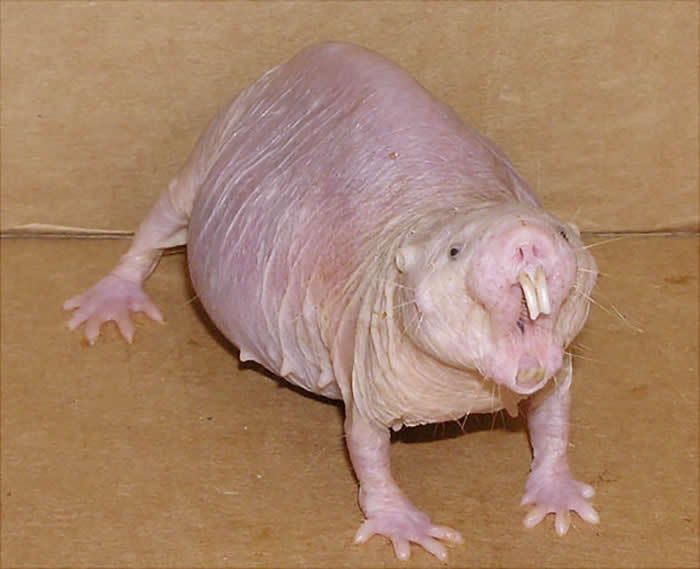
Image Source: Jedimentat44
Also known as the sand puppy, the naked mole-rat is a burrowing rodent found in parts of East Africa. Thanks to its unusual set of physical traits it thrives in a harsh underground environment and is the only mammalian thermoconformer, almost entirely ectothermic (cold-blooded) in how it regulates body temperature. The naked-mole rat lacks pain sensitivity in its skin, and has very low metabolic and respiratory rates.
6. Glass Frog
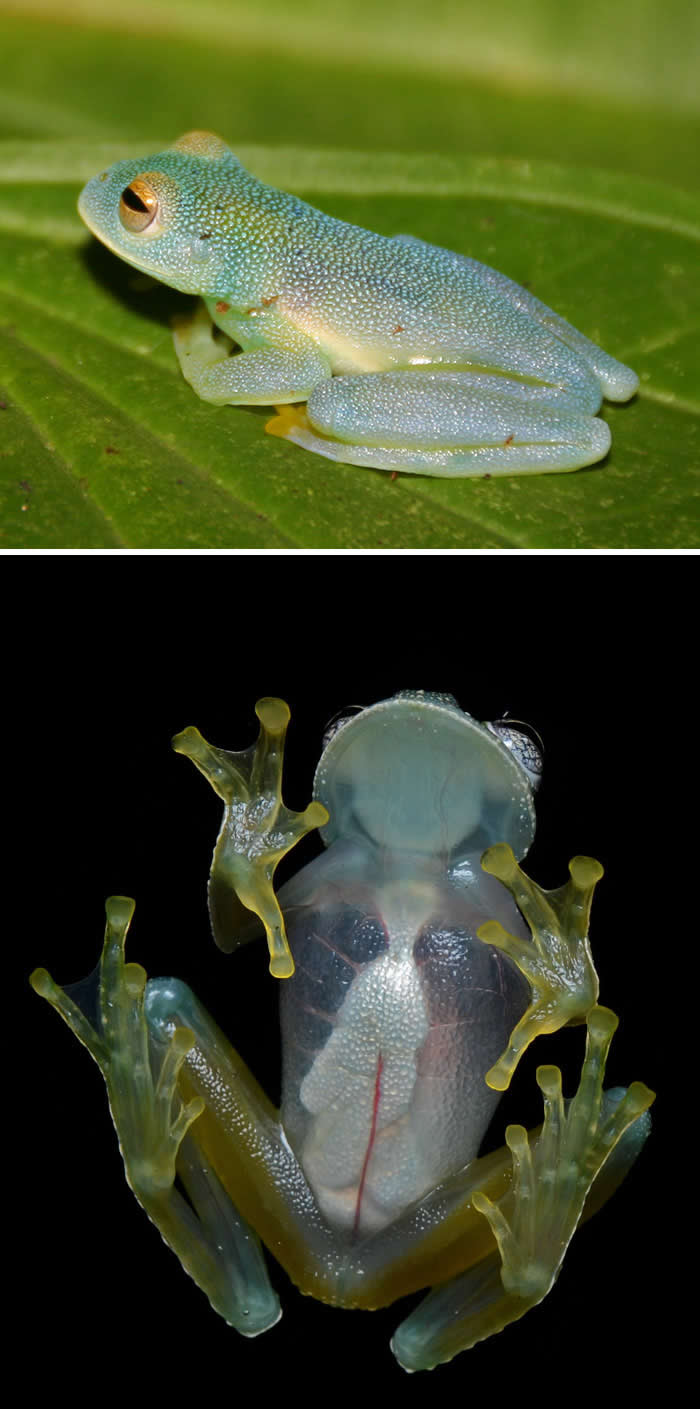
Image Source: JurriaanH,Geoff Gallice
Found in South America, the glass frog is a family of amphibians with some specimens exhibiting an outstanding feature — transparent abdomens. Because the internal viscera is visible through the skin, the common name they are given is glass frogs.
7. Fossa
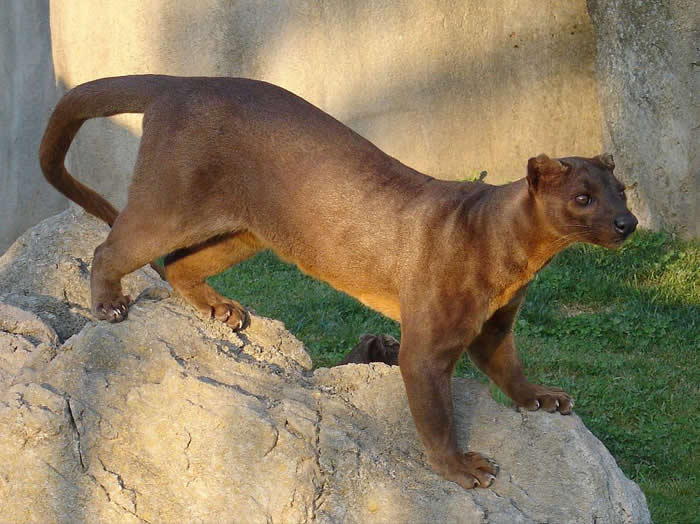
Image Source: Ran Kirlian
Fossa is a cat-like mammal that lives in Madagascar. Its classification has been controversial because physically it resembles a cat, while other traits suggest relation to viverrids. Genetic research has shown that they are actually their own separate species.
8. Panda Ant
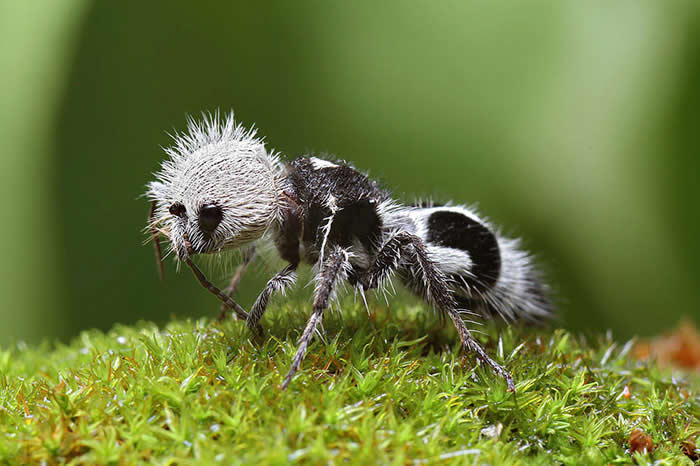
Image Source: Chris Lukhaup
Despite looking like an ant and being referred as such, it is in fact a form of wingless wasp. This insect is also known as cow-killer. Females possess thicker fur but lack wings. The furry panda ant lives for about 2 years.
9. Tufted Deer
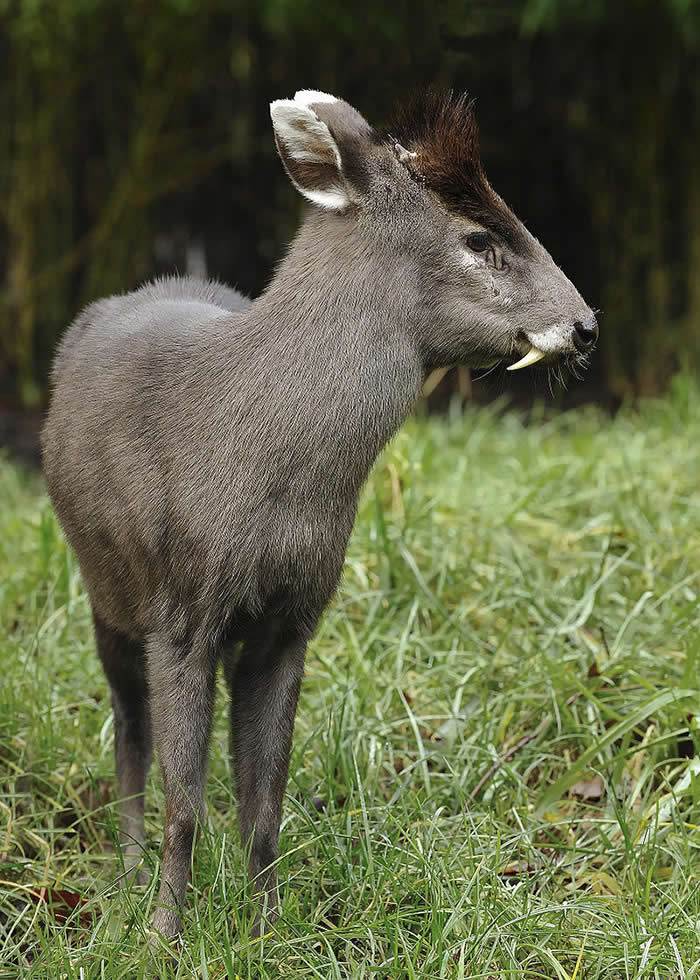
Image Source: Heush
Found in central China, the tufted deer is a small species of deer characterized by a prominent tuft of black hair on its forehead and fang-like canines for the males. It is a timid, mainly solitary creature, that sometimes lives in pairs and enjoys living in areas with good cover.
10. Honduran White Bat
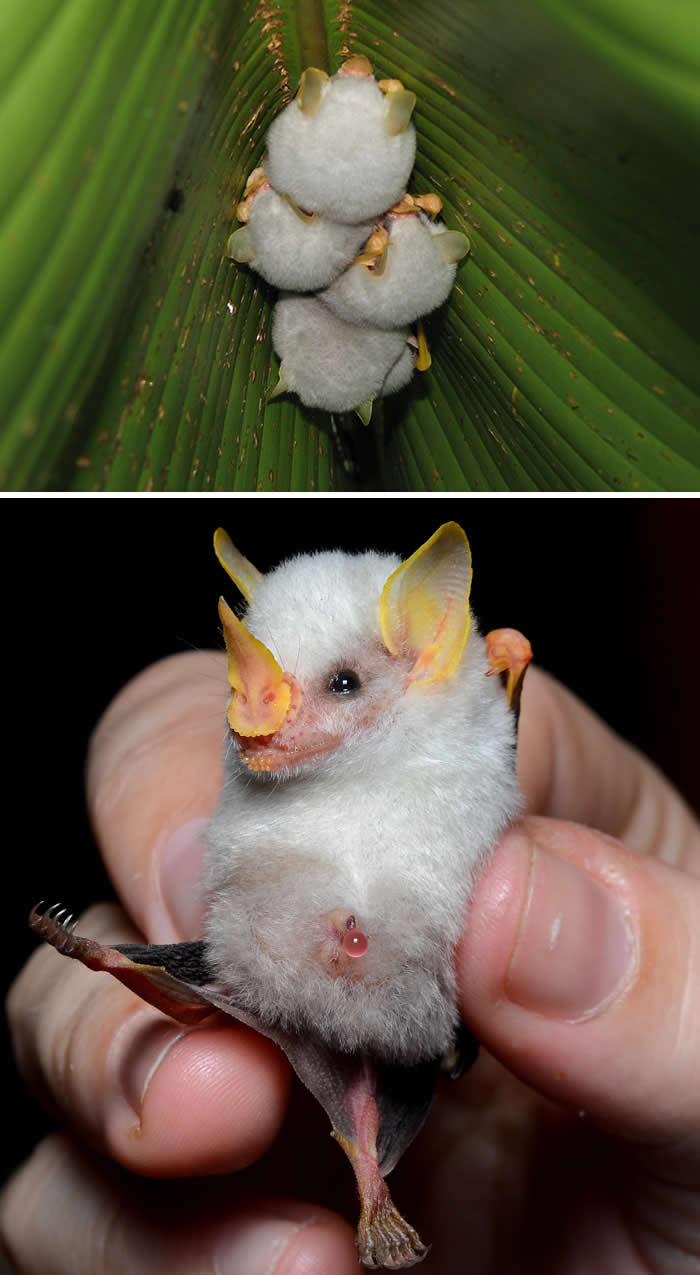
Image Source: Leyo,Geoff Gallice
The Honduran white bat has distinctive white fur, with tips of individual hairs being gray as well as a leaf-shaped nose. They live in leaf ‘tents’ that they ‘build’ by cutting the side veins extending out from the midrib of large leaves.
11. Saiga Antelope
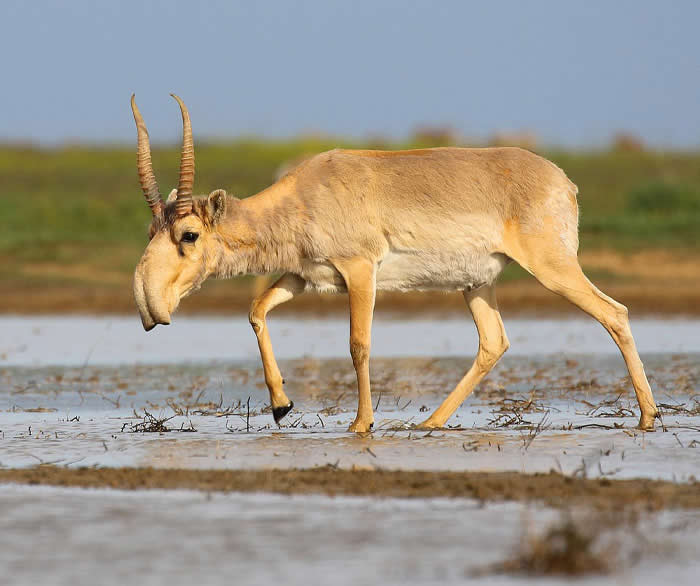
Image Source: Andrey Giljov
This saiga, spread around the Eurasian steppe, is known for its an extremely unusual, over-sized, flexible nose structure, the proboscis. It is a critically endangered antelope.
12. Leafy Seadragon
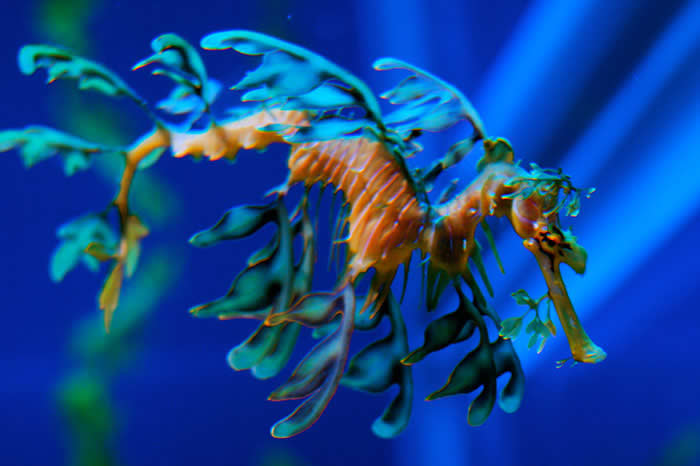
Image Source: dro!d
Found along the southern and western coasts of Australia, the leafy seadragon is a marine fish with long leaf-like protrusions coming from all over the body, that serves as camouflage.
13. Dik-Dik
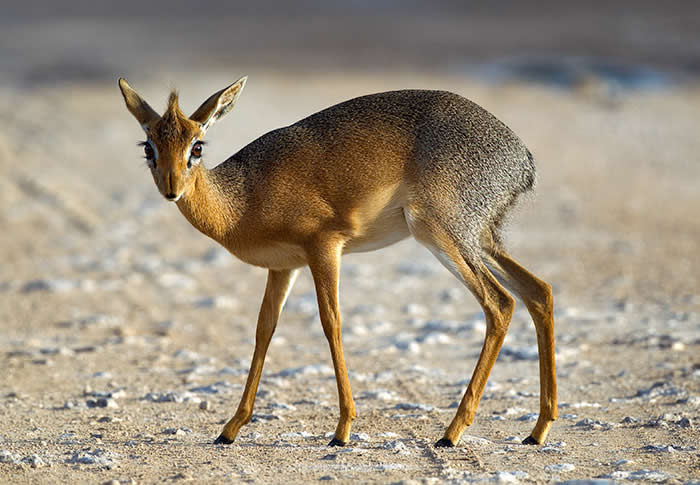
Image Source: Yathin S Krishnappa
Found in the bushlands of eastern and southern Africa, dik-dik is the name for any of four species of small antelope in the genus Madoqua. Dik-diks are herbivores that can tolerate air temperatures of up to 40 °C (104 °F).
14. Lilac-Breasted Roller
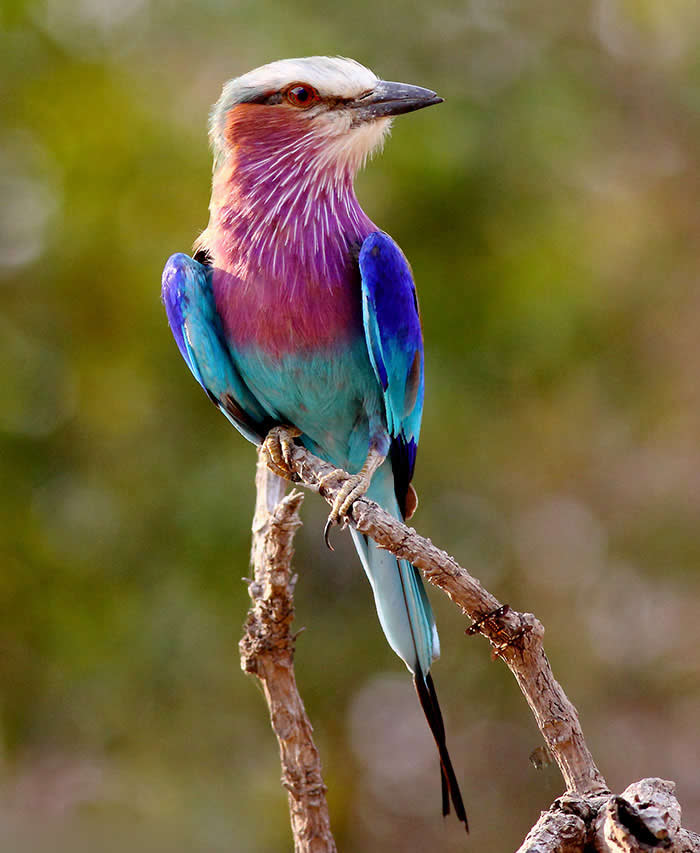
Image Source: Prabir2011
Widely distributed in sub-Saharan Africa and the southern Arabian Peninsula, the lilac-breasted roller is a colorful bird that likes perching in hight trees and other vantage points where it can spot prey at ground level. Their bright plumage is unmistakable with deep lilac breast feathers.
15. Mata Mata
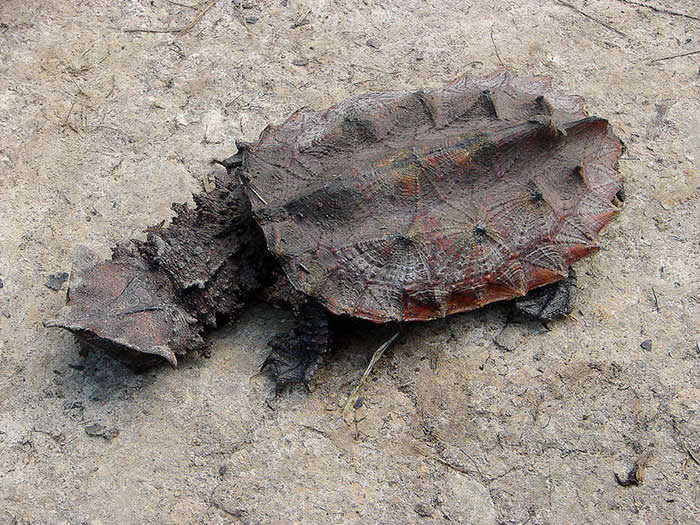
Image Source: Dick Culbert
Found in South America, the mata mata is a freshwater turtle known for a large, triangular, flattened head characterized with many tubercles and flaps of skin, and a "horn" on its long and tubular snout.
16. Sea Pig
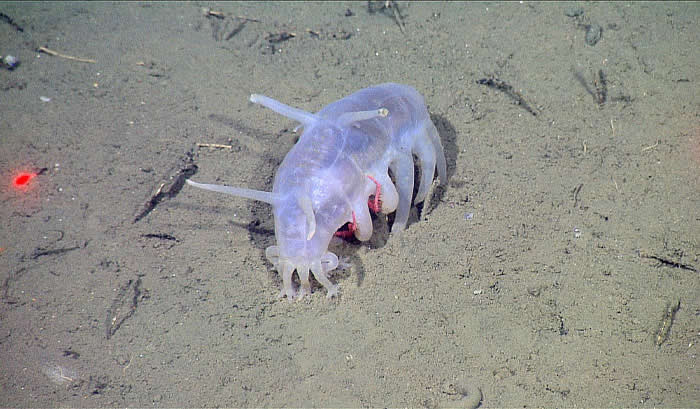
Image Source: NOAA/MBARI
Scotoplanes are sea cucumbers that live on deep ocean bottoms, specifically on the abyssal plain in the Atlantic, Pacific and Indian Ocean, typically at depths of over 1000 meters. They are deposit feeders, and obtain food by extracting organic particles from deep-sea mud.
17. Superb Bird-Of-Paradise
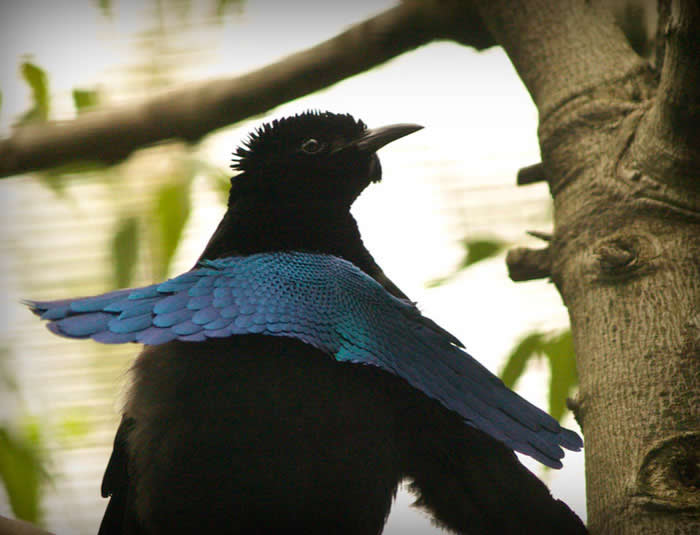
Image Source: Natasha Baucas
Superb bird-of-paradise is a small bird that has a small female population, therefore the competition amongst males is fierce. Because of that, they have one of the most bizarre and elaborate courtship displays in the avian world.The male is black with an iridescent green crown, blue-green breast cover and a long velvety black erectile cape covering his back, while the female is a reddish-brown bird with brownish barred buff below.
18. Satanic Leaf-Tailed Gecko
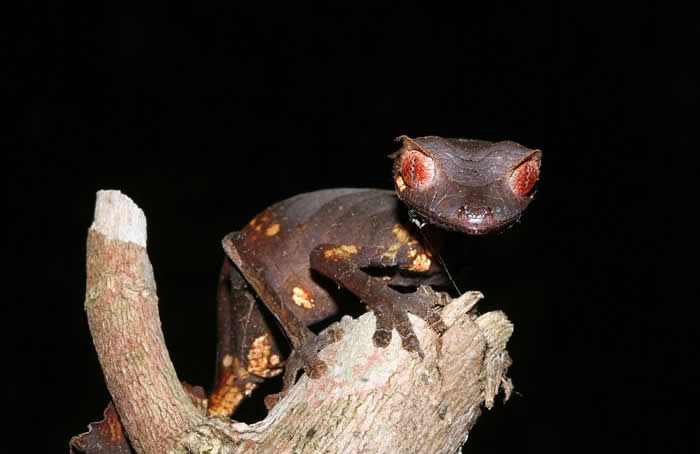
Image Source: Julien Renoult
Satanic leaf-tailed gecko is a species of gecko that is found on the island of Madagascar. Their tail is flattened and appears to look like a leaf, helping the animal blend in within the environment.
19. Halitrephes Jelly
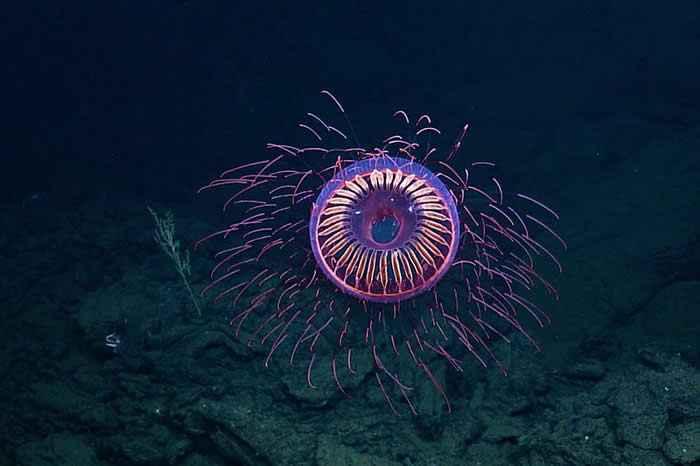
Image Source: EVNautilus
Halitrephes is a type of deep sea hydrozoan that lives at a depth of 4,000-5,000 feet.
20. Pink Fairy Armadillo
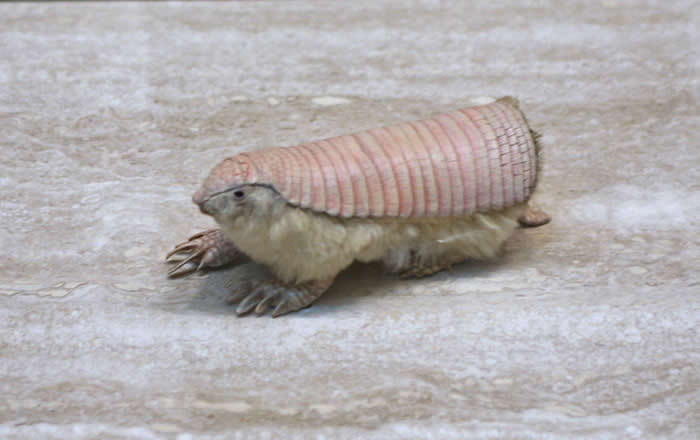
Image Source: Cliff
Found in central Argentina, the pink fairy armadillo is the smallest species of armadillo. They have small eyes, silky yellowish white fur, and a flexible dorsal shell that is solely attached to its body by a thin dorsal membrane.
21. Maned Wolf
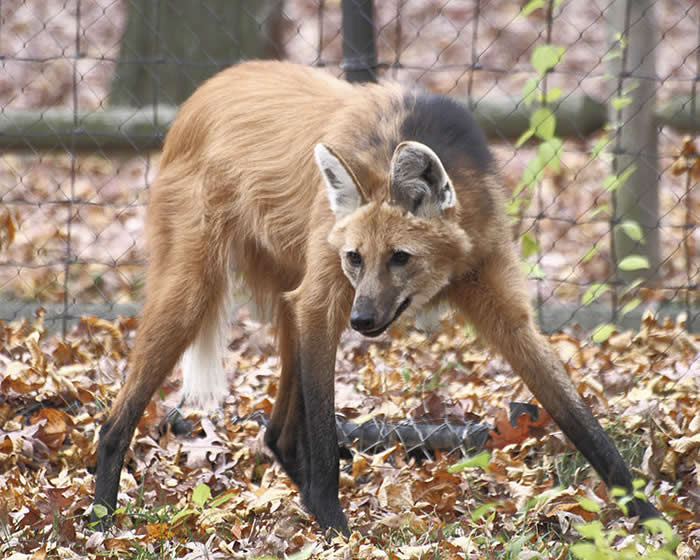
Image Source: Sage Ross
Maned Wolf is the largest canid found in South America. It bears a striking resemblance to foxes, but is neither a fox now a wolf. The maned wolf participates in symbiotic relationships with other species and is shy around humans.
22. Blobfish
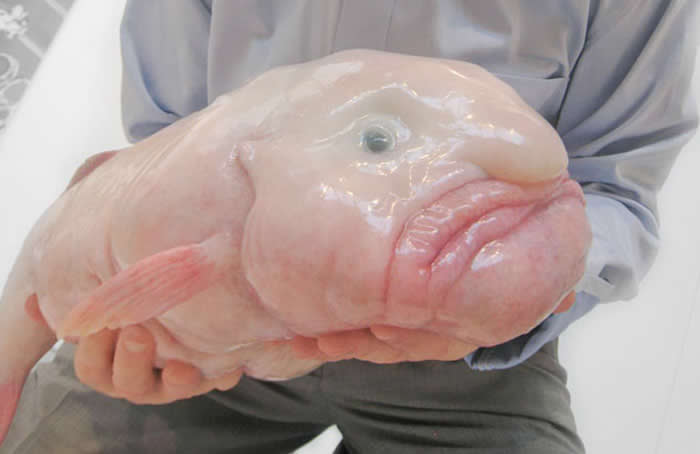
Image Source: Grufnik
The blobfish is a deep sea fish that inhabits the deep waters off the coasts of mainland Australia and Tasmania, Zealand. The body of the blobfish is primarily a gelatinous mass with a density slightly less than water and this allows it to float above the sea floor without expending energy on swimming. They only appear droopy when taken out of the sea, when pressure changes drastically.
23. Golden Tortoise Beetle
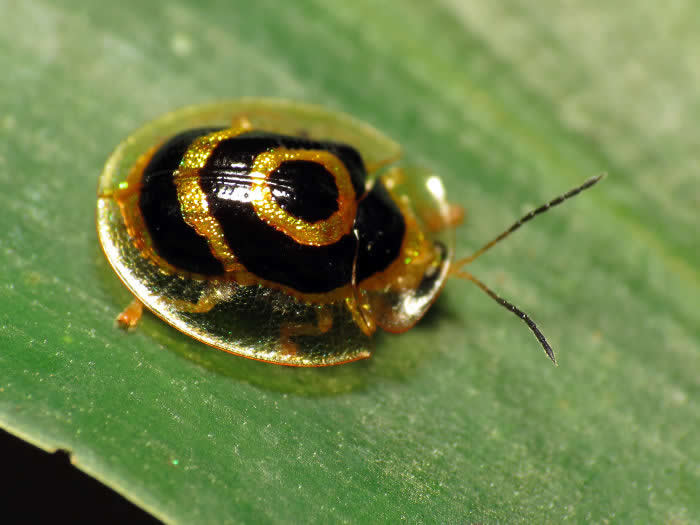
Image Source: Katja Schulz
Native to the Americas, the golden tortoise beetle is a species of beetle that varies in color from reddish-brown with black spots through gold, and often metallic, earning it the nickname "goldbug". It tends to switch color in different conditions, such as during mating, and during times of disturbance, such as when it is touched by a researcher.
24. Sea Pen
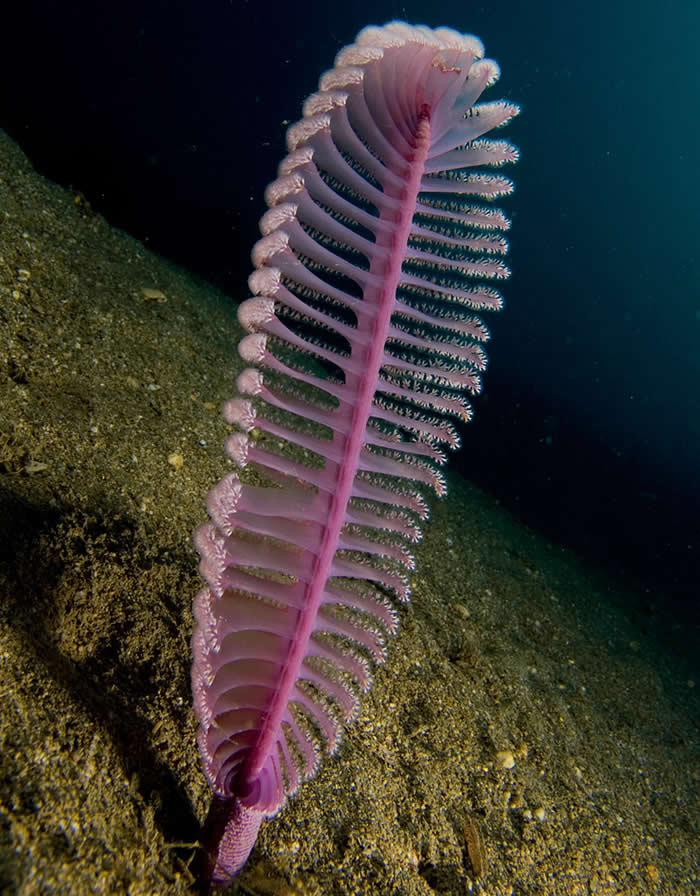
Image Source: Nick Hobgood
Sea pen is a colonial animal with multiple polyps that ‘root’ itself in sandy or muddy substrate. They mainly catch plankton. When touched, some sea pens emit a bright greenish light.
25. Axolotl
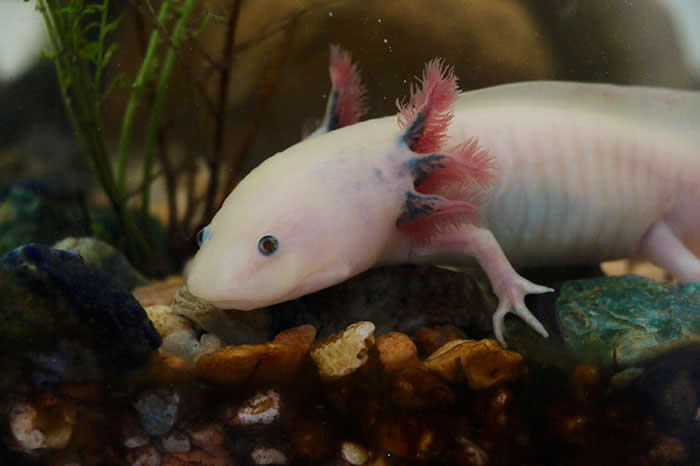
Image Source: Amandasofiarana
Also known as a Mexican salamander, the axolotl is a critically endangered salamander. They are used extensively for research because of their regenerative qualities.
26. Narwhal
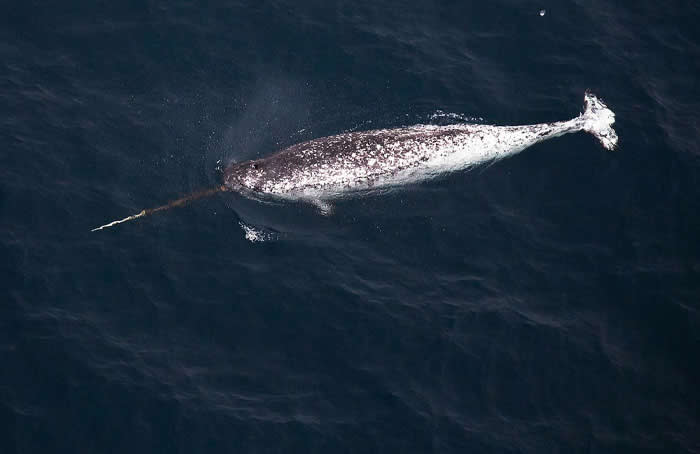
Image Source: Gazprom Neft
This medium-toothed whale has a large "tusk" from a protruding canine tooth and is found in the arctic, has been valued for over 1000 years by the Inuit people for its meat and ivory. Narwhals, however, are especially vulnerable to climate change.
27. Mantis Shrimp
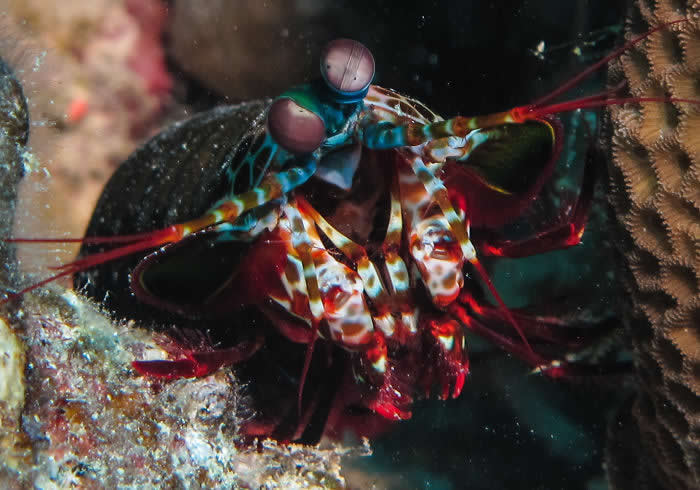
Image Source: Ed Bierman
Also called the “sea locusts“, “prawn killers” and even “thumb splitters”, this is one of the most common predators in tropical and sub-tropical waters. They have powerful claws that are used to attack and kill prey by spearing, stunning, or dismembering. Some larger species could even break through aquarium glass.
28. Shoebill
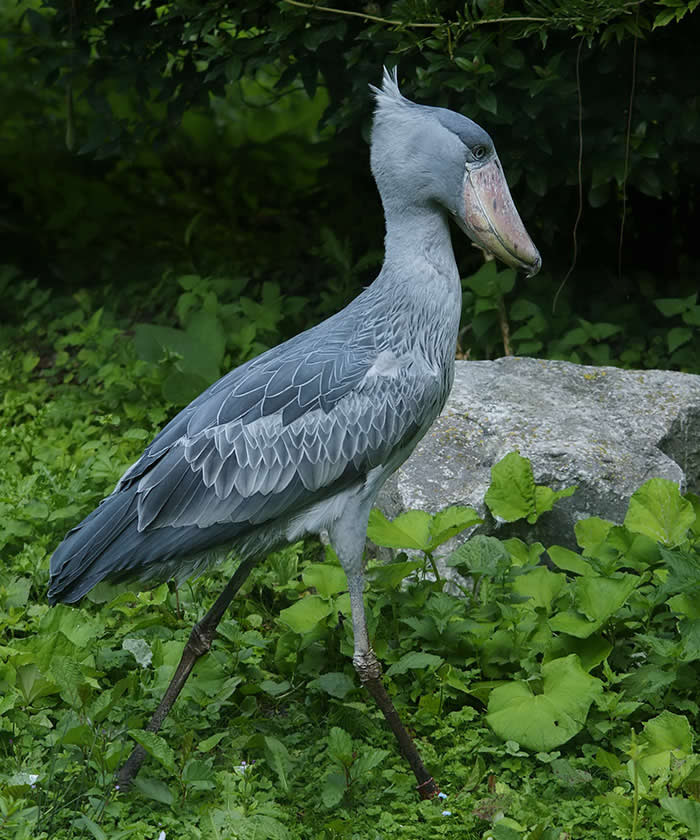
Image Source: Hans Hillewaert
Shoebill is a large stork-like bird which gets its name from its enormous shoe-shaped beak. The bird lives in tropical east Africa in large swamps and is known for its slow movements and tendency to stay still for long periods thus species getting described as "statue-like".
29. Goblin Shark
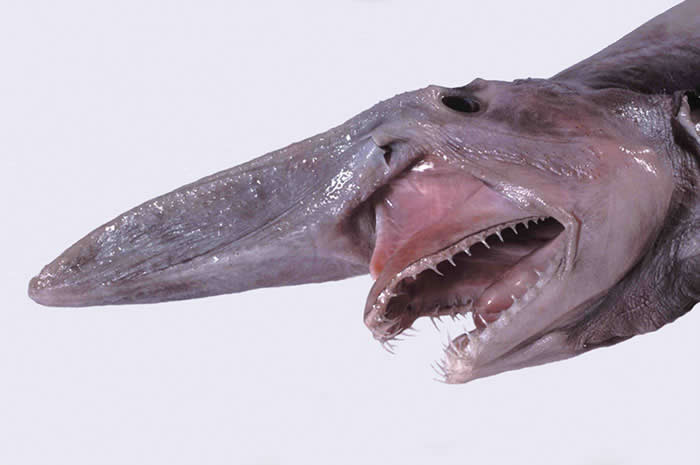
Image Source: Dianne Bray / Museum Victoria
This rare shark is sometimes even called a “living fossil”, “is the only extant representative of the family Mitsukurinidae, a lineage some 125 million years old.” Goblin sharks inhabit the depths greater than 100 m (330 ft), with adults found deeper than juveniles. Given the depths at which it lives, the goblin shark poses no danger to humans.
30. Sri Lanka Frogmouth
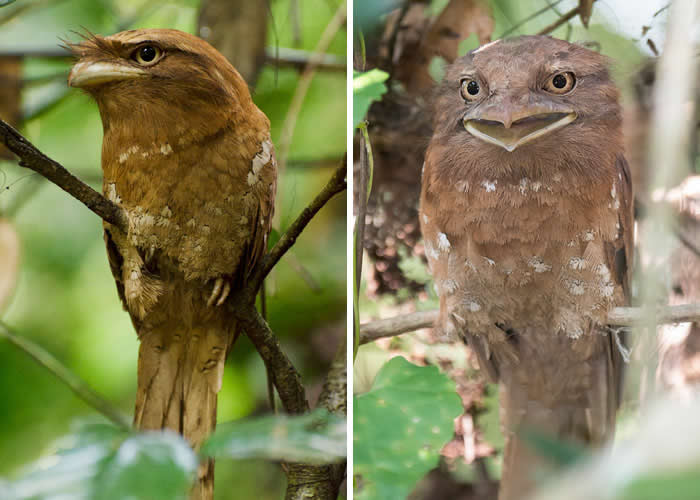
Image Source: Arshad.ka5,Koshy Koshy
Sri Lanka frogmouth is found in the Western Ghats of south India and Sri Lanka. A nocturnal bird, Sri Lanka frogmouth has a wide and hooked bill with slit-like nostrils and a large head with eyes facing forward to provide a wide field of binocular vision.
31. Long-Wattled Umbrellabird
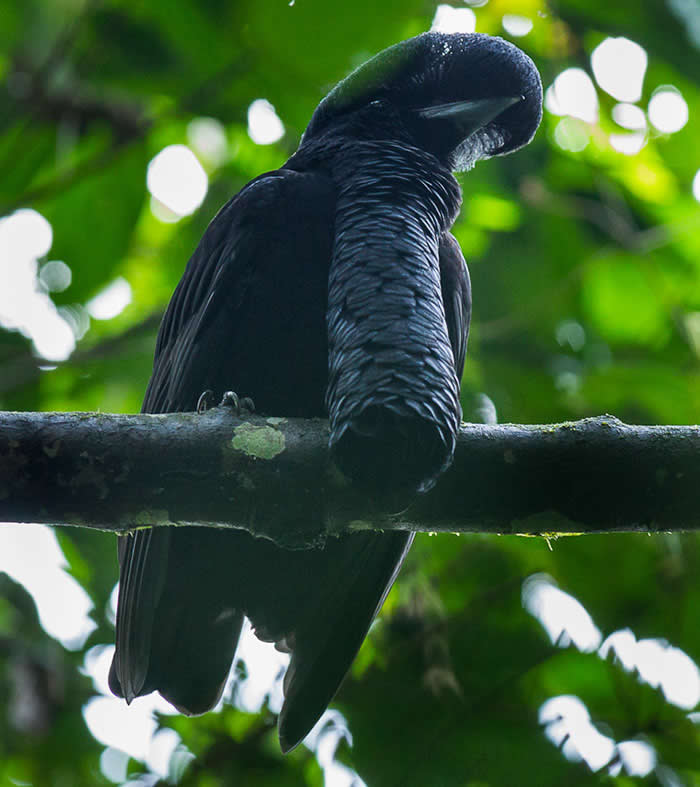
Image Source: Francesco Veronesi
Native to Colombia, the long-wattled umbrellabird is a frugivorous bird. The male is distinguished by a large throat wattle of feathers, while females and juveniles have no or a much smaller wattle.
32. Dugong
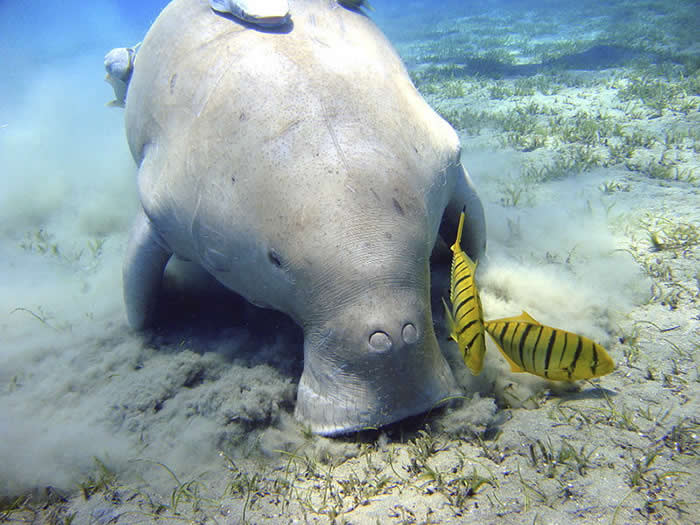
Image Source: Julien Willem
A medium-sized marine mammal, Dugong is the only sirenian in its range, which spans the waters of some 40 countries and territories throughout the Indo-West Pacific. They are considered as the inspiration for mermaids. The dugong’s body is large with a cylindrical shape that tapers at both ends.
FAQ About Bizarre Animals
Why are some animals so strange-looking?
Many unusual animals evolved unique body shapes, colors, and survival features to adapt to extreme environments, predators, food shortages, or climate conditions. What looks weird to humans is often nature’s smartest survival strategy developed over millions of years through evolution and natural selection.
What is the weirdest animal on Earth?
There’s no official answer, but creatures like the blobfish, axolotl, thorny devil, goblin shark, and star-nosed mole are often considered among the weirdest animals because of their bizarre appearances, unusual behaviors, and rare adaptations that seem almost alien to humans.
Are bizarre animals dangerous to humans?
Most strange-looking animals are completely harmless and avoid human interaction whenever possible. While some species may use venom, camouflage, or defensive behaviors for survival, the majority simply look intimidating or unusual without posing serious danger to people in everyday situations.
Why are scientists still discovering new animals?
Large parts of Earth’s oceans, rainforests, caves, and remote ecosystems remain unexplored. Scientists regularly discover new species because many animals live in hidden habitats, deep-sea environments, or isolated regions that humans rarely visit or study in detail.
What makes unusual animals important to nature?
Every species plays a role in maintaining ecological balance. Strange animals help control pests, spread seeds, recycle nutrients, and support food chains. Protecting biodiversity ensures ecosystems remain healthy, stable, and capable of supporting life across the planet for future generations.