
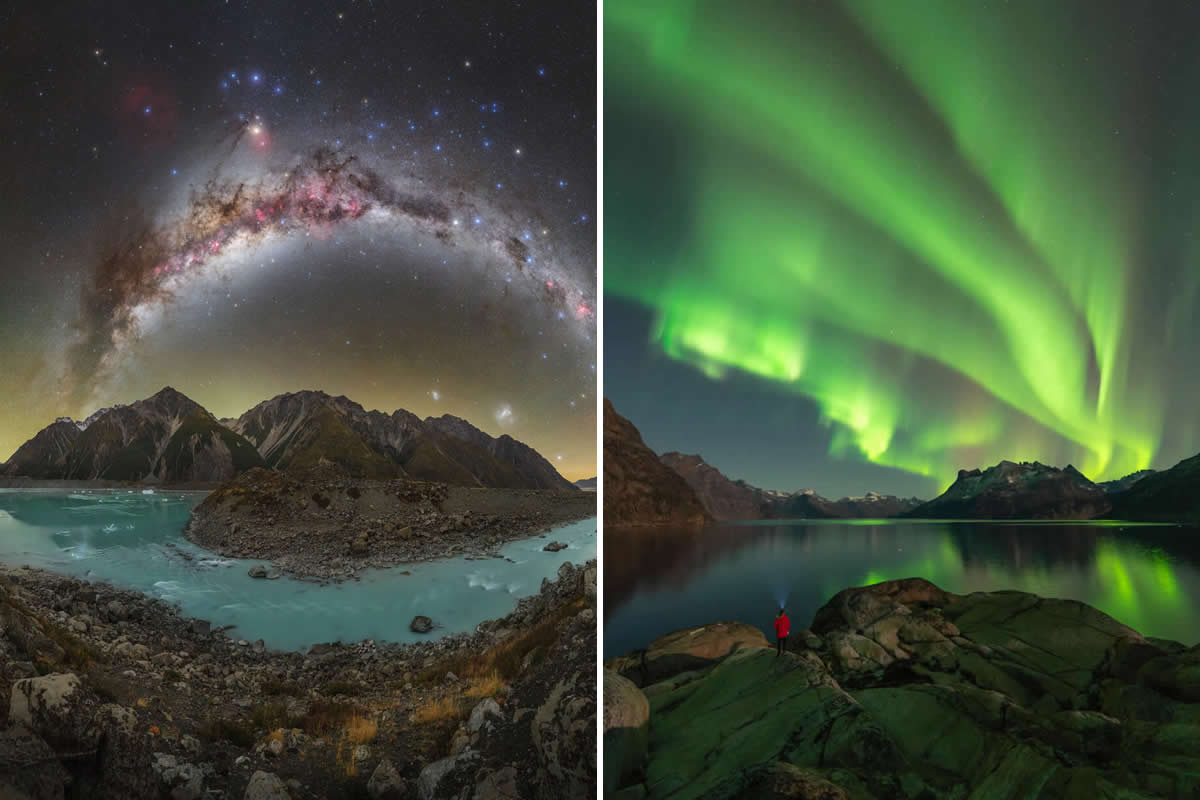
There’s something about stepping outside after dark and looking up that instantly puts life into perspective. The noise fades, the sky opens up, and suddenly you’re staring at a universe far bigger than your daily to-do list. Capture the Dark 2026 captures that feeling.
DarkSky International has announced the winners of its sixth annual nighttime photography contest, and this year’s edition set a record, attracting entries from photographers in more than 30 countries. The winning images take us from sweeping night landscapes and brilliant stars to deep-sky observations and creative interpretations of the darkness.
But this competition isn’t just about pretty pictures. It carries a bigger message. DarkSky International says light pollution is increasing by nearly 10% each year worldwide, disrupting wildlife, affecting community well-being, and making it harder for all of us to experience genuinely dark skies.
That makes these photographs hit differently. They’re beautiful, sure, but they also remind us what we’re slowly losing.
Across nine standard categories, judges selected three winners, alongside a special Star Trek-themed category and a People’s Choice Award. Together, the 31 winning photos reveal a night that was mysterious, peaceful, dramatic, and absolutely breathtaking.
So turn down the lights, look up, and take a little trip into the dark.
You can find more info:
#1. Nightscapes – First Place: Razorback by Paul Wilson
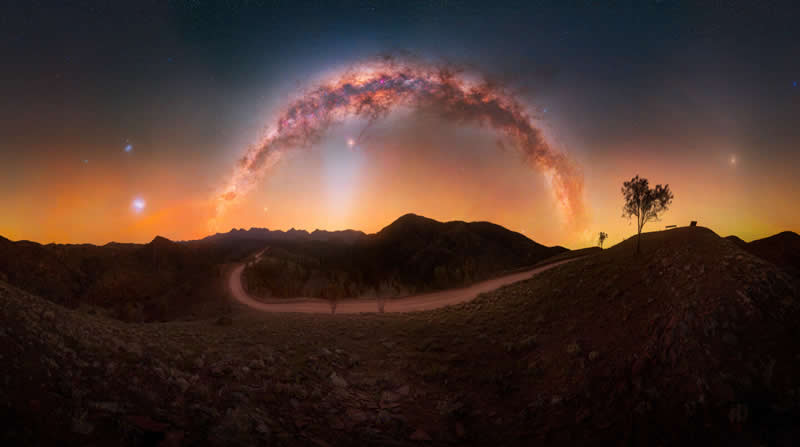
"Captured from Razorback Lookout in South Australia’s Flinders Ranges, this panorama spans the entire southern night sky. The Milky Way arches overhead while the Large and Small Magellanic Clouds hang to the south and the Zodiacal Light rises in the east, all visible in a single winter night. It celebrates the remarkable clarity of Australia’s dark skies, where multiple celestial phenomena can be experienced together above an iconic outback landscape."
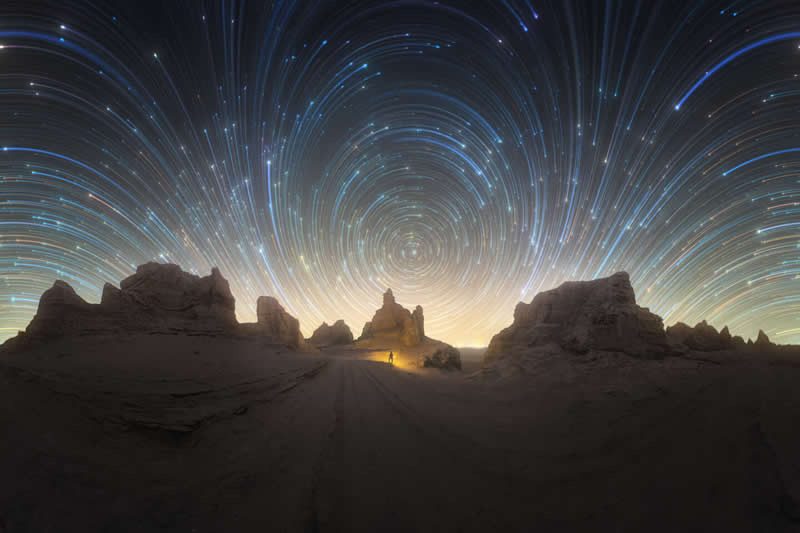
#2. Nightscapes – Second Place: Wind-Carved Earth, Star-Written Night by Yifei Pei
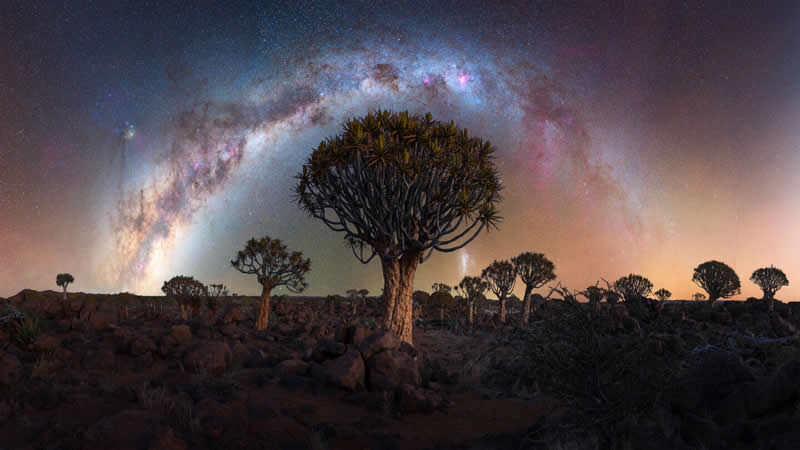
#3. Nightscapes – Third Place: Forest of Stars by Marcin Zajac
#4. International Dark Sky Places – First Place: Window to Orion by Kat Lawman
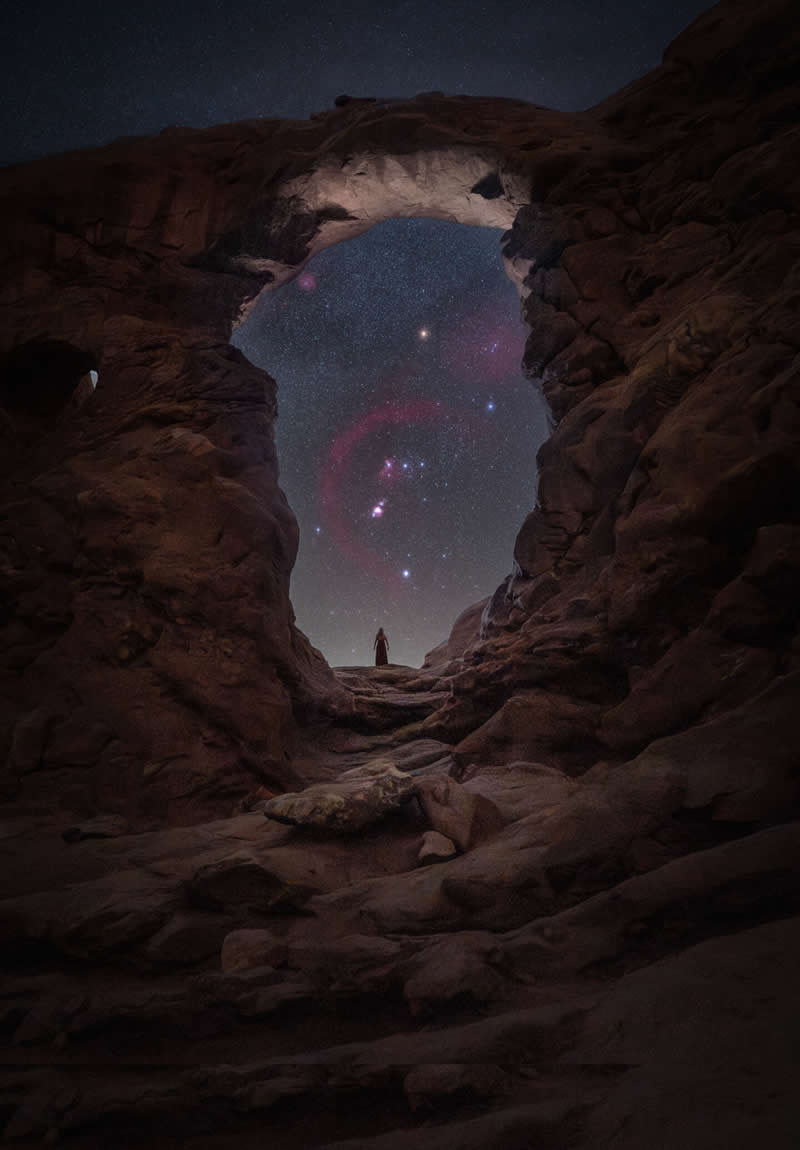
"Captured beneath the pristine skies of Arches National Park, an International Dark Sky Park, this self-portrait frames Orion within the natural window of Turret Arch. Standing alone beneath the arch, I wanted to convey the scale of both the landscape and the cosmos. Using an astro-modified camera and blended H-alpha data, I revealed the delicate hydrogen clouds surrounding Orion, including Barnard’s Loop and its glowing nebulae. The image celebrates the importance of preserving dark skies, where the universe can still be experienced in remarkable detail above one of Earth’s most spectacular desert landscapes.”
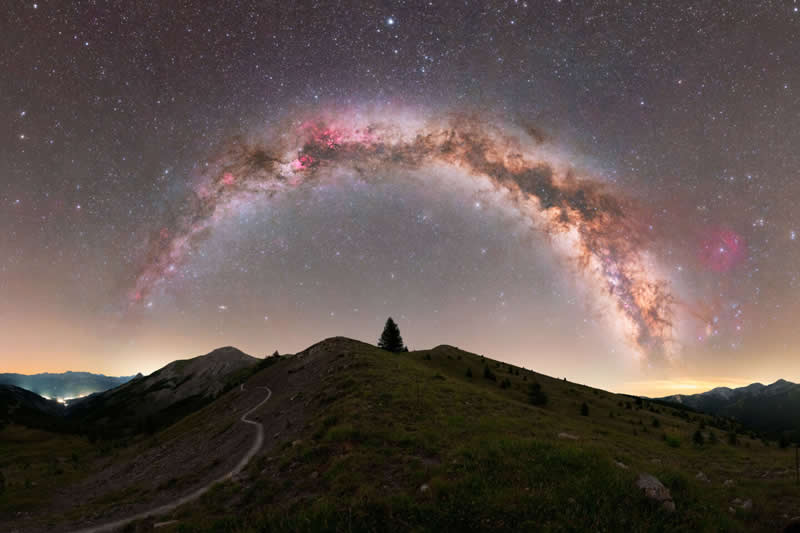
#5. International Dark Sky Places – Second Place: Alpine Archway by Max Inwood
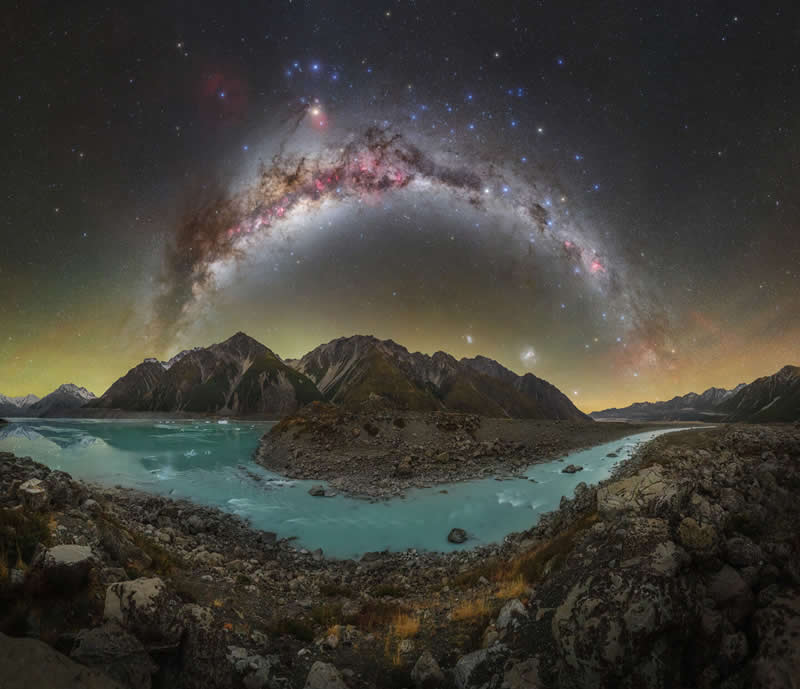
#6. International Dark Sky Places – Third Place: Allos by Florian Riou
#7. Quality Lighting and Design – First Place: Little Mt Hoffman by Ross Steensland
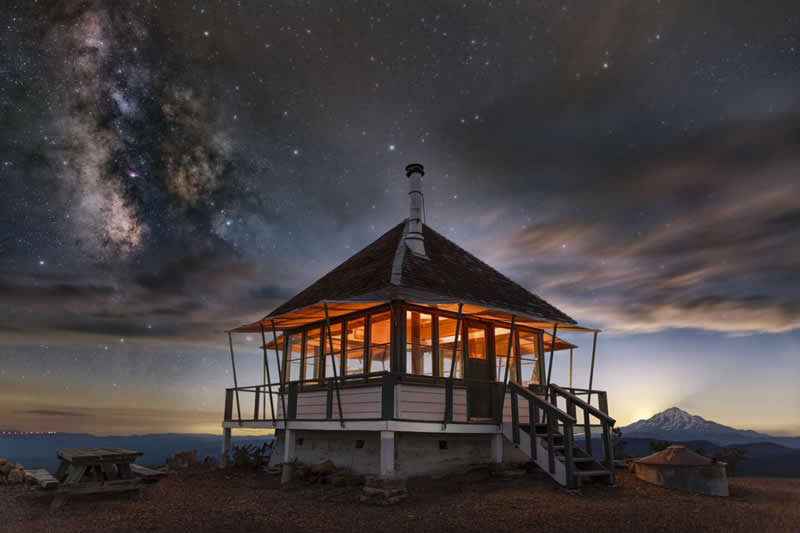
"Perched atop a cinder cone volcano, this small lookout offers sweeping views in every direction. From the warmth of a cozy wood stove, you can watch a sky filled with stars or the moon rise behind Mount Shasta through panoramic windows."
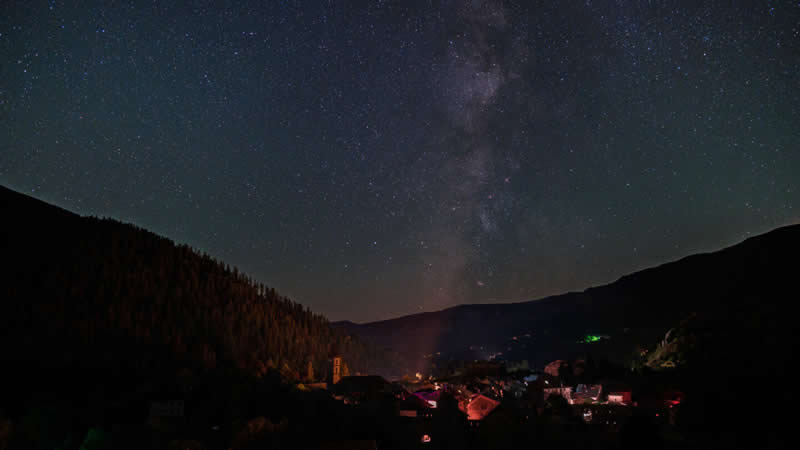
#8. Quality Lighting and Design – Second Place: Colmars-les-Alpes: A “Starry Village” by F. Xavier Cuvelier
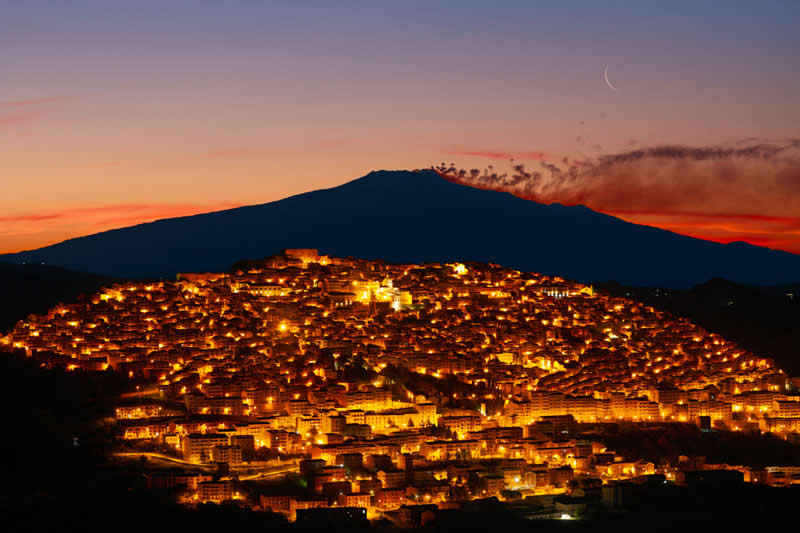
#9. Quality Lighting and Design – Third Place: Visions from Sicily Gangi, Etna with Gas Rings, Venus and the Sickle Moon by Dario Giannobile
#10. The Impact of Light Pollution – First Place: Artifical Comet by Kouyu Wang
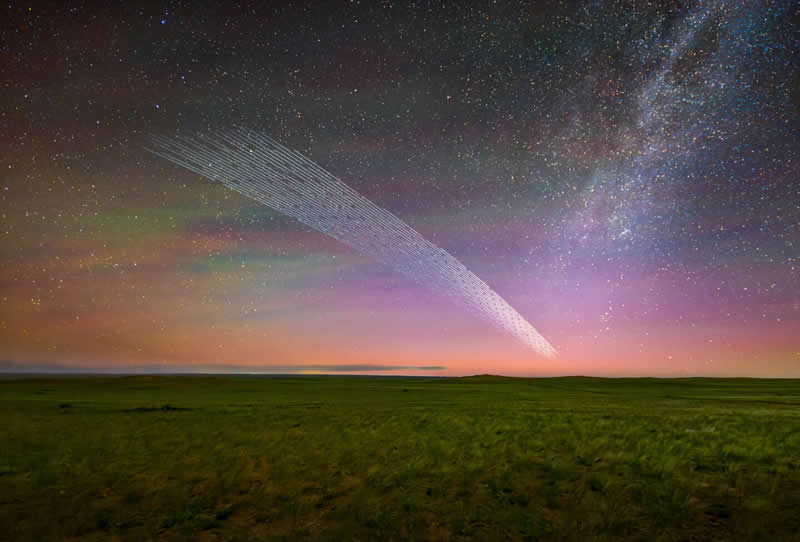
"This frame captures a newly launched Starlink satellite group. In time-lapse footage, they appear as short lines. The stacked images show their orbital drift and reveal the impact of satellite constellations on the night sky."
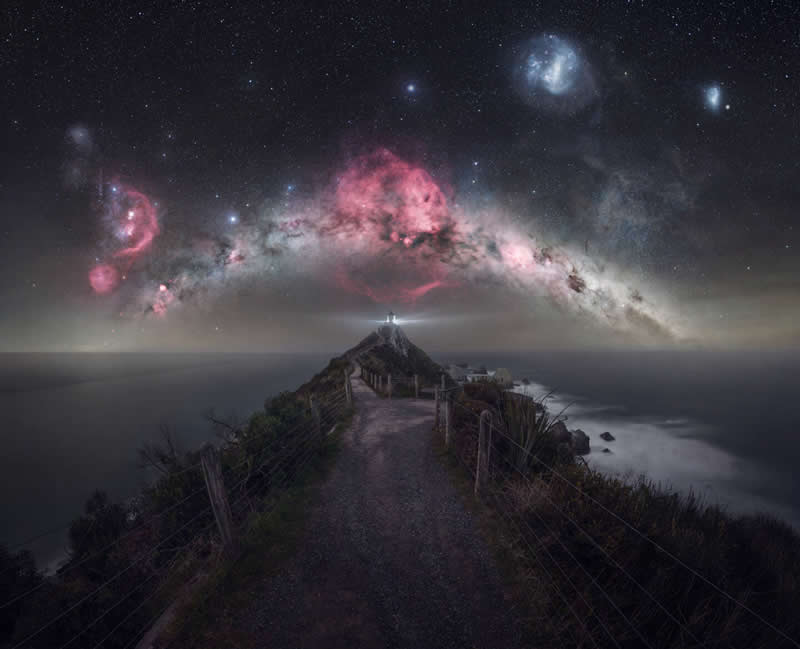
#11. The Impact of Light Pollution – Second Place: A dialogue between space and human light by Mikel Iraeta
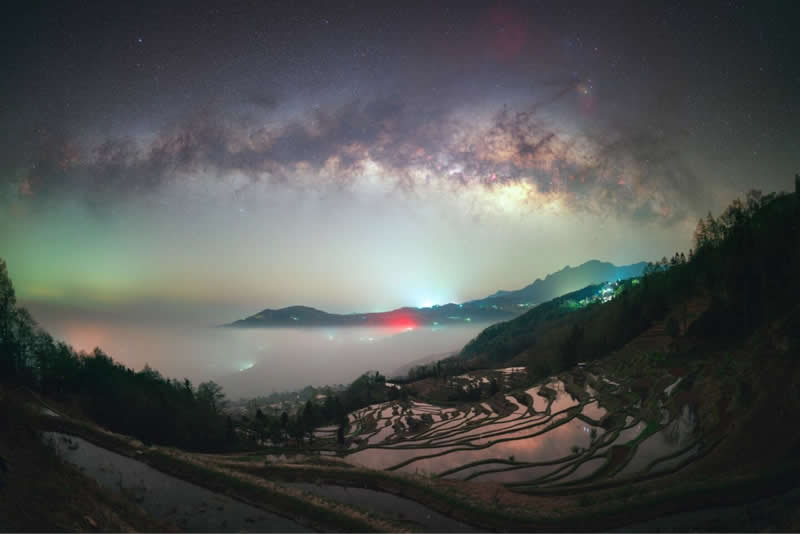
#12. The Impact of Light Pollution – Third Place: Night Sky over Yuanyang Terraced Fields by Wei Wenjun
#13. Creatures of the Night – First Place: The Chasm by Tom Rae
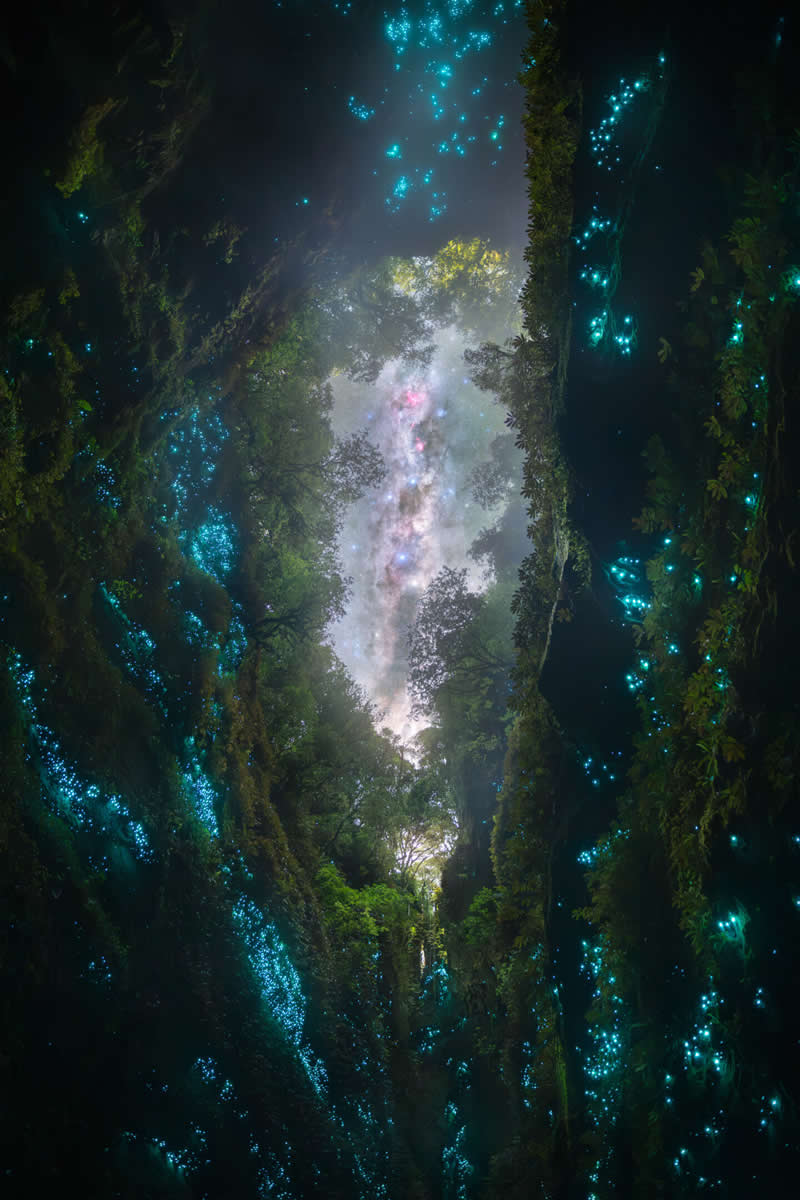
"These images were captured after rappelling over 100 metres (330 ft) straight down into a vast cave system in New Zealand’s North Island at night. The cavern was alive at night with glow worms and fragile ecosystems, an otherworldly show hidden deep in a landscape shaped over millions of years. Photographing this environment at night was incredibly challenging. The extreme humidity, subtle light from the glow worms and long exposures pushed my skills to the limit."
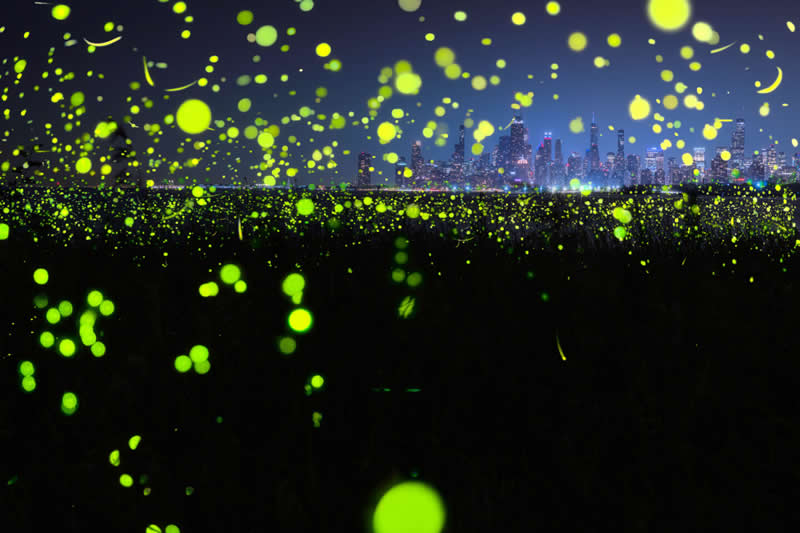
#14. Creatures of the Night – Second Place: Chicago Lights by Gerri Whitley
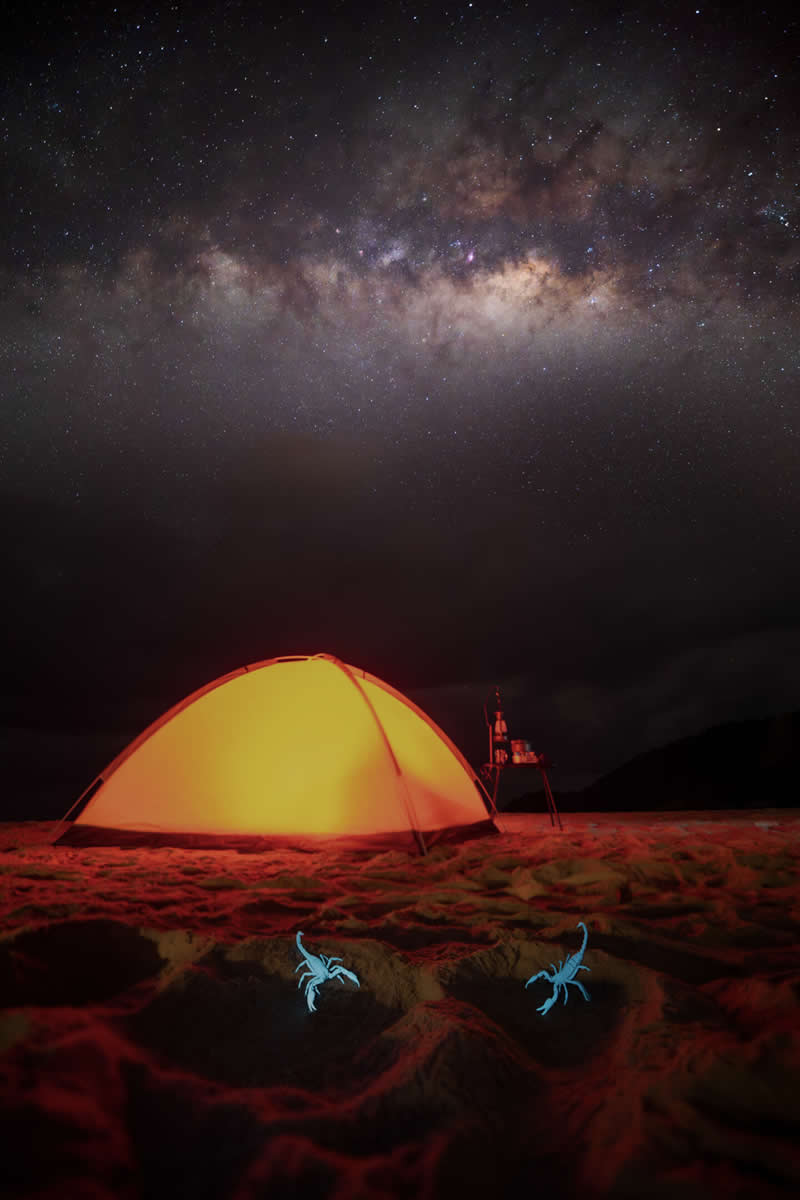
#15. Creatures of the Night – Third Place: Scorpion & Scorpious by Nanthakumar K Nallvan
#16. Deep Sky Observations – First Place: The Dementors of Cepheus (LBN 528 & LBN 532), Wardens of a Dead Star (SNR G110.3+11.3) by Julien De Winter, Landon Boehm, and Brian Diaz
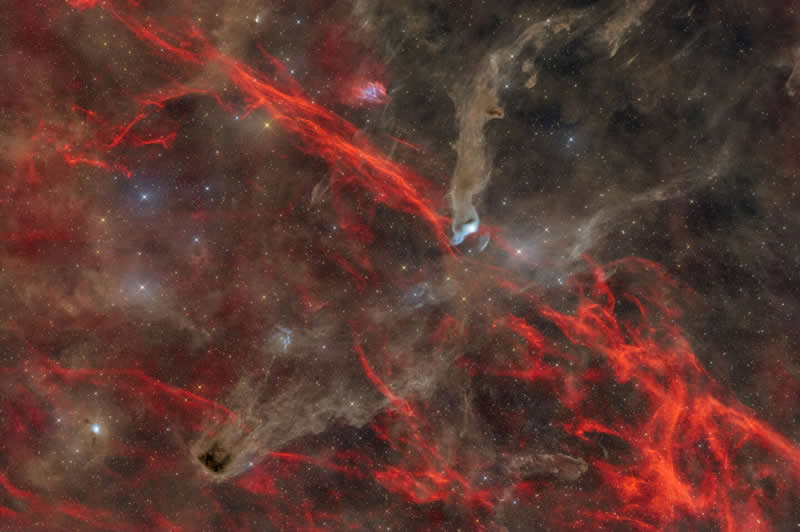
"This rich region of Cepheus showcases multiple stages of stellar evolution through dust clouds, reflection and dark nebulae, a planetary nebula, and an ancient supernova remnant. LBN 532, LDN 1221, vdB 152, and LBN 528 reveal the intricate interplay of light, dust, and stellar winds, while PNG 111.0+11.6 represents the peaceful death of a low-mass star. Together, these objects form a striking portrait of cosmic birth, transformation, and stellar death."
#17. Deep Sky Observations – Second Place: Echoes of a Merger by Paul Montague
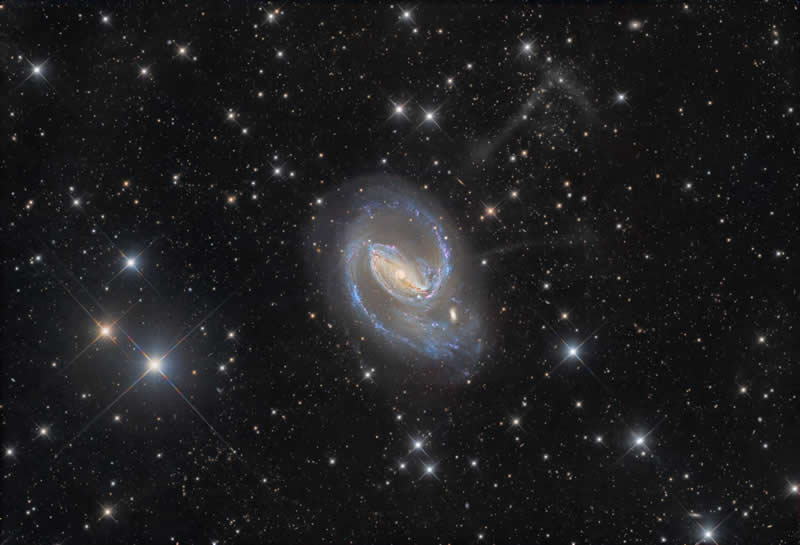
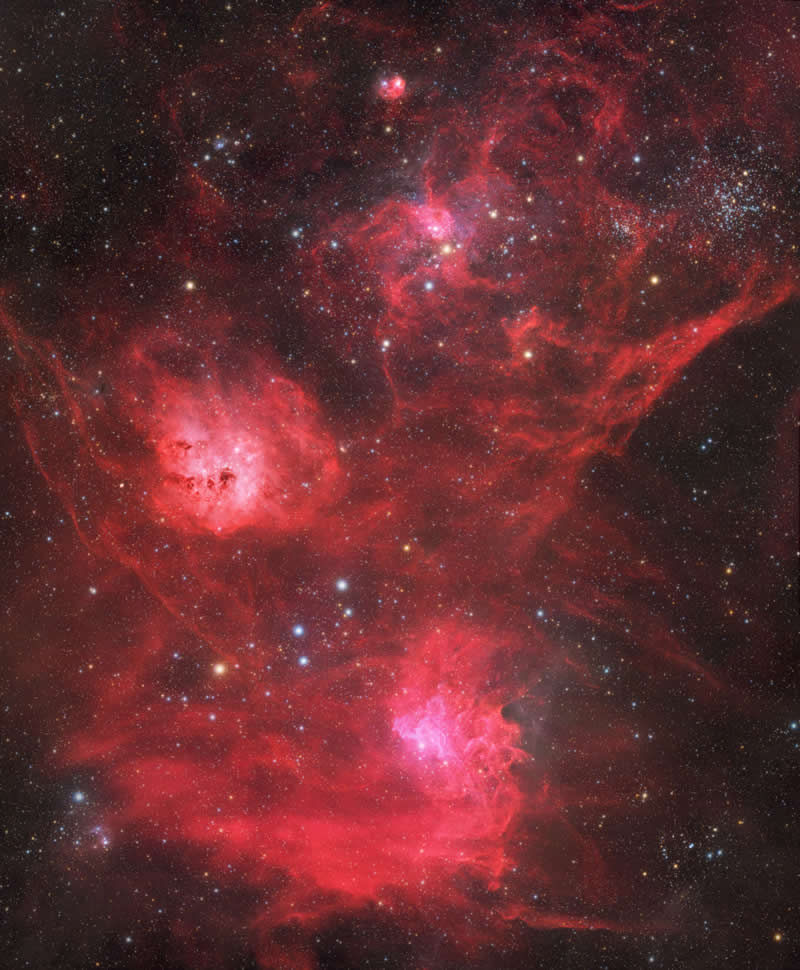
#18. Deep Sky Observations – Third Place: The Auriga Neblua Complex by Andrew Warner
#19. Mobile Nighttime Photography – First Place: Aurora Over Mount Shuksan by Enrique Barquet
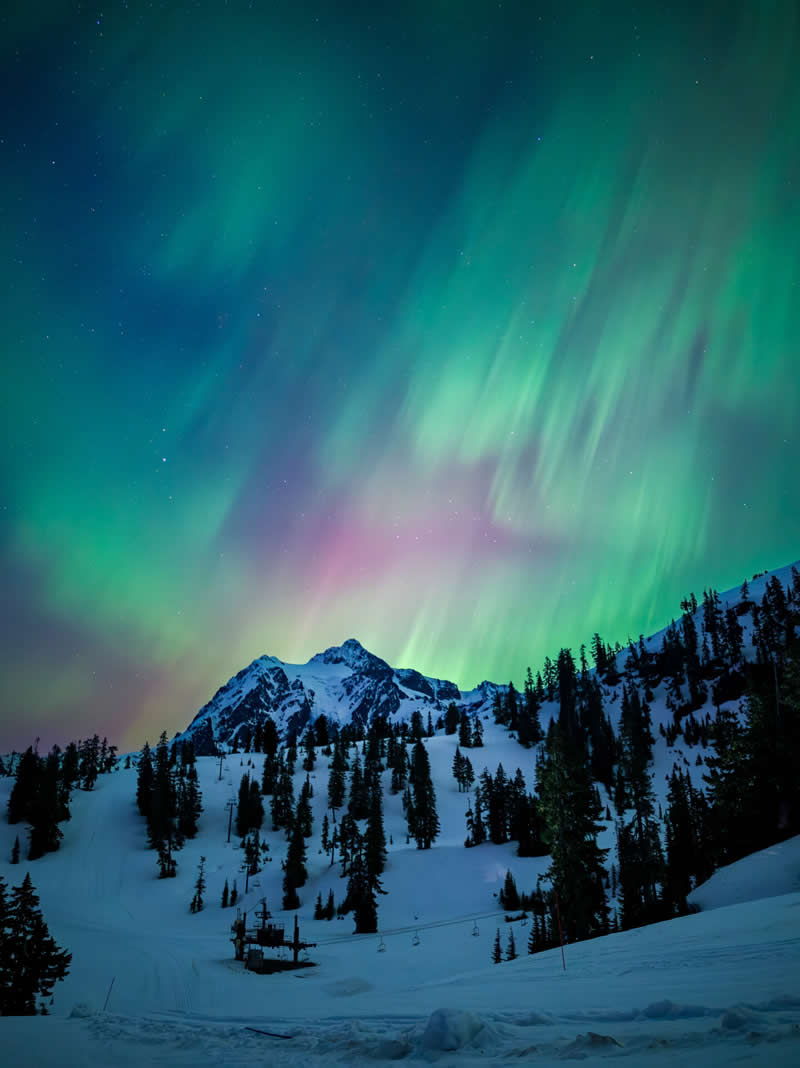
"Captured with a mobile phone during the geomagnetic storm of May 10–11, 2024, this image shows the aurora spreading above Mount Shuksan. The snow-covered mountain reflects the green and magenta light, turning a familiar landscape into something completely different. It was one of those rare nights when simply being outside and paying attention was enough to witness an extraordinary scene."
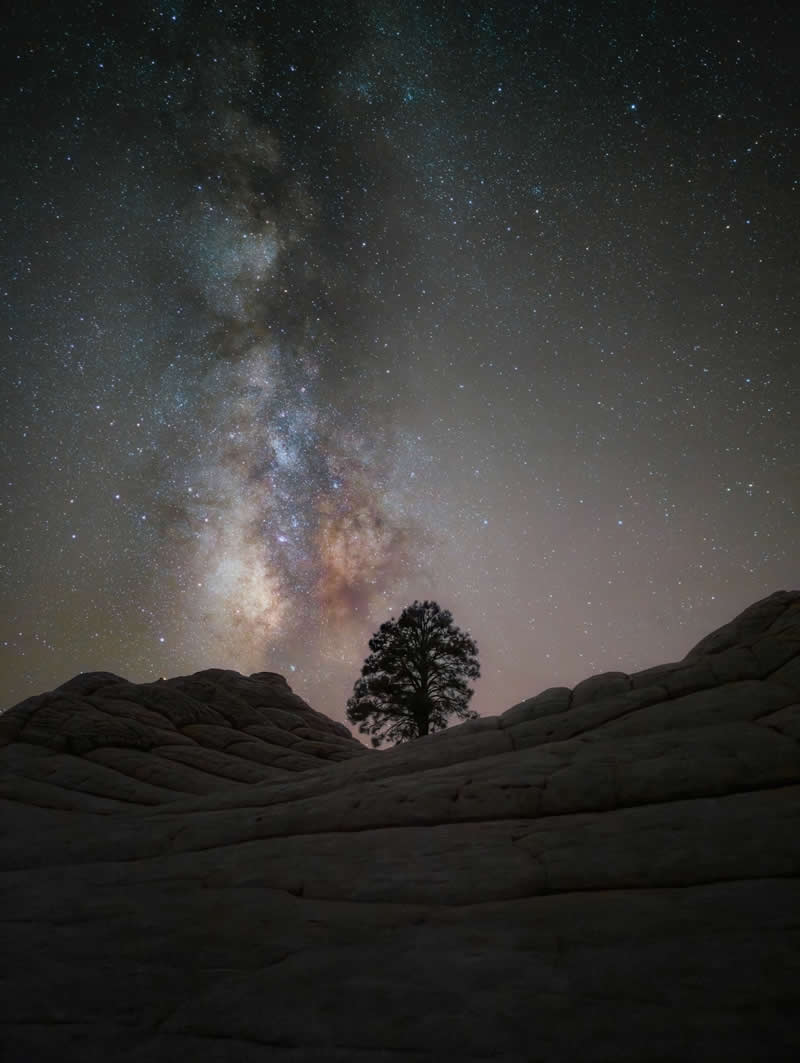
#20. Mobile Nighttime Photography – Second Place: Milky Way in White Pocket of Vermillion Cliffs National Monument by Katrina Brown
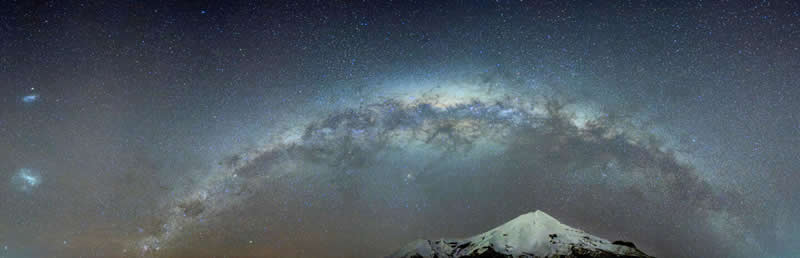
#21. Mobile Nighttime Photography – Third Place: Milky Way Arch with LMC and SMC over Taranaki Maunga by Nikita Veerabahu Pillai
#22. Young Astrophotographers – First Place: River of Light by Norah Swann
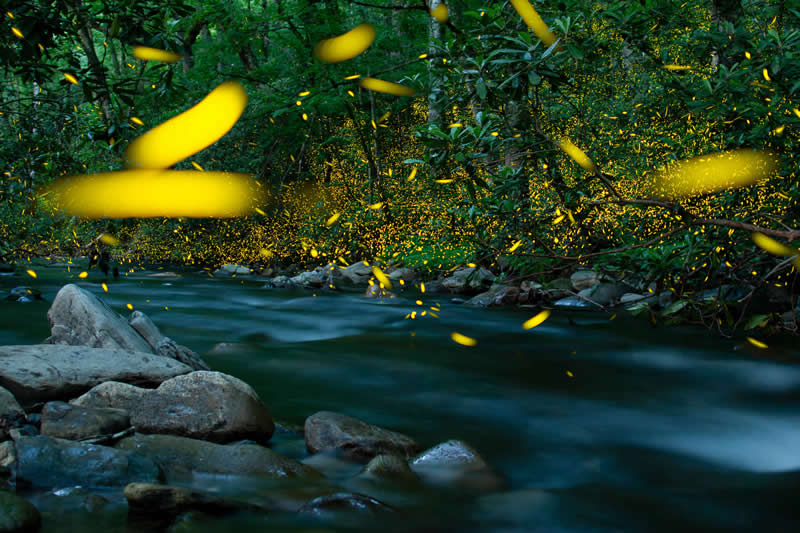
"This photo captures synchronous fireflies over a creek. It shows how darkness is essential for the survival of nocturnal creatures."
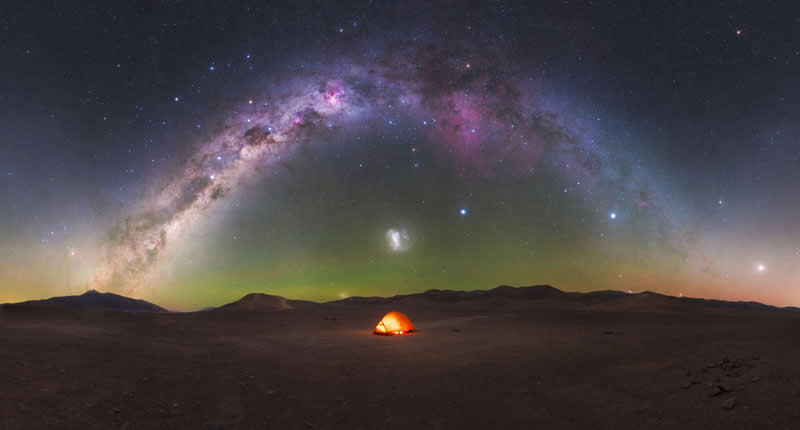
#23. Young Astrophotographers – Second Place: Take A Nap In The Atacama Desert by Kunzhe Chen
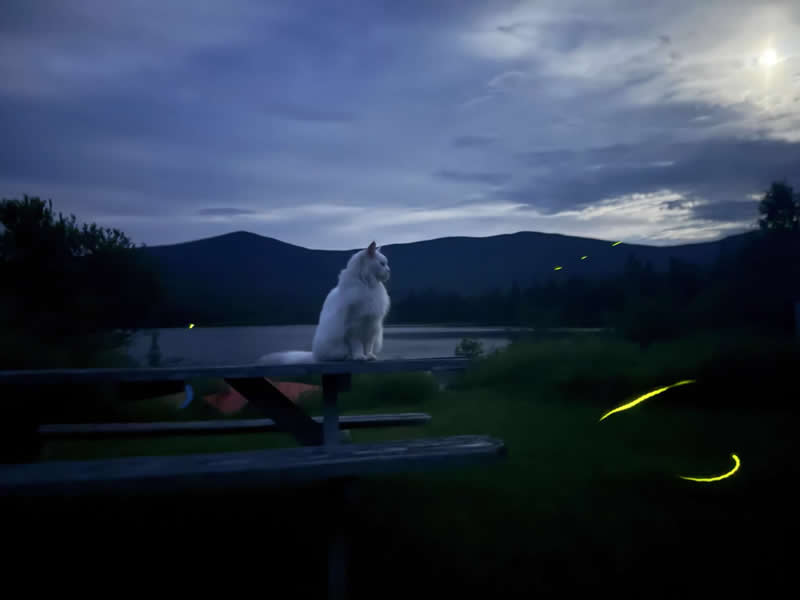
#24. Young Astrophotographers – Third Place: Midsummer Night Cat and Fireflies by Avis Kennedy-Stirling
#25. Nighttime Adventures – First Place: Aurora over the Prince Christian Sound by Dennis Lehtonen
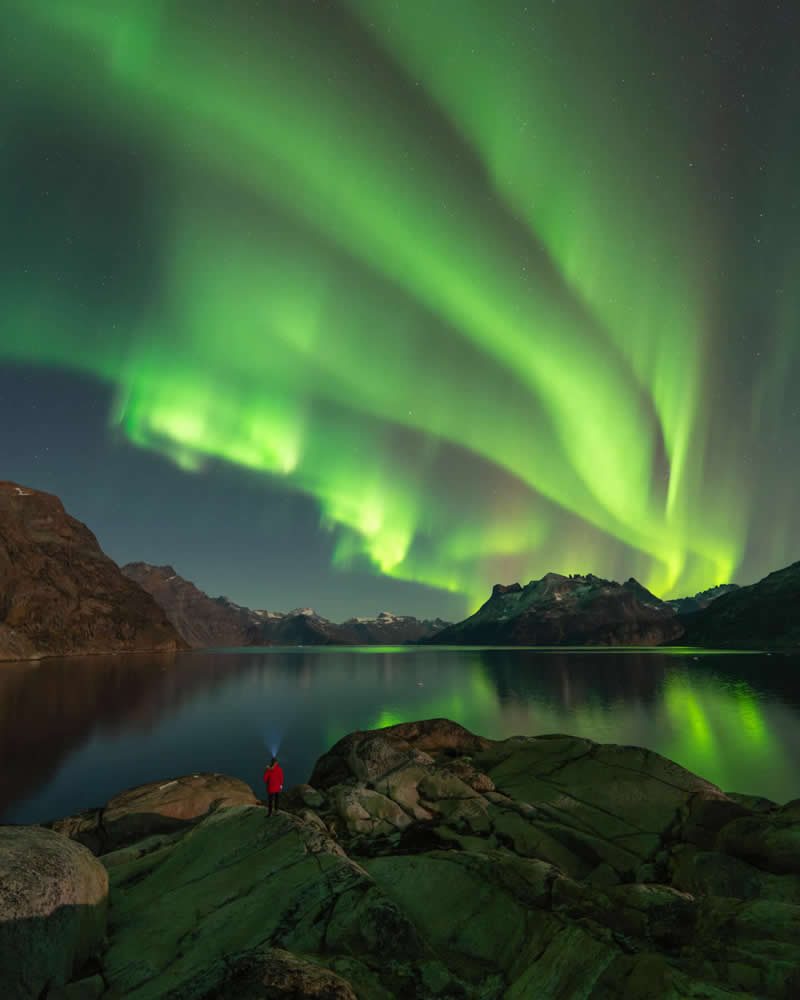
"The aurora forecast was promising, so I spent several hours jumping from one ice-covered rock to another, looking for an ideal photo location. Luck was on my side as the lack of wind allowed for some reflections also."
#26. Nighttime Adventures – Second Place: Watching the Galaxy Rise by Dustin Bischke
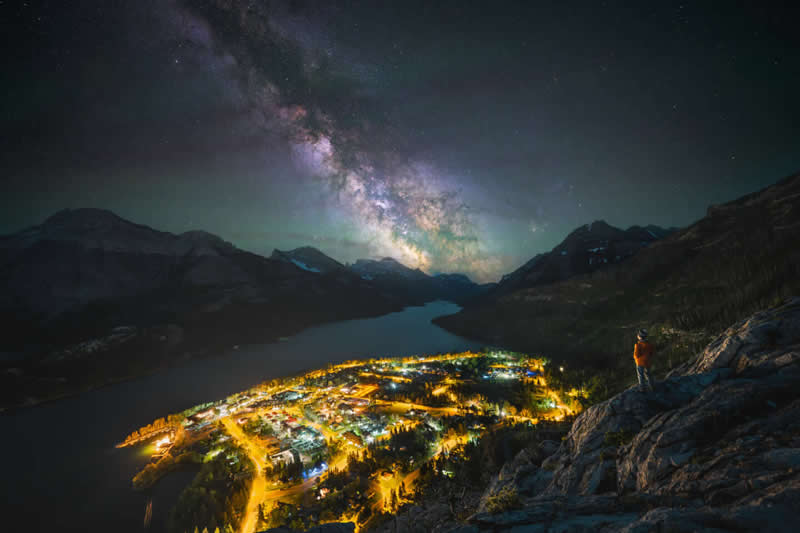
#27. Nighttime Adventures – Third Place: The Cabin by Chris Owen
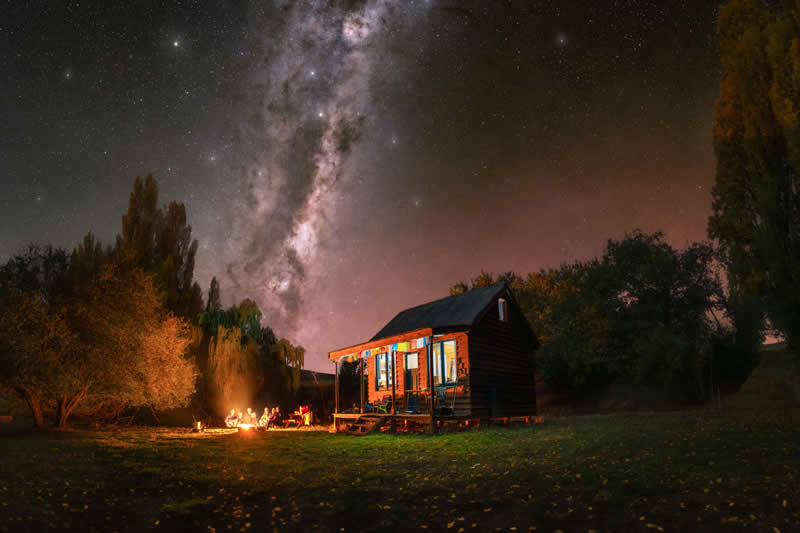
#28. People’s Choice Award – First Place: The Great Bear and the Rainbow Bridge La Grande Ourse et le pont arc-en-ciel
by Ethan Keller
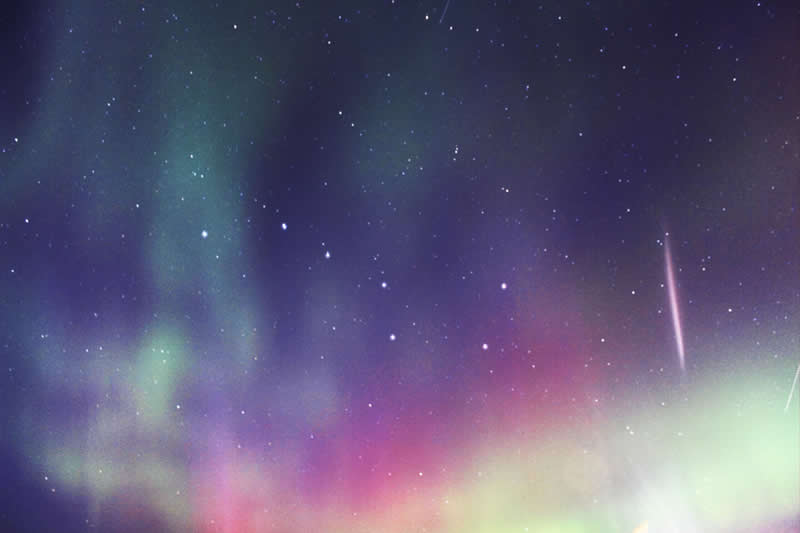
"As a young Canadian fascinated by ancient folklore, I’ve grown up learning of Indigenous stories in which the Aurora Borealis represents the spirits of ancestors. I believe this image reflects those legends, depicting the constellations of Ursa Major (the Great Bear) and Canes Venatici (the Hunting Dogs) surrounded by the vibrant mosaic of the northern lights."
#29. Star Trek 60 – First Place: In View by Monika Deviat
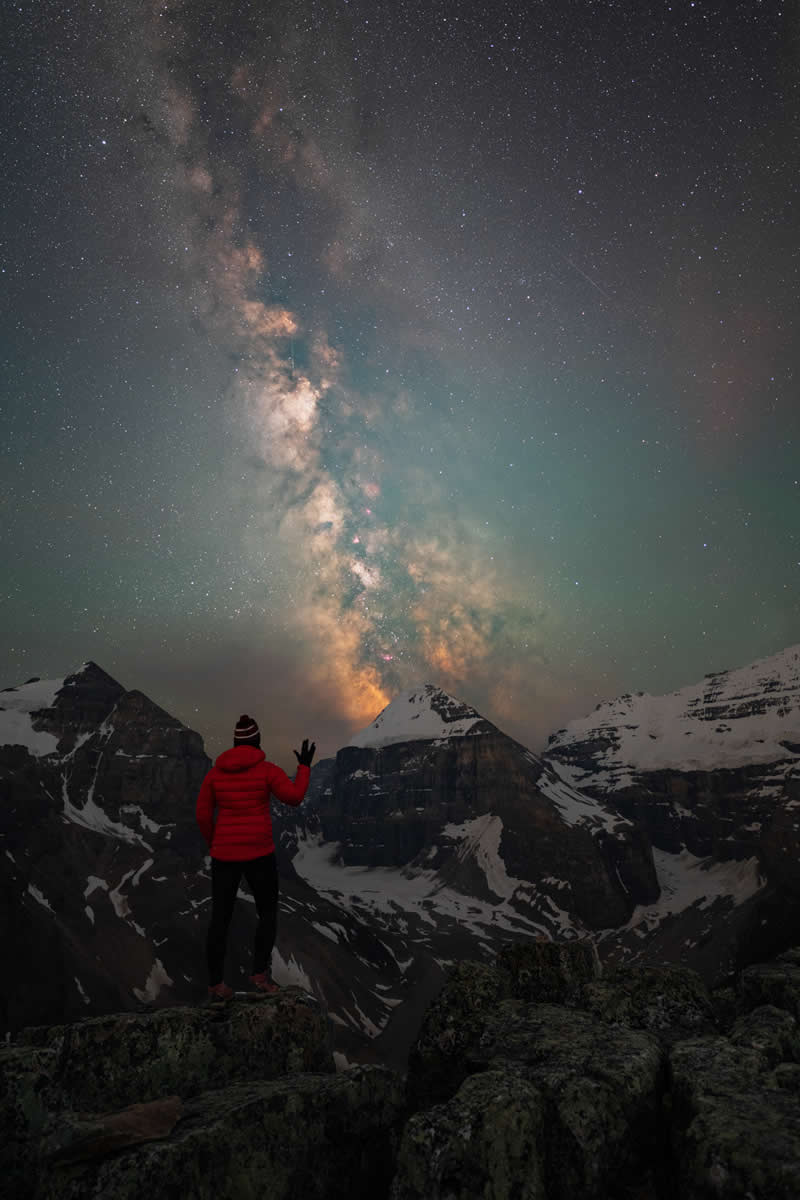
#30. Star Trek 60 – Second Place: Waiting for 2063 by Rositsa Dimitrova
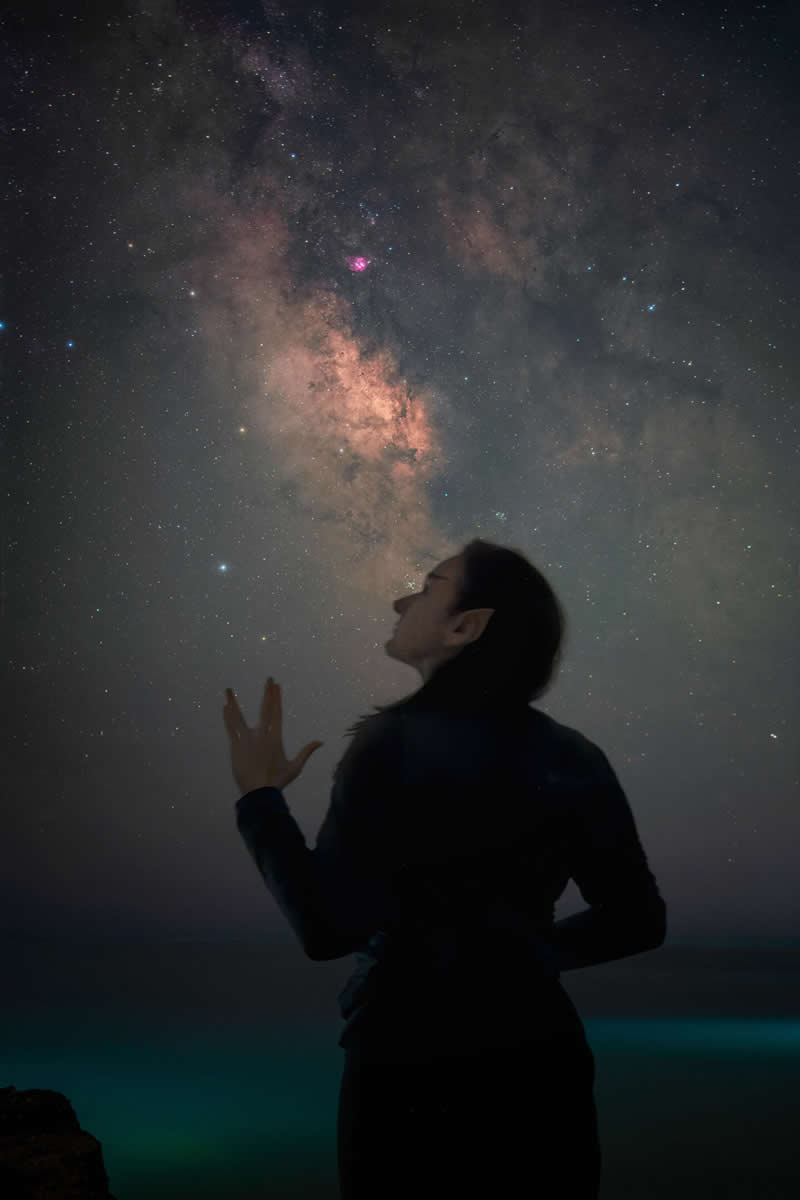
#31. Star Trek 60 – Third Place: Live Long and Prosper (In That Order) by Ken Lee
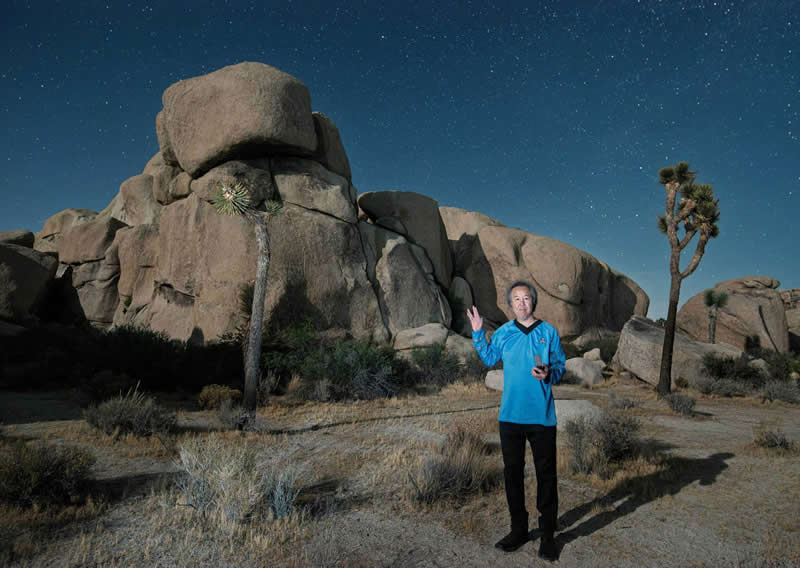
Frequently Asked Questions:
What is the Capture the Dark photography contest?
Capture the Dark is DarkSky International’s annual nighttime photography competition, created to celebrate the beauty of darkness while raising awareness about light pollution. The contest showcases photographers using compelling images to promote appreciation and protection of naturally dark night skies.
Who organized Capture the Dark 2026?
DarkSky International organized Capture the Dark 2026, the sixth annual edition of its nighttime photography contest. The competition attracted a record number of entries from photographers representing more than 30 countries, highlighting global interest in protecting dark skies.
Why is protecting dark skies important?
Protecting dark skies matters because increasing artificial light can disrupt wildlife, affect community well-being, and reduce opportunities to experience natural night environments. DarkSky International advocates responsible outdoor lighting to reduce unnecessary illumination while keeping communities safe and functional.
How many winning photos are featured in Capture the Dark 2026?
A total of 31 winning photographs are featured from Capture the Dark 2026. Judges selected top three finishers across nine standard categories, plus winners from a special Star Trek-themed category and one People’s Choice Award.
What makes the winning Capture the Dark photographs special?
The winning photographs combine technical skill, creativity, and a powerful sense of place to reveal nighttime beauty. They range from expansive night landscapes to deep-sky observations, while encouraging viewers to think about light pollution and the value of darkness.