Sometimes, the objects we can’t bring ourselves to throw away aren’t valuable in the usual sense. They might be an old ticket, a handwritten note, a worn-out wallet, or a passport tucked inside a drawer. But somehow, they carry a whole person. That’s exactly what happened when Indian illustrator and graphic designer Radhika Chitalia rediscovered her late father’s expired passport.
Radhika, originally from India, has spent the past 13 years living and working in Copenhagen, Denmark. Alongside her commercial design work, she creates deeply personal, hand-painted pieces that dig into memory, emotion, psychology, and the strange meaning we attach to everyday things.
Her father’s passport became something much more than an old travel document. He loved traveling and had dreamed of exploring the world with Radhika’s mother after retirement. Sadly, he passed away before that dream could happen.
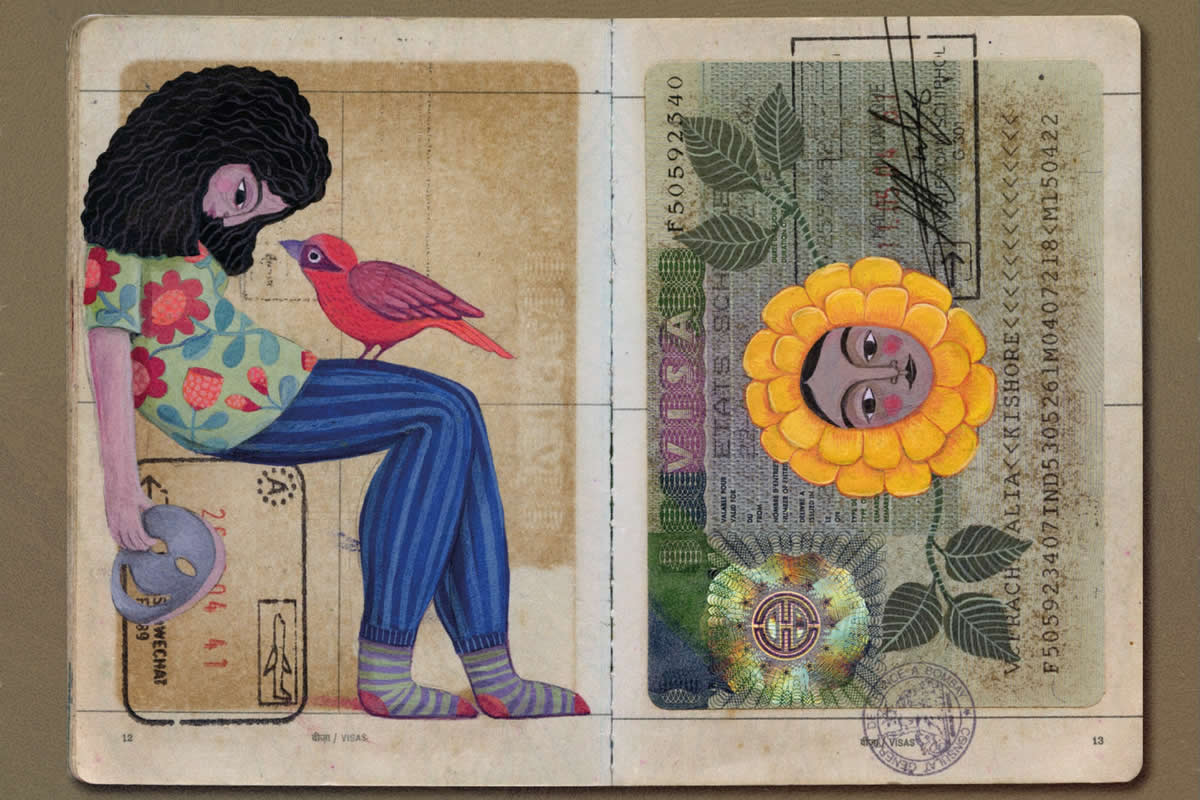
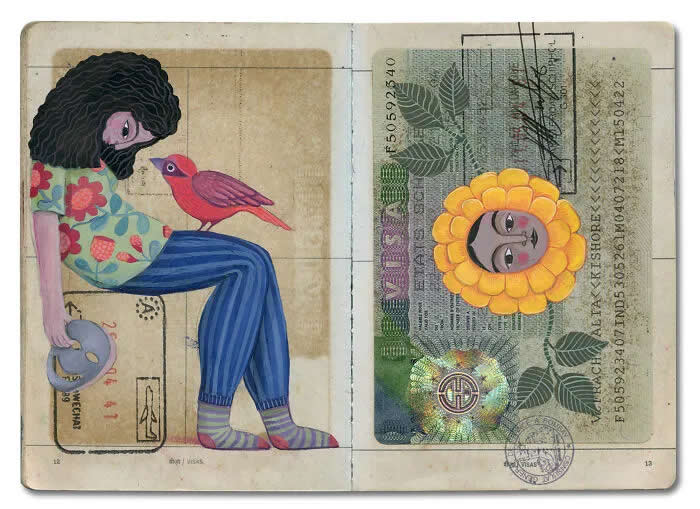
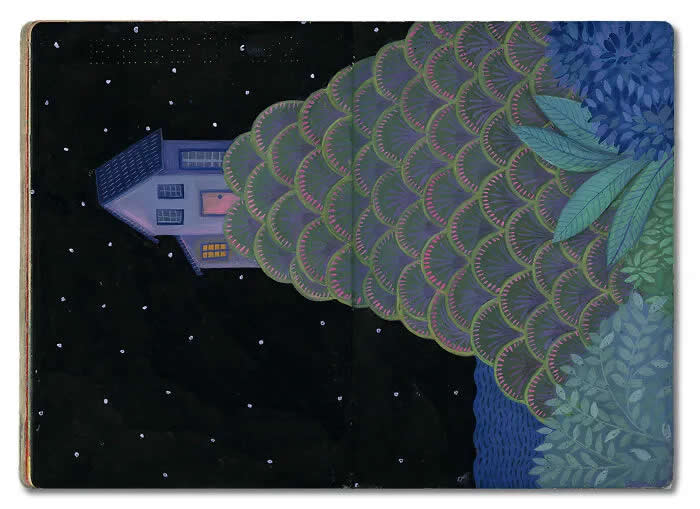
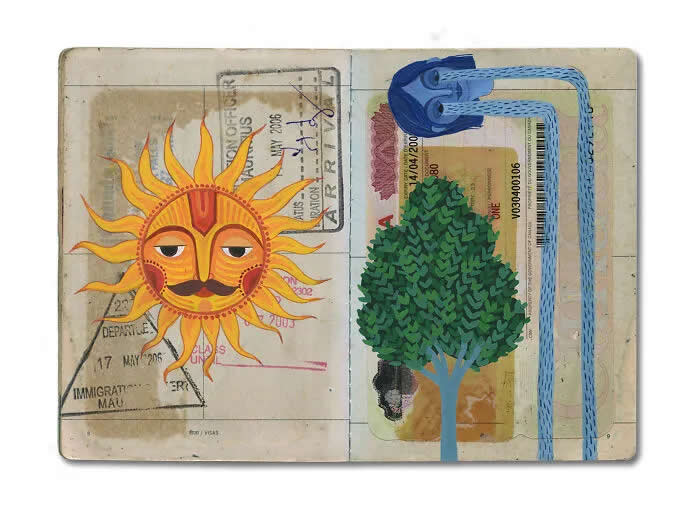
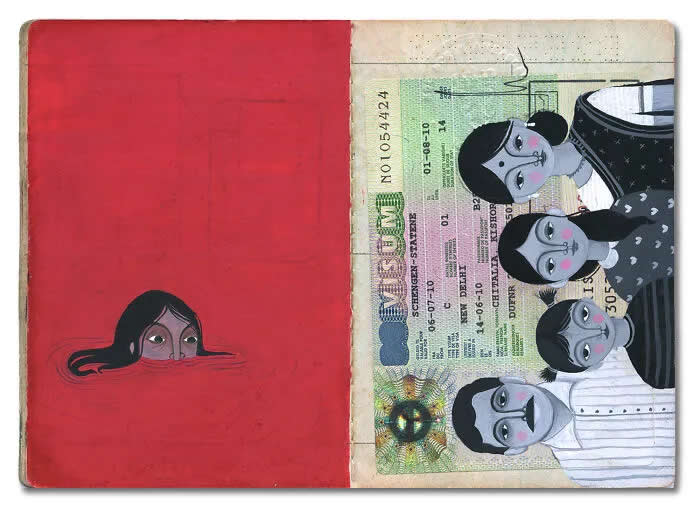
Years later, while going through his belongings, Radhika found the passport again. She couldn’t toss it. She couldn’t simply hide it away, either. So she picked up her brush and began painting directly onto its pages.
What came next feels less like an art project and more like a conversation with someone who was no longer there. The passport became a canvas, a memory capsule, and a way to imagine the journeys her father never got to take.
You can find more info about Radhika Chitalia:
#1
#2
#3
#4
When an Old Passport Became a Canvas
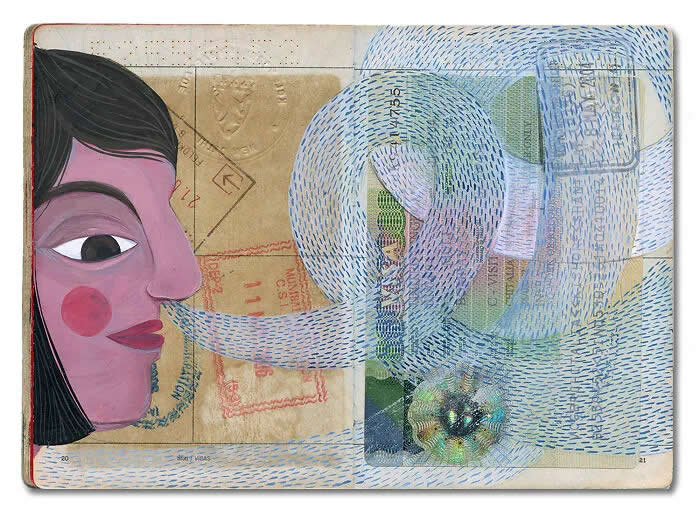
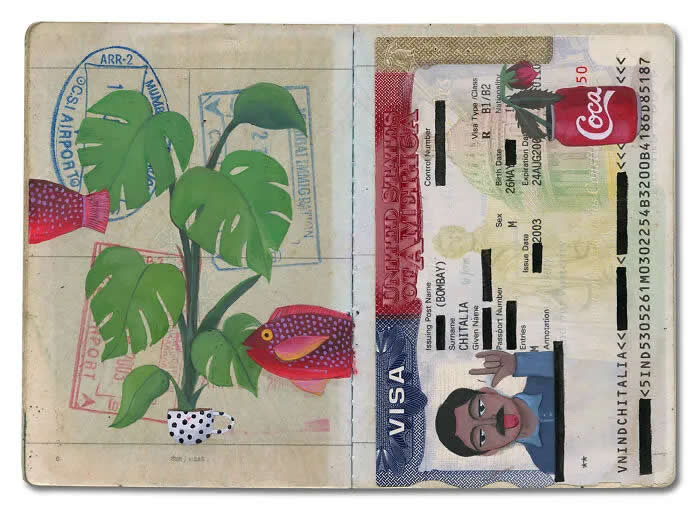
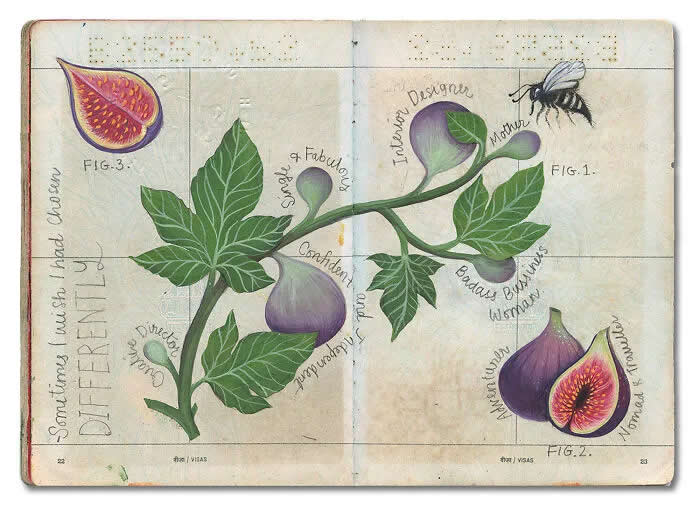
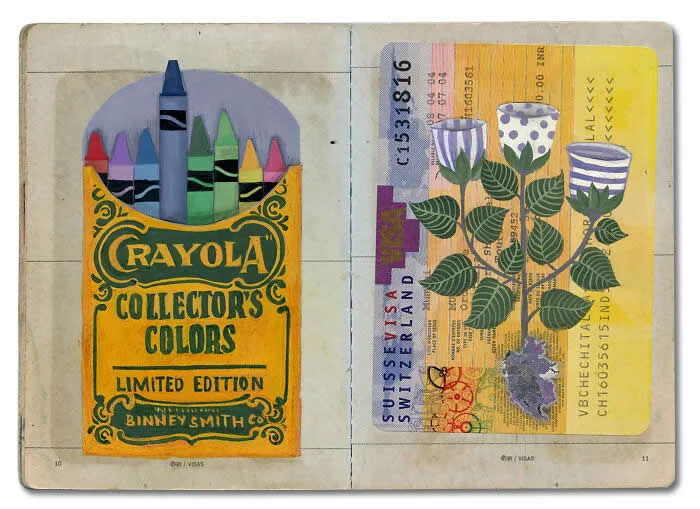
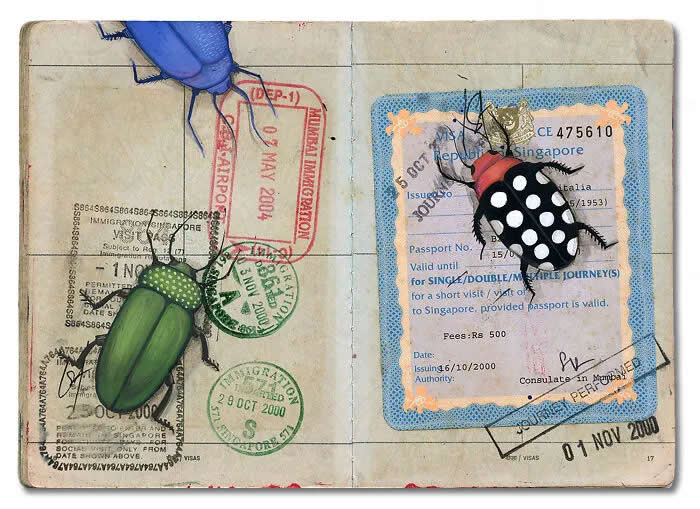
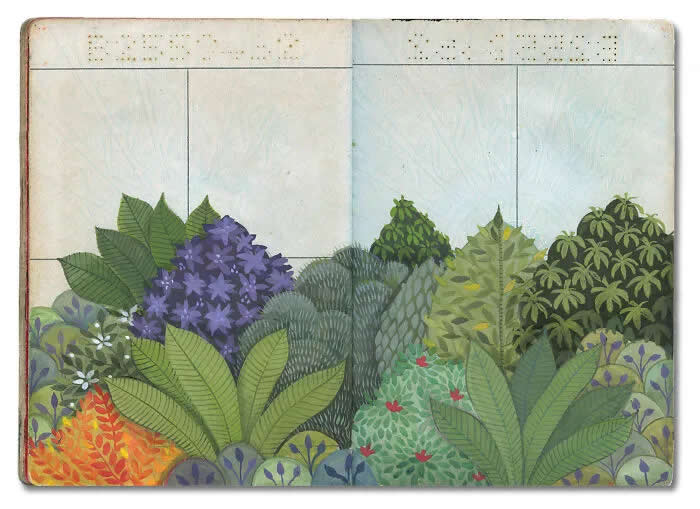
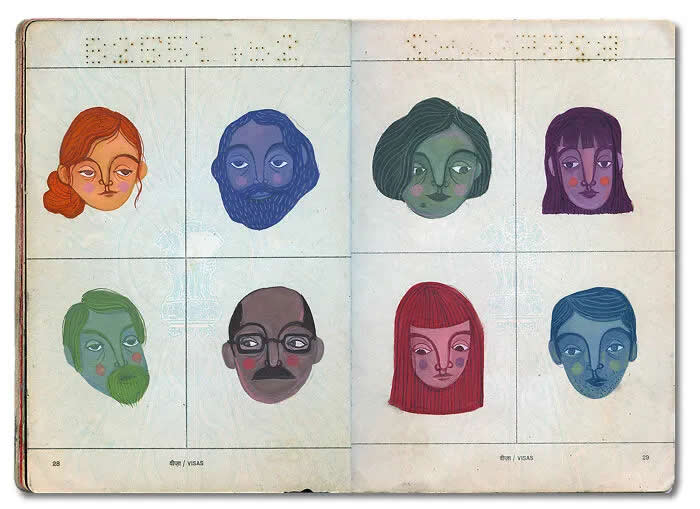
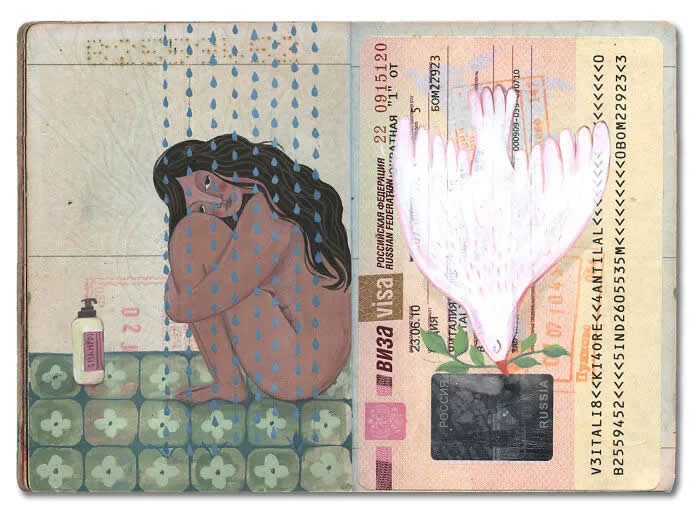
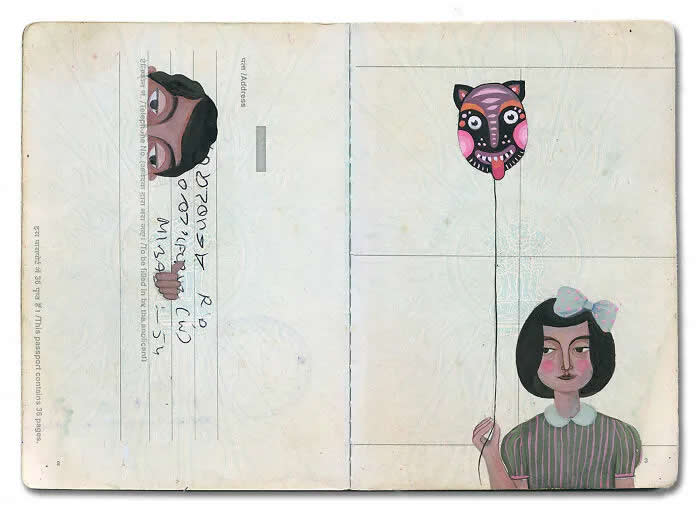
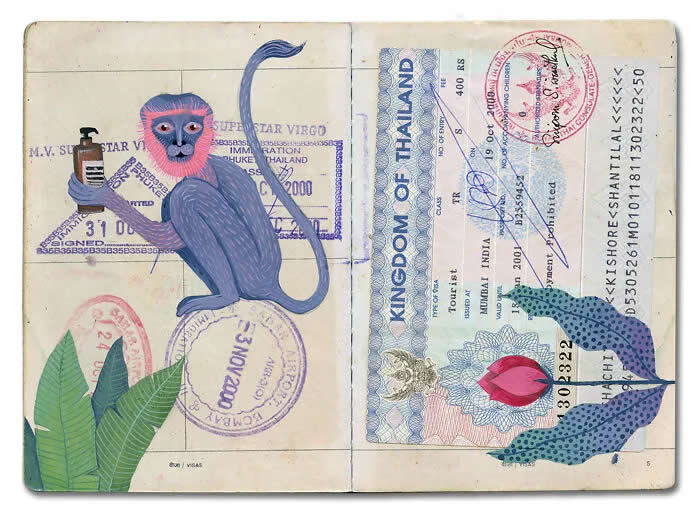
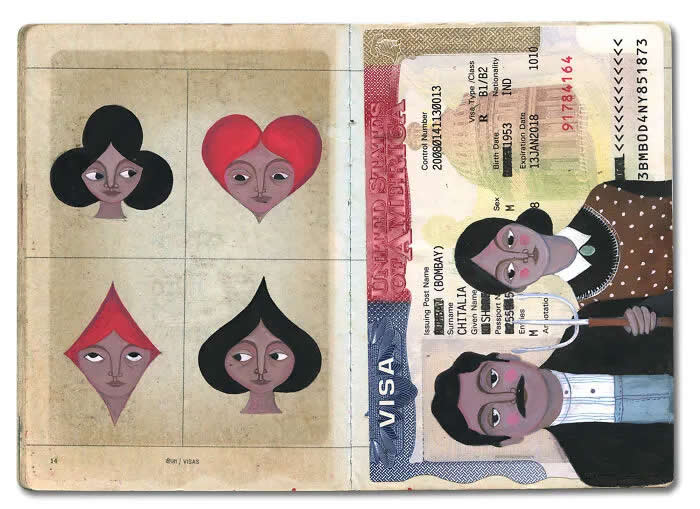
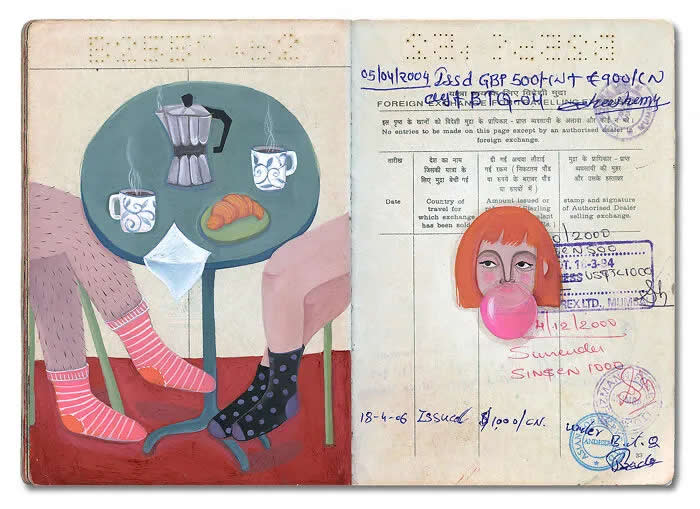
Radhika didn’t begin with some grand artistic plan. It happened almost on a whim. She opened her father’s expired passport and started painting directly onto the pages with gouache, working around visas, immigration stamps, photographs, and blank spaces.
And honestly, there’s something incredibly fitting about that choice.
A passport is already a record of movement. It tells you where someone went, where they came from, and the places they were allowed to enter. Radhika’s father had spent his life traveling and dreamed of seeing even more of the world during retirement. Then life cut that chapter short.
So she continued it in another way.
Each painted page became a little fictional journey, layered over the evidence of his real ones. The official stamps and faded documents remained underneath, while Radhika’s illustrations introduced new stories, emotions, and possibilities.
The result feels intimate rather than decorative. You’re not just looking at paintings. You’re looking at someone’s history being gently rewritten.
#5
#6
#7
#8
Painting the Journeys That Never Happened
As Radhika kept working, the passport started to mean something bigger. It wasn’t simply paper anymore. It already carried her father’s history, and now her paintings added another layer.
That idea really struck me. We all have objects like this, don’t we?
Maybe it’s your grandmother’s recipe book. Your dad’s old watch. A jacket that still somehow feels like the person who wore it. The object itself might be ordinary, but the memories attached to it are anything but.
Radhika understood that instinct beautifully.
She described the passport as an object that was already carrying her father’s history, while her paintings filled its pages with new stories. That realization eventually pushed her toward other belongings, too. She began painting on documents such as her father’s school report cards and certificates, transforming pieces of paper that might otherwise have ended up forgotten into something alive again.
It’s a powerful creative idea: don’t erase the past. Build on it.
#9
#10
#11
#12
A Private Tribute That Found Other People
Perhaps the most unexpected part came after Radhika began sharing the project online. What started as an intensely private way of processing grief suddenly became something other people recognized in themselves.
People weren’t responding only to the illustrations. They were responding to the feeling behind them.
Many shared their own stories of losing loved ones and struggling to let go of their belongings. And that’s where the work takes another turn. Radhika’s passport paintings aren’t really just about one father, one daughter, or one family. They’re about that very human urge to keep a connection alive.
Think about the last time you held onto something simply because throwing it away felt wrong. Why do we do that? Because objects can become little containers for memory.
Radhika’s work gives that instinct a visual language. She didn’t preserve her father’s passport by keeping it untouched. She preserved it by allowing it to change.
And maybe that’s the most beautiful part.
The passport couldn’t take her father on those dreamed-of journeys. But through paint, Radhika gave those pages another life. She turned a document of where he had been into a tribute to where he might have gone.
#13
#14
#15
#16
Frequently Asked Questions:
Who is Radhika Chitalia?
Radhika Chitalia is an Indian illustrator and graphic designer who has lived and worked in Copenhagen, Denmark, for 13 years. Alongside commercial design, she creates hand-painted works exploring memory, emotion, psychology, and everyday objects.
Why did Radhika Chitalia paint on her father’s passport?
Radhika discovered her late father’s expired passport while sorting through his belongings. Unable to throw it away or leave it forgotten, she began painting directly onto its pages, transforming the document into a deeply personal tribute.
What materials did Radhika use for the passport paintings?
Radhika painted directly onto her father’s passport pages using gouache. She worked around existing visas, immigration stamps, and blank areas, allowing the original document and her illustrations to exist together as one artwork.
What inspired Radhika to create these personal artworks?
Radhika was inspired by her father’s love of travel and his unrealized dream of exploring the world after retirement. Painting his passport became a way to process loss while imagining new stories for the journeys he never experienced.
Did Radhika create other artworks using her father’s belongings?
Yes. The passport project inspired Radhika to work with other documents belonging to her father, including school report cards and certificates. She transformed these everyday keepsakes into personal artworks, giving forgotten objects new meaning through creativity.