Most people know the Maasai Mara as a land of golden grass, epic safaris, and dramatic daylight scenes packed with lions, zebras, and wildebeest. But once the sun drops and the crowds leave, another world wakes up. It’s quieter, darker, wilder, and almost nobody gets to see it. Wildlife photographer Will Burrard-Lucas has pulled back the curtain on that hidden universe with a jaw-dropping new camera trap project that captures the Maasai Mara after dark in all its mystery.
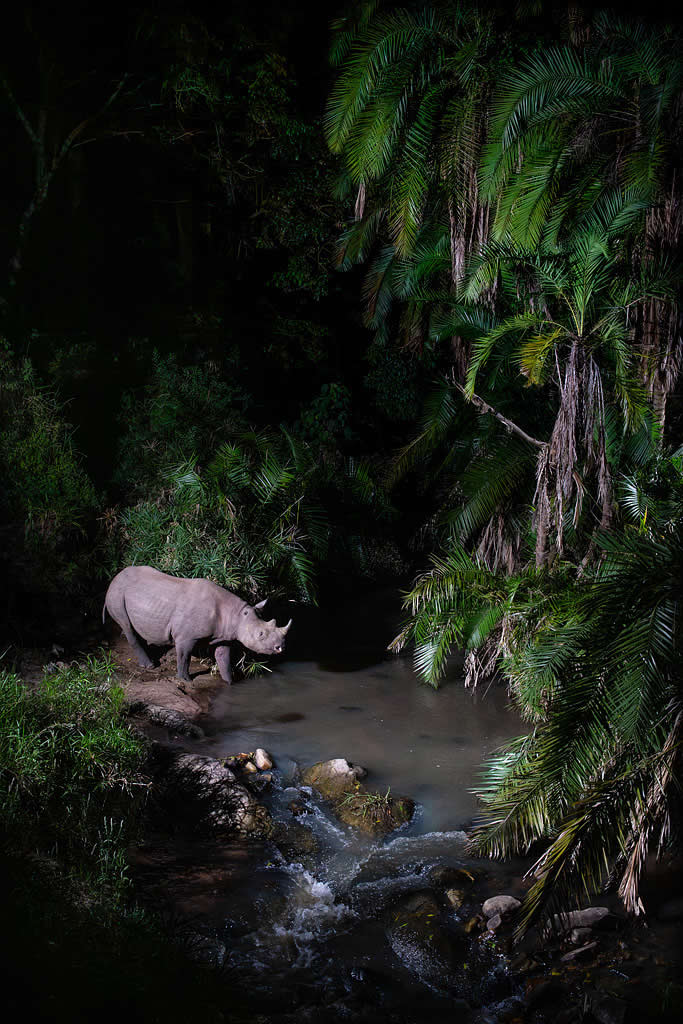
Working over several months in collaboration with the Maasai Mara Rhino Unit, Narok County Government, and The Safari Collection’s Footprint Trust, Burrard-Lucas placed advanced camera traps in a remote forested river crossing deep inside Kenya’s iconic reserve. The location was no random guess. Rangers knew endangered black rhinos used the corridor, but thick vegetation made direct sightings tough. That’s where technology stepped in.
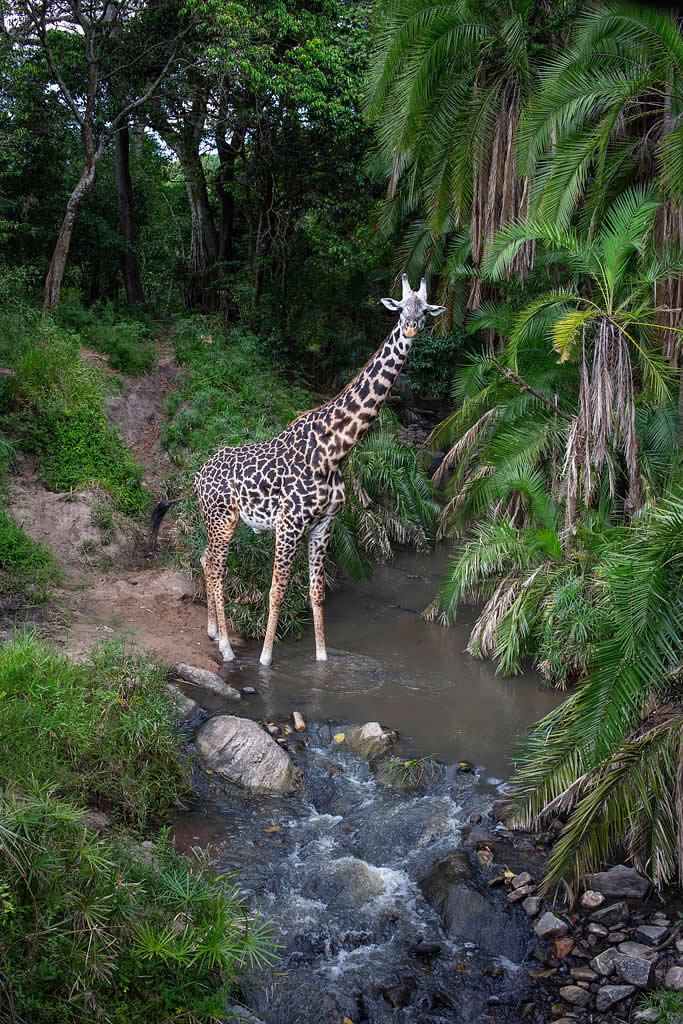
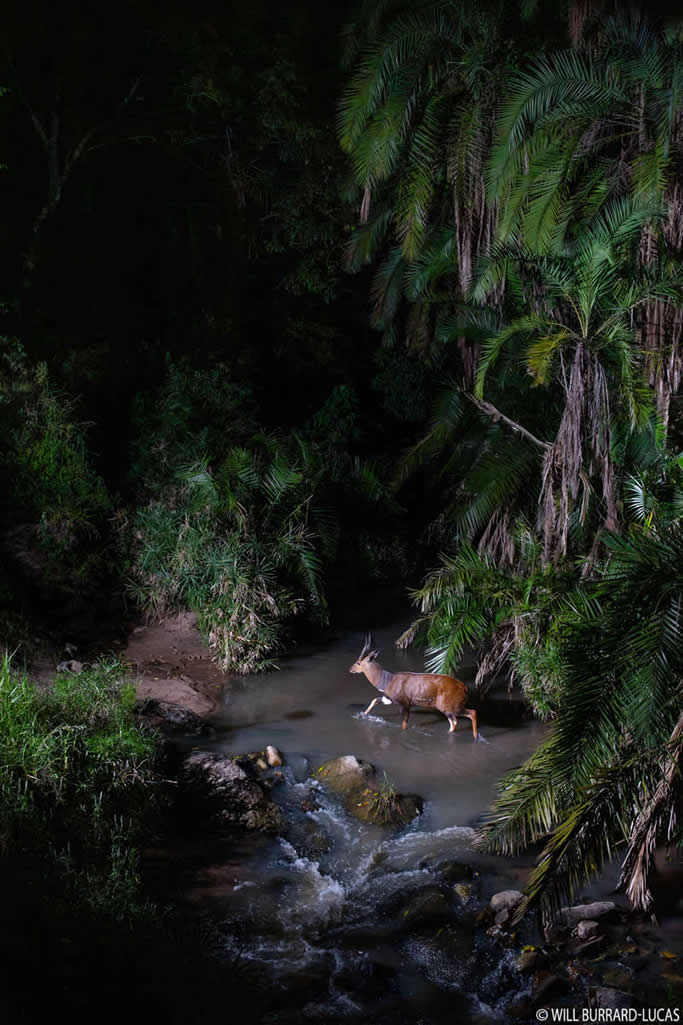
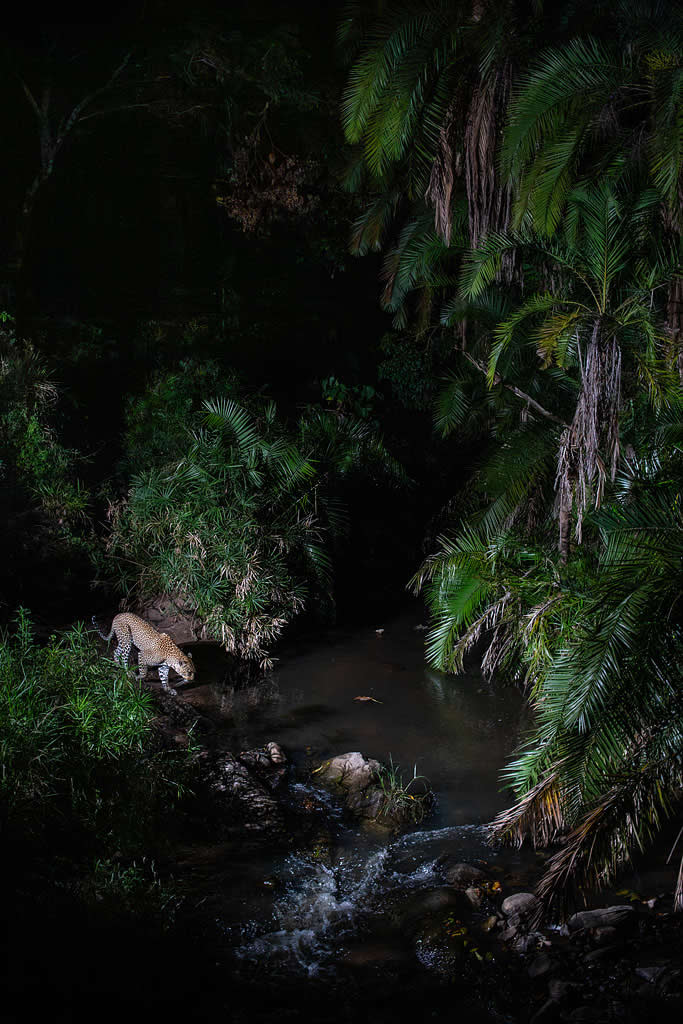
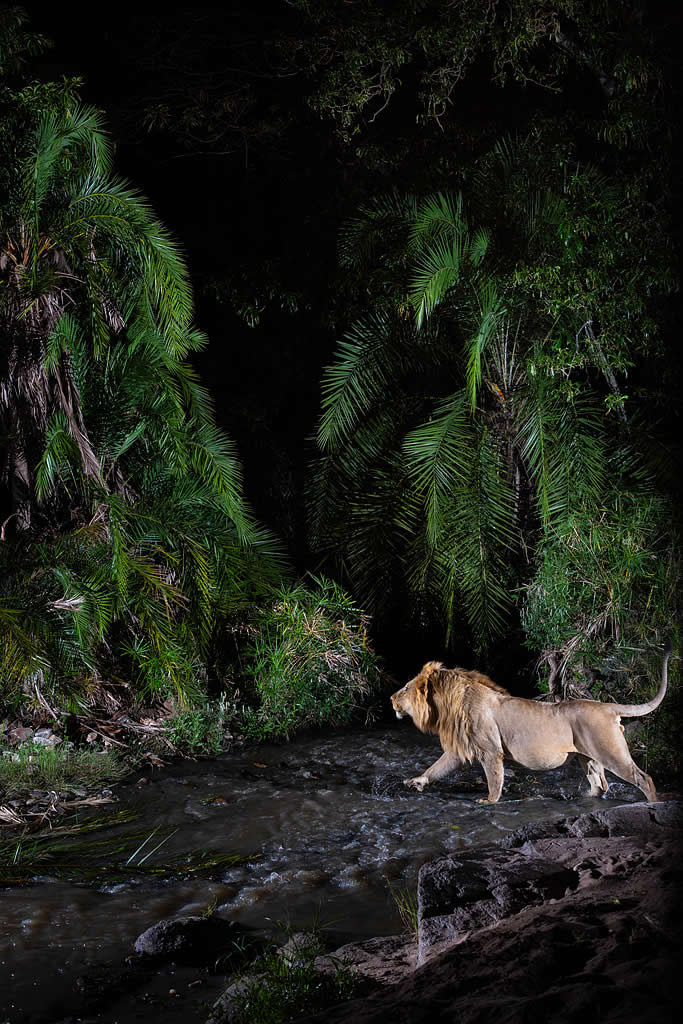
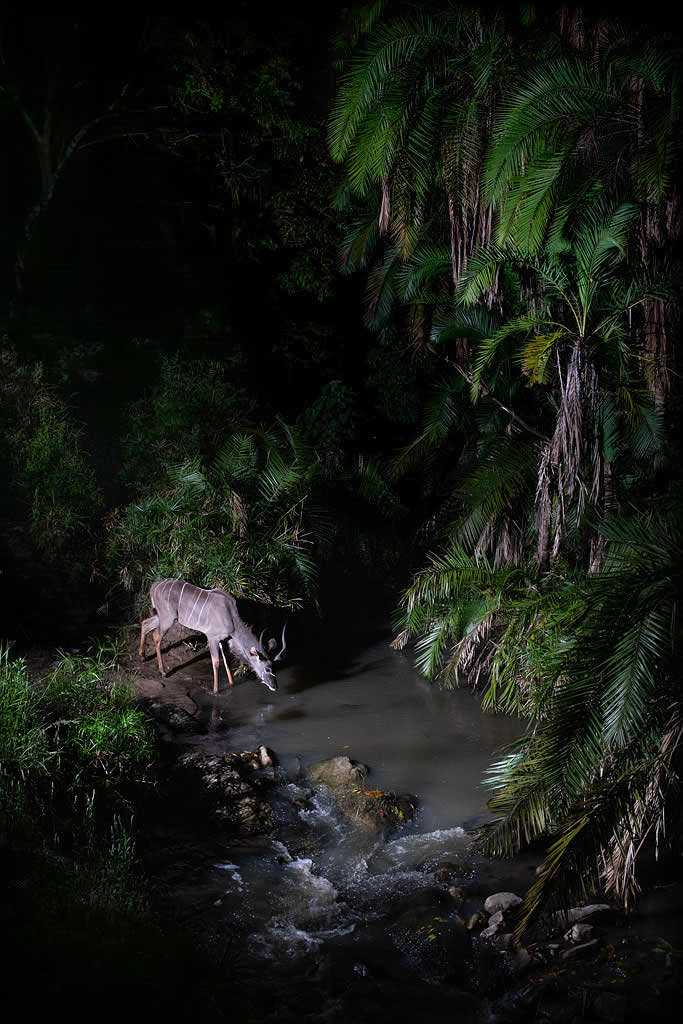
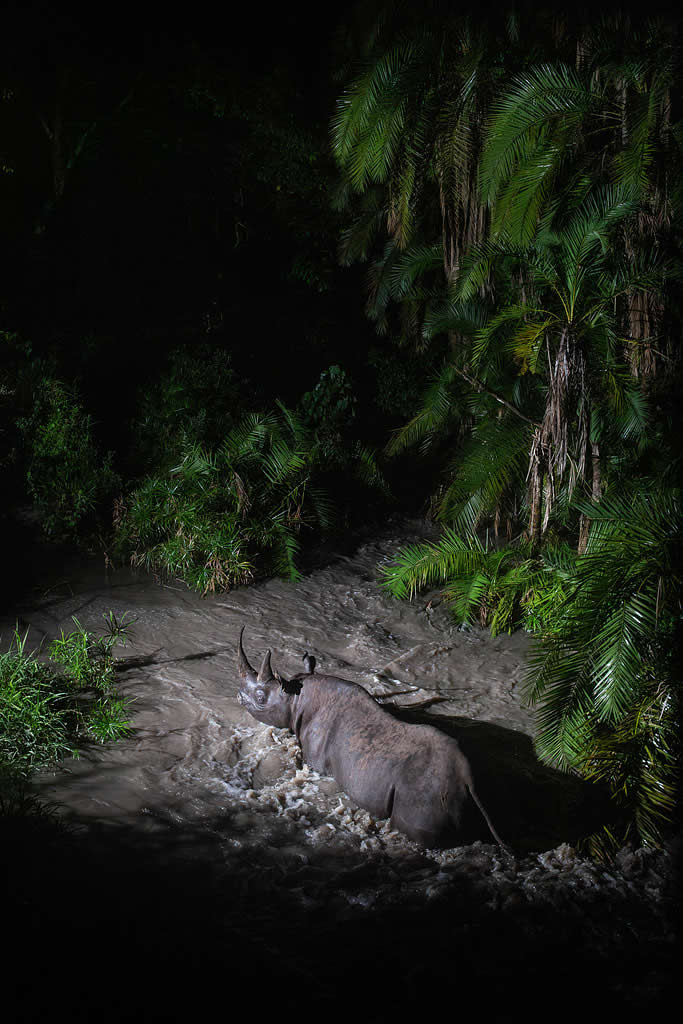
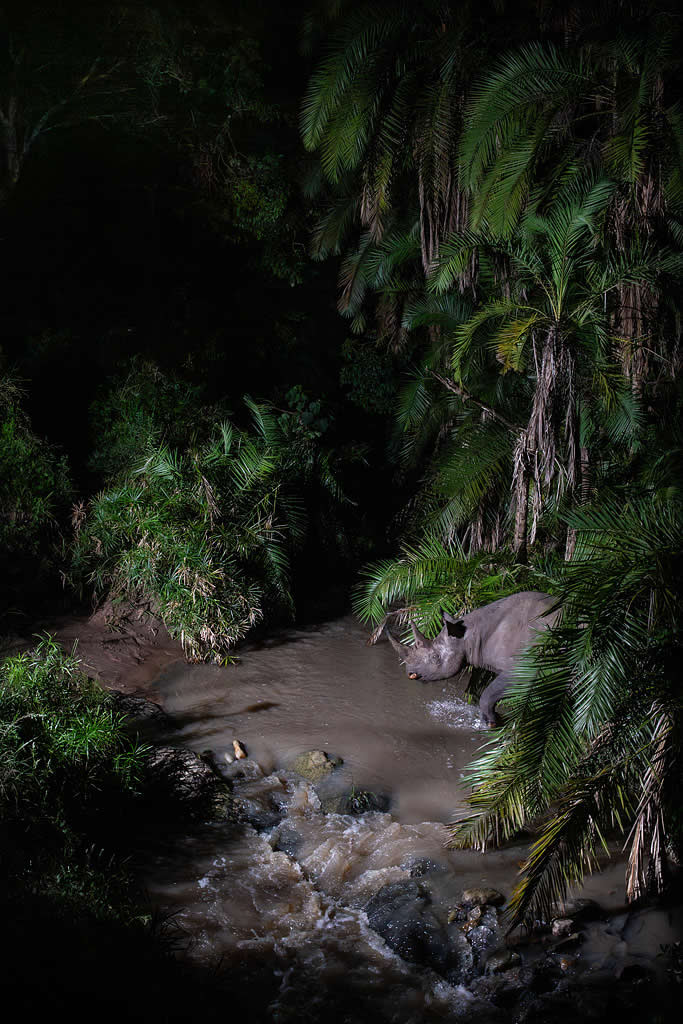
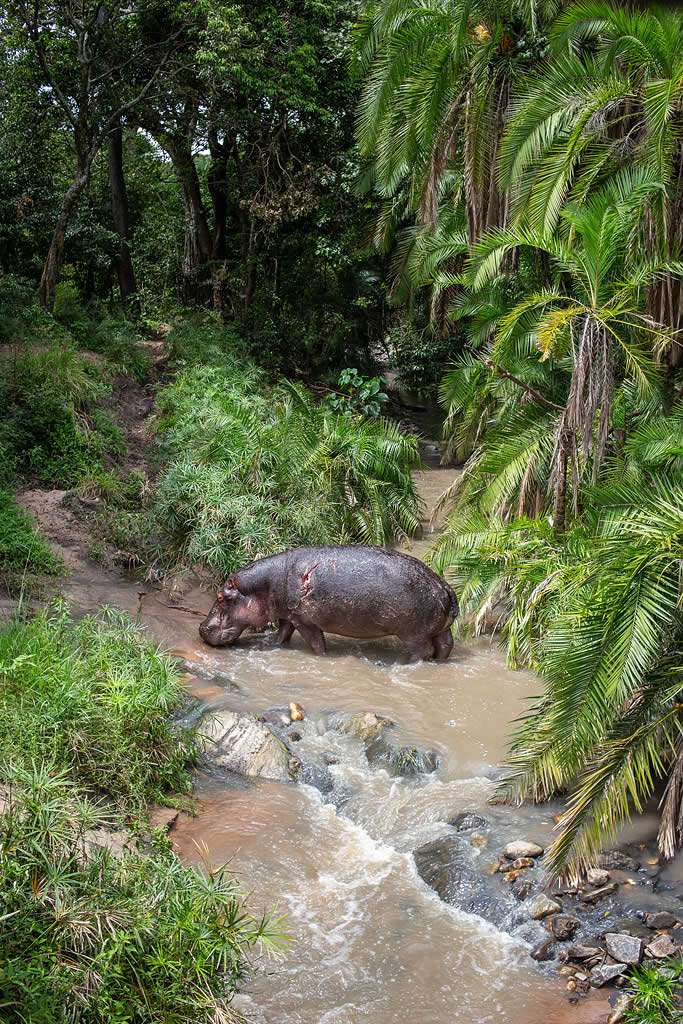
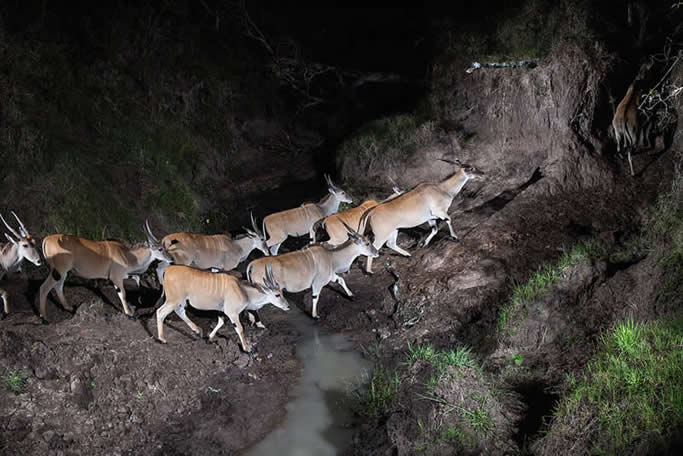
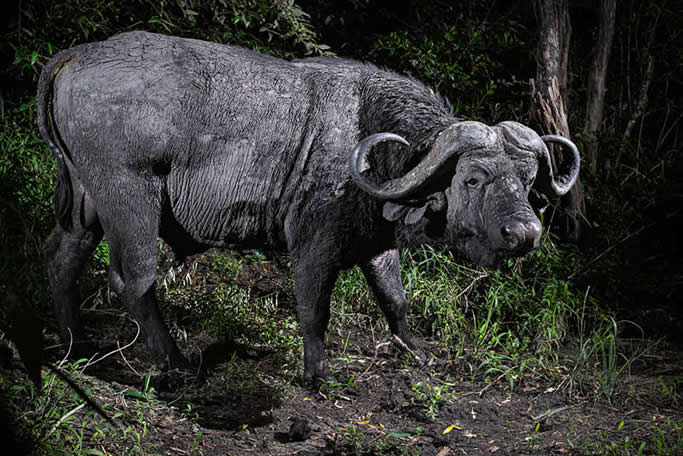
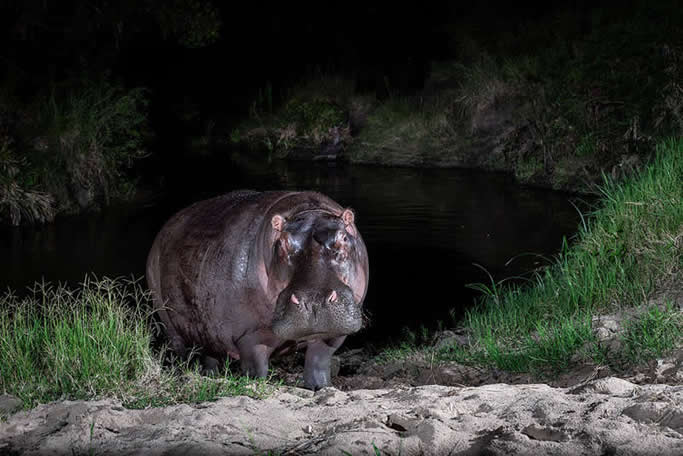
What happened next was pure gold. The cameras recorded black rhinos, elephants, hippos, leopards, giraffes, bushbuck, and even a greater kudu, an animal not officially recorded in the area for years. These weren’t just cool wildlife photos. They became real conservation tools, helping rangers confirm the presence of animals that hadn’t been seen in months.
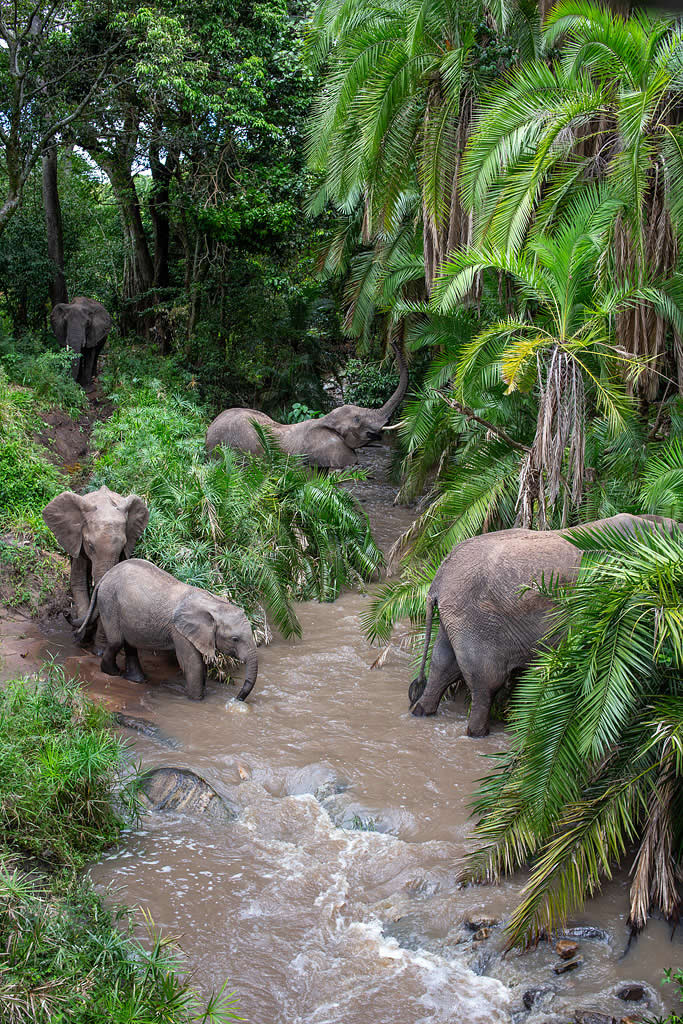
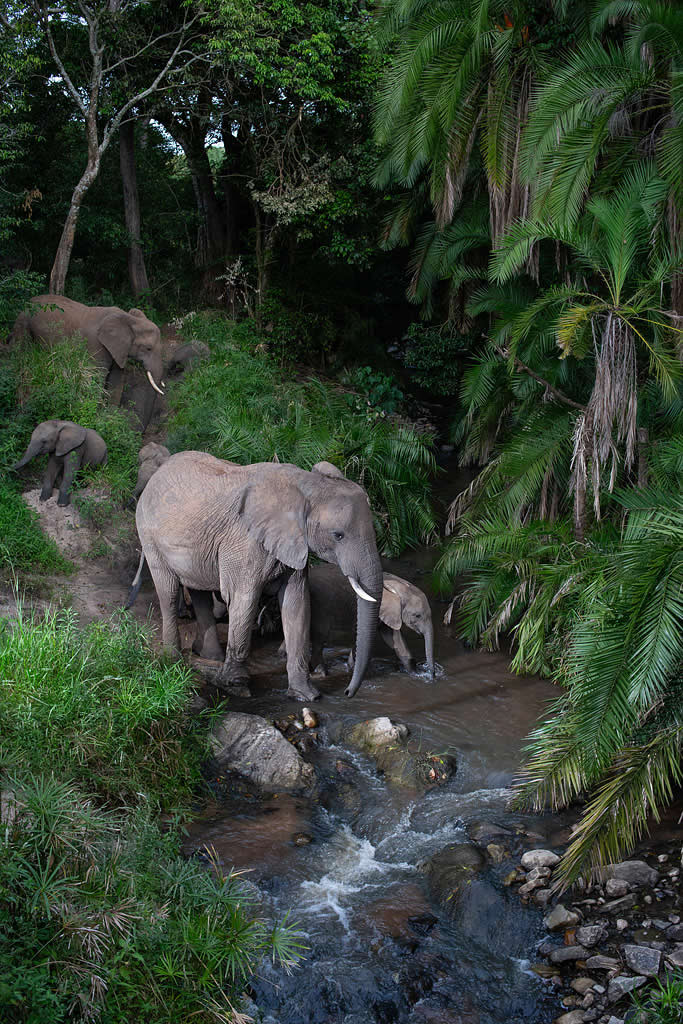
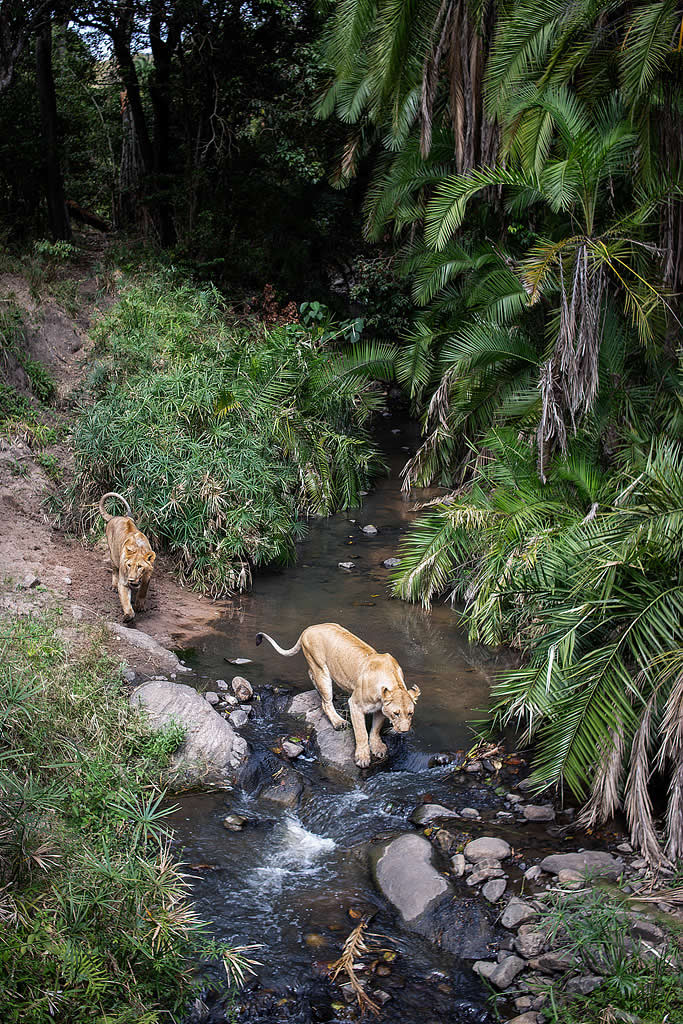
Beyond science, the images are cinematic masterpieces: rhinos pushing through floodwaters, elephants moving through palm shadows, and silent predators ghosting through ancient forest trails. This is the Maasai Mara that few travelers ever witness, and it’s absolutely unforgettable.
You can find Will Burrard-Lucas on the web:
#1
#2
#3
A Hidden Forest Inside the Famous Mara
When people picture the Maasai Mara, they imagine wide open plains stretching forever. But Burrard-Lucas discovered something wildly different: a secluded forest valley packed with towering fig trees, palms, steep riverbanks, and narrow wildlife trails. It felt less like classic safari country and more like a lost prehistoric world tucked inside the savannah.
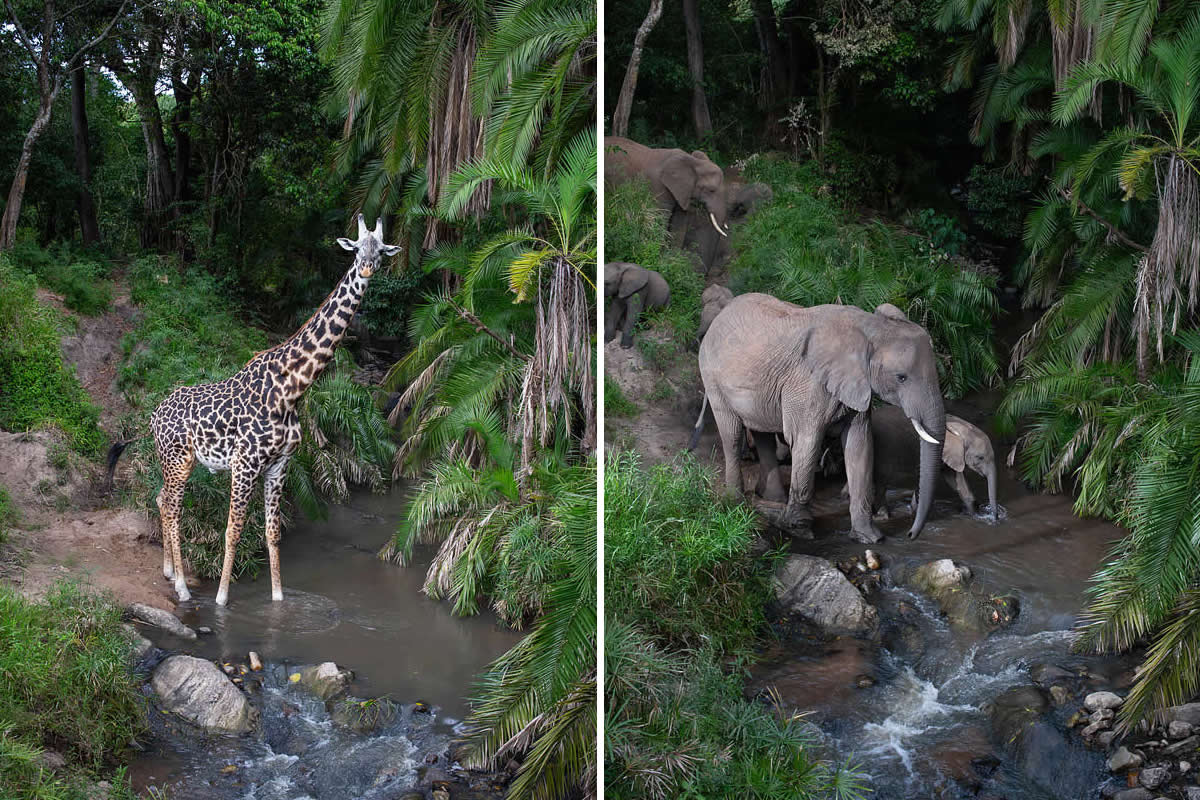
This hidden crossing became the perfect place to install camera traps high above the trail, allowing animals to be photographed within the landscape rather than as plain close-ups. That creative angle gave the images drama, atmosphere, and a strong sense of place. It also proved that the Mara is more layered than many visitors realize. Beyond the postcard grasslands lies a secret network of habitats where wildlife moves quietly and unseen.
#4
#5
#6
Camera Traps That Help Save Wildlife
These photographs are stunning, but the project wasn’t only about art. It was also serious conservation work. Rangers monitoring the endangered black rhino population needed better ways to track animals using dense vegetation where patrols can miss them. Camera traps became a game-changer.
Instead of repeatedly photographing one rhino, the system captured multiple individuals using the corridor. Some had not been officially documented for months, and one rhino last seen in 2023 was confirmed alive again. That kind of data helps improve population counts, movement tracking, and habitat protection plans.
By combining ranger field knowledge, GPS tags, ear-notching records, and EarthRanger technology, the team created smarter wildlife monitoring. It’s proof that photography and science can work hand in hand for real impact.
#7
#8
#9
Rare Visitors and Unexpected Surprises
One of the biggest thrills of the project came when the memory cards revealed a greater kudu walking through the crossing. For years, the species had not been officially recorded in that area, making the image a huge moment for local wildlife teams. It showed the Mara still holds surprises and remains a living wilderness.
The cameras also captured elephants in family groups, hippos leaving the river, cautious giraffes approaching water, bushbuck slipping through cover, and a leopard appearing like a shadow before disappearing again. Every frame added another chapter to the story.
This kind of biodiversity reminds us that ecosystems are full of movement and mystery. Even in one of Africa’s most famous reserves, nature still keeps its cards close to the chest.
#10
#11
#12
Why the Maasai Mara After Dark Matters
Tourists usually experience the Maasai Mara by day, and night driving in the main reserve is restricted. That means most visitors never witness how animals travel, hunt, rest, and navigate once darkness takes over. Burrard-Lucas’ project offers a rare backstage pass to those hidden hours.
The nighttime photos reveal how species use sheltered corridors and forest crossings to move safely through the landscape. They also show how climate pressures, like increasing flash floods, are changing habitats. One striking image captured a black rhino forcing its way through raging floodwater, beautiful, dramatic, and deeply telling.
In the end, this project is about more than epic photos. It reminds us that wild places are still full of secrets, and protecting them means understanding what happens when nobody is watching.
#13
#14
#15
About Will Burrard-Lucas
Will Burrard-Lucas is one of those rare photographers who blends creativity, innovation, and deep respect for wildlife into every project. Splitting his time between the United Kingdom and Africa, he developed his connection to the continent in childhood, when his family lived in Tanzania. Early memories of safari landscapes and wild animals helped shape a lifelong fascination with nature that continues to define his career today. That early spark later led him back to Africa, where he has focused extensively on projects in Zambia and Kenya.
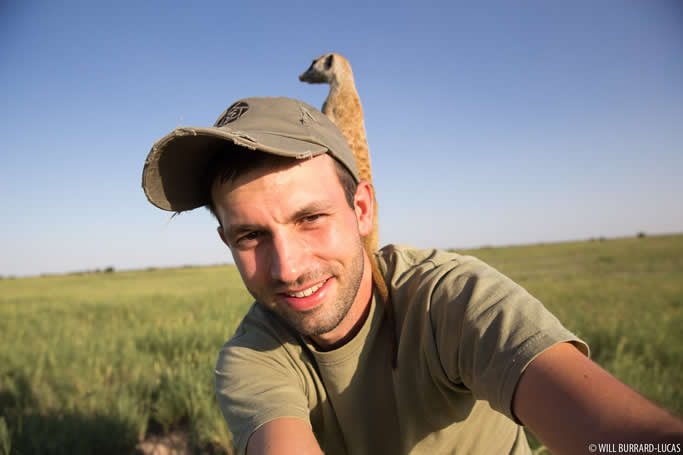
What sets Burrard-Lucas apart is his determination to photograph animals in fresh and intimate ways. Known for dramatic close-up portraits, he often uses wide-angle lenses to place viewers directly inside the moment. When conventional approaches fell short, he created the groundbreaking “BeetleCam,” a remote-controlled camera buggy designed to capture ground-level images of potentially dangerous wildlife. He later expanded this vision by founding Camtraptions Ltd in 2013, producing advanced camera trap systems now used globally by photographers, filmmakers, and conservation teams.
His major projects have combined storytelling with conservation impact. In Kenya, he documented Africa’s last great tuskers, later publishing the account in the acclaimed book Land of Giants. He also captured rare, high-quality images of a melanistic leopard, leading to the release of The Black Leopard in 2021. More than a photographer, Burrard-Lucas has become a modern visual explorer whose bold ideas continue to reshape wildlife photography.
Related Articles:
- Wildlife Photography by Ze Da Quinta
- Wildlife Photography by Michel d’Oultremont
- Wildlife Photography by Lewis Frazier
- Wildlife Photography by Alexandra Surkova