
There’s something about a rain-soaked street that instantly changes how a city feels. Familiar roads turn cinematic. Streetlights stretch into glowing trails. Reflections double the world around us.
For photographers, these moments aren’t just beautiful; they’re full of storytelling potential.
Let’s explore why rainy city nights continue to inspire some of the most striking urban photography.
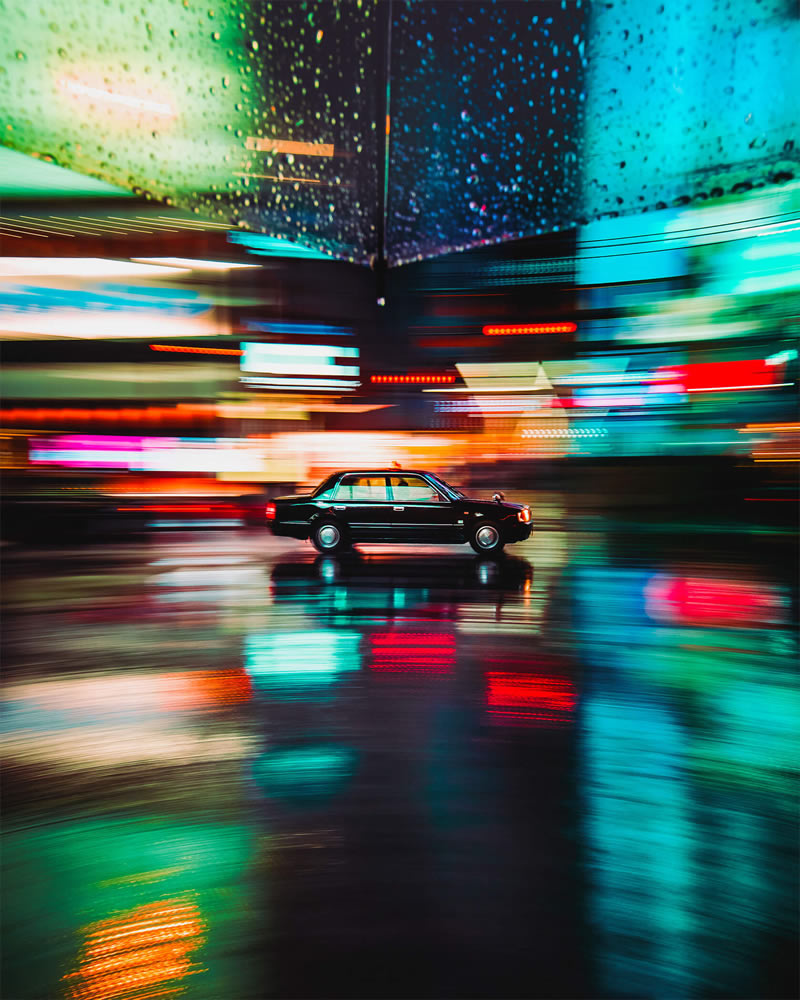
Photo by: Osaka Omi Kim
When the City Starts to Glow
Rain transforms ordinary streets into reflective canvases. Wet surfaces mirror everything: neon signs, passing cars, street lamps, creating layered compositions that don’t exist in dry conditions.
Instead of a single subject, you suddenly have:
- A real scene
- A reflected scene
- And the space in between
This added depth makes even simple shots feel rich and immersive.
Pro Tip: Look down as much as you look ahead. Some of the most powerful shots are hiding in puddles.
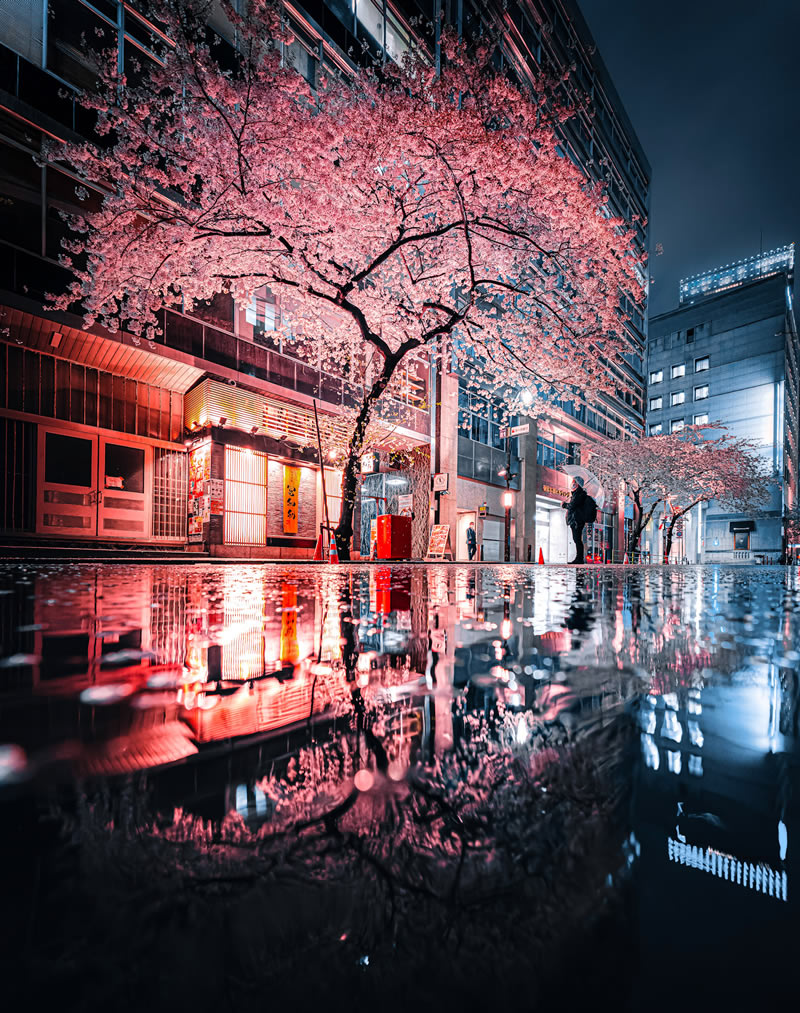
Photo by: Junya Watanabe
Reflections That Tell Two Stories
Reflections in rainy streets do more than add beauty; they create narrative.
A person walking under an umbrella becomes two figures:
- One real
- One abstract
This duality adds emotion and mystery. You can frame reflections to:
- Emphasize isolation
- Create symmetry
- Or introduce a surreal, dreamlike feel
Many photographers use reflections to say more without adding extra elements. You can see this approach beautifully in minimalist street photography award-winning shots, where simplicity and reflection come together to create powerful visual stories.
Try flipping your image upside down in editing. Sometimes, the reflection tells a stronger story than reality.
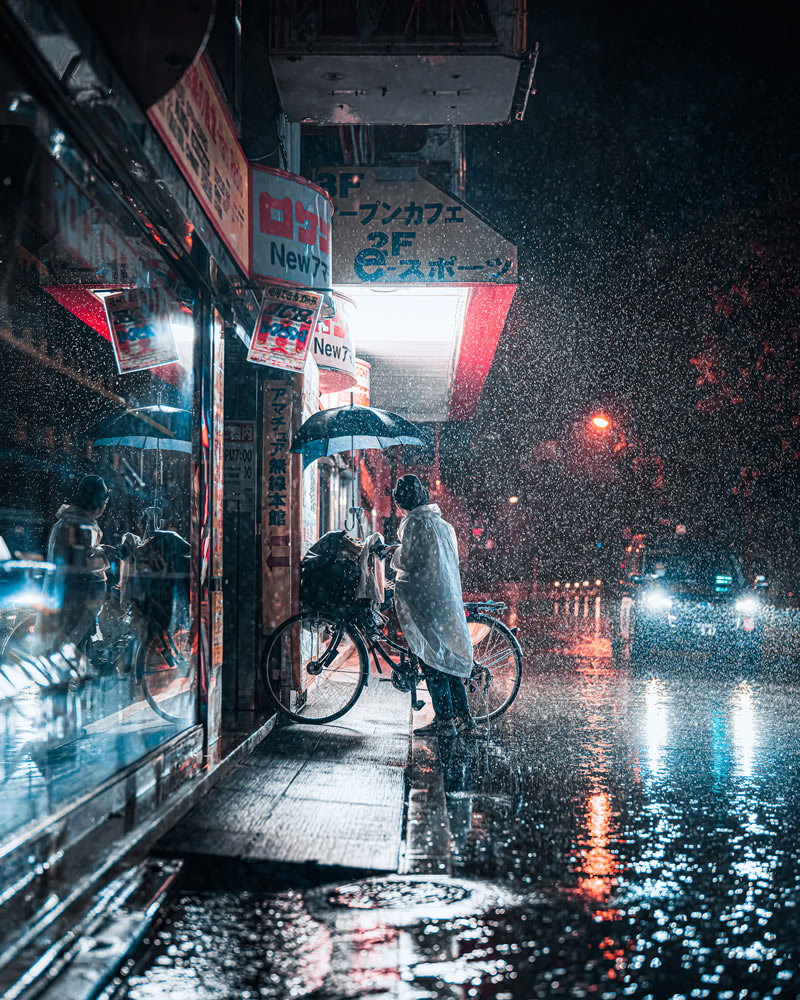
Photo by: Junya Watanabe
Neon Lights and Color Drama
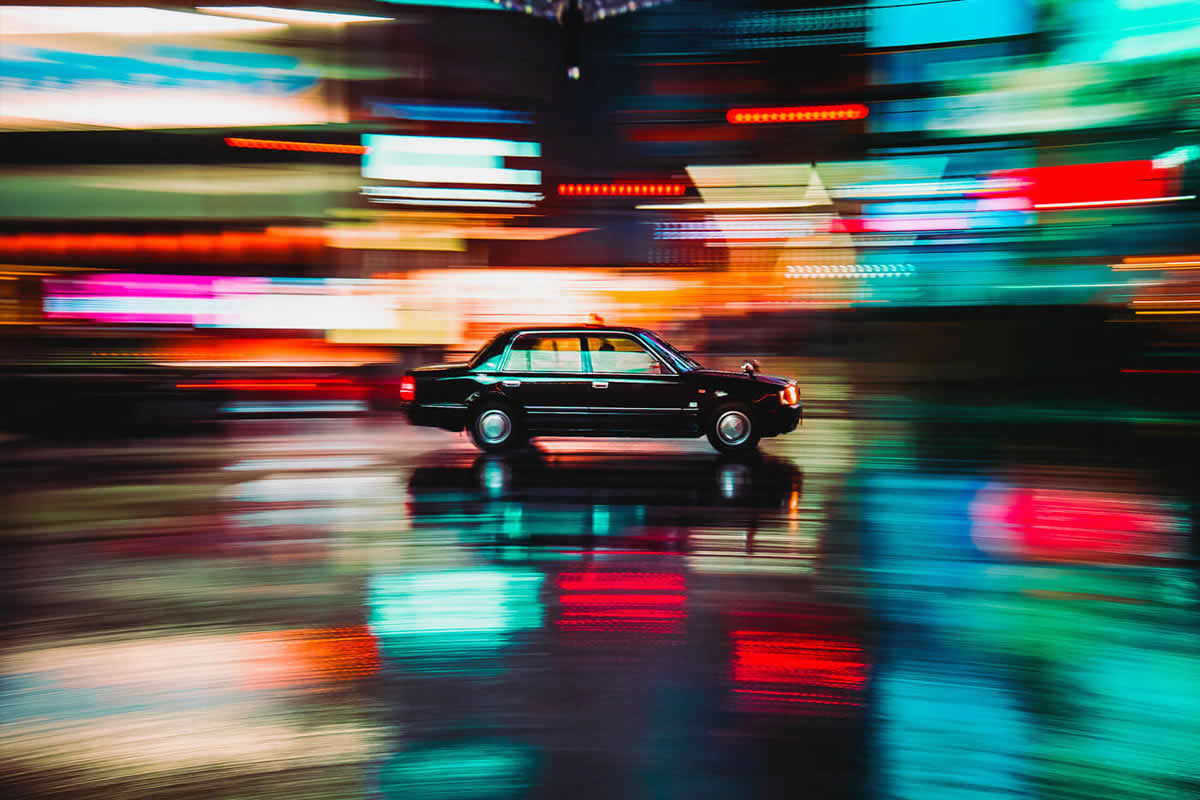
Rain amplifies color. Neon lights bounce off wet roads, creating vibrant streaks of pink, blue, and yellow.
This is why cities known for neon, like Tokyo or Hong Kong, are often featured in rainy night photography.
But you don’t need those locations. Even a small street with:
- A shop sign
- A traffic signal
- Or a passing vehicle
…can produce dramatic color contrast when the ground is wet.
Expert Tip: Slightly underexpose your shot to make colors richer and avoid blown highlights.
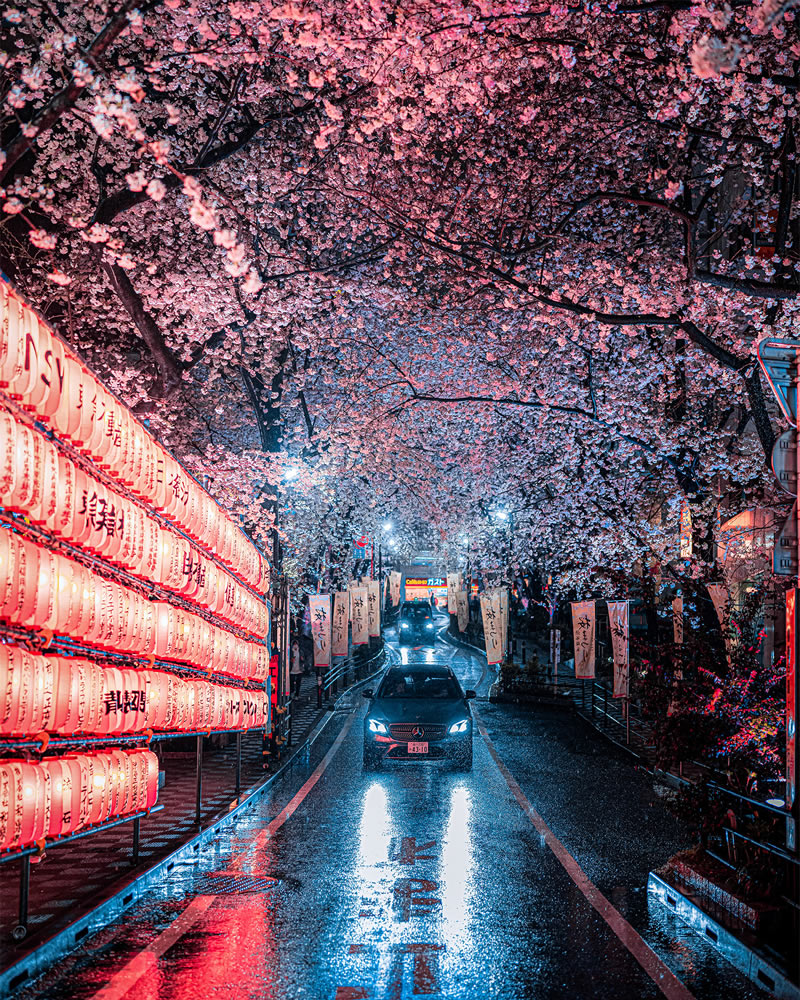
Photo by: Junya Watanabe
Mood, Emotion, and Atmosphere
Rain naturally adds emotion to a scene. It softens light, reduces distractions, and creates a quiet, introspective mood.
That’s why rainy street photography often feels:
- Cinematic
- Nostalgic
- Slightly melancholic
It’s not just about visuals, it’s about feeling.
Even a busy city can feel calm and personal when seen through the rain.
This emotional depth is what makes rainy street photography so compelling, as seen in Eduardo Ortiz’s street photography work, where everyday moments are turned into cinematic frames.
Include a human element (a silhouette, umbrella, or shadow) to add scale and emotional depth.
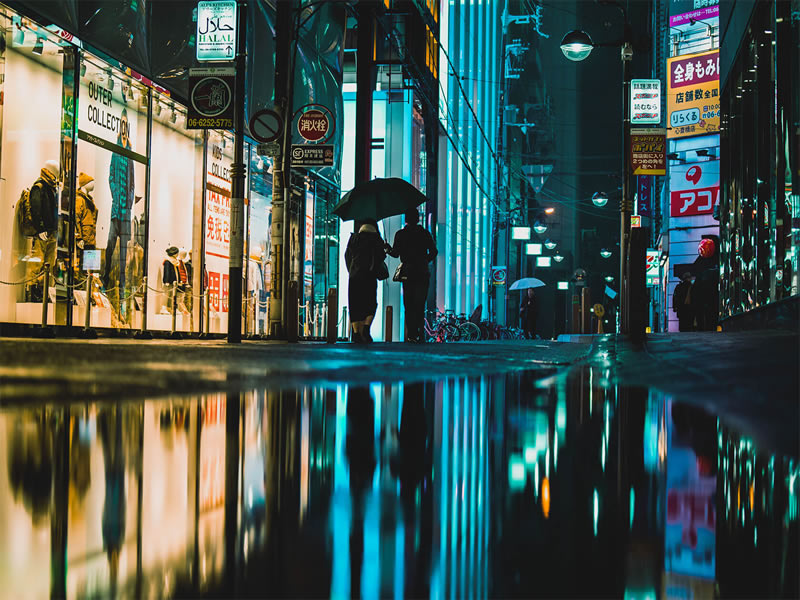
Photo by: Osaka Omi Kim
Movement Becomes Visible
Rainy nights make motion easier to capture and more visually appealing.
Car lights stretch into reflections. Pedestrians blur softly through the frame. Raindrops catch light in subtle ways.
Using slower shutter speeds, you can:
- Turn traffic into flowing lines
- Capture ghost-like movement
- Add energy without clutter
Advice: Start with a shutter speed around 1/10 to 1 second and adjust based on movement.
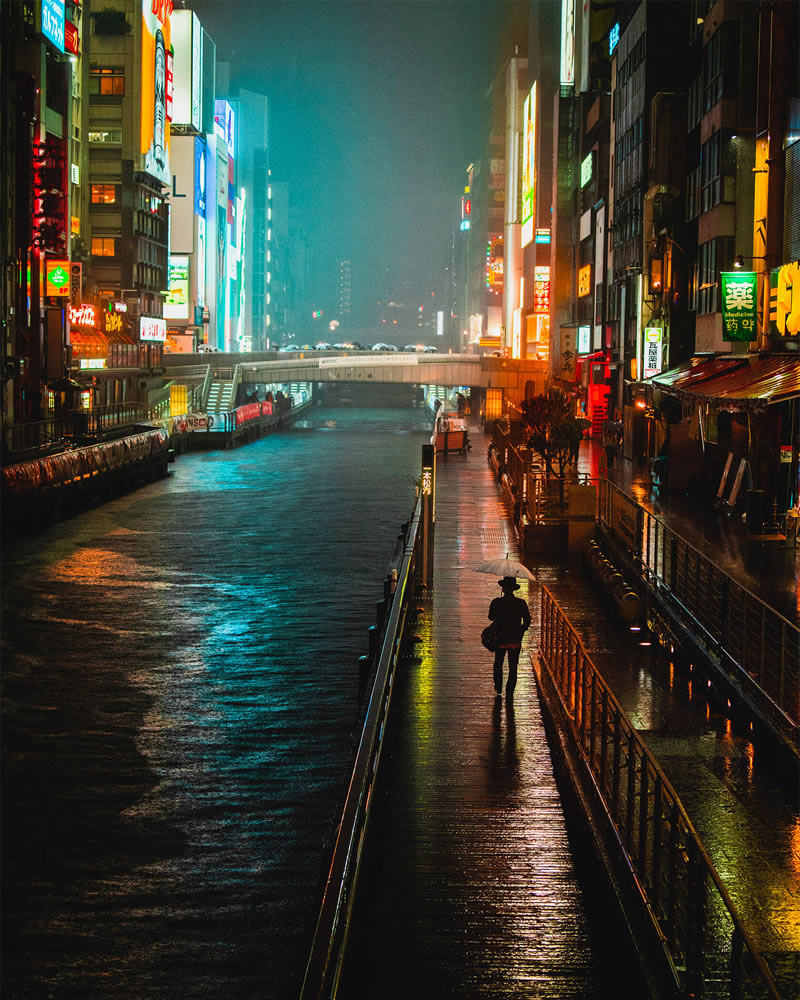
Photo by: Osaka Omi Kim
Why Photographers Keep Coming Back to Rain
Rain doesn’t just change the look of a street; it changes how we see it.
It simplifies scenes, enhances light, and adds layers that aren’t visible otherwise. For photographers, it offers a mix of control and unpredictability.
Every frame feels slightly different:
- A new reflection
- A new subject
- A new story
And that’s what keeps it exciting.
Today, smartphones dominate photography, with more than 90% of images captured on phones, while traditional cameras make up less than 8%.
This shift, driven largely by social media, has made photography more spontaneous and everyday-focused turning simple moments like rainy streets into powerful visual stories.
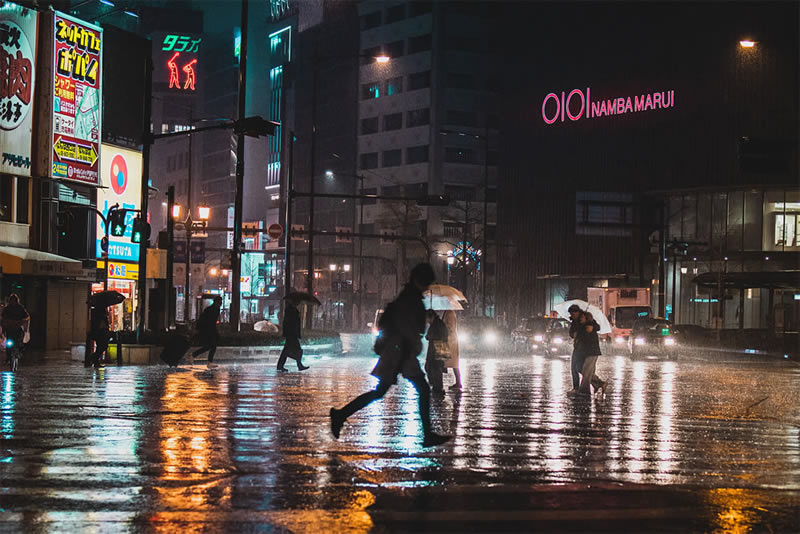
Photo by: Osaka Omi Kim
Final Thoughts
Rainy streets remind us that you don’t need exotic locations to create powerful images. Sometimes, all it takes is a familiar place, a bit of rain, and a different perspective.
Next time it rains, step outside with your camera.
You might just find poetry in the reflections beneath your feet.
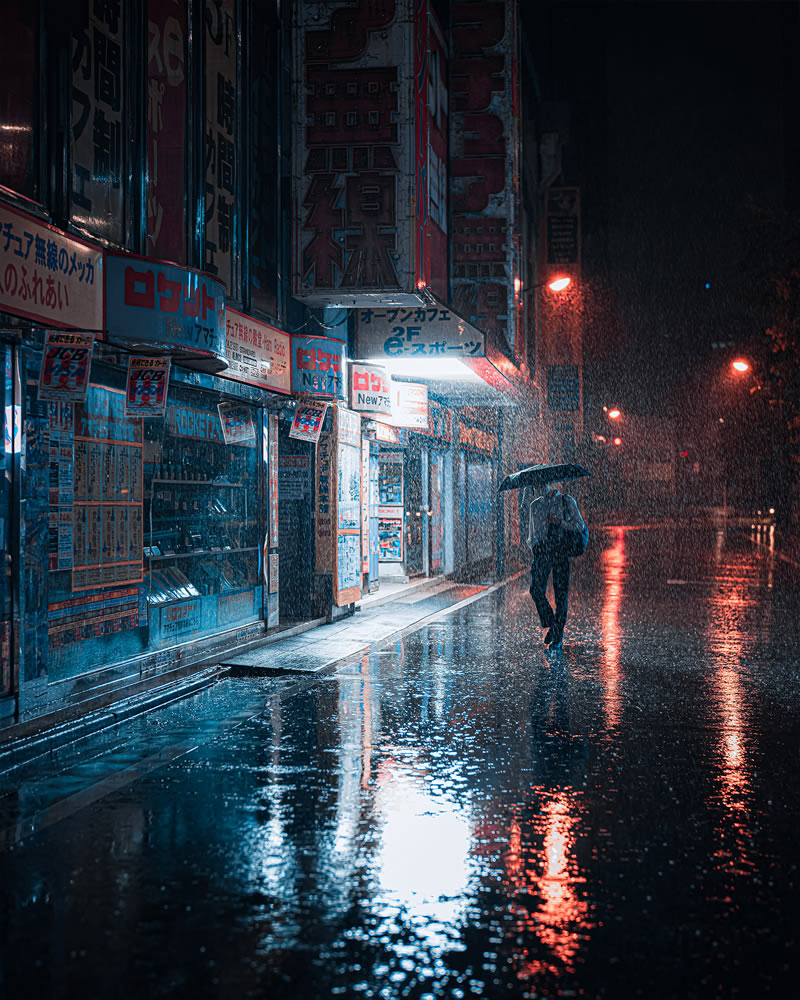
Photo by: Junya Watanabe
FAQ’s
1. What camera settings work best for rainy night street photography?
For rainy nights, use a wide aperture (f/1.8–f/2.8) to let in more light, and increase ISO (800–3200 depending on your camera). Keep your shutter speed balanced—faster (1/125) to freeze motion or slower (1/10–1 sec) for light trails and reflections. Adjust based on the scene and movement.
2. How do you protect your camera while shooting in the rain?
Use a rain cover or even a simple plastic bag if you don’t have professional gear. Keep a microfiber cloth handy to wipe your lens frequently. Also, avoid changing lenses in the rain to prevent moisture from entering your camera body.
3. Why do reflections look better at night after rain?
At night, artificial lights like street lamps, car headlights, and neon signs reflect off wet surfaces, creating contrast and color depth. During the day, reflections are flatter because natural light is more diffused and less directional.
4. Do you need a tripod for rainy street photography?
Not always. If you’re shooting handheld, modern cameras with image stabilization can handle low light well. However, a tripod helps when using slower shutter speeds for light trails and sharper reflections. It’s especially useful for long exposure shots.
5. What are the best subjects to shoot on rainy streets?
Focus on subjects that enhance light and mood, such as people with umbrellas, neon signs, puddles, passing cars, and silhouettes. These elements add reflections, motion, and depth, making your photos more engaging and cinematic.