
There’s something about the ocean that can stop you in your tracks. One moment, it’s a playground for surfers, sailors, and beach lovers; the next, it feels like an entirely different universe, packed with strange creatures, fragile ecosystems, and stories we’re only beginning to understand.
Covering roughly 70 percent of Earth’s surface, our oceans feed communities, move goods, fuel economies, and shelter an astonishing range of life. Yet beneath all that blue, trouble is brewing. Melting ice, rising seas, industrial fishing, pollution, and disappearing habitats are putting enormous pressure on marine life.
That tension between beauty and vulnerability sits at the heart of the Ocean Photographer of the Year, presented by Oceanographic and Blancpain. The annual competition isn’t simply about making gorgeous pictures. It gives photographers a powerful way to show what’s happening beneath the surface and why we should care.
The 2026 finalists span Wildlife, Fine Art, Adventure, Conservation (Impact), Conservation (Hope), Human Connection: People & Planet Ocean, and The Ocean Unseen: Hidden Worlds. Together, their photographs move from jaw-dropping encounters to images that are genuinely hard to look at.
And that’s the point. The ocean can be sublime and sorrowful at the same time. These photographers make us pause, look closer, and remember just how much we stand to lose.
You can find more info:
#1. Wildlife Photographer of the Year: Abdulaziz Al Saleh, Kuwait
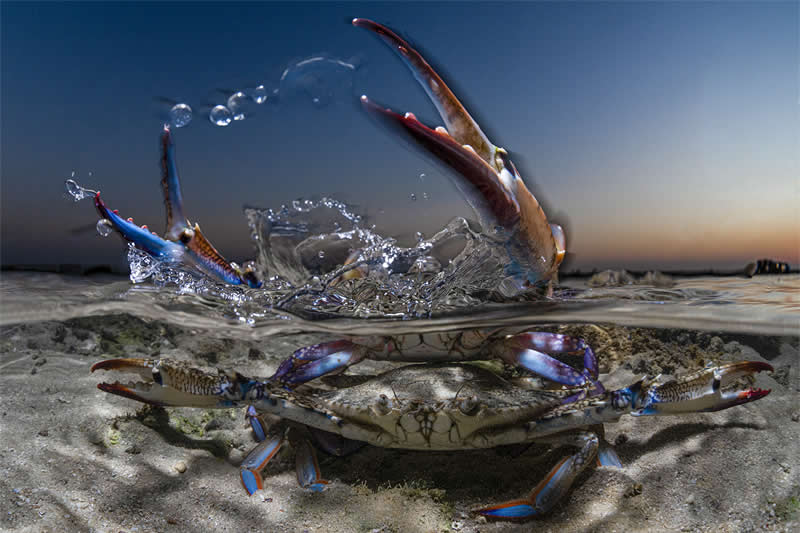
"A male blue crab (Callinectes sapidus) displays his large claws above the water while protecting a female during mating in Kuwait’s Arabian Gulf. During reproduction, males guard females to reduce the risk of predation and competition. This split-level image was taken at sunrise in a shallow intertidal zone, where careful movement was essential to avoid disturbing the crabs. The female’s distinctively coloured claws and her still posture contrast with the male’s defensive display."
#2. Wildlife Photographer of the Year: Rafael Fernandez Caballero, Mexico
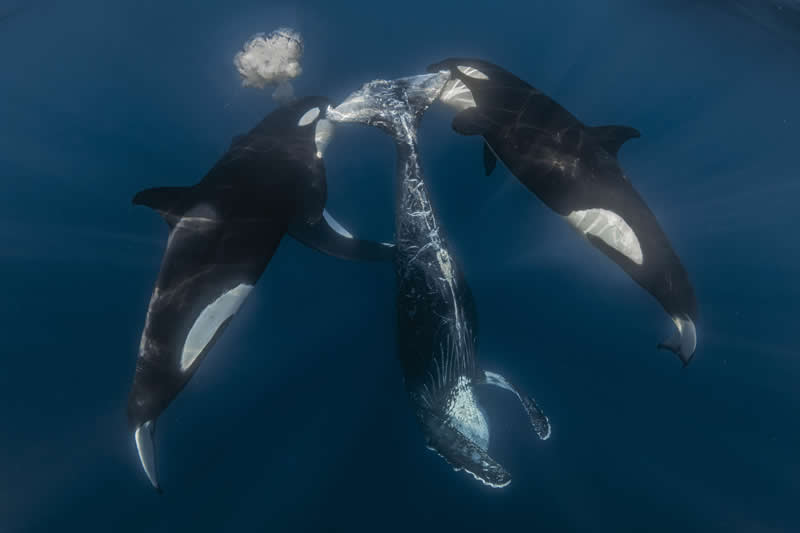
"In the Pacific waters of Mexico, this photograph captures the aftermath of a successful orca hunt. Nearly an hour after a pod separated a humpback whale calf from its mother, the orcas resurfaced carrying their prey between them. The event reveals the cooperative hunting strategies of orcas, where multiple individuals work together to isolate and subdue large prey. What the image doesn’t show is that after the kill, other scavengers, including silky sharks, were drawn to the remains, showing how one event can influence an entire marine food web."
#3. Wildlife Photographer of the Year: Ariel Mei Gliboff, USA
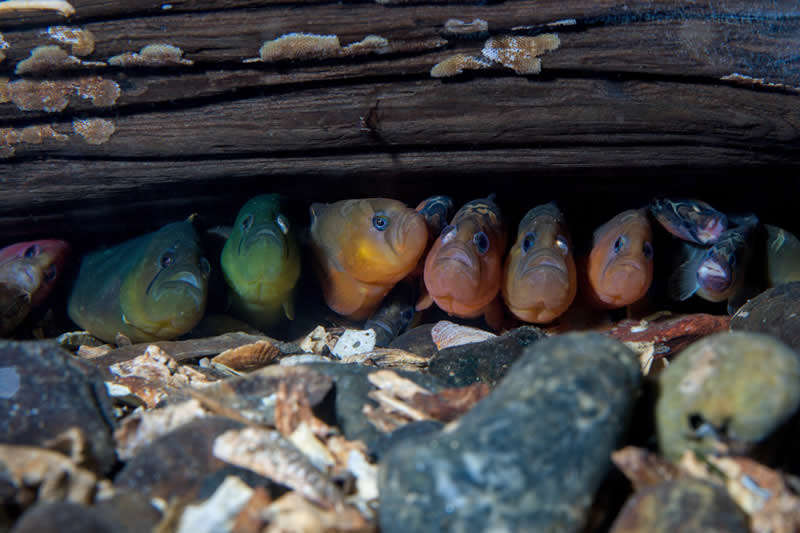
"A group of 11 gunnels gathers in a colourful cluster beneath the waters of Seattle. Although gunnels are a common species in the region, finding so many together in a tightly packed group with such varied colours is unusual. Their bright patterns stand out against the darker waters typical of Pacific Northwest diving. This image highlights the unexpected beauty found in familiar species."
#4. Wildlife Photographer of the Year: Allan Cronin, New Zealand
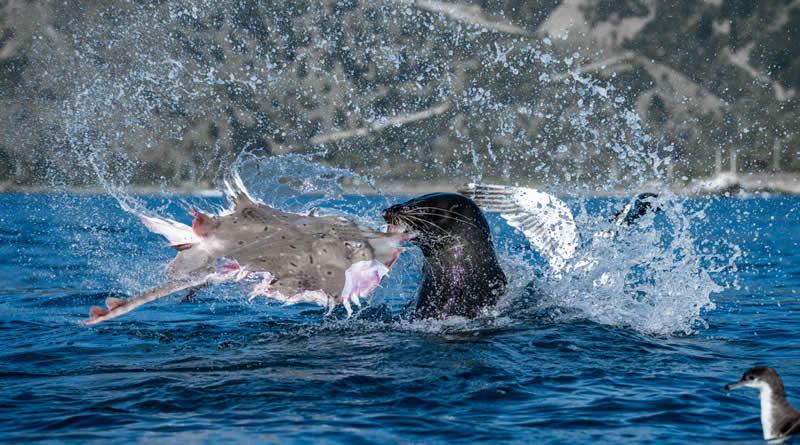
"A New Zealand fur seal tears apart a rough skate in the waters of New Zealand, while seabirds gather for the scraps. Unable to swallow such large prey whole, the seal throws the skate repeatedly to break it into smaller pieces. Photographed from a kayak, this scene reveals the feeding strategy of a powerful predator and the chain of life that follows every meal."
#5. Wildlife Photographer of the Year: Andrea Michelutti, Philippines
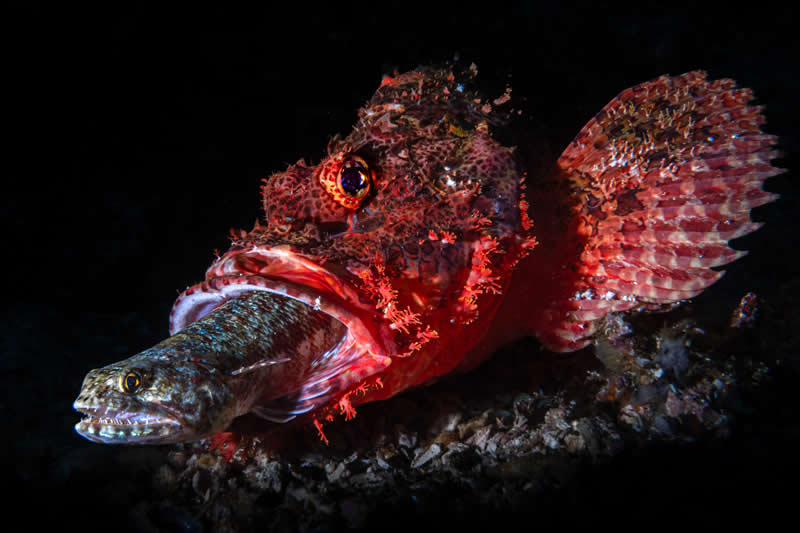
"A scorpionfish consumes a lizardfish in a moment of hunting behaviour, revealing the constant balance between survival and vulnerability on coral reefs. The compact composition isolates the interaction using a snoot to direct light onto the two fish while keeping the background subdued. The position of both animals makes the behaviour immediately visible, showing the scorpionfish’s feeding strategy and the brief, powerful encounters that shape life on the reef."
#6. Wildlife Photographer of the Year: Henley Spiers, Philippines
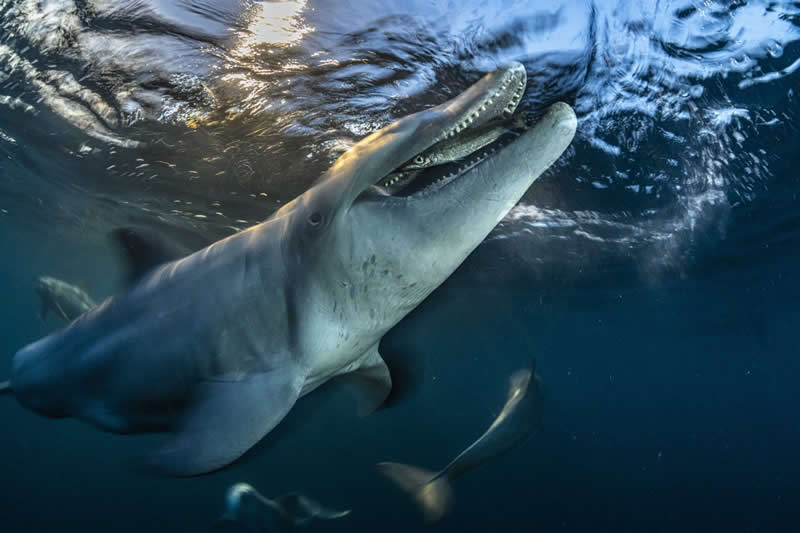
"A bottlenose dolphin bites a small fish beside a traditional bagan fishing platform in Indonesia. These dolphins have learned to associate the illuminated nets with an easy source of food, often taking discarded or unwanted fish provided by fishermen. Bagan vessels use lights at night to attract fish before lowering nets from floating platforms. This image captures the close relationship between a wild predator and a human fishing practice, while revealing how animal behaviour can adapt to changing ocean environments."
#7. Wildlife Photographer of the Year: Josh Blank, Australia
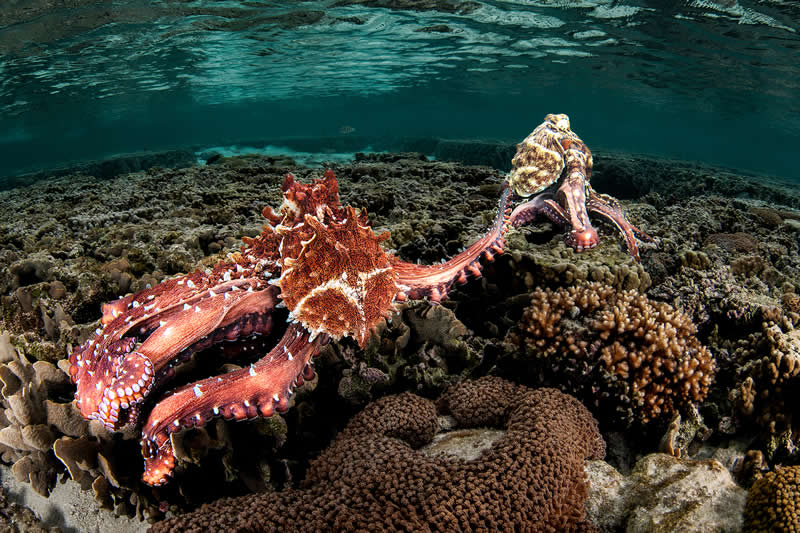
“Arms of Connection” captures two octopuses during courtship on a shallow coral reef at Lady Elliot Island, part of Australia’s Great Barrier Reef. The male extends his specialised mating arm, known as a hectocotylus, to transfer spermatophores to the female. The interaction continued for several minutes as the male approached and the female moved across the reef before eventually accepting him.
#8. Wildlife Photographer of the Year: Yuta Shigeno, Japan
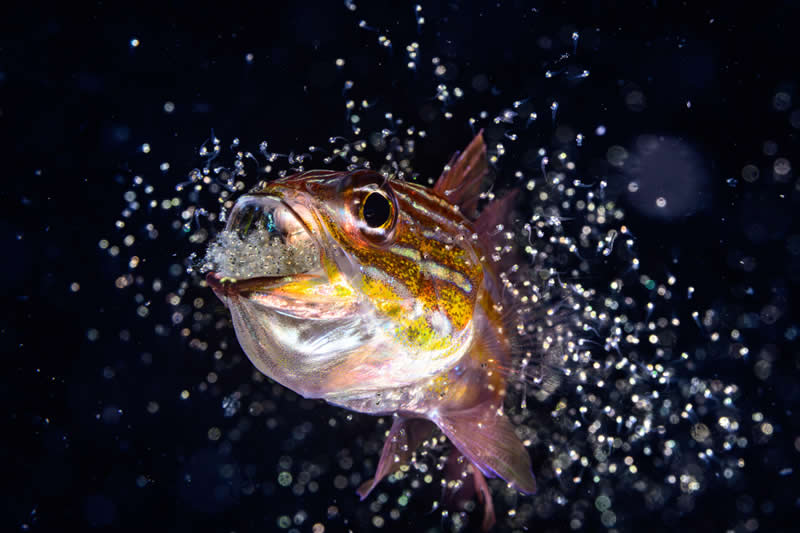
"This photograph captures a male cardinalfish releasing the larvae he has been brooding inside his mouth. Although this species is common in Japanese waters, the image reveals a rarely noticed stage of its life cycle. The male carries and protects the developing eggs for around a week, eating little or nothing during this period. The larvae are released over several events, with the first release containing the largest number."
#9. Wildlife Photographer of the Year: Tamara Stubbs, Antarctica
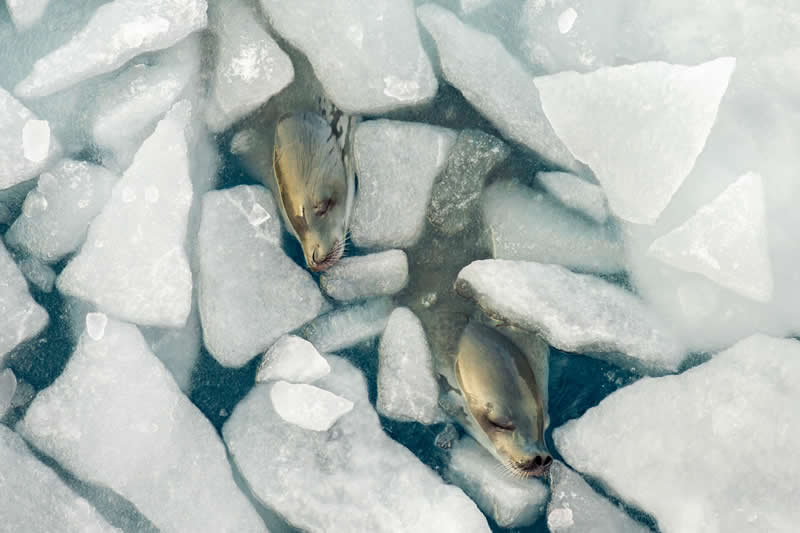
"During a Weddell Sea Expedition in Antarctica, crabeater seals gathered around the icebreaker S.A. Agulhas II after the ship became surrounded by multi-year sea ice. Resting in the sheltered shade of the vessel, the seals floated motionless in the water, occasionally lifting their heads to breathe. This behaviour was observed only once during the expedition. Crabeater seals are highly adapted to life in Antarctic pack ice, using sea ice as a platform for resting, breeding and avoiding predators."
#10. Wildlife Photographer of the Year: Talia Greis, Australia
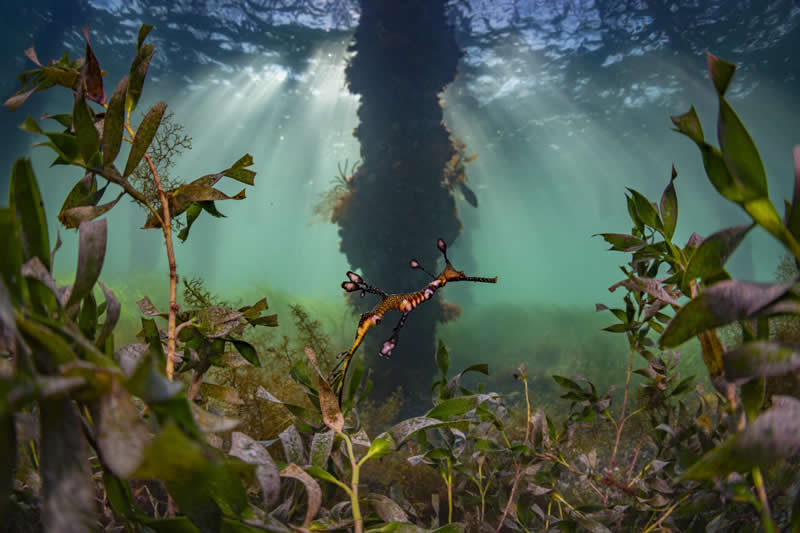
"A juvenile weedy seadragon drifts among seagrass beneath Flinders Pier, Victoria, Australia. Unlike adults, young seadragons have darker colouring that helps them disappear among the vegetation. This individual was missing the appendages on its snout, a feature some seadragons lose over their lifetime. The image shows how these delicate animals are shaped by the environment they inhabit."
#11. Wildlife Photographer of the Year: Matty Smith, Falkland Islands
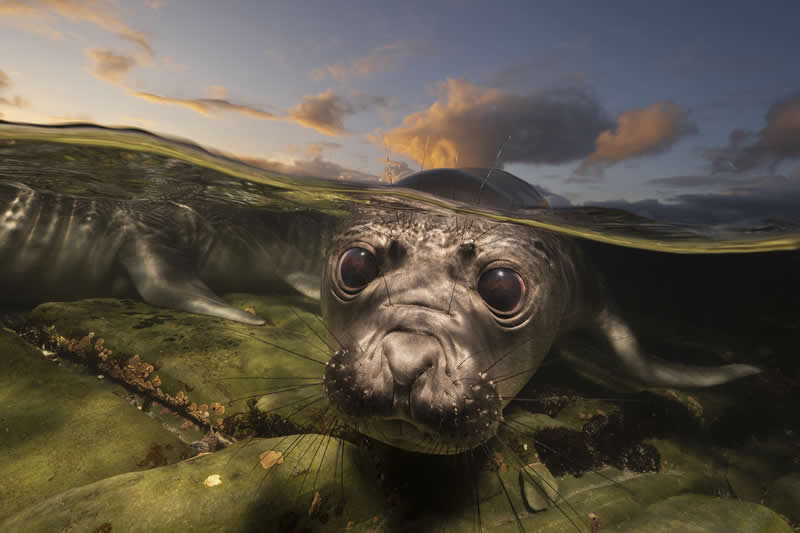
"Southern elephant seal pups explore shallow rock pools on Sea Lion Island in the Falkland Islands, testing their first movements in the water after being weaned by their mothers. These young seals must quickly learn to swim and survive independently. As they climb over one another and investigate their surroundings, this scene captures a key moment in their journey from land-bound pups to ocean explorers."
#12. Fine Art Photographer of the Year: Ben Thouard, French Polynesia
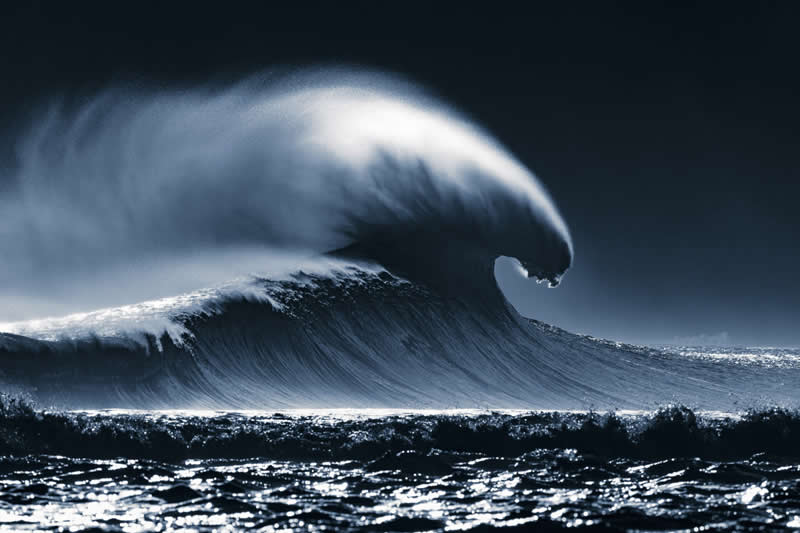
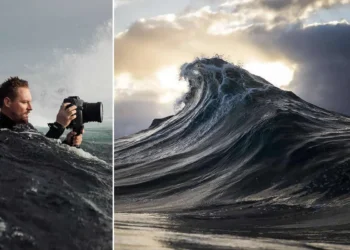
"A powerful wave breaks off the coast of Tahiti, its lip shaped by offshore winds as sunlight turns the spray into a glowing veil. Shot from a jet ski using a long telephoto lens, a moment of ocean chaos is transformed into a carefully balanced landscape, reminiscent of the famous print The Great Wave off Kanagawa by Japanese artist Katsushika Hokusai."
#13. Fine Art Photographer of the Year: John Kowitz, Hawaii, USA
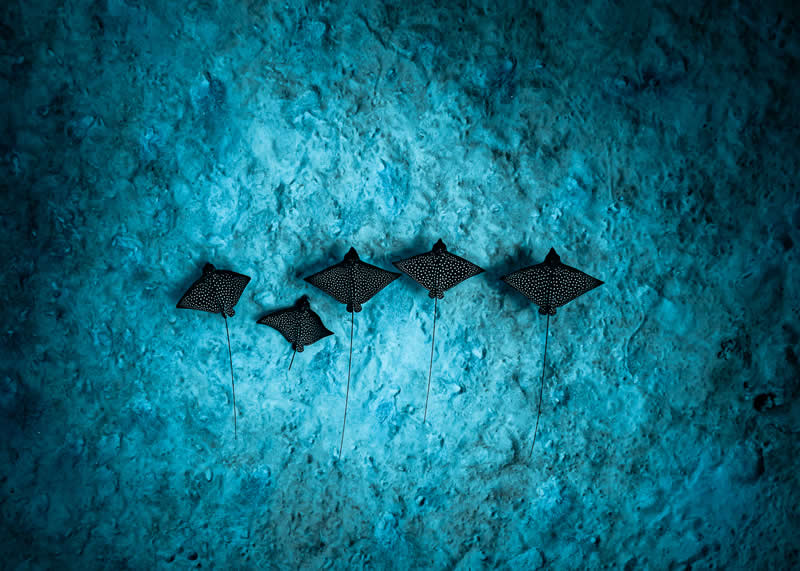
"Five spotted eagle rays glide above the sandy seabed, their dark bodies and white markings contrasting against the pale background. These rays often travel together while searching for prey, using electroreceptors to detect hidden molluscs and crustaceans beneath the sand. Photographed during a dive in search of manta rays, this formation appeared during the journey back to shore."
#14. Fine Art Photographer of the Year: Matty Smith, Maldives
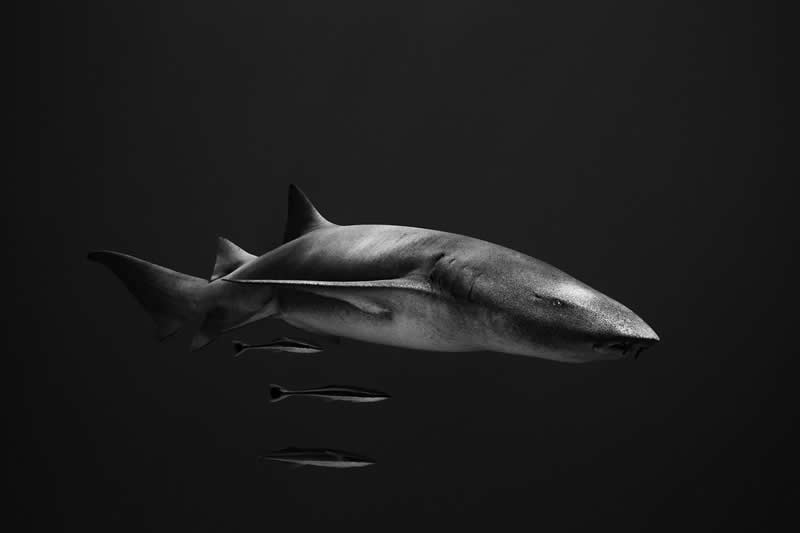
"A tawny nurse shark glides through the warm waters of the Maldives as the setting sun filters through the ocean surface. Beneath it, remoras travel alongside their host, illustrating a common partnership in which the smaller fish gain transport, protection and feeding opportunities. Often perceived as fearsome predators, nurse sharks are slow-moving, bottom-dwelling animals that play an important role in maintaining healthy marine ecosystems. The shark’s direct gaze creates a sense of connection with the viewer."
#15. Adventure Photographer of the Year: Ben Yávar, Philippines
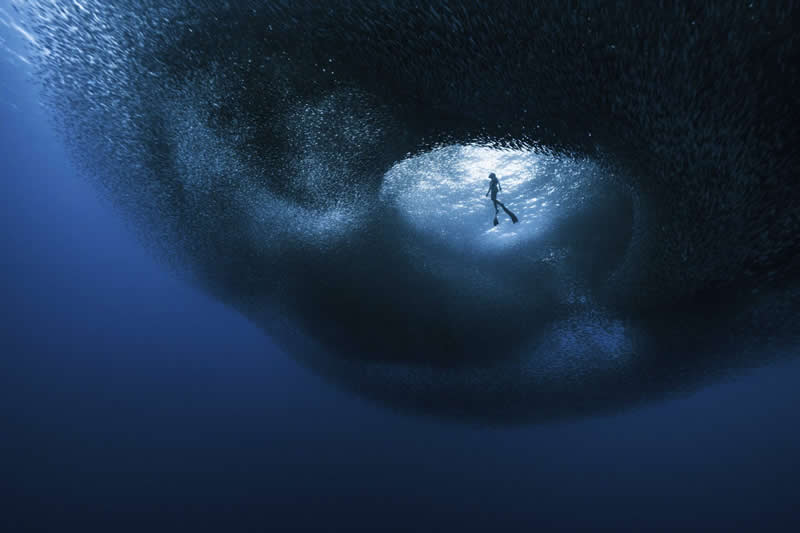
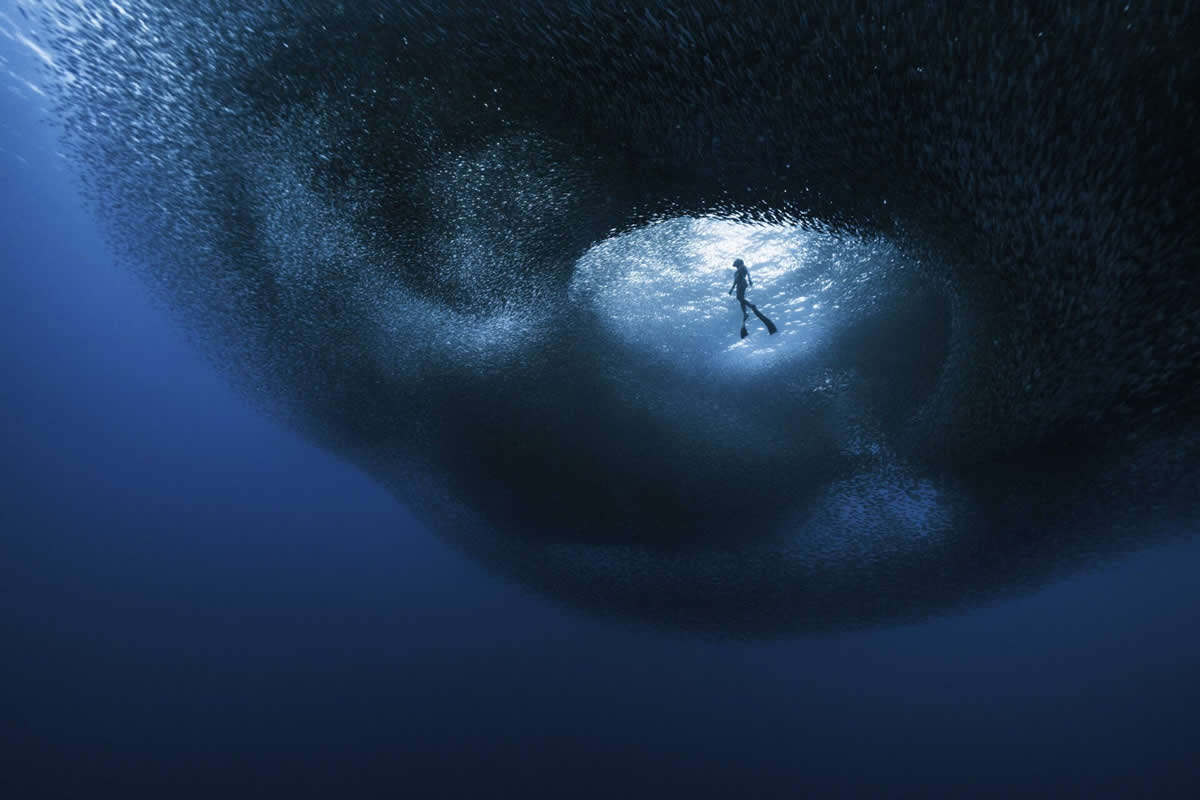
"A freediver is surrounded by a vast school of sardines, which part to form a striking halo as they move around her. Captured during an unplanned morning dive, the image reveals the calm trust that can exist between people and marine life. It is a reminder that patience and respect for the ocean often lead to its most extraordinary moments."
#16. Adventure Photographer of the Year: Daniel Edmond Sullivan Jr, Hawaii
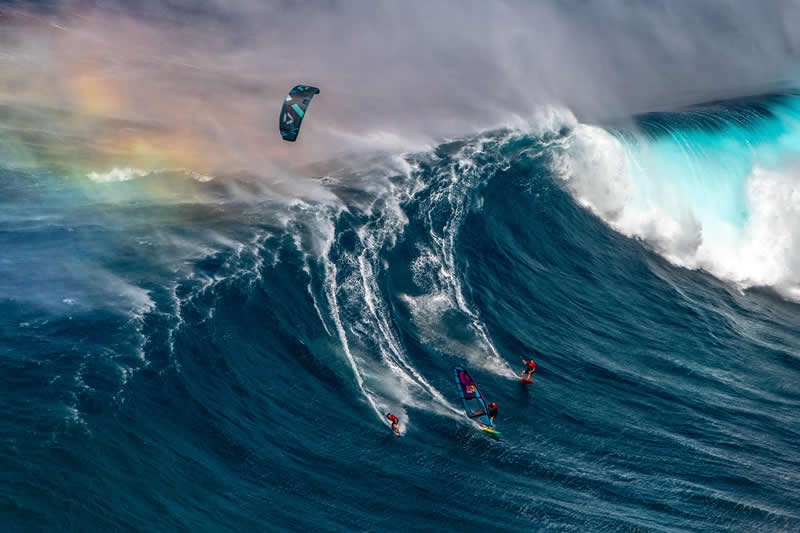
"The photographer shot this image of a surfer, windsurfer and kitesurfer sharing the same towering wave at Peʻahi, known as Jaws, on Maui’s north shore, from a doorless helicopter. At the time there was an unusual combination of huge swell and strong wind that allowed three different forms of wave riding to happen in harmony. In the spray, a rainbow forms. It has been created by the same wind powering the riders across the wave."
#17. Adventure Photographer of the Year: Gergo Rugli, Australia
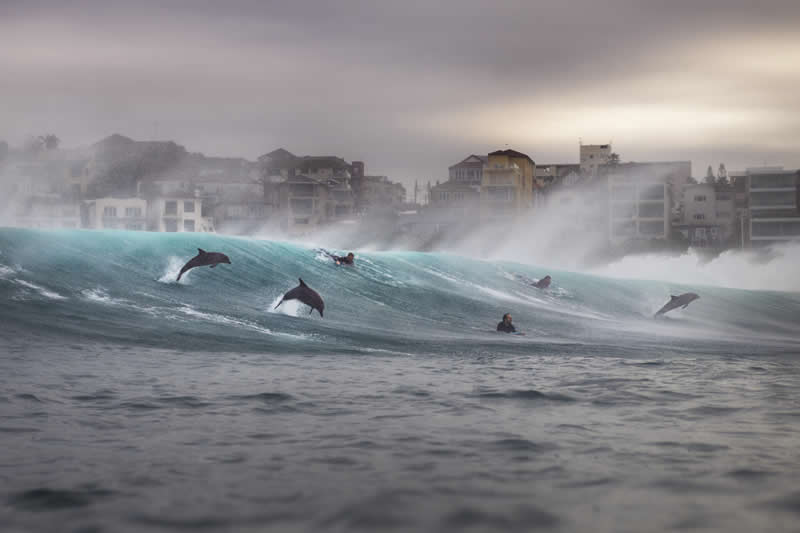
"Dolphins ride the waves alongside surfers at Tamarama Beach, Sydney, during a powerful swell and offshore winds. The pod stayed with the surfers for more than an hour, moving through the lineup as naturally as the people around them. Captured from the water, this image shows the ocean as a shared space, where humans and wildlife briefly move together within the same powerful coastal environment."
#18. Adventure Photographer of the Year: Lars von Ritter Zahony, Greenland
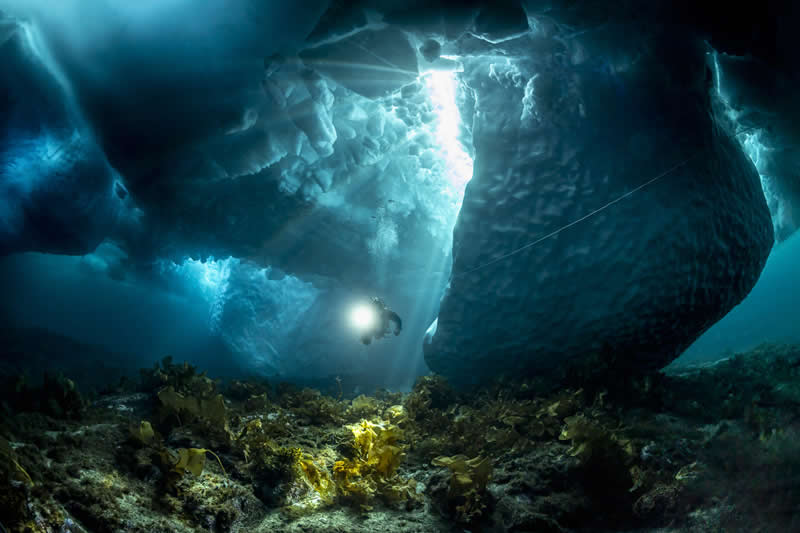
"Sunlight pours through cracks in an iceberg in East Greenland, illuminating the seabed like a natural theatre. Created by a storm just days earlier, these openings allow light to reach an underwater world usually hidden in darkness. Despite its warm glow, the scene was photographed in extreme conditions, with water at -2.5°C and air temperatures of -15°C, pushing both divers and equipment to their limits."
#19. Adventure Photographer of the Year: Stefan Mathers, Portugal
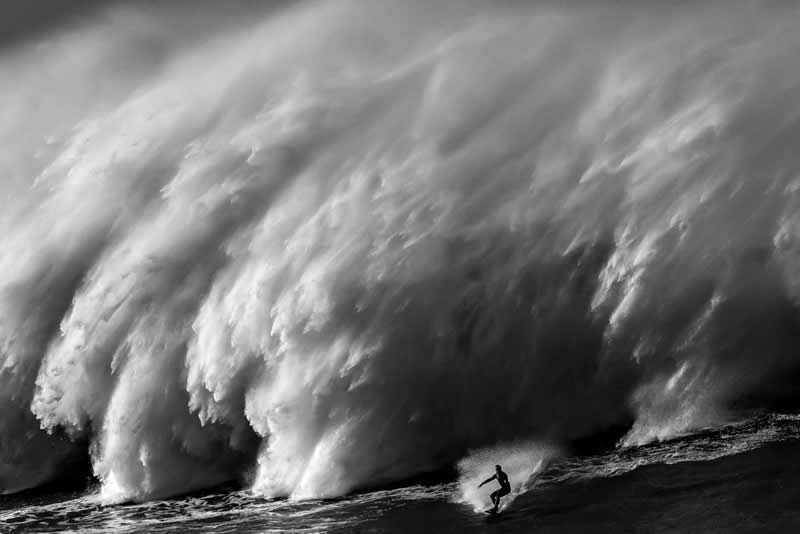
"Eighteen-year-old surfer Luke Smith rides a powerful wave at the end of the surf season. The swirling foam and the crashing white water behind the surfer resemble a snow avalanche. The size of the wave highlights the ocean’s raw power and the bravery of the surfer. Luke was towed into these large waves by his brother, who also acted as his safety partner, which is essential in these conditions."
#20. Conservation (Impact) Photographer of the Year: Celia Kujala, San Diego, California
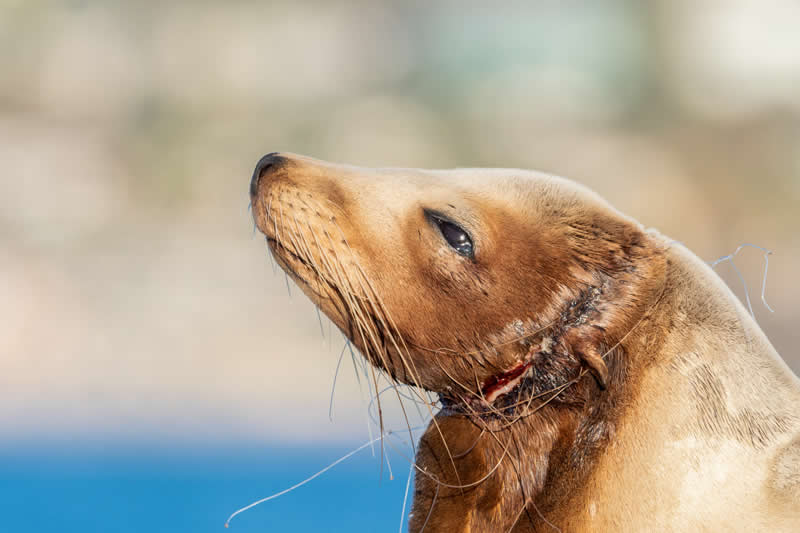
"A California sea lion has plastic netting tightly wrapped around her neck. This is a stark reminder of the lasting impacts of marine plastic pollution. The wound had already cut deep into her skin, yet rescuing her was impossible because of her location within a crowded colony. Images like this reveal the hidden cost of discarded waste and give a face to an often-unseen crisis. The catchlight in her eye creates an intimate connection that is difficult to ignore."
#21. Conservation (Impact) Photographer of the Year: Daniel Taylor, The Gulf of California, Mexico
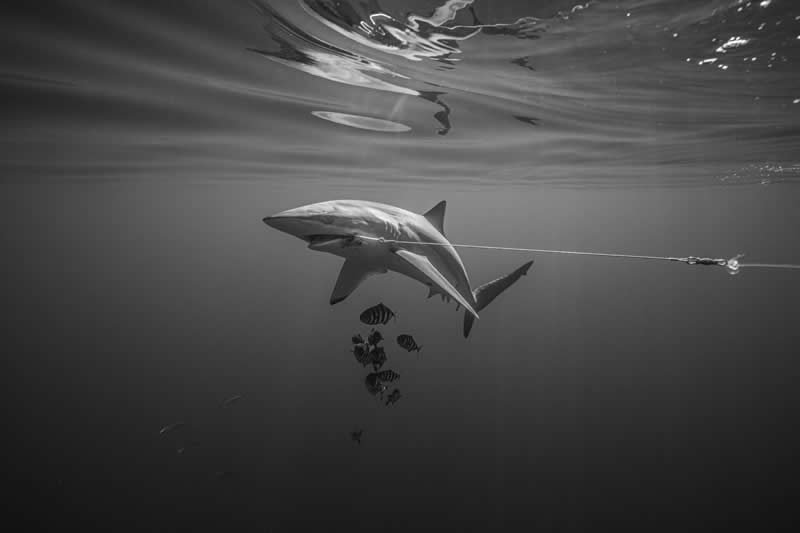
"A silky shark circles helplessly after taking bait from an illegal longline, its fate sealed by a steel hook and heavy line designed to prevent escape. Photographed less than 48 hours after Baja California’s seasonal shark fishing ban ended, the image reveals a hidden reality unfolding far from shore. A small group of pilot fish remains beside the shark, highlighting how the loss of one animal can ripple through an entire ecosystem."
#22. Conservation (Impact) Photographer of the Year: James Ferrara, Raa Atoll, Maldives
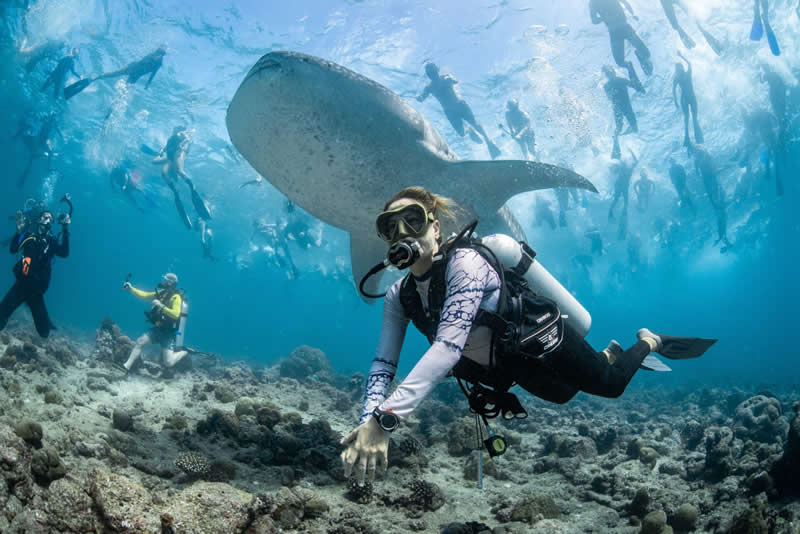
"A whale shark is surrounded by divers and snorkelers in the Maldives, revealing the overwhelming pressure that crowded wildlife tourism can place on marine animals. With almost 50 people visible in the frame, this image captures the reality behind some popular wildlife encounters: an animal seeking space while people compete for a closer view. It challenges us to rethink how we experience and protect the species we admire."
#23. Conservation (Impact) Photographer of the Year: Ysabela Coll, Magdalena Bay, Mexico
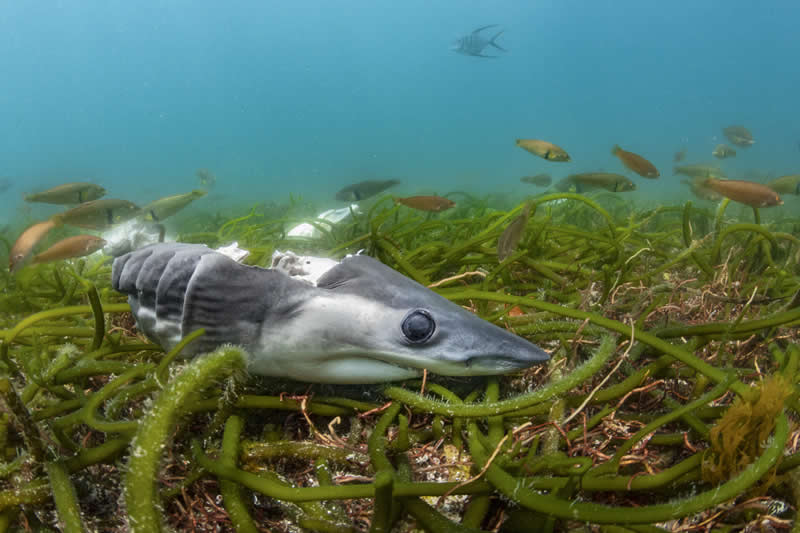
"A shark’s severed head lies among seagrass in Baja California, Mexico, after the animal’s body was removed. Hundreds of similar remains were found along one beach, revealing the scale of shark exploitation in this region. The surrounding seagrass meadow is a reminder that even thriving marine habitats can exist alongside human pressures that threaten ocean wildlife."
#24. Conservation (Hope) Photographer of the Year: Daniel Edmond Sullivan Jr Maui County, Hawaii
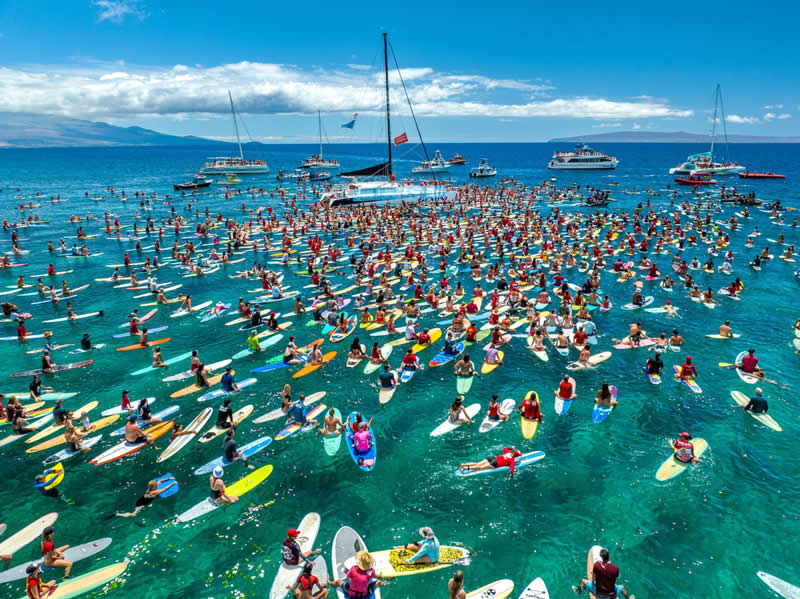
"Thirty days after the 2023 Lahaina wildfire claimed 102 lives, thousands gathered off West Maui for a traditional Hawaiian paddle-out ceremony. Surfers and families formed a circle on the ocean, linking hands and releasing leis in memory of those lost. Photographed from above, the image captures a community transforming grief into a shared expression of love, remembrance and connection to the sea."
#25. Conservation (Hope) Photographer of the Year: Thomas Pavy, French Polynesia
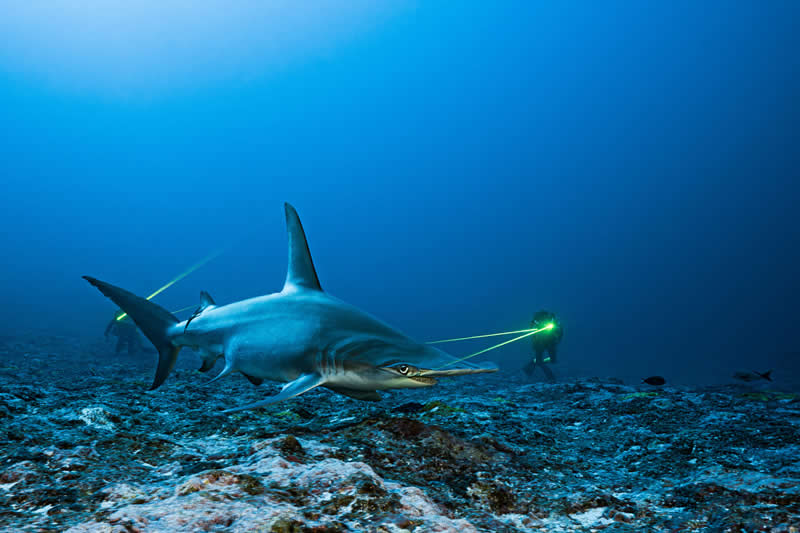
"A great hammerhead shark (Sphyrna mokarran) is photographed at 55 metres depth in Tiputa Pass, Rangiroa Atoll, during a population survey. This image represents the moment an anonymous shark becomes a known individual. Through photo identification and laser-calibrated video photogrammetry, scientists can track sharks over time, measuring size, sex and population trends. Conducted without bait or attractants, this research helps reveal the lives of Tamataroa, a culturally respected species protected in French Polynesia."
#26. Conservation (Hope) Photographer of the Year: Leighton Lum, Honolulu, Hawaii, United States
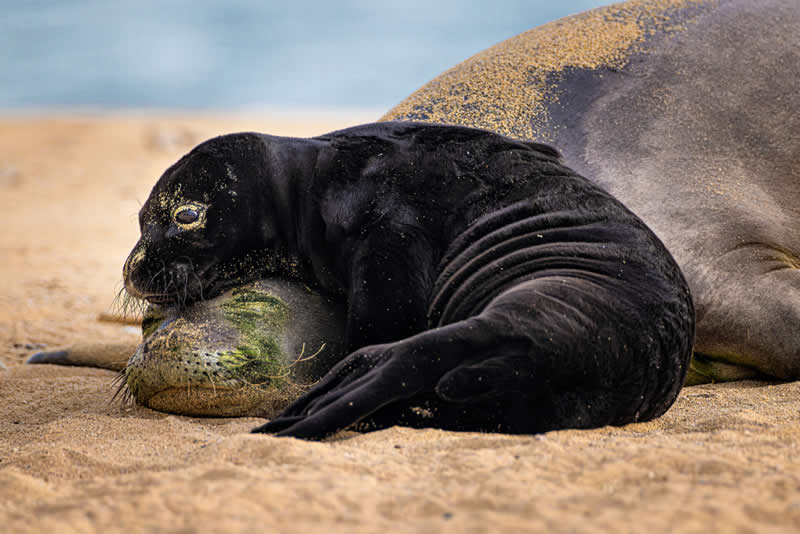
"A Hawaiian monk seal rests with her week-old pup on Kaimana Beach in Waikīkī. Mothers nurse their pups for around six weeks without feeding, losing up to a third of their body weight while the pup grows rapidly before becoming independent. Despite choosing one of Hawaiʻi’s busiest beaches to raise her pup, Kaiwi has successfully raised several pups here. It does however require the support of conservation teams and volunteers – DLNR enforcement, NOAA and volunteer groups coordinating barriers and round-the-clock patrols to ensure that tourists and locals wouldn’t get too close during such a sensitive window."
#27. Human Connection Award: People & Planet Ocean: Anita Verde, Baja Peninsula, Mexico
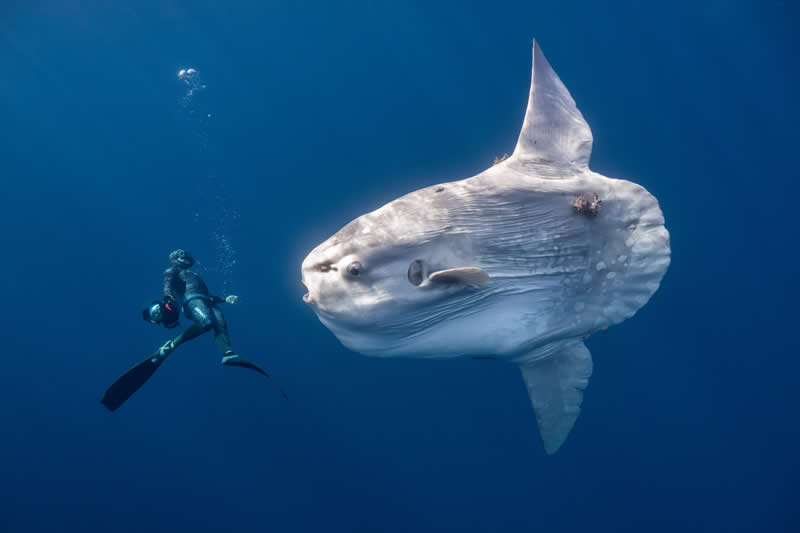
"A giant oceanic sunfish (Mola mola) glides through the clear waters of Mexico’s Baja Peninsula. Encountered during the final hour of a 2025 sardine run expedition, the unusually pale fish approaches the freedivers on its own, while soft sunlight gives it a moon-like glow. The unexpected meeting is a reminder that the ocean’s most memorable moments often happen when least expected."
#28. Human Connection Award: People & Planet Ocean: Francesca Page, Isle of White, UK
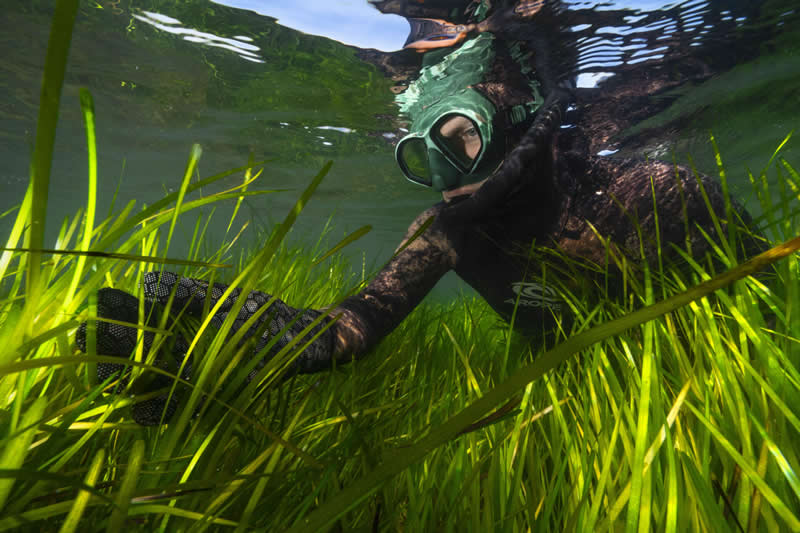
"A volunteer from Project Seagrass surveys a healthy seagrass meadow in the Solent, off the Isle of Wight. Seagrass supports marine life, stores carbon and helps protect coastlines, yet the UK has lost around 92 per cent of these underwater meadows. Through the Solent Seascape Project, volunteers and scientists are restoring this vital habitat, showing how community action can help bring damaged marine ecosystems back to life."
#29. Human Connection Award: People & Planet Ocean: Gergo Rugli, Sydney, Australia
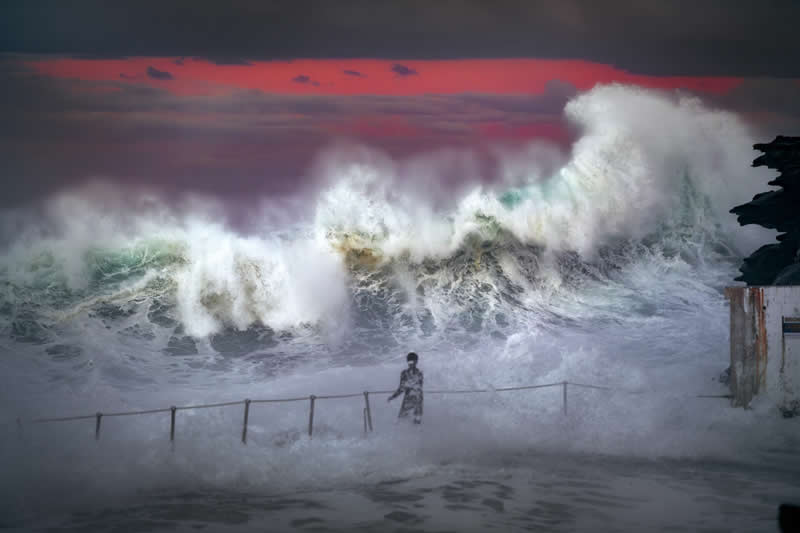
"A fearless teenager stands at Bronte Ocean Pool, Sydney, as a powerful swell sends waves crashing over the closed pool. While the conditions forced beaches to shut, people watched the waves from behind the fence. A group of local teenagers climbed into the closed pool and stood on the edge, waiting for the waves to crash over them and sweep them across the pool. It was undoubtedly dangerous, but demonstrates their deep familiarity and connection with the ocean."
#30. The Ocean Unseen: Hidden Worlds: Andrea Michelutti, Anilao, Philippines
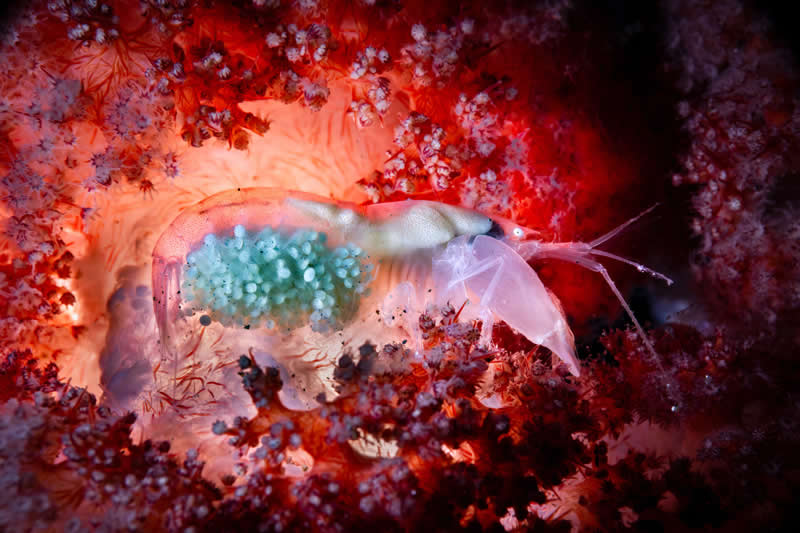
"A shrimp carrying a clutch of eggs shelters within the branches of a coral. The photographer used a snoot placed behind the coral to create the fiery glow surrounding the eggs, while front lighting revealed the shrimp without disturbing its fragile habitat."
#31. The Ocean Unseen: Hidden Worlds: Bing Lin, Malapascua Island, Philippines
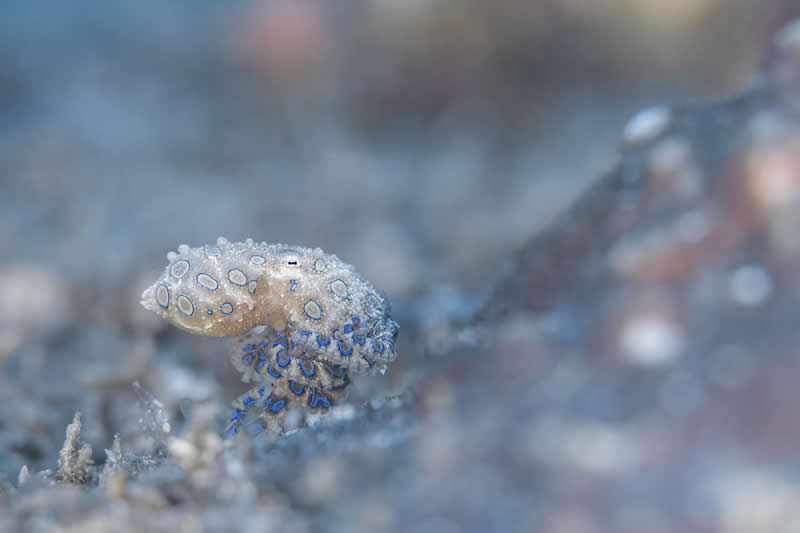
"A blue-ringed octopus, smaller than a golf ball, moves across the crest of a reef wall at Malapascua Island, Philippines. This species is nocturnal, intensely secretive, and rarely seen during daylight hours – much less hunting in the open, which makes moments like this incredibly rare. Using its intricate camouflage, this tiny predator blends into the reef while searching for prey among rocks and coral. Photographed with a macro lens, the image reveals details often missed in the underwater landscape."
#32. The Ocean Unseen: Hidden Worlds: Luis Arpa Toribio, Lembeh, Indonesia
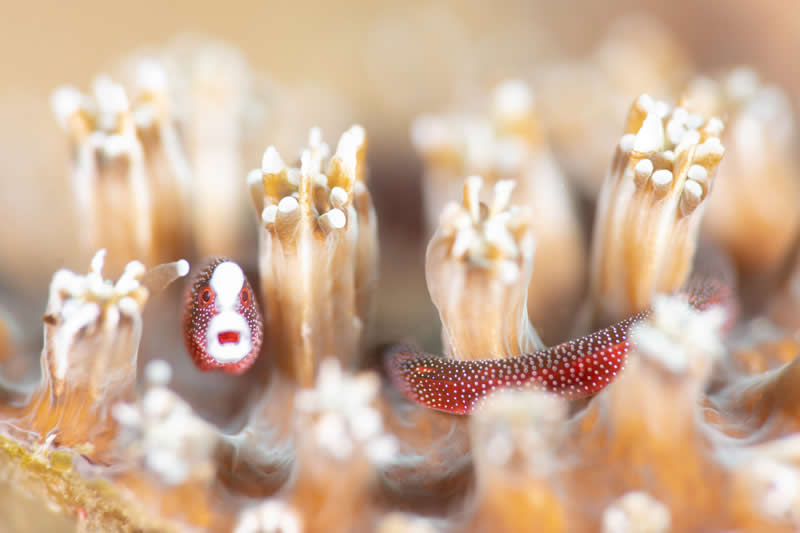
"A Braun’s pughead pipefish (Bulbonaricus brauni) peers from between coral polyps in Lembeh, Indonesia. Its unusual features give it a curious, almost surprised expression, helping people connect with a species rarely seen outside its coral home. Some guides damage coral colonies to make these tiny fish easier to show to visitors, but this image was captured by waiting patiently and allowing the animal to appear naturally."
#33. The Ocean Unseen: Hidden Worlds: Steven Lopez, Avalon, California, USA
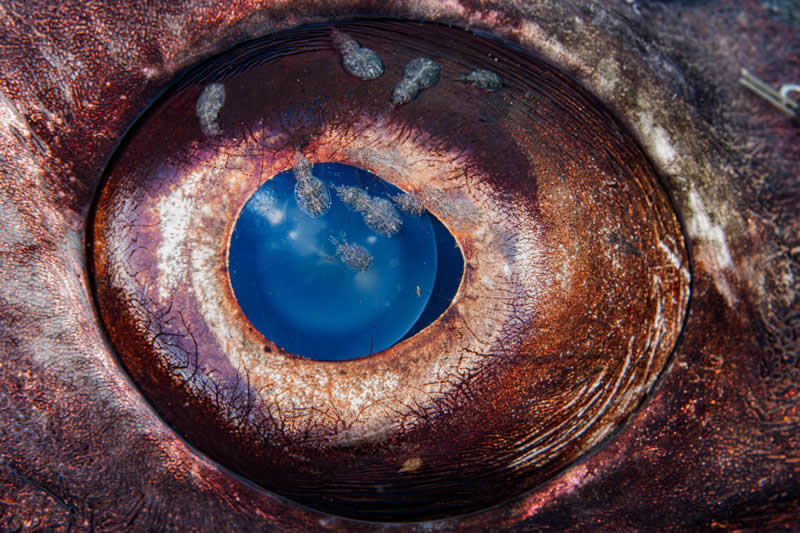
"A close view of a giant black sea bass reveals tiny parasitic copepods clustered around its eye in a Catalina Island kelp forest. Once misidentified on other hosts, these copepods are now known to have a specific relationship with this threatened fish. In the late 1970s and early 1980s, the giant black sea bass was nearly extinct in Southern California but is now recovering through protection efforts. This image highlights how even a giant predator can support a hidden community of much smaller organisms."
#34. The Ocean Unseen: Hidden Worlds: Suliman Alatiqi, Mawali, Bitung City, North Sulawesi, Indonesia
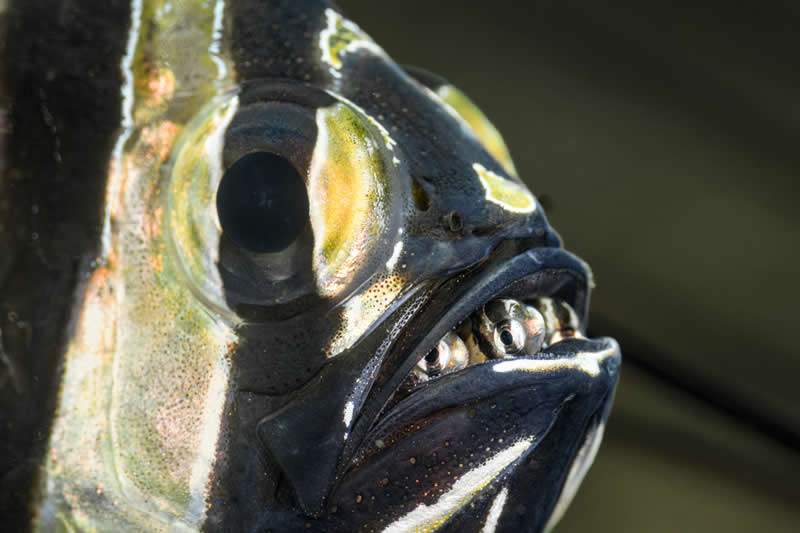
"A male Banggai cardinalfish shelters newly hatched juveniles inside his mouth, continuing the parental care that follows a three-week incubation period. After hatching, the male may brood the young for another 10 days without feeding, protecting them from predators until they become more independent. This image captures two juveniles peering from their father’s mouth, revealing the specialised mouthbrooding strategy that helps this species increase the survival of its young."
#35. The Ocean Unseen: Hidden Worlds: Mitsuna Kawai, Osezaki, Japan
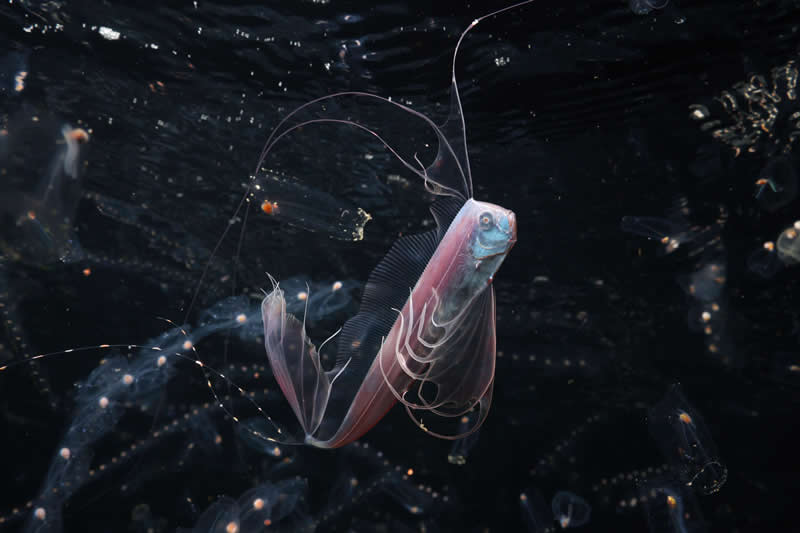
"A ribbonfish rises vertically through the dark waters of Osezaki, Japan. Its long, silver body and delicate fins are adapted for life in the open ocean. This image was captured during a winter blackwater dive. Around the ribbonfish, a swarm of salps – small, jelly-like animals that feed on tiny particles in the ocean – creates a glimpse of life moving through the deep sea."
Frequently Asked Questions:
What is the Ocean Photographer of the Year?
The Ocean Photographer of the Year is an annual photography competition presented by Oceanographic and Blancpain. It celebrates powerful ocean imagery while highlighting marine biodiversity, conservation challenges, human connections, and the urgent need to protect our oceans.
What does the Ocean Photographer of the Year competition highlight?
The competition highlights the oceans’ beauty and vulnerability. Photographers document wildlife, underwater ecosystems, conservation efforts, human relationships with the sea, and hidden marine worlds, creating compelling visual stories that encourage people to care about ocean protection.
What categories are included in Ocean Photographer of the Year?
The competition includes Wildlife, Fine Art, Adventure, Conservation (Impact), Conservation (Hope), Human Connection: People & Planet Ocean, and The Ocean Unseen: Hidden Worlds, giving photographers from different disciplines opportunities to tell powerful stories about our oceans.
Why is ocean photography important for conservation?
Ocean photography makes environmental issues easier to understand and connect with emotionally. A single striking image can reveal endangered wildlife, damaged habitats, or extraordinary ecosystems, helping audiences recognize the ocean’s value and understand why protecting marine environments matters.
Who can enter the Ocean Photographer of the Year competition?
Ocean Photographer of the Year welcomes ocean photographers across experience levels, including both amateurs and professionals. A panel of ocean photographers, editors, and museum and gallery curators judges entries, and 118 images are recognized each year.