
There’s a way in which birds make the ordinary seem truly magical: one moment a small songbird is sitting quietly on a branch and the next a raptor is slicing through the sky as if it dominated the area. The 2026 Audubon Photography Awards capture those brief moments and they are really something to see.
This year’s winners have been announced by the National Audubon Society, making it the 17th year of the competition’s recognition of the beauty, behaviour, and difficulties facing birds throughout the Americas. The awards are split into two geographical competitions: one covering Chile and Colombia and the other the United States and Canada, with the aim of highlighting the relationships between birds, people, and ecosystems.
The judges chose nine winning entries from Chile and Colombia and eight from the United States and Canada; the winners of the grand prize also received $5,000 and an unforgettable trip to Antarctica with HX Expeditions.
Yet money and trophies only give part of the story; behind those photographs there are hours spent in the blinds, freezing mornings, long waits, muddy trails, and a great deal of patience. Some photographers take years to learn where a bird might turn up and how it might behave. And when all the circumstances finally align, they have only one precious second in which to take the photograph.
From dramatic seabirds through to fierce raptors and colourful songbirds, it is clear that great wildlife photography is not merely a matter of possessing a good camera; it is about turning up, remaining patient, and being ready when nature puts on a show.
You can find more info:
#1. Grand Prize: Jacqueline Burke
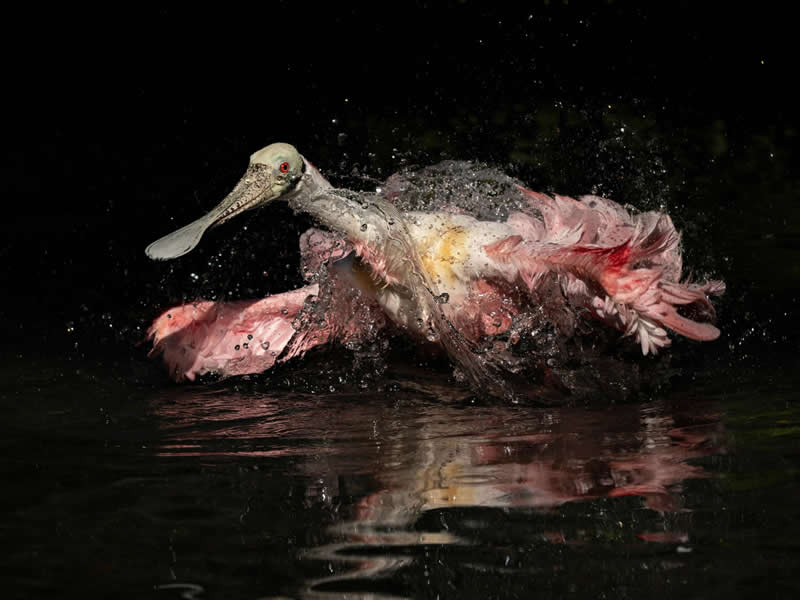
Location: St. Augustine Alligator Farm Zoological Park, Florida, United States
Behind the Shot: Wild wading birds gather each year to nest in this rookery, where the alligators deter feral cats, raccoons, and other nest predators. While most areas were brightly lit in the midday sun, I noticed a cove beneath dense vegetation that fell into deep shadow. A spoonbill moved into this darker pocket to drink and bathe, and I watched the rhythm of its movements as a shaft of light illuminated its pale plumage and pink wings. Roseate Spoonbills are often observed foraging, but bathing behavior offers a different view into their lives. In this image, the bird’s color, structure, and movement are all visible at once; it kind of had it all.
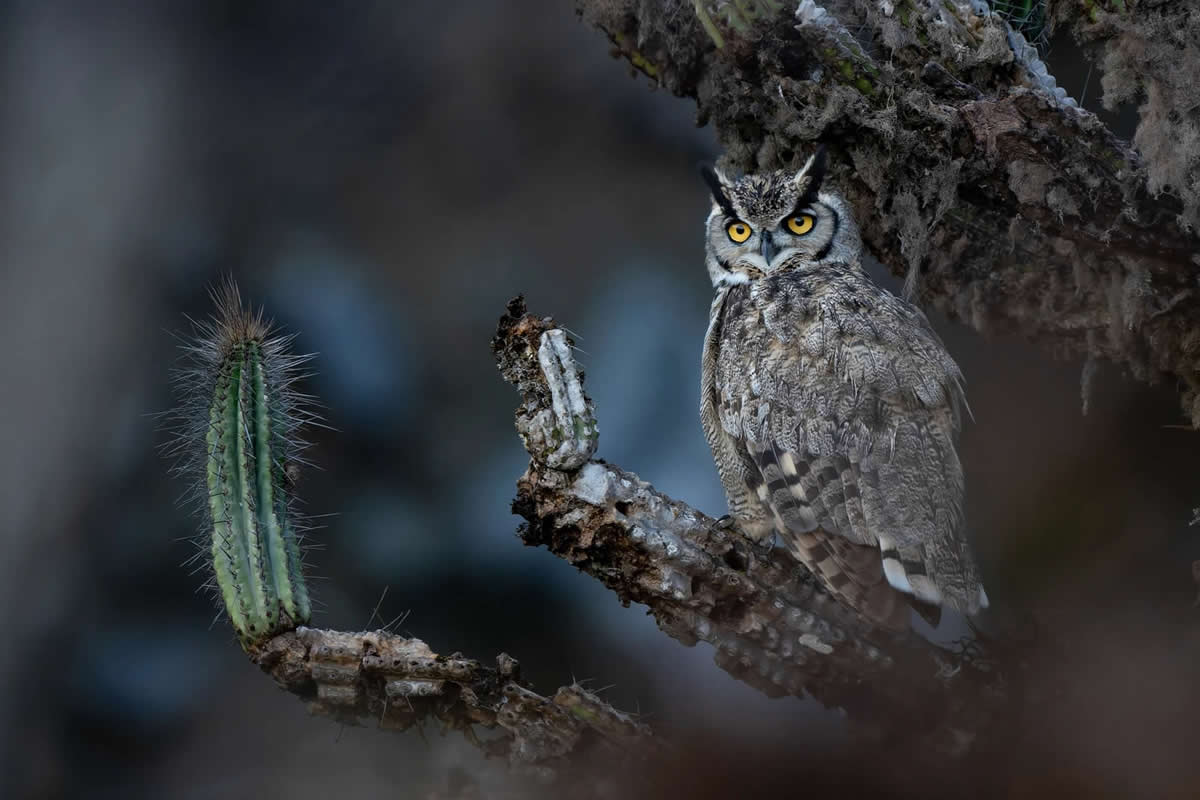
#2. Grand Prize: Francisco Castro Escobar
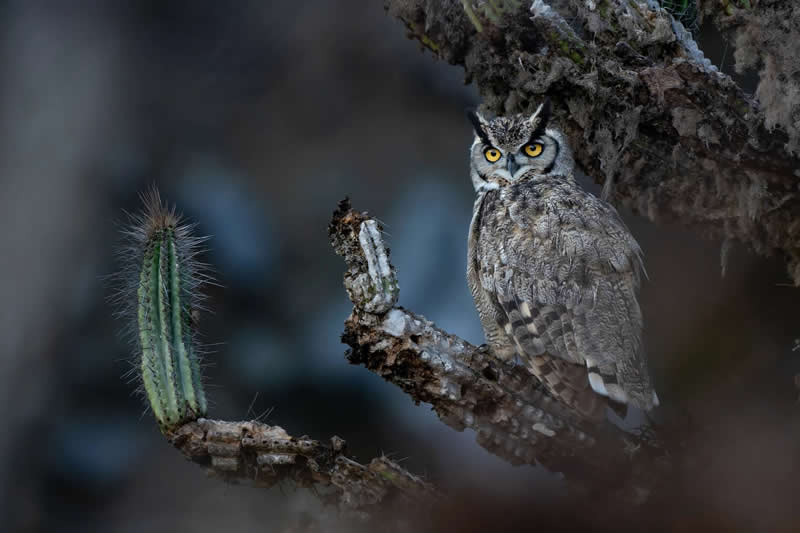
Location: Paposo Natural Preserve, Antofagasta, Chile
Behind the Shot: Starting at dawn, my friends and I walked for hours through a unique desert landscape in northern Chile, where the rugged terrain traps sea mist in ravines and where cacti and vibrant wildflowers thrive. In the distance, we noticed the silhouette of a bird perched among the cacti. I approached slowly without a sound, hiding behind the plants to avoid any disturbance. Once near, I was thrilled to see through my lens an imposing Lesser Horned Owl: “the ghost of the desert.” The largest owl in Chile gets this nickname because seeing one is so rare that it’s like an apparition. I felt the magic as I captured its calm beauty.
#3. Birds in Landscapes, Chile: Timothy Dhalleine
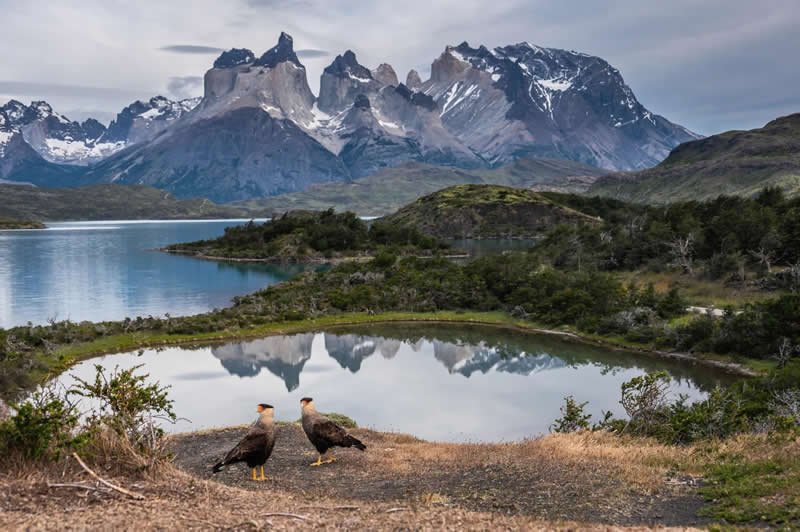
Location: Torres del Paine National Park, Magallanes and Chilean Antarctica, Chile
Behind the Shot: I live in the Chilean Patagonia and spend my time exploring Torres del Paine National Park. I’ve seen this place in all its facets, and yet it always manages to surprise me. That particular morning, I was hoping to photograph the sunrise when I came across a couple of Crested Caracaras seemingly gazing at the mountain range. People often dismiss this species as a scavenger and rarely stop to observe its more intimate behaviors. I’d like all park visitors to remember that we share these breathtaking landscapes with countless forms of life that deserve our respect and consideration.
#4. Birds Without Borders: Nick Parayko
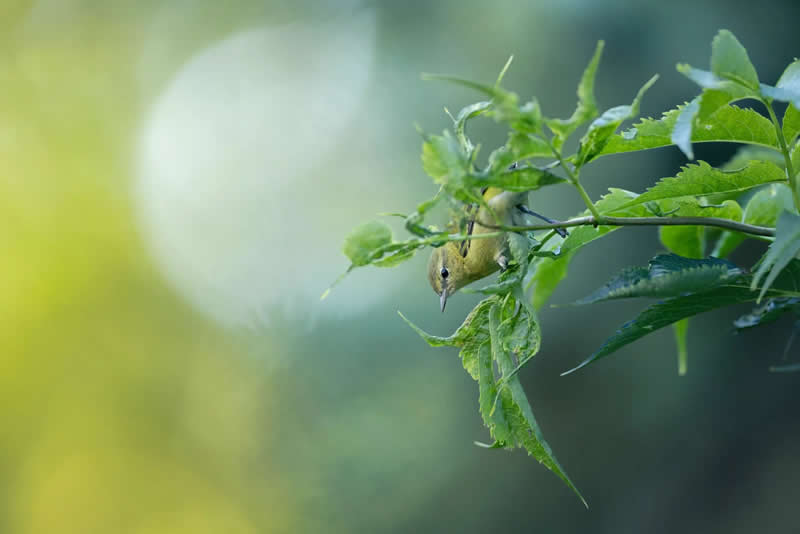
Location: St. Albert, Alberta, Canada
Behind the Shot: I’d recently moved into a home that backed onto a city ravine, so I set out to document my new yard birds in the native vegetation. This migrating Tennessee Warbler stayed for more than a week after discovering an abundant food source: a well-timed mass emergence of flying ants. To get this shot, I concealed myself beside my air-conditioning unit. When the warbler perched on an elderberry, I captured it in a fun position against a soft, two-toned background. In just a short time birding around my yard, I’ve documented more than 70 species, a reminder of the diversity that exists within urban environments. I hope my photos draw attention to the rich wildlife that can be found close to home.
#5. Birds Without Borders: Rodrigo González Pairoa
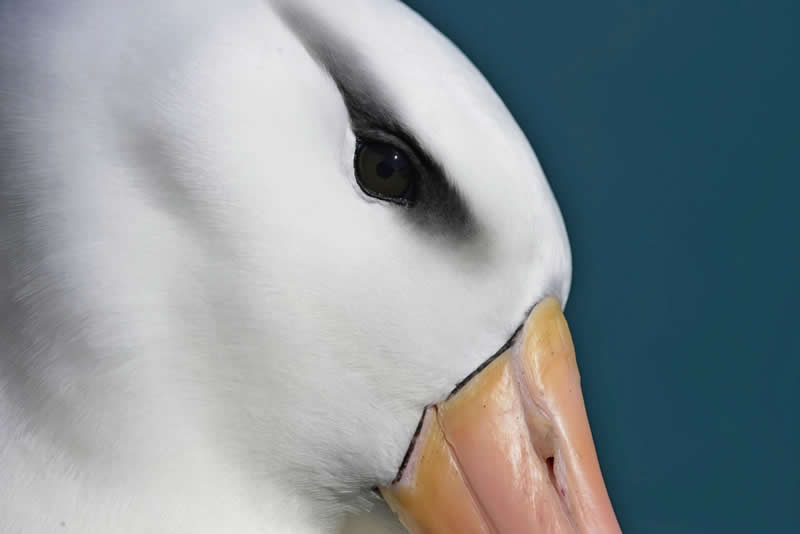
Location: Albatross Islet, Magallanes and Chilean Antarctica, Chile
Behind the Shot: It was almost impossible to keep the camera steady. In the remote Almirantazgo Sound, the biting cold, ever-changing light, and unpredictable wind forced me to readjust my stance and refocus after every blast of photos. This albatross was calm and let me approach slowly. In an almost comical moment, it tilted its head, as if observing me with the same curiosity with which I was photographing it. I filled the frame with its face, revealing the dark outline around its eye and the sculptural texture of its plumage. In that brief moment, the wind ceased. The resulting image captures a fleeting moment of silent, intimate connection with an iconic species of the Southern Seas. I hope that whoever views it feels that same sense of closeness.
#6. Birds in Landscapes: Liron Gertsman
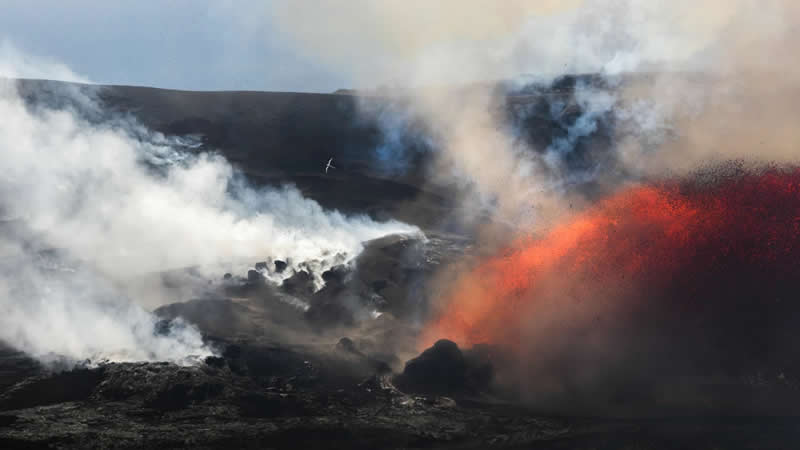
Location: Hawaiʻi Volcanoes National Park, Hawai‘i, United States
Behind the Shot: I’m passionate about photographing birds in spectacular environments, so when I heard about White-tailed Tropicbirds nesting in the caldera walls of an active volcano, I made the trip. I spent 10 days scouting and waiting at the Halemaʻumaʻu Crater before the Kīlauea volcano erupted. White gases on the left of the photo are primarily water vapor and carbon dioxide; the blue gas on the top right is sulfur dioxide; the brown dust is volcanic ash; and red lava glows on the right. The birds nest in the crater’s cracks, safe from predators, and use the thermals generated from the volcano’s heat to gain lift as they fly out to gather food.
#7. Conservation: Josh Galicki
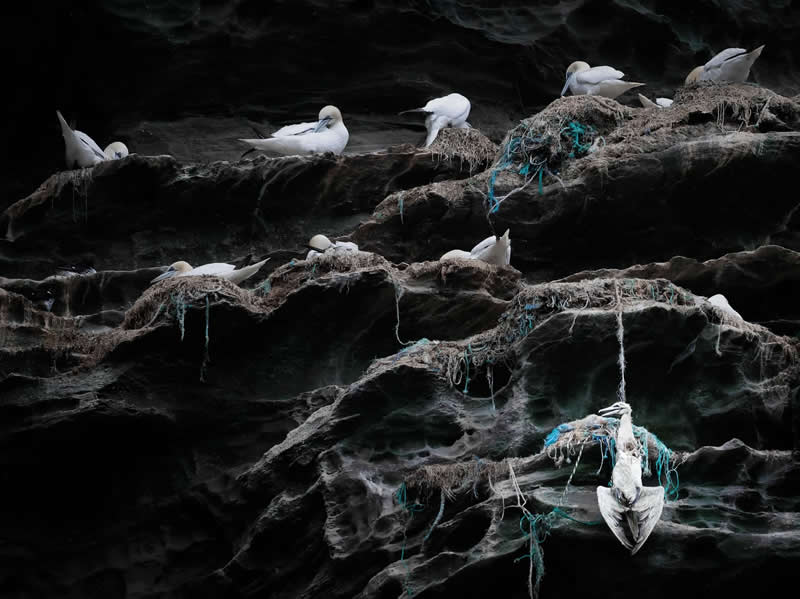
Location: Isle of Noss, Shetland Islands, United Kingdom
Behind the Shot: I was on a boat passing under cliffs where Northern Gannets nest and spotted this dead bird hanging from fishing line as others went about their lives around it. I’ve never seen anything like it. I wanted to show this contrast between life and death. This species already faces many challenges, including climate change and disease; only the year before my visit, avian flu had decimated the colony. I took this image as a reminder of one more obstacle we put in the way of this charismatic species.
#8. Coastal Birds, Chile: Gonzalo Bertolotto Quintana
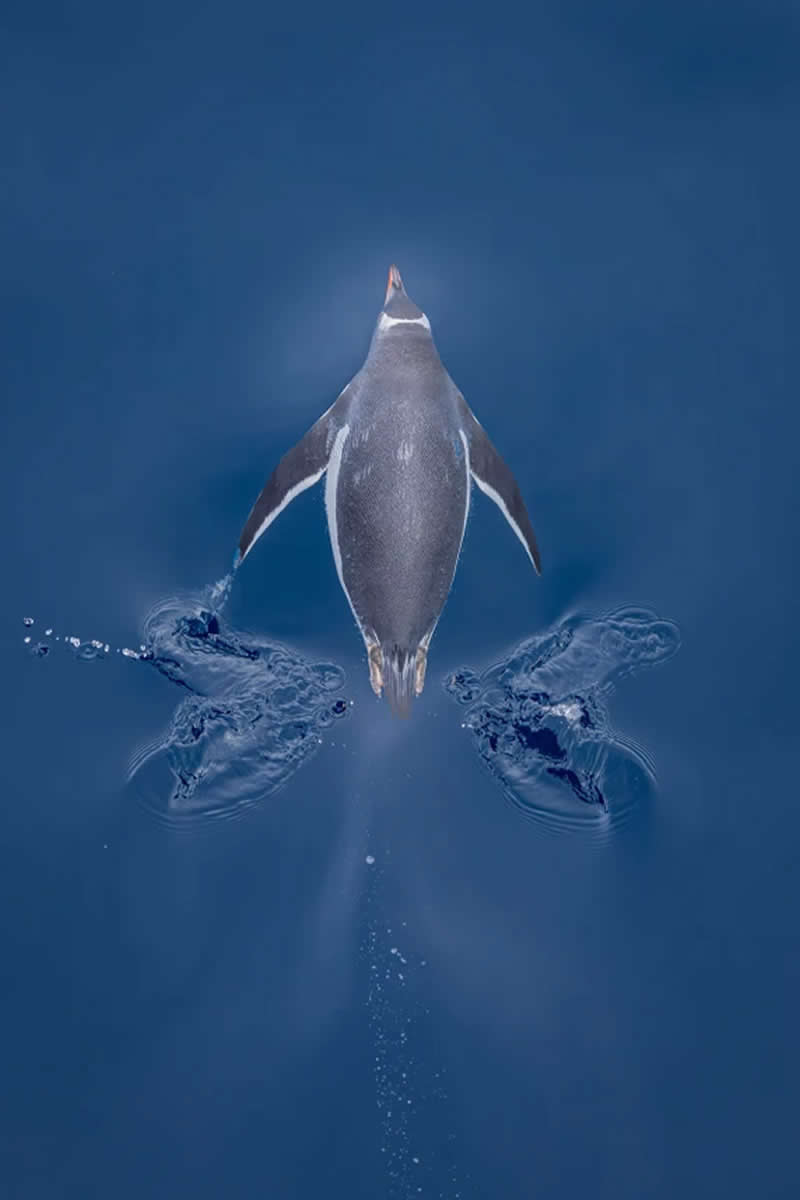
Location: Bahía Fildes, Magallanes and Chilean Antarctica, Chile
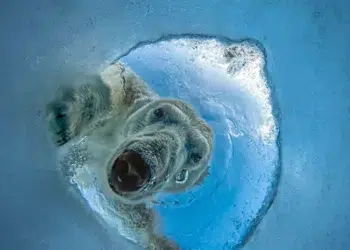
Behind the Shot: I was working as the meteorologist aboard a 558-foot-long multipurpose vessel of the Chilean Navy and as a member of a University of Magallanes’ scientific expedition in Antarctica. One afternoon, some Gentoo Penguins swam around our ship. I first thought I’d film them, but since we were moving, I decided to take photos instead. From a height of nearly 130 feet, I managed to capture this image of one penguin from a unique angle: with almost its entire body submerged, revealing the bubbles and swirl that formed as it flapped its wings. Even though it was underwater, its movement was visible, creating a symmetrical scene made possible by the elevated view.
#9. Birds in Landscapes, Colombia: Faber Mosquera Álvarez
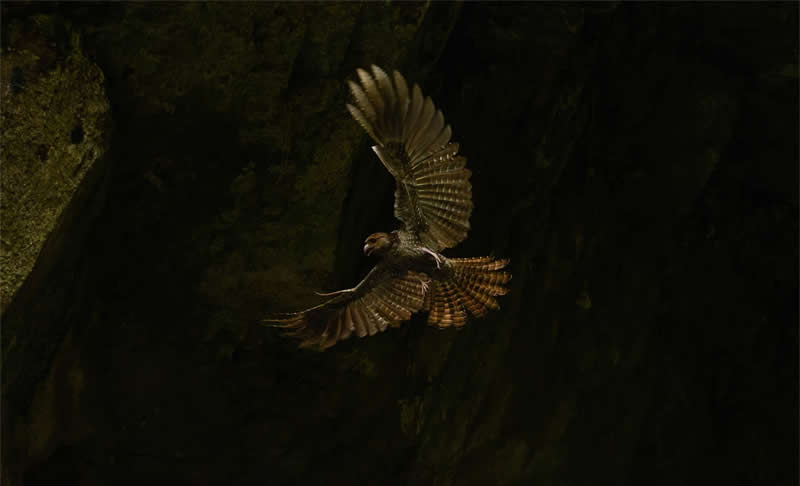
Location: Cañón de los Guácharos, Quindío, Colombia
Behind the Shot: Photographing this Oilbird in flight inside its sanctuary of shadows was a test of patience and technique. I knew the lighting conditions in the cavern would be critical, so I went ahead of the group I was with, crossing a rushing river to find the perfect angle without disturbing the area. I increased my camera’s light sensitivity and used a high shutter speed to freeze the birds’ movement. As my companions caught up with me, the cave came alive in an explosion of fluttering wings. I had a nasty fall on the river rocks on my return trip, but my knee pain vanished when I saw this image.
#10. Plants for Birds: Mike Henry
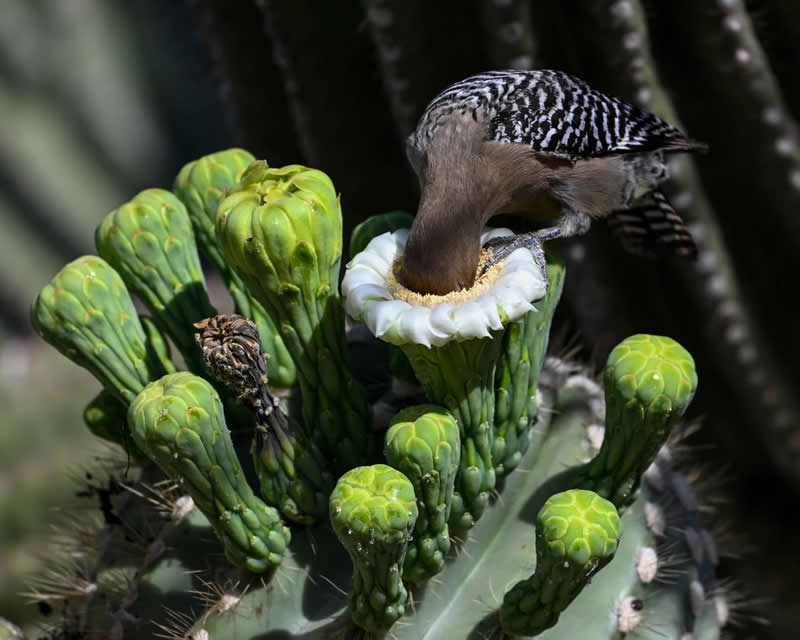
Location: Tucson, Arizona, United States
Behind the Shot: Saguaro cactus blossoms begin opening in early April in southeast Arizona. They only bloom for about a day and a half, providing an opportunity to observe pollinators like birds and bats. The flowers are usually way too high for me to get a good perspective, but these were on an arm that grew to the side. I stopped by every morning, waiting for the buds to open. When they did, I watched this female woodpecker’s head completely disappear into the blossom as it sampled the nectar. The result is both whimsical and fascinating behavior.
#11. Conservation: Santiago Pérez Rincón
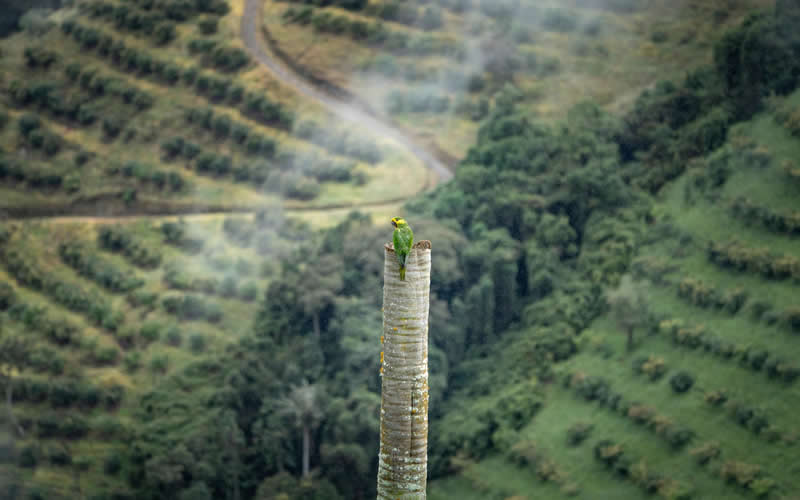
Location: Cañón del Río Anaime, Tolima, Colombia
Behind the Shot: I was in Tolima for a wedding and took the opportunity to visit this magical yet desolate mountain landscape. Some of the country’s last wax palm forests survive here, even as multinational corporations continue clearing these ecosystems to make way for monocultures of Hass avocado crops. With a local guide, I went to see the Yellow-eared Parrot, whose survival depends on the wax palm. I hope this image of the bird and palm surrounded by crops conveys a message of vigilance: Thanks to the tireless efforts of environmental advocates, the species was saved from near extinction—but if avocado plantations keep encroaching, the parrot’s story of recovery could take a turn for the worse.
#12. Youth: Ian Shultz
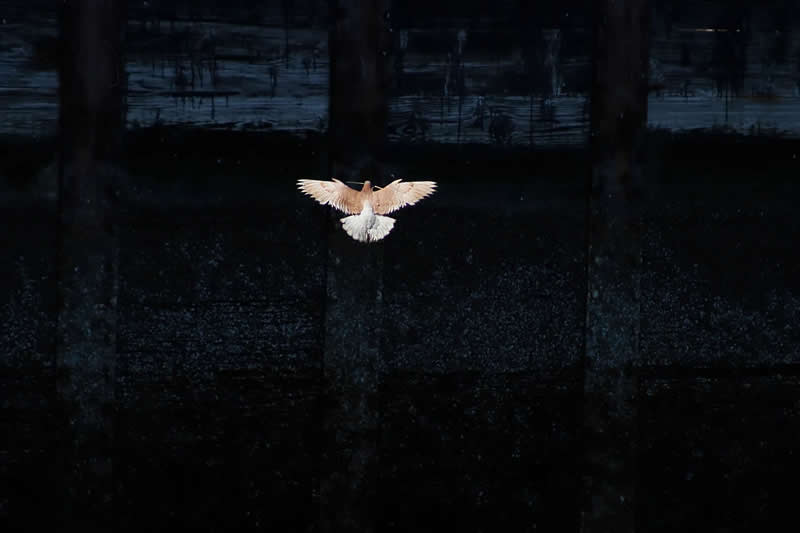
Location: Seattle, Washington, United States
Behind the Shot: While my father went paddleboarding in Puget Sound, I would often walk along the shoreline to photograph herons, gulls, and Ospreys. Most days, I dismissed pigeons as too common to document. This morning, however, I noticed Rock Pigeons swoop out from beneath an old pier to collect nesting material and then bank back underneath, flaring their wings and fanning their tail feathers wide as they braked to land. One individual’s plumage seemed to glow whenever it passed through a shaft of sunlight. I positioned myself on boulders below the pier and captured this shot when the pigeon swept into the frame. The experience taught me a lesson: Even common birds can produce the day’s most striking image.
#13. Female Bird Prize: Gail Bisson
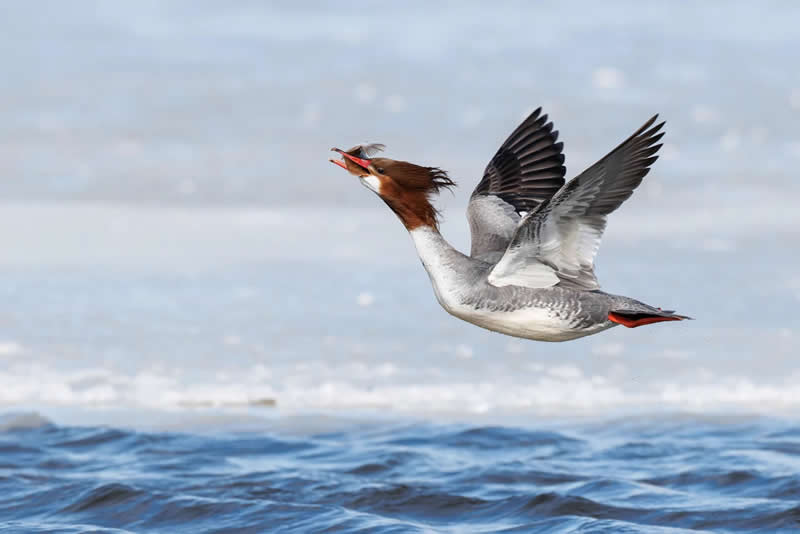
Location: East Bay Sandbar, Nova Scotia, Canada
Behind the Shot: I spend a lot of time photographing waterfowl, but on this bitterly cold winter day, I was reluctant to leave my warm house. I pushed myself to go out. The ducks were not very active, and after 30 minutes I decided to go warm up in the car. Normally I leave my camera on the ice during breaks, but this time I took it with me. Thank goodness I did, because just as I reached the car, I spotted a female Common Merganser with a flatfish take to the air to protect her catch from other mergansers. I was thrilled to snap this frame as she passed me at eye level, but I worried it wouldn’t be tack sharp. It was!
#14. Youth: Juan David Camacho Márquez
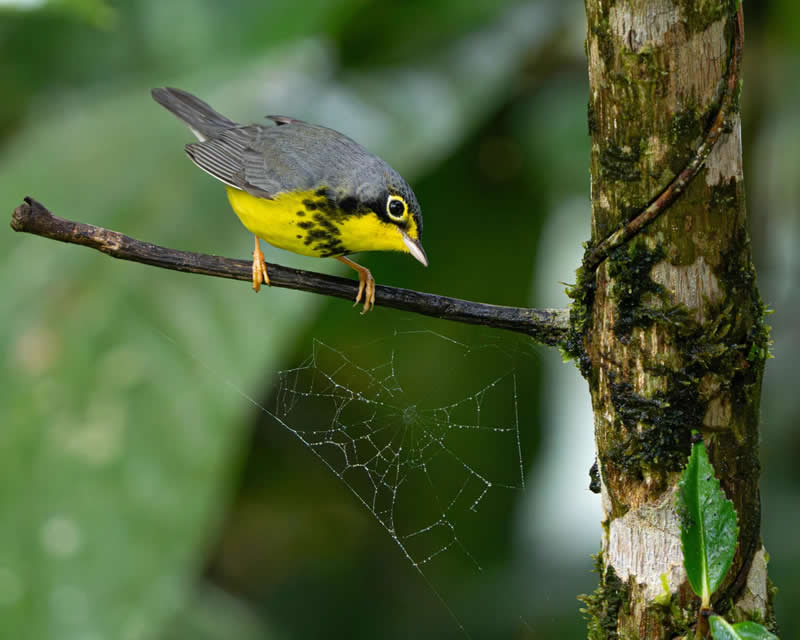
Location: El Queremal, Valle del Cauca, Colombia
Behind the Shot: I was walking through the woods with a group of birding friends one cloudy morning when I came across a Plain-backed Antpitta—a lifer for me and one of the first records of the species for the area. With that sighting, my day was already a success, but then I saw this Canada Warbler. I took a photo, but it was only when I looked at it later that I noticed the perfect dew-covered spiderweb hanging beneath the branch. The bird seems to be looking at the web, creating a natural harmony. For three years, I had tried many times to get a decent photo of this species, but I hadn’t yet succeeded. What you see before you is a dream fulfilled.
#15. Plants for Birds, Colombia: Santiago Giraldo
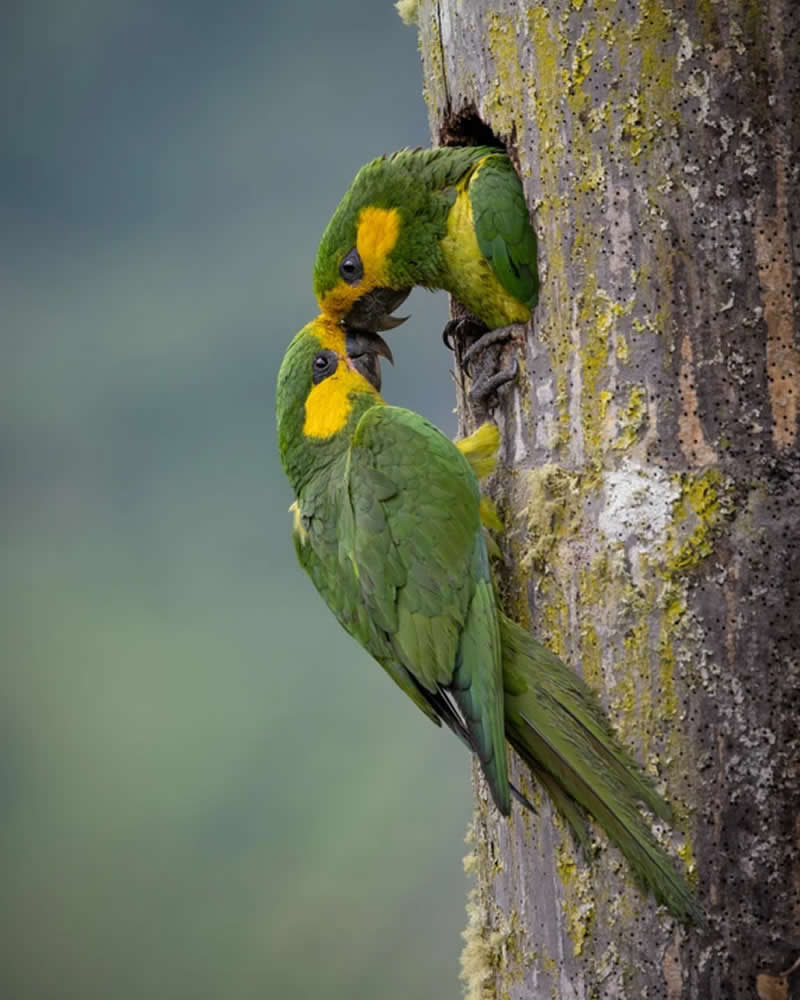
Location: Anaime, Tolima, Colombia
Behind the Shot: Nesting is not just a relationship between two birds; it’s often a whole set of species interactions. When a wax palm dies, woodpeckers peck into the bark, creating hollows that Yellow-eared Parrots later occupy. On this day, I waited more than eight hours under the towering wax palms for this couple to appear. They’d just begun to build their home, and I wanted to capture them entering their nest, but the light worked against me. Then the pair offered a more intimate scene: their ritual of preening, an essential behavior for maintaining and strengthening their bond. The everyday interaction in this photo felt like an authentic expression of connection and mutual care.
Honorable Mentions
#16. Coastal Birds, Chile: Marcelo Cárcamo Vera
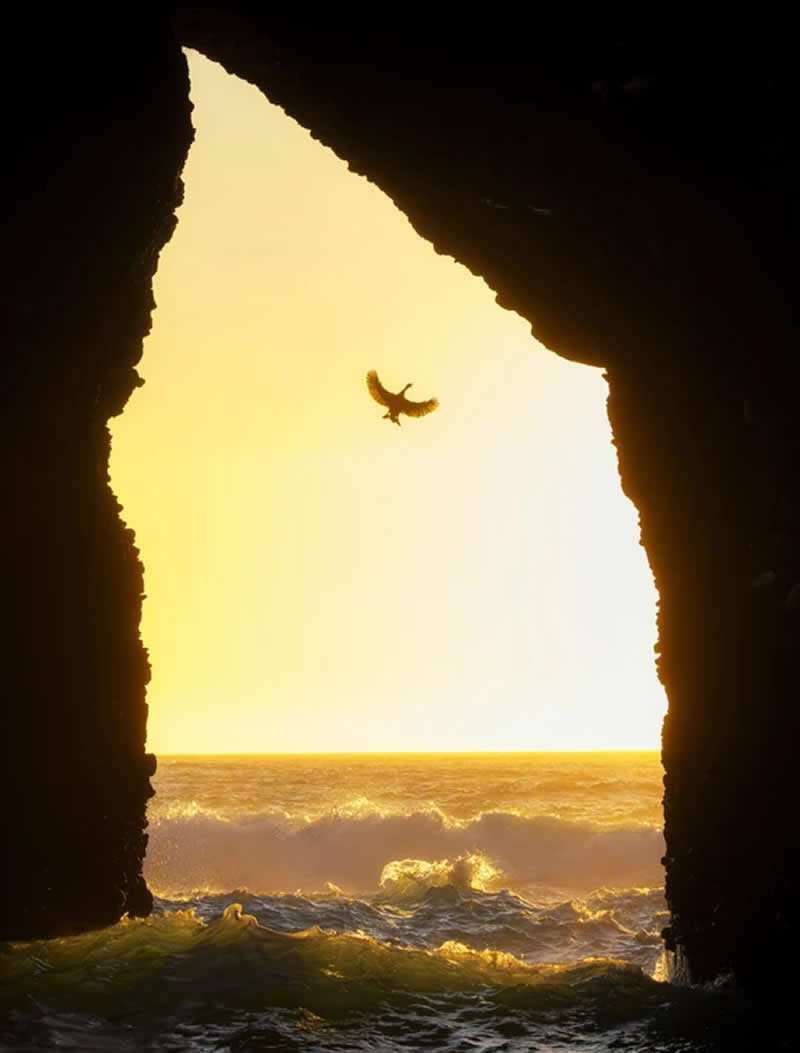
Location: Pilolcura, Los Ríos, Chile
Behind the Shot: I frequently visit this area and had always wanted to capture an image of the Red-legged Cormorant in flight, framed by the natural arch formed by the rocks and bathed in the sunset light. However, I had yet to achieve that perfect shot despite previous attempts. On this occasion, the evening light was magnificent. After several tries I finally caught this cormorant in exquisite detail—wings fully spread, head tilted upward—set against the rolling waves, which added an extra touch as the light filtered through the water.
#17. Plants for Birds, Colombia: David Paredes Bravo
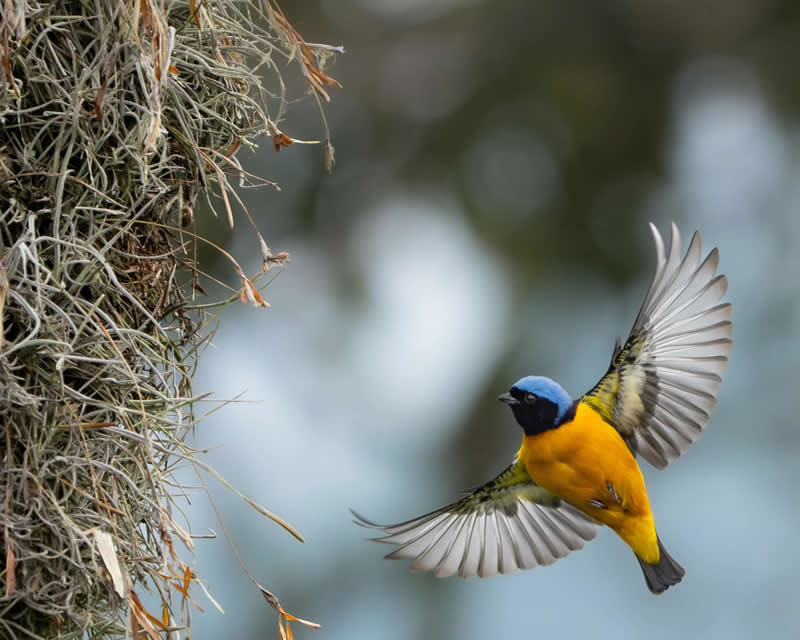
Location: Alto del Zarzo, Caldas, Colombia
Behind the Shot: Golden-rumped Euphonias have always been one of my favorite species; I’m fascinated by how their contrasting blue and yellow tones stand out in their natural habitat. I sought them out in Alto del Zarzo, where a local energy company had implemented an environmental education program. As a result, the community was not only familiar with the bird but also working towards its preservation. Locals pointed me to where the species’ song could be heard. Over months, I walked the same path at least five times until, one quiet morning, I spotted a couple perched in a palm. This dynamic photo, depicting one of the birds building its nest with dried mosses and lichens, shows the intimate relationship between these Andean birds and the plants that sustain their life cycle.
#18. Birds Without Borders: Erich Podbielski
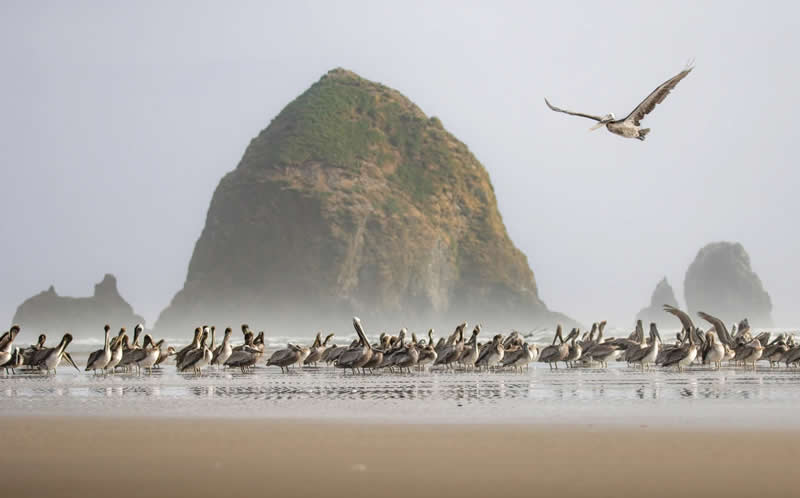
Location: Cannon Beach, Oregon, United States
Behind the Shot: A year after my wife and I honeymooned at Cannon Beach, we came back to celebrate our anniversary. I was mesmerized as squadron after squadron of Brown Pelicans flew low across the water. I walked a mile up the beach and discovered their destination. Where a small creek met the ocean, hundreds of pelicans bathed in the fresh water. With Haystack Rock in the background, I positioned myself so I could capture one flock and got eye-level with the pelicans. That’s when I captured the image of a pelican flying in to join the congregation. I was physically shaking after the experience: an iconic coastal species at an iconic coastal landmark, reminding us that people and birds can share the shore.
#19. Birds Without Borders: Rubén Barraza
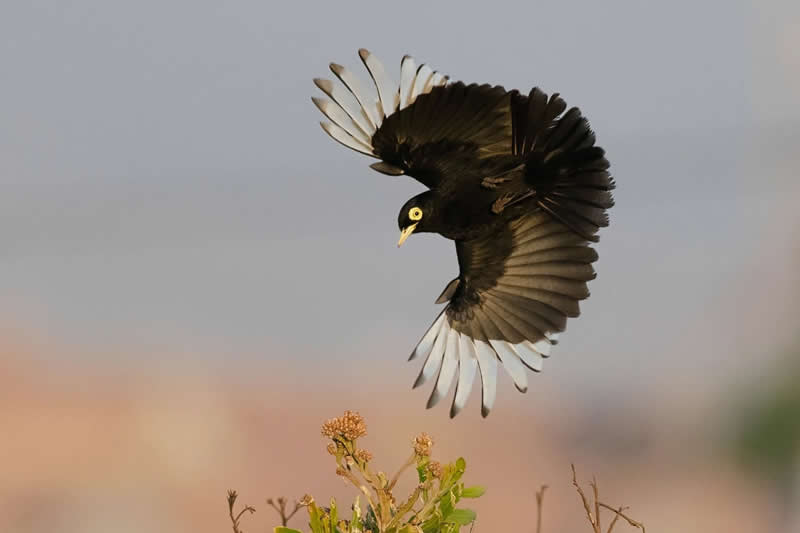
Location: Elqui River Wetlands, La Serena, Coquimbo, Chile
Behind the Shot: A friend and I headed to a wetland on the banks of the Elqui River in November, when the Spectacled Tyrant breeds in Chile. In a spectacular display, the male plummets from high, its wings half-closed to reveal its white patches. Just before landing, it performs a 360-degree flip while spreading its wings, a maneuver that lasts microseconds. I had tried to capture that precise moment previously, but I was always in too much of a hurry. On this occasion, armed with a tripod and plenty of patience, we waited for hours. By the end of the day, the image I’d had in my mind became a reality.
#20. Youth: Parham Pourahmad
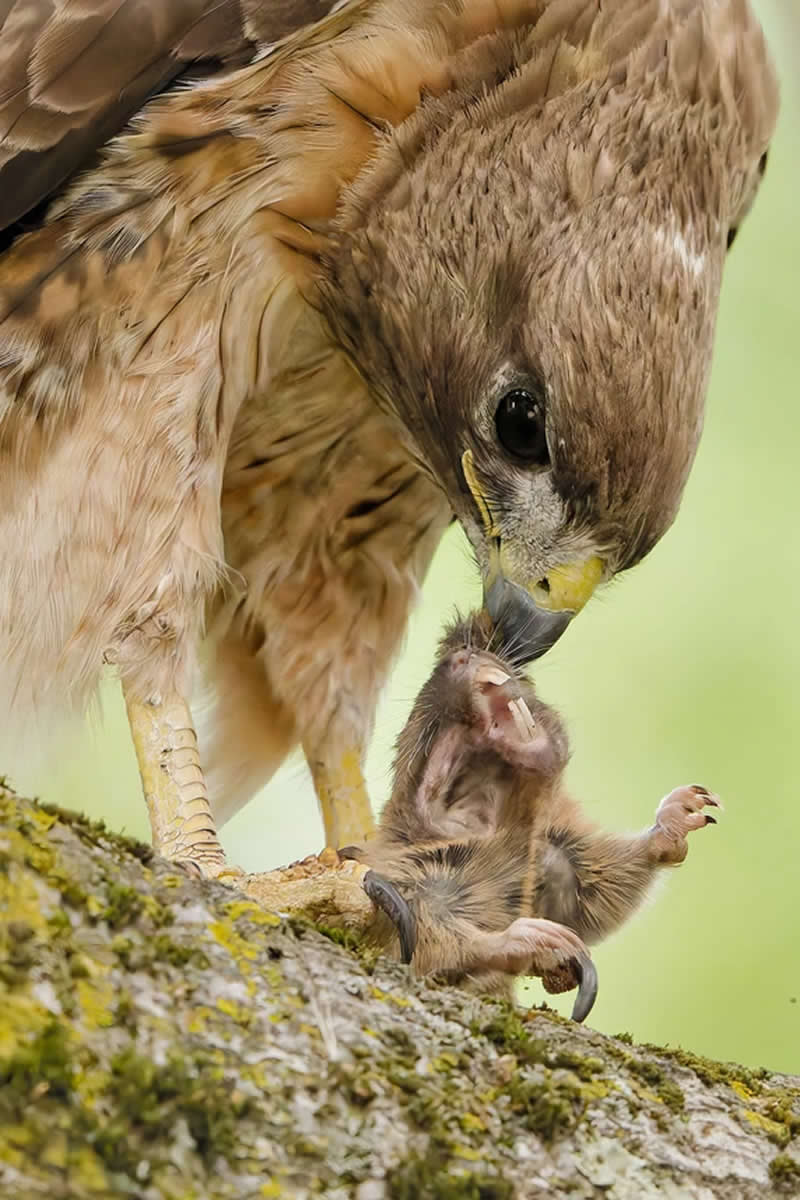
Location: Cupertino, California, United States
Behind the Shot: Out of the corner of my eye, I noticed this Red-tailed Hawk fly across a field. I zoomed in on the bird and saw it carried a rodent in its talons. I rushed over when it landed in an oak tree, hoping to photograph the hawk before it finished its meal. Luckily, I found it perched out in the open, so I experimented with different angles until I got a nice blurry background. My goal was to capture both the gopher’s face and the hawk in the frame to emphasize the emotional intensity of predation. Soon, the hawk lifted the dead gopher’s head, and the rodent’s mouth stretched open, appearing to scream.
#21. Plants for Birds: Kevin Lohman
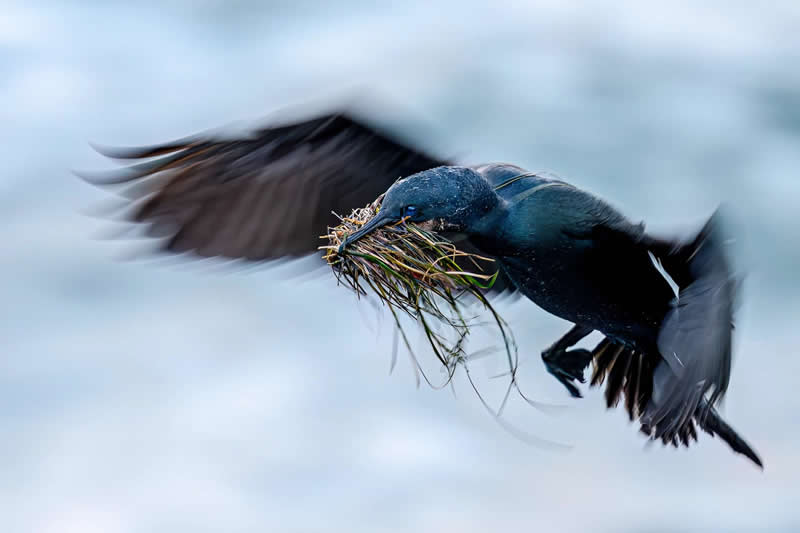
Location: Natural Bridges State Beach, Santa Cruz, California, United States
Behind the Shot: From a public walkway above a Brandt’s Cormorant colony, I watched as birds repeatedly flew in with nesting material. To capture this photo, I slowed my shutter speed while panning, which blurred this bird’s wings and kept its head and the bundle of grass sharp. Holding a long lens made the process more challenging and most frames were not useable, but I caught this moment. What drew me to this scene was the connection between ocean and cliff—these cormorants rely on marine vegetation like surfgrass to build and maintain their nests, linking the health of the nearshore ocean to their success on land. I hope the image highlights the effort behind this behavior and the importance of protecting coastal ecosystems.
#22. Birds In Landscape, Chile: Paulo Olivier Hanshing
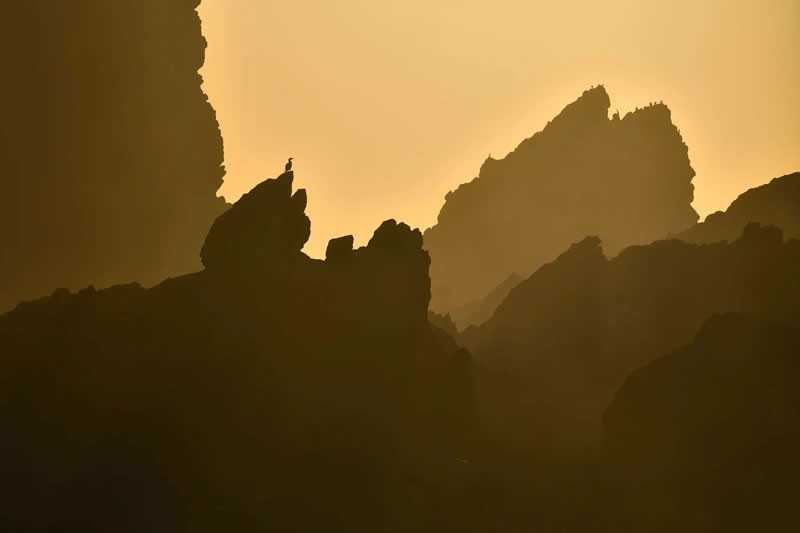
Location: Caleta Talcaruca, Coquimbo, Chile
Behind the Shot: This image was a happy accident. I was on my car exploring the coast around the fishing community of Talcaruca, filming for my YouTube channel. I was drawn to the rocky outcrops, where the combination of wind, low-angled sunlight, and backlit surf spray created a beautiful tonal gradient. I loved the setting, but I was missing my main character. I drove slowly until I found a spot where everything lined up, and then I saw the Neotropic Cormorant perched on the rock. It all clicked. The bird’s small presence gave a sense of scale to the impressive landscape, and I made sure to capture the bird’s silhouette against the sky so it stood out. I hope this image does a little justice to the common birds that we often overlook in favor of rare sightings.
#23. Youth: Camilo Sanabria Grajales
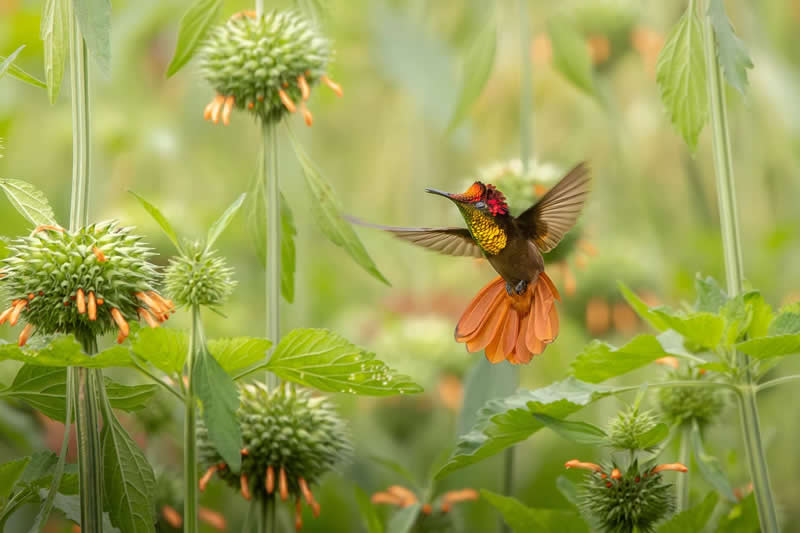
Location: Guadalajara de Buga, Valle del Cauca, Colombia
Behind the Shot: I searched for the Ruby-topaz Hummingbird for years. On my first attempt, I walked for a long, sunny day, but didn’t see one. The second time, I went back to the same spot. The area was full of flowers this species feeds on, but I had an allergic reaction, so that didn’t work out. On my third attempt, I went to the Uva National Park and failed again. But then it came, my big day. I was invited to a site that was full of flowers in Buga and was in for a surprise: more than 10 hummingbirds, both male and female. They flitted around so fast that I was at first unsuccessful at capturing their radiance. Then one approached me. I focused on it just in time. As it was about to dart away, I got this unique photo that captures its sun-drenched colors.
#24. Birds In Landscapes: Jay Vanos
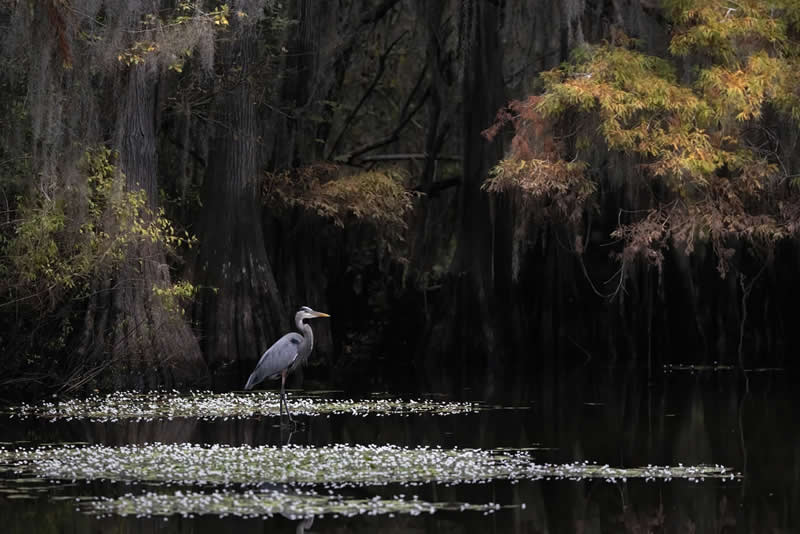
Location: Caddo Lake Wildlife Management Area, Texas, United States
Behind the Shot: I took an aluminum pontoon boat driven by an altogether entertaining captain while on a landscape photography tour of Caddo Lake, a stunningly beautiful bayou unlike anything I’d ever seen. Not as stable as a houseboat, the pontoon made any serious photography a bit tricky. Still, if you’ve never done this, you need to. It’s a treat. A seasonal downpour utterly soaked us and added to the challenge. As we continued our tour of the bayou, the rain lifted, and we came into a dark bay where a solitary Great Blue Heron stood amid the cypress trees. This regal photo certainly made up for the rain.
#25. Female Bird Prize: Peter Brannon
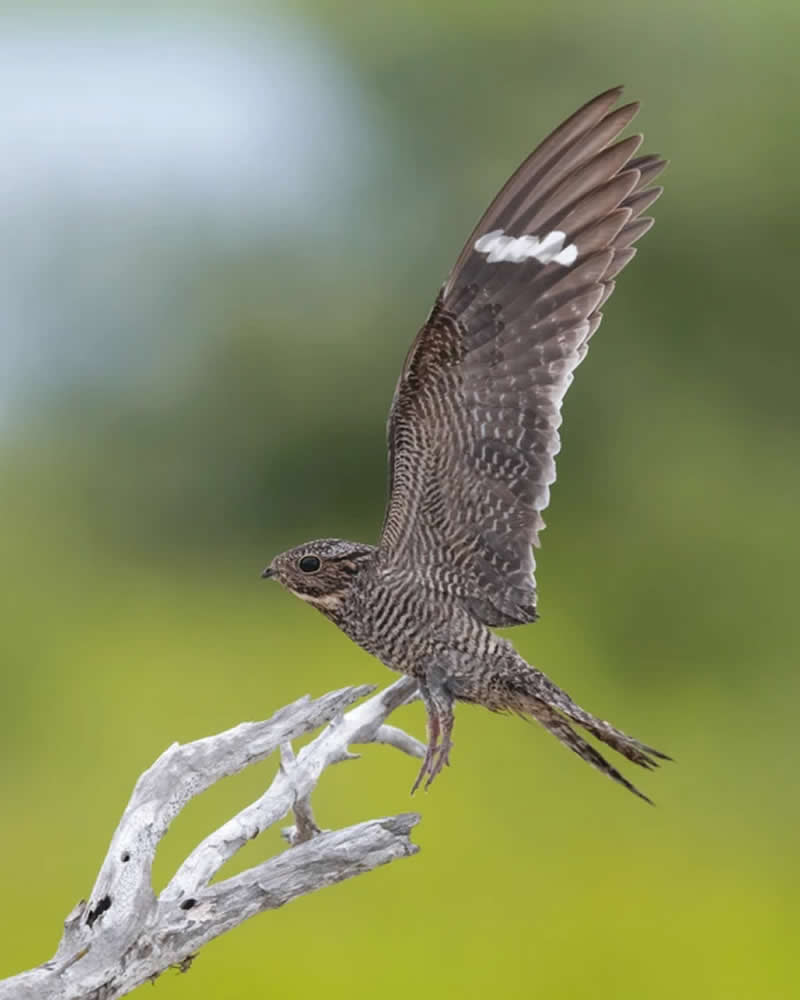
Location: Tampa, Florida, United States
Behind the Shot: While exploring a local preserve, I spotted a Common Nighthawk in flight several hundred yards away. These birds are masters of camouflage and are often only seen as fleeting shadows at dusk, so spotting one in late afternoon was a rare treat. I remained perfectly still and tracked the bird through my 800mm lens, wishing it might drift a little closer. It didn’t just approach, it banked toward me. I captured this frame the moment it touched down on a snag. Seeing a bird that’s usually invisible in the daylight fly and majestically land was a dream come true. To me, this image shows the serendipity of wildlife photography and illuminates a rarely seen side of this species.
#26. Conservation: Lourdes Venard
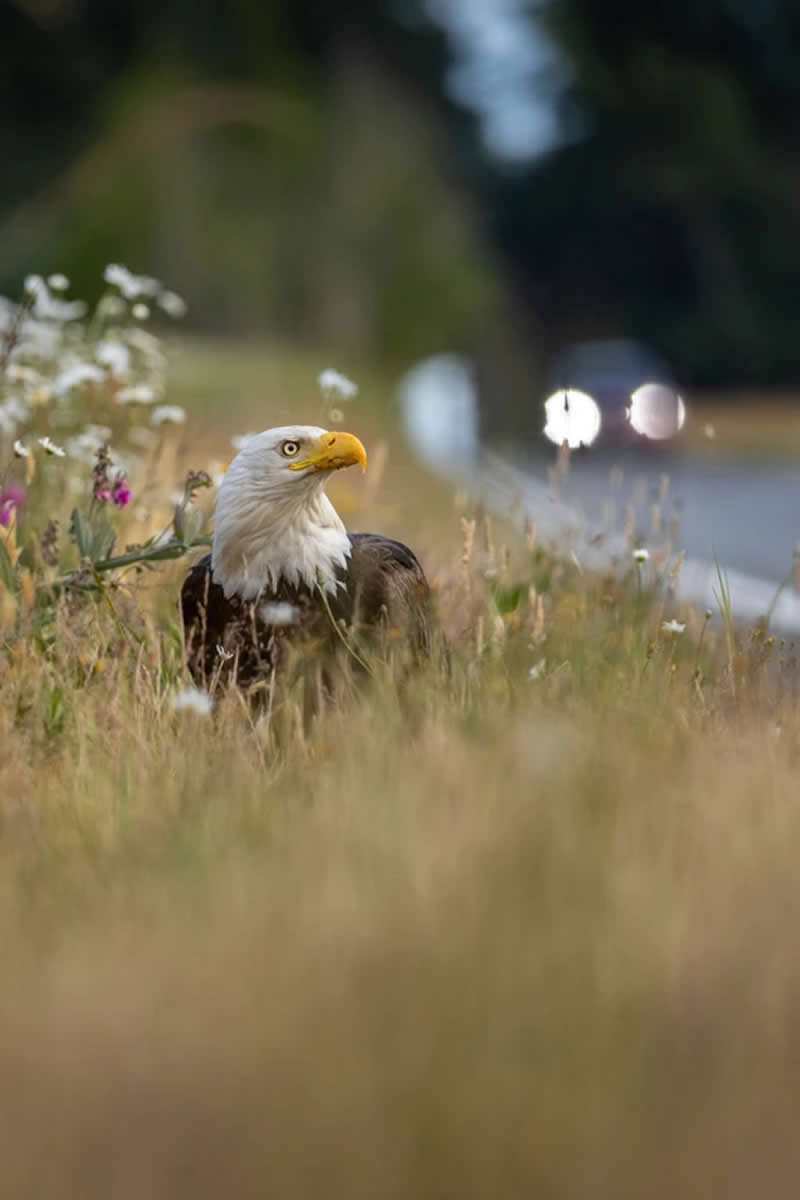
Location: Coupeville, Washington, United States
Behind the Shot: Bald Eagles are a symbol of wild endurance, yet their survival increasingly depends on our human-created landscape. I frequently see them beside or even in the road scavenging roadkill, a dangerous behavior that brings them into conflict with drivers. I discovered this particular raptor feeding amid a cluster of wildflowers beside the pavement. I safely parked at a distance and approached on foot, sitting quietly on the gravel shoulder. As the bird looked up, I spotted an approaching car. I framed the composition so the oncoming headlights were a looming presence. This image offers a reminder that a roadway isn’t just a place for an eagle to find a meal—it’s also where the wild world risks a collision with our modern one.
#27. Conservation: Rodrigo Vega
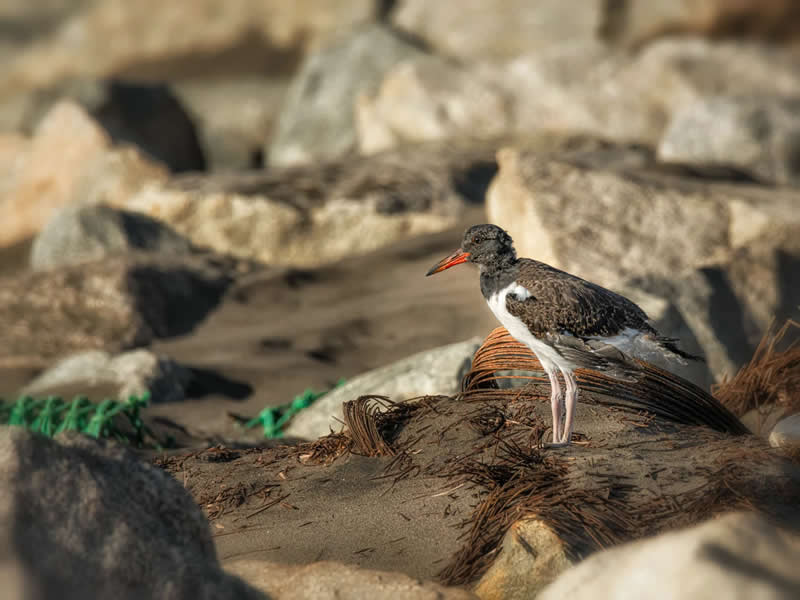
Location: Playa de Llolleo, Valparaíso, Chile
Behind the Shot: Back in 2021, Playa de Llolleo—a stretch of beach at the mouth of the Maipo River—lacked the legal protections it has today, and vehicles could drive at full speed across the sand. There, American Oystercatchers were also harassed by stray dogs and natural predators. To protect these sensitive birds, the community and Ojos del Mar Foundation established a security perimeter and enlisted volunteers like me to monitor them. I was honored to get to know these three little chicks from the minute they hatched. Here, I captured my favorite, “Alita” (or Little Wing), surrounded by metal scraps and fishing debris. We never found out what caused Alita’s injured wing, but we feared he wouldn’t be able to fly. Luckily, he did. Watching the three siblings take off for the first time was the greatest joy.
#28. Birds in Landscapes, Colombia: Cristian Camilo Castaño Vargas
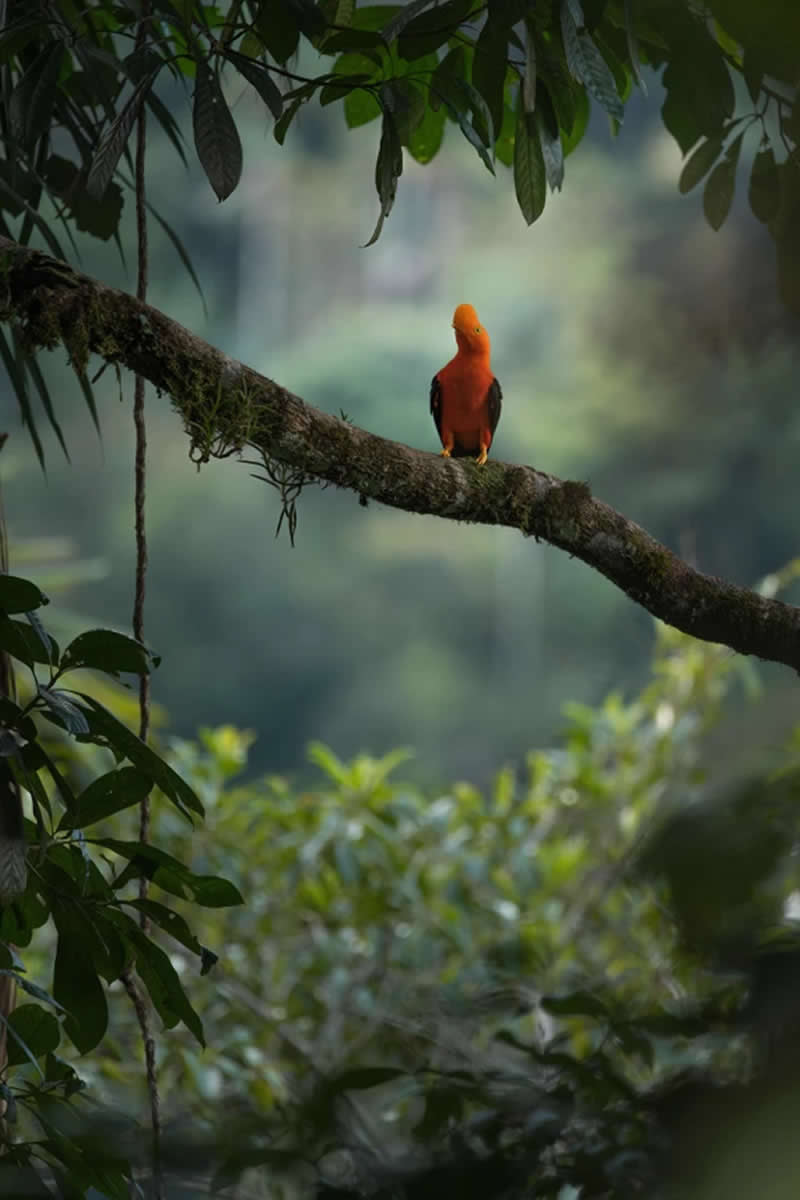
Location: Vereda Sucre, Caquetá, Colombia
Behind the Shot: As a birding guide in Caquetá, I spend much time searching for spots to take visitors. One day I came across an old trail in the Andean foothills, where I identified a lek of Andean Cock-of-the-rock. But I couldn’t find the lek on a subsequent visit, so I feared the worst. Although we’ve been working to raise awareness for conservation, locals sometimes cut down forest to plant coffee or create pasture. Despite all that, one day, when escorting a friend, we tried our luck. I’m glad we did. The birds were so loud we heard them from afar. As we neared, we saw a dozen males dancing for two females. One appeared in an ideal position but the lighting conditions were challenging, and my camera’s autofocus failed to lock onto the bird. I quickly switched to manual mode and snapped this image—a testament to nature’s resilience.
Frequently Asked Questions:
What are the 2026 Audubon Photography Awards?
The 2026 Audubon Photography Awards celebrate outstanding bird photography and videography across the Americas. The competition highlights avian beauty, behavior, conservation challenges, and the dedication photographers bring to capturing fleeting moments in the wild.
How many years have the Audubon Photography Awards been running?
The Audubon Photography Awards are celebrating their 17th year in 2026. Over the years, the competition has showcased exceptional bird photography while highlighting the incredible diversity, behavior, habitats, and challenges faced by birds throughout the Western Hemisphere.
Which countries are included in the 2026 competition?
The 2026 awards feature two geographic competitions. One is open to photographers and videographers in the United States and Canada, while the other includes participants living in Chile and Colombia, highlighting connections between birds and ecosystems.
What do photographers receive for winning the grand prize?
Grand prize winners in the 2026 Audubon Photography Awards receive $5,000 along with a voyage to Antarctica with HX Expeditions. The prize recognizes exceptional photography while offering winners an extraordinary opportunity to experience wildlife firsthand.
What makes the winning bird photographs special?
The winning photographs stand out because they capture fleeting moments that require serious patience, preparation, and timing. From seabirds and songbirds to raptors, the images reveal remarkable behavior and showcase the photographers’ commitment to getting the shot.