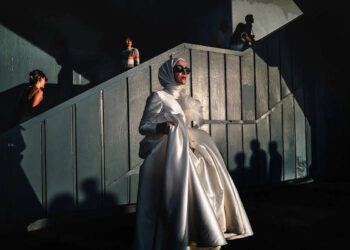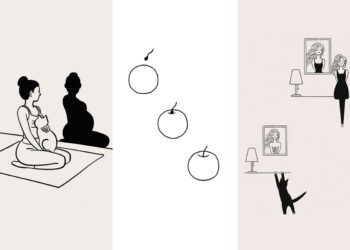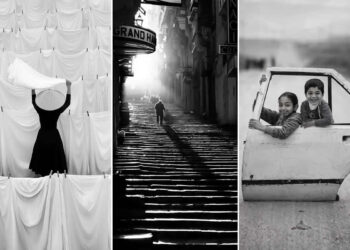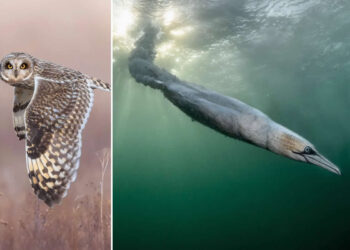

There’s something strangely powerful about a photograph that doesn’t try too hard. No crowded frame. No complicated story. No endless details fighting for your attention. Just one simple subject, a little breathing room, and a moment that somehow makes you stop scrolling. That’s the quiet magic of minimalist photography.
Minimalism proves that a photograph doesn’t need a lot to say a lot. A single chair against a wall, a lonely figure crossing an empty street, a splash of color, a sharp shadow, or a perfectly placed geometric shape can become surprisingly poetic when everything unnecessary falls away.
The beauty often comes from knowing what to leave out. Composition becomes cleaner. Negative space becomes meaningful. Colors become louder. Shadows become characters. Even ordinary objects suddenly feel worthy of a second look.
That’s what makes these 45 photographs so fascinating. They explore simple subjects and powerful messages, moving between colorful scenes, black-and-white frames, still life photography, architecture, street moments, and everyday observations.
Think of this collection as a little reminder to slow down. Look closer. Strip away the noise. Because sometimes, the simplest frame is the one that stays with you the longest.
#1. Between Blue and White: Photography by Paola Scala
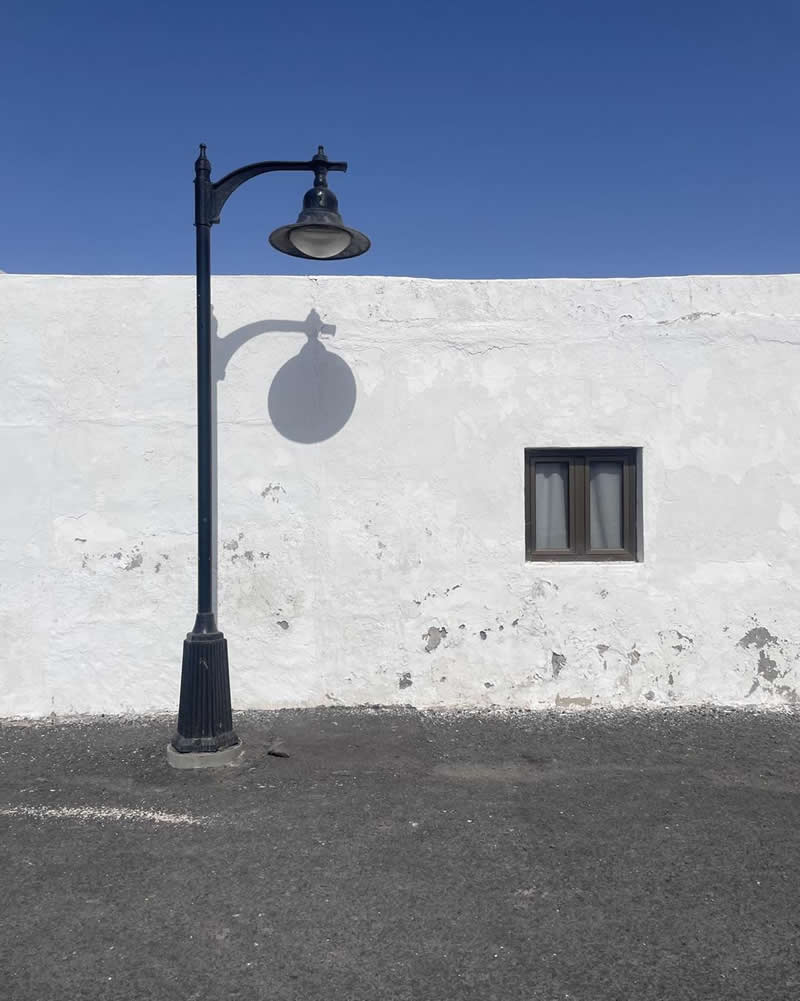
Image Source: Simple is Beautiful Photography
#2. The Pink Ball: Photography by Osma Harvilahti
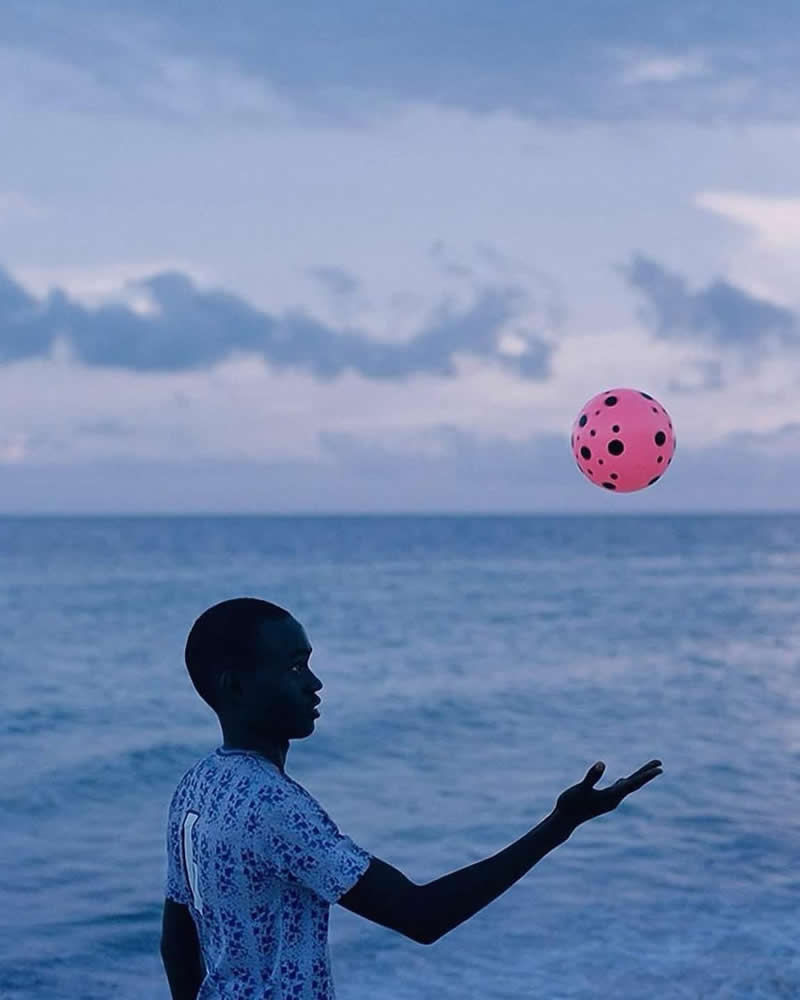
Image Source: Simple is Beautiful Photography
#3. Autumn Light in Stockholm: Photography by Fredrik Axling
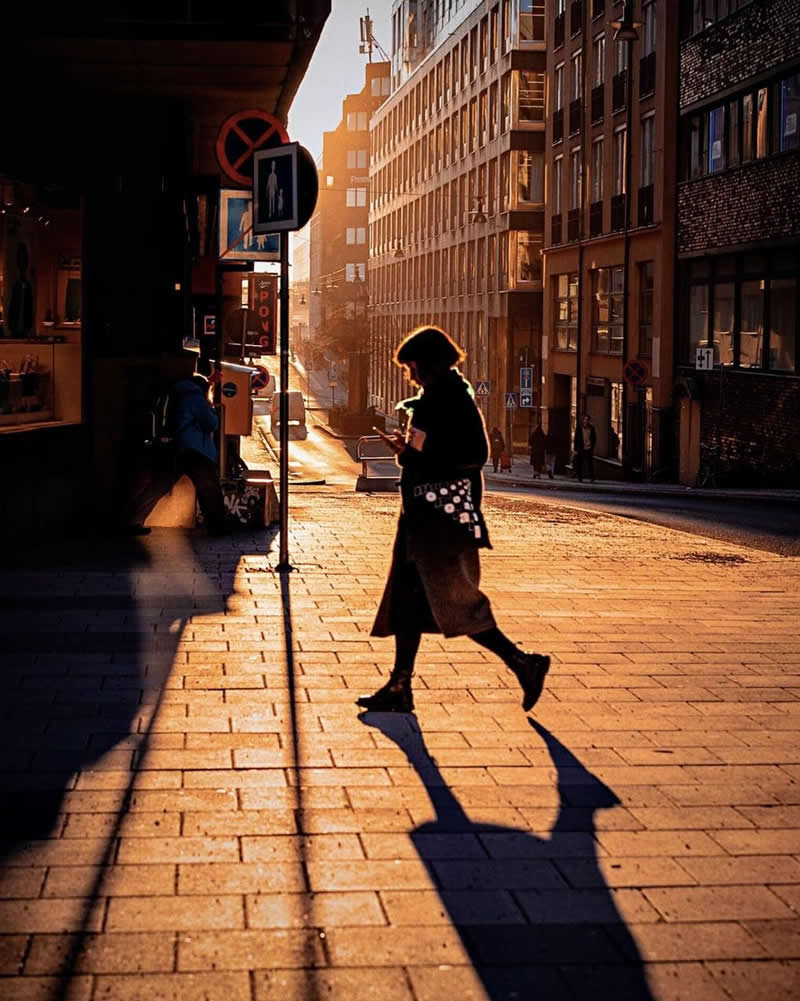
Image Source: Simple is Beautiful Photography
#4. Local Meeting: Photography by Rale Foto
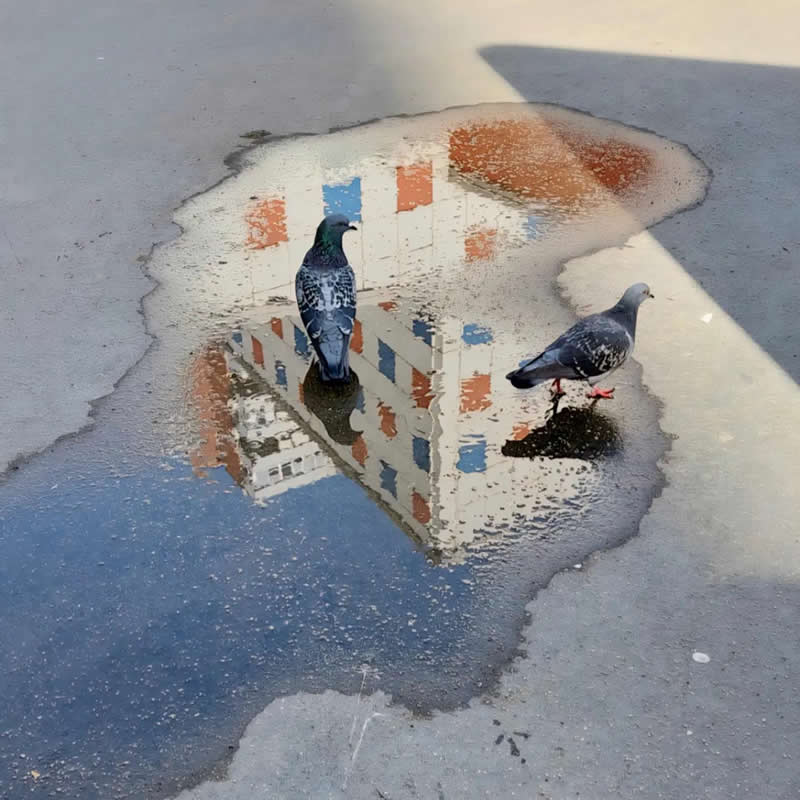
Image Source: Simple is Beautiful Photography
#5. Olive Tree Shadow: Photography by Evaggelia Merisioti
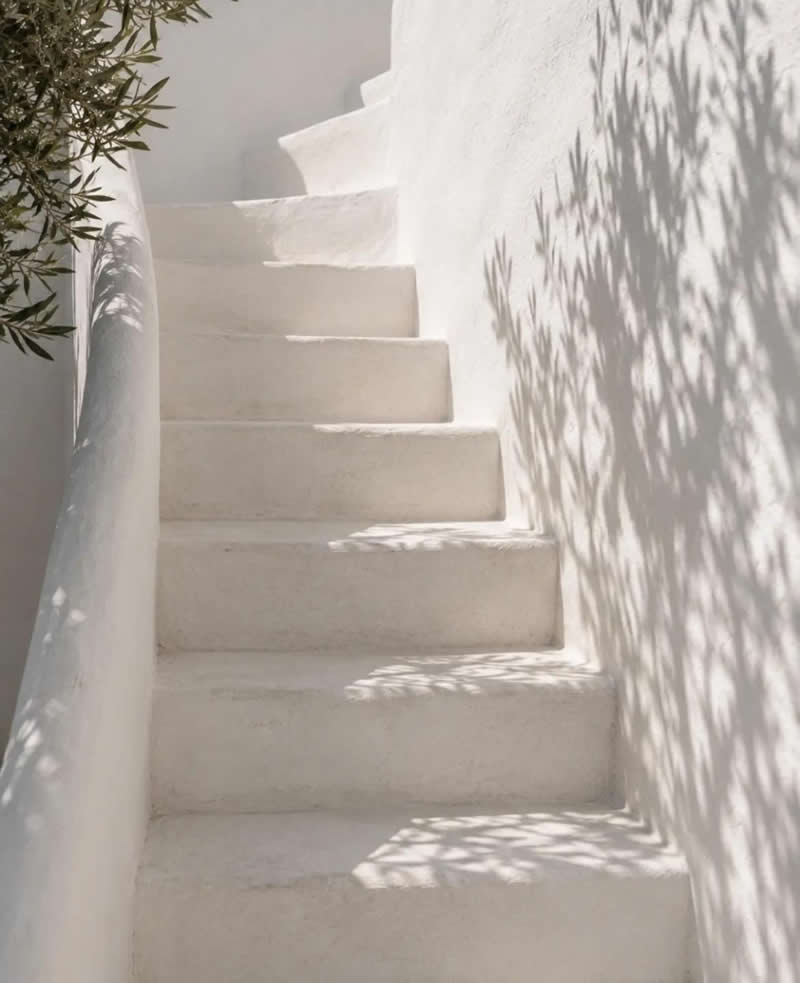
Image Source: Simple is Beautiful Photography
#6. Love Through the Years: Photography by Breno Rocha
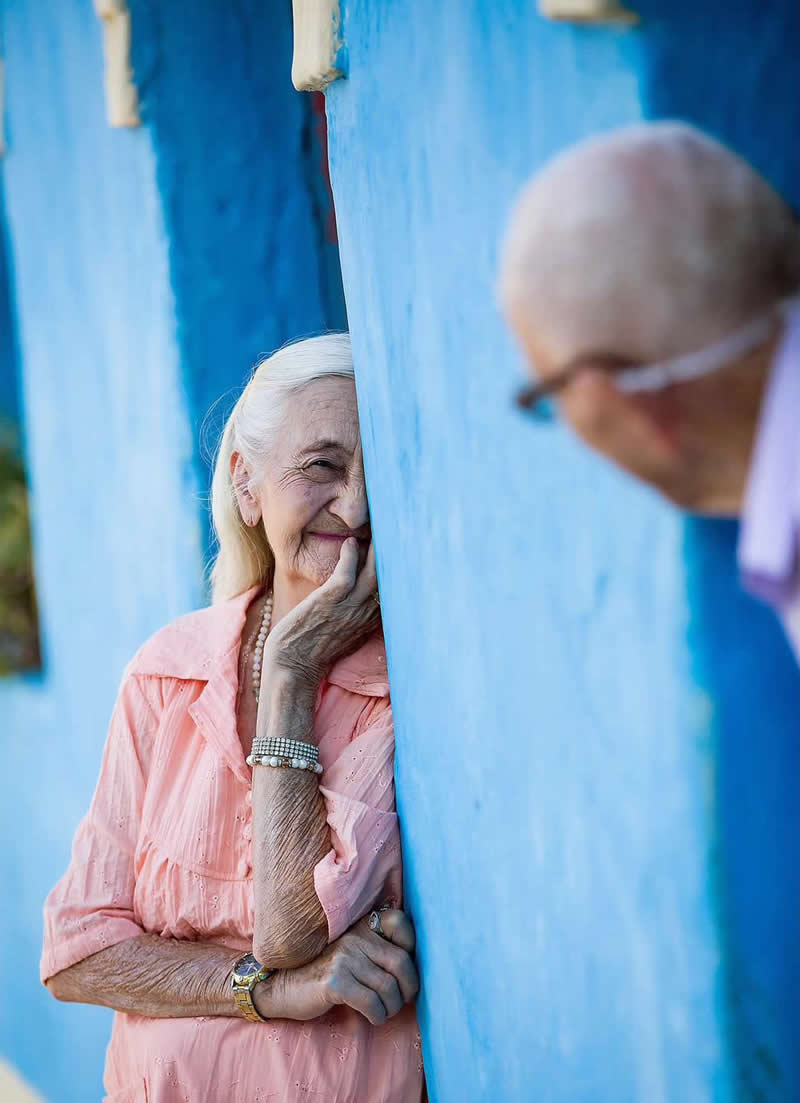
Image Source: Simple is Beautiful Photography
#7. Quiet by the Window: Photography by Marianne Onsvaag
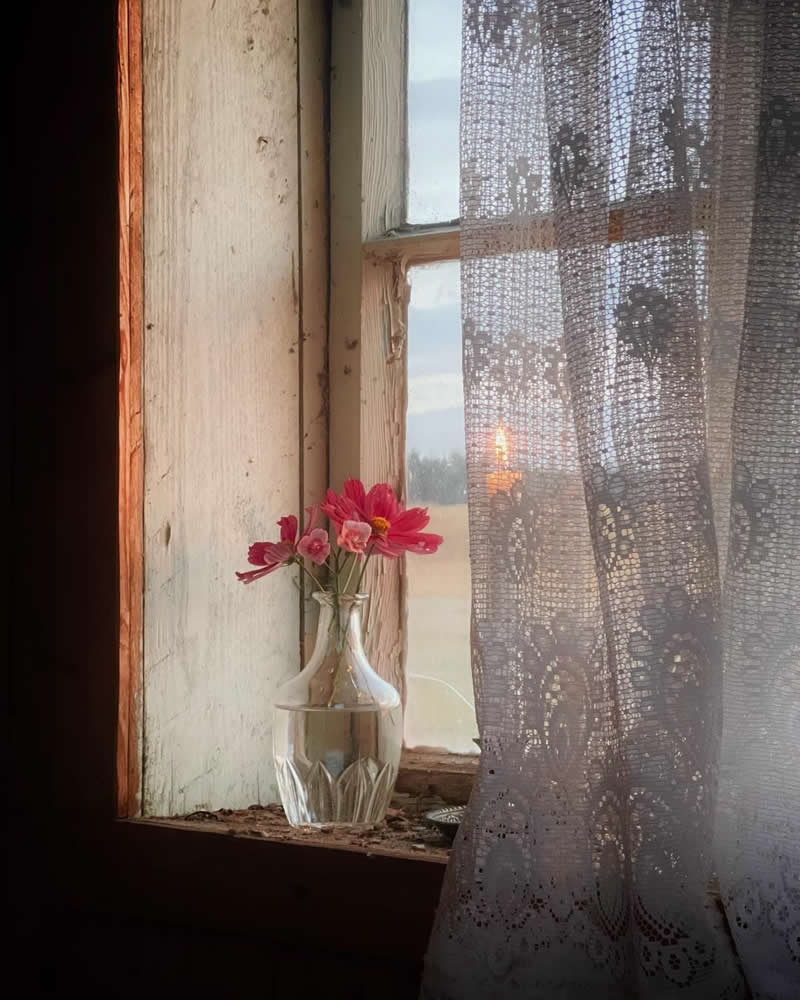
Image Source: Simple is Beautiful Photography
#8. A Taste of Summer: Photography by Panagiotis Rokas
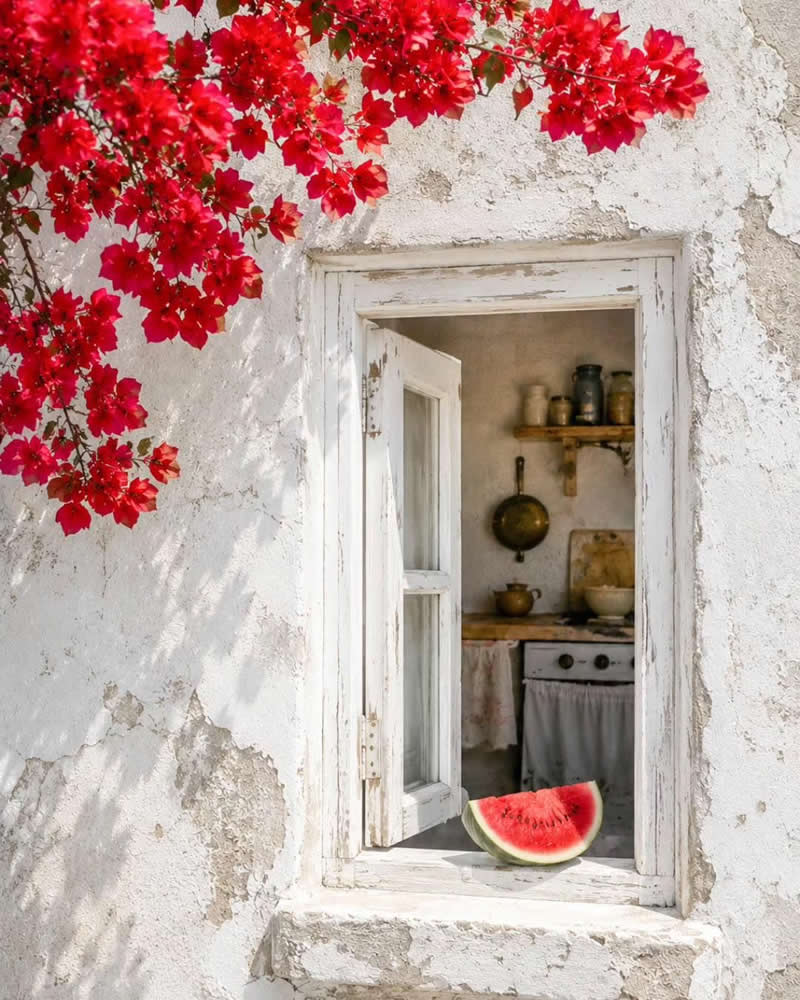
Image Source: Simple is Beautiful Photography
The Power of Simple Subjects
Minimalist photography starts with an almost deceptively simple question: what can you remove? When distractions disappear, an ordinary object can suddenly become the star. A person, window, flower, chair, or building may seem insignificant at first, but thoughtful framing can turn it into visual poetry. The trick isn’t finding something extraordinary; it’s seeing something ordinary in an extraordinary way.
- Simple subjects can carry surprisingly strong emotions.
- Isolation makes individual objects visually powerful.
- Negative space gives the subject room to breathe.
- Everyday objects can become artistic symbols.
- Minimalism encourages us to look beyond the obvious.
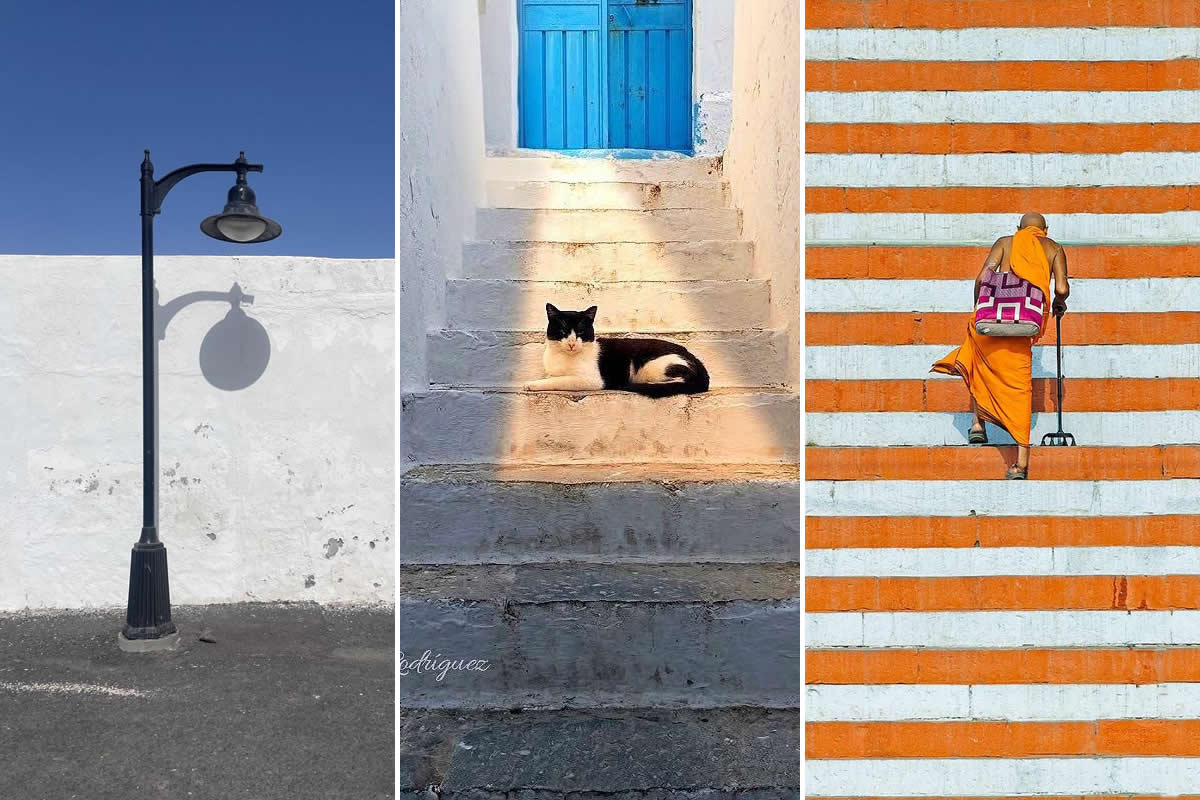
#9. One Step at a Time, Varanasi, India: Photography by Obie
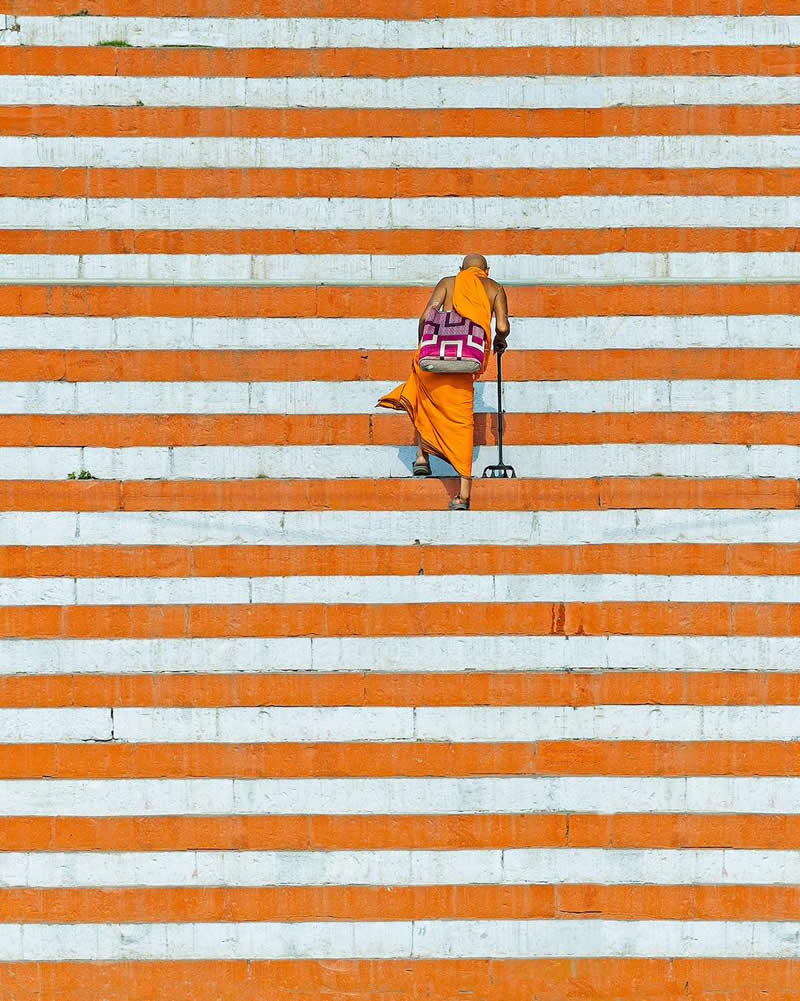
Image Source: Simple is Beautiful Photography
#10. Red Geometry: Photography by JS Rodriguez
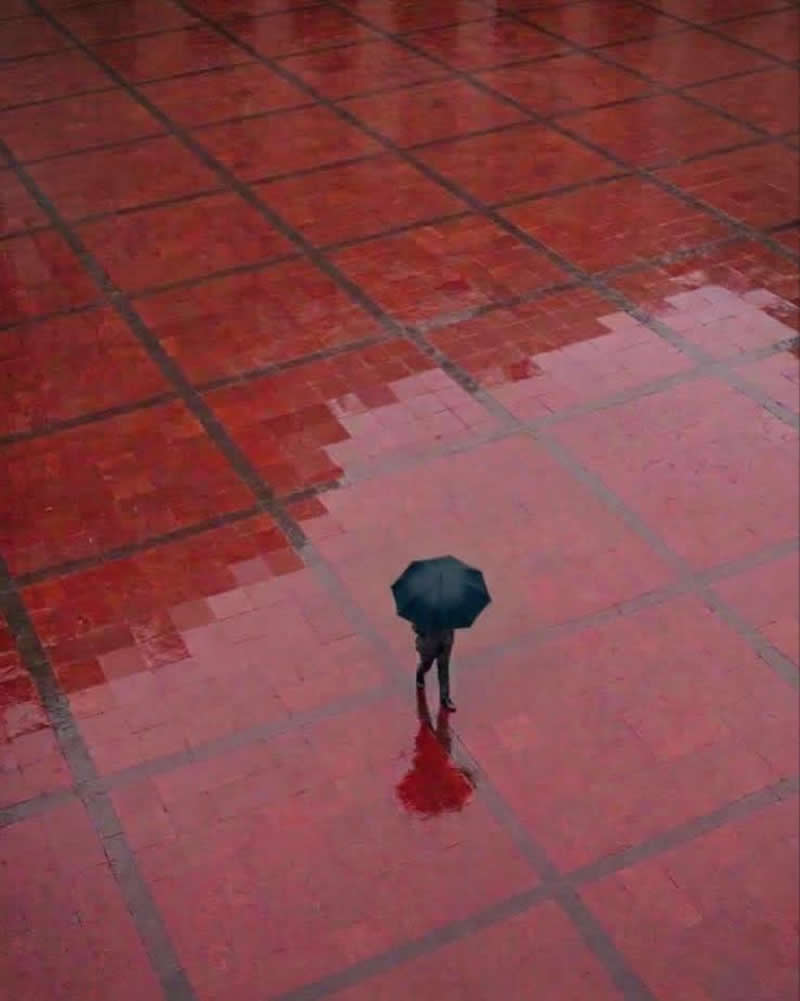
Image Source: Simple is Beautiful Photography
#11. Red and Blue: Photography by Morten Andresen
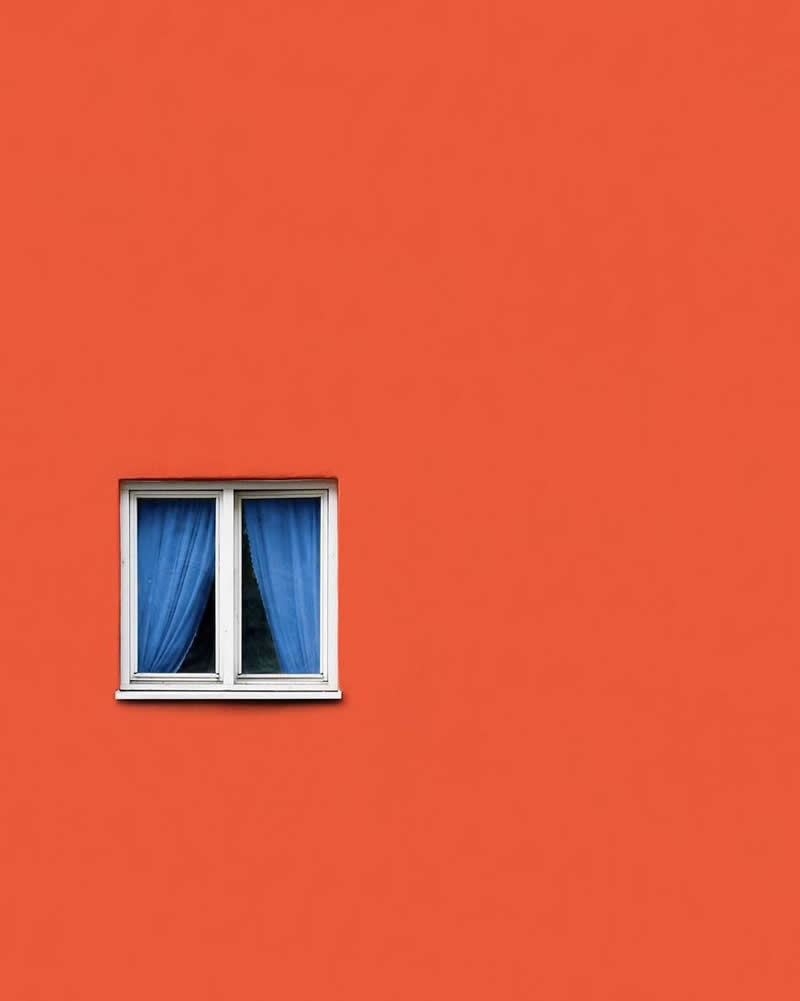
Image Source: Simple is Beautiful Photography
#12. Timeless Bikaner Fort, Rajasthan, India: Photography by Jim Zuckerman
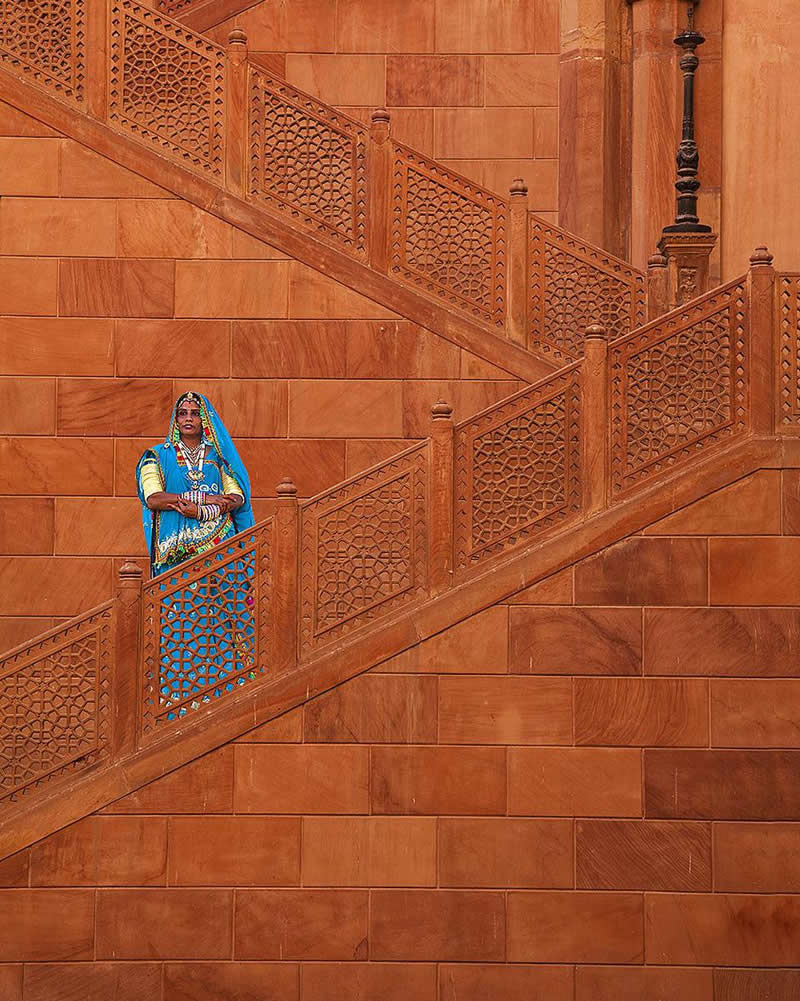
Image Source: Simple is Beautiful Photography
#13. A Touch of Orange: Photography by Matías Martín
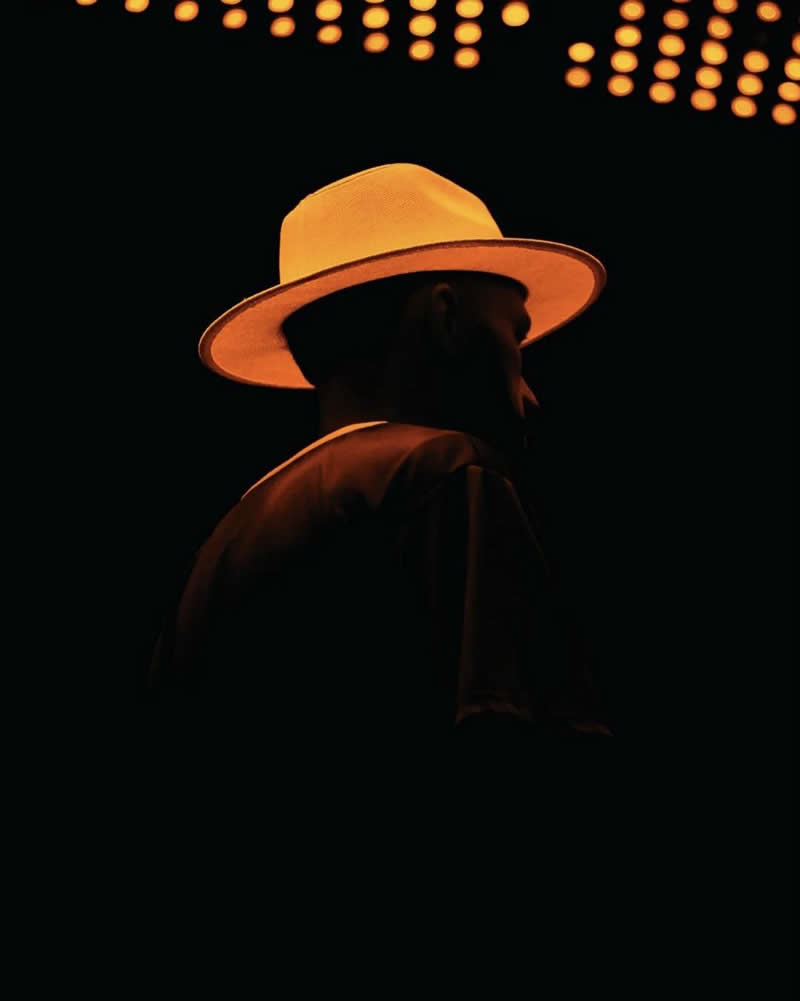
Image Source: Simple is Beautiful Photography
#14. Who would you invite to this table?: Photography by Alicudi Casa
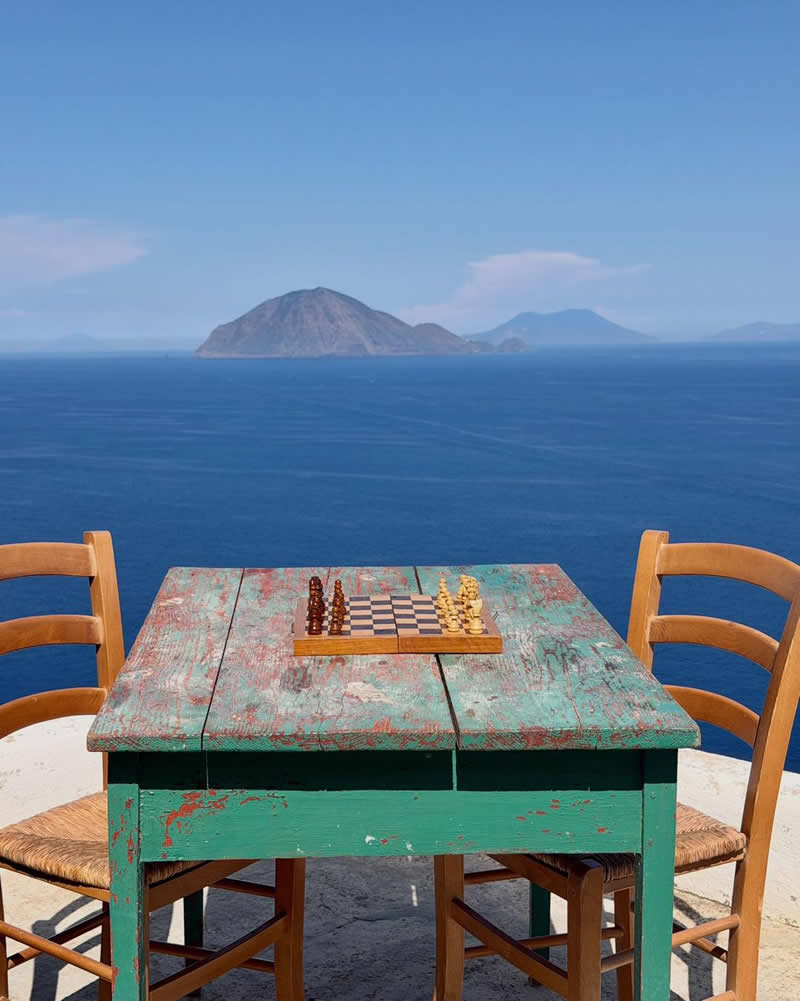
Image Source: Simple is Beautiful Photography
#15. Can You See Me?: Photography by Francesco Cucchiara
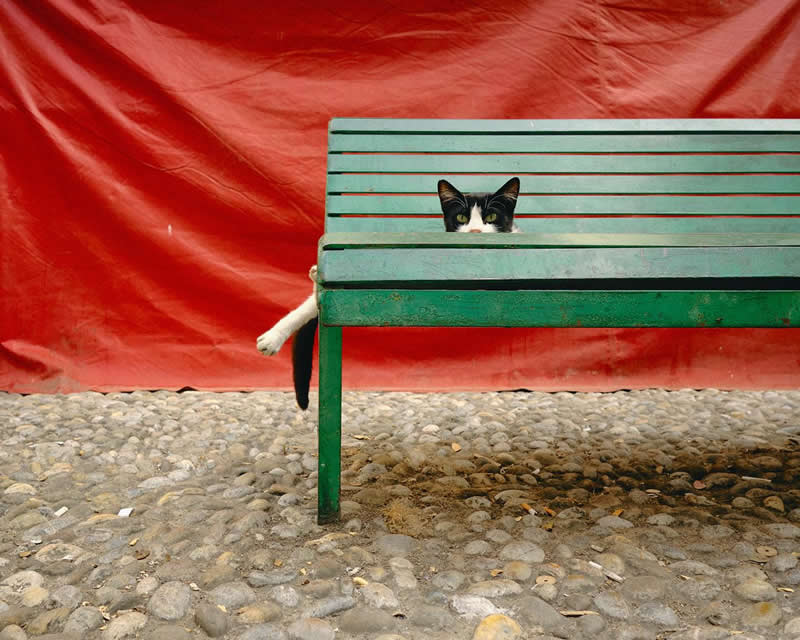
Image Source: Simple is Beautiful Photography
#16. A Geranium and a Cat: Photography by Roka Spanagiotis, Greece
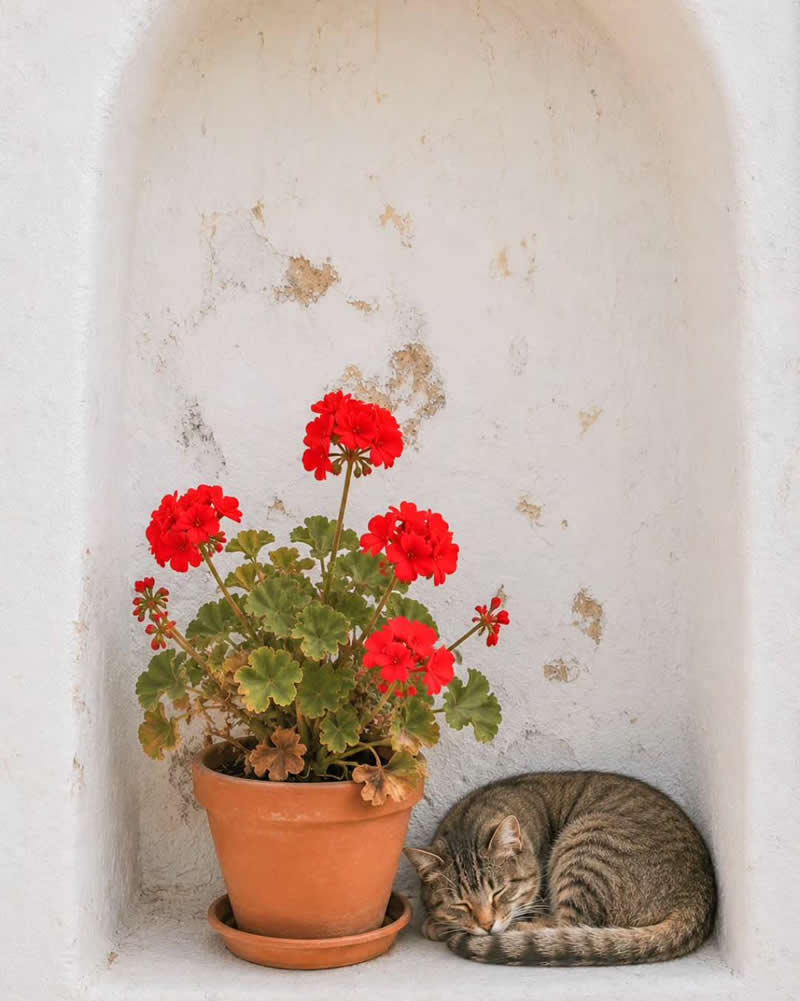
Image Source: Simple is Beautiful Photography
Geometry, Lines, and Perfect Composition
Geometry gives minimalist photographs their visual backbone. Straight lines, circles, rectangles, repeating patterns, and architectural shapes can transform an otherwise quiet scene into something incredibly satisfying. When a person enters that structure at exactly the right moment, the photograph can suddenly click. It’s a beautiful meeting point between careful composition and the unpredictable rhythm of everyday life.
- Look for strong horizontal and vertical lines.
- Repetition can create rhythm and visual balance.
- Symmetry instantly brings structure to simple scenes.
- A carefully positioned subject can complete the composition.
- Architecture offers endless opportunities for minimalist photography.
#17. A Splash of Orange: Photography by Panagiotis Papaioannou
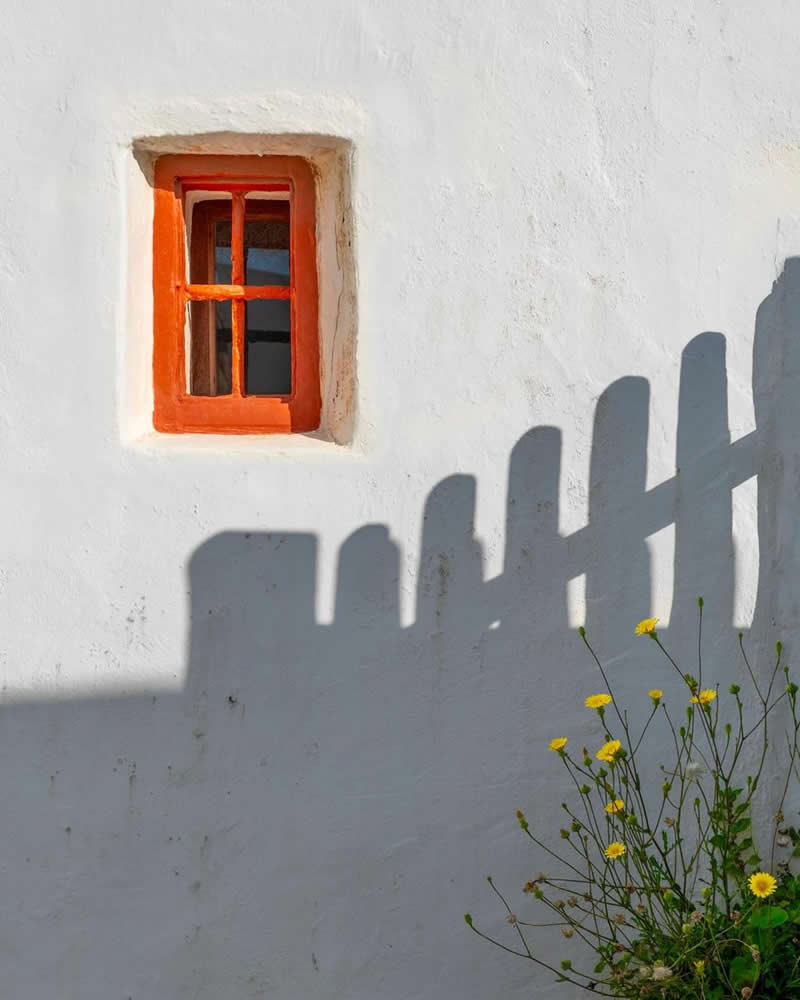
Image Source: Simple is Beautiful Photography
#18. Can one flower change an entire landscape?: Photography by Nathalie Orselli
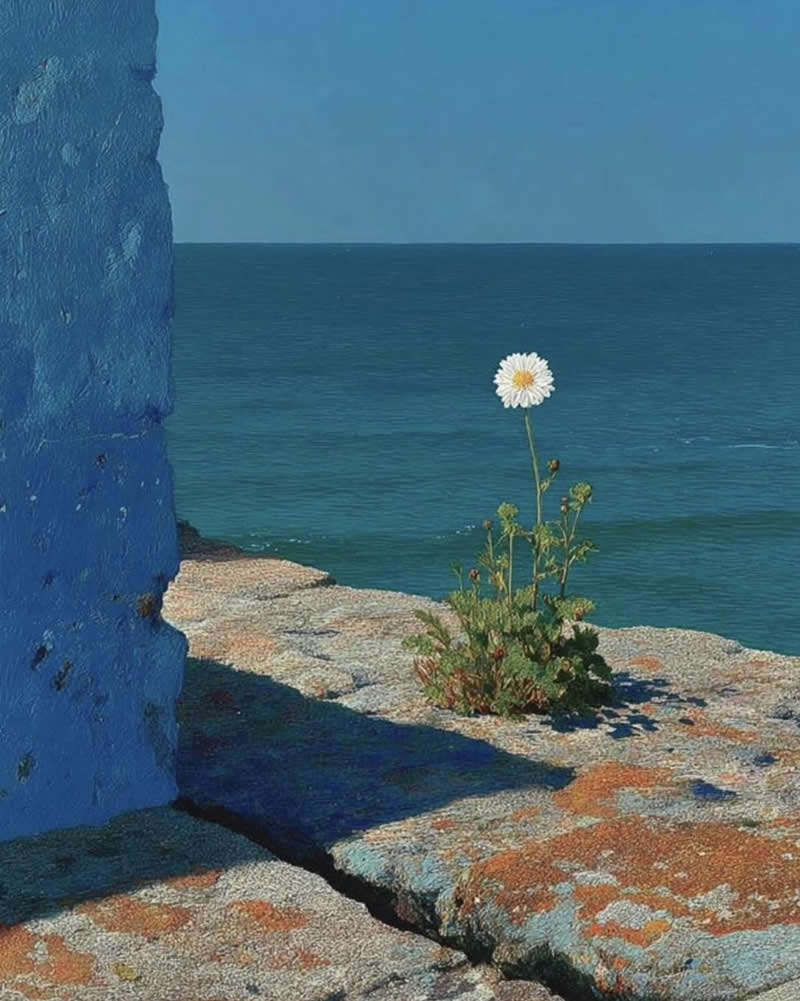
Image Source: Simple is Beautiful Photography
#19. Would you take this road?: Photography by Jonathan White
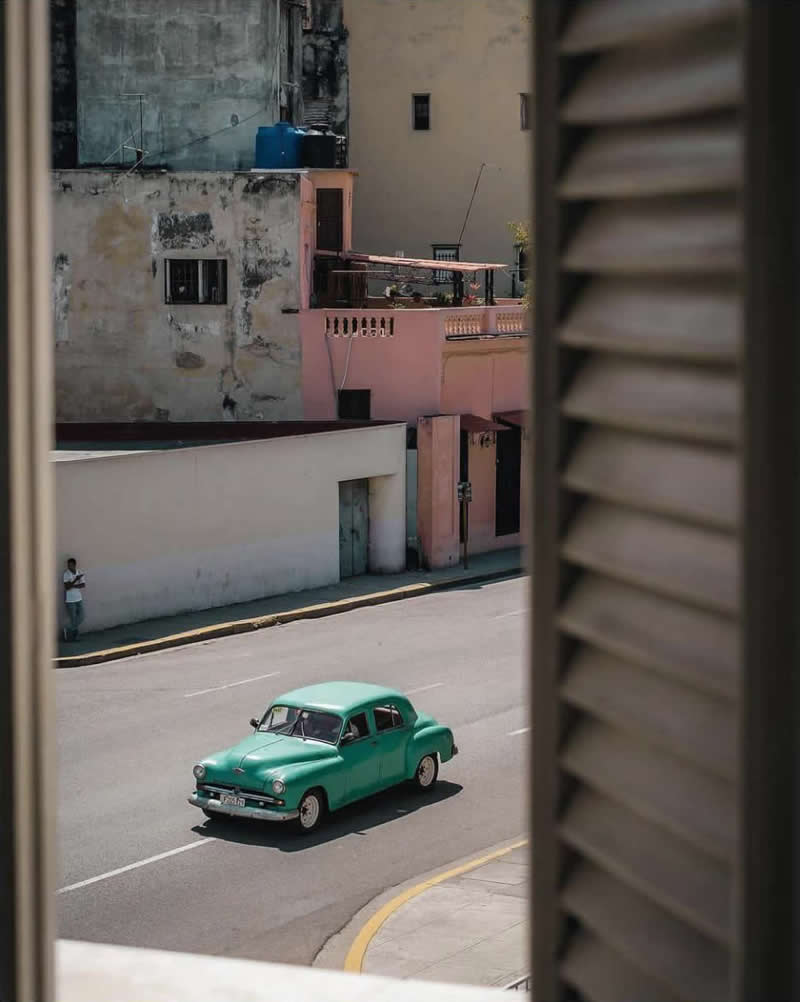
Image Source: Simple is Beautiful Photography
#20. A Room with a View, Alicudi, Aeolian Islands, Italy: Photography by Alicudi Casa
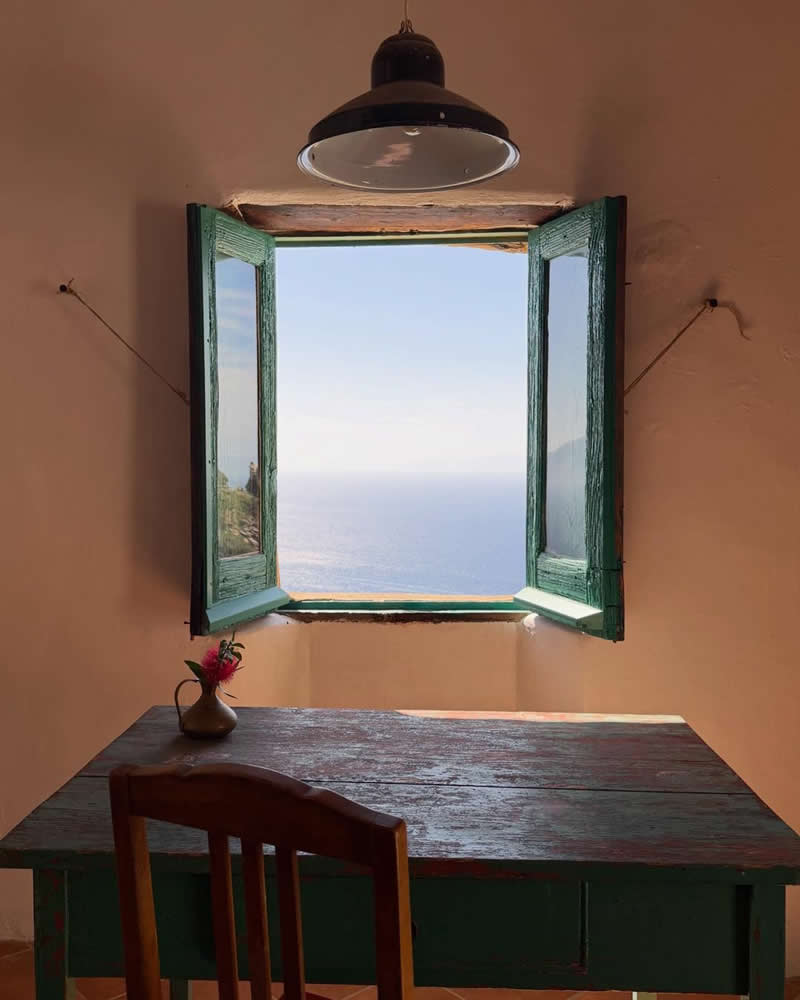
Image Source: Simple is Beautiful Photography
#21. A Conversation Between Light and Shadow: Photography by Mo Hushi
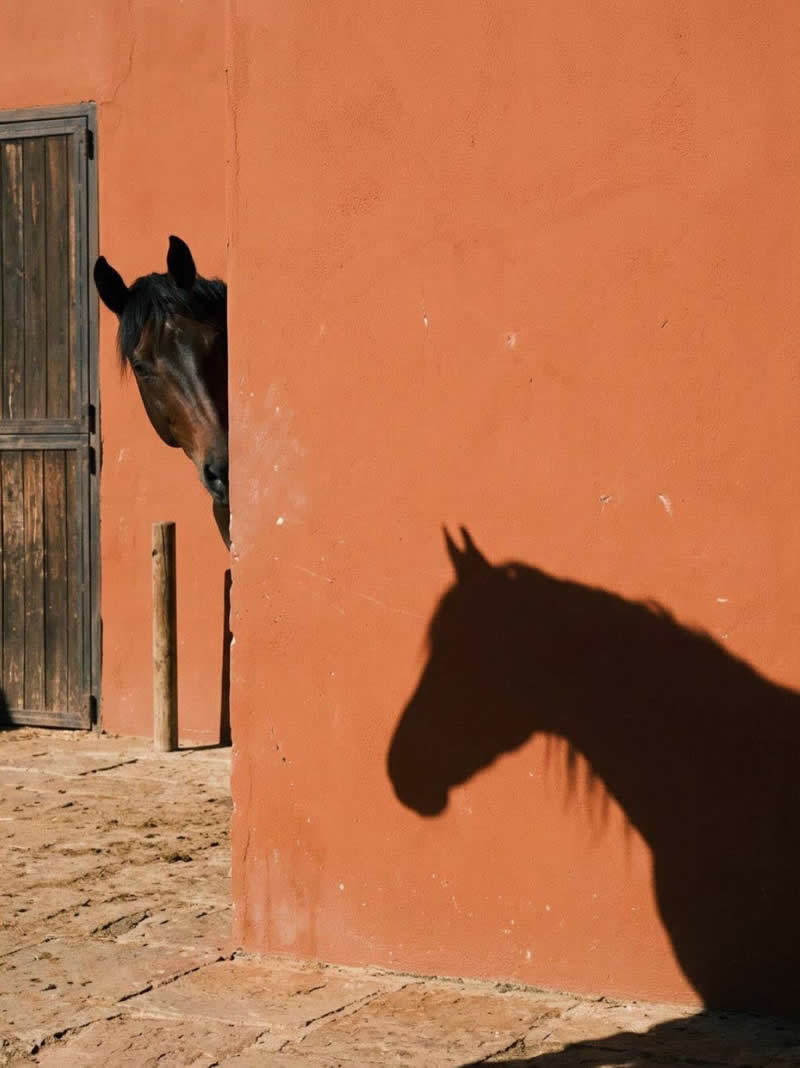
Image Source: Simple is Beautiful Photography
#22. Behind the Blue Shutters: Photography by Sylvain Reybaut
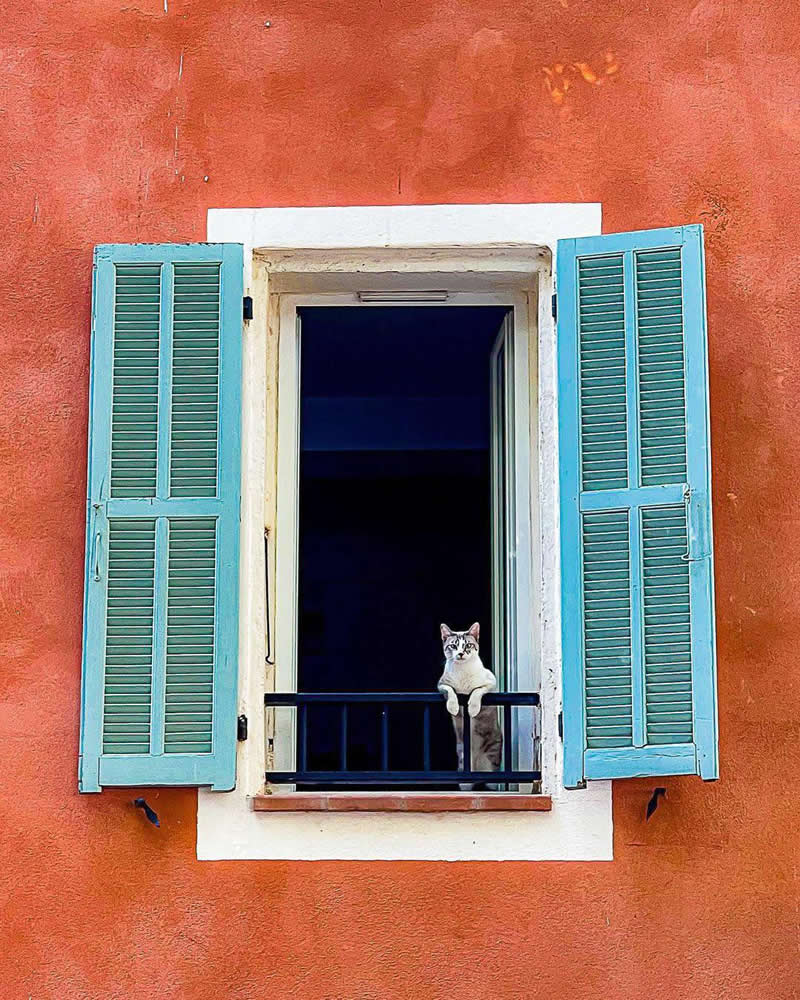
Image Source: Simple is Beautiful Photography
#23. Mediterranean Coffee Break: Photography by Fabio Napolitano
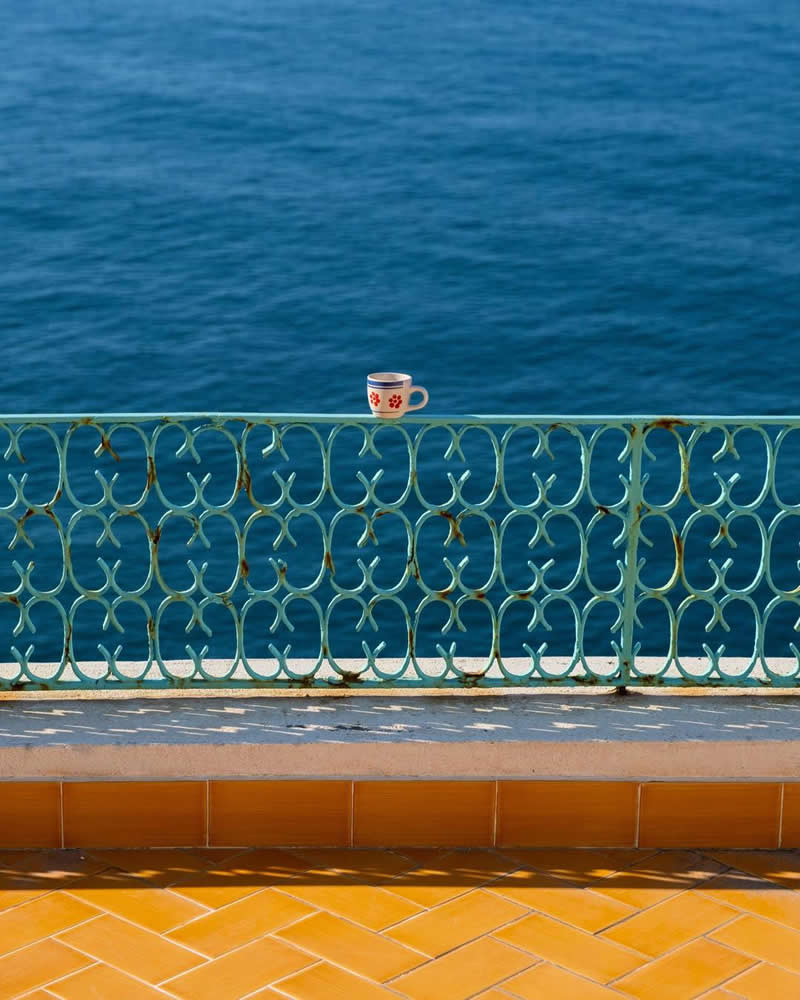
Image Source: Simple is Beautiful Photography
#24. Hope Finds a Way: Photography by Teresa Fonseca
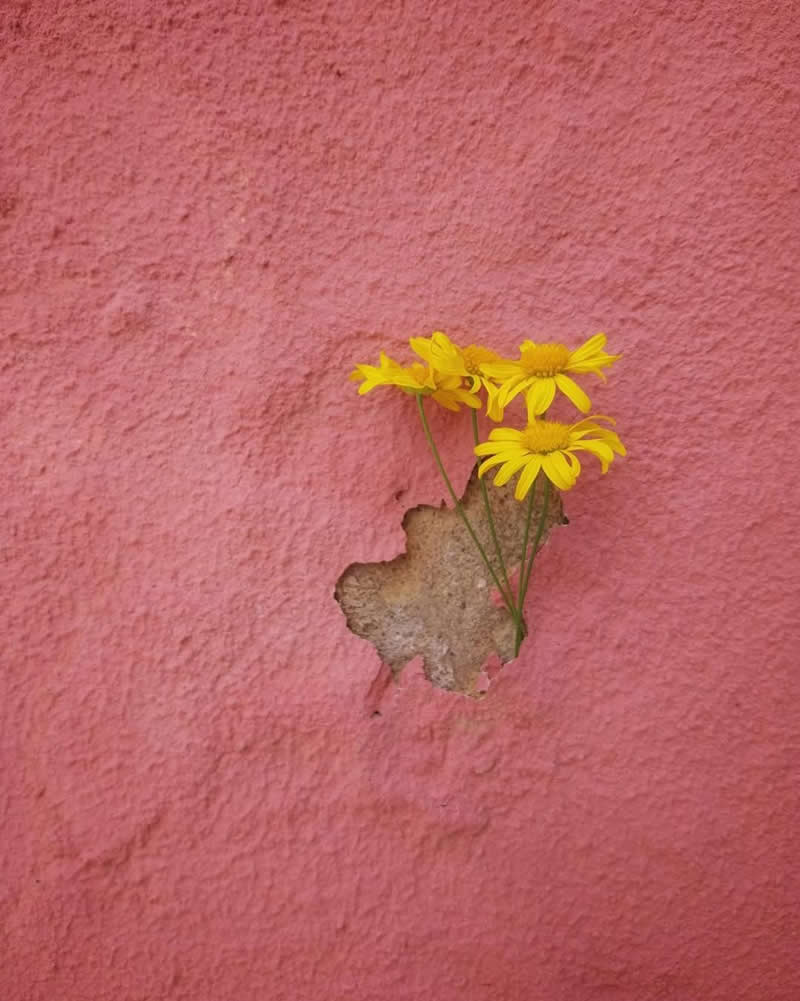
Image Source: Simple is Beautiful Photography
Shadows, Light, and Negative Space
Light can make a minimalist photograph feel almost cinematic. A hard shadow crossing a wall, a tiny figure surrounded by brightness, or a beam of sunlight landing on an otherwise empty surface can completely change the mood. Shadows aren’t merely background details; they can become subjects themselves. Add generous negative space, and suddenly the photograph has room to breathe, think, and speak.
- Shadows can create mystery and emotional depth.
- Strong light can simplify complicated environments.
- Negative space directs attention toward the main subject.
- Silhouettes can turn people into graphic shapes.
- Experimenting with light can reveal unexpected compositions.
#25. Girl with Bicycle, in the Coombe, Dublin, 1966: Photography by Evelyn Hofer
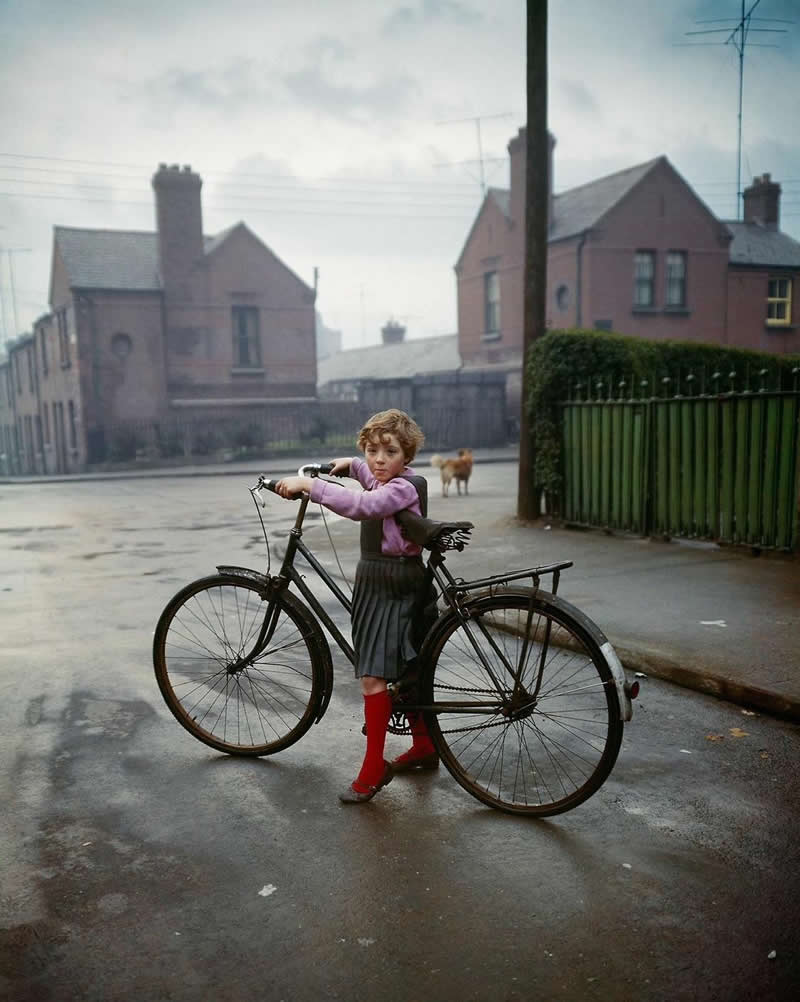
Image Source: Simple is Beautiful Photography
#26. Behind the Green Door, Trinidad, Cuba: Photography by Engin Güneysu
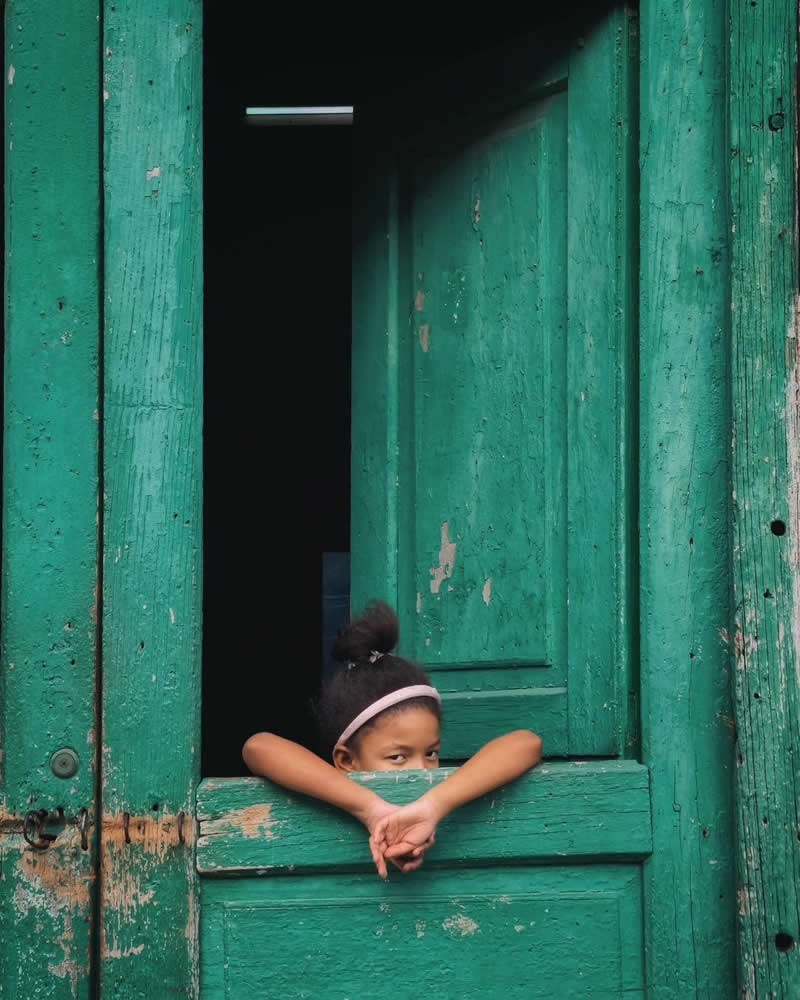
Image Source: Simple is Beautiful Photography
#27. Pink Passage, Laiva Plaza, San José del Cabo, Mexico: Photography by Oscar Hernández
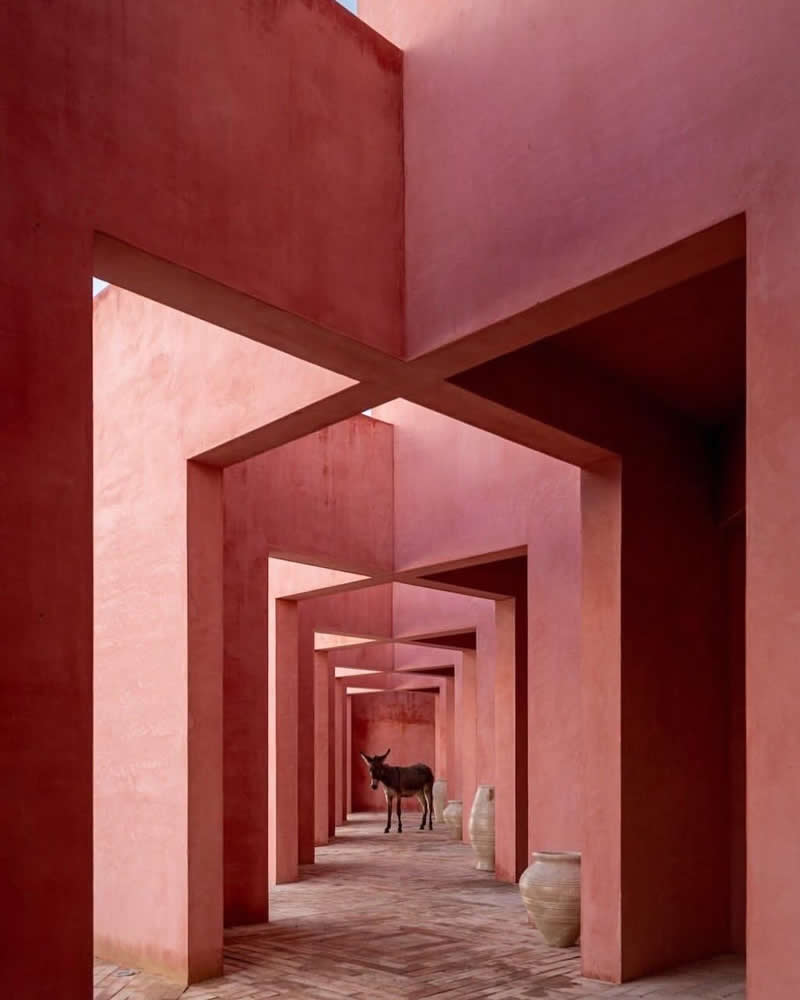
Image Source: Simple is Beautiful Photography
#28. A Step into Light, Florence, Italy: Photography by Andrea Martini
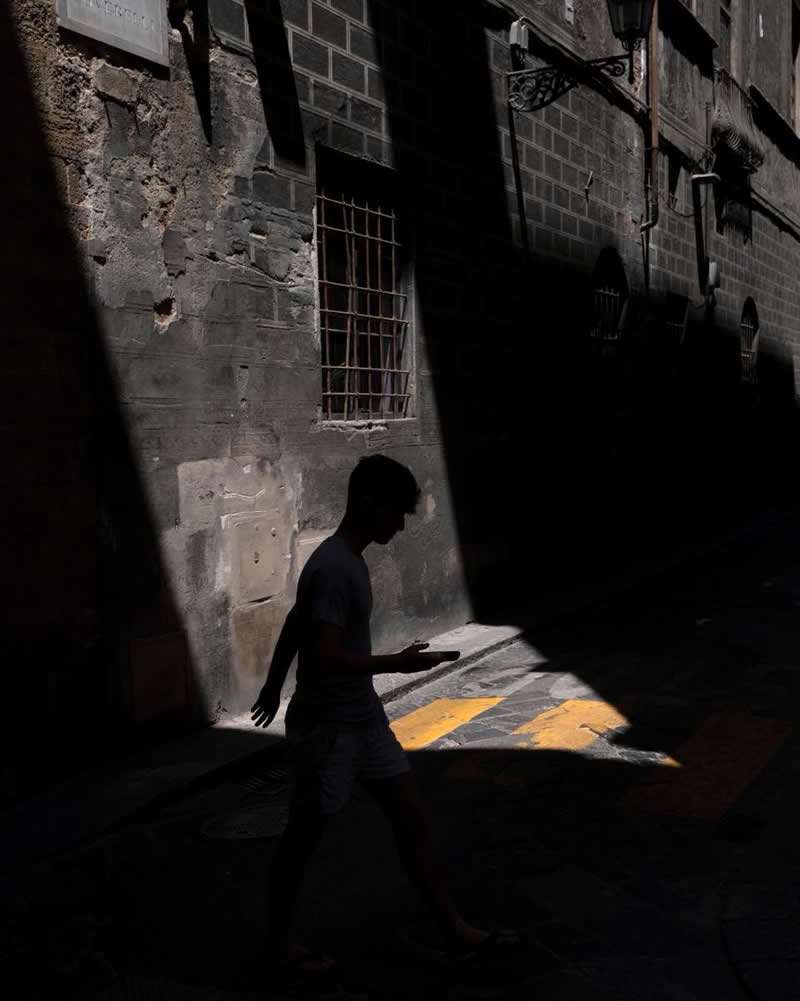
Image Source: Simple is Beautiful Photography
#29. Hill Tribe Girl Standing On Hill Side, Sa Pa, Lao Cai, Vietnam: Photography by Martin Puddy
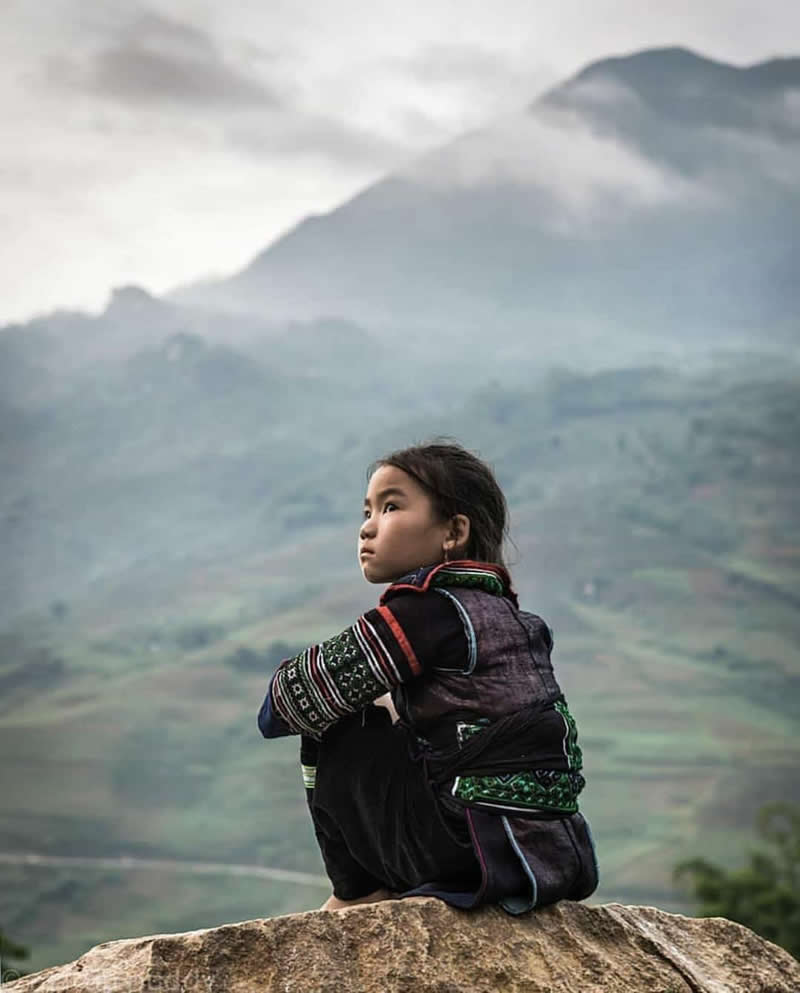
Image Source: Simple is Beautiful Photography
#30. Sometimes, the most meaningful conversations happen without words: Photography by Samuel Voskanyan
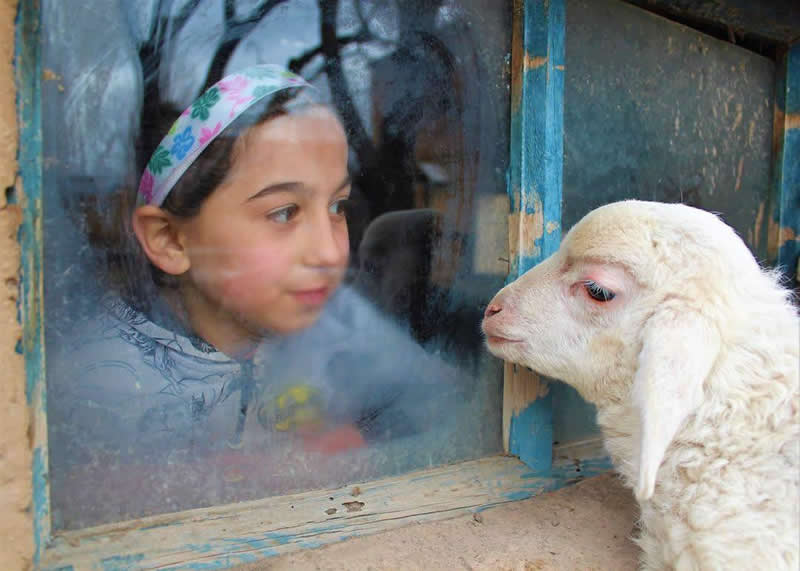
Image Source: Simple is Beautiful Photography
#31. Reaching Out, Alexandria, Egypt: Photography by Donia Ahmed
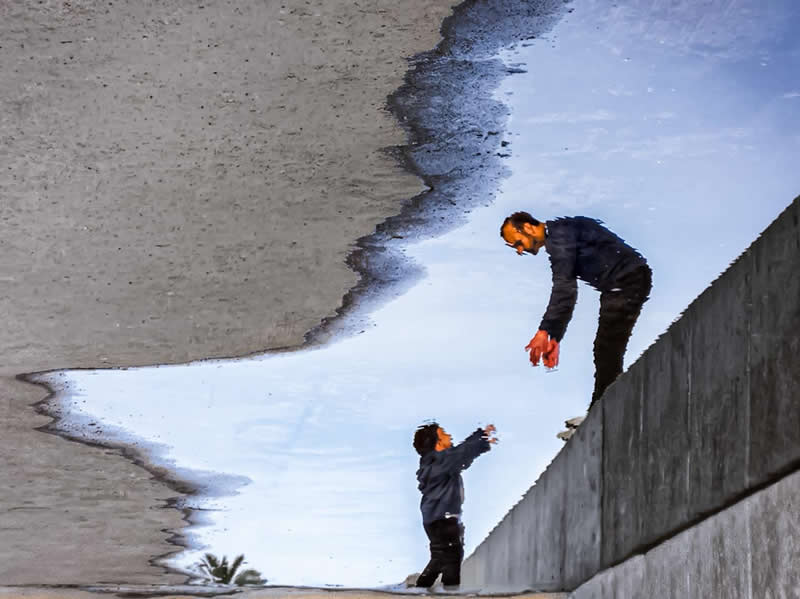
Image Source: Simple is Beautiful Photography
#32. Between Light and Shadow, Gothenburg, Sweden: Photography by Ektor Karyotakis
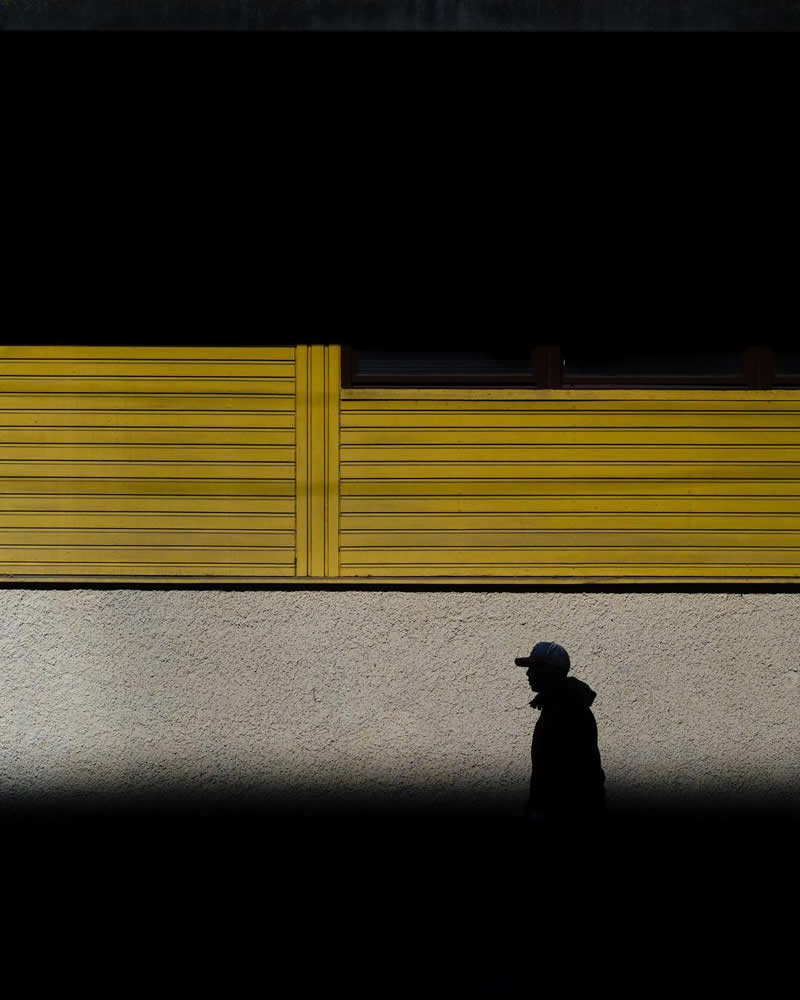
Image Source: Simple is Beautiful Photography
Color, Contrast, and Black-and-White Beauty
Minimalism doesn’t always mean muted or monochromatic. Sometimes one bold color is all a photograph needs. A red coat against a pale wall, a yellow object in an otherwise quiet frame, or contrasting colors can create an instant visual punch. On the flip side, black-and-white photography strips away color completely, letting texture, light, shape, and emotion take center stage.
- Use one dominant color to create visual impact.
- Complementary colors can make simple compositions pop.
- Black and white emphasizes shape, texture, and light.
- High contrast can give minimal frames dramatic energy.
- Color can become the central storytelling element.
#33. Beyond the Curtain, Bukhara, Uzbekistan: Photography by Behzod Boltaev
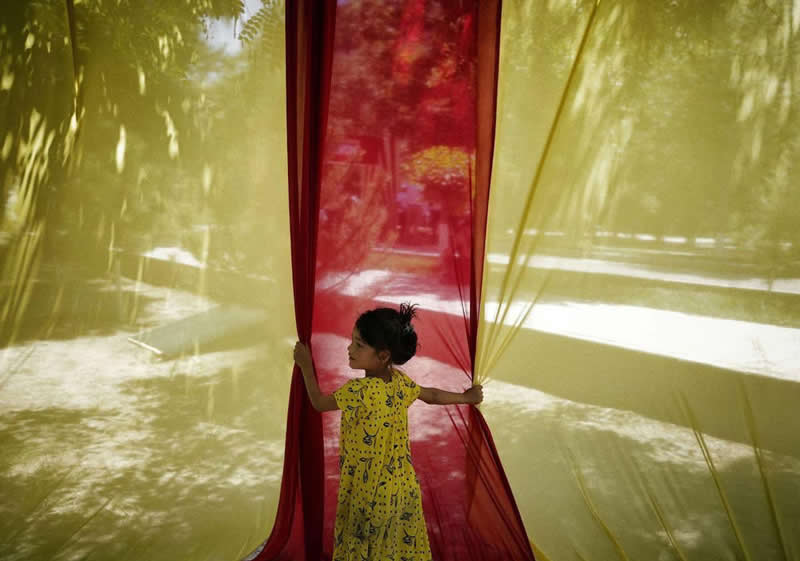
Image Source: Simple is Beautiful Photography
#34. What do you think is waiting behind that blue door?: Photography by JS Rodriguez
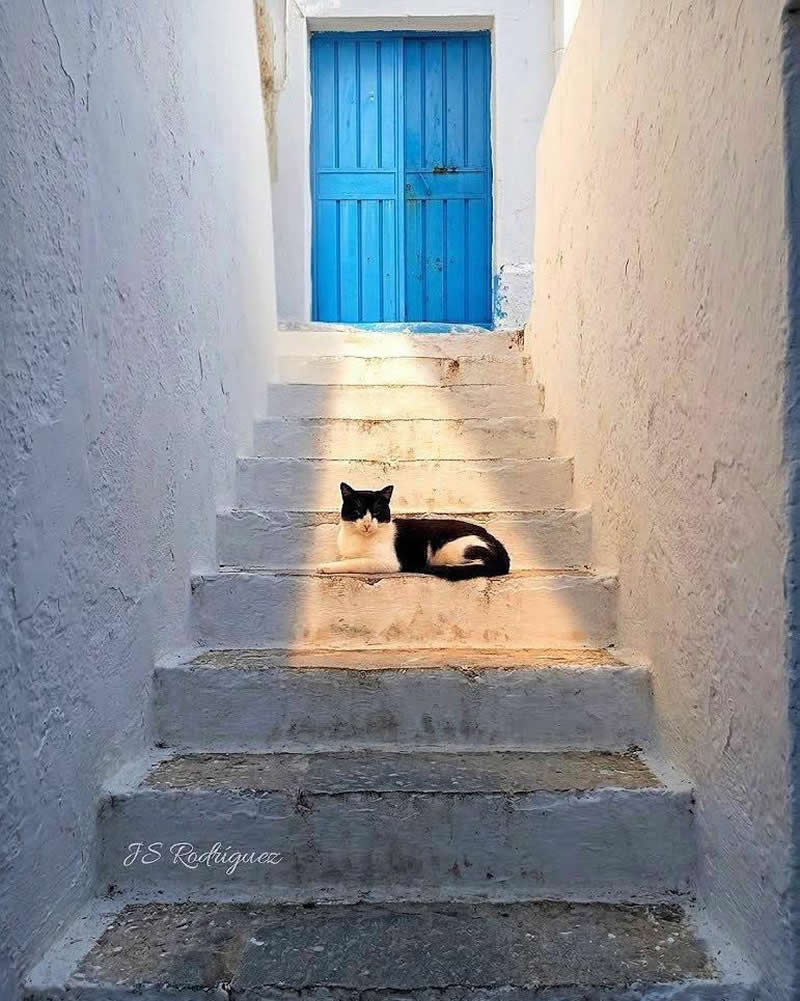
Image Source: Simple is Beautiful Photography
#35. Where the Sea Meets Everyday Life, Scilla, Italy: Photography by Stefania Granata

Image Source: Simple is Beautiful Photography
#36. New York in Another Time: Photography by Frank Fournier
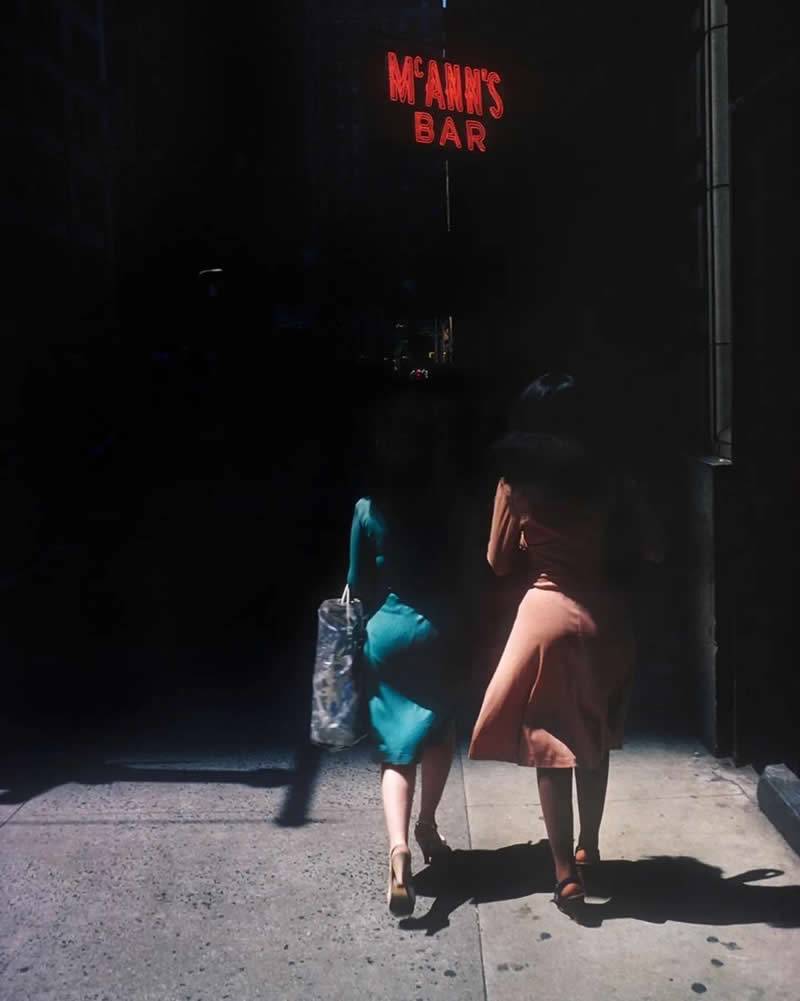
Image Source: Simple is Beautiful Photography
#37. A breath between sky and water: Photography by David Mould

Image Source: Simple is Beautiful Photography
#38. Do you like red balloons?: Photography by Andrea Pozzoni
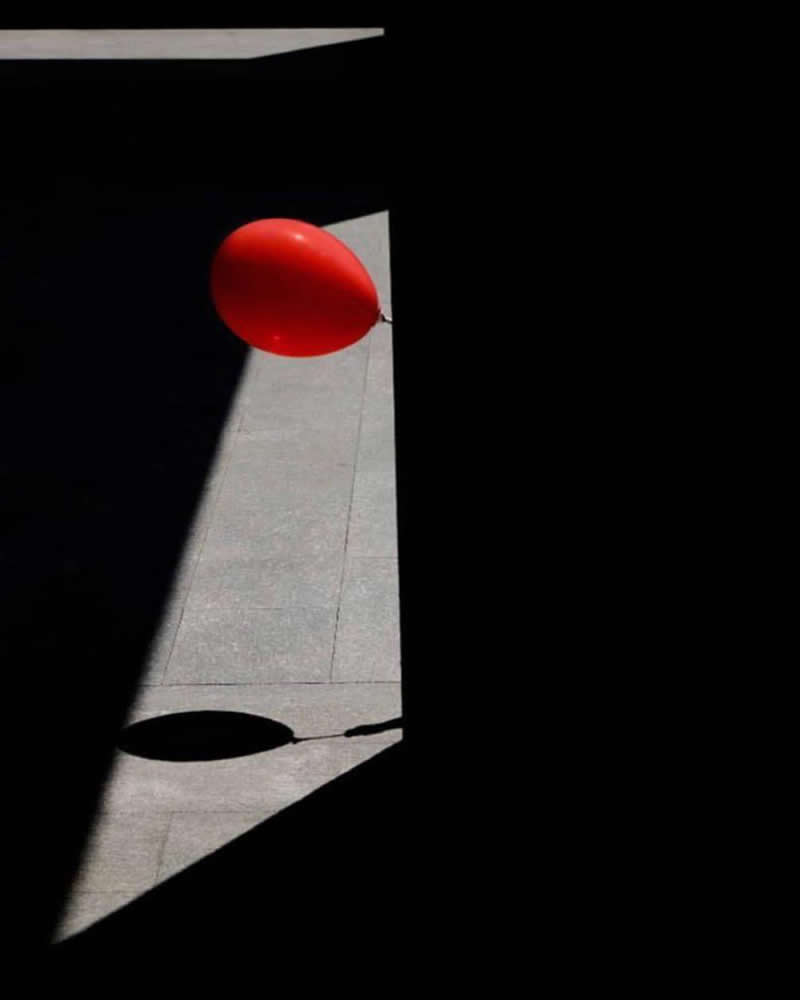
Image Source: Simple is Beautiful Photography
#39. What story does this photograph tell you?: Photography by Andy
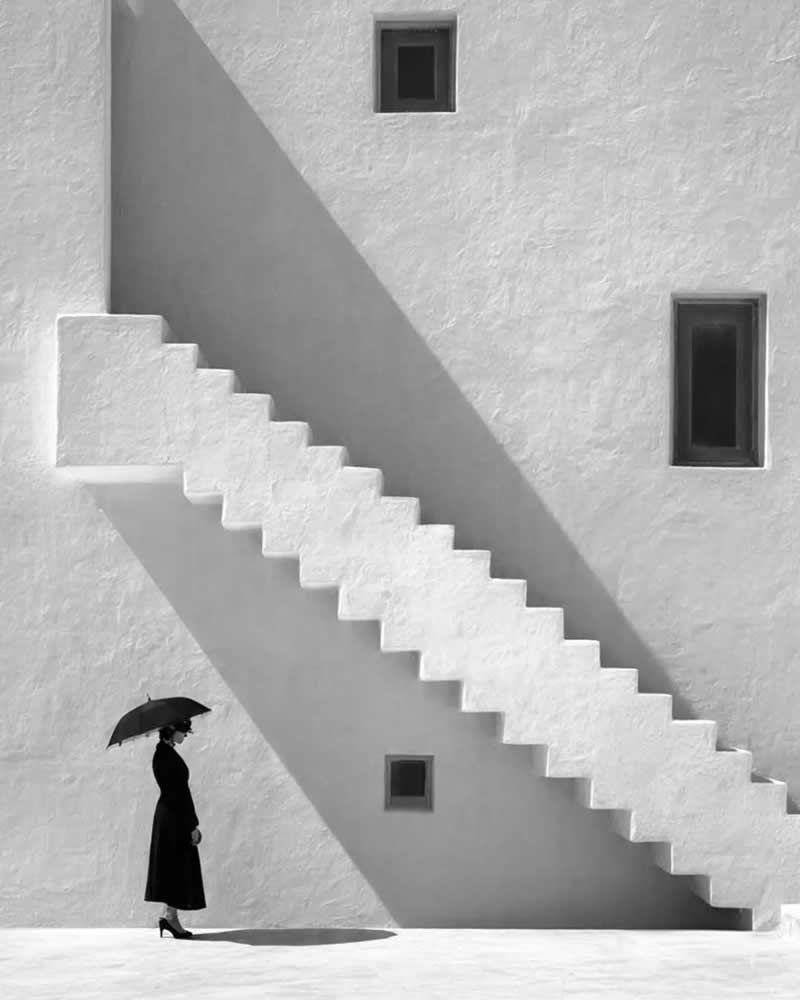
Image Source: Simple is Beautiful Photography
#40. A Sip of the City, Milan, Italy: Photography by Salvatore Tuzzo
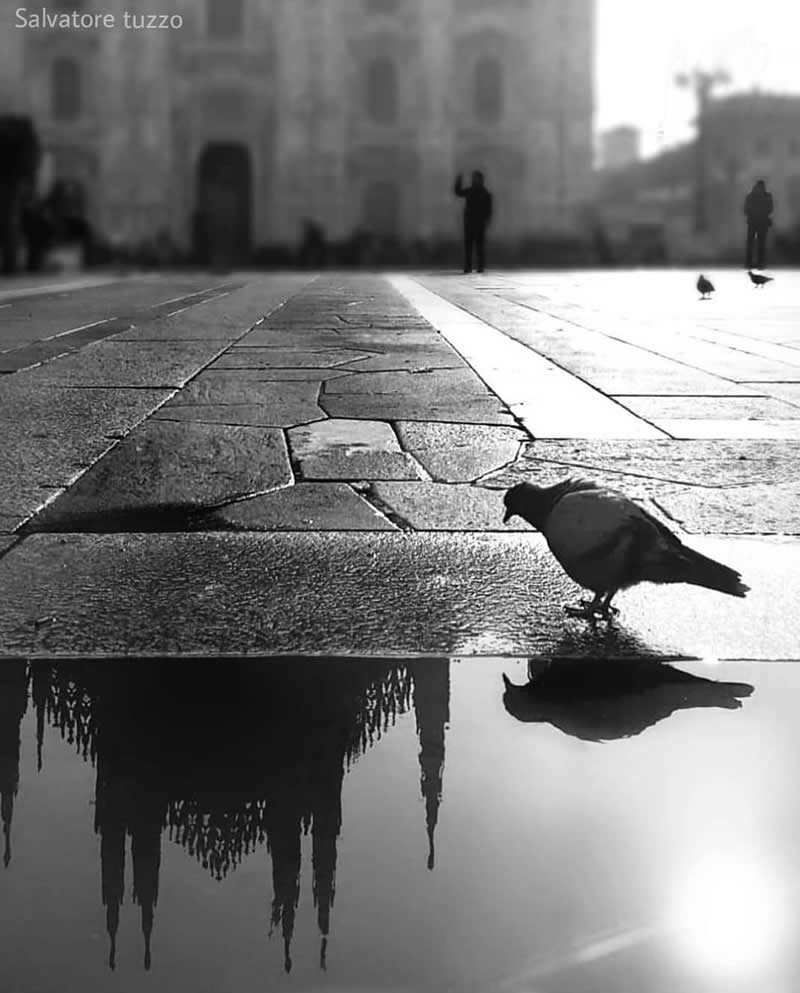
Image Source: Simple is Beautiful Photography
Finding Poetry in Everyday Life
Perhaps the most beautiful lesson of minimalist photography is that inspiration doesn’t require a spectacular location. It can sit on a kitchen table, hide on a city sidewalk, appear in a shadow, or wait quietly on an ordinary wall. Once you start paying attention, everyday life becomes a huge collection of potential photographs. Minimalism simply teaches you how to notice them.
- Slow down and observe familiar surroundings.
- Search for unusual relationships between ordinary objects.
- Street photography can reveal minimalist moments everywhere.
- Still life scenes can become powerful visual stories.
- Curiosity is often more important than an exotic location.
#41. Woven in Light: Photography by Rukie Jumah
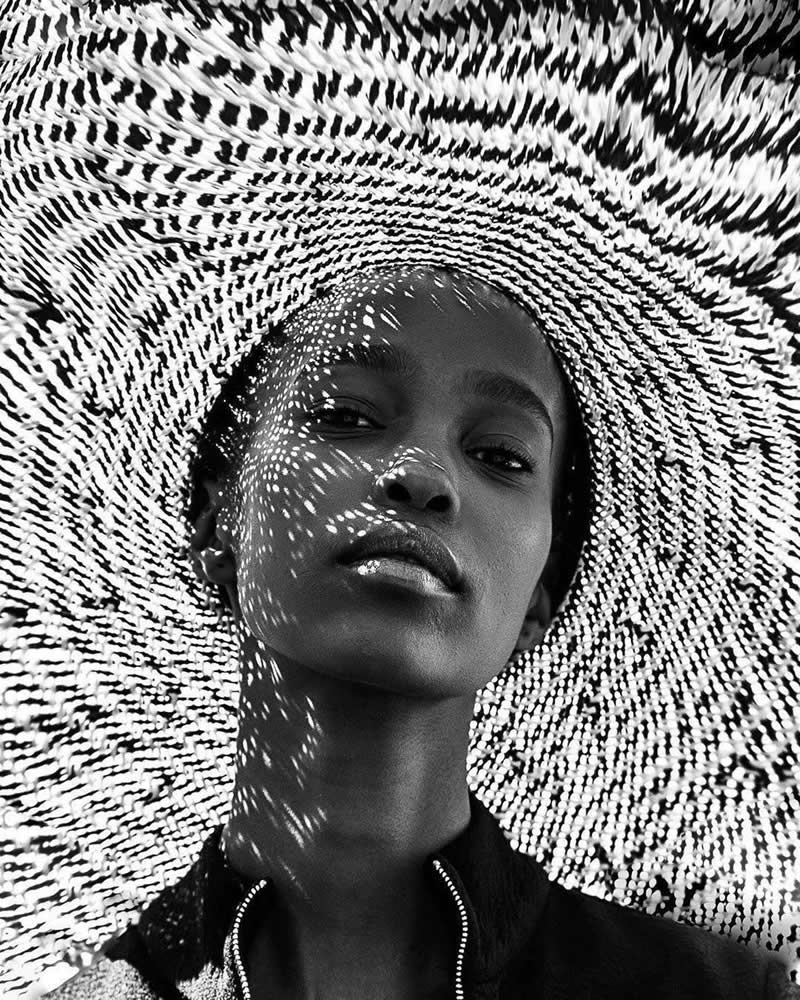
Image Source: Simple is Beautiful Photography
#42. Cat Stand-Off, Naples, Italy: Photography by Leonard Freed
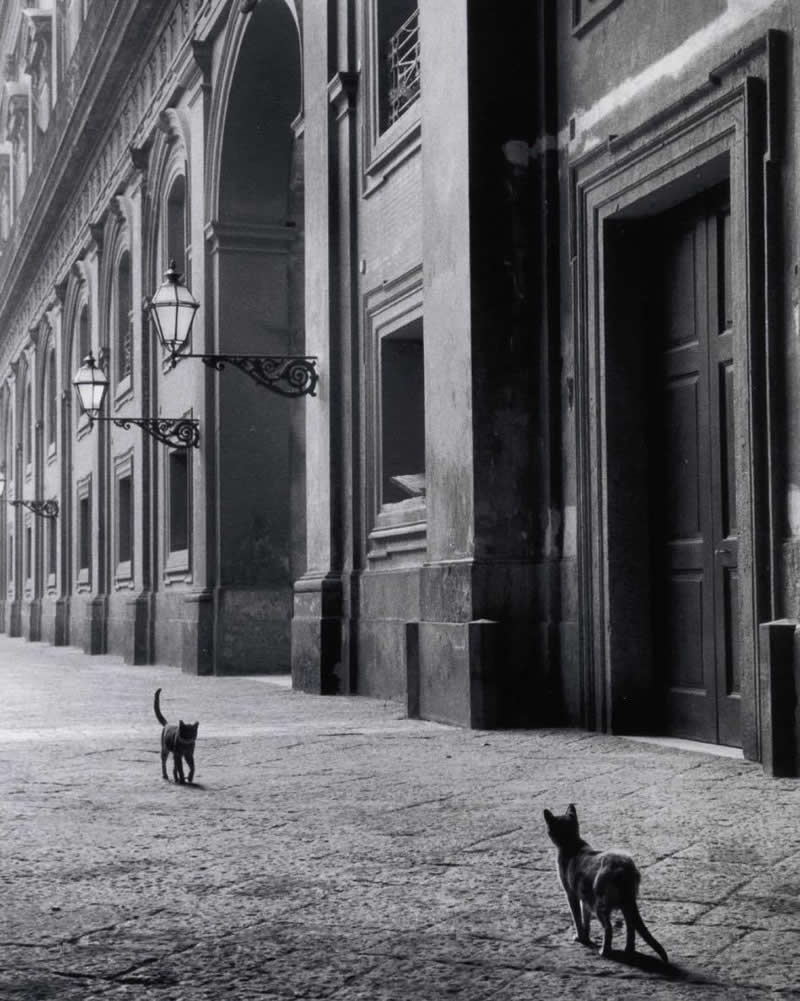
Image Source: Simple is Beautiful Photography
#43. Passing Through Light, Tate Modern, London: Photography by Pascal Andreani
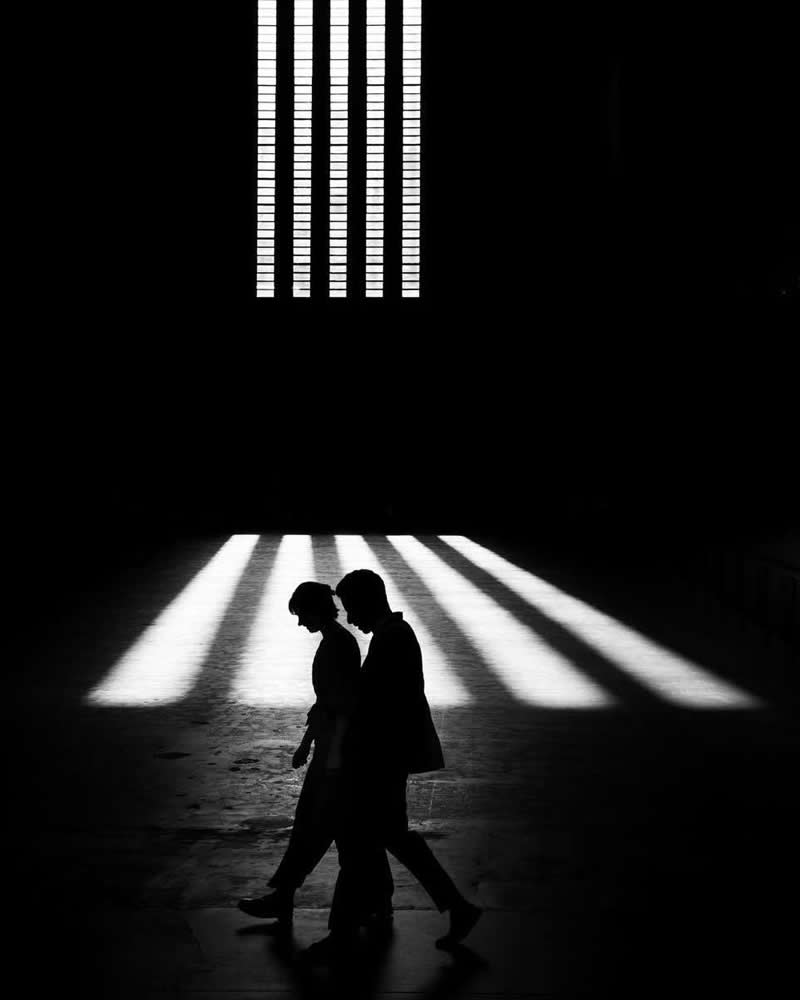
Image Source: Simple is Beautiful Photography
#44. A Curious Visitor, Azadi Tower, Tehran, Iran: Photography by Akbar Mehrinezhad
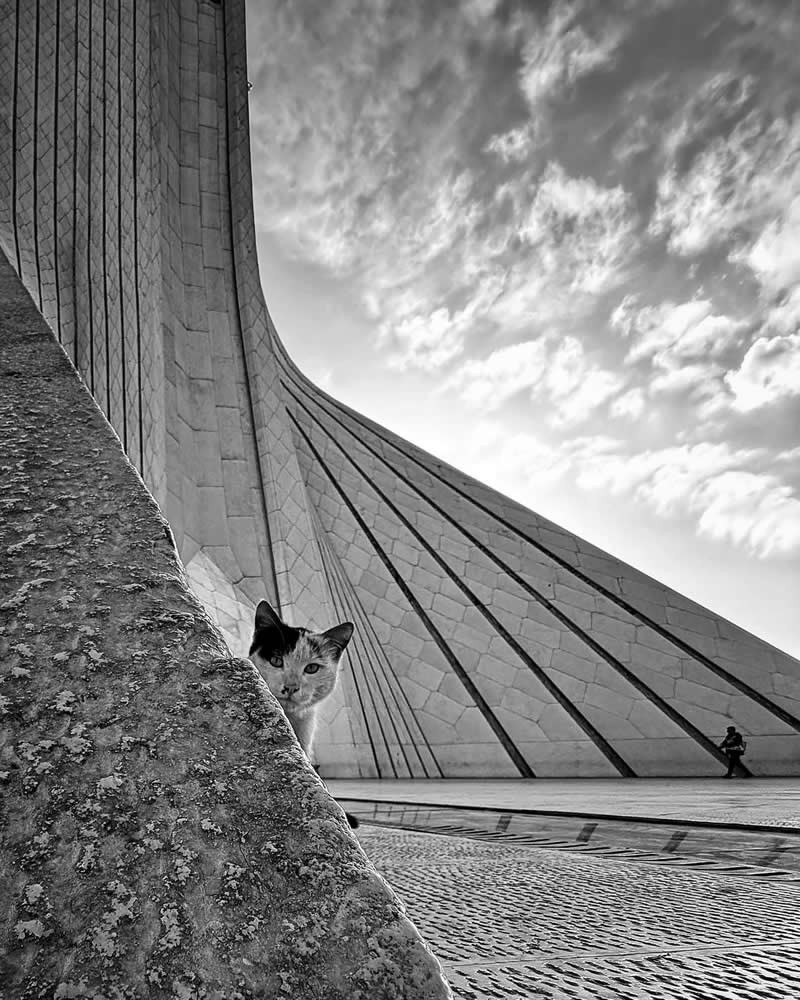
Image Source: Simple is Beautiful Photography
#45. When Light Draws a Cat: Photography by Kanin Hisao
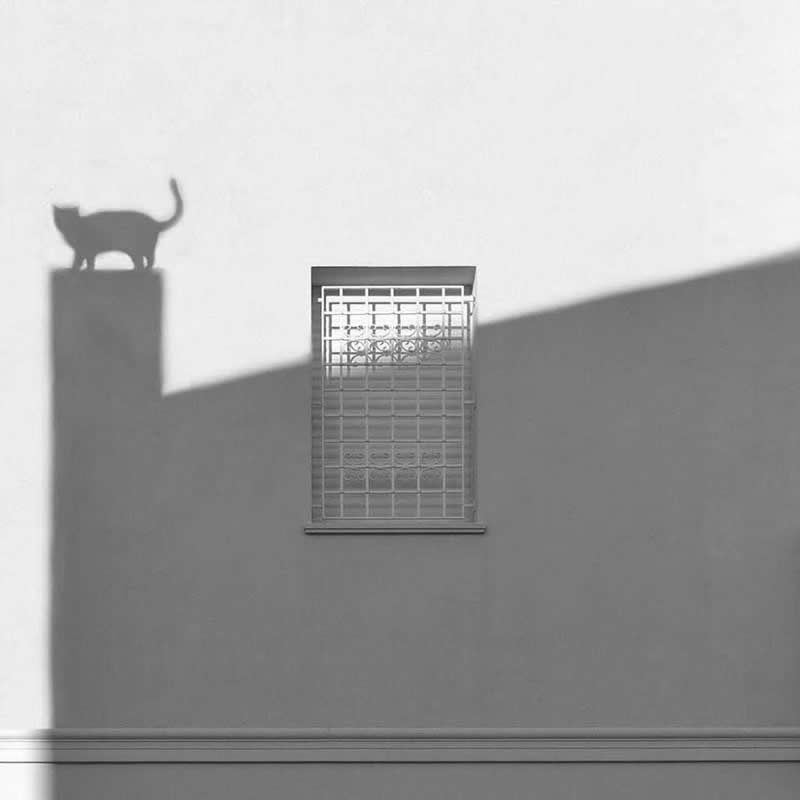
Image Source: Simple is Beautiful Photography
Editor’s Summary
These photographs show that minimalism isn’t about making photography empty; it’s about making every element count. They teach us to simplify, observe carefully, and recognize beauty in ordinary scenes. Whether through geometry, color, shadows, negative space, or timing, a restrained composition can create an image that feels surprisingly deep, emotional, and memorable.
- Simplify: Remove distractions and let the essential elements lead.
- Observe: Look closely at ordinary scenes before passing them by.
- Compose: Use lines, shapes, space, and balance intentionally.
- Experiment: Play with shadows, color, contrast, and perspective.
- Stay curious: Beautiful photographs can be hiding almost anywhere.