
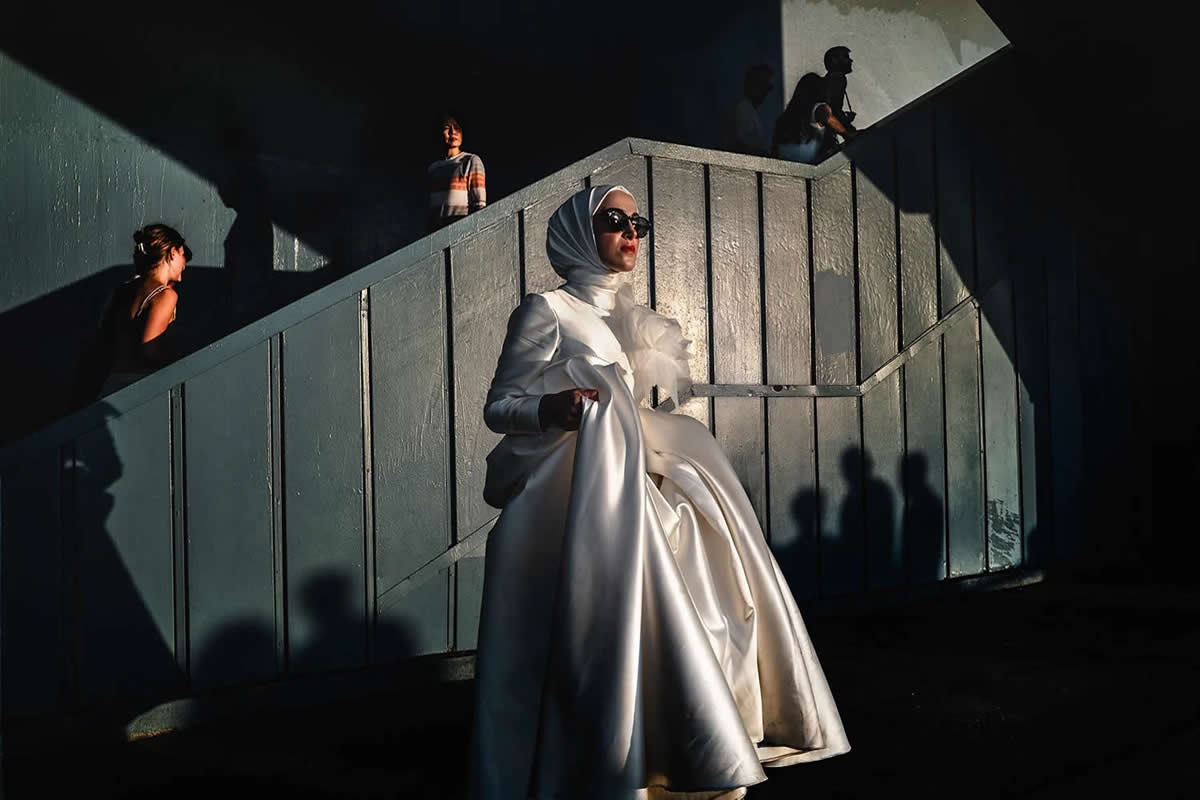
What if the most interesting photograph on your roll is hiding on a street you’ve walked a hundred times? For Italian photographer Stefano Mirabella, that’s exactly where the magic begins. Born and raised in Rome, Mirabella has spent years turning everyday streets into carefully constructed visual stories, proving that you don’t need an exotic destination to make a compelling photograph.
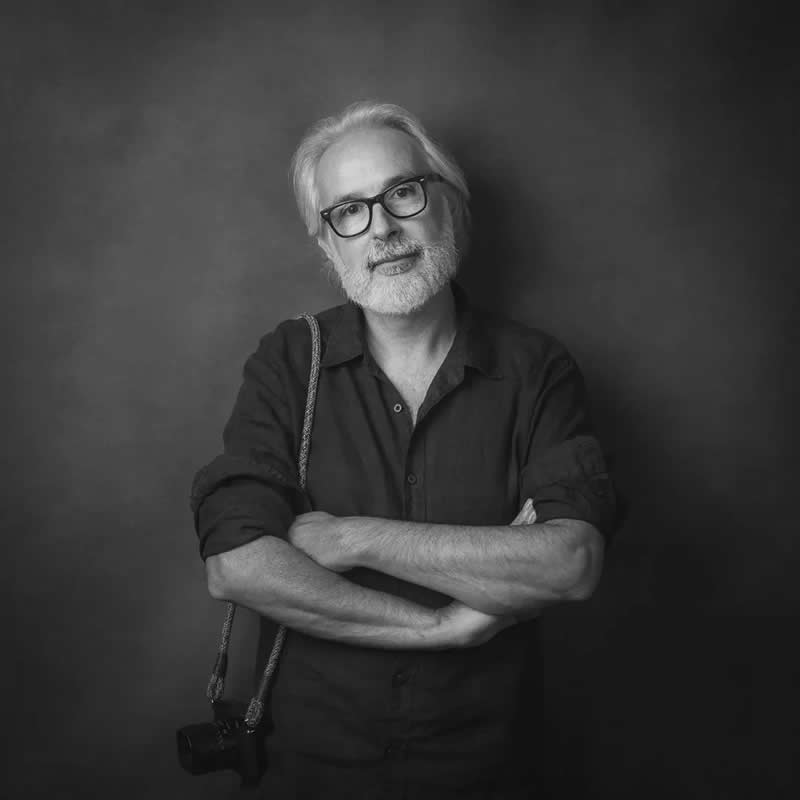
His photographic journey began with reportage and documentary work, taking him across countries including Thailand, Cambodia, Laos, Myanmar, India, Syria, and the Palestinian territories. Those experiences shaped his lasting fascination with people, places, and the connections between them. Eventually, his attention turned closer to home, and Rome became his creative playground.
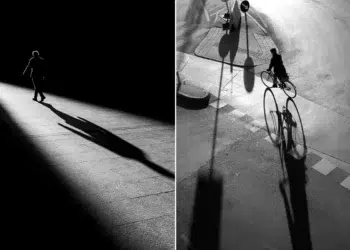
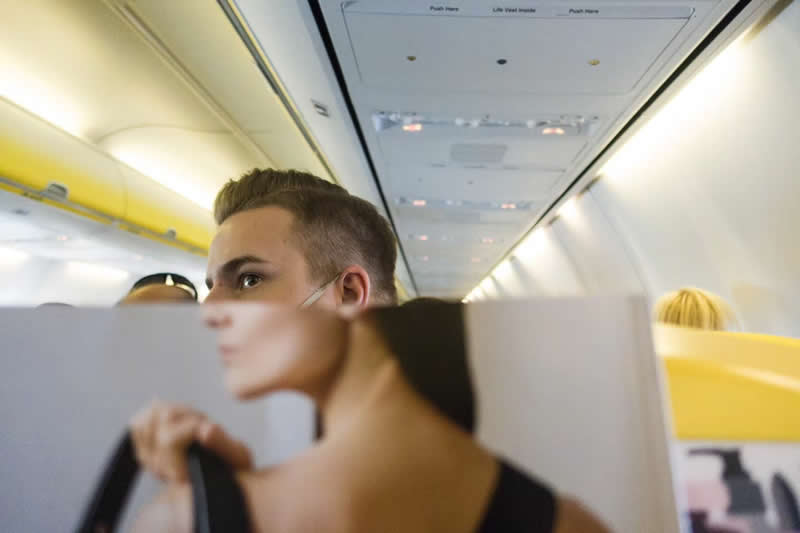
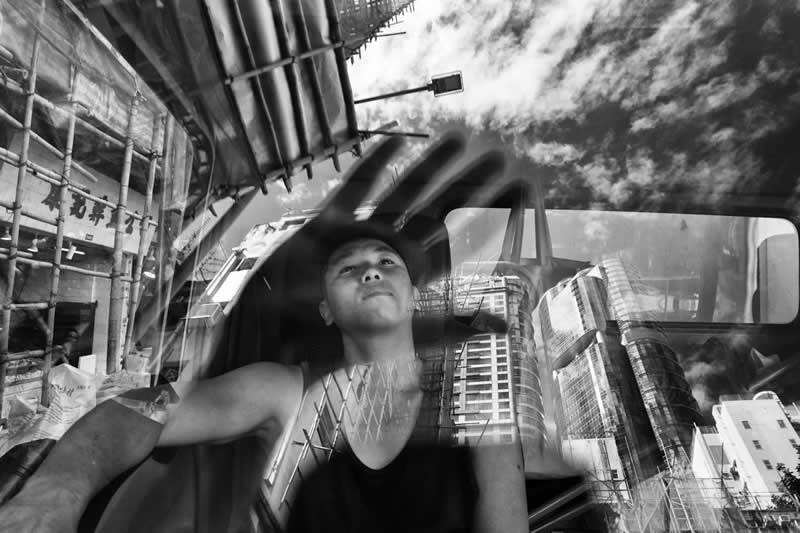
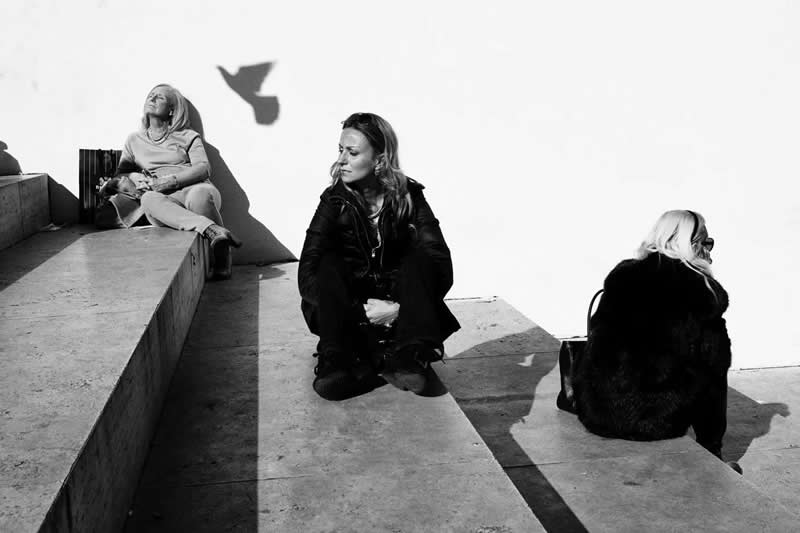
Mirabella’s street photography is built on a fascinating balance: preparation meets chance. He studies light, geometry, lines, empty spaces, and backgrounds before choosing his position and waiting. Then comes the unpredictable part: a gesture, glance, coincidence, or passing figure that suddenly makes every element click.
Working primarily with a 28mm lens, he believes the subject may grab your attention, but the background often makes the photograph work. His images remind us that great street photography isn’t simply about being quick with a camera. It’s about slowing down, staying curious, and learning to see the familiar as if you’re discovering it for the first time.
You can find Stefano Mirabella on the web:
#1
#2
#3
#4
A brief introduction about yourself?
I am an Italian photographer, born and raised in Rome. My work today is centred on street photography, though it grows out of a documentary approach I developed much earlier, travelling through countries such as Thailand, Cambodia, Laos, Myanmar, India, Syria, and the Palestinian territories. I believe those experiences deeply influenced the way I still photograph today: even when working on the street, I remain interested in people, places, and the relationships that develop between them.
In recent years, alongside my personal work, teaching has become an important part of my practice. I teach photography at Officine Fotografiche in Rome and have collaborated with Leica Akademie Italy for many years, leading courses and workshops primarily focused on street photography and composition.
#5
#6
#7
#8
How did you begin your journey in photography?
I began studying photography in Rome in 2003. At first, I was mainly drawn to reportage and documentary photography. Photography was a way for me to enter places and situations I did not know and, above all, to connect with people.
For several years, I travelled extensively, working mainly in Asia and the Middle East. Then, around 2012, something changed. I began photographing Rome and everyday life more consistently, and I realised that I did not necessarily need to travel far to find something worth observing.
Street photography taught me precisely this: the extraordinary can be hidden within something completely ordinary. Since then, the street has become the main territory of my photographic exploration.
#9
#10
#11
#12
Your photographs often feel carefully composed even though the situations themselves are completely spontaneous. How do you read the geometry, lines, light, and empty spaces of a scene before deciding where to position yourself?
I believe that an important part of street photography happens before anything actually happens.
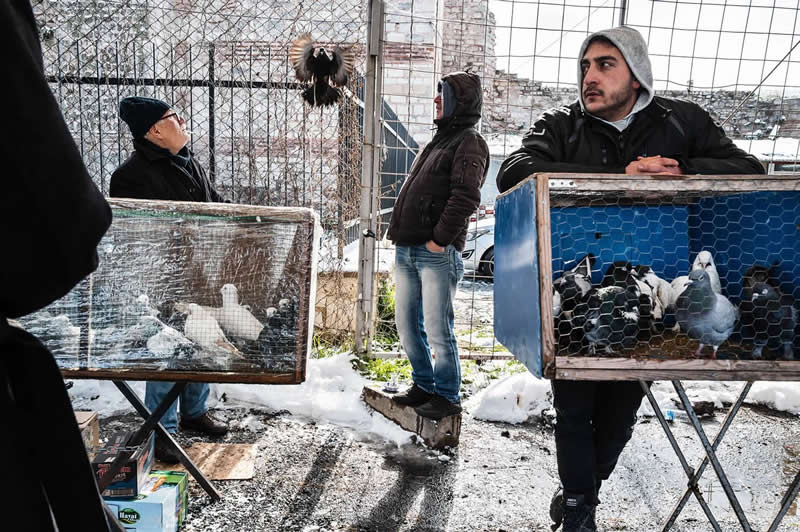
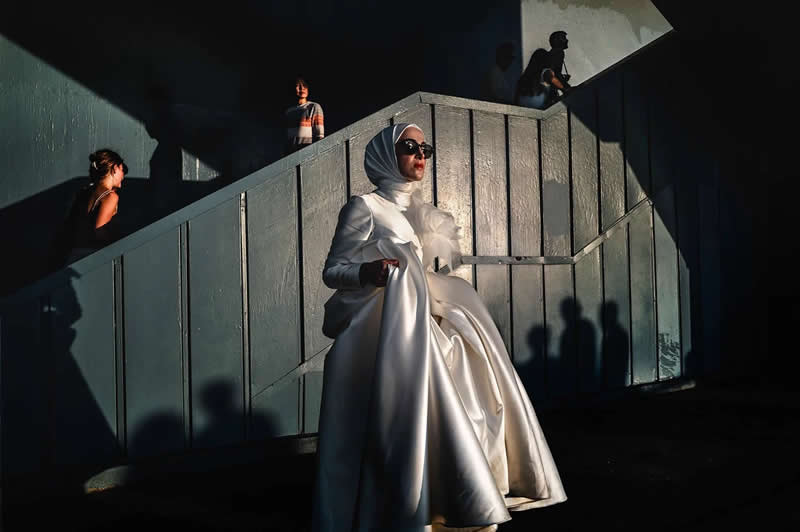
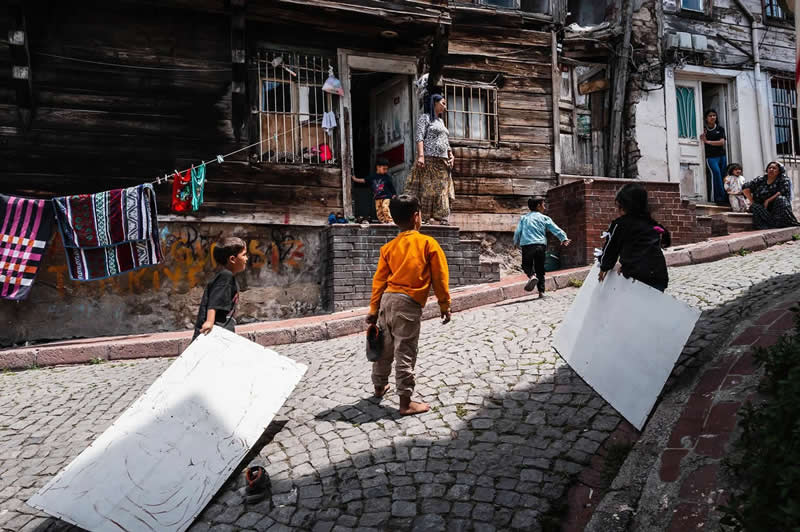
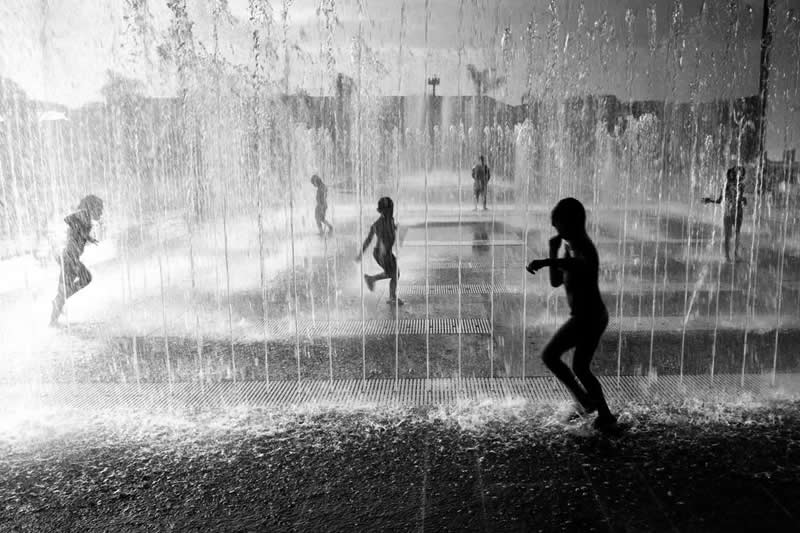
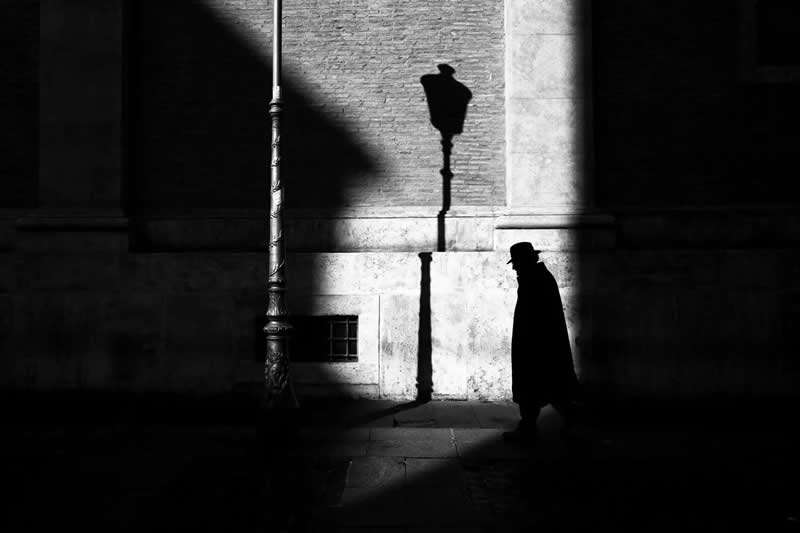
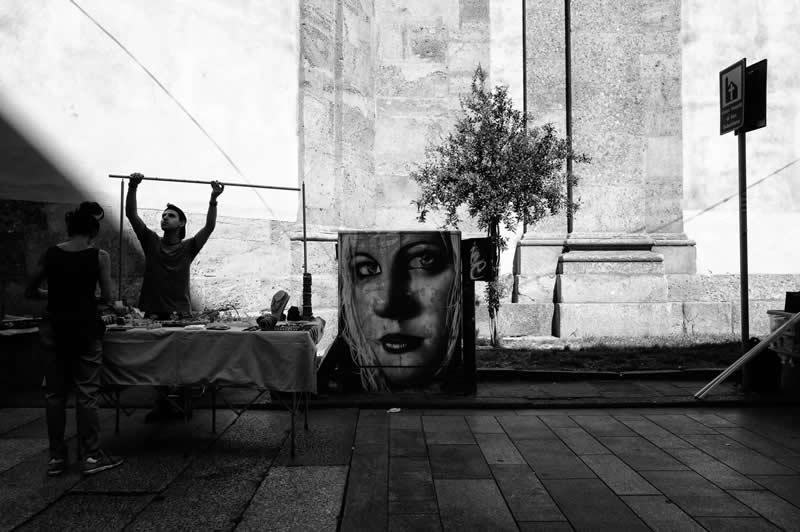
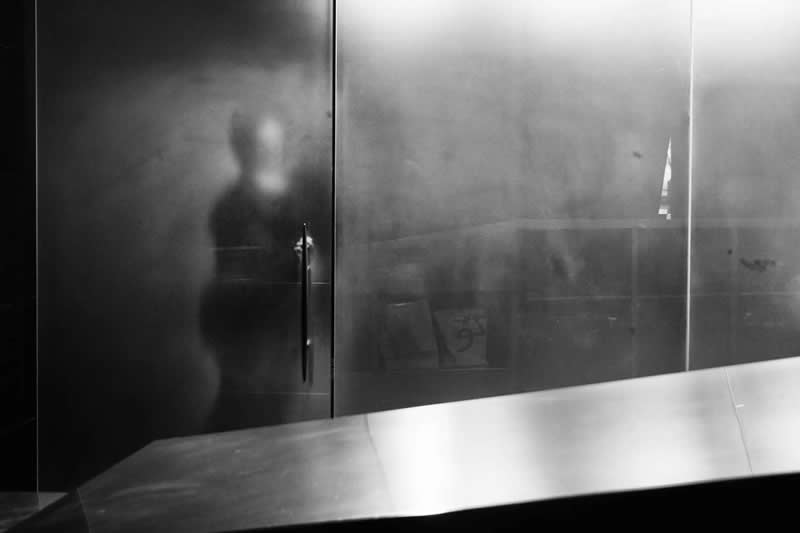
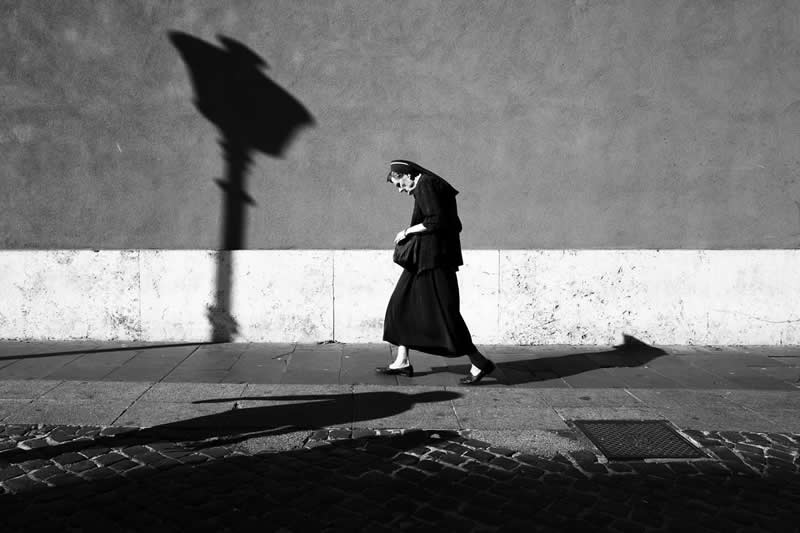
When I arrive somewhere, I do not necessarily start by looking for a person or a subject. Very often, I observe the space first: the light, the lines, the edges of the frame, the distances, and what is happening in the background. I try to understand whether that space already has a structure capable of accommodating something.
Then I choose my position and wait.
It is a kind of balance between preparation and chance. I can control where I stand, the framing, the distance, and the relationship between foreground and background, but I cannot control what is going to happen. And it is precisely that unpredictable element that interests me.
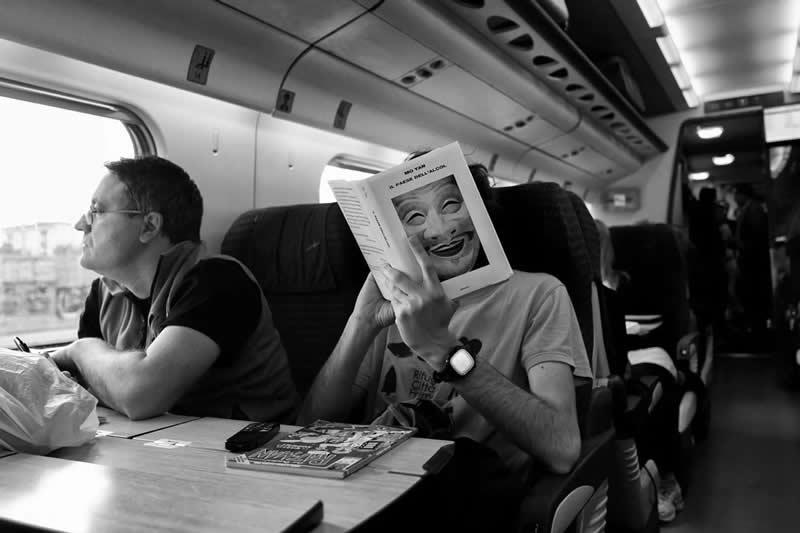
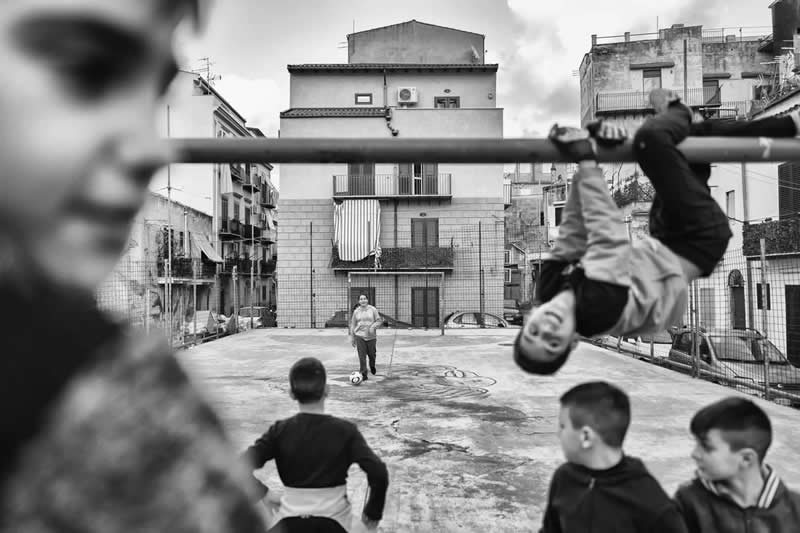
I have worked almost exclusively with a 28mm lens for many years, and I believe it has profoundly shaped the way I see. It is a focal length that requires me to be inside the scene while, at the same time, allowing me to keep a great deal of space within the frame. This is why I often tell my students that the subject attracts the eye, but the background builds the photograph.
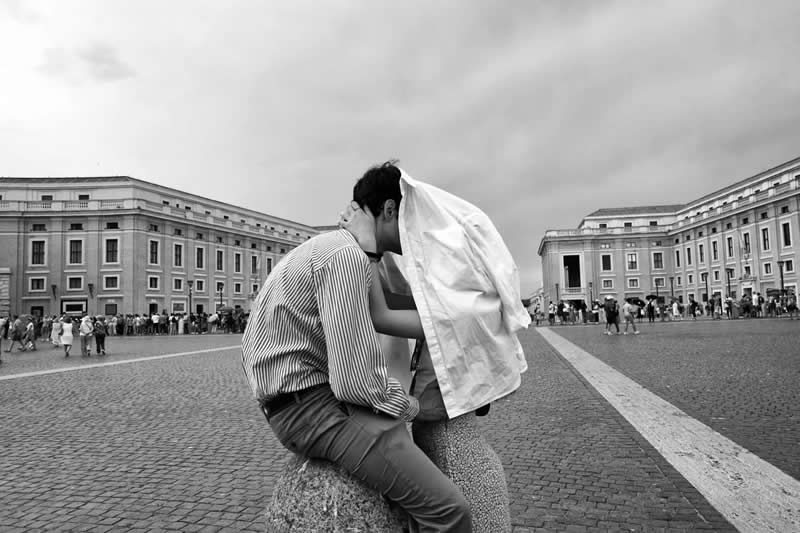
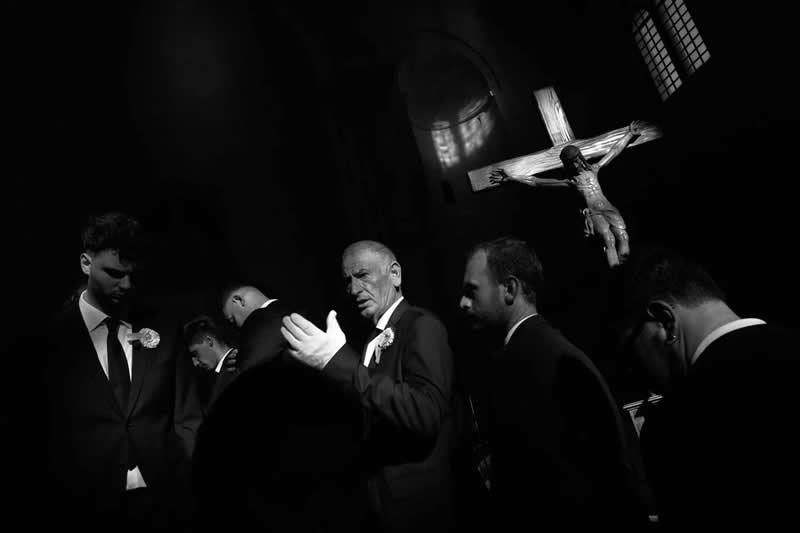
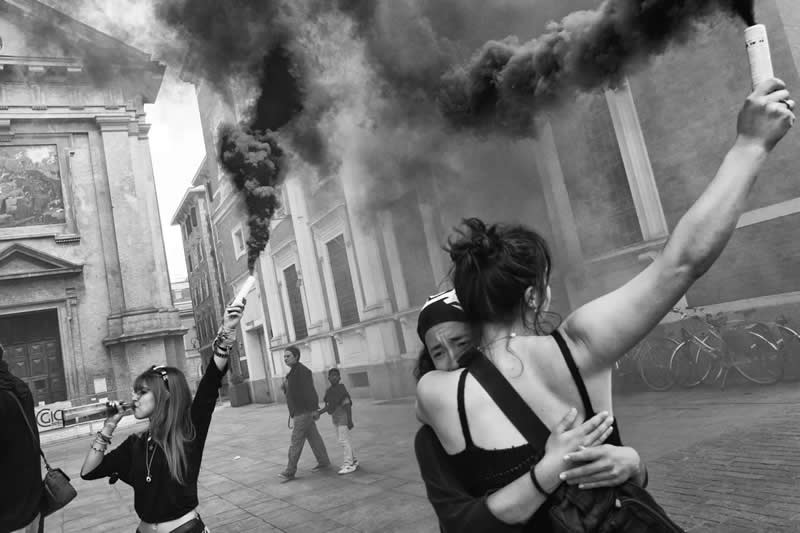
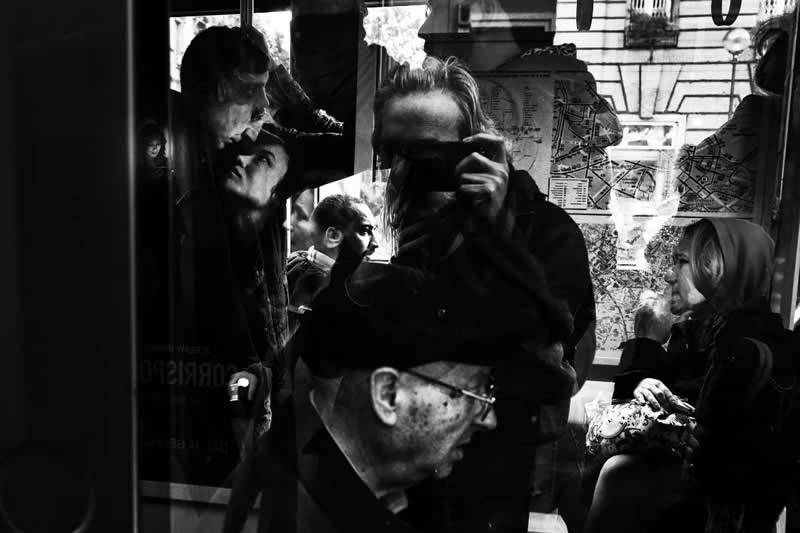
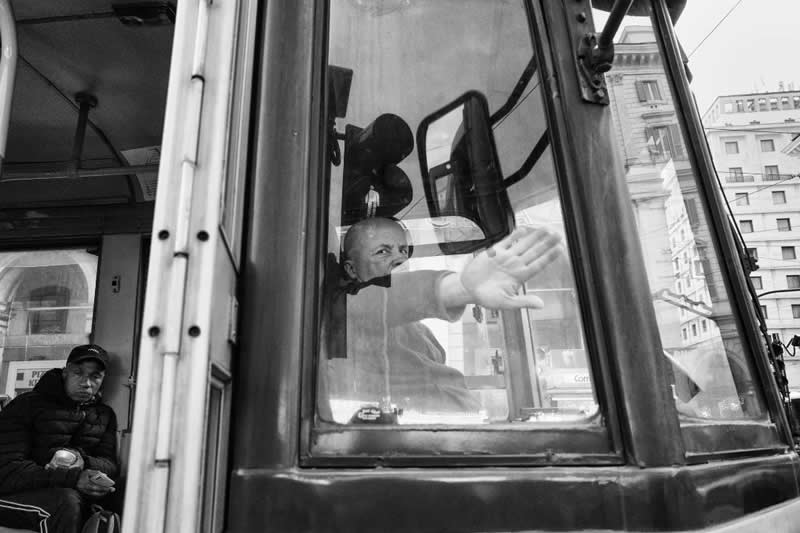
When something finally enters the space I have chosen — a person, a gesture, a glance, a coincidence — I am no longer simply photographing a subject. I am looking for the moment when all the elements within the frame begin to speak to one another.
#13
#14
#15
#16
You’ve said that you look for relationships between people and the environment around them. What makes that relationship visually interesting enough for you to wait for the right moment and press the shutter?
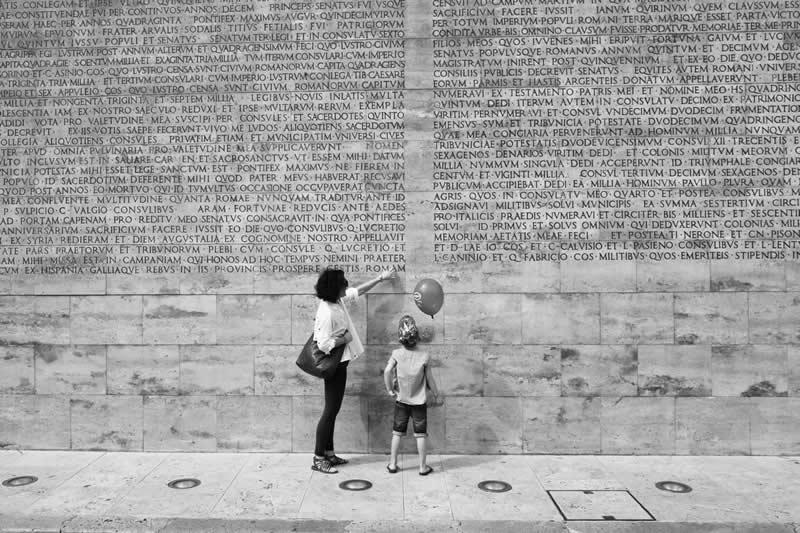
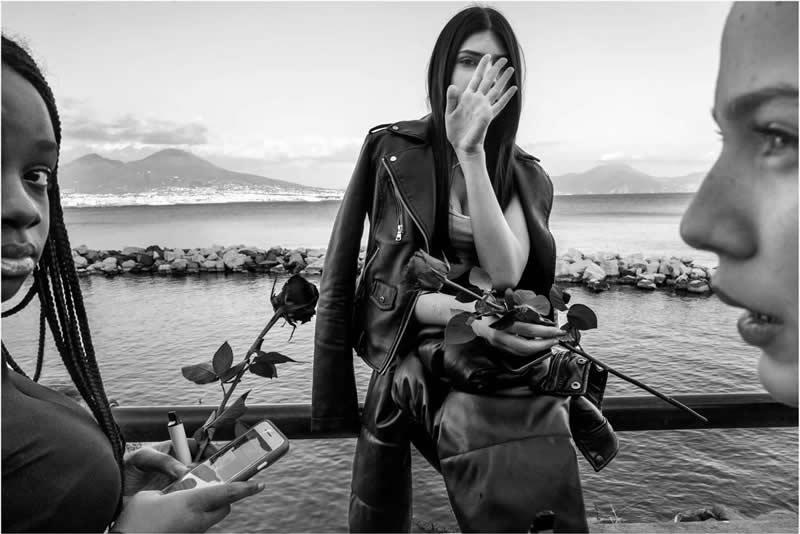
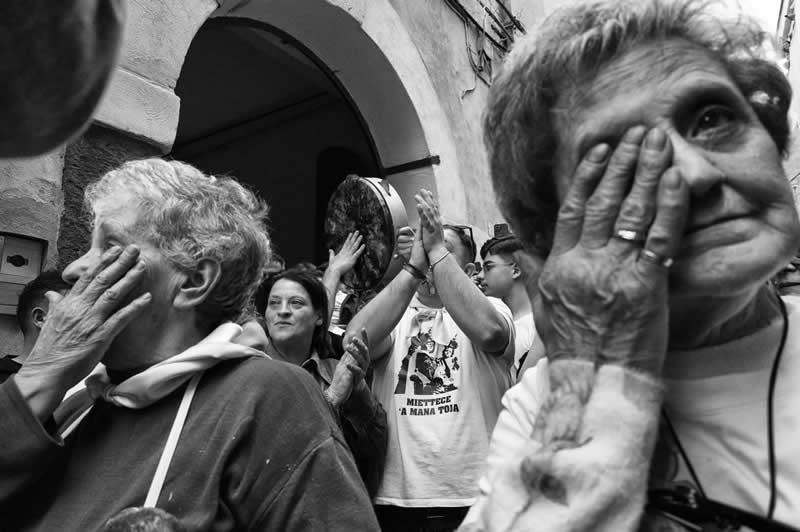
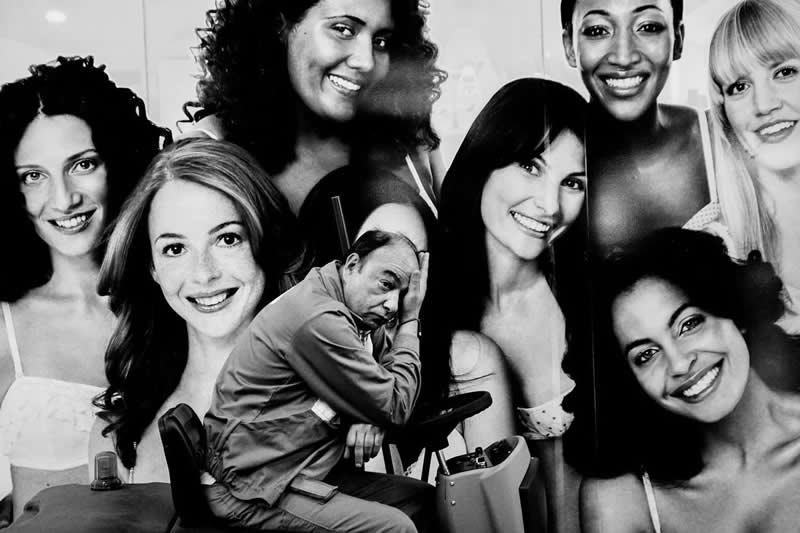
I am far less interested in an isolated person than in what happens between things.
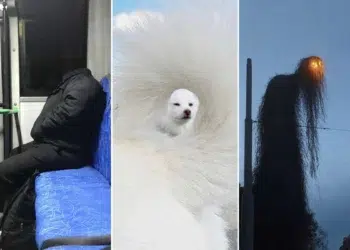
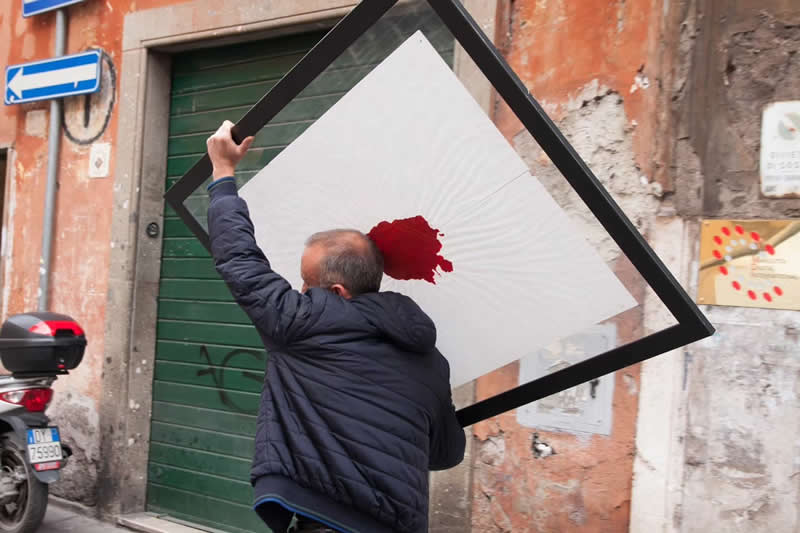
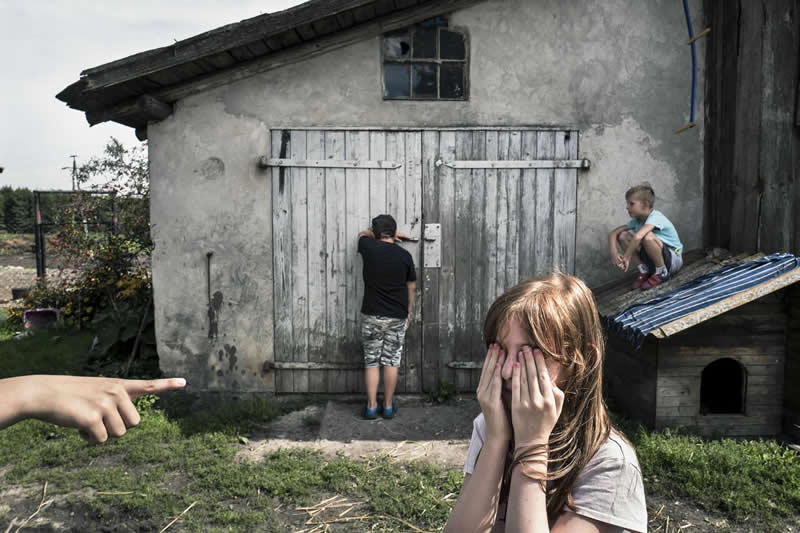
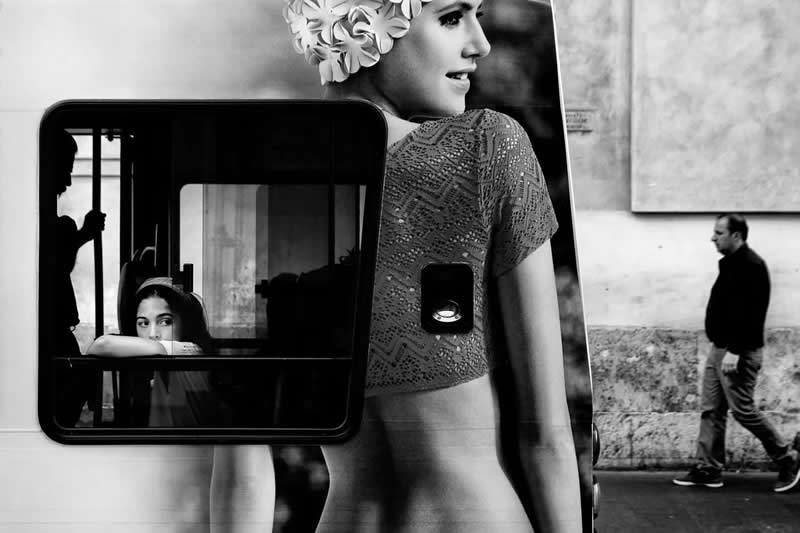
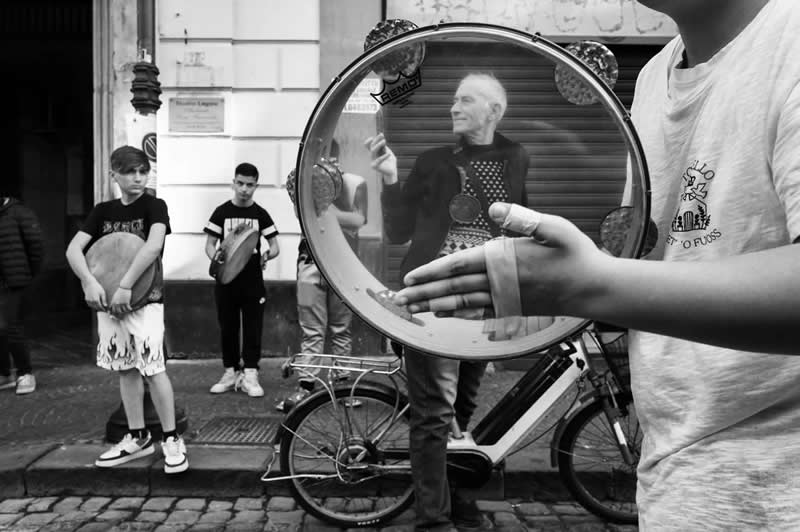
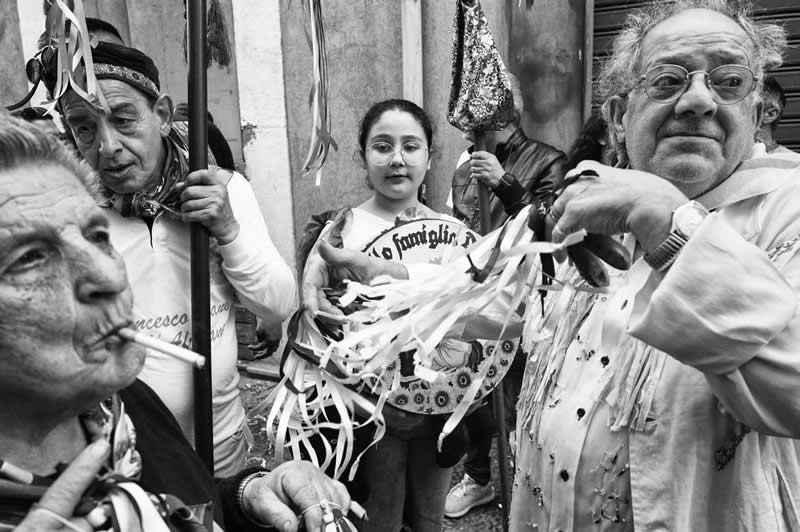
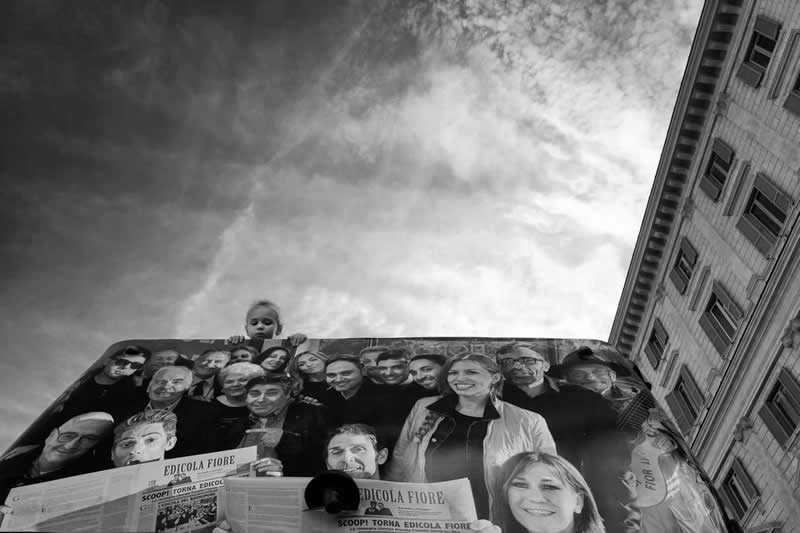
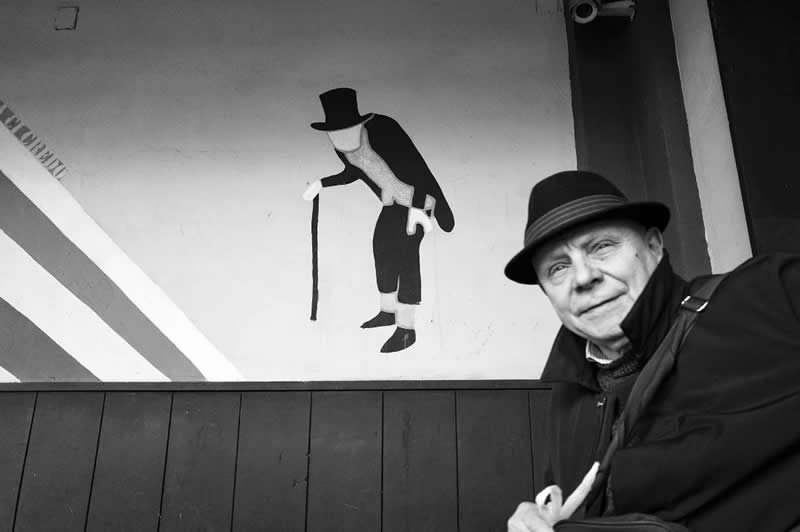
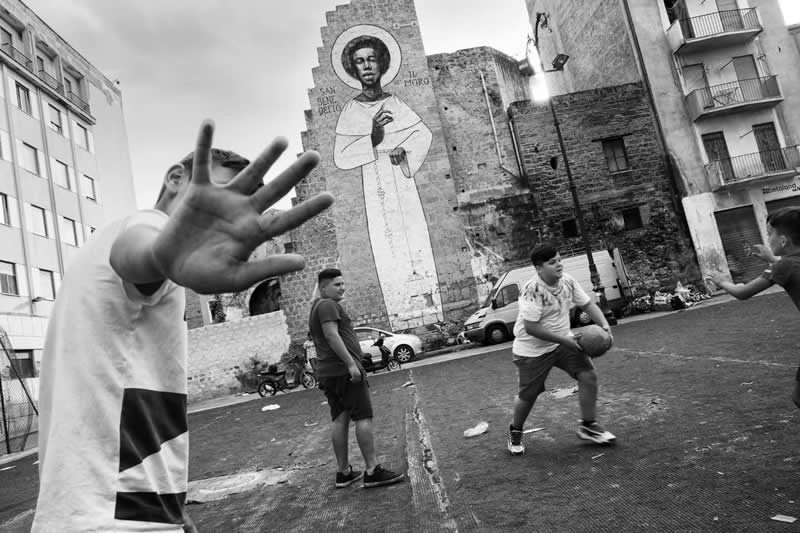
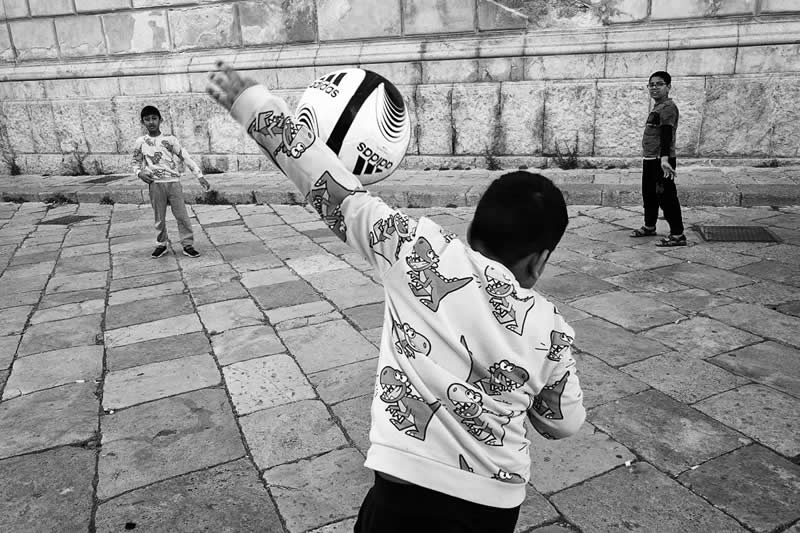
Sometimes the relationship is obvious: a gesture that seems to respond to an advertising image, two people at a distance unconsciously assuming the same posture, or a colour recurring in different parts of the frame. But it can also be something much more subtle: a tension, a distance, an empty space.
When I photograph, I am constantly looking for these connections.
Sometimes the scene is almost complete and only one element is missing. That is when I might wait in the same place for several minutes. I do not know exactly what I am waiting for — and I think that is important. If I already knew what was supposed to happen, the photograph would simply become the execution of an idea.
I prefer to prepare the image and leave room for the unexpected.
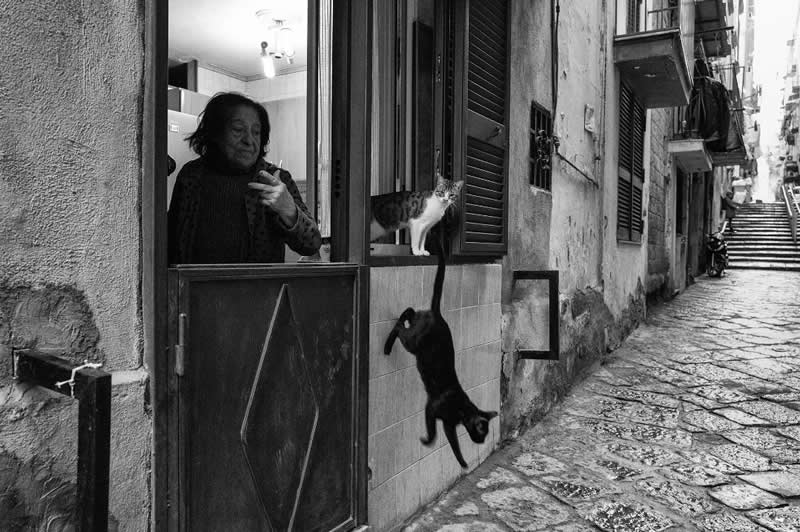
The moment I am looking for comes when something suddenly changes the balance of the scene and, for a fraction of a second, elements that had previously been independent seem to belong to the same story.
#17
#18
#19
#20
You’ve spent years photographing Rome, a city you know extremely well. How do you continue finding fresh images in a place you’ve photographed for so long — and what has street photography taught you about seeing your own city differently?
Photographing a place you know extremely well is probably more difficult than photographing somewhere unfamiliar.
When we travel, we are naturally alert. Everything is new: the light, people’s behaviour, the colours, even small everyday gestures. In our own city, the opposite happens. We think we already know what is around the corner and, little by little, we stop looking.
Rome has been an extraordinary training ground for me precisely because of this.
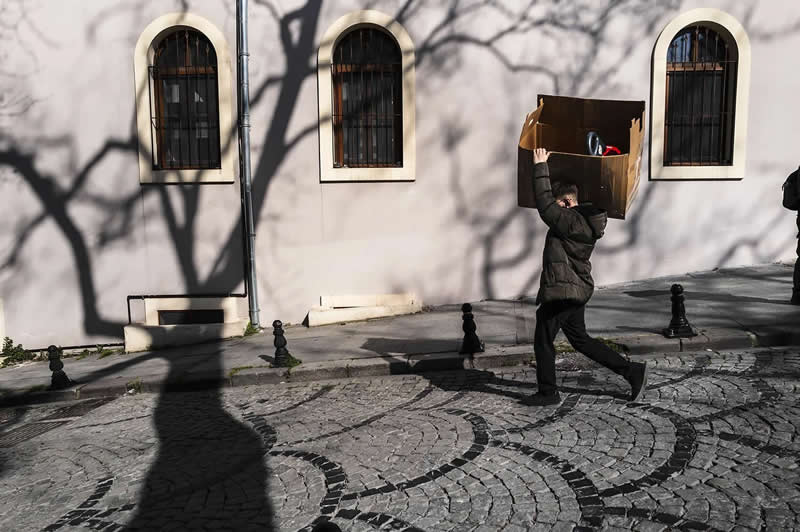
Over the years, I have learned that I do not necessarily need to search for new places; I need to find new ways of seeing places I already know. I can walk down the same street hundreds of times and find it completely different because of the light, a person, a season, or simply because I am looking at it differently that day.
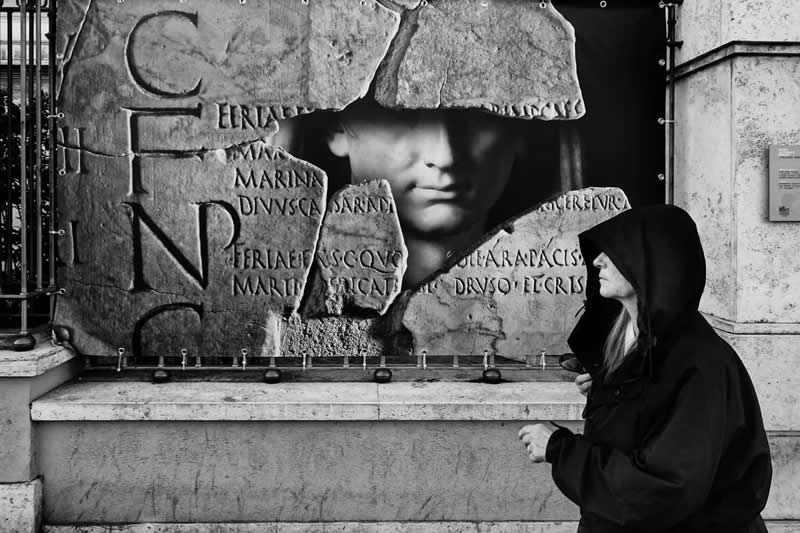
One of the places I have photographed most extensively is the Ara Pacis. It is a relatively small space that I know almost centimetre by centimetre, and for that very reason it has become a kind of personal laboratory. I know the light, the geometry, and the points where people might enter the frame, but I never know what will actually happen.
Perhaps this is the most important lesson Rome has taught me: familiarity must never become habit.
Ultimately, street photography has taught me to move through my own city as if I were still capable of getting lost in it.
#21
#22
#23
#24
Your awards and recognitions?
I have never considered awards and recognitions to be the goal of my work, but some of them have represented important moments in my journey.
In 2014, I was among the winners of the Leica Talent Award, a recognition that marked the beginning of a professional relationship with Leica that continues to this day. Since 2015, I have collaborated with Leica Camera Italia and Leica Akademie Italy as a photographer and educator.
In 2021, I curated the exhibition “Caio Mario Garrubba – FREELANCE SULLA STRADA”, dedicated to one of the key figures in post-war Italian photography. It was a particularly meaningful experience for me, as it gave me the opportunity to engage deeply with both a photographer and a period in Italian photography that feel very close to my own understanding of the medium.
In 2025, I was awarded third prize in the Street Photography category at the Siena Awards.
Over the years, my work has also been presented in numerous solo and group exhibitions in Italy and abroad.
Beyond awards and recognitions, however, as time goes by I increasingly value something else: developing a personal visual language consistent enough for someone to recognise one of my photographs before even seeing my name.
#25
#26
#27
#28
Your favourite photographers and key sources of inspiration?
Henri Cartier-Bresson was inevitably one of my earliest references, particularly for the relationship between geometry, composition, and timing. Over time, however, my influences have expanded and now come from very different areas of photography.
Alex Webb has certainly been fundamental for the way he constructs complex images through layers, light, and relationships between elements. Nikos Economopoulos and Jason Eskenazi are also important references for me, particularly in their relationship with space and distance, and their ability to visually organise seemingly chaotic situations. Josef Koudelka remains an extraordinary photographer for the intensity, freedom, and strength of his visual language.
But my visual education does not come from street photography alone. I feel a strong connection to Italian photography and the visual culture of Neorealism, which I consider an essential reference. Its way of looking at everyday life, people, and places without separating them from their social and human context has undoubtedly left a mark on the way I photograph.
In the same way, photographers such as Gilles Peress and Paolo Pellegrin, although working in territories different from street photography, are important references for me because of their visual language, energy, and the freedom with which they use photography. I am particularly interested in the moment when an image stops being merely descriptive and becomes a visual experience, while still maintaining a deep connection with reality.
Over time, I have also learned to look for inspiration beyond photography — in literature, cinema, painting, and, above all, in the simple act of walking and observing.
After many years, I believe inspiration is no longer so much about finding something extraordinary to photograph. It is about remaining curious enough to keep seeing what is in front of us every day.
#29
#30
#31
#32
#33
#34
Editor’s Summary
Stefano Mirabella’s approach reminds us that great street photography starts with observation, not reaction. His work teaches us to slow down, study our surroundings, embrace uncertainty, and find visual relationships hiding in everyday scenes. Most importantly, he shows that familiarity doesn’t have to kill curiosity; it can become the starting point for seeing differently.
- Observe before you shoot: Study light, lines, geometry, and background first.
- Embrace patience: Sometimes the strongest frame requires waiting for one missing element.
- Look beyond the subject: The relationship between people and their surroundings can create the real story.
- Use familiarity creatively: Your own city can offer endless photographs when you see it differently.
- Leave room for chance: Prepare the frame, but allow unexpected moments to complete it.