
Nature doesn’t give second chances.
A penguin leaps.
A bear turns its head.
A tiger locks eyes.
And then the moment disappears.
That’s why powerful wildlife photos feel rare. They capture seconds that took hours, sometimes days of patience to earn.
The newly announced 2025 winners of the Non-Professional Wildlife category from the reFocus Awards reveal some of the most breathtaking wildlife photos captured this year.
These aren’t staged scenes. They’re field-earned moments from across Antarctica, Africa, Asia, the Arctic, and the Americas.
For readers in the USA and UK, where wildlife documentaries and conservation storytelling remain hugely popular, these images feel both cinematic and urgent.
Let’s explore all 35.
35 Award-Winning Wildlife Photos
Each of these award-winning wildlife photos freezes a split second of instinct, survival, and beauty in the natural world.
#1. “Penguin Pose” — Mat Bell (Discovery of the Year)
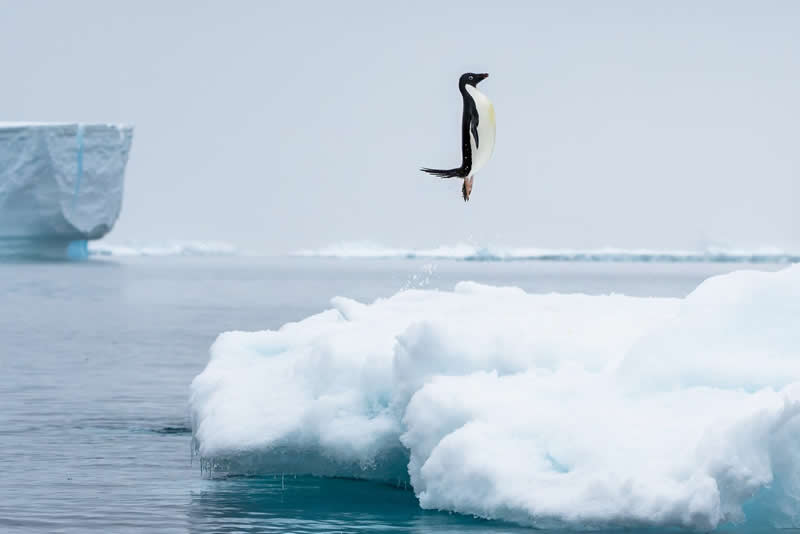
An Adélie penguin launches nearly 10 feet out of freezing Antarctic waters toward an iceberg, captured mid-air in a moment that feels almost gravity-defying and perfectly timed.
#2. “The Sentinel” — Mats Carduner (Silver)
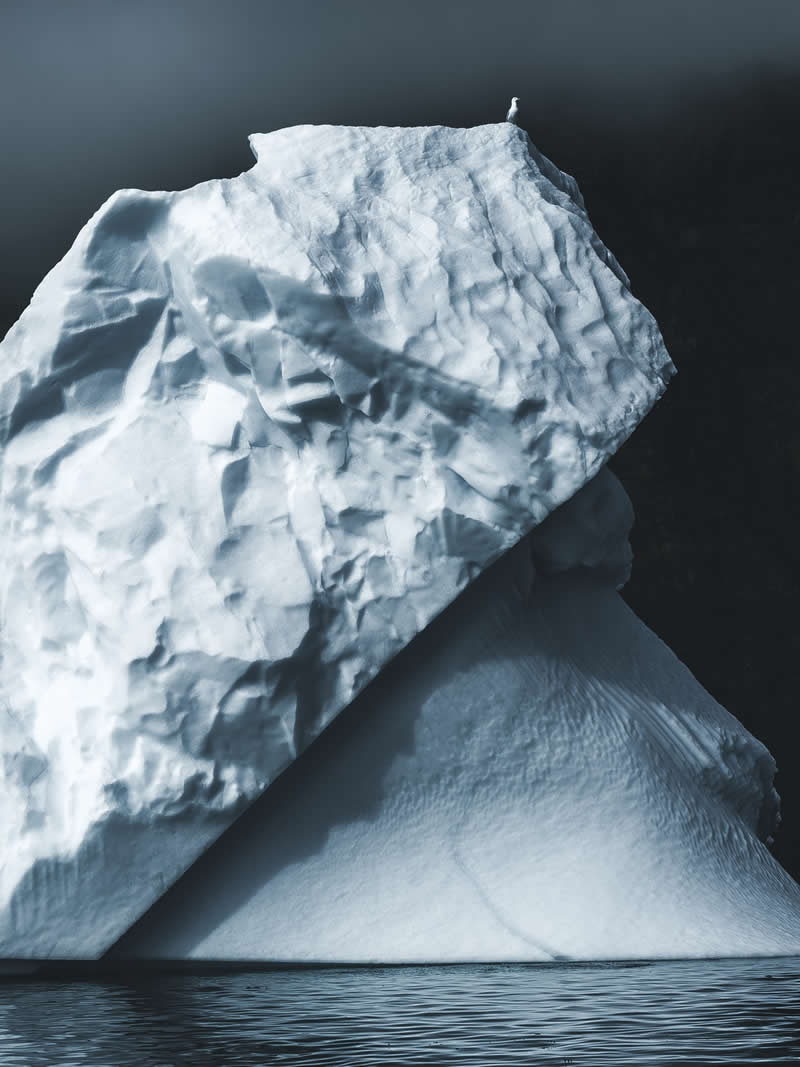
A solitary seagull overlooks East Greenland’s shifting coastline, subtly reflecting environmental change and the quiet resilience of Arctic wildlife adapting to retreating sea ice.
#3. “The Crossing” — Mili L. Fitch (Silver)
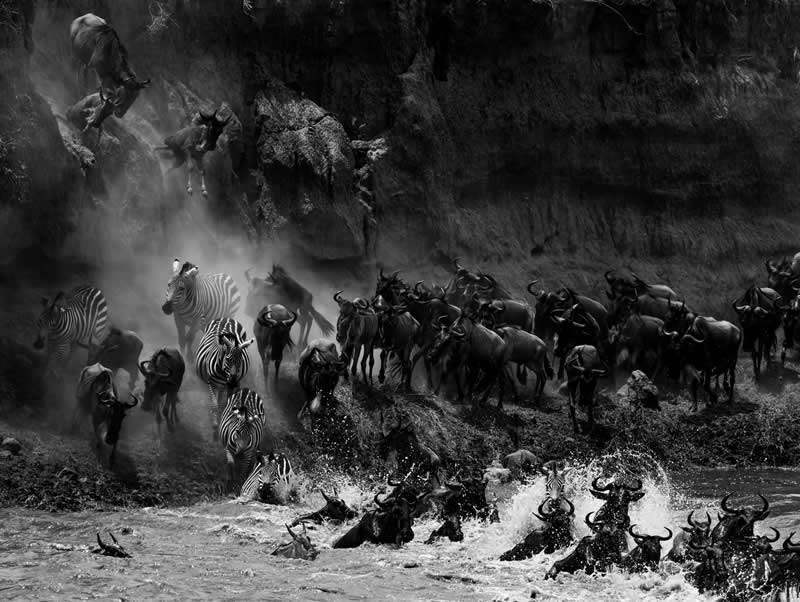
Amid swirling dust and splashing water, wildlife pushes forward in a dramatic migration scene that feels ancient, urgent, and intensely alive.
#4. “Prism Break” — Scott Robert (Silver)
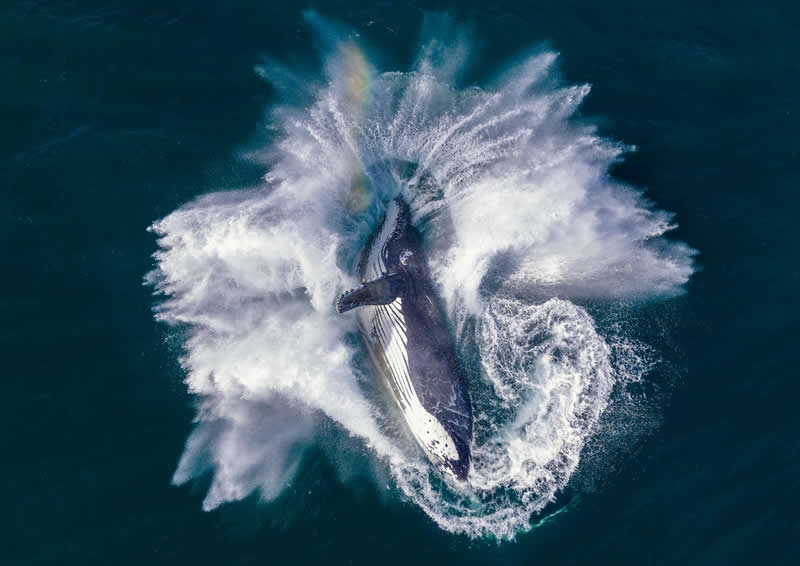
Light refracts across the frame, transforming a wildlife encounter into something almost abstract, blending movement, colour, and atmosphere into one striking composition.
#5. Bronze: “Looking To The Future” by Kasey Mueller
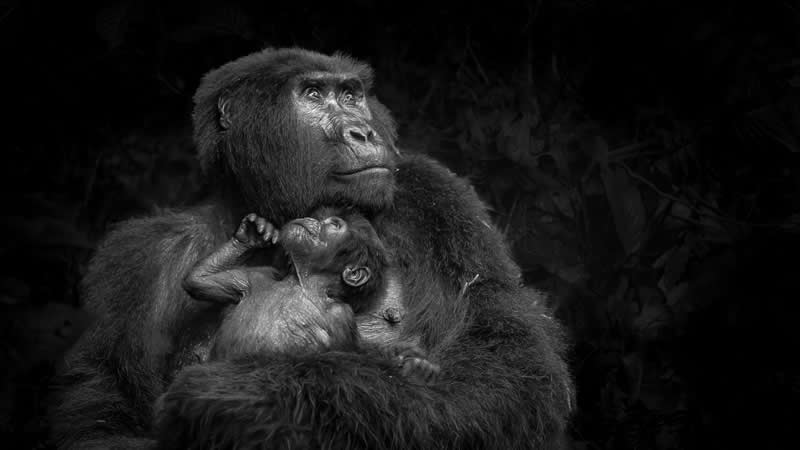
A mountain gorilla mother cradles her newborn gently, symbolising both vulnerability and hope for a species slowly recovering thanks to conservation efforts.
#6. “Lazy Leopard” — St. John Gunn (Bronze)
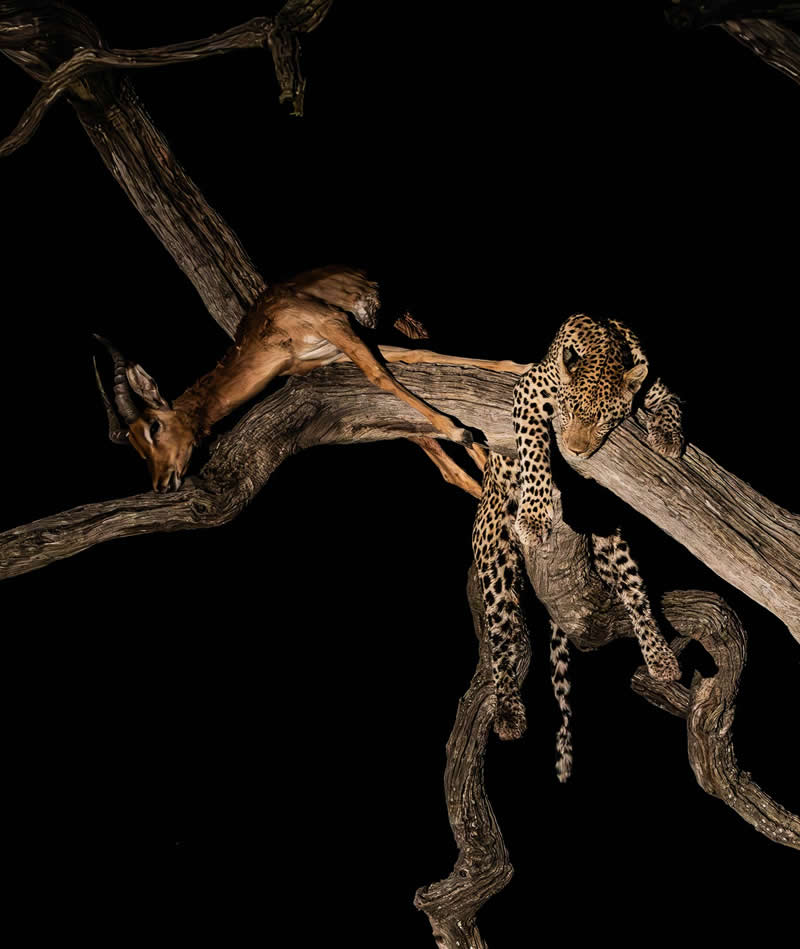
A resting leopard appears relaxed, yet its posture reveals alert awareness, reminding us that even stillness in the wild carries quiet tension.
#7. “Geladas on the Roof of Africa” — Turgay Uzer (Bronze)
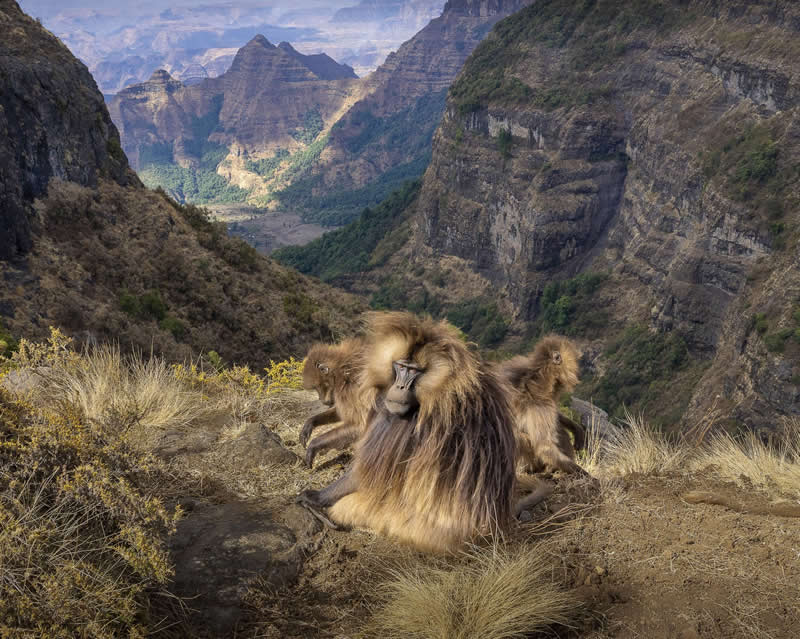
High in Ethiopia’s Simien Mountains, gelada monkeys cling to steep cliff ledges at night, demonstrating remarkable survival strategies against predators.
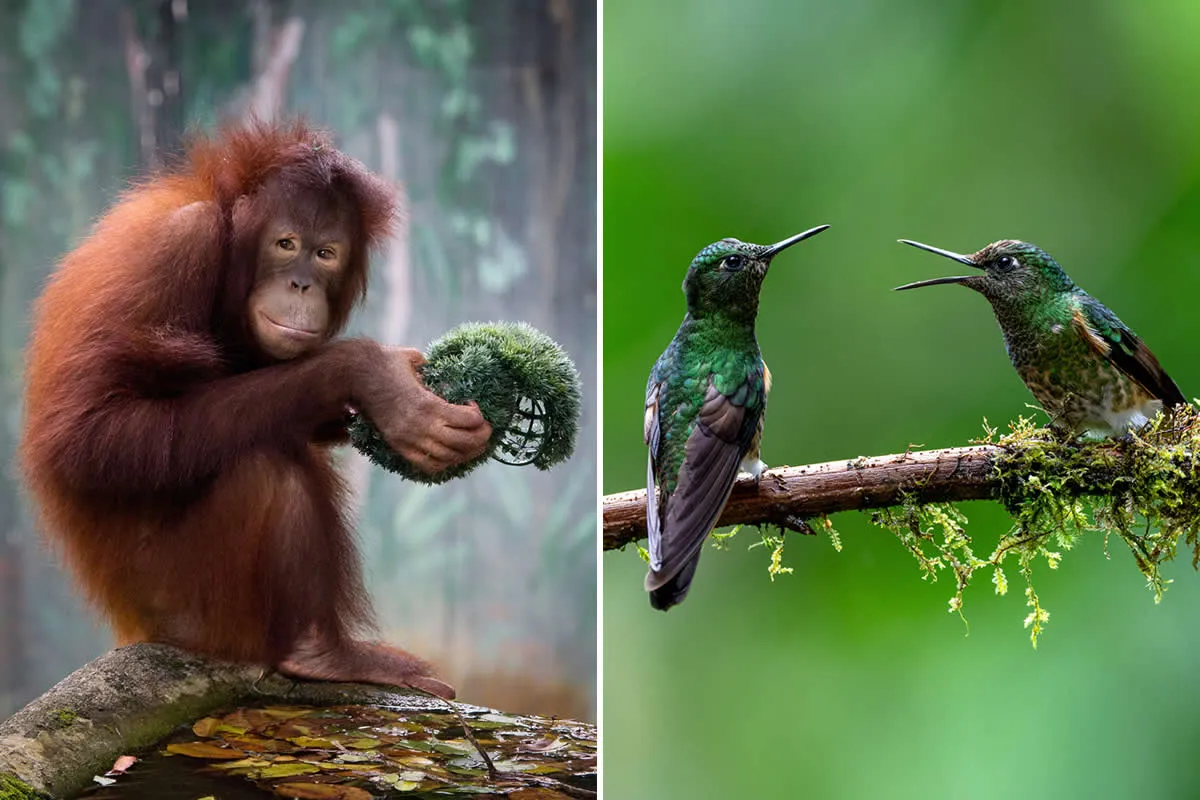
#8. “Bornean Orangutan” — Dev Kumar (People’s Vote Award)
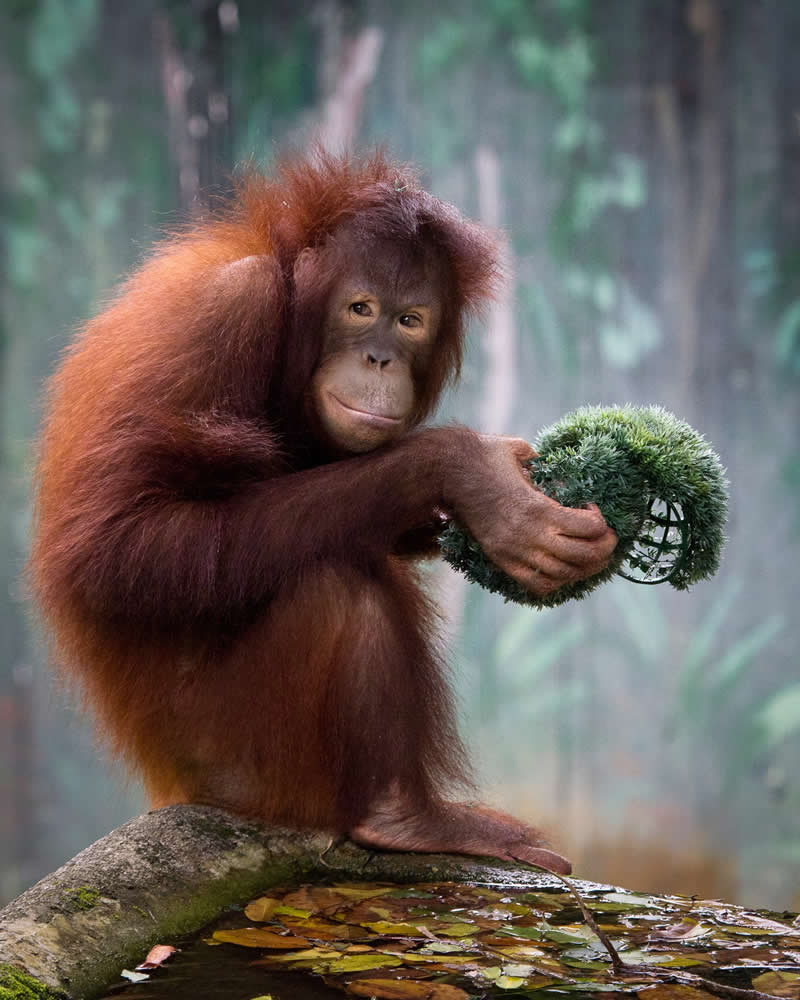
A young orangutan gazes directly into the lens, creating a powerful, intimate wildlife portrait that feels personal rather than dramatic.
Honorable Mentions
#9. “On the Lookout” — Rebecca Harvey
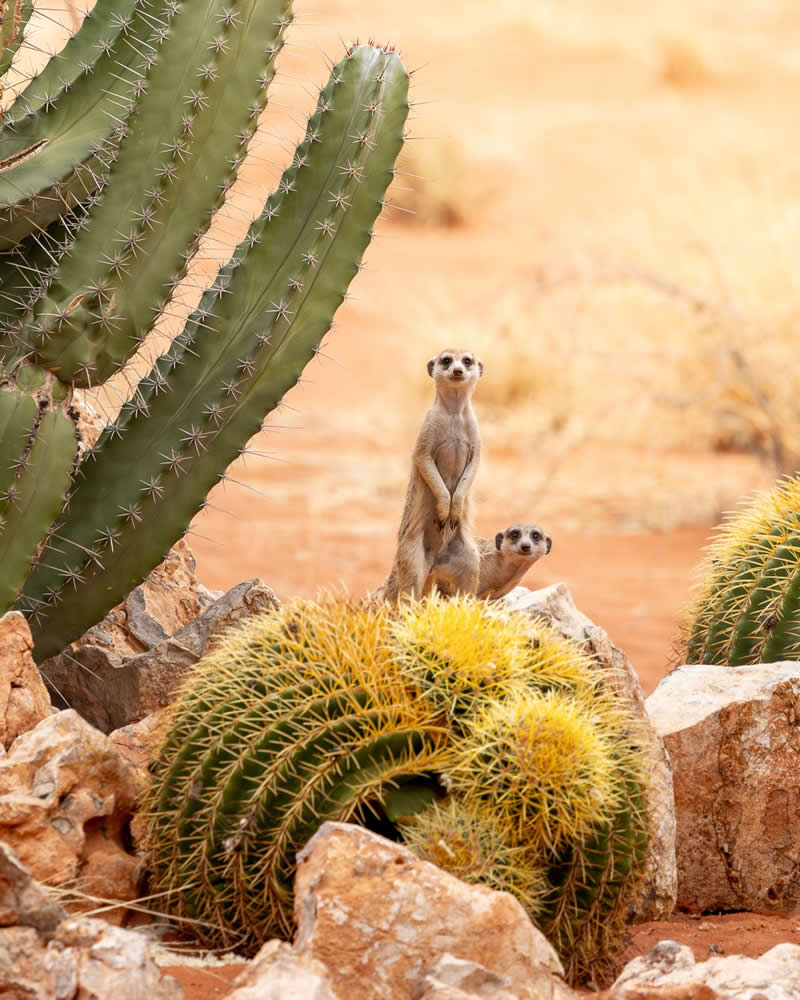
Two meerkats stand alert atop a rock in Namibia, studying the photographer curiously as desert light sharpens their silhouettes.
#10. “Love in Wilderness” — Xuejun Long
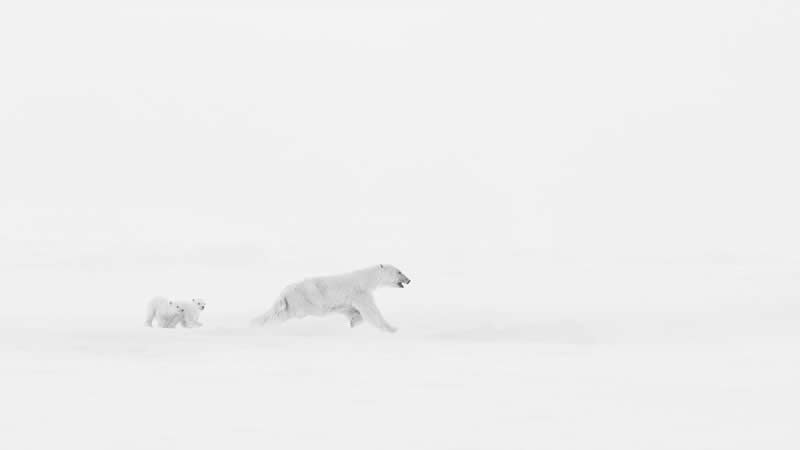
A polar bear mother and cubs appear in the harsh Arctic landscape, a rare sight requiring immense patience and endurance to capture.
#11. “Owl Taxi” — Rebecca DePorte
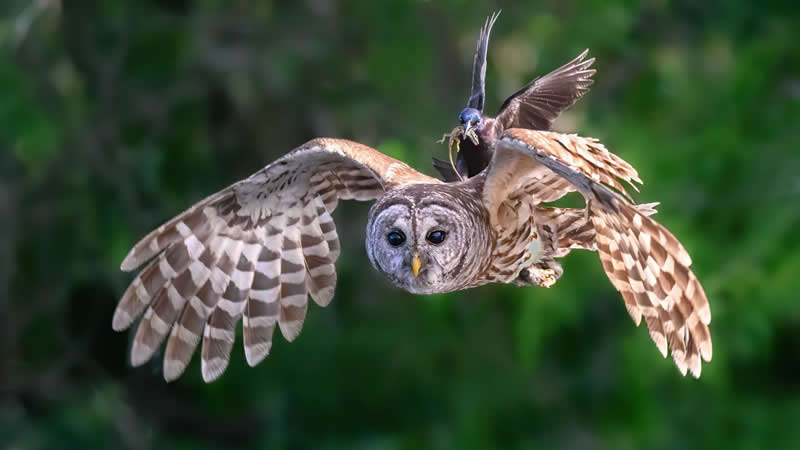
An unexpected mid-air clash unfolds as grackles confront a barred owl, resulting in a chaotic and unforgettable split-second interaction.
#12. “The Midnight Beauty” — Dr. Soumen Chanda
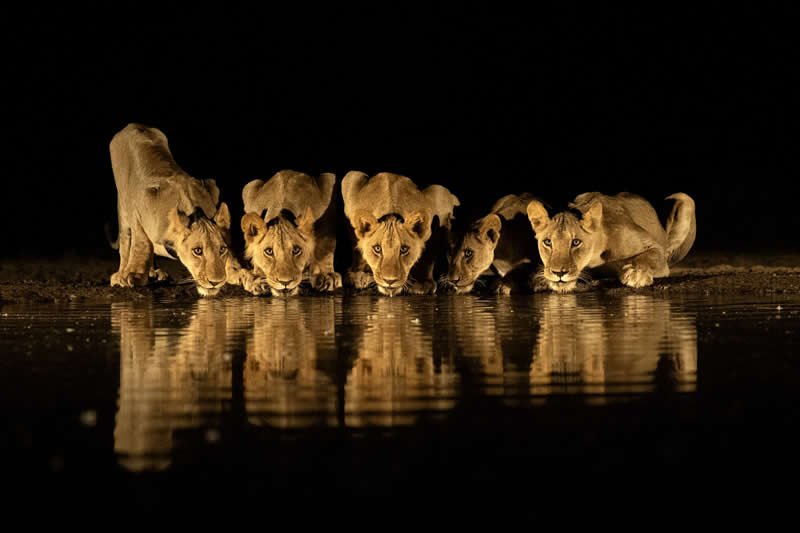
Captured from a hide in southern Kenya at midnight, this waterhole scene highlights how darkness transforms wildlife photography entirely.
#13. “The White-backed Vulture Spreading its Wings” — Stephan Grixti
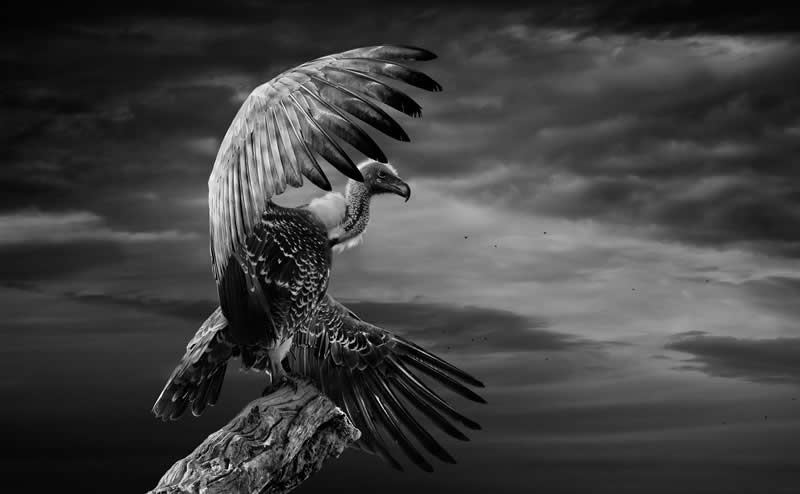
A dramatic wing display fills the frame, showcasing the sheer scale and presence of this often misunderstood scavenger species.
#14. “The Roundest Rebel” — Leslie Robins
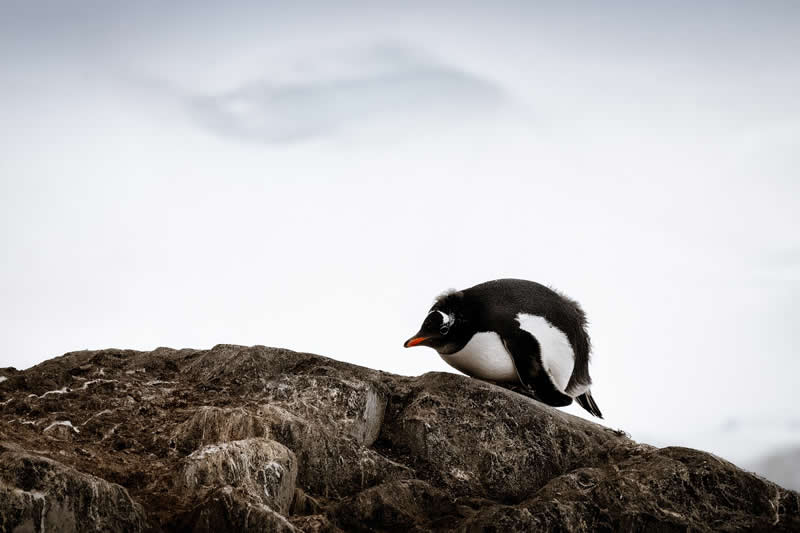
A Gentoo penguin leans defiantly into Antarctic wind, its determined posture standing out against the stark, icy backdrop.
#15. “Journey Together” — Michiko Kimura
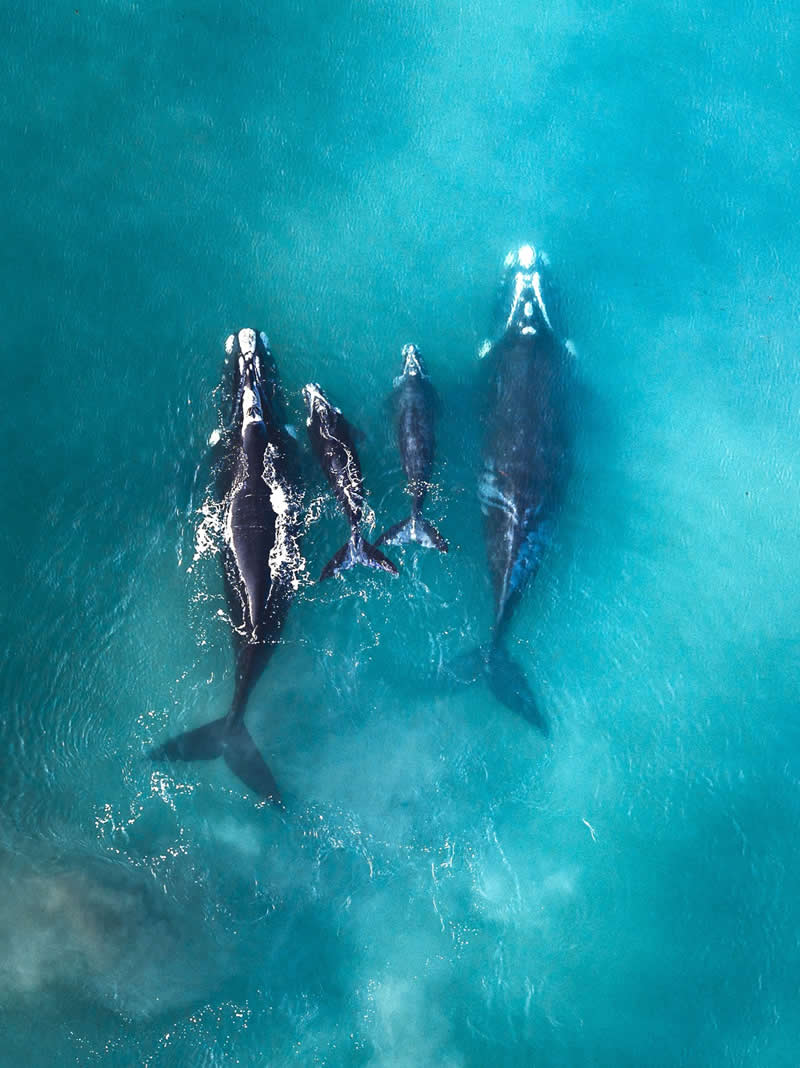
Two whale mothers pause with their calves near a shoreline, capturing a tender moment before beginning a long migratory journey.
#16. “Fish Tail” — Deborah Russell
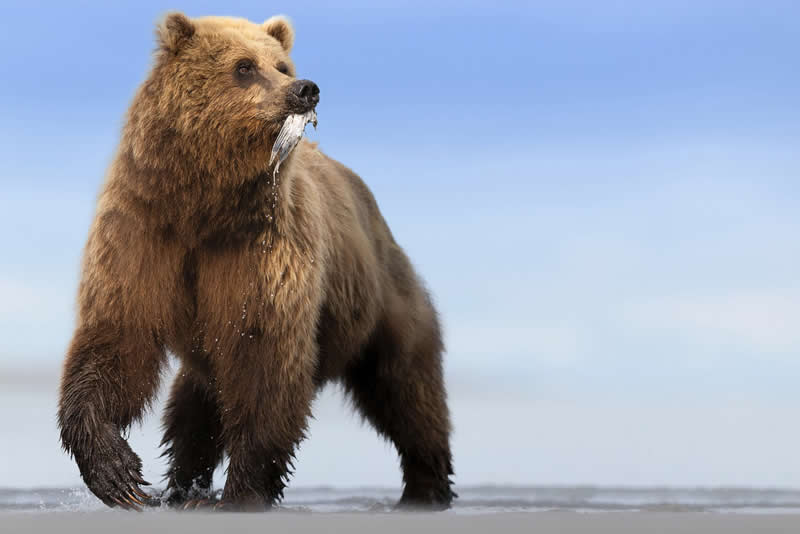
A coastal brown bear finishes devouring its catch, leaving only the fishtail behind as it scans the horizon for its next opportunity.
#17. “Orchestra of Orcas” — Rose Van Der Zwan
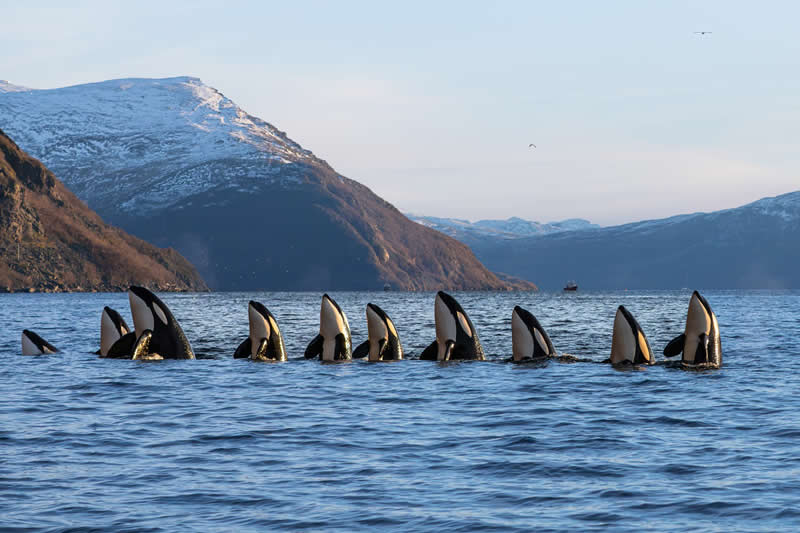
Spyhopping orcas rise vertically from Norwegian waters, creating a synchronised display that feels both graceful and theatrical.
#18. “A Foggy Brown Bear” — Tore Viem
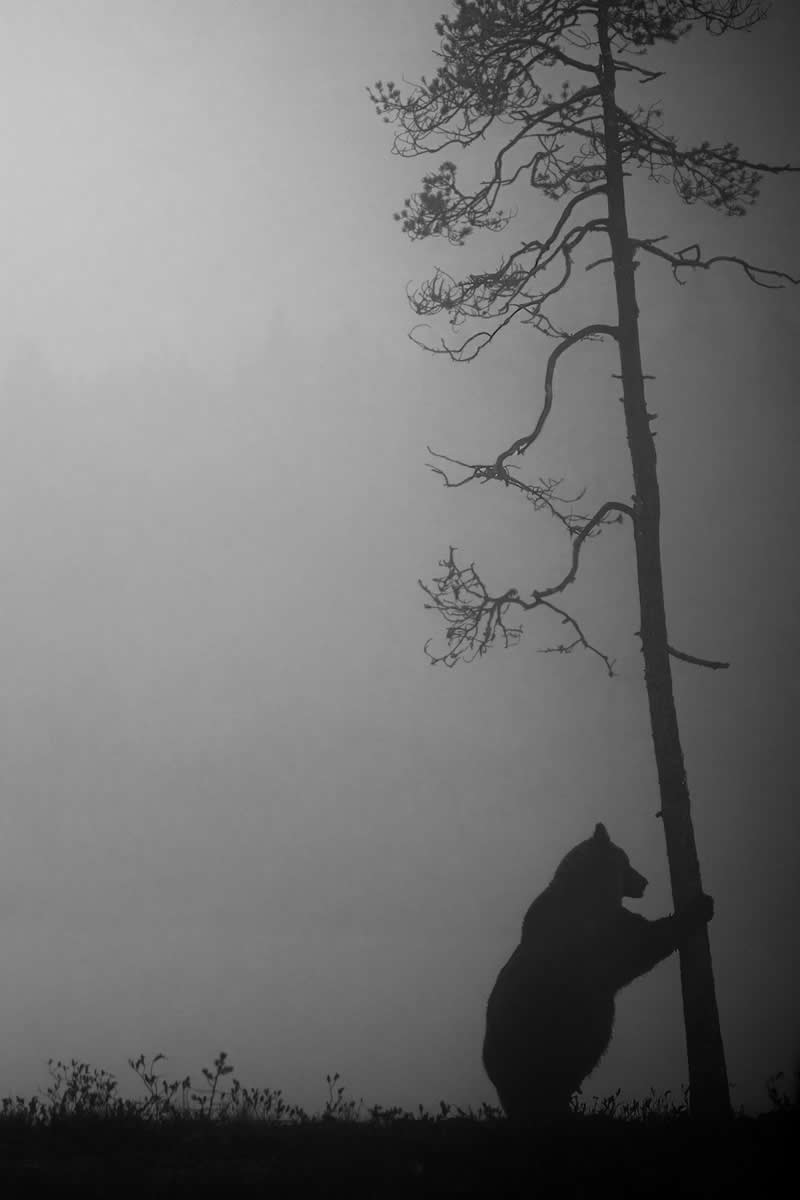
Through dense Finnish fog, a distant brown bear emerges slowly, manually focused and framed in a moment of quiet suspense.
#19. “Stoic Composure” — Bin Wang
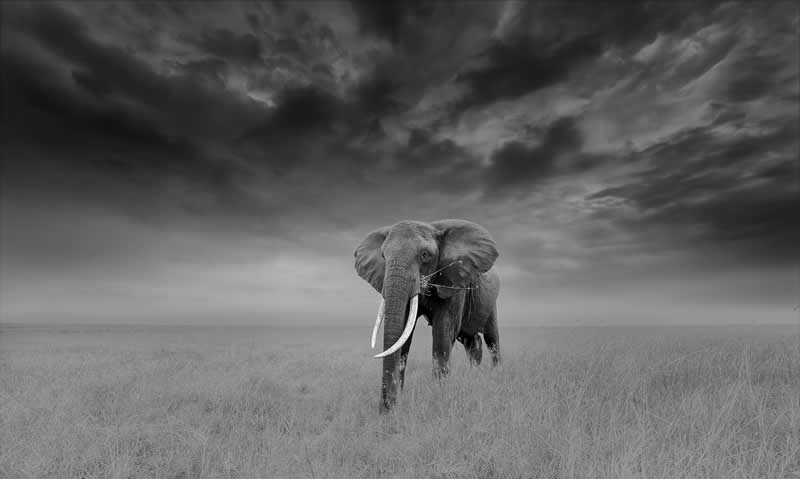
This wildlife portrait emphasises calm strength and presence, proving that stillness can be just as powerful as motion.
#20. “Giving His All” by Thomas DeLiberto
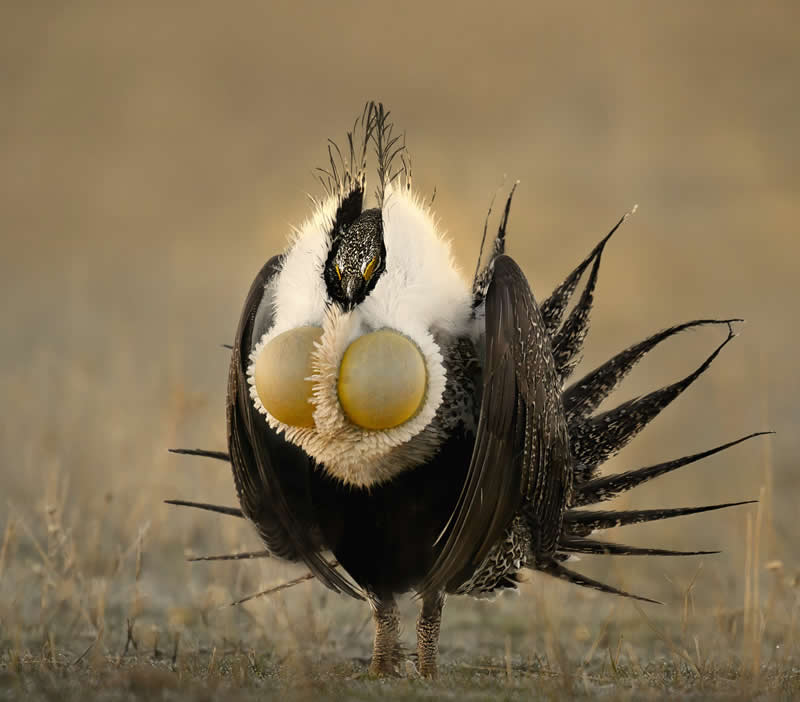
A male greater sage-grouse inflates his air sacs mid-display during mating season, captured at peak performance.
#21. “Flower Child” — Nate Solo
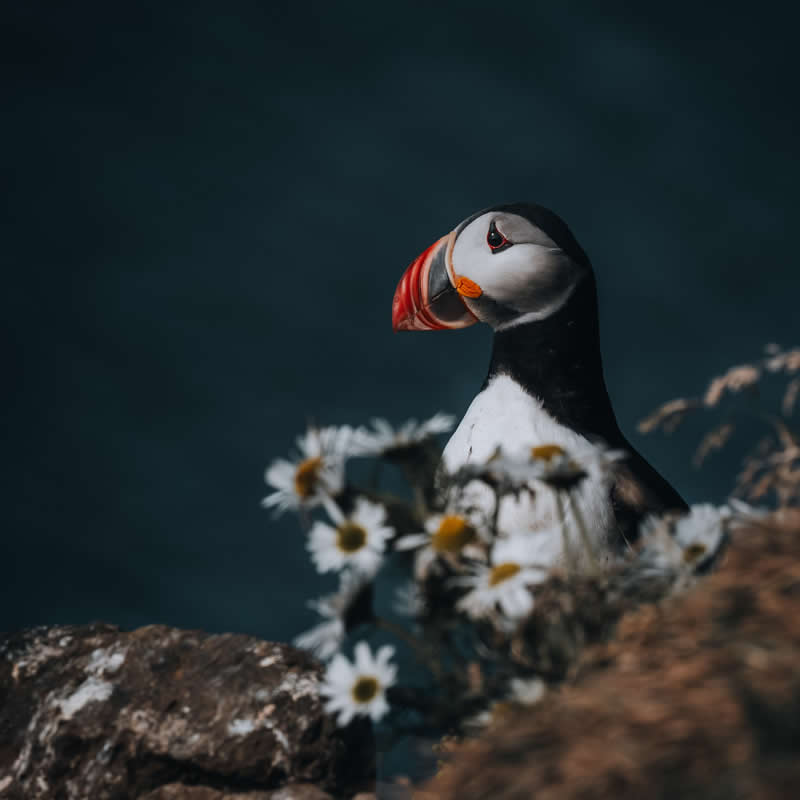
An Atlantic puffin stands among delicate flowers, the framing cleverly highlighting how surprisingly small this charismatic bird truly is.
#22. “Arguments” — A. Pires
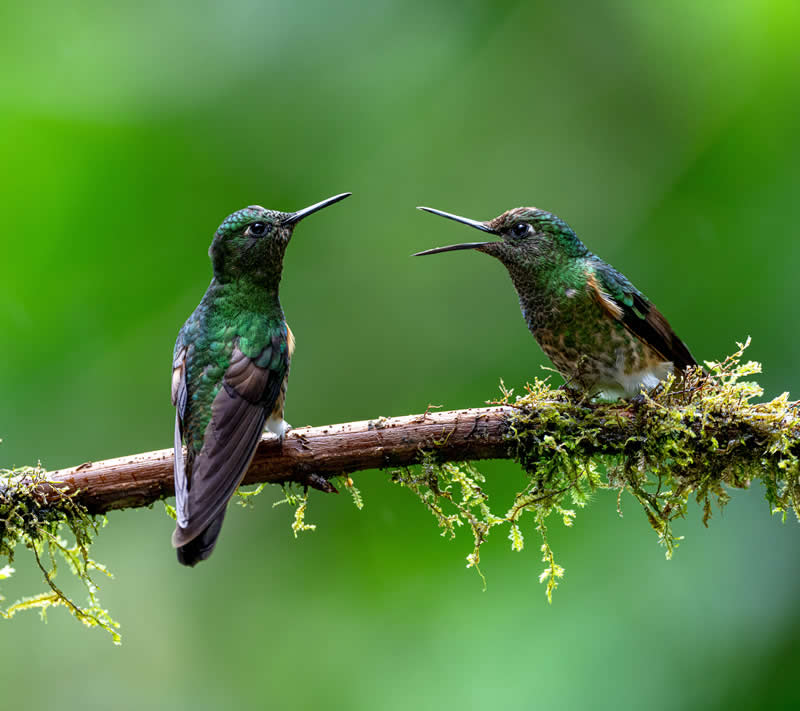
Two territorial hummingbirds clash in Ecuador’s cloud forest, their confrontation frozen in a moment of high-speed intensity.
#23.“El Guardián del Musgo” — Alvaro Mancilla Melo
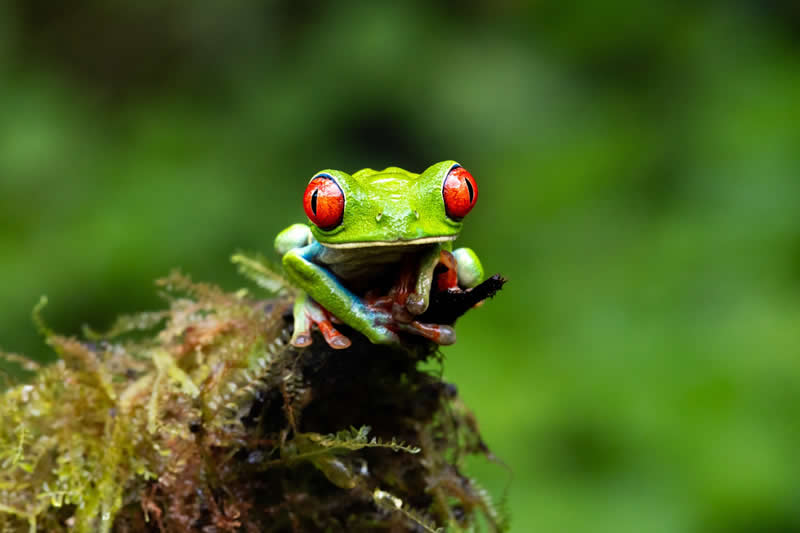
A red-eyed tree frog appears after rainfall in Costa Rica, symbolising rainforest health and ecological balance.
#24. “A Promise in the Air” — Amit Joshi
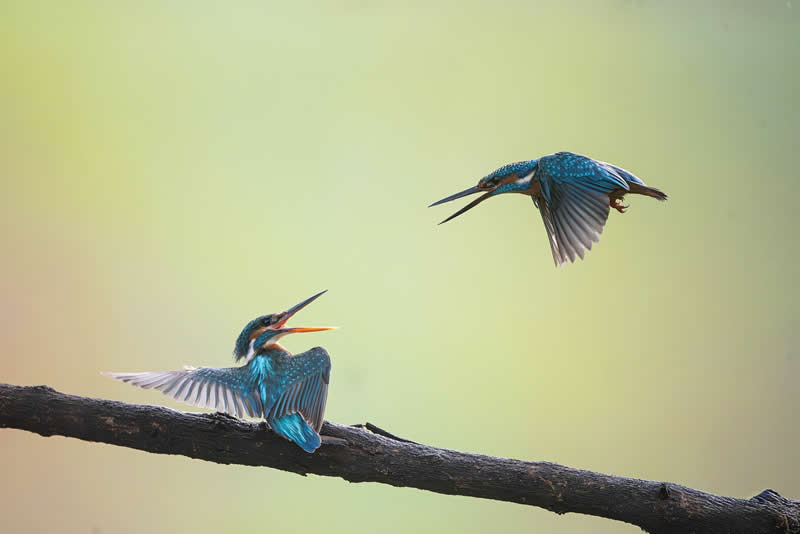
A kingfisher flashes vibrant blue and orange during a courtship chase, combining colour, motion, and behavioural storytelling beautifully.
#25. “In the Deep Shade” — Boris Droutman
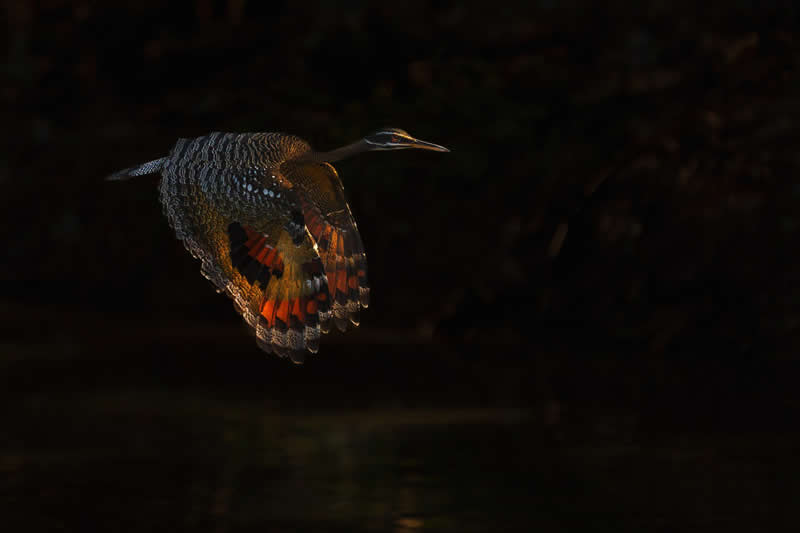
A sunbittern flies through Brazil’s Pantanal wetlands, wings extended in a dramatic and perfectly timed frame.
#26. “Hands Down” — Deborah Russell
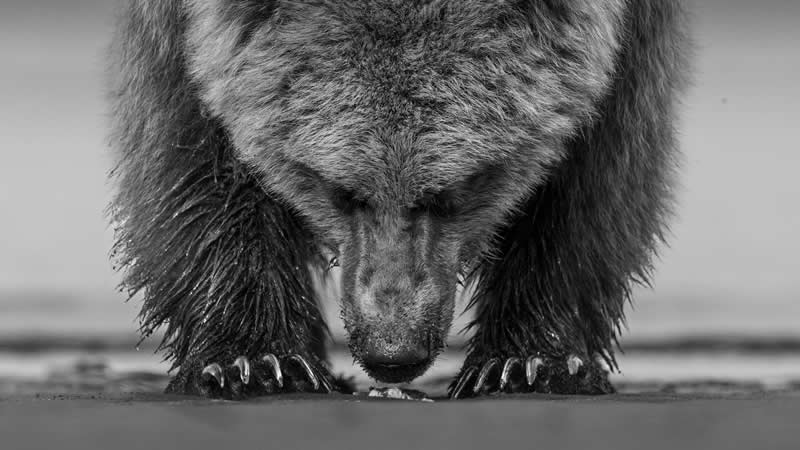
A brown bear demonstrates remarkable dexterity while digging razor clams from muddy flats, revealing intelligence behind brute strength.
#27. “Cuteness Quotient 100 Out of 100” — Anil Kumar
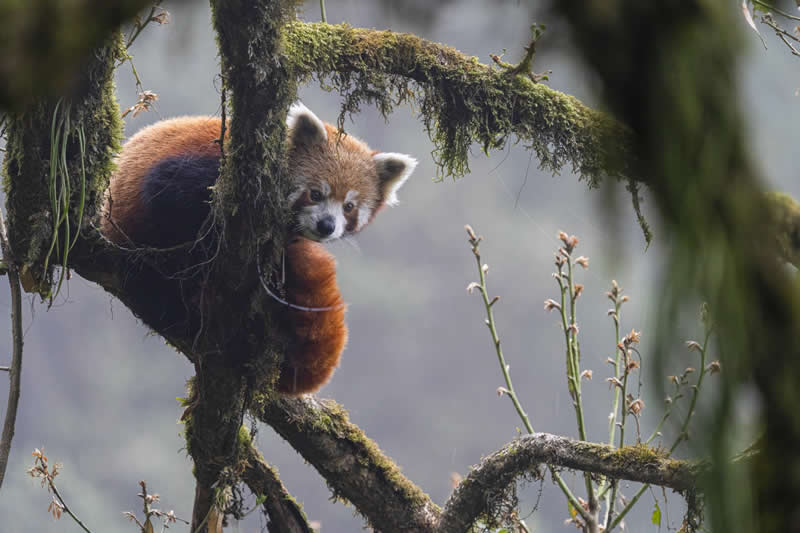
A red panda portrait captured after trekking steep bamboo forests highlights both effort and reward in wildlife photography.
#28. “Panthera Tigris” — Abdul Kader Kagalwala
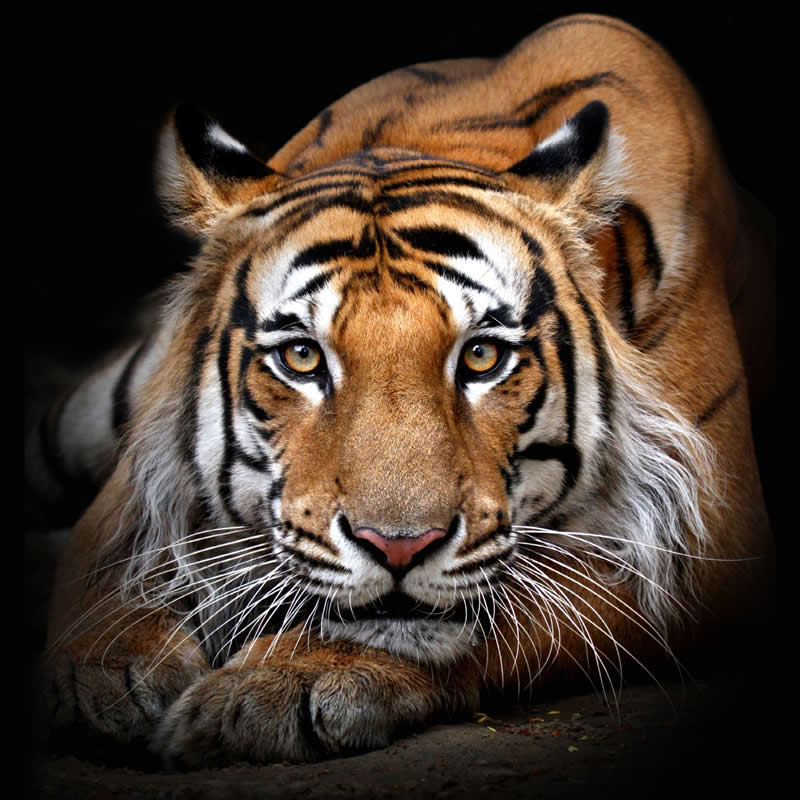
A Royal Bengal tiger portrait commands attention, its direct gaze conveying quiet authority and undeniable presence.
#29. “Mother’s Love” — Bin Wang
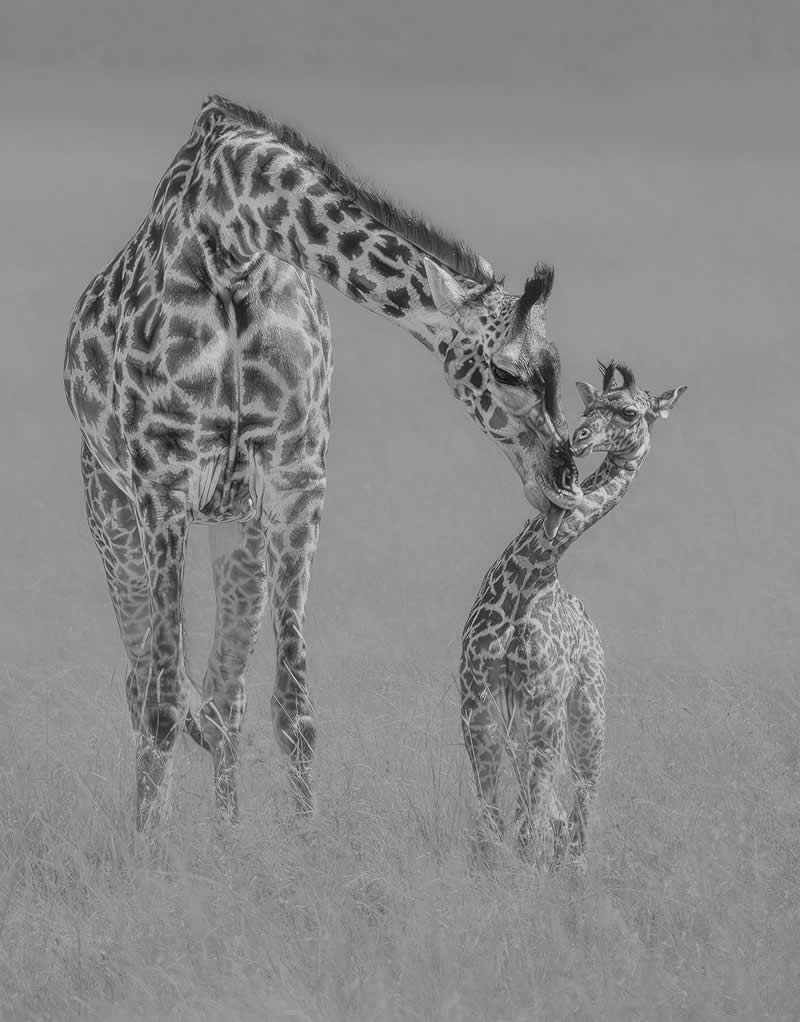
A tender maternal interaction unfolds naturally, reminding viewers that nurturing behaviour exists strongly in the wild.
#30.“Walking on Water” — Jack James
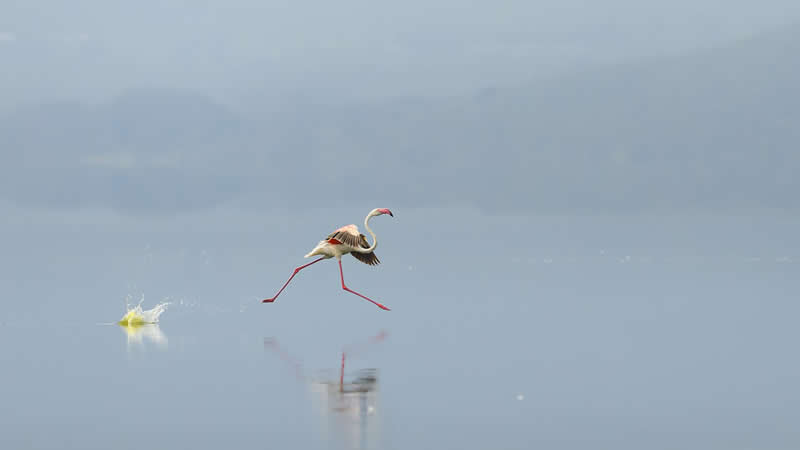
A flamingo appears to glide across misty lake waters at sunrise, creating an almost surreal visual illusion.
#31. “Living That Lone Wolf Life” — V Shiung Hiew
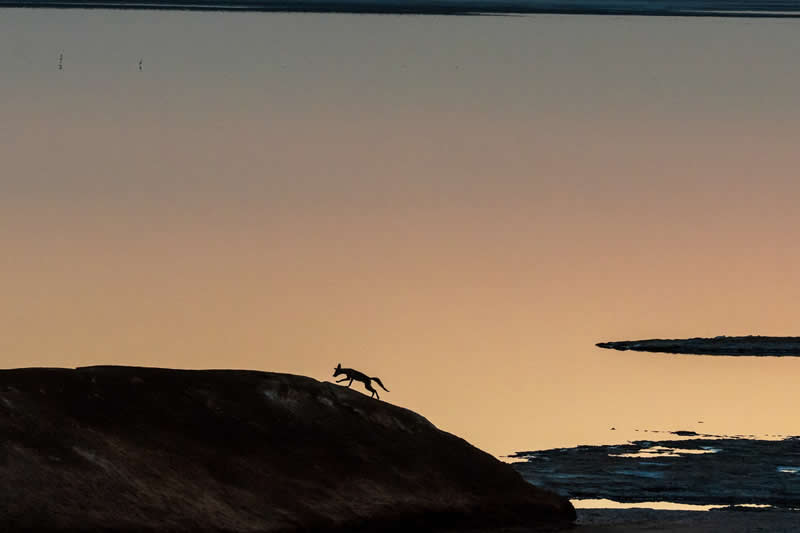
A solitary wolf stands confidently alone, capturing independence and quiet resilience within its natural habitat.
#32. “Arctic Tern Attack!!!” — Ricardo Tormo
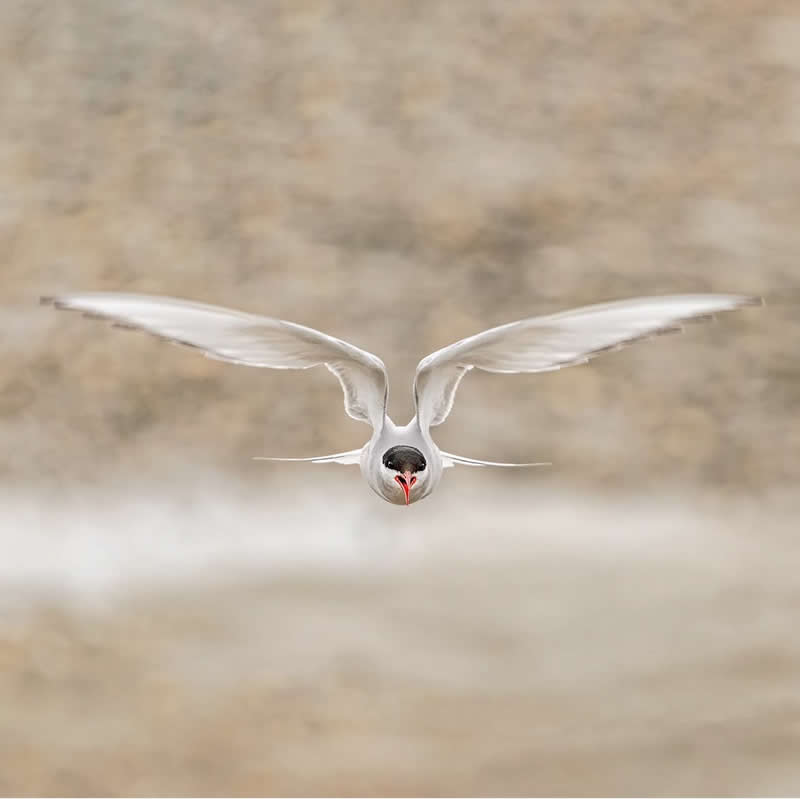
An explosive defensive dive by an Arctic tern demonstrates how fiercely small birds protect their nesting grounds.
#33. “Surprise Encounter” — Shawn Thomas
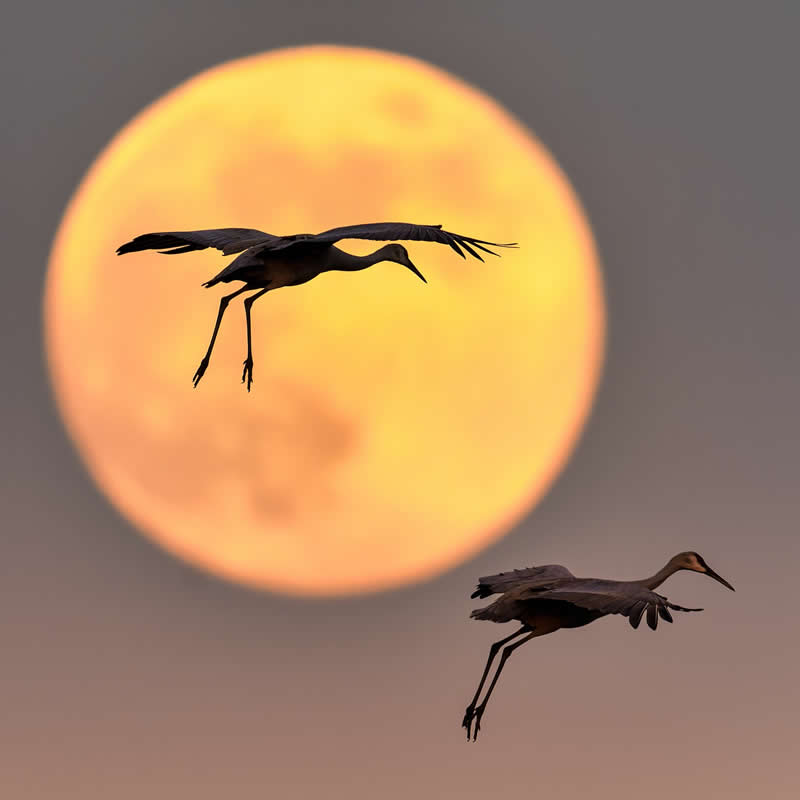
Two sandhill cranes fly past a glowing full moon, creating a cinematic silhouette rarely witnessed in wildlife photography.
#34. “Caiman Tears” — Rebecca DePorte
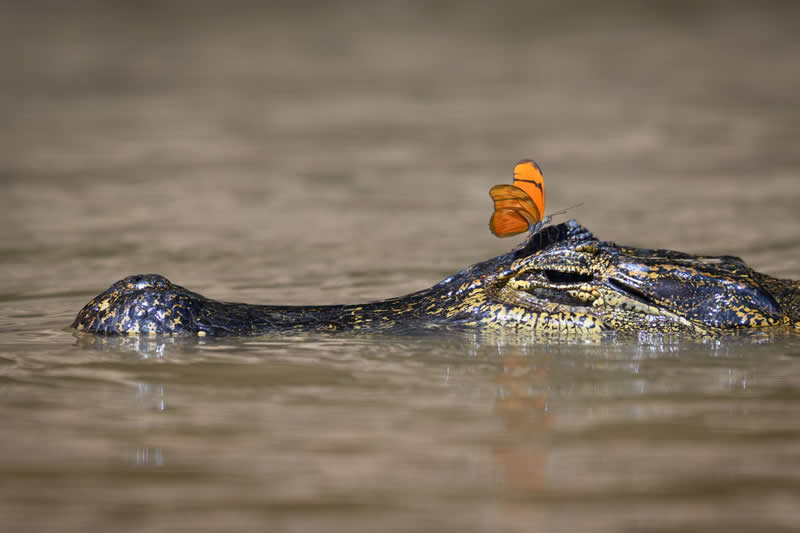
A butterfly drinks nutrients from a caiman’s tears, documenting a fascinating ecological interaction that few ever witness.
#35. “Star Appeal” — A. Pires
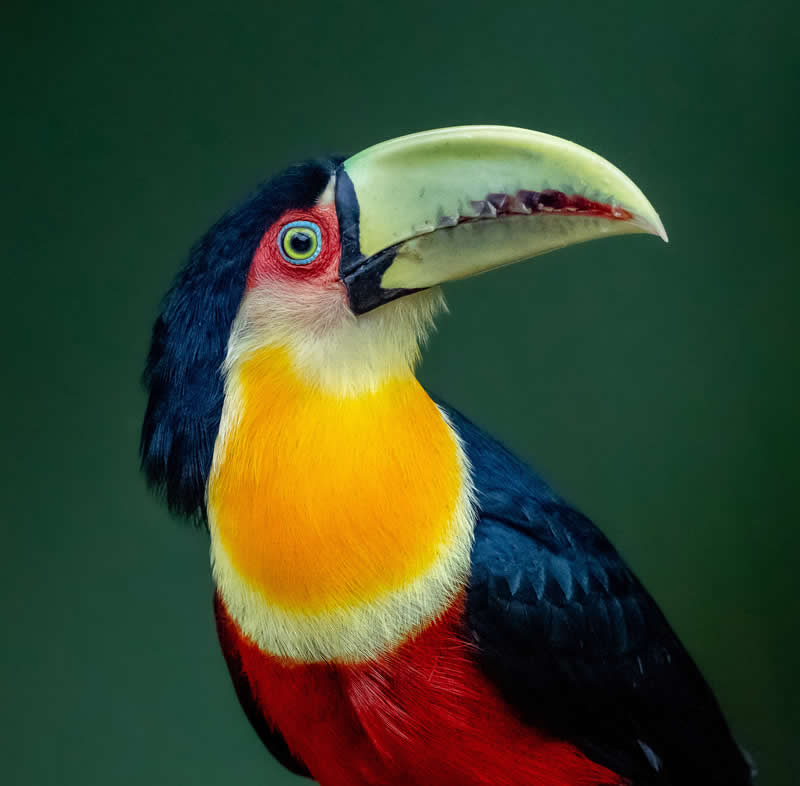
A Green-billed Toucan poses confidently in Brazil’s forests, its vibrant beak and stance giving it an undeniable stage presence.
Behind the Lens: What It Takes to Capture Wildlife Photos
Capturing award-winning wildlife photos isn’t luck.
It often means:
- Waiting in freezing temperatures for hours
- Sitting silently inside the photo hides before sunrise
- Trekking through steep forests or Arctic ice
- Missing dozens of shots before one perfect frame
Many of these photographers travelled across continents, faced unpredictable weather, and relied on instinct rather than certainty.
As discussed in Reddit wildlife photography threads, early mornings and long hours in hides are standard practice for serious photographers.
Many wildlife photographers start hours before animals appear, trekking before sunrise and then sitting for hours in camouflage hides to blend into the environment before a subject arrives.
Photographers in these discussions often mention spending 4–6 hours without moving to avoid disturbing wildlife.
This kind of dedication is also evident in projects like this powerful exploration of Indian travel and wildlife photography, where patience, location awareness, and cultural context shape every frame.
Wildlife photography is patience in its purest form.
And that effort is exactly what makes these images powerful.
Why These Wildlife Photos Matter in 2026
Wildlife photography does more than inspire.
Across countries like the USA and the UK, where nature documentaries, conservation reporting, and environmental storytelling have strong audiences, wildlife photos continue to spark conversation and concern.
It:
- Raises conservation awareness
- Documents environmental change
- Encourages responsible travel
- Connects viewers to distant ecosystems
In a digital world saturated with content, authentic wildlife photos still stop people mid-scroll, and that engagement is exactly what keeps conservation stories alive.
Insight:
The wildlife images that resonate most are the ones that feel real. Viewers respond more strongly to raw moments, a hunting attempt, a protective glance, a sudden leap, than to technically perfect but emotionally distant frames.
From dramatic colour compositions to the timeless power of monochrome imagery as seen in
striking collections of black and white wildlife photography, the genre continues to evolve while keeping its emotional core intact.
These 35 images prove that powerful storytelling doesn’t require professional status, only vision, patience, and timing.
Final Thought
The wild doesn’t slow down.
It doesn’t repeat itself.
And that’s exactly why great wildlife photos stay with us long after we’ve stopped scrolling.
Each image in this collection captures a moment that will never happen in the same way again. A leap. A stare. A sudden movement through fog or wind. Seconds that required patience, timing, and respect for the subject.
That’s the magic of wildlife photography.
It freezes what is normally fleeting.
It brings distant landscapes closer.
It reminds us that the natural world is still powerful and unpredictable.
Which one would you hang on your wall?