
At just 23, Maceo and Andrea are already carving out a lane that blends science, storytelling, and serious visual impact. The twin brothers are biology students by day and macro wildlife photographers by passion, spending their time in the field chasing insects, reptiles, and amphibians most people walk past without a second glance. Through their growing Instagram platform, Twins_Wild_Lens, they turn tiny, misunderstood creatures into cinematic close-up portraits that stop viewers mid-scroll.
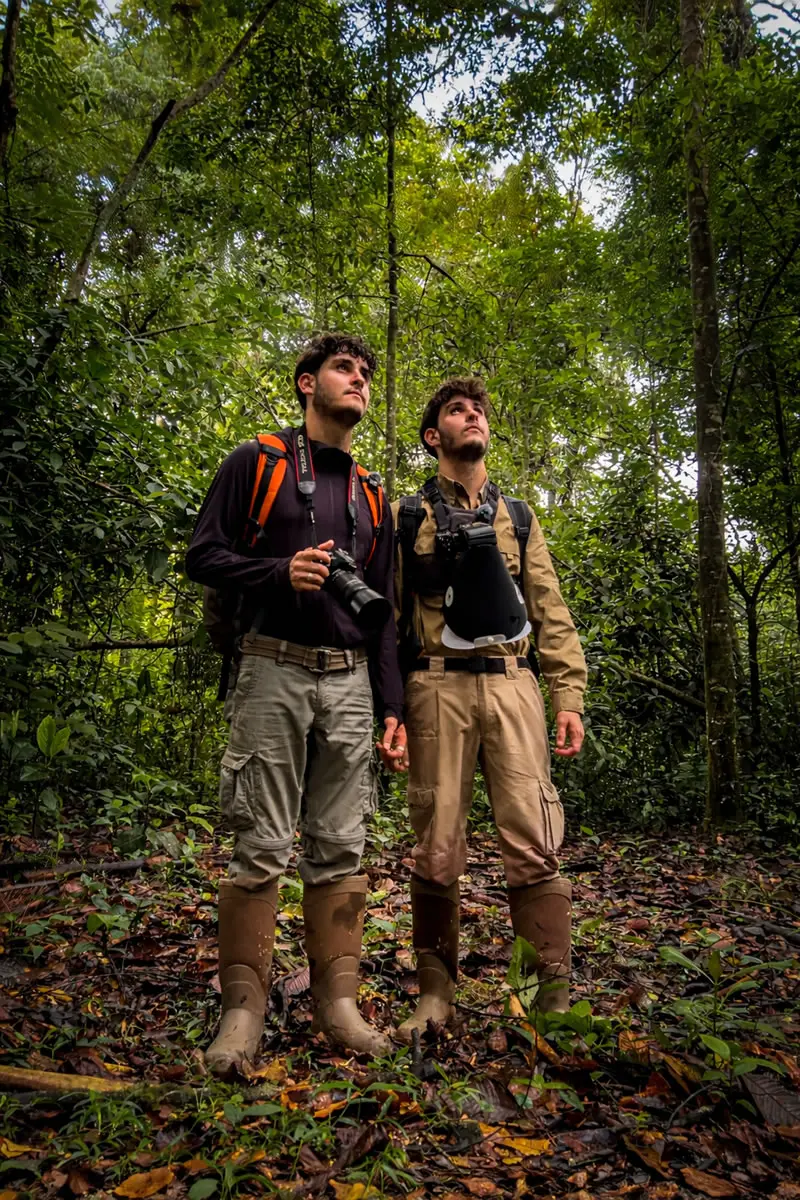
Their work hits differently because it’s rooted in biology. Field observations aren’t just assignments—they’re creative missions. Using an OM E-M1 Mark III, paired with the OM System M.Zuiko 90mm and 12–40mm f/2.8 lenses, along with a Godox V860III flash, the twins capture razor-sharp details—textures, colors, and expressions invisible to the naked eye. Every image feels intentional, almost like a character study, not just a wildlife record.
Insects especially get a bad rap, and that’s where Maceo and Andrea push back. Their macro portraits flip fear into curiosity, showing these creatures as expressive, complex, and oddly relatable. That perspective is catching on fast. With over 40,000 followers, nominations at the Wildlife Photographer of the Year competition organized by the Natural History Museum, and exhibitions at a scientific congress in Mexico, their journey is gaining serious momentum.
Inspired by photographers like Laurent Hesemans, Rafael Steinlesberger, and Ben Salb, the twins aim to give insects a face—and a story—worth caring about.
You can find Maceo and Andrea on the web:
#1. Bothrops asper
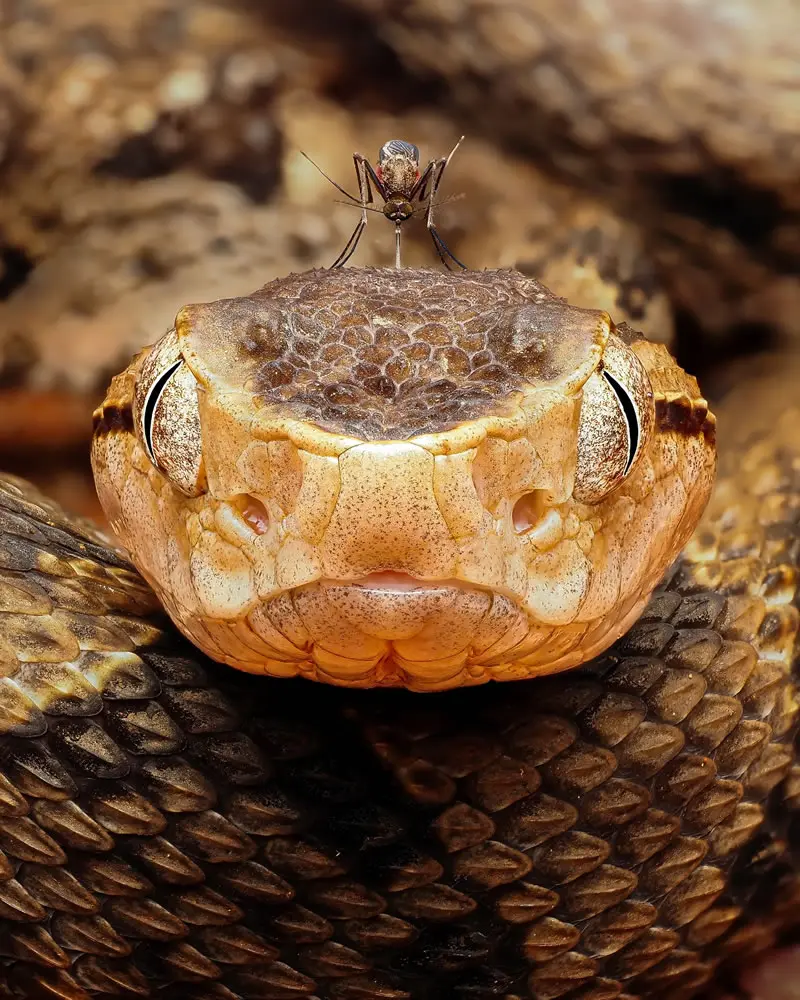
Bothrops asper is one of the most common snakes in Costa Rica. During our trip, we were lucky enough to encounter several of them. These snakes are as fascinating as they are dangerous, in fact, they’re responsible for the highest number of snakebite fatalities in Central America every year.
Thanks to its cryptic coloration, B. asper blends perfectly into the leaf litter, becoming almost invisible to the untrained eye. This exceptional camouflage, combined with its abundance and proximity to human settlements, explains why so many accidental encounters, and therefore bites, occur each year.
This photo was also one of the most demanding focus stacks I’ve ever made, it required patience and creativity, especially with that unexpected mosquito joining the scene.
#2. Banded Demoiselle (Calopteryx splendens)
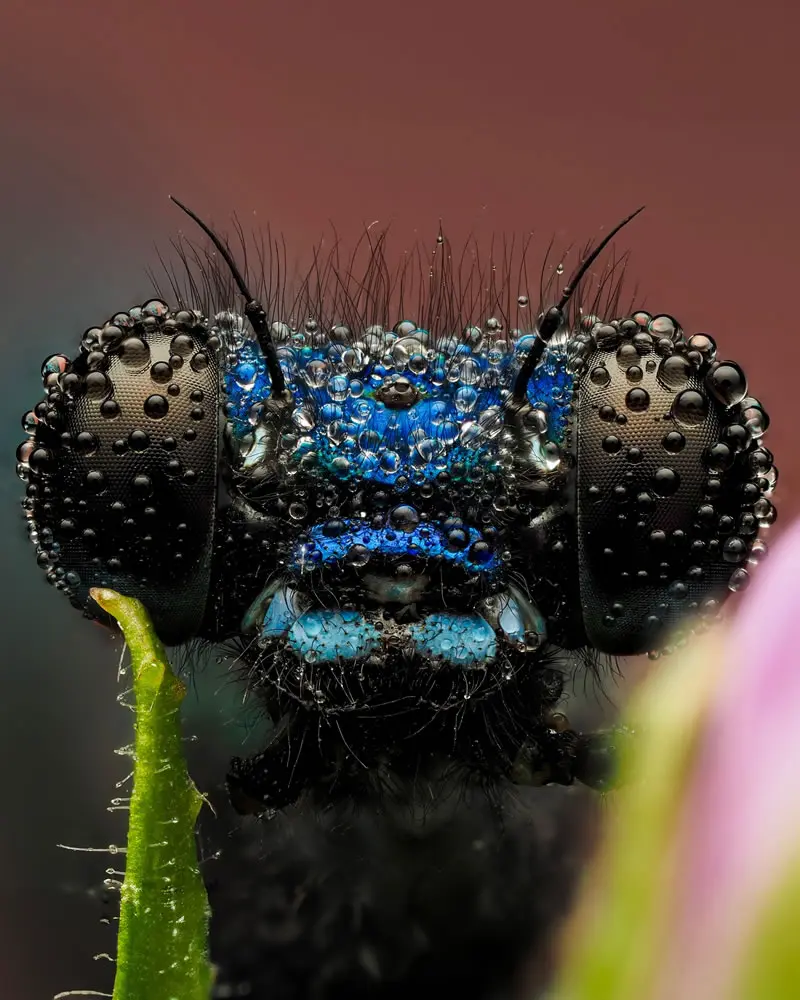
We got up super early to go shoot some macros, and it was totally worth it! In the morning, these damselflies stay still because they’re still cold from the night, which makes them way easier to photograph.
This one is a male Calopteryx splendens, also known as the banded demoiselle. You can tell by the dark patch on his wings. He was just chilling by the river, covered in dew and glowing in the soft light. Kinda magical.
Fun fact: The males use those dark wing bands to show off and defend their territory. It’s like a little dance-off over the river
#3. Goniurosaurus sengokui
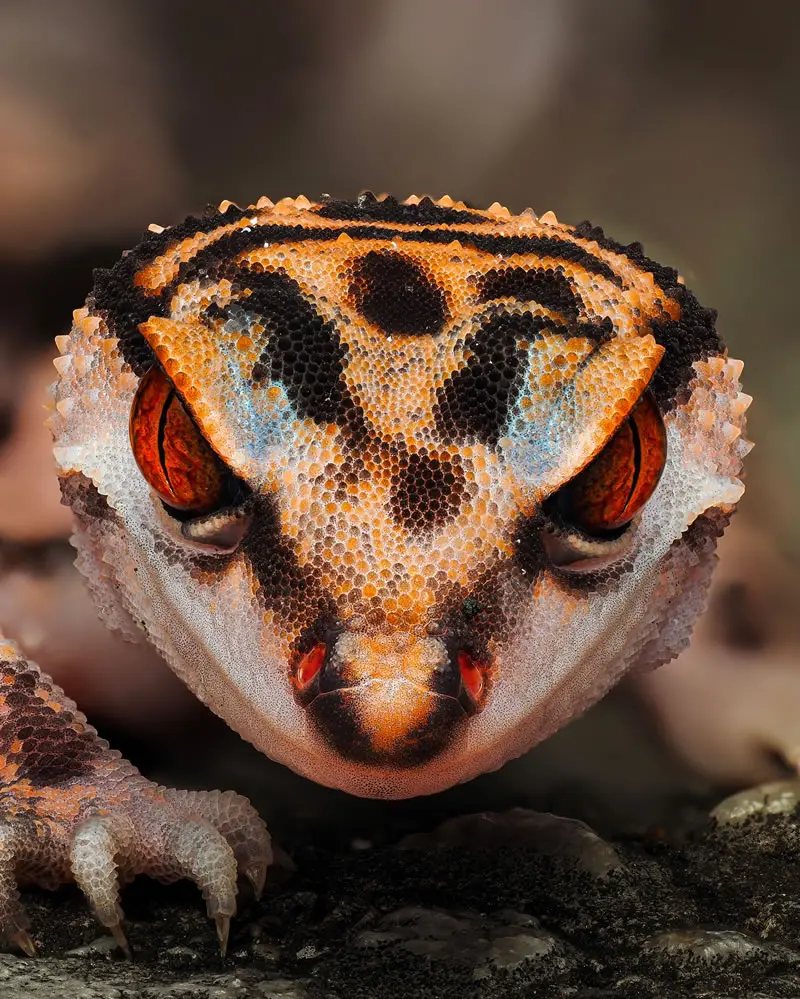
We honestly never thought we would have the chance to find this species during our trip. Goniurosaurus sengokui is a subspecies of Goniurosaurus kuroiwae orientalis, a small gecko that is endemic to the tiny island of Tokashiki (only 19 km²) and is listed as critically endangered.
When we arrived on the island, we knew this gecko existed, but we didn’t truly expect to see one especially since only about a dozen sightings have ever been recorded since its recognition as a subspecies in 2017.
Our encounter happened completely by surprise during a late-night herping session. It must have been around 3 a.m. we were driving slowly, hoping to spot a Habu viper, when suddenly the unmistakable shape of a small gecko appeared in the middle of the road. As we got closer, my brother and I shouted at the exact same time: “GECKO!”
#4. Hyalinobatrachium vireovittatum (Green-striped Glass Frog)
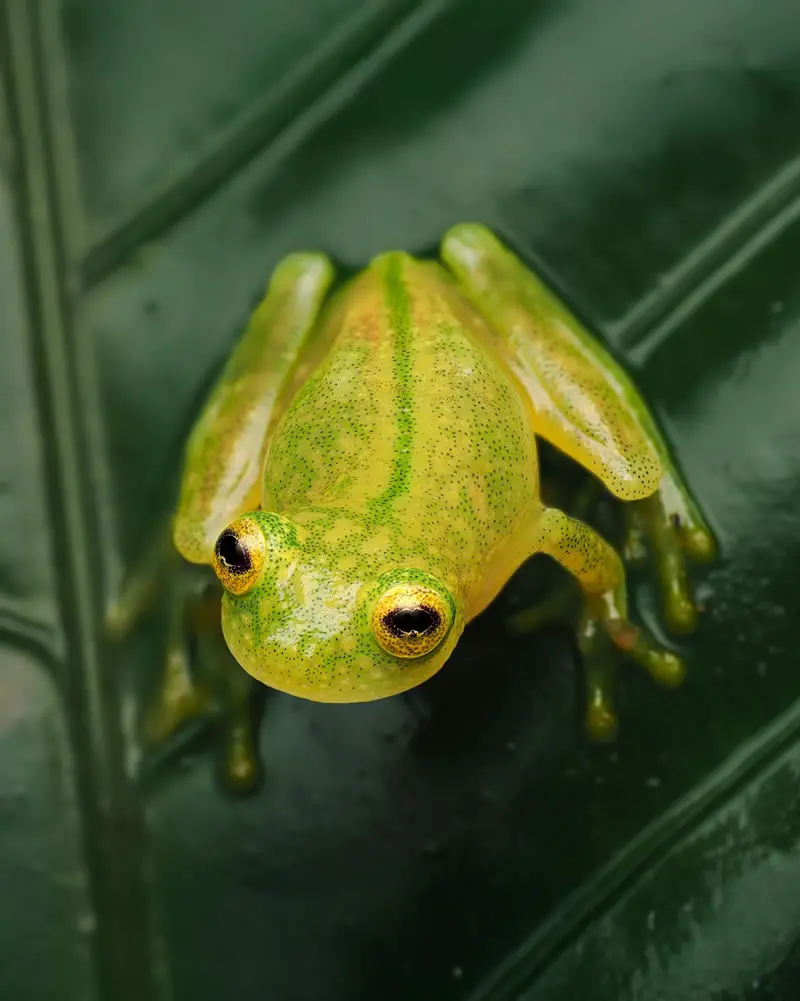
During one of our night outings not far from Sierpe, with our friend and incredible guide @sierpe_frogs , we encountered this stunning glass frog while walking along a small creek. Perched delicately on a leaf above the flowing water, this species is considered relatively rare in this part of Costa Rica.
The tiny black star-shaped markings visible on the skin are melanophores, pigment cells containing melanin. The pigment spreads throughout their cytoplasmic extensions, giving them their characteristic small star-shaped appearance. In glass frogs, these stellate cells contribute to body patterning, camouflage, and even light absorption for thermoregulation.
#5. Haania lobiceps
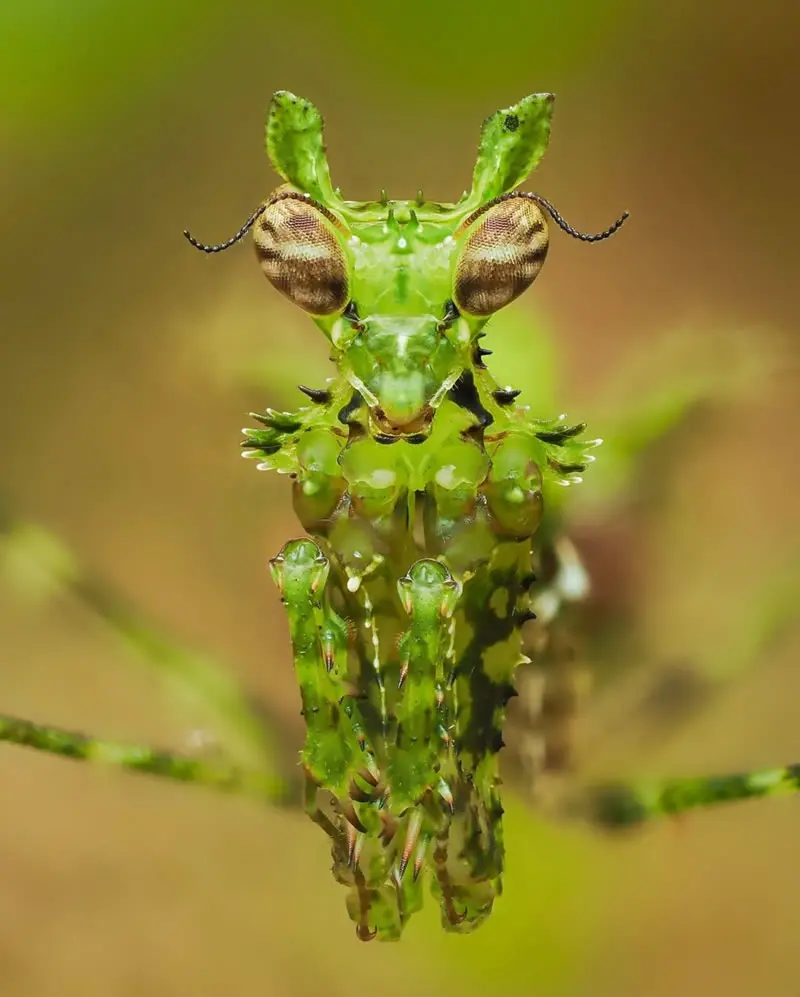
One of our main target species during this trip was the Moss Mantis, without a doubt one of the most impressive examples of camouflage I’ve ever seen.
Its camouflage, combined with its extremely small size, makes it incredibly difficult to spot. To even have a chance of seeing it, it needs to move, if it stays perfectly still, it’s almost impossible to detect.
The individual I managed to find was only revealed thanks to pure chance, a harvestman, fleeing from my light, accidentally walked over the mantis, causing it to move just enough for me to notice it. That brief moment of motion was all it took.
#6. Espadarana prosoblepon (Emerald Glass Frog)
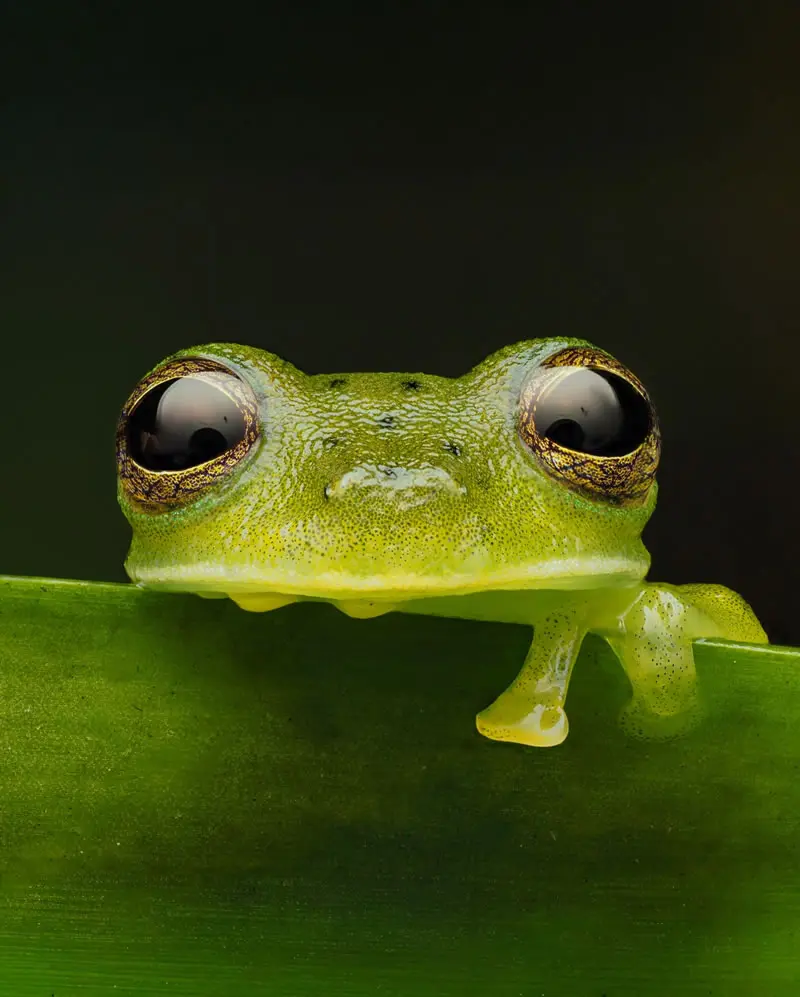
During one of our night herping sessions in Costa Rica, while making our way up a waterfall, we came across this fantastic emerald glass frog. Perched on the vegetation near the flowing water.
The two bluish spurs visible near the shoulders are humeral spines, found in males of many glass frog species. They are used during male to male combat in the breeding season. The blue « Emerald » coloration itself has no known biological function and is likely caused by skin structure and light reflection rather than pigmentation.
The eyes show violet-tinted veins in the iris. Although poorly studied, these patterns may help break up the circular shape of the eye, aid in individual recognition, or adapt vision to low-light conditions.
#7. Marshallius nigrofasciatus (Weevil)
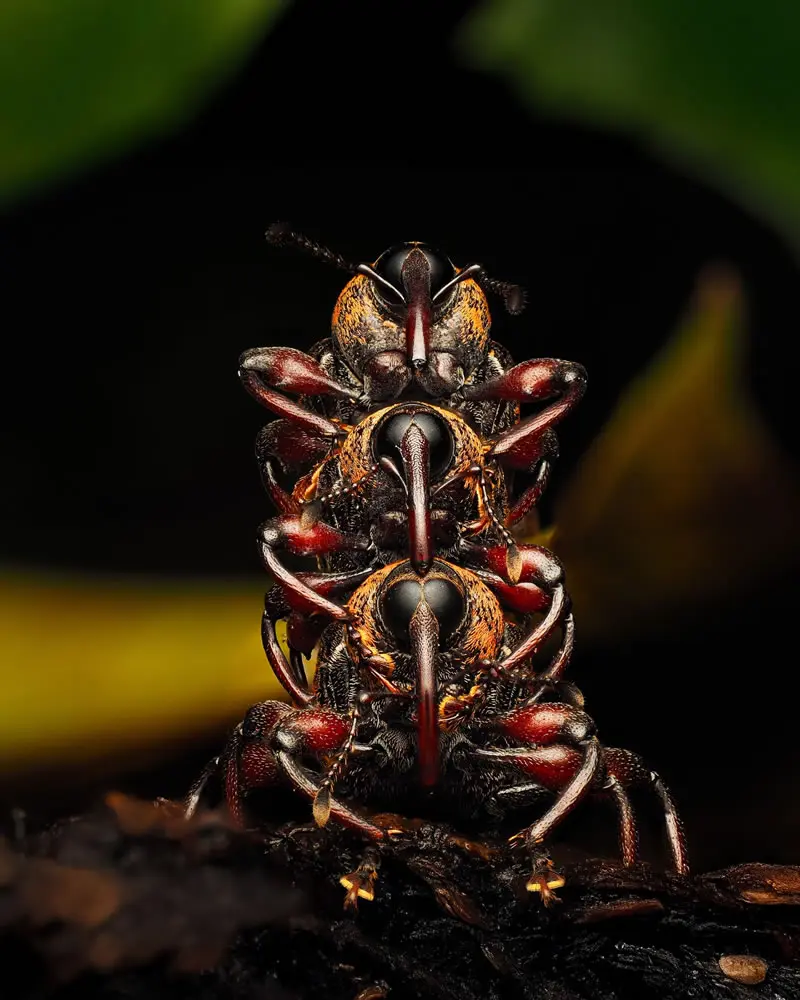
The more the merrier… right? Because this is definitely a weevil tower situation.
During one of our daytime walks at Centro Manu in Costa Rica, we stumbled upon this incredible little gathering of Marshallius nigrofasciatus, stacked one on top of the other like some kind of perfectly synchronized insect totem pole. We found them perched on a tree trunk right beside the trail, casually doing their thing.
And honestly… seen from the front, don’t they look like fighter jet pilots wearing oxygen masks?
#8. Oophaga Granulifera
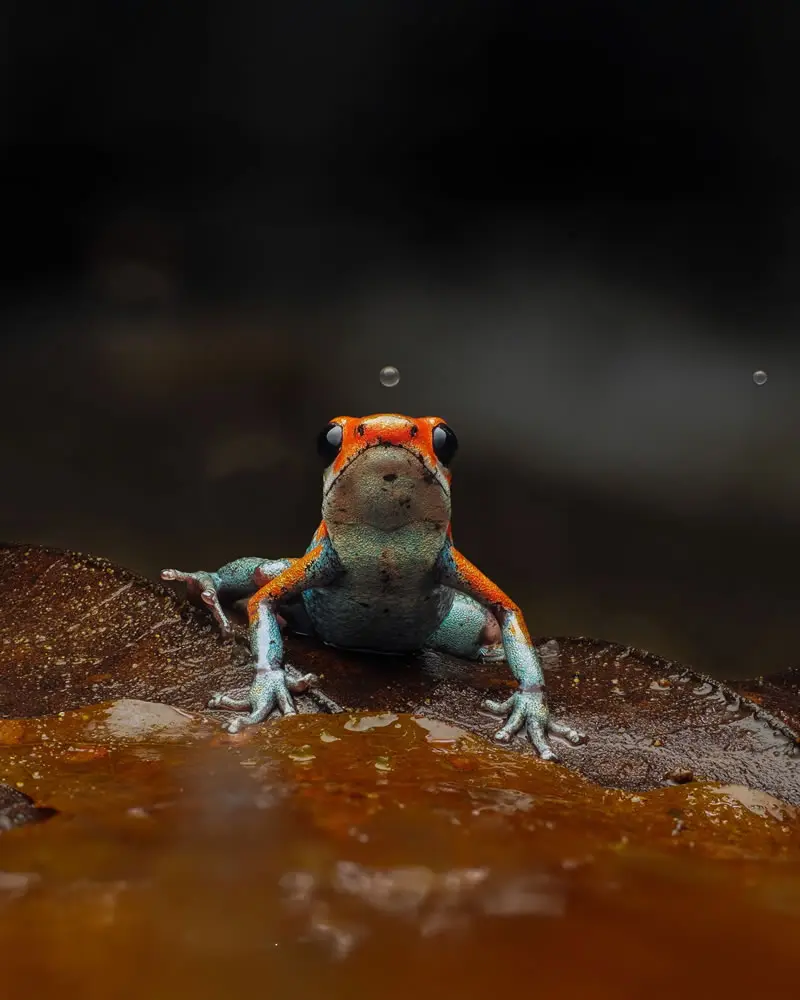
Perfect timing for the shot!
During one of our herping sessions in Sierpe, search of dendrobates, those famous, brightly colored poison frogs. While hiking upstream along a river, we came across an Oophaga granulifera.
Right at that moment, heavy rain started pouring down. We were completely soaked, but we still managed to take a few shots. And the craziest part? It was only later, while editing the photos, that we noticed a perfectly placed raindrop in front of the frog, making it look as if she was staring at it.
The genus Oophaga means “egg eater”, females feed their tadpoles with unfertilized eggs, a beautiful example of parental care. The name granulifera refers to the frog’s slightly granular skin texture.
#9. Theraphosidae / Tarantula
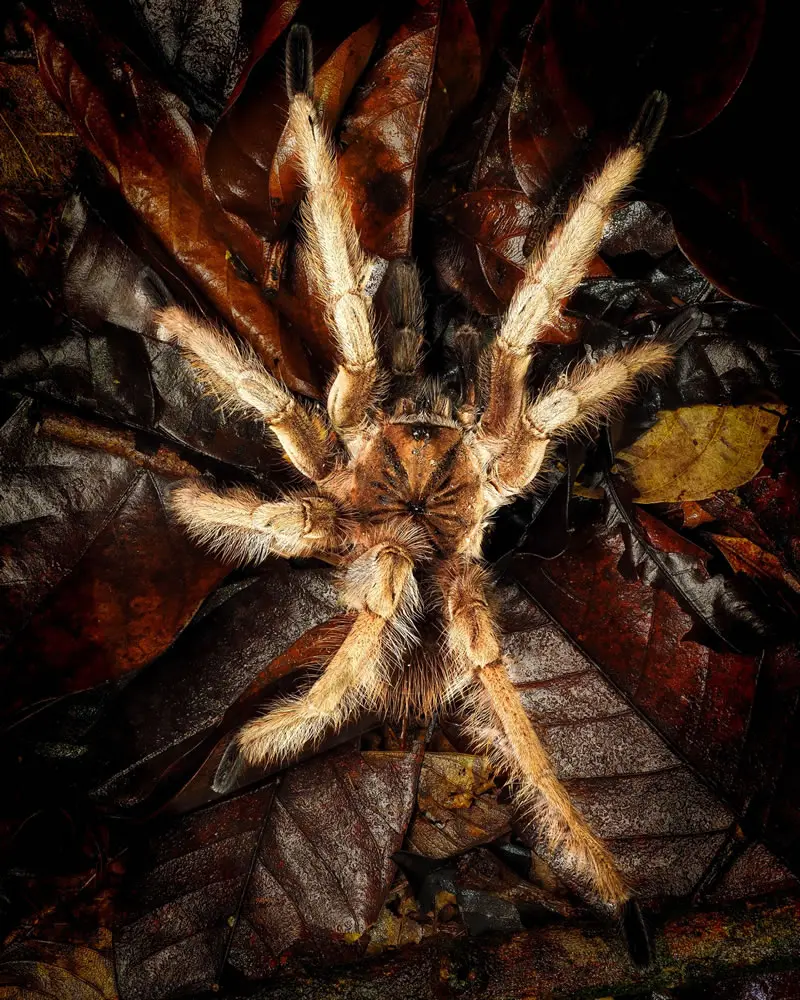
During our stay in Sarapiquí, Costa Rica, we had the chance to observe an impressive diversity of tarantulas.
Each one was more striking than the last, displaying an astonishing range of patterns, sizes, and colors. Due to the limited scientific information available on many tarantula species inhabiting these forests, and especially in Costa Rica, identifying certain individuals can be quite challenging. The tarantula shown in the first photo remains uncertain. It appears to be a large, terrestrial species, but its exact identity is still unclear. If anyone has insights or expertise, feel free to share
#10. Ahaetulla mycterizans (Vine Snake)
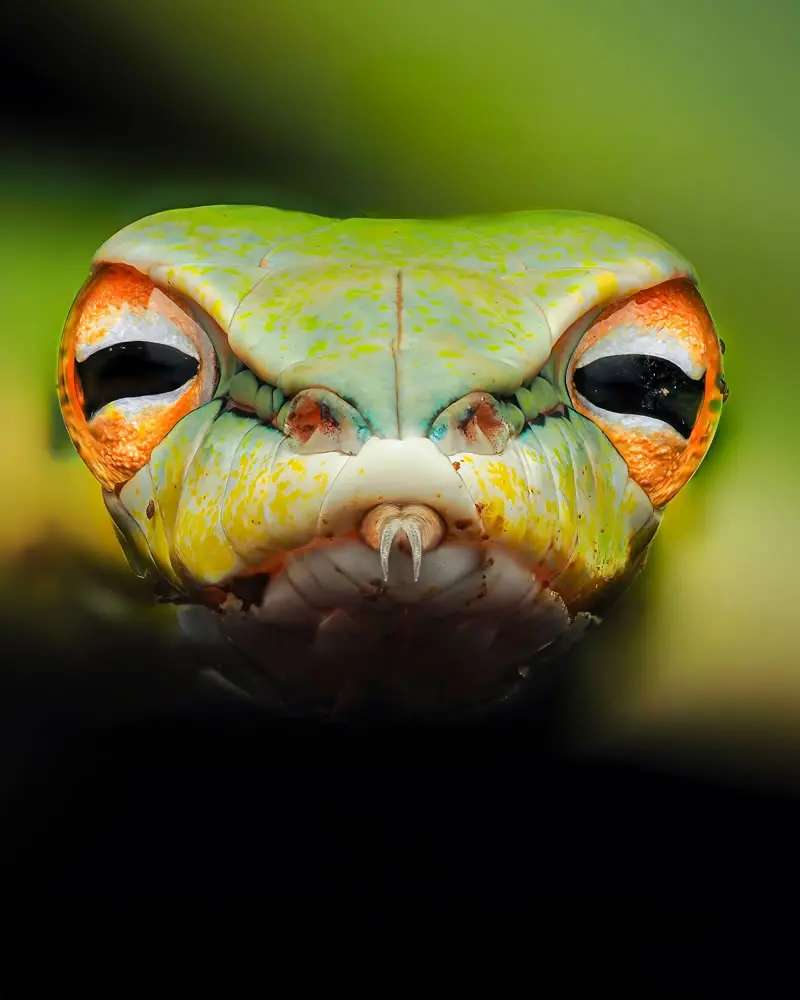
During our urban herping outing in Bogor, Indonesia, we were lucky enough to encounter several vine snakes. Even though these snakes are quite common in the area, they are far from easy to find.
As their name suggests, vine snakes really do look like lianas hanging in the trees. Their thin bodies, long heads and green color make them blend in perfectly with the vegetation, and more than once we walked right past one without noticing it.
It’s only when they slightly move or you really take the time to look that they suddenly appear and that’s what makes spotting them so rewarding.
#11. Megophrys montana (Horned Frog)
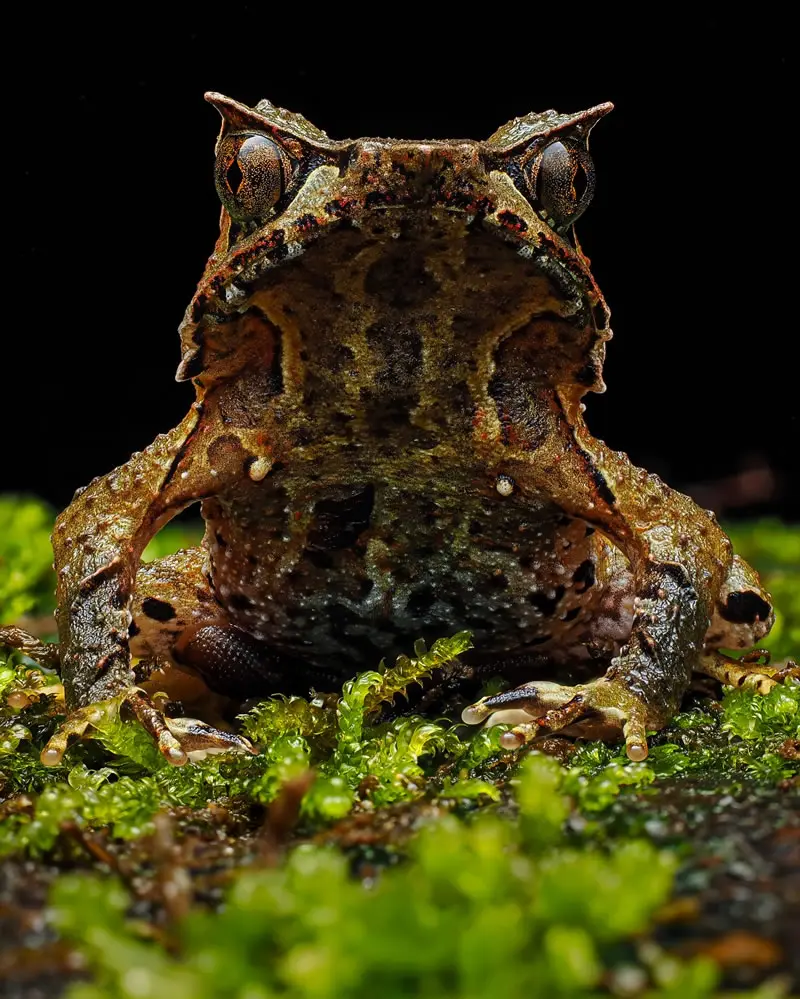
During my stay in Indonesia, we found this magnificent frog with an incredibly intimidating stare. Its famous horn-like projections above the eyes give it an almost malevolent look, perfectly suited to its forest-floor lifestyle.
We were lucky enough to encounter two different phenotypes of this species. The first, more classic form displays a dark brown coloration, while the second, much rarer, shows a striking yellowish tone. In this post, the brown morph appears first, followed by the yellow one.
Megophrys montana is a master of camouflage, blending seamlessly into leaf litter and moss. This remarkable adaptation makes sightings in the wild very difficult.
#12. Hamadruas sp.
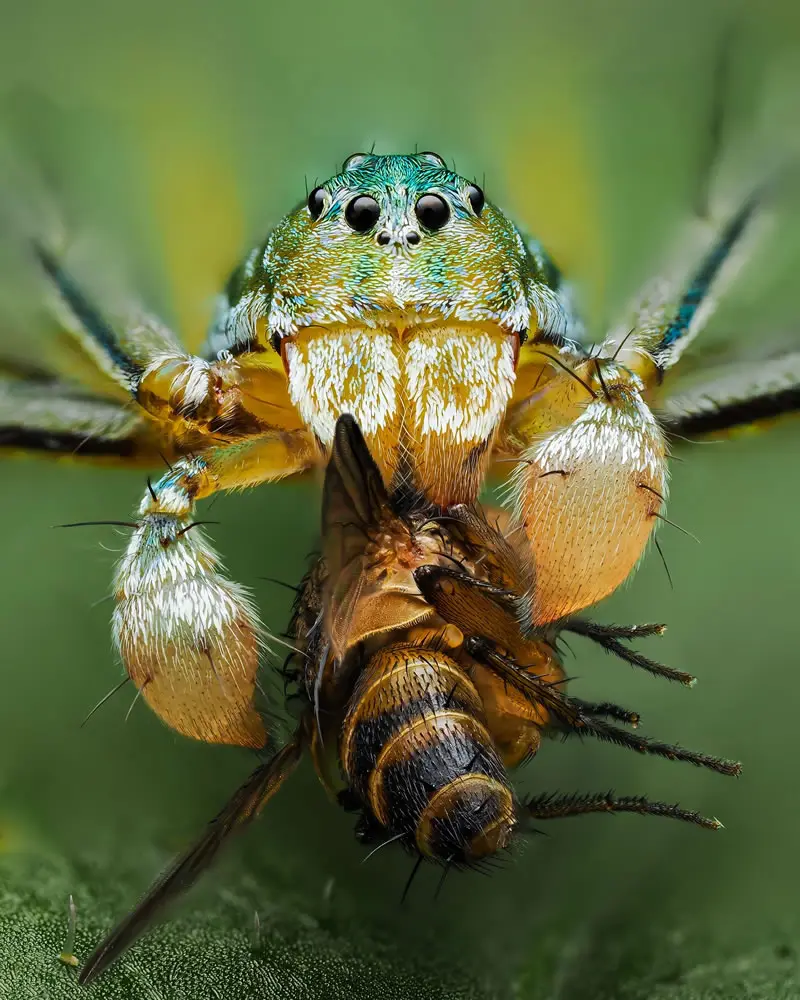
During our trip to Indonesia, we stumbled upon this incredible scene deep in the forest a lynx spider from the genus Hamadruas in the middle of its meal, feeding on a fly.
At first, it was the size of this lynx spider that caught my attention. Only after getting closer did I realize it already had a prey clenched in its chelicerae, frozen in a perfect hunting moment.
Lynx spiders are active hunters that don’t rely on webs to catch their prey. Instead, they use their excellent vision, speed, and agility to ambush insects directly on vegetation. Their spiny legs and alert posture make them fascinating predators to observe, especially at such close range.
#13. Duellmanohyla Rufioculis
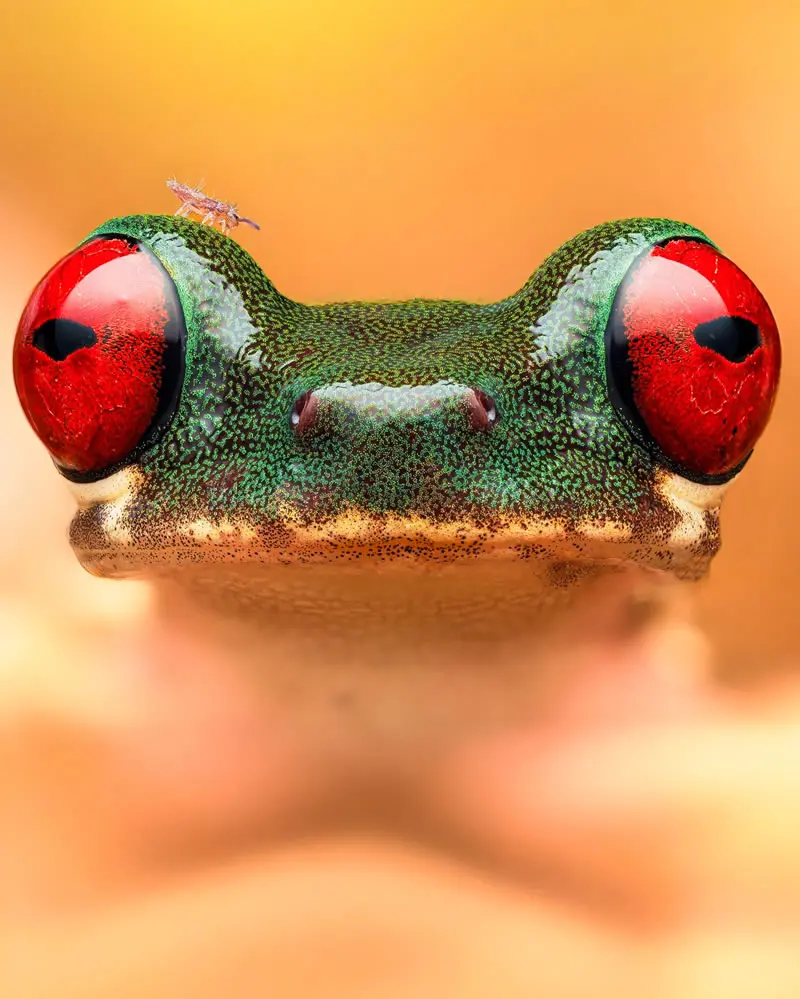
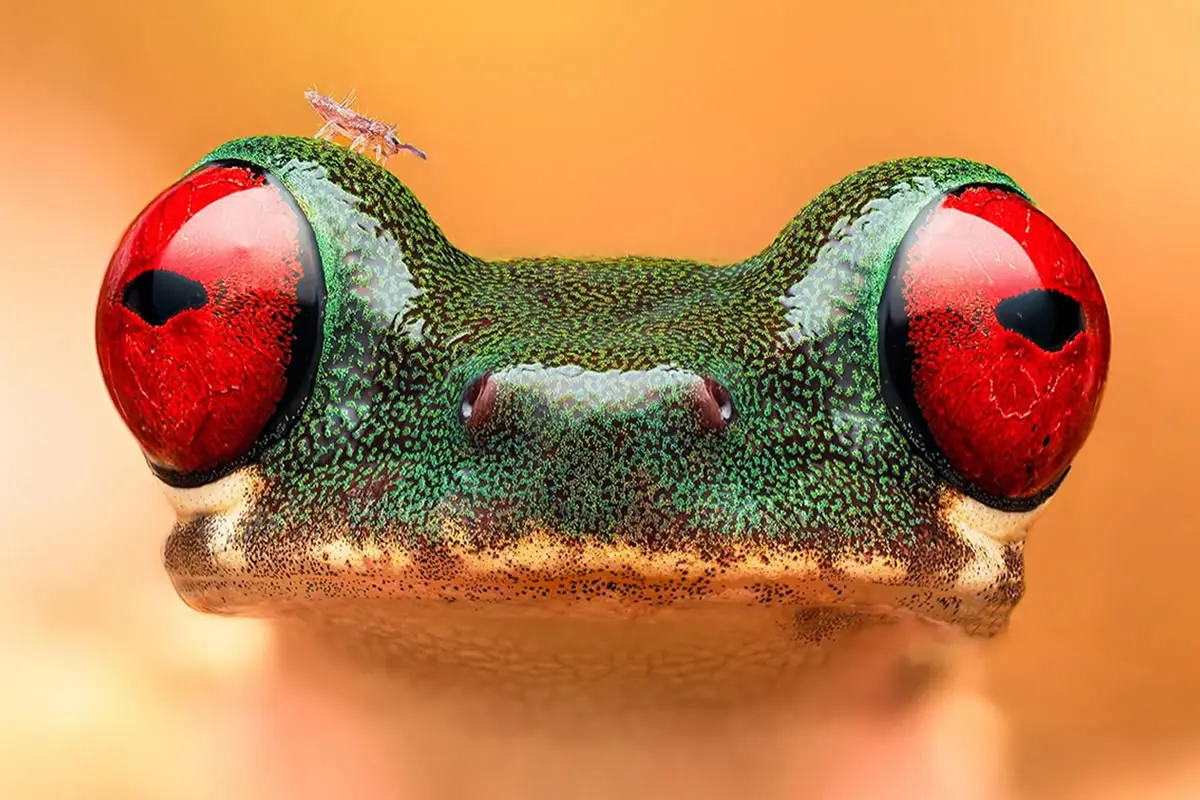
We encountered this stunning frog during one of our night outings not far from Sierpe. While walking along a small creek, we came across this magnificent frog, mesmerized by its large red eyes and its unexpected passenger, a curious springtail hitching a ride.
This species is a nocturnal stream-dwelling tree frog, highly dependent on clean, fast-flowing forest streams, and is considered a good indicator of ecosystem health.
#14. Leptophryne cruentata
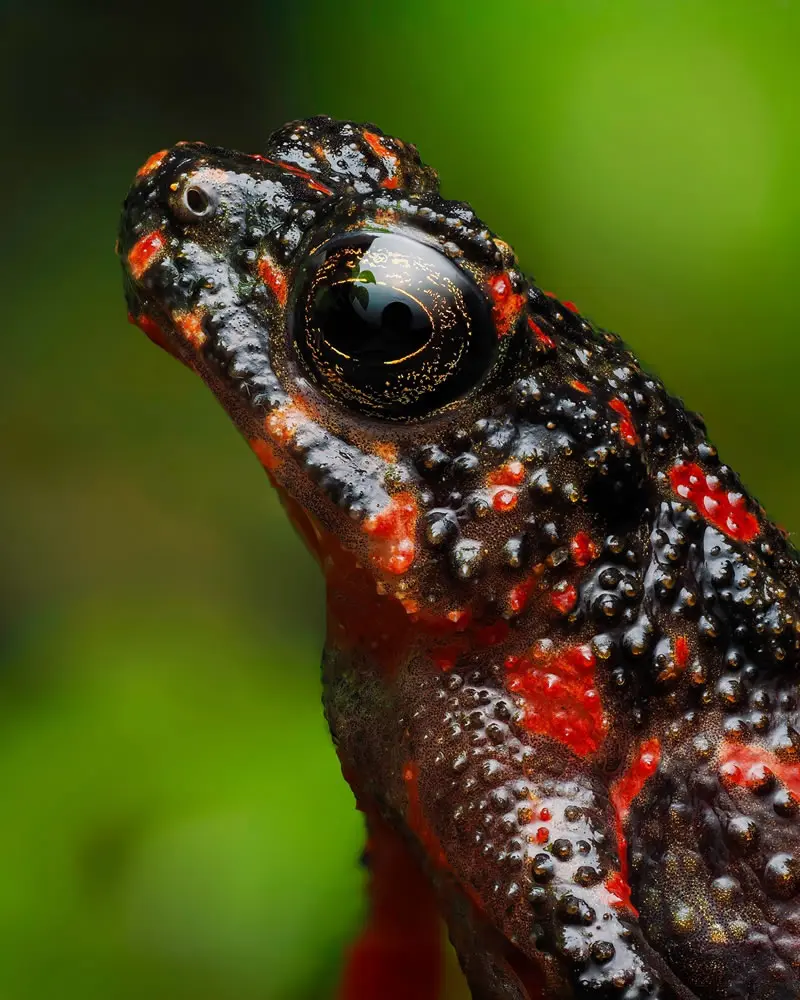
The name “Bleeding Toad” comes from the striking red markings on its body, which resemble drops of blood contrasting against its dark skin.
It is the only amphibian legally protected in Indonesia, and according to the IUCN, fewer than 250 individuals are believed to remain. We were incredibly lucky to be able to observe and photograph this species in the wild. A truly unforgettable encounter.
#15. Pyrgauchenia sp.
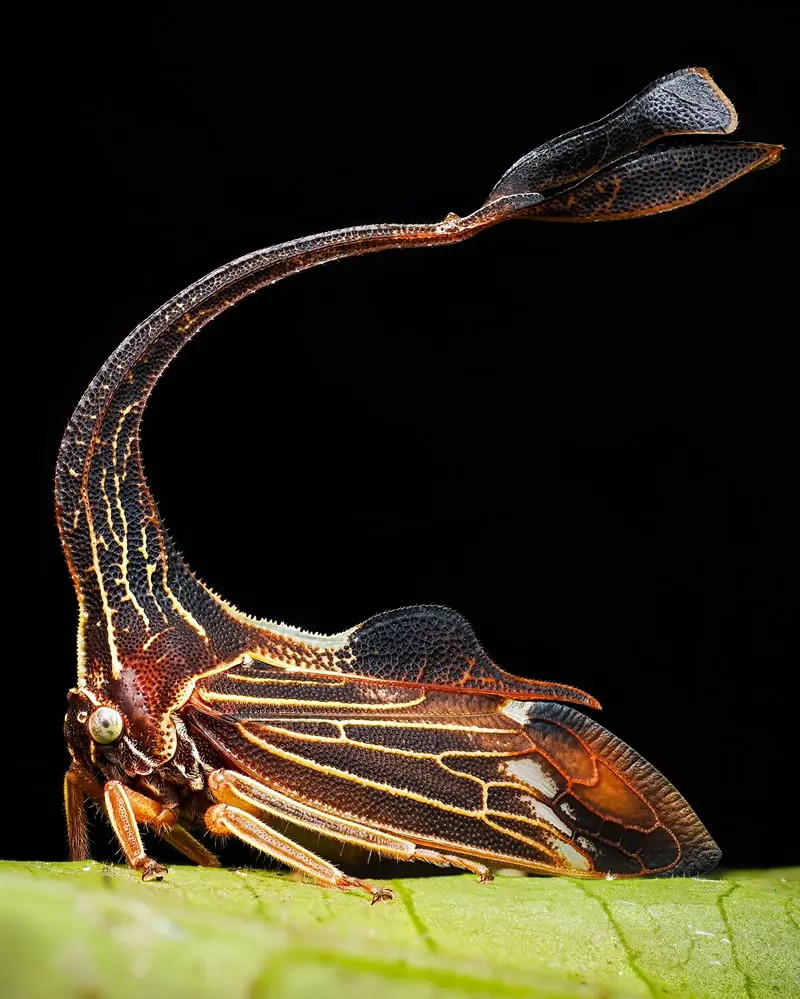
While walking around our camp, I came across this treehopper that immediately reminded me of the genus Cladonota, which is typically found in Central and South America. Surprised to see a treehopper with such morphology here, I stopped to photograph it.
This individual does not belong to Cladonota, but to the genus Pyrgauchenia and as far as I know, this could represent the first documented observation of this genus in Sulawesi.
As for the species, I initially thought of Pyrgauchenia tristaniopsis, but I’m not completely certain so if anyone has an idea, your help would be greatly appreciated.
#16. Sachatamia ilex
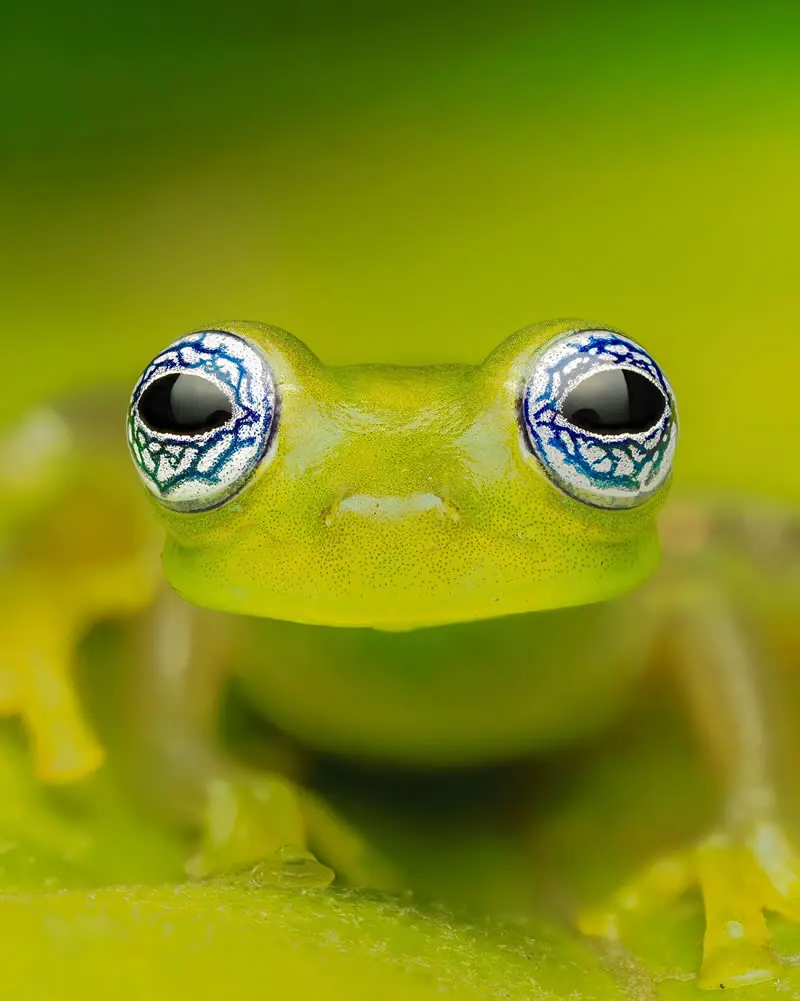
In the Sarapiquí region, about a 2.5 hour drive from the capital, we headed deep into the forest. We finally located the frog we had been looking forward to seeing most, Sachatamia ilex, the Ghost Glass Frog.
We were reaching the end of our herping session with Stanley after nearly six hours of walking through dense jungle when, above a small river, we suddenly came across this beautiful frog. Its large eyes, crossed with striking blue reticulations, stood out immediately. What an incredible species.
The blue reticulations observed in the eyes could be related to the distribution of blue-sensitive photoreceptors or underlying structural adaptations that enhance visual sensitivity or camouflage. Such patterns might help reduce glare, improve contrast detection, or provide some form of cryptic coloration to avoid predators.
#17. Paraphrynus laevifrons
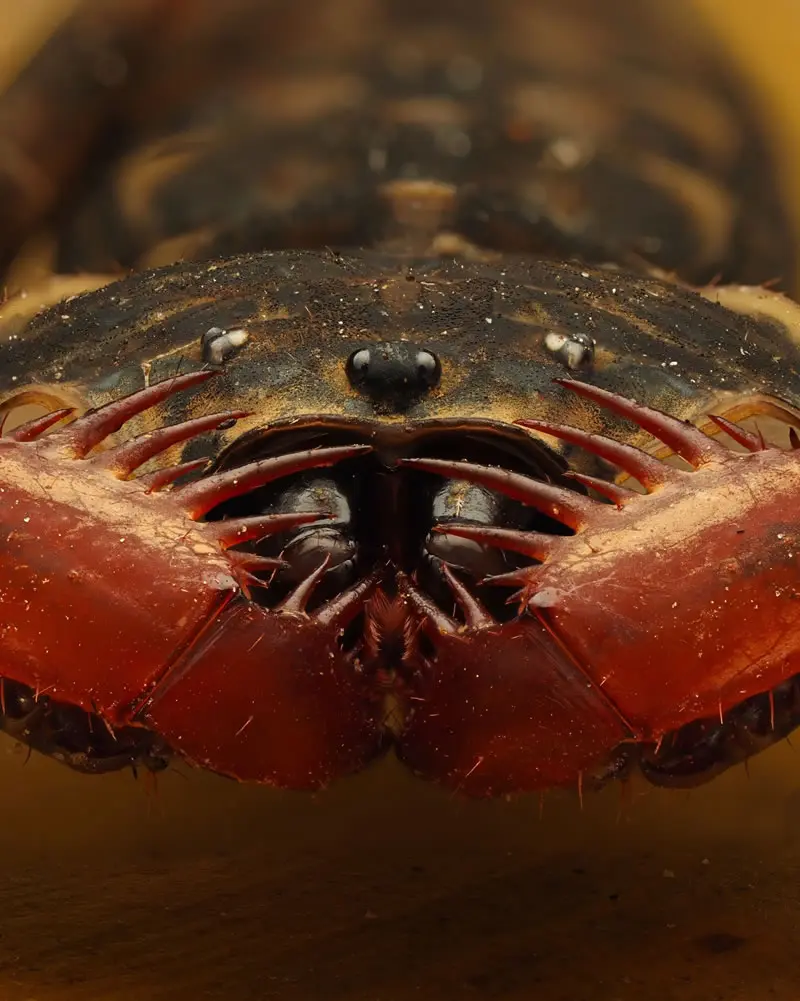
Sometimes, when wandering around our place, we stumble upon species that are as strange as they are fascinating. This time, we crossed paths with a tailless whip scorpion, a creature with such an extraterrestrial look … maybe intraterrestrial fits better.
Despite its intimidating appearance, it’s 100% harmless. Its elongated front legs act as ultra-sensitive sensors, allowing it to “feel” its surroundings with incredible precision, detecting vibrations, obstacles, and even hidden prey in the dark.
They also stand out for something rarely see in arachnids, social interactions. Studies have shown prolonged associations between mothers, offspring, and sometimes even siblings, marked by frequent, gentle, almost “friendly” touches with their whip-like legs, a way to reassure, communicate, and stay connected.
#18. Liturgusa krattorum
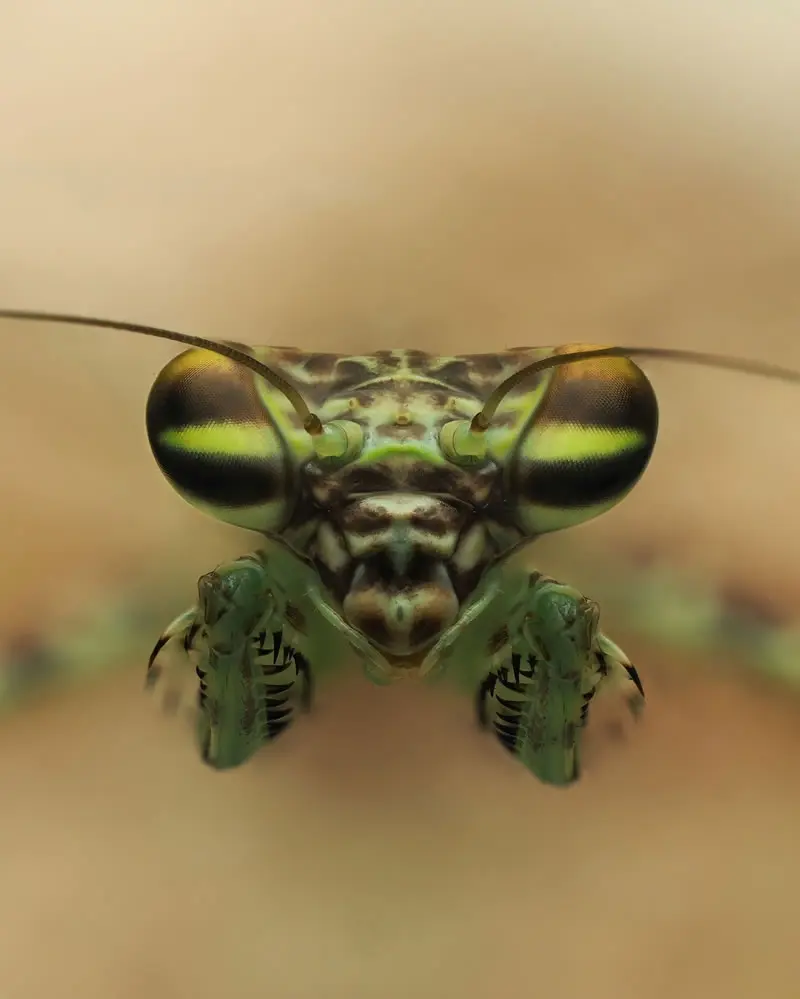
Finally, a new insect shot on our Instagram feed! In Costa Rica, there are so many different species of reptiles, amphibians, insects, and arachnids that we don’t even know what to pick for our next post. But thanks to Laurent, his sharp eyes, and his incredible knowledge, we were able to observe insects always more surprising and unusual.
Unlike many other species, Liturgusa mantises are extremely fast and active. They don’t wait for prey to come to them, they patrol along the bark, tracking arthropods with remarkable agility.
#19. Triprion spinosus / Crowned Tree Frog
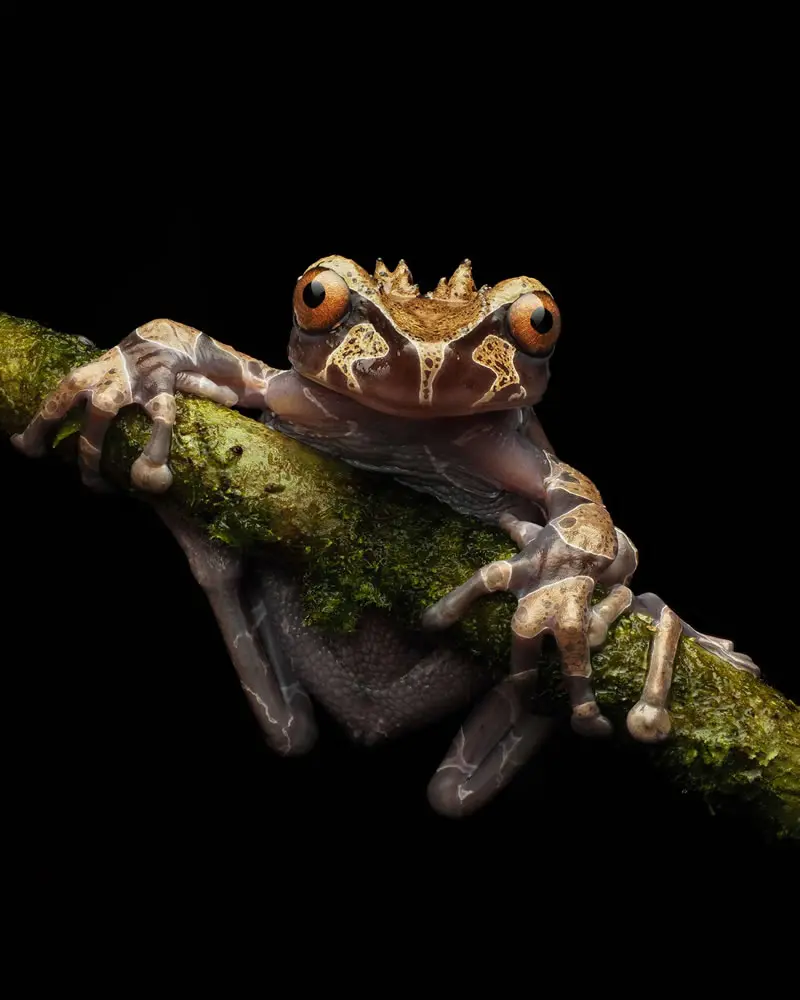
During our nights out exploring the Costa Rican rainforest, we came across the Crowned Tree Frog (Triprion spinosus) several times. These frogs are surprisingly easy to recognize that crown of sharp little spines on their head is actually where their name comes from.
These rarely seen frogs live high in the trees of subtropical forests. We almost always found them clinging to a branch, perfectly posed, as if they had been expecting us. Their calm, statuesque attitude made them an absolute joy to photograph.
#20. Oophaga pumilio / Blue Jeans Frog
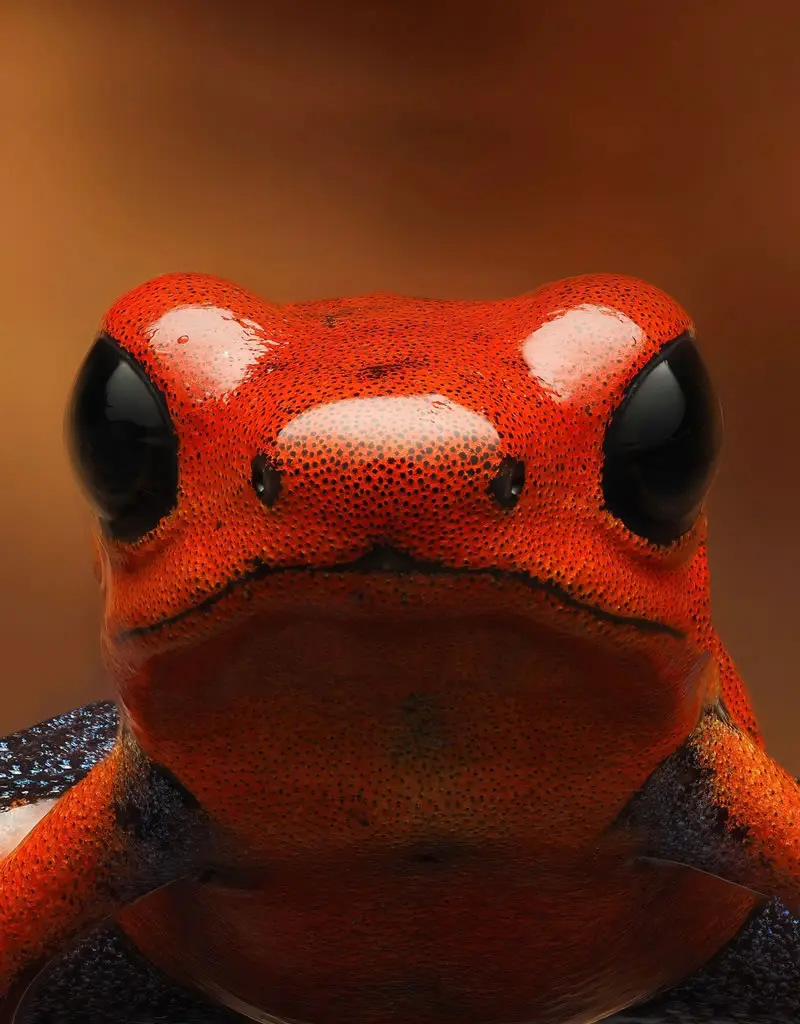
Our search for this small but legendary species took us into the lowland rainforests of the Caribbean slope. We moved through dense vegetation where these frogs are commonly found. Their colors vary widely, bright red, deep blue, orange, green, or speckled, which makes them relatively easy to spot in the forest. The population we encountered showed the classic red body with blue legs morph.
Poison dart frogs are among our favorite amphibians. Their small size, wide range of colors, and toxicity make them unique. In Oophaga pumilio, toxicity comes from alkaloids accumulated from their diet, mainly small ants and mites.
#21. Biolleyana sp. nymph
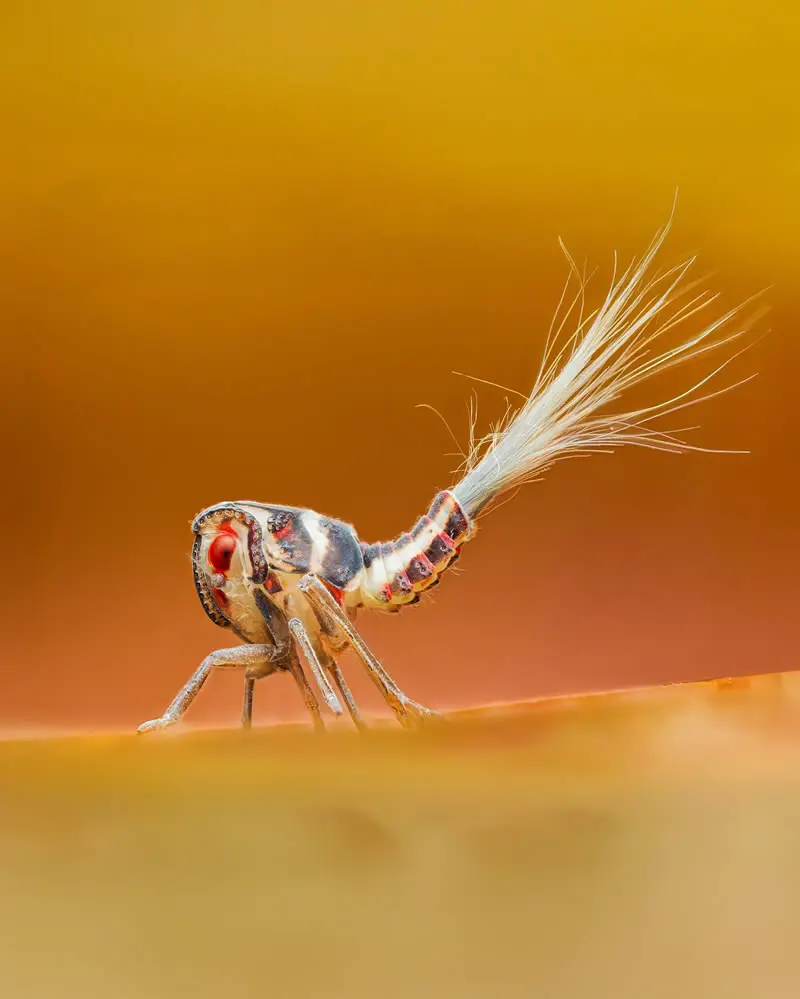
Here, we photographed the nymph of a Biolleyana planthopper resting on a banana leaf. These tiny creatures are as fascinating as they are delicate, with their waxy filaments and alien-like appearance that make them look almost unreal.
#22. Cruziohyla sylviae
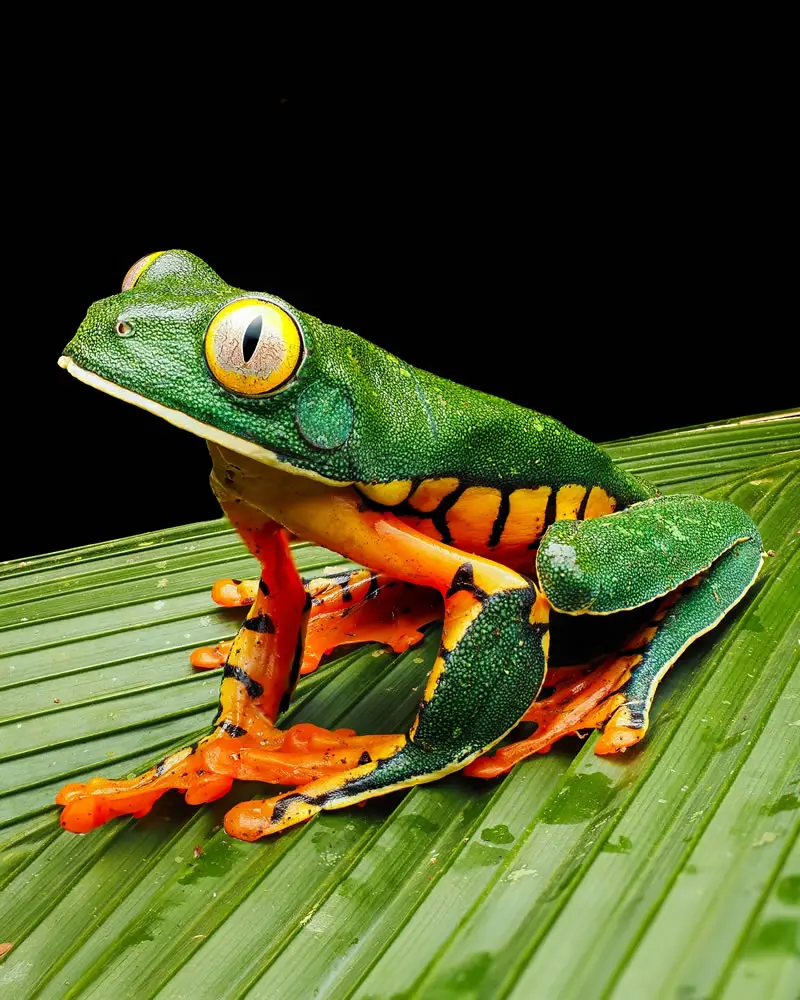
We started our trip in the Sarapiquí region, about a 2.5 hour drive from the capital. One of our main targets was Cruziohyla sylviae, a stunning arboreal frog with a bright green back, striking orange belly, and bold black tiger-like stripes on its sides. It took us two nights and several hours of walking through the forest to finally find it but it was absolutely worth it.
This species is one of the most spectacular tree frogs in Central America. Its vibrant colors, large silver eyes with yellow rings, and delicate skin texture make it a true jewel of the rainforest. Seeing it in its natural habitat, quietly resting on a leaf, was an unforgettable moment.
#23. Platycnemis pennipes
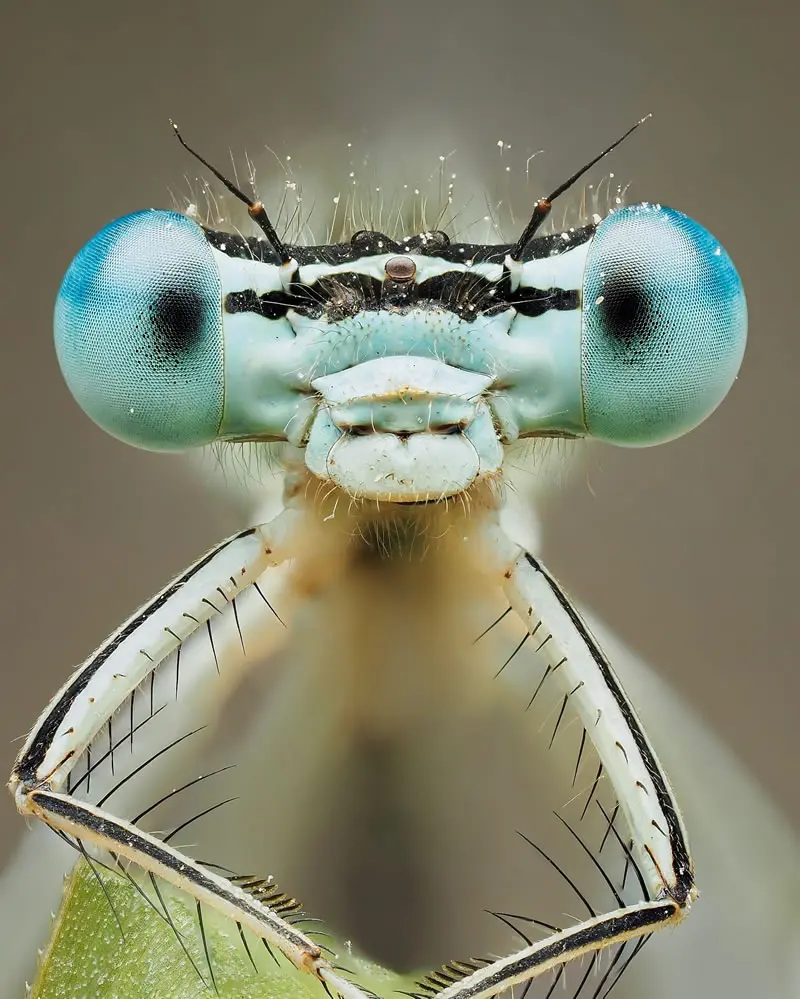
We’ve always loved photographing damselflies their large, curious eyes give them a personality that feels almost human, as if they were quietly observing us in return.
Known as the White-legged Damselfly, Platycnemis pennipes thrives along slow-flowing rivers and ponds rich in aquatic plants.
Males are recognized by their pale blue tones and their flattened, feather-like legs, used in courtship displays to attract females.
#24. Cicindela hybrida
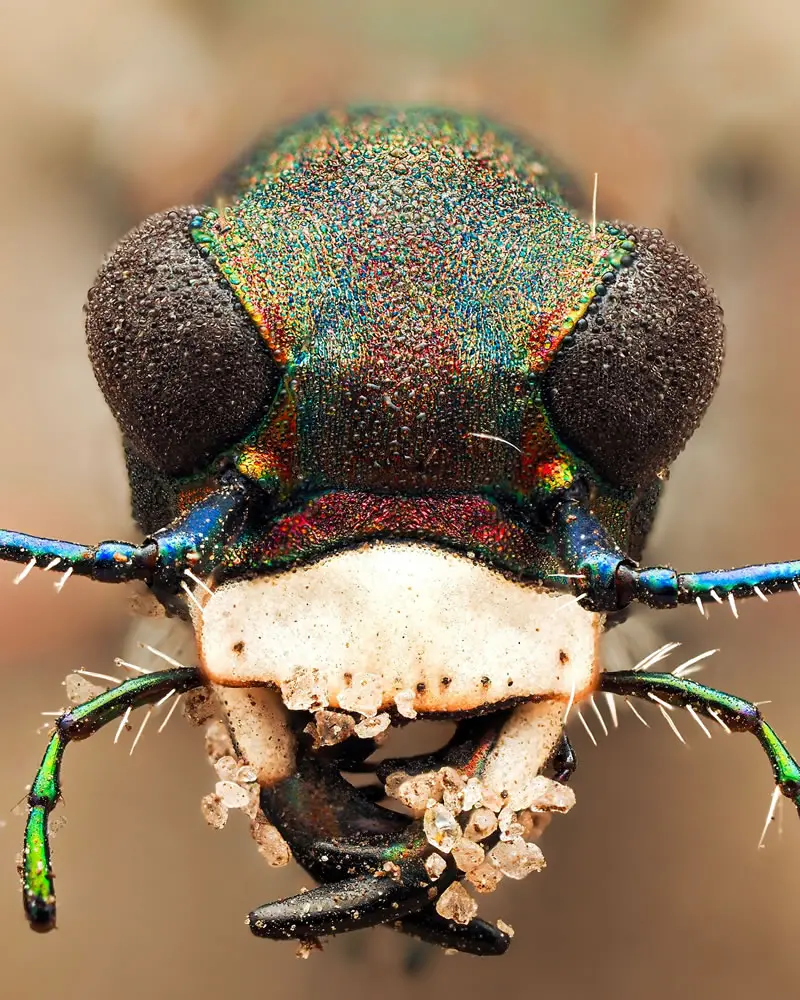
After returning from Japan a few weeks later, we decided to take a walk in one of our favorite spots for macro photography near home. We’ve already found tiger beetles in this reserve before, and our goal that morning was to find them again, this time to photograph them with our 90 mm lens.
The grass was covered in dew, and when we finally came across this tiger beetle, it was still very calm and moving slowly, allowing us to capture this shot. Its natural metallic colors, combined with the morning dew, make it look like a true jewel of nature.
#25. Goniurosaurus sengokui
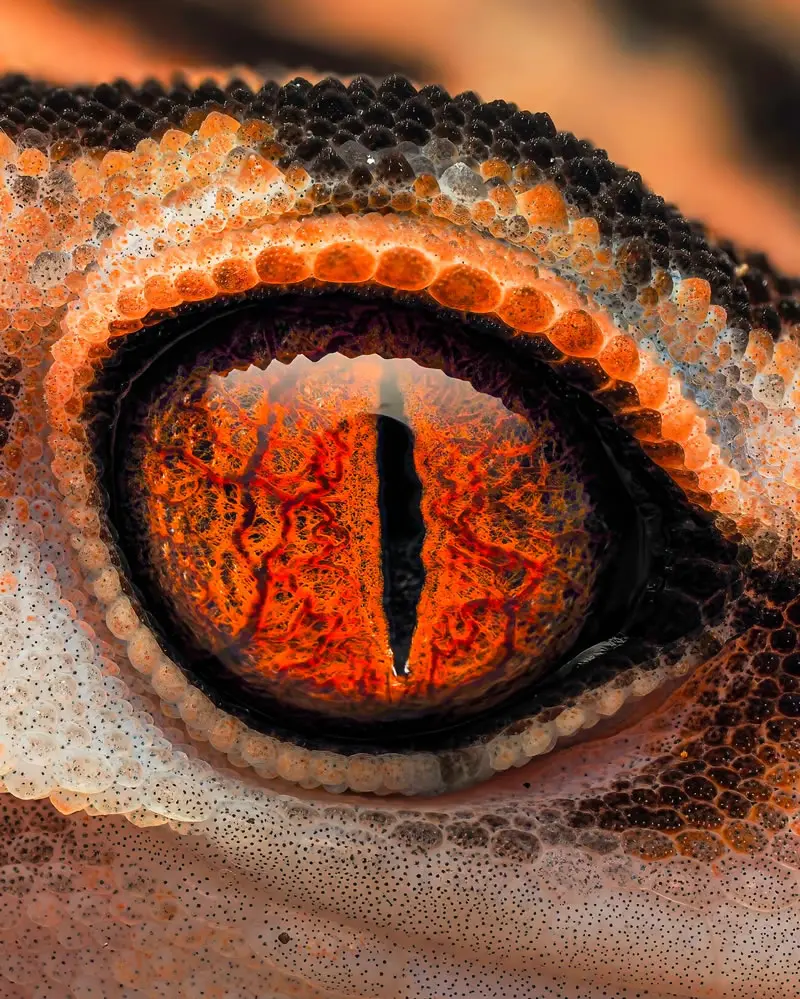
Goniurosaurus sengokui, described in 2017, is a cave gecko endemic to Tokashiki and Aka Islands in the Ryukyu Archipelago of Japan. This rare species is protected under Japanese law and listed in CITES Appendix III due to its limited range and threats from illegal collection.
It inhabits humid forests and rocky areas, often hiding under logs or stones during the day and becoming active at night. Its striking coloration and cat-like eyes make it one of the most fascinating geckos to observe up close.
#26. Mantis religiosa
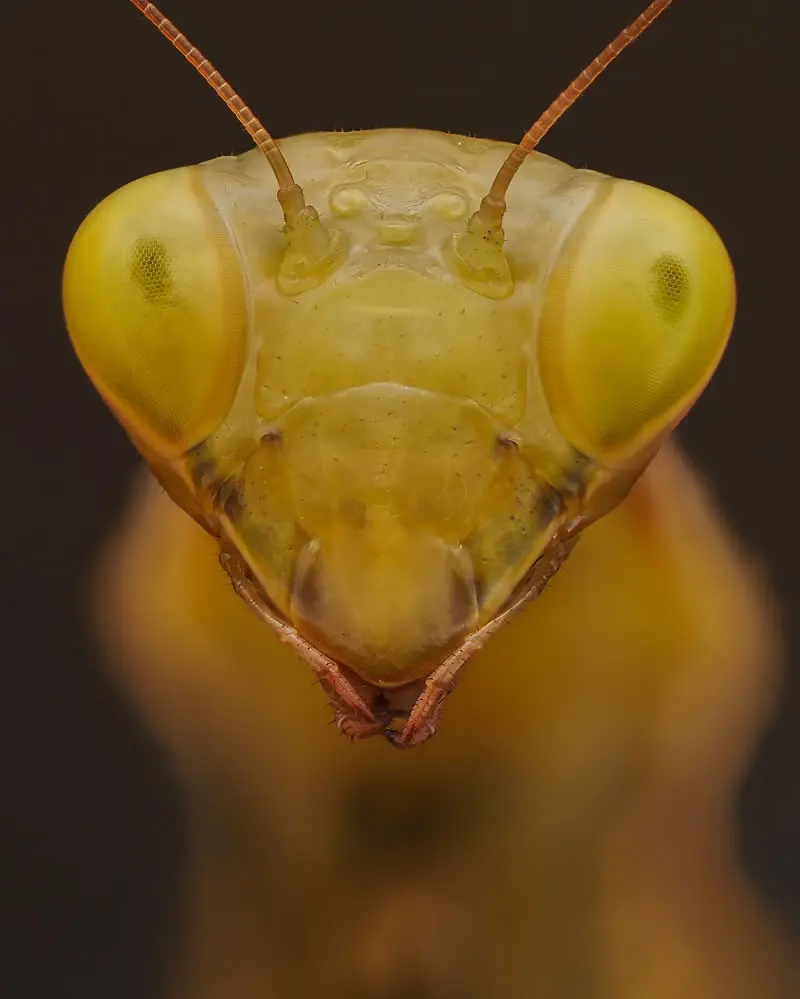
Photographing this praying mantis was far from easy. She just wouldn’t stop moving and during the rare few seconds she stayed still, she kept twitching her mandibles, making most of our focus stacks completely unusable.
Luckily, in the middle of all those failed attempts, we managed to pull off one stack that really stood out, and we’re pretty happy with how it turned out.
The European mantis is a master ambush predator, using its camouflage and lightning-fast reflexes to capture prey. Despite their fearsome appearance, they are harmless to humans and play an important role in controlling insect populations.
Fun fact: Mantis religiosa, or the European mantis, can rotate its head nearly 180 degrees a rare ability among insects giving it exceptional vision to track both prey and predators.
#27. The huntsman spider (Heteropoda venatoria)
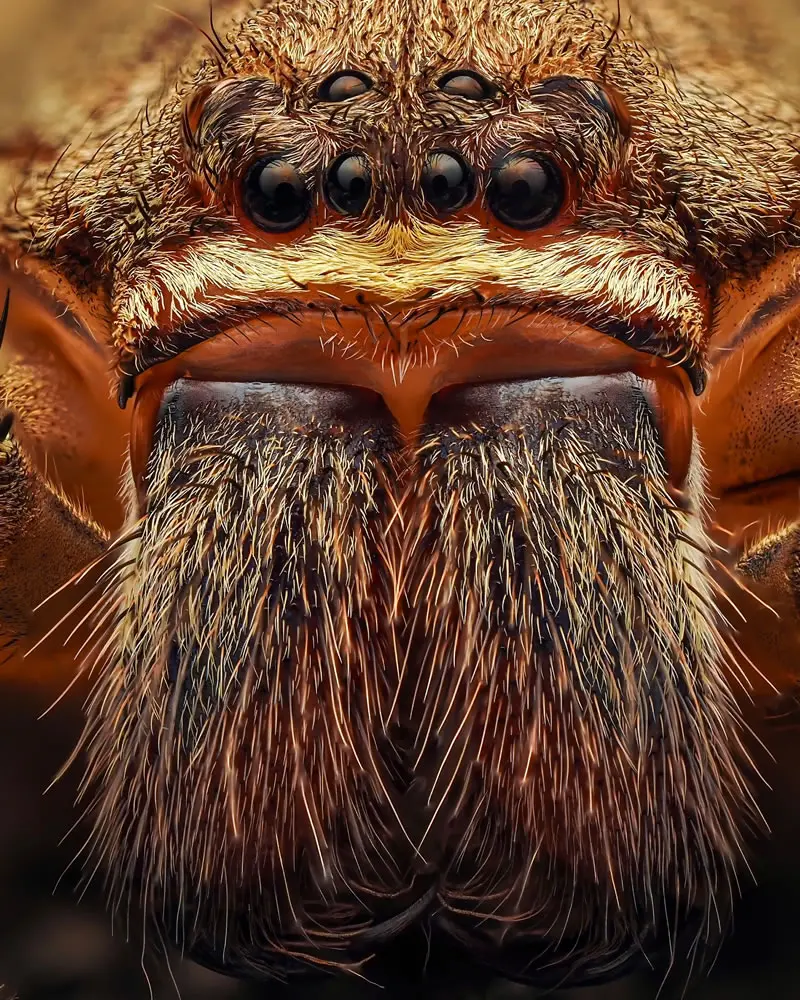
Portrait of Heteropoda venatoria. This spider was truly everywhere, in the forest, near houses, on the roadside, even inside restaurants… literally everywhere.
What made it even more impressive was its size: most of the individuals we came across were about as big as my hand. Such a massive and striking spider is hard to miss, and spotting them quickly became a daily experience on the island.
From an ecological perspective, Heteropoda venatoria plays an important role as a natural pest controller, especially against cockroaches. In fact, many locals appreciate its presence in their homes for this very reason.
#28. Colletes halophilus
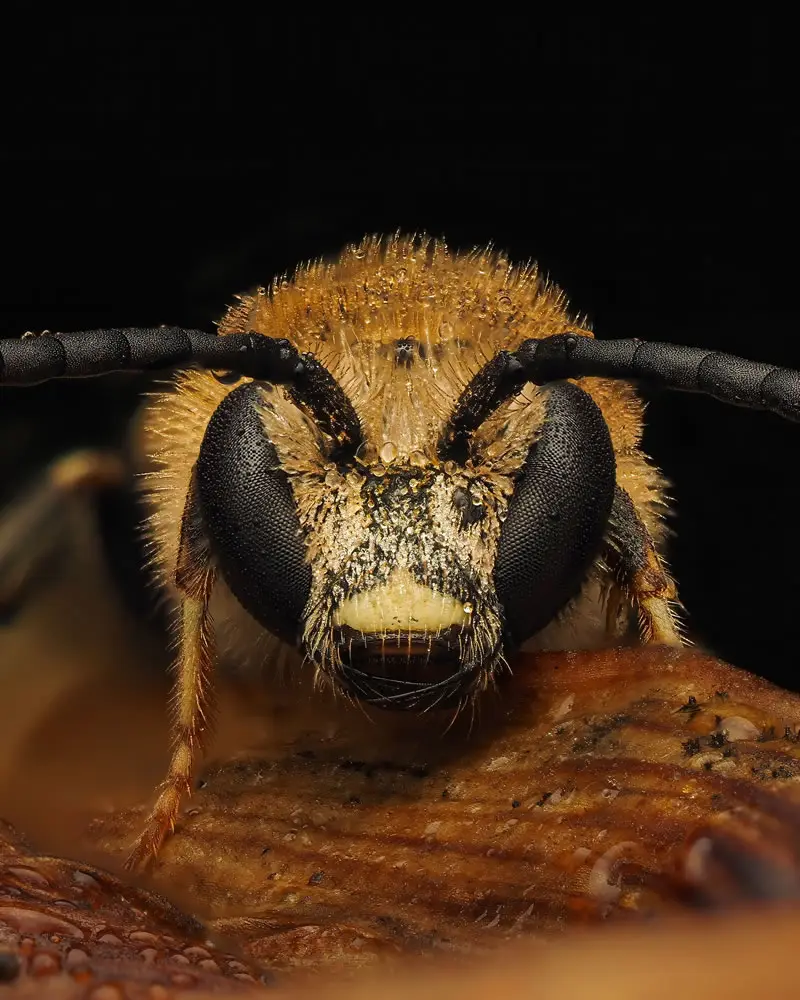
These bees are not only tied to coastal dunes for nesting, but also depend heavily on the seasonal bloom of sea aster. Their entire activity window is synced with the late-summer flowers. Even in such a harsh, salty, and windy environment, they manage to thrive and keep pollination alive where few others can’t.
#29. The Moorish gecko (Tarentola mauritanica)
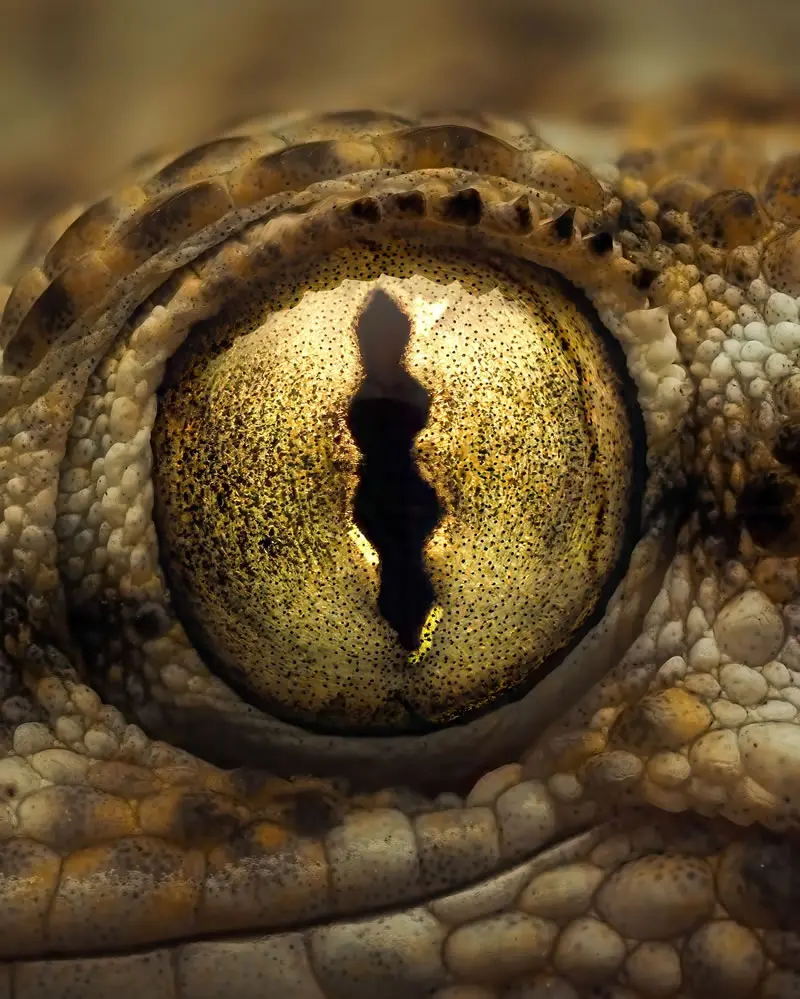
During our trip to southern France, we often came across one of the most emblematic reptiles of the Mediterranean, the Moorish gecko. Unlike some of the rare species we usually search for, this one is not particularly hard to find, but it can be quite a challenge to photograph since it is active only at night.
When we were kids, we used to spend entire evenings looking for them. We would often end up scanning the walls near the lamps, where the geckos came to catch insects in the glow of the light.
While editing the photos, we couldn’t help but notice how much its head shape and golden eye gave it a striking resemblance to a miniature caiman. This gecko is instantly recognizable, with a spiny skin texture, usually gray or brown, allowing it to blend in perfectly with stone walls and tree trunks.
#30. The ladybird spider (Eresus kollari)
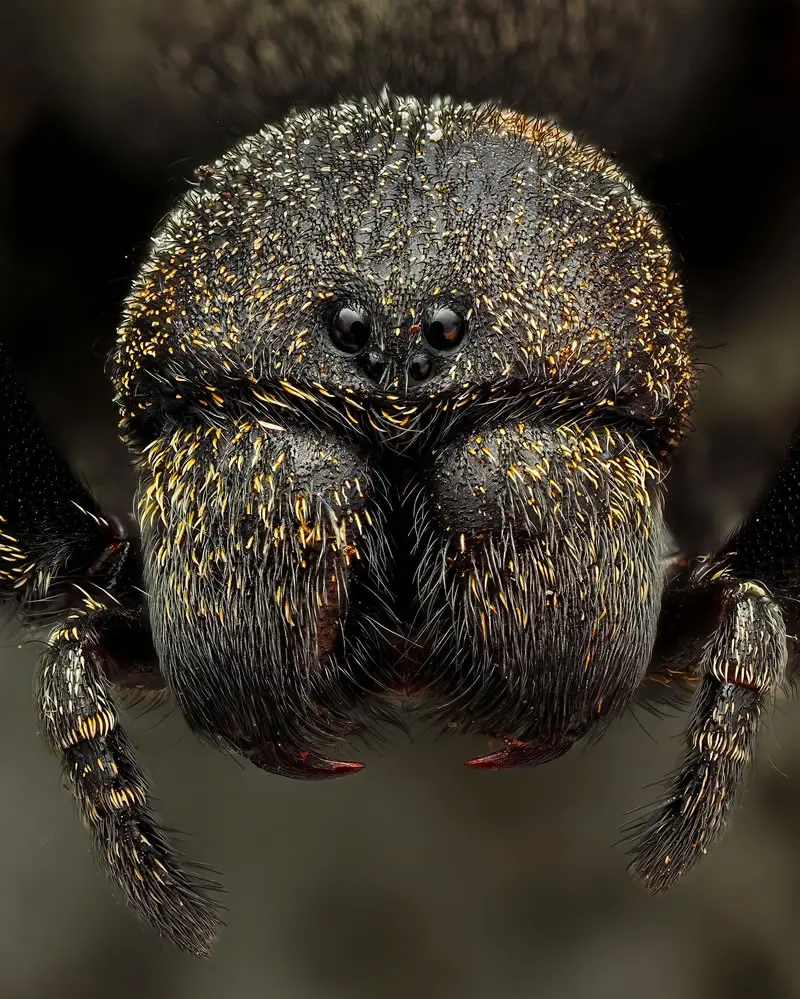
During our trip to southern France, one of the species we were looking for was a female Eresus kollari. This spider is certainly among the rarest in France. We had previously searched for it in an area near our home where sightings (iNaturalist) had been recorded, without success. In the end, it was during our journey in the south that we were lucky enough to find this beauty, thanks to reports on iNaturalist.
Like many spider species, E. kollari shows strong sexual dimorphism: the smaller male displays vivid colors with a red abdomen dotted with black spots, while the female is larger with a darker coloration. She has a black body and a head speckled with orange markings.
Interview with Maceo and Andrea
A Brief Introduction of Yourselves?
We are Maceo and Andrea, 23-year-old twin brothers currently studying biology. We are both deeply passionate about wildlife and photography, especially insects, reptiles, and amphibians.
Through our studies and field explorations, we combine our scientific background with our love for nature photography. We run an Instagram account called Twins_Wild_Lens, where we share photographs of the insects, reptiles, and amphibians we encounter during our observations and adventures in the field.
What Inspires You to Capture These Stunning Macro Photographs in Nature?
What inspires us to capture macro photographs is the opportunity to reveal the hidden beauty of the small creatures that surround us. Macro photography allows us to highlight details, textures, colors, and structures that are almost invisible to the naked eye, offering a new perspective on a world that is often overlooked.
Many of these animals, especially insects, are misunderstood or disliked. Through close-up portraits, we aim to present them in a different light—almost like expressive characters—and create an emotional connection with the viewer.
If our work can encourage people to see these creatures with curiosity and appreciation instead of fear or indifference, then we feel we have fulfilled our purpose.
Your Awards and Recognition?
We are still at an early stage in our photographic journey, but our work has already received some encouraging recognition.
Our Instagram account has grown to over 40,000 followers, where we share our passion for macro wildlife photography. Several of our images have been nominated for the Wildlife Photographer of the Year competition organized by the Natural History Museum, and some of our photographs were exhibited at a scientific congress in Mexico.
These experiences motivate us to continue improving and sharing our perspective on small wildlife.
Your Favorite Photographers and Sources of Inspiration?
Many macro photographers inspire us in different ways.
Laurent Hesemans, a photographer based in Costa Rica, inspires us with his ability to capture stunning tropical biodiversity through detailed and vibrant macro images.
Rafael Steinlesberger is another strong influence. His macro photographs of animals and insects encountered during his travels demonstrate both technical precision and a deep respect for wildlife.
Finally, Ben Salb is a major source of inspiration for us. His insect portraits are particularly powerful, as he succeeds in revealing the “character” of the insects he photographs—something we also strive to express in our own work.
Conclusion
Maceo and Andrea are living proof that powerful wildlife stories don’t need giant predators or dramatic landscapes. Sometimes, the real magic lives in the grass, under leaves, and along forest paths. By blending biological knowledge with thoughtful macro photography, these twin brothers are changing how people see small wildlife—one frame at a time.
Their images invite us to slow down, look closer, and trade fear for fascination. If their work inspires even one person to appreciate an insect instead of ignoring it, their mission is already a success.