
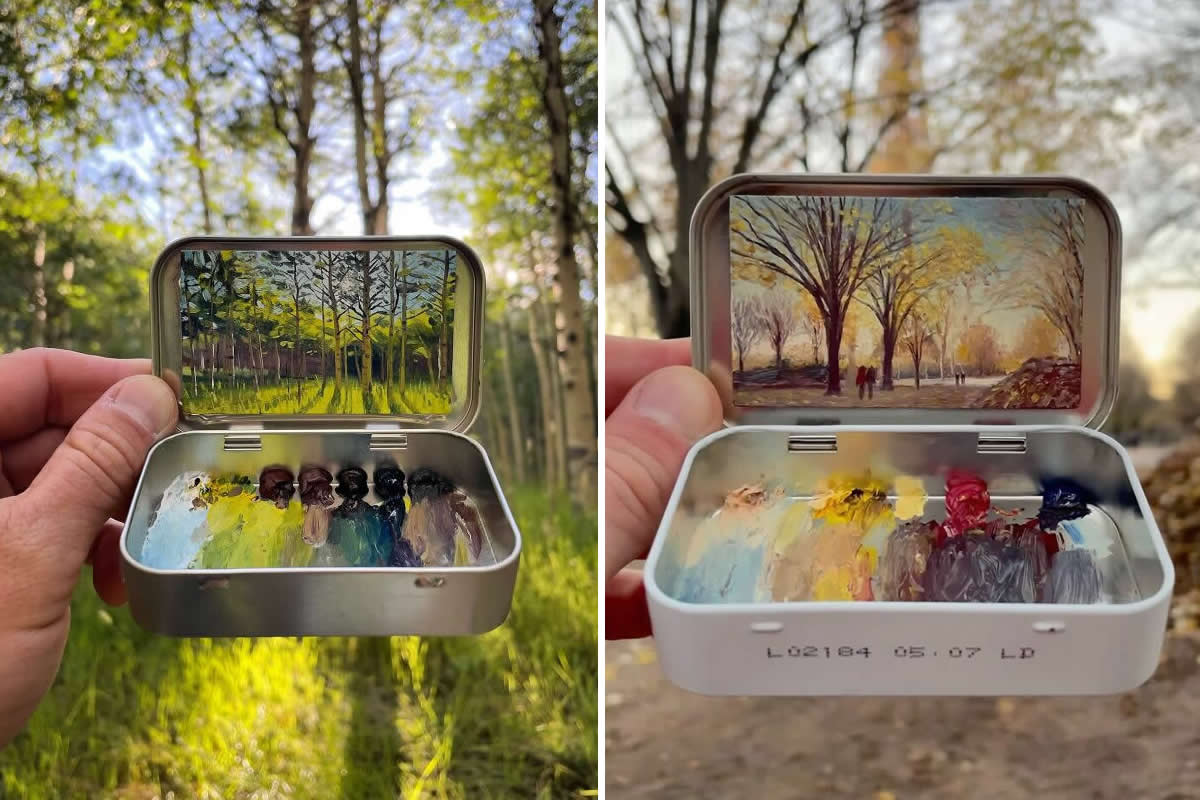
Most painters think in canvases. Remington Robinson thinks in Altoid tins.
And honestly, that’s half the fun of his work. At first glance, you see a tiny metal mint box and assume it’s just a clever gimmick. Cute idea, right? Then you look closer. Really closer. Suddenly you’re staring at a glowing Paris evening, a misty mountain valley, a river lined with autumn trees, or a flower garden catching soft afternoon light, all painted inside the lid of something that fits in the palm of your hand. That’s when it hits you: this isn’t novelty art. It’s serious painting disguised as something playful.
Robinson’s miniature paintings feel a little like magic tricks, except there’s no trick. Just skill, patience, and a wild amount of control. He takes scenes that usually belong on wide canvases, coastlines, cathedrals, forests, bridges, snowy peaks, and city streets and compresses them into a few square inches without losing mood, atmosphere, or story. That’s the part that really gets you. These aren’t tiny paintings that feel tiny. They feel expansive. Cinematic, even.
There’s also something deeply charming about the contrast. Altoid tins are ordinary, pocketable, and almost disposable. Robinson turns them into portable galleries. A mountain view becomes something you can hold between your fingers. A sunset becomes something that clicks shut and slips into a jacket pocket. And that shift in scale changes everything. It makes you look longer, lean in closer, and appreciate how much emotion can live inside a very small frame.
You can find more info about Remington Robinson:
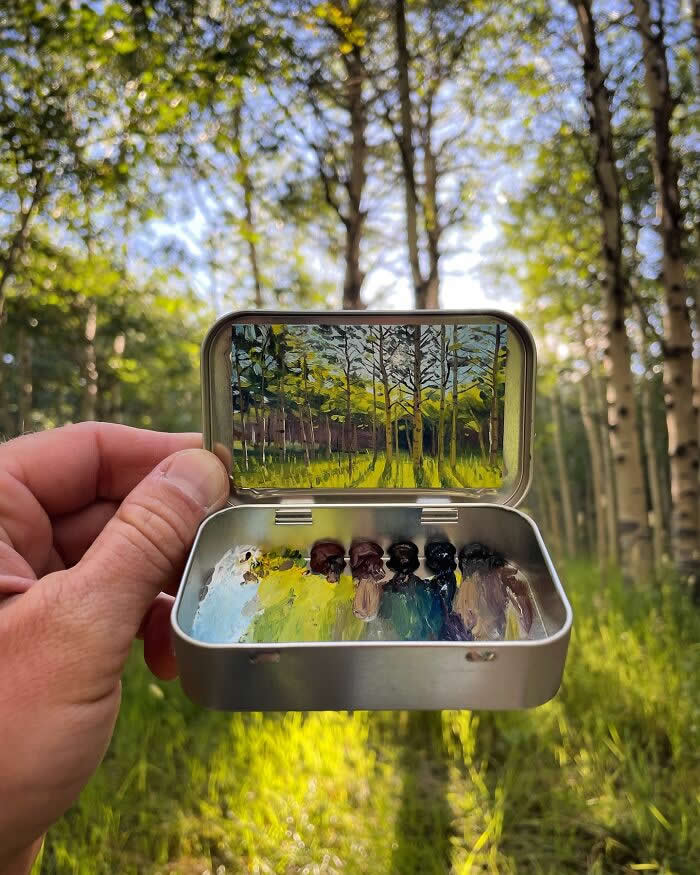
#1. A Tiny Forest Captured in Paint
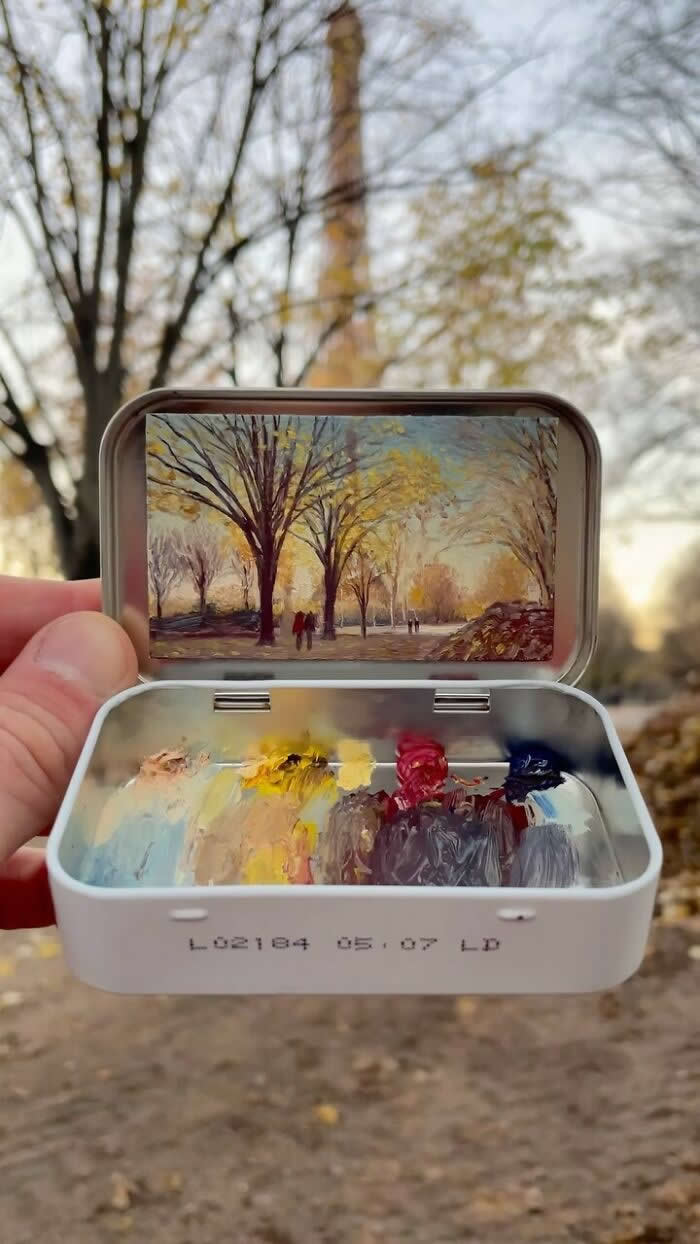
#2. Autumn Light Between the Trees
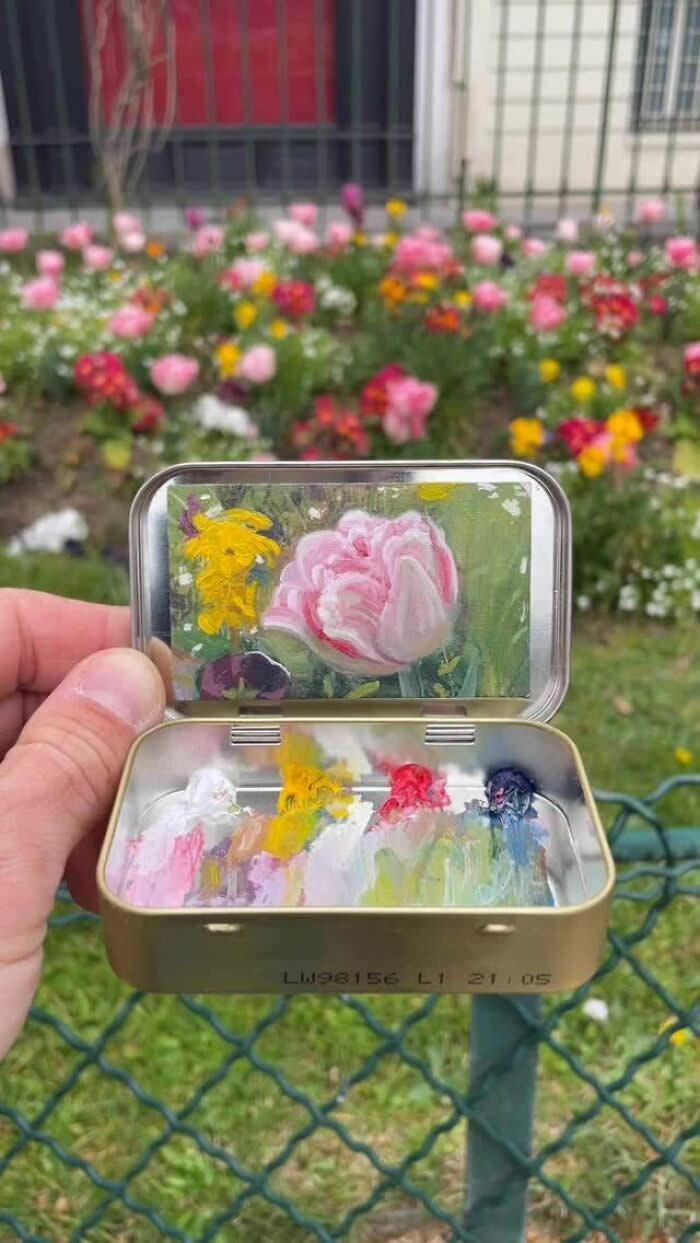
#3. A Bloom Held in Miniature
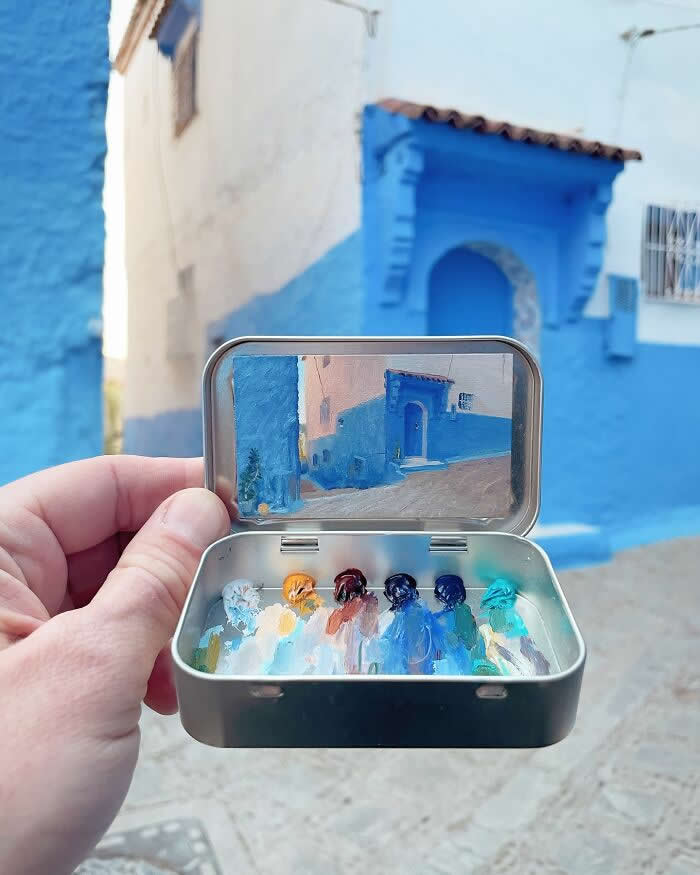
#4. Blue Walls, Quiet Light
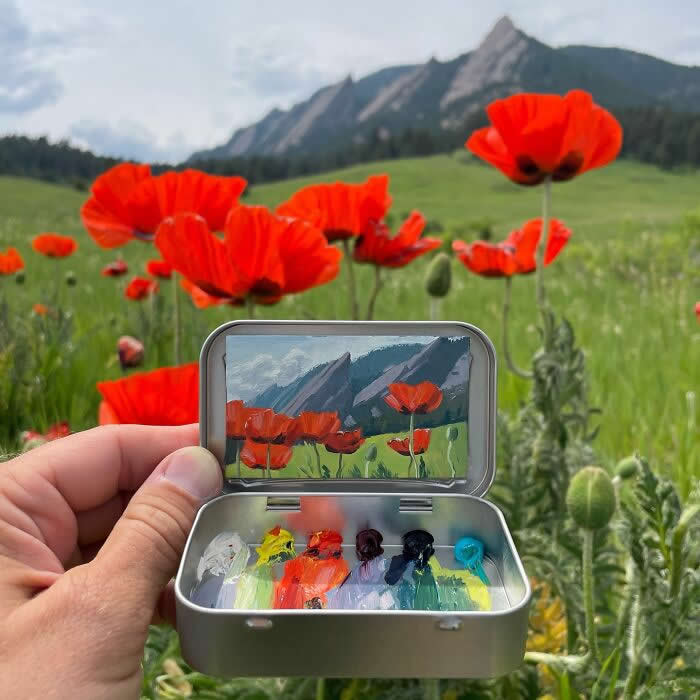
#5. Where the Poppies Meet the Peaks
Small Surface, Big World
The first thing that makes Remington Robinson’s work so memorable is the sheer mismatch between size and ambition. These paintings are tiny ridiculously tiny, really but the scenes inside them aren’t small at all. They’re full-on landscapes, city views, riversides, gardens, monuments, and moments of weather that feel huge in mood. A lightning strike over a mountain ridge. The Eiffel Tower glows at night. A quiet lake wrapped in mist. That’s a lot to ask from the lid of an Altoid tin.
And yet, it works.
That’s because Robinson doesn’t treat these pieces like mini doodles or quick studies. He paints them with the same emotional weight you’d expect from a much larger work. The composition still matters. The light still matters. The atmosphere definitely matters. You can feel him distilling a place down to the exact details that make it memorable: the bend of a bridge, the softness of reflected water, the color of storm clouds before rain. It’s kind of like hearing your favorite song played acoustically and realizing it still hits just as hard without all the extra production.
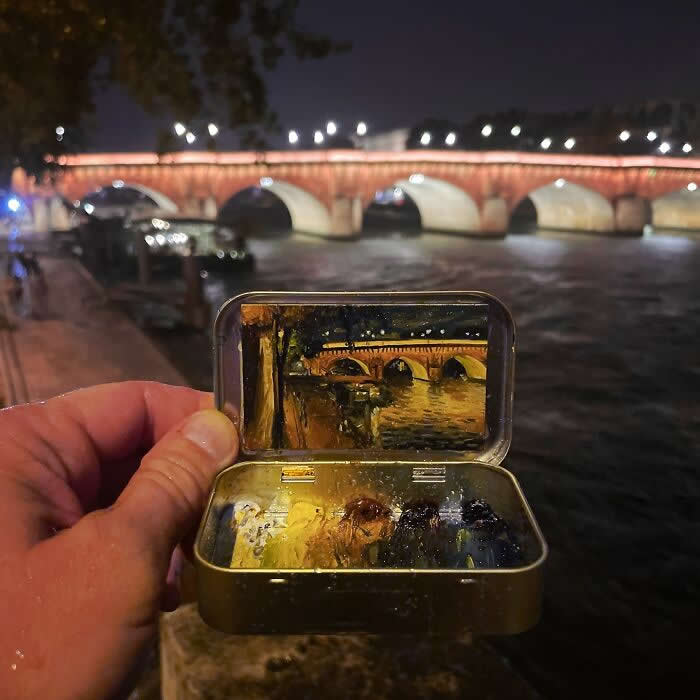
#6. Golden Reflections on the River
#7. Golden Gate in Miniature
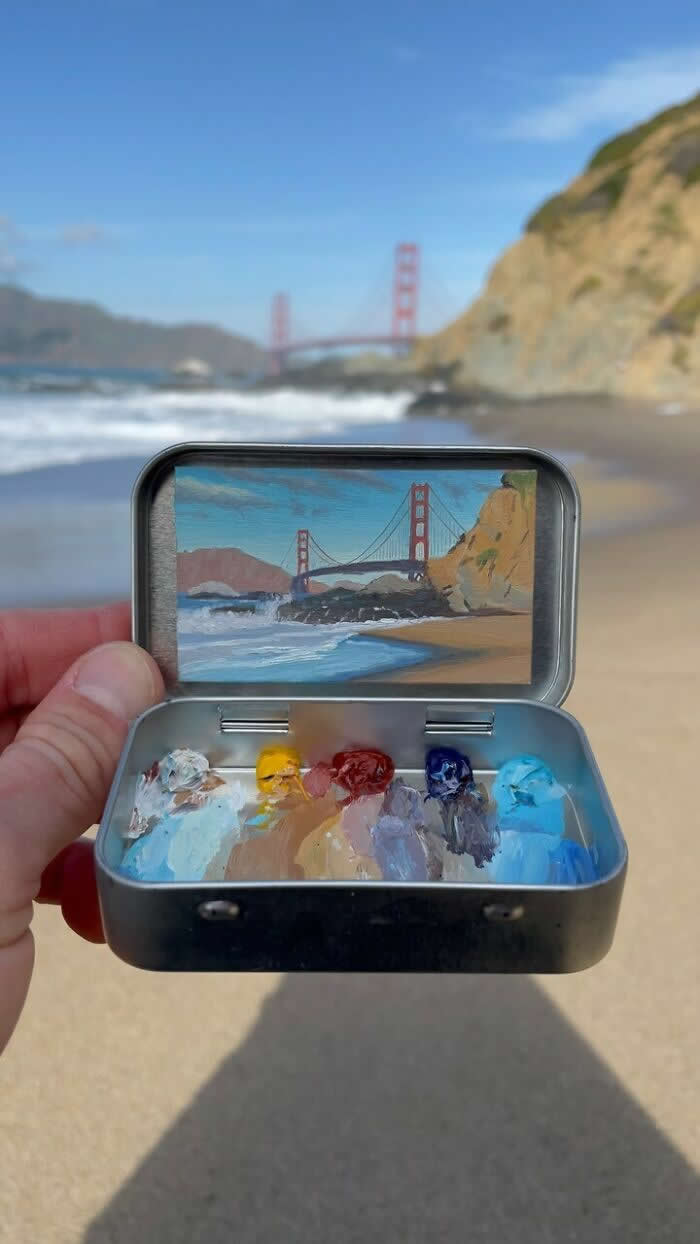
#8. A Quiet Ride at Dusk
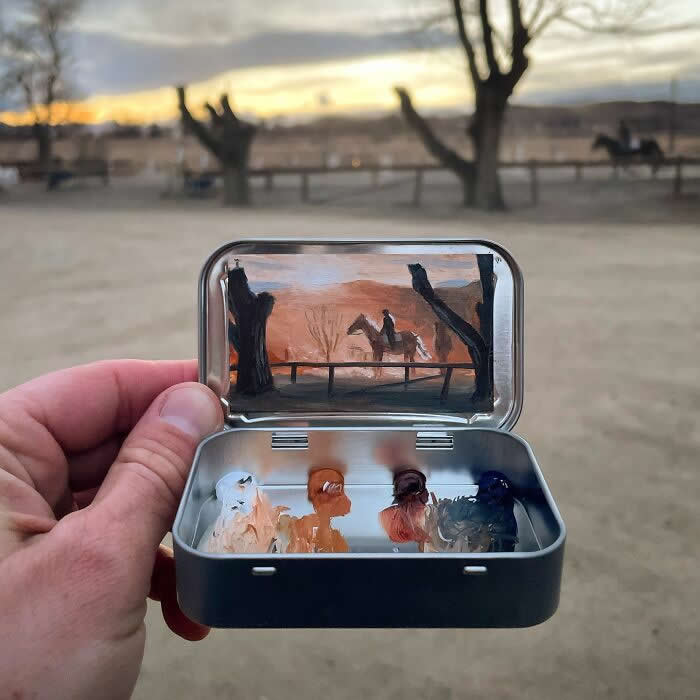
#9. Paris in a Pocket of Light
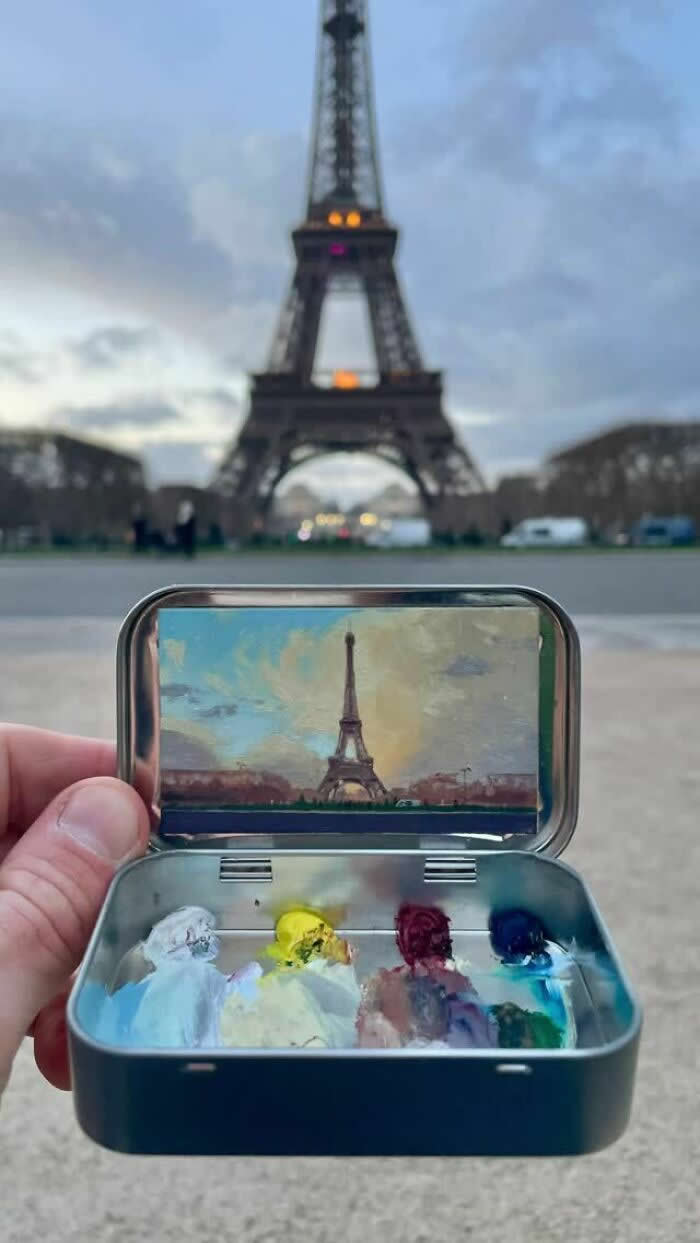
#10. Spring Blooms in Soft Light
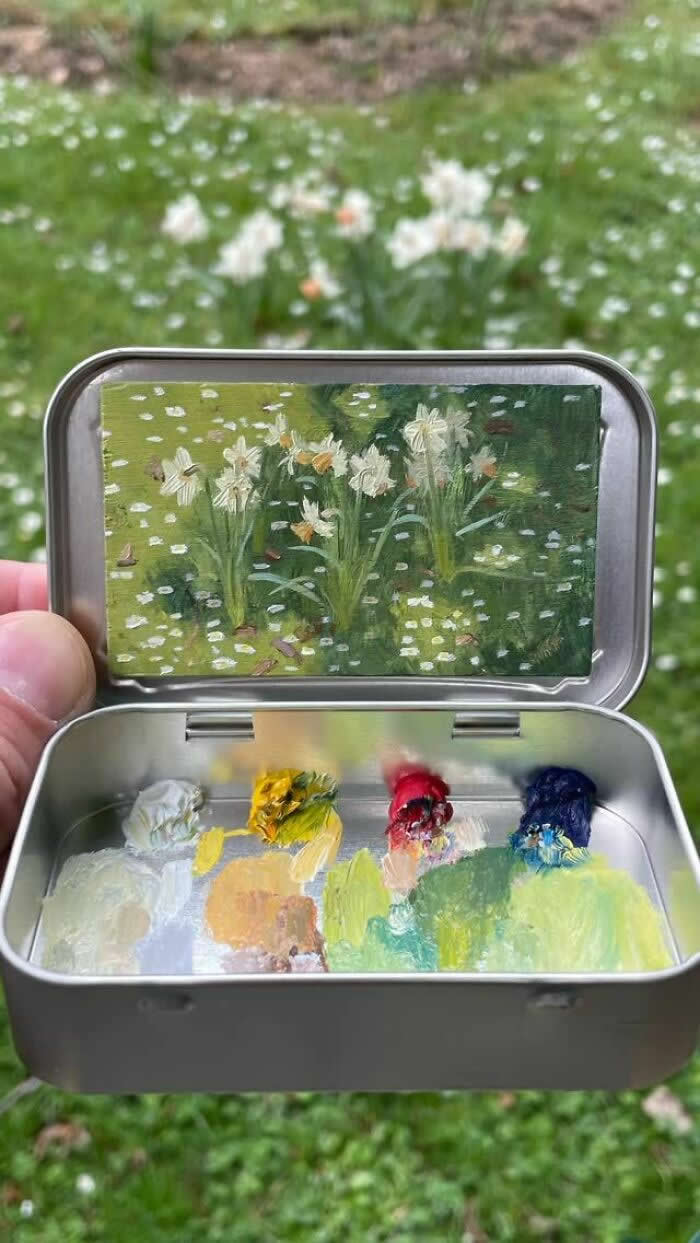
#11. Flowers Framing the Paris Sky
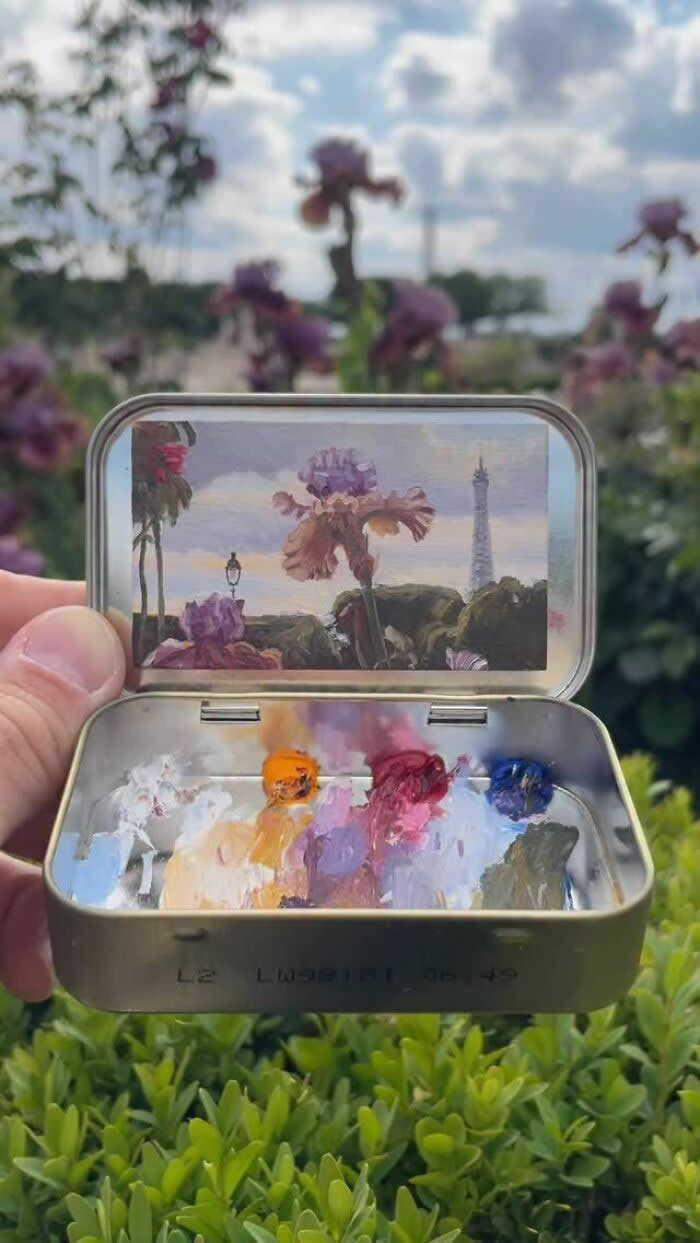
#12. Spring Stroll Beneath the Blossoms
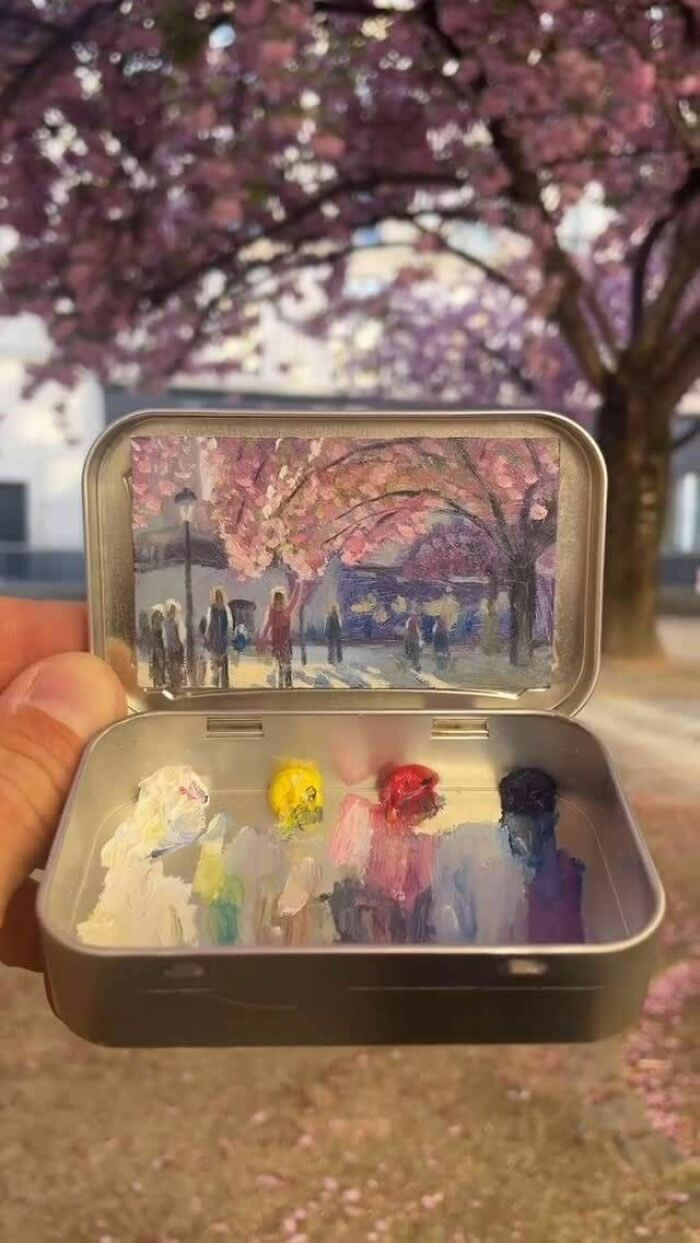
#13. Twilight Through Bare Branches
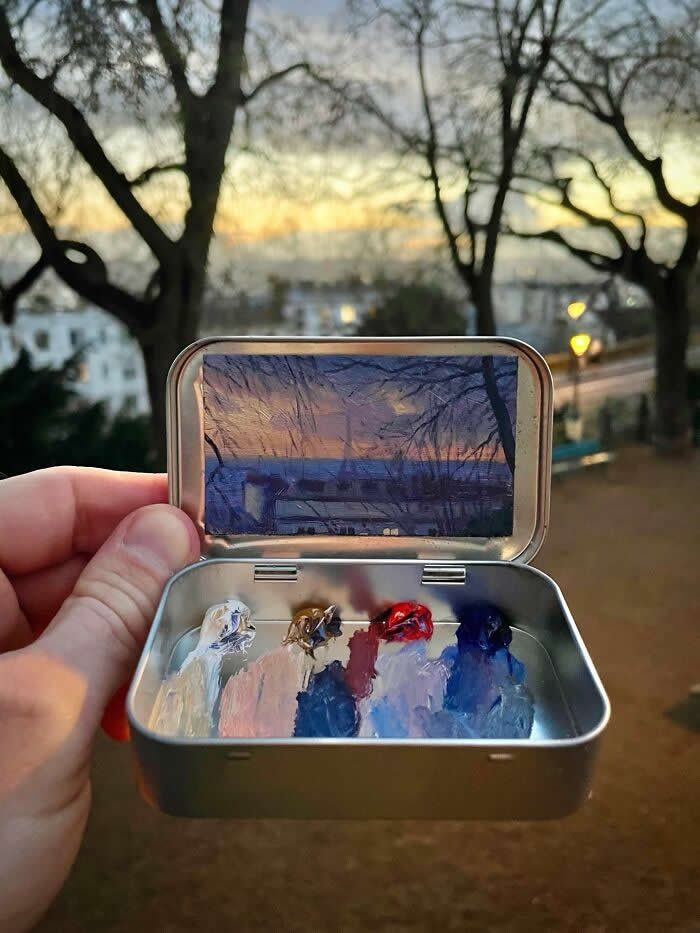
#14. Snowlight on the Mountain Peak
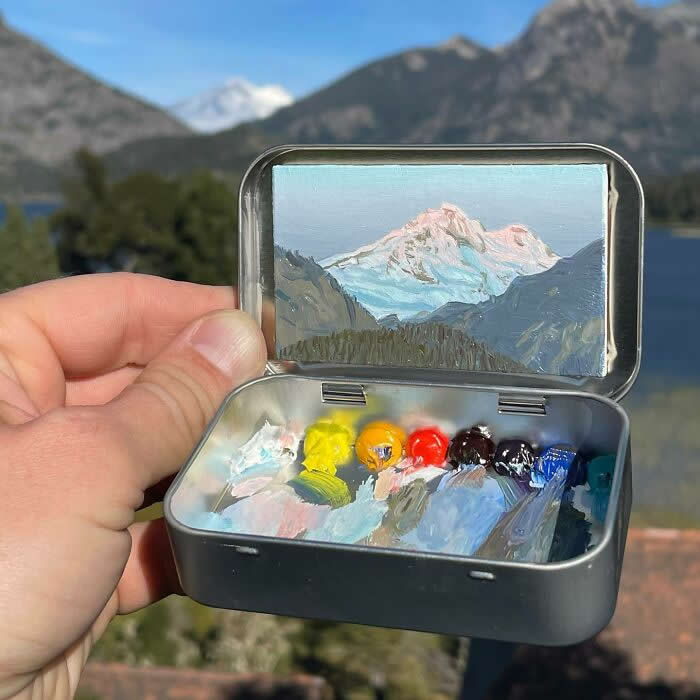
#15. Sunlit Houses Beneath a Soft Sky
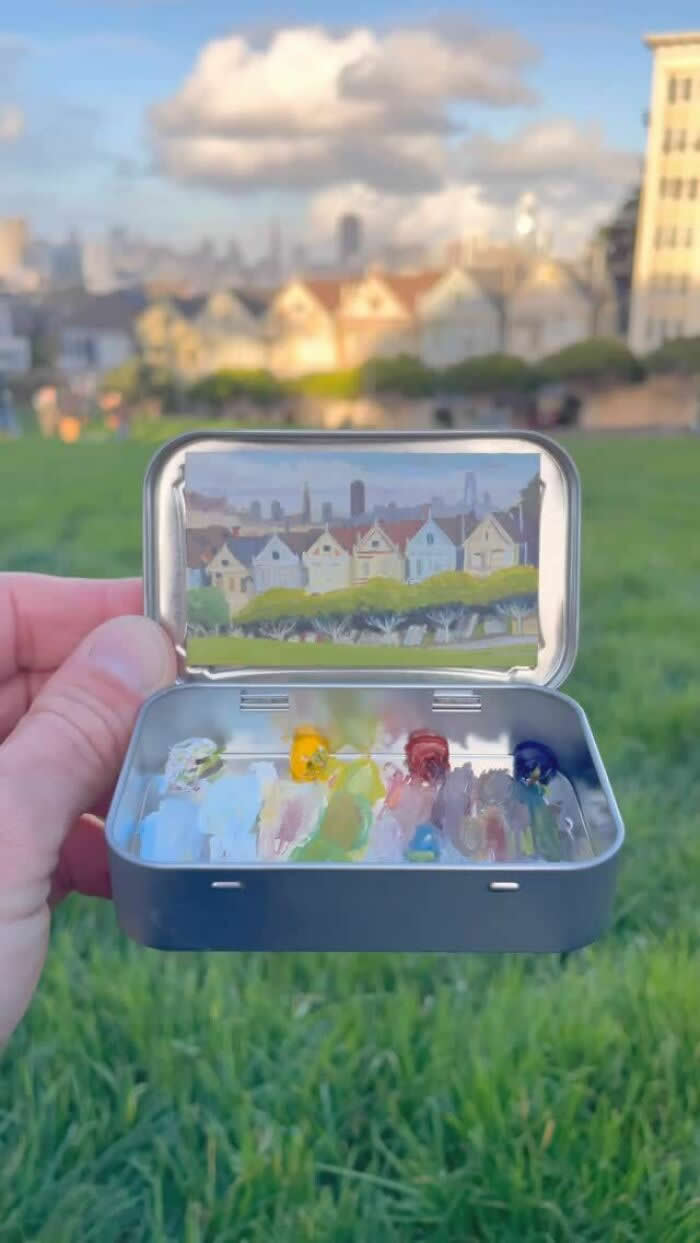
#16. Niagara in Midnight Blue
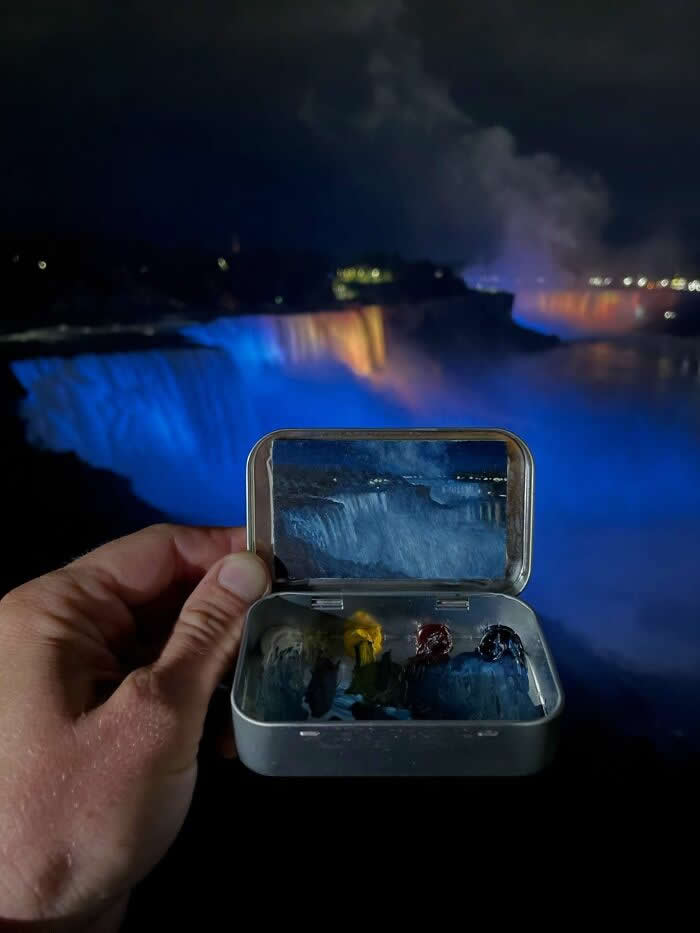
#17. A Little Slice of Paradise
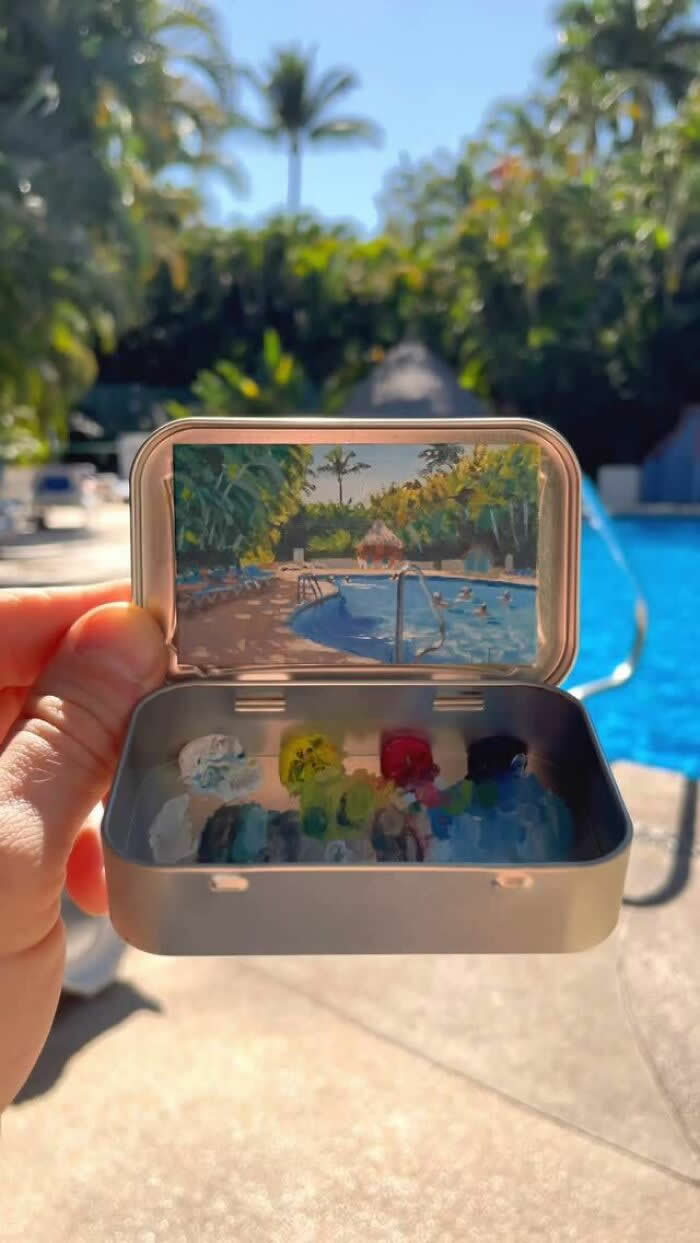
#18. Morning Light Along the Seine
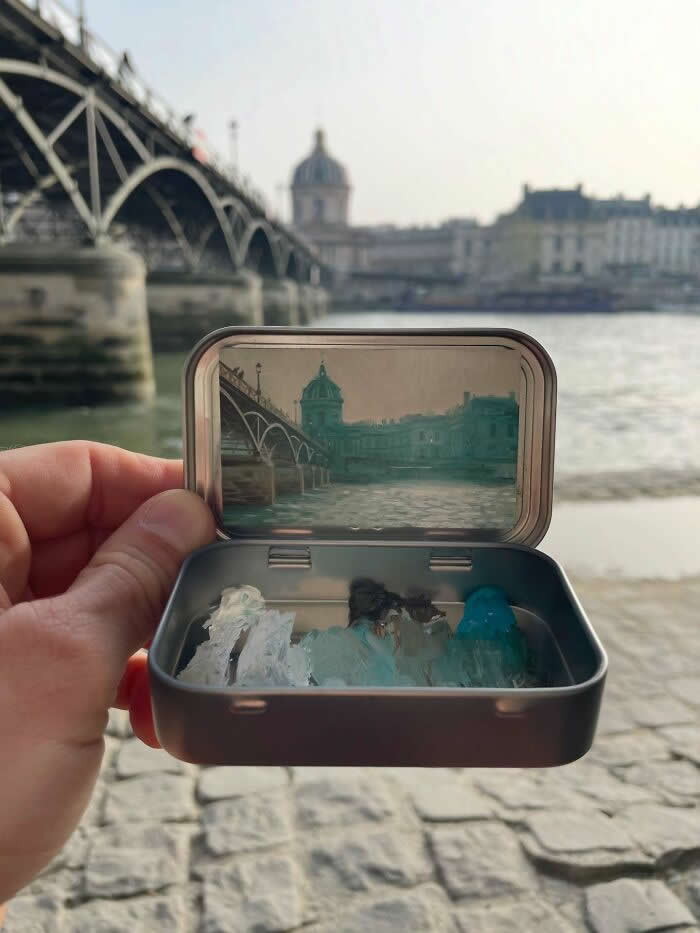
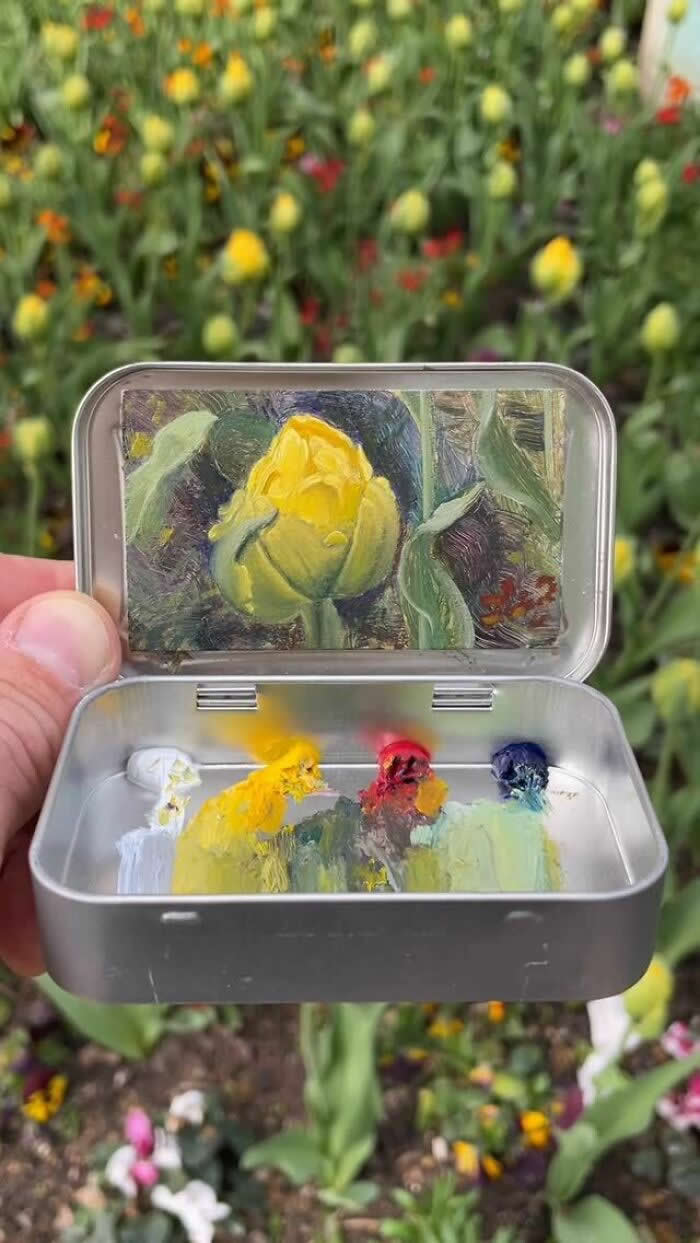
#19. A Yellow Tulip in Close Focus
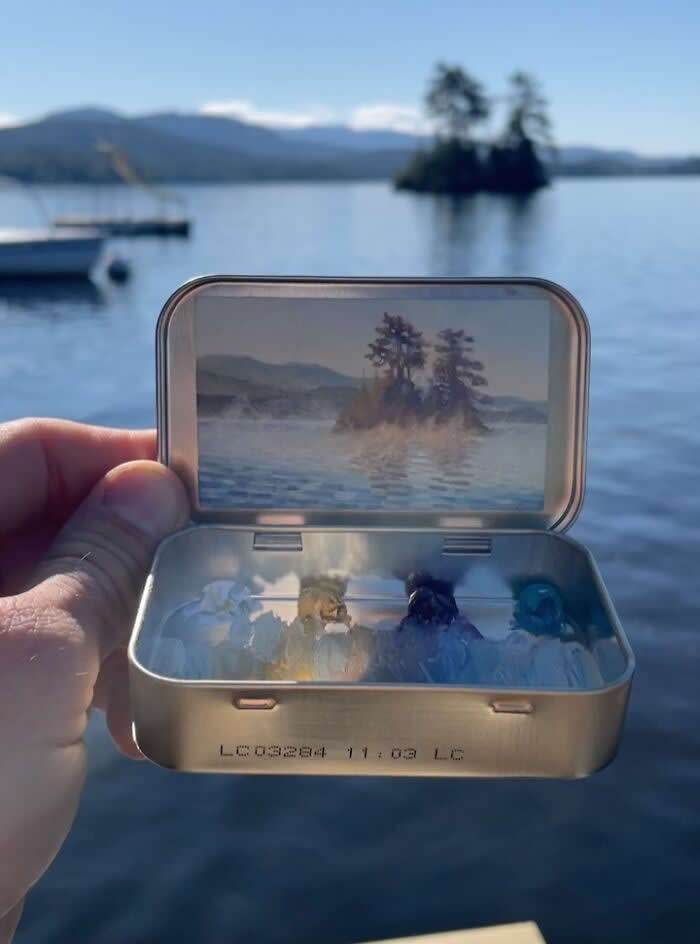
#20. Stillness on the Lake
Why the Altoid Tin Format Feels So Genius
There’s something weirdly perfect about using Altoid tins for painting. They’re familiar, humble, almost funny at first. We all know what they are. They usually hold mints, not tiny works of art. That contrast gives Robinson’s paintings an immediate hook, but it also does something deeper: it makes the art feel intimate.
A traditional canvas hangs on a wall, inviting you to step back. These ask you to come closer. To hold them. To inspect them. To notice the brushstrokes packed into a space smaller than your phone screen. That changes the relationship between viewer and artwork in a really satisfying way. It feels less like looking at a painting in a gallery and more like being let in on a secret.
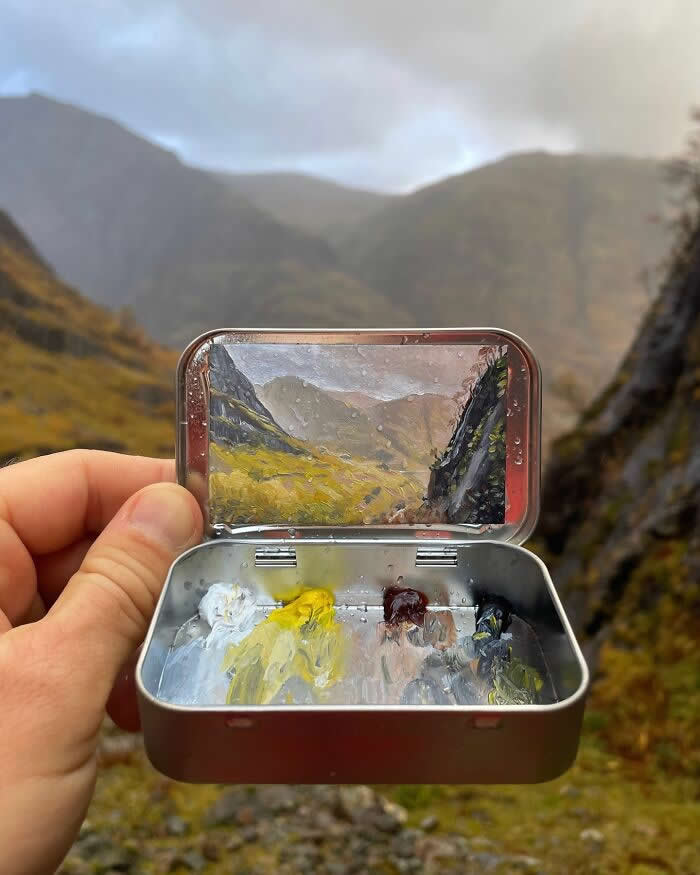
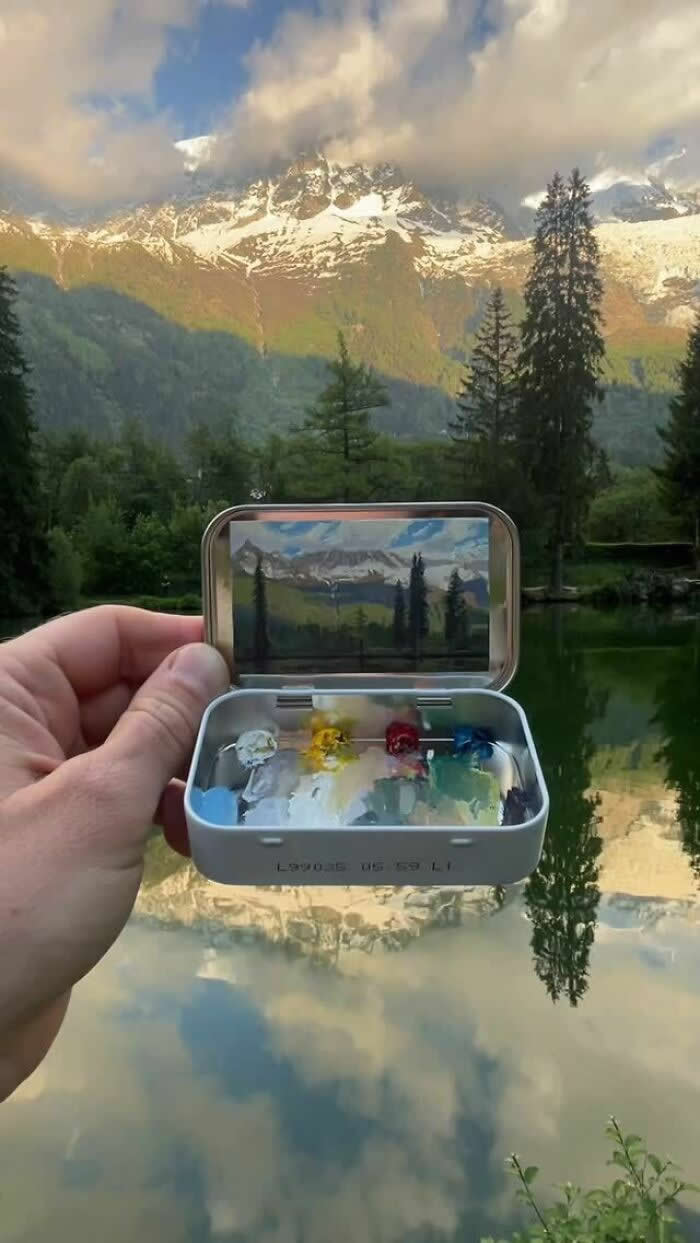
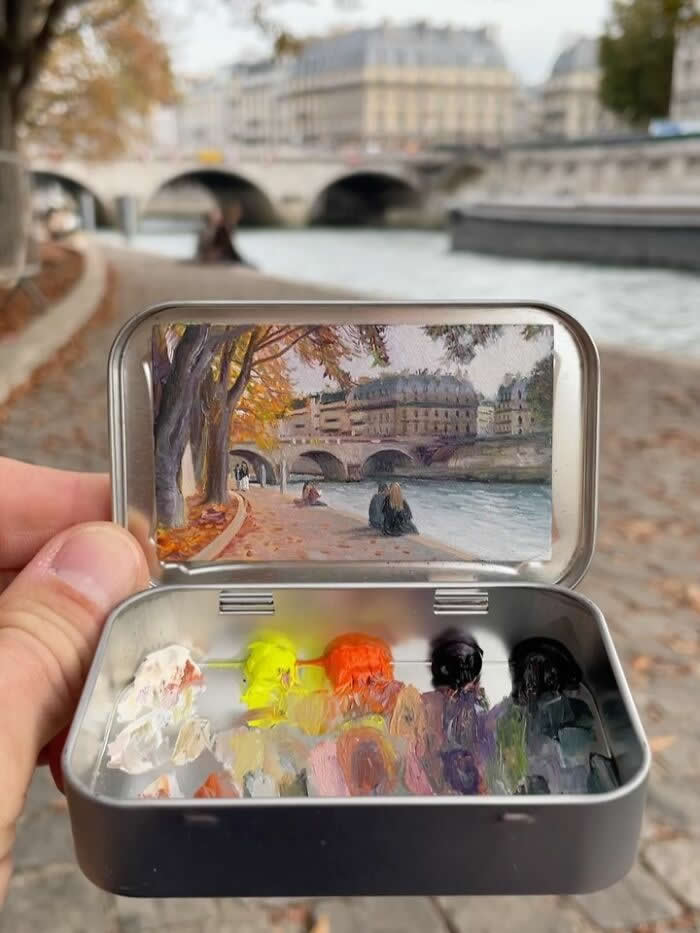
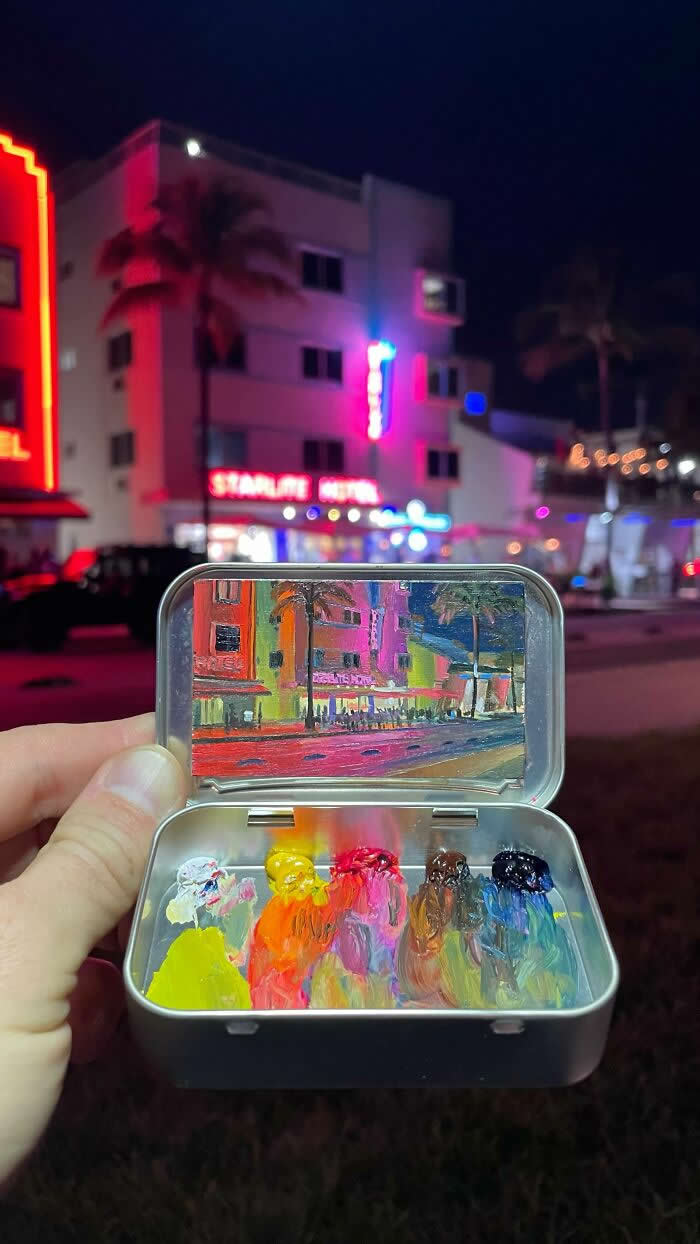
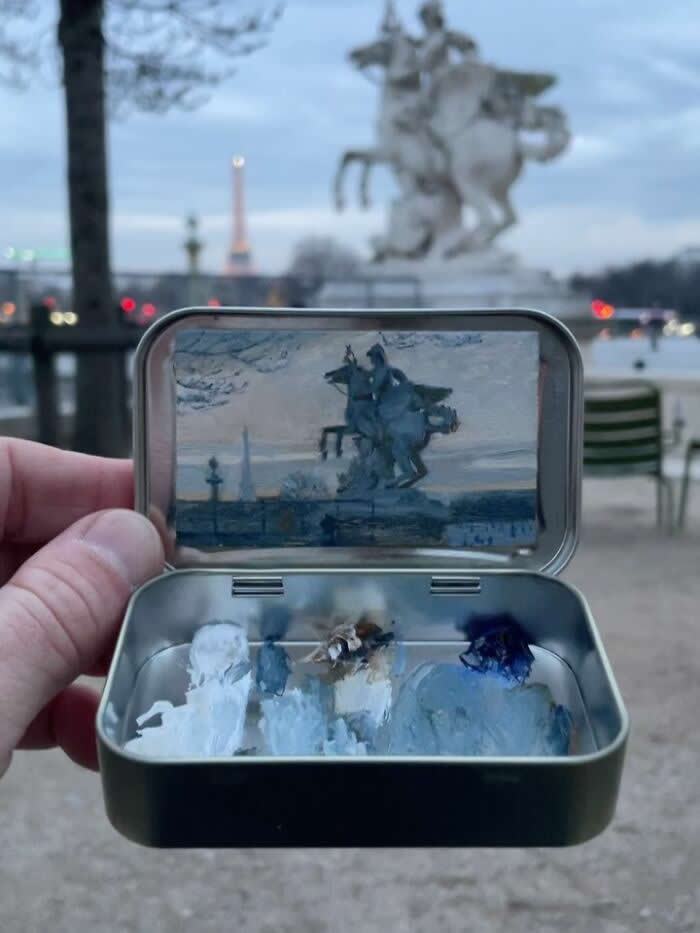
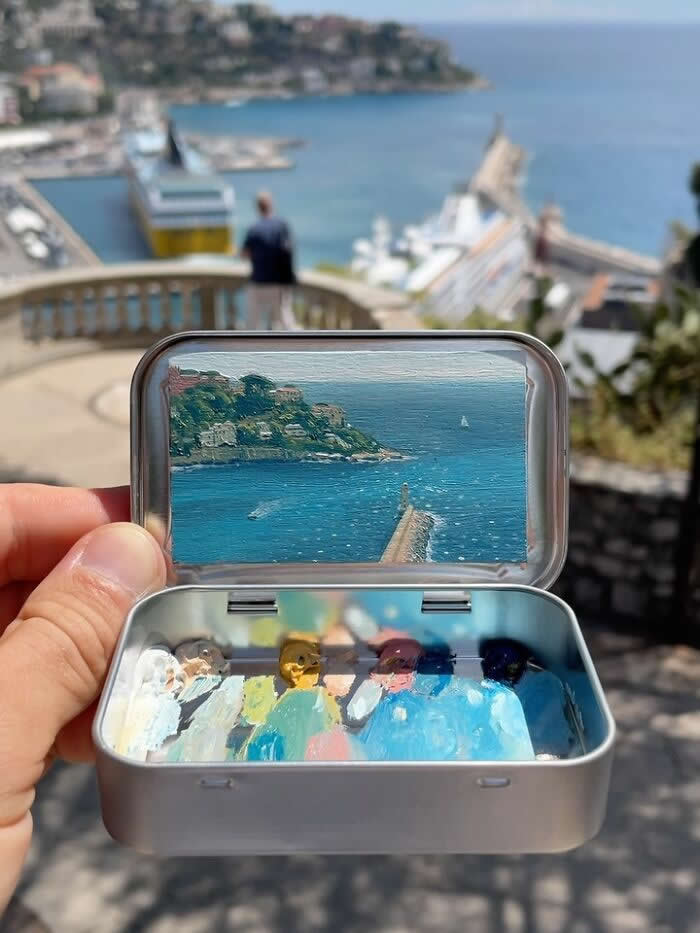
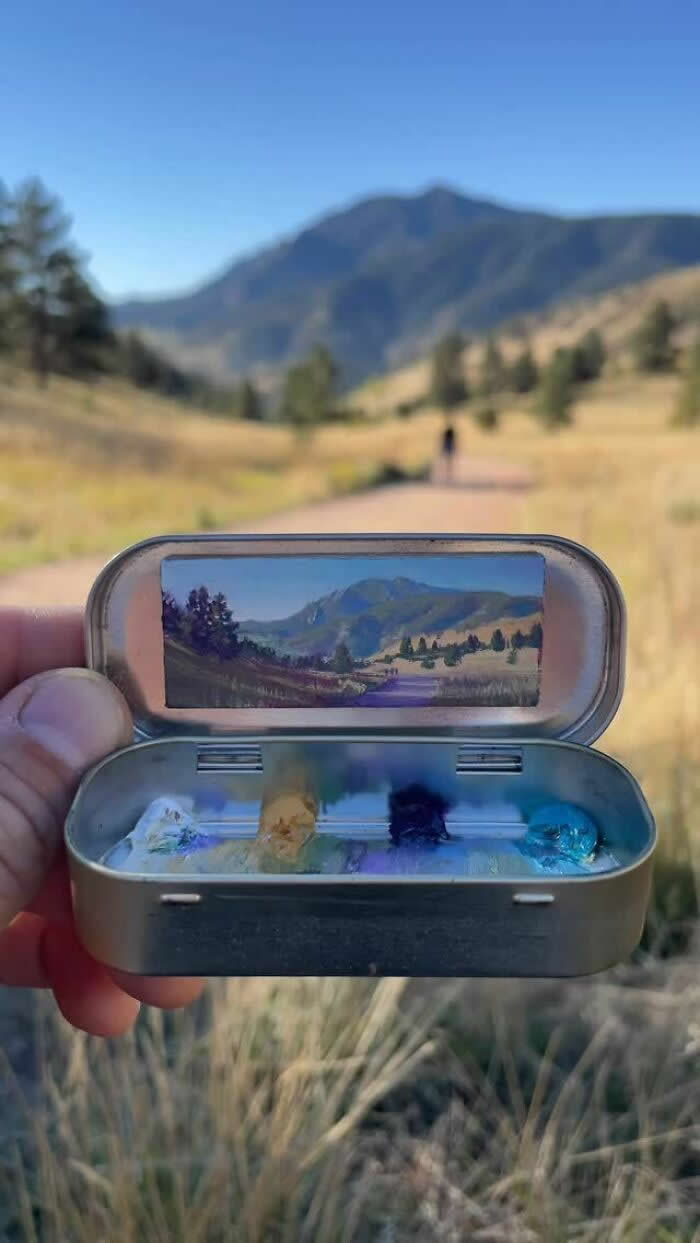
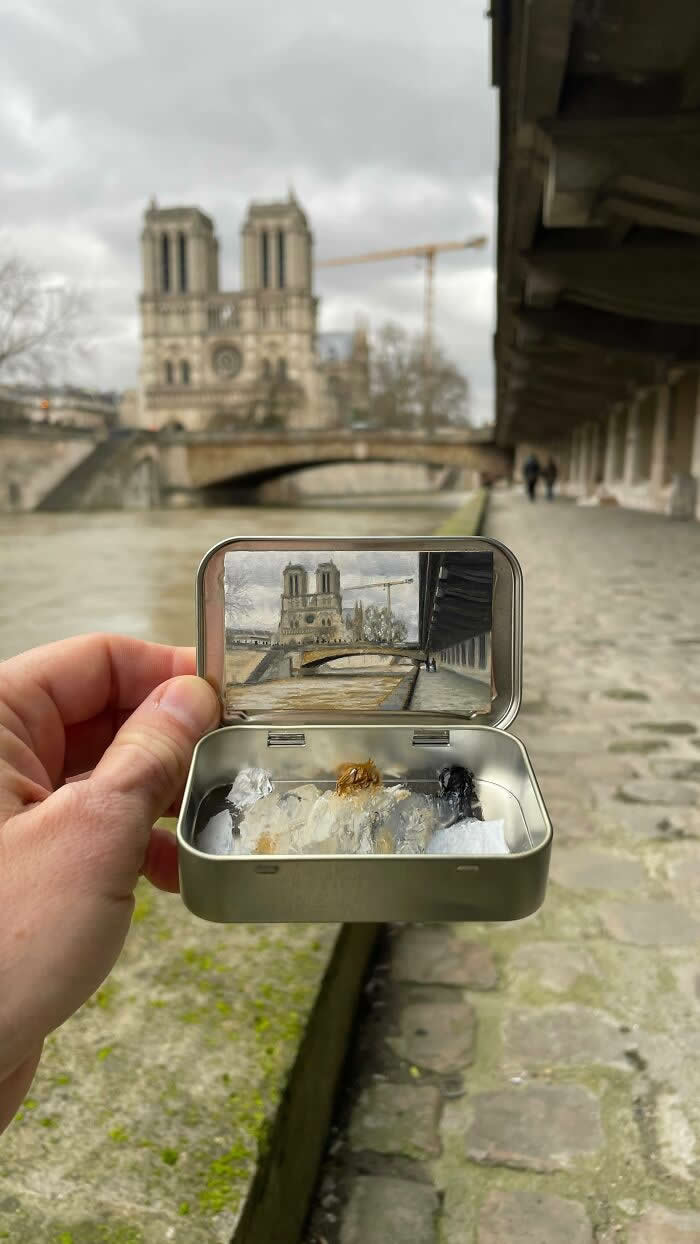
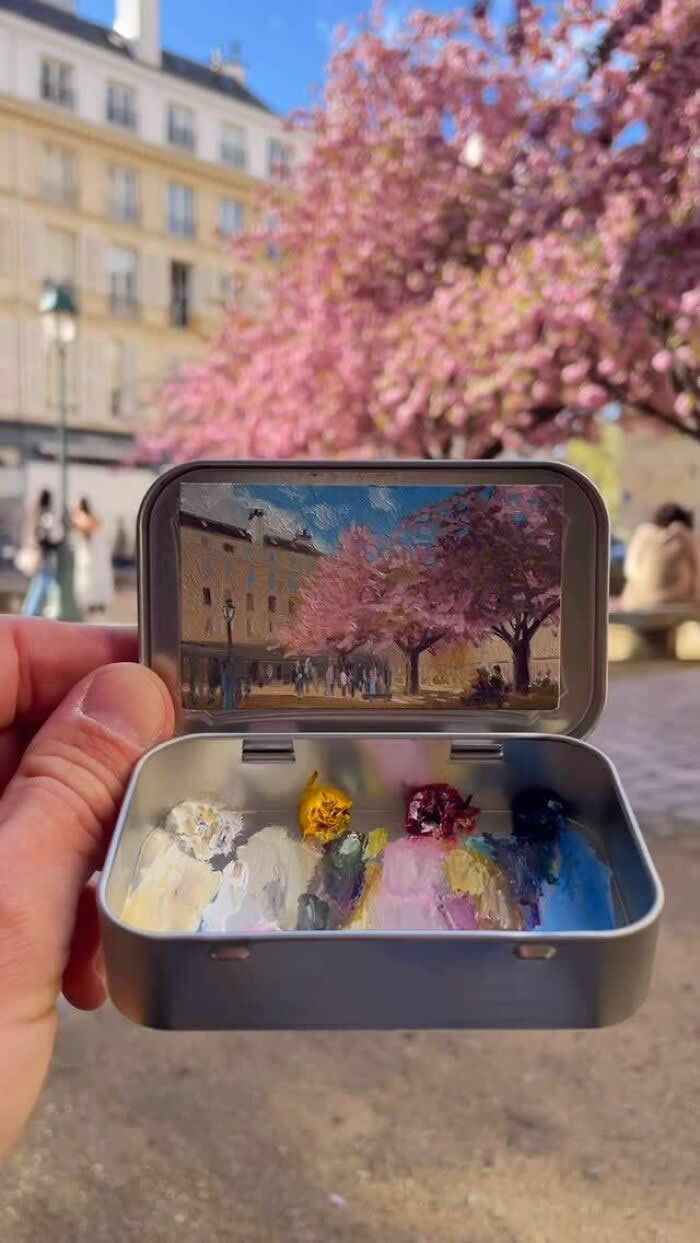
And the tins don’t just act as frames; they become part of the story. The paint palette in the bottom half, the finished scene in the lid, the real location blurred in the background of each photo, it all creates this lovely before-and-after feeling. You’re not just seeing the artwork; you’re seeing the process, the place, and the object that carried both. It’s portable plein air painting with personality.
#21. Light Breaking Through the Valley
#22. Mountains Reflected in Still Water
#23. Poppies Beneath the Mountain Sky
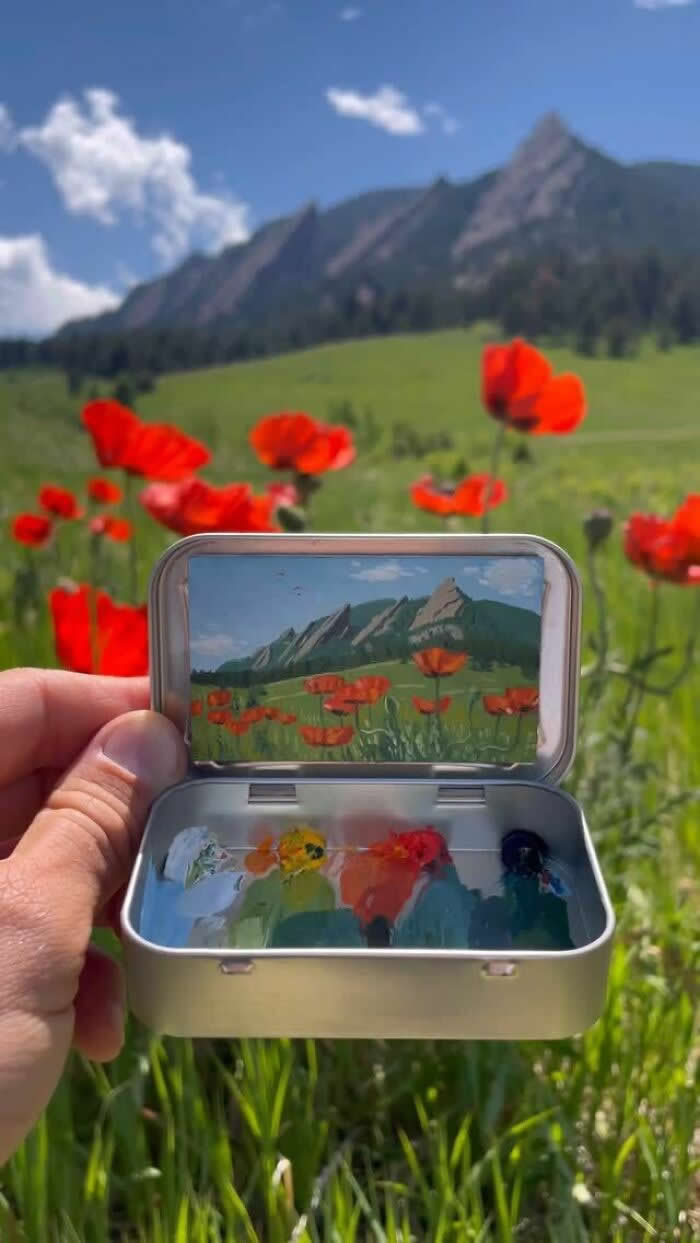
#24. Paris Glowing Beneath the Night Sky
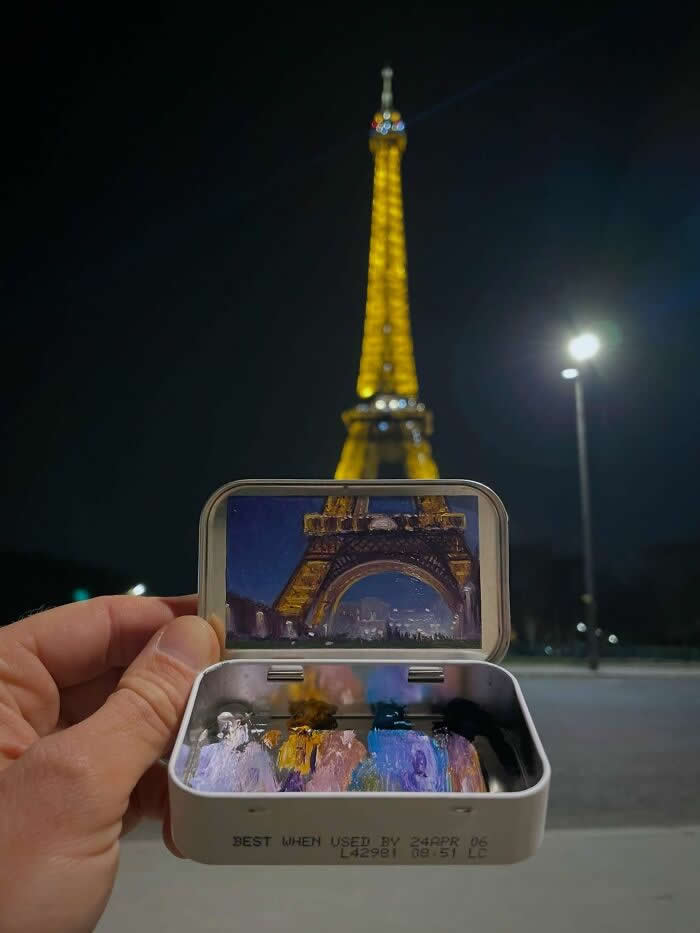
#25. Paris Framed in a Quiet Afternoon
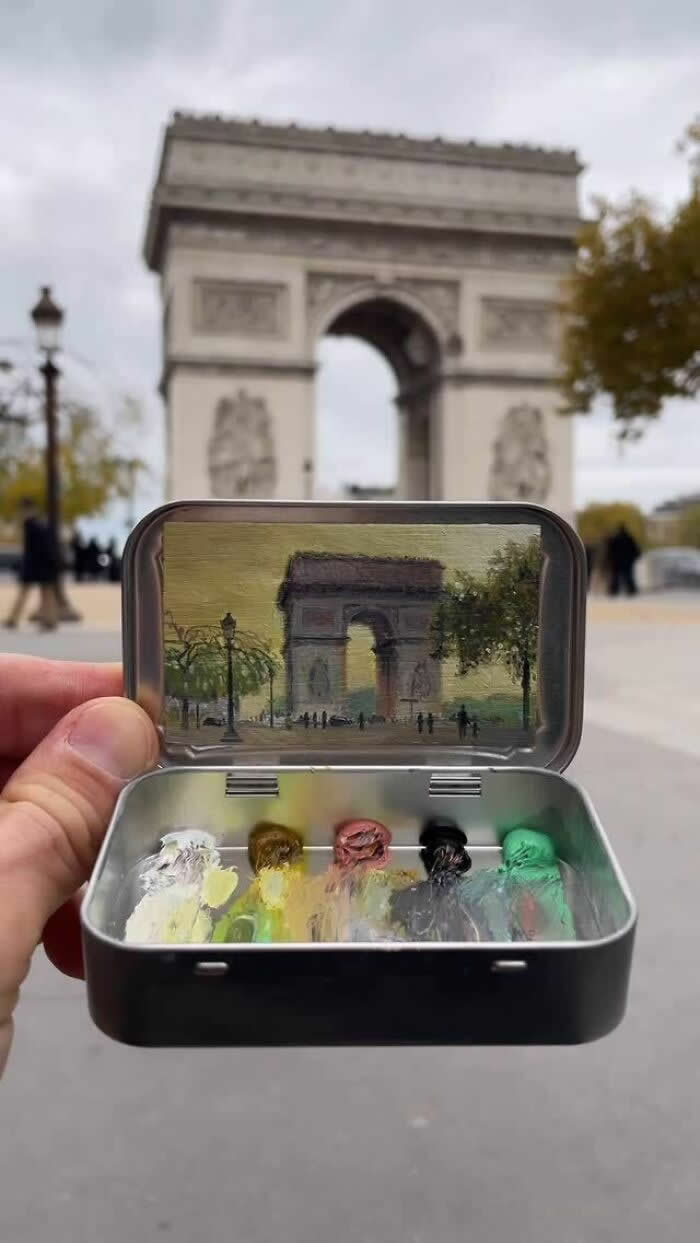
#26. Autumn Leaves Framing the View
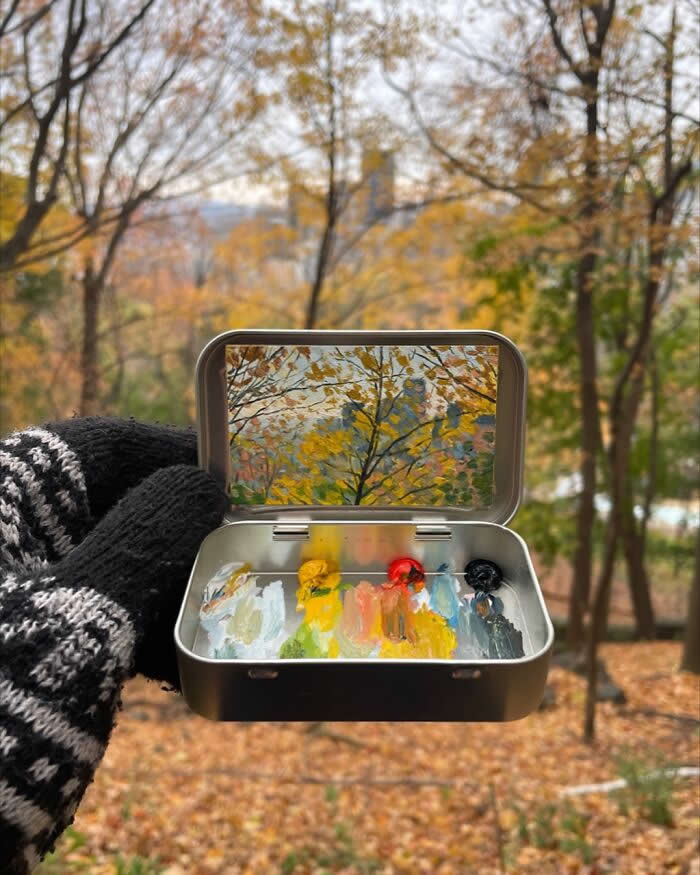
#27. Autumn Along the Seine
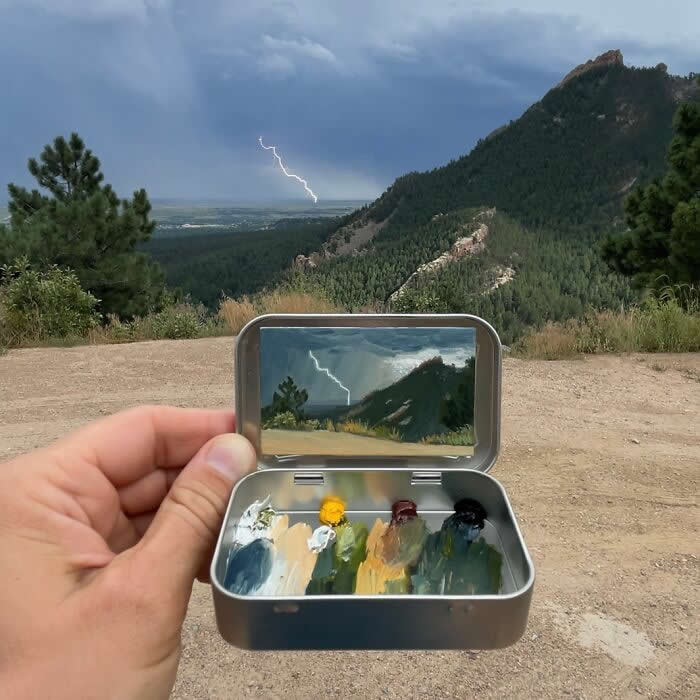
#28. Lightning Over the Mountain Ridge
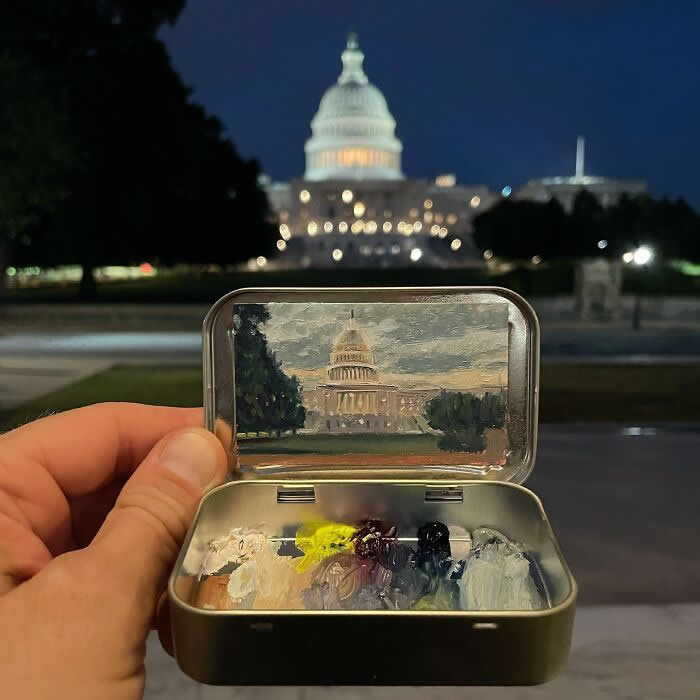
#29. The Capitol in Evening Glow
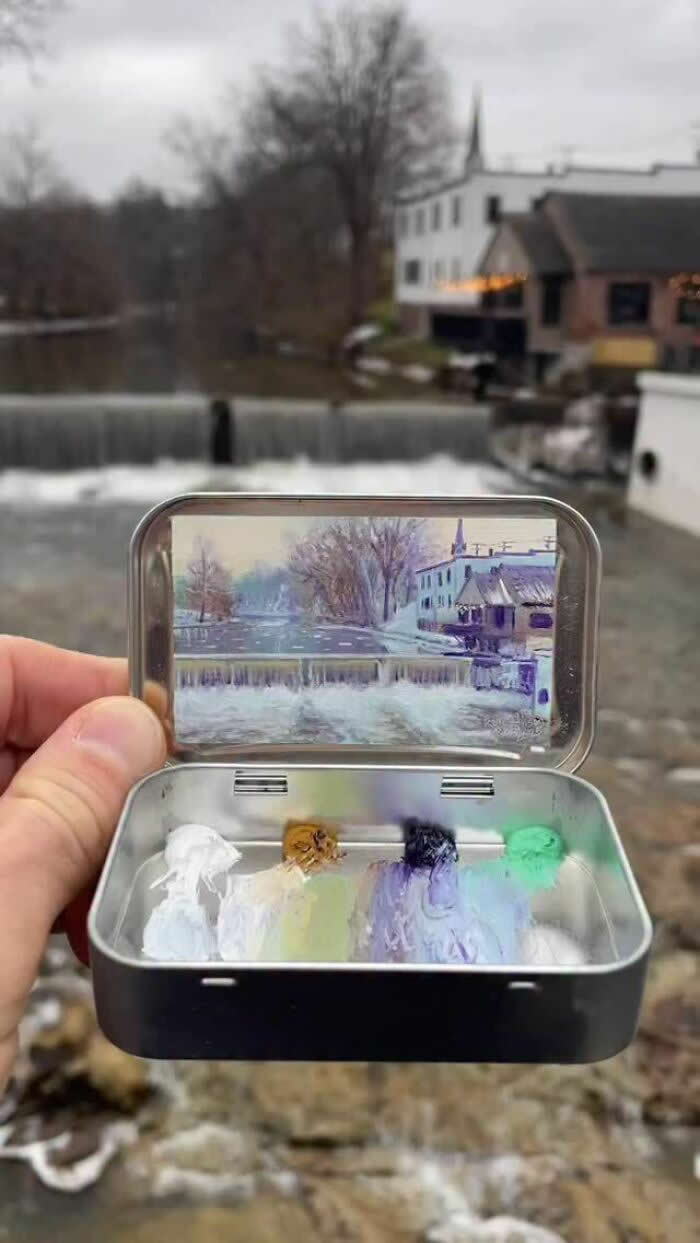
#30. Winter Light by the Riverside
Tiny Paintings That Still Feel Full of Atmosphere
What really makes these miniature paintings stick with you isn’t just the technical precision. It’s the mood. Robinson understands that a place isn’t memorable because of every single detail; it’s memorable because of light, color, weather, and feeling. That’s why these works land so well. He knows what to keep, what to simplify, and what to let dissolve into suggestion.
Look at one of his mountain scenes, and you’ll notice how little space he actually has to work with. A few sharp lines for a ridge. A cool wash of blue-gray in the distance. A streak of warm sunlight catching a slope. That’s it. But somehow your brain fills in the rest, and the place feels complete. It’s the same reason a great travel memory can come rushing back from one smell or one song. You don’t need everything. You just need the right things.
That’s what Robinson captures so beautifully: the essence of a place. Not a photographic copy. Not a checklist of landmarks. A feeling. A moment. A little pocket of time you can almost step into, even if it’s painted on the inside of a mint tin.
#31. Twilight Over the Seine
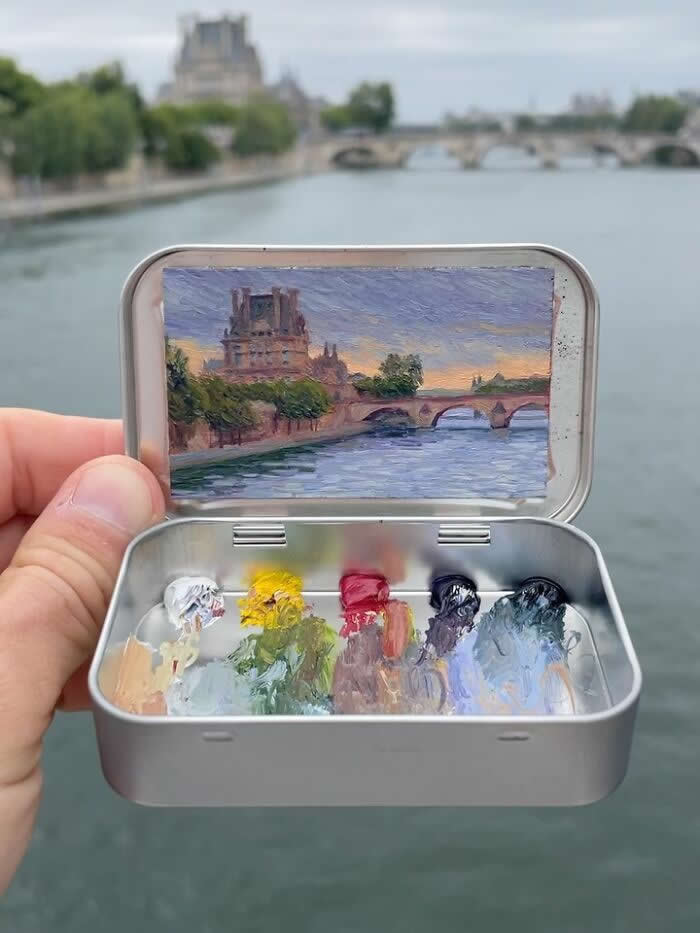
#32. Willow Light on the Water
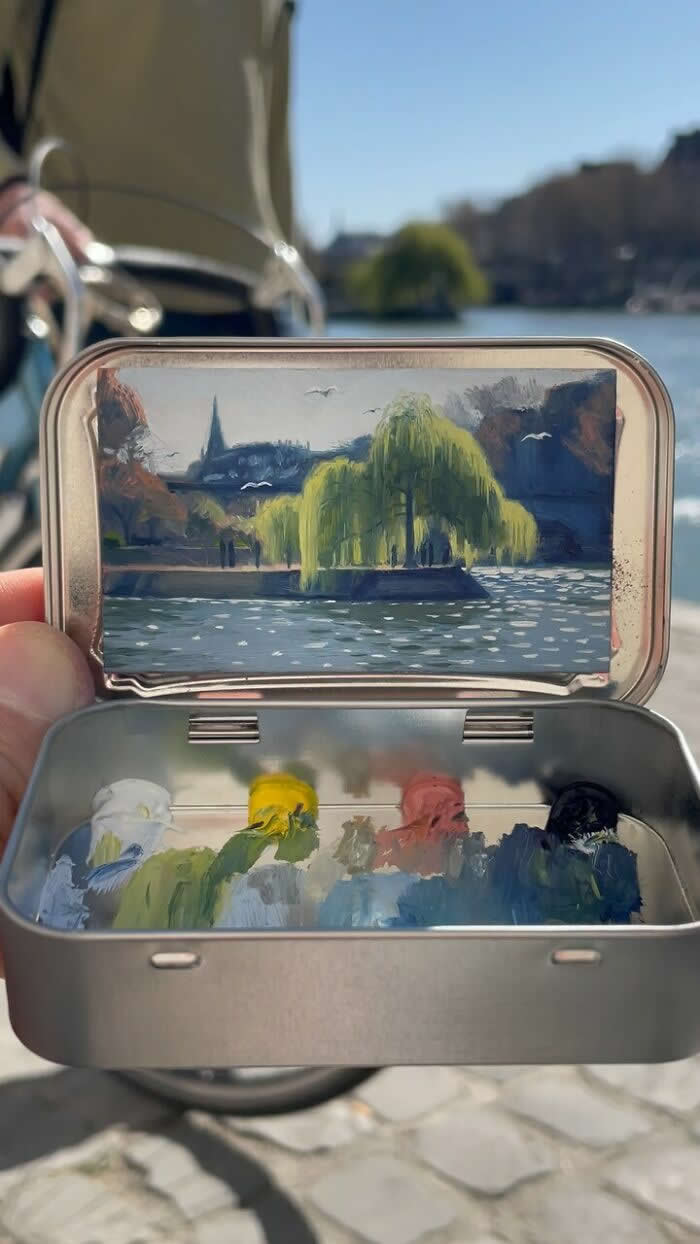
#33. Reflections Along the Riverside
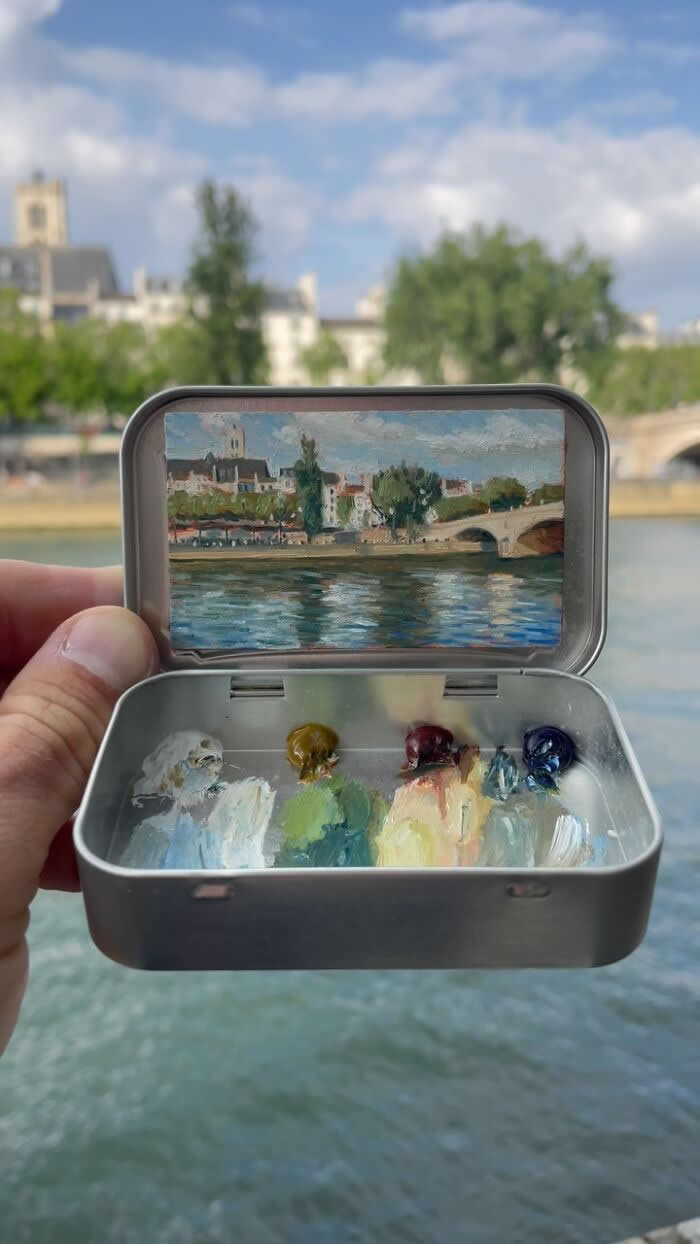
#34. A Highland Valley Under Gathering Skies
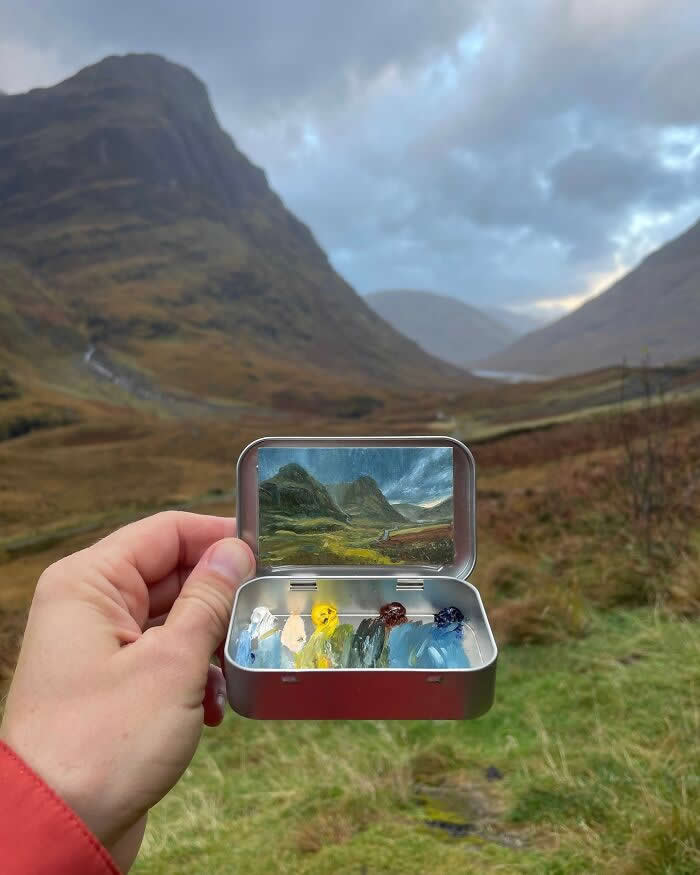
#35. Neon Nights on Ocean Drive
#36. A Paris Monument in Evening Haze
#37. A Harbor Painted in Summer Blue
#38. A Quiet Trail Through Mountain Light
#39. Notre-Dame Beneath a Gray Paris Sky
#40. Cherry Blossoms in the Afternoon Light
Frequently Asked Questions:
Who is Remington Robinson?
Remington Robinson is an American artist known for creating miniature paintings inside Altoid tin lids. His work transforms tiny metal tins into portable landscapes, cityscapes, and travel-inspired scenes, blending technical precision with atmosphere, storytelling, and a strong sense of place in every composition.
What makes Remington Robinson’s Altoid tin paintings special?
What makes them special is the contrast between scale and subject. Robinson paints expansive mountain, river, garden, and city scenes on surfaces just a few inches wide. The tiny format makes each painting feel intimate, while the level of detail and mood gives it surprising visual impact.
What kind of scenes does Remington Robinson paint?
Robinson paints a wide range of subjects, including mountain landscapes, lakes, forests, bridges, Paris landmarks, flower gardens, coastal views, and quiet urban corners. His paintings often capture fleeting moments of light and atmosphere, turning everyday locations into small but emotionally rich visual stories.
Why do Altoid tins work so well for miniature art?
Altoid tins work beautifully because they’re compact, portable, and instantly recognizable. Their small size creates a surprising contrast with the grandeur of Robinson’s subjects. The tin also doubles as both frame and palette, making each piece feel like a self-contained studio, artwork, and travel memory.
Are Remington Robinson’s paintings more about detail or atmosphere?
They’re really about both, but atmosphere is what makes them unforgettable. Robinson uses detail selectively, focusing on light, composition, and color to suggest a place rather than over-explaining it. That balance allows each tiny painting to feel expansive, emotional, and much larger than its actual size.