
Some photographs show you an event, while others give you the impression that you had just squeezed through the crowd and had actually been there. Sreejith Kaviyil’s photographs of Puli Kali, Kerala’s famous Tiger Dance, clearly fall into the second category.
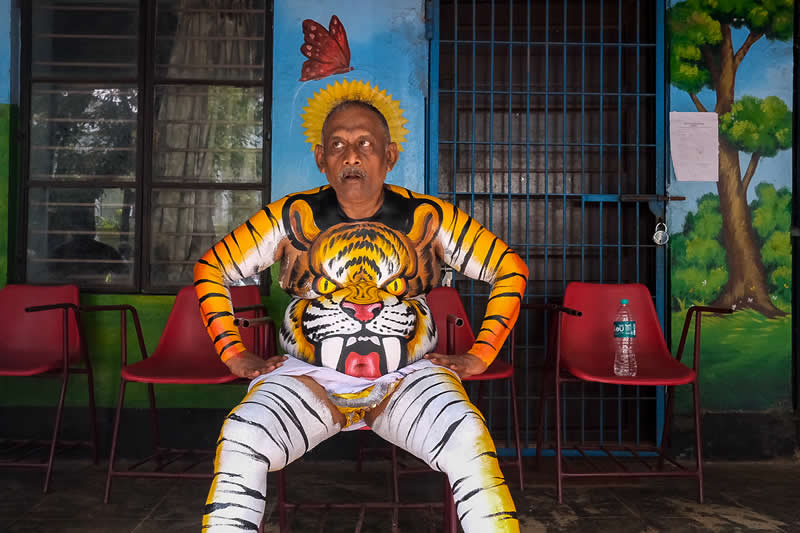
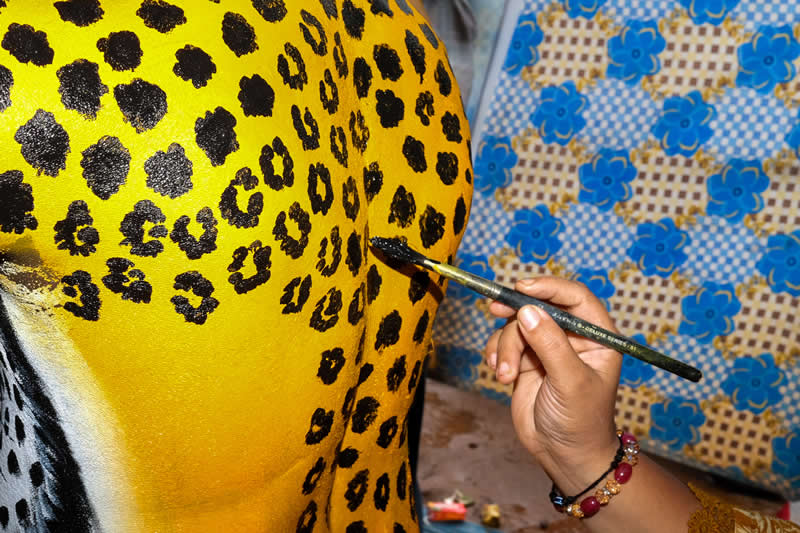
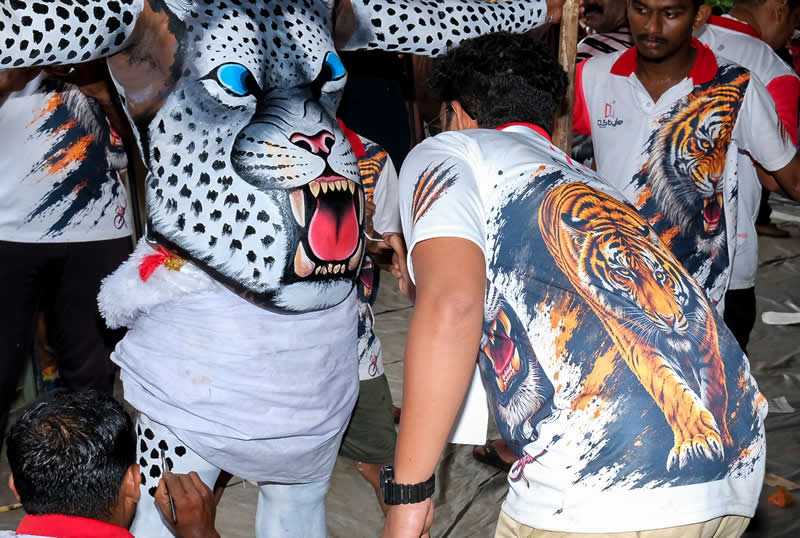
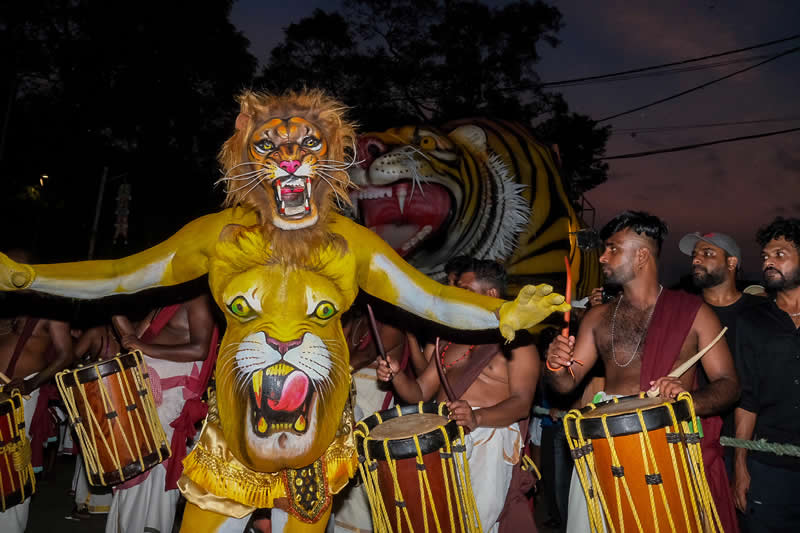
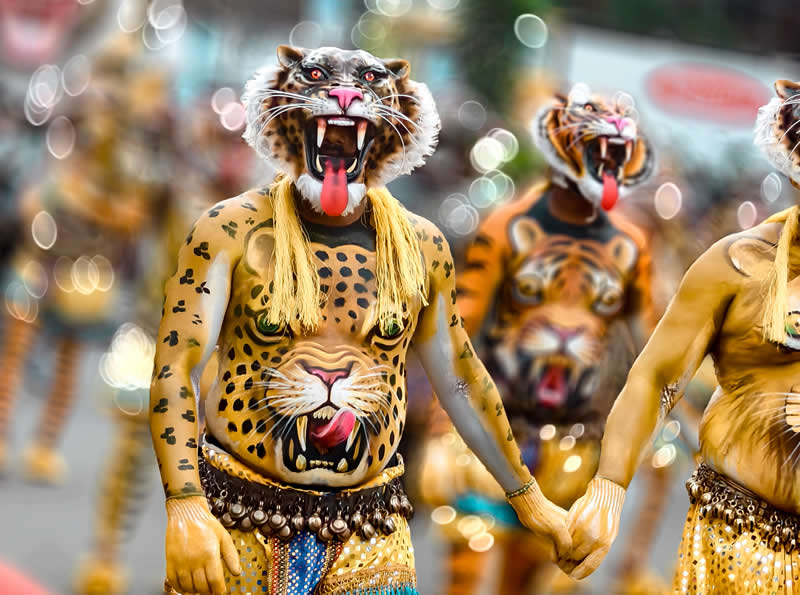
For over two centuries, Puli Kali has brought yellow, orange, and black colors to Kerala’s streets, particularly in Thrissur. The performers transform into roaring tigers and leopards, using masks, painted bodies, and jingling belts around their waists. The event is celebrated on the fourth day of Onam, known as Nalaam Onam, and is a folk performance that is loud, playful, dramatic, and wonderfully chaotic.
Here’s the interesting point: Sreejith doesn’t pursue the obvious spectacle.
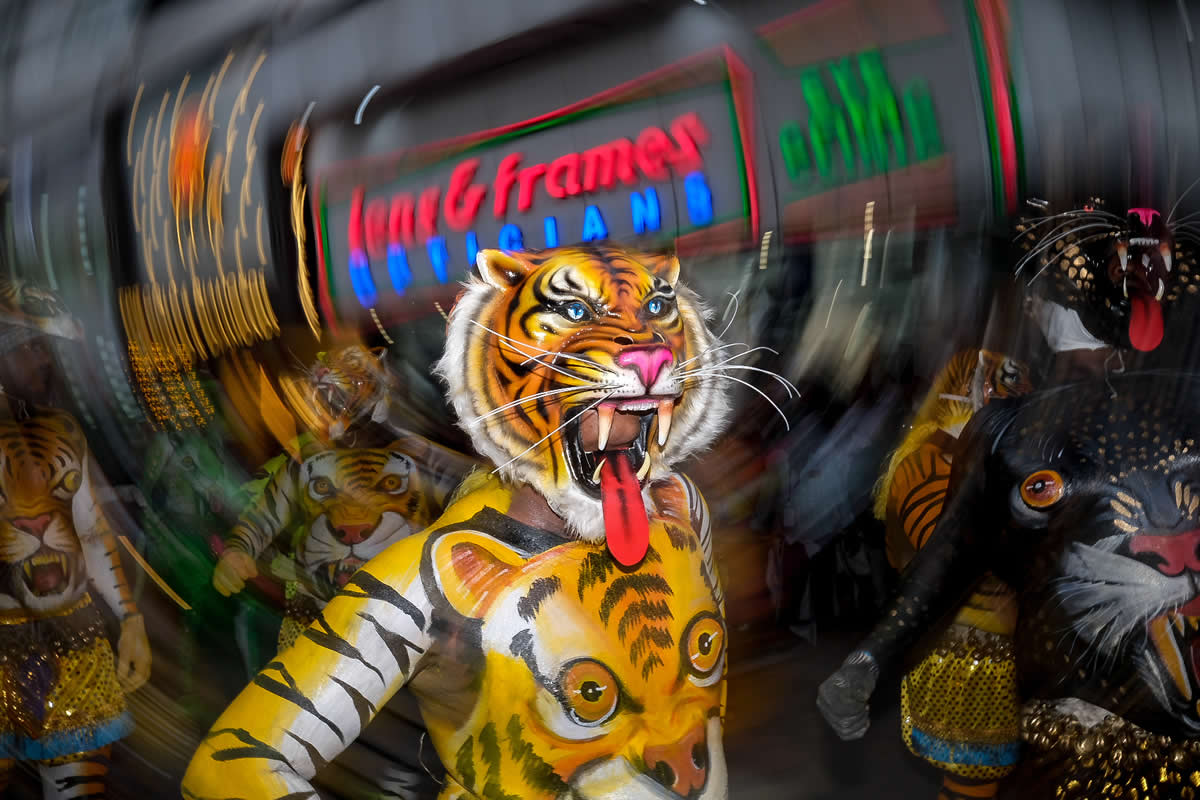
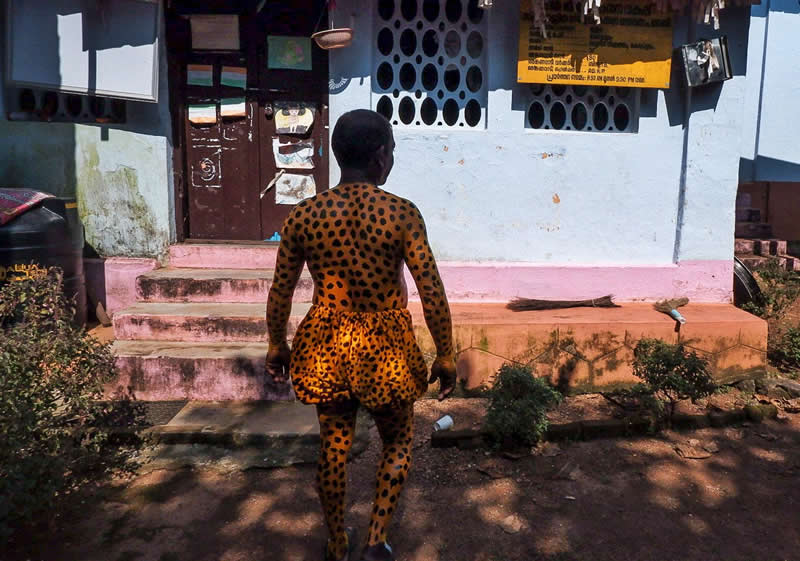
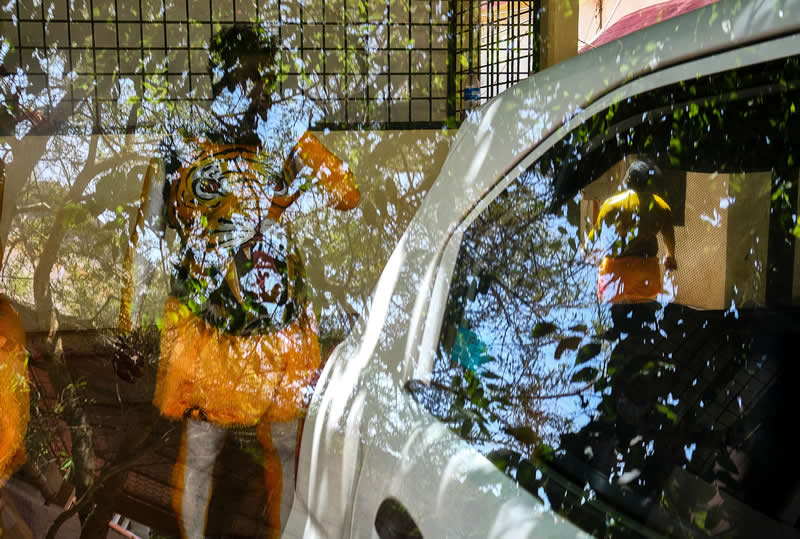
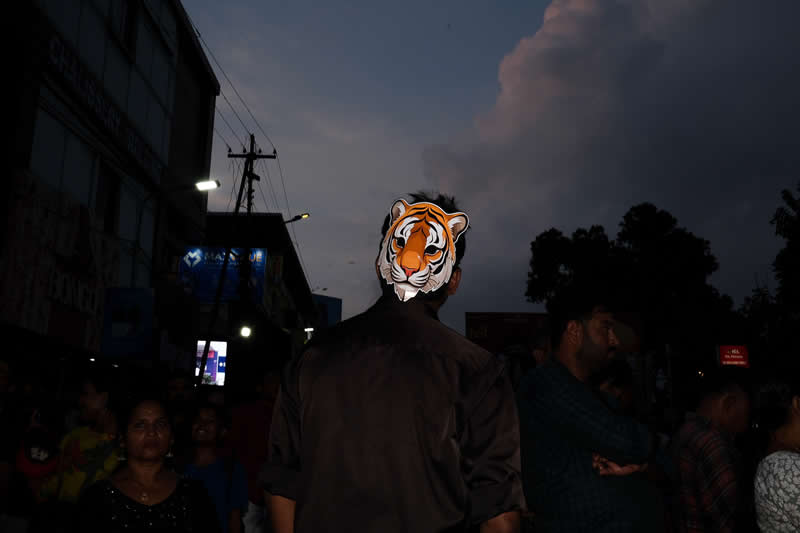
Rather, he focuses on the significant moments. A thin strip of light falls exactly on the painted skin. The performer shows a brief expression under the tiger makeup. The tiger appears to make eye contact with a person in the audience. Then it is gone a second later.
It is at this point that Sreejith’s instinct for street photography comes into play; by using careful composition, displaying sharp observation, and having a good sense of timing, he transforms this chaotic scene of movement into close-up visual narratives. Although the tigers are painted, the emotions are entirely genuine.
You can find Sreejith Kaviyil on the Web:
Puli Kali Comes Alive
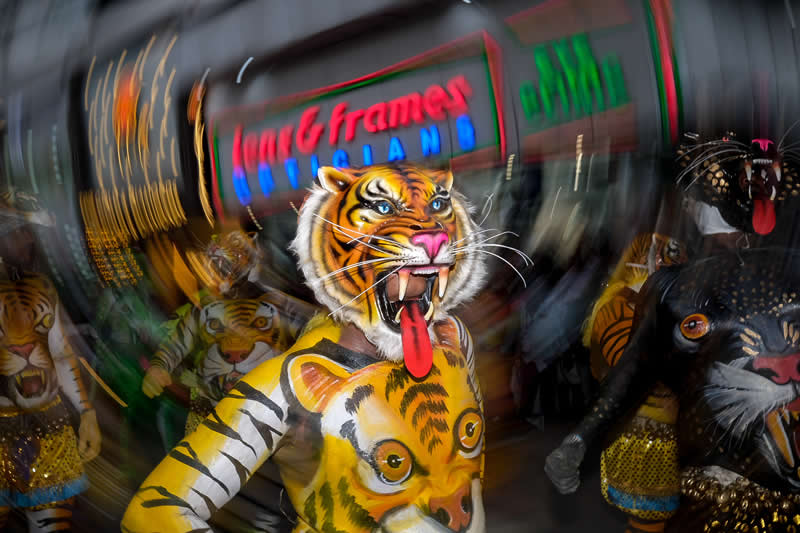
The Puli Kali doesn’t simply appear; it takes control of the streets. In bold yellow, orange, and black, the performers assume the forms of tigers and leopards and fill Thrissur with music, movement, bells, and a genuine festival atmosphere.
This 200-year-old folk custom, celebrated on the fourth day of Onam, is a dream come true for photographers, with color and action everywhere. Yet the challenge lies in capturing a strong photograph amid all that chaos.
Beyond the Tiger Paint
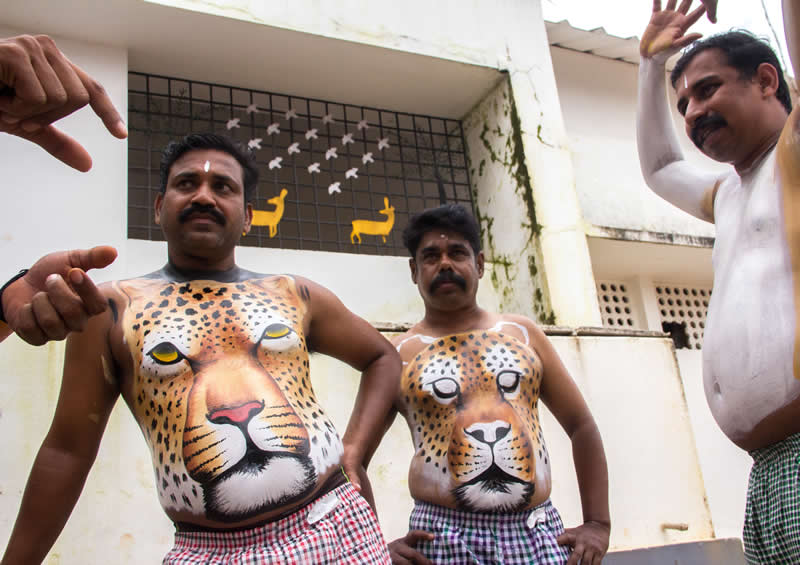
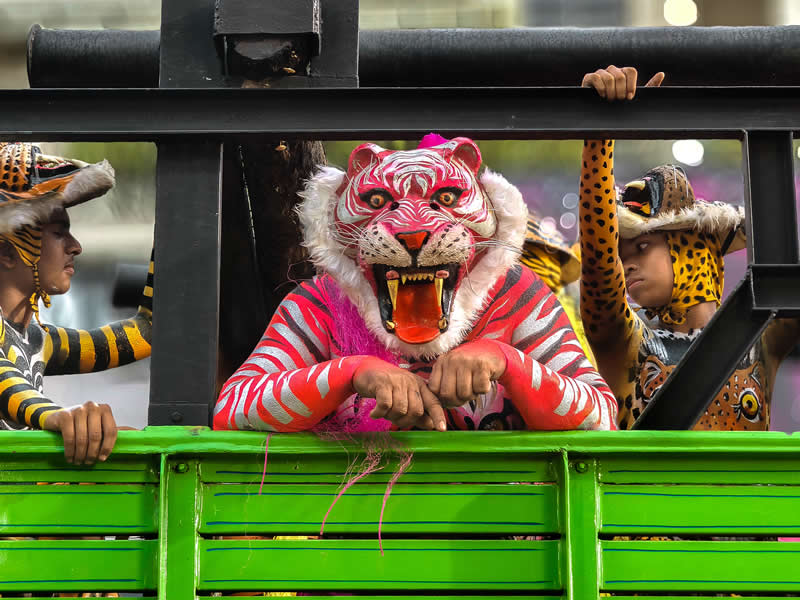
Sreejith Kaviyil goes beyond the obvious show. Rather than focusing solely on large-scale movements, he looks for brief, easily missed moments: a sudden smile, a curious glance, a spot of light, or a quiet connection between the performer and the spectator.
Under all that tiger paint, there are real people with real emotions. By highlighting these human aspects, Sreejith’s photographs give the series warmth and personality without sacrificing the wild energy of Puli Kali.
A Street Photographer’s Eye
With more than ten years of street photography experience, Sreejith knows great moments seldom turn up. When photographing Puli Kali, he works spontaneously and instinctively. He captures the moving crowd through strong framing, skillful composition, layers, and careful observation.
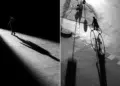
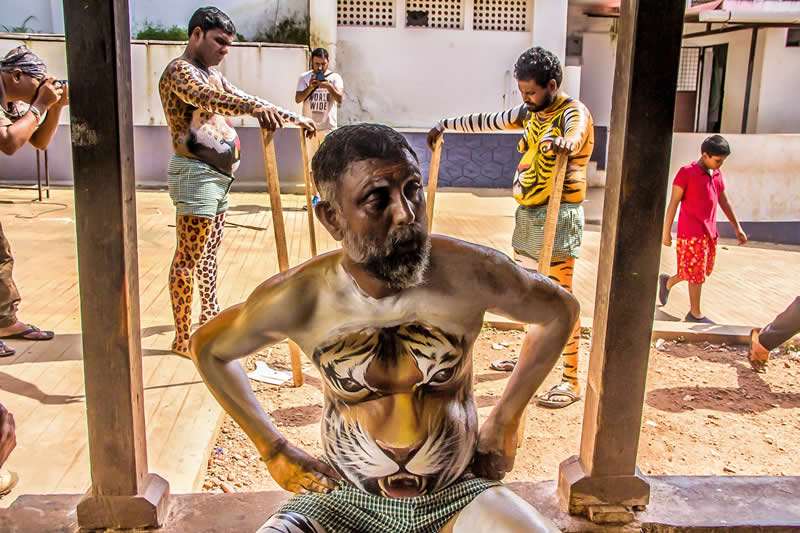
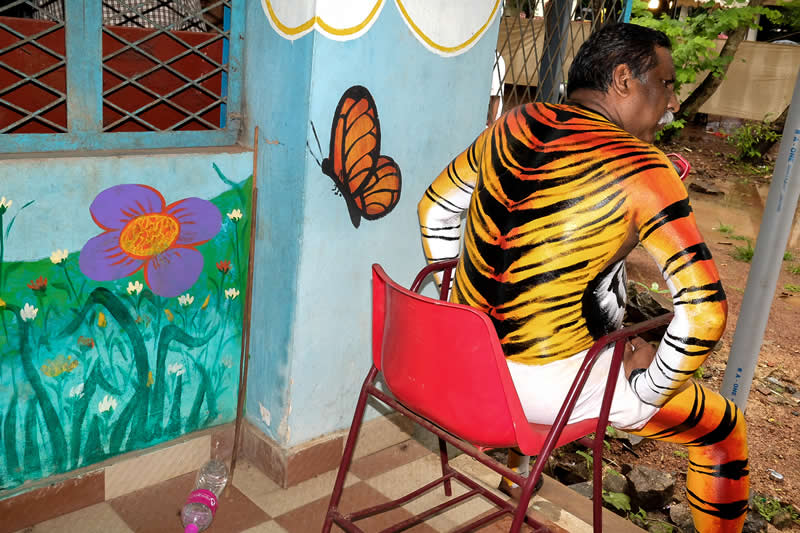
For example, a man covered in tiger paint sits between two poles, while the people in the background align perfectly within the frame. It’s a great example of Sreejith’s sharp observation and compositional skills. Throughout the series, he carefully notices and captures these fleeting moments with remarkable precision.
Moments That Almost Disappear
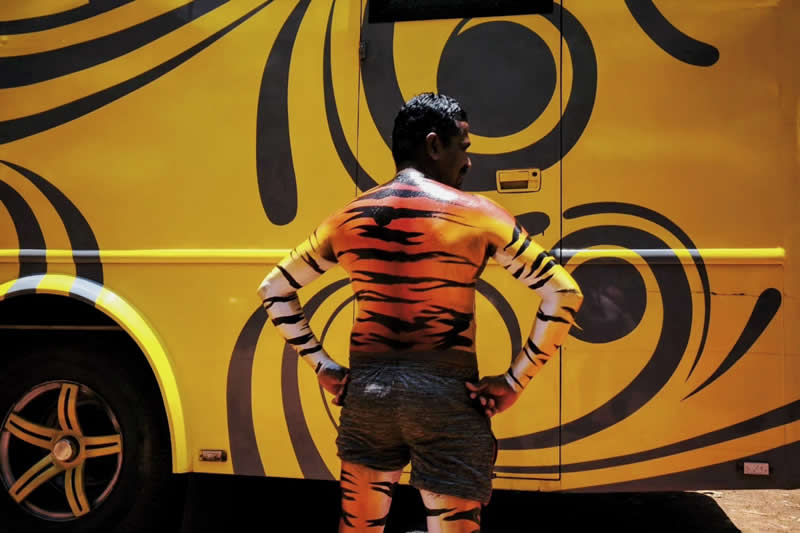
The most beautiful aspect of this series is the way it captures fleeting moments. As the performer moves, the sunlight changes, and a certain expression appears before the moment is lost. Sreejith’s camera gives these brief fragments a second life; his photographs do more than record a well-known tradition from Kerala, for they convey the mood, rhythm, and humanity within it.
Although the paint will eventually disappear and the streets will soon become quiet again, these brief memories remain frozen in time.
Frequently Asked Questions:
What is Puli Kali?
Puli Kali, meaning Tiger Dance, is a traditional folk art from Kerala with around 200 years of history. Performers paint their bodies like tigers and leopards and perform energetic sequences during Onam, especially in Thrissur.
When is Puli Kali celebrated?
Puli Kali is traditionally celebrated on the fourth day of Onam, known as Nalaam Onam. The colorful celebration marks the grand culmination of Kerala’s harvest festival, with performers, music, painted bodies, masks, bells, and lively street performances.
Who is Sreejith Kaviyil?
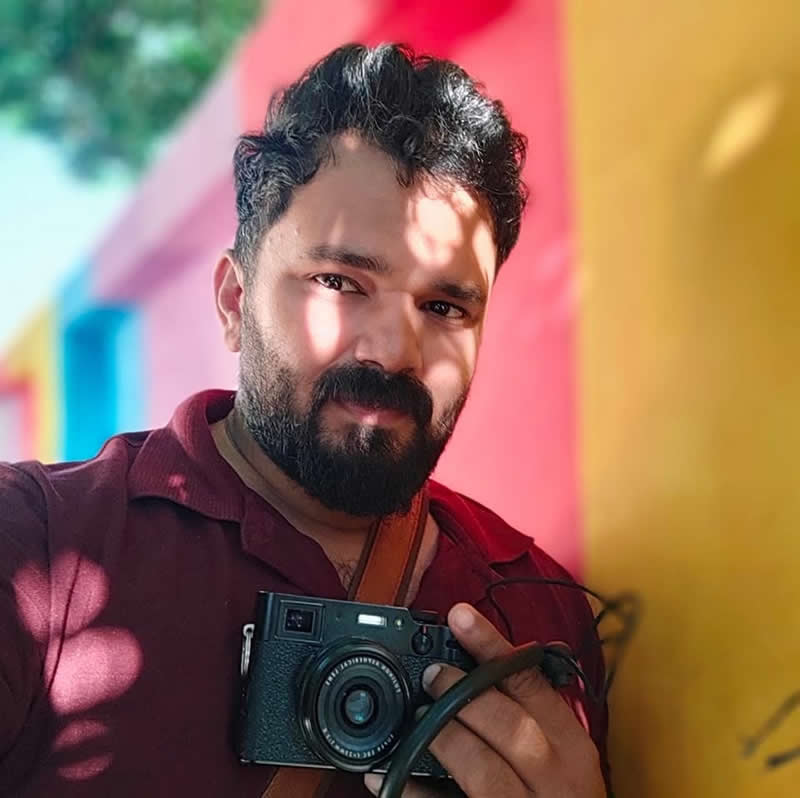
Sreejith Kaviyil is a Kerala-based street photographer with more than a decade of experience documenting Indian street life. His photography focuses on fleeting moments, careful observation, strong composition, framing, and poetic details found within everyday chaos.
How does Sreejith photograph Puli Kali?
Sreejith approaches Puli Kali with a street photographer’s eye, looking beyond the obvious spectacle. He captures fleeting expressions, gestures, light, shadows, connections, and unexpected compositions, turning fast-moving festival scenes into intimate, visually engaging moments.
What makes Sreejith’s Puli Kali photographs special?
Sreejith’s photographs stand out because they capture more than colorful tiger costumes. Through timing, framing, composition, and observation, he finds brief human and visual moments hidden within Puli Kali’s chaos, preserving details that might otherwise disappear almost instantly.