
When you think of raw emotion splashed onto a canvas, no one does it quite like Vincent van Gogh. The Dutch master wasn’t just painting pictures — he was bleeding feelings onto linen, mixing madness and genius in every brushstroke. From starry skies to sunlit fields, Van Gogh painted life the way he felt it, not just the way it looked. His art screams color, chaos, and courage — and that’s what makes it timeless.
Though his life was tragically short and often misunderstood, Van Gogh left behind more than 2,000 works that still shake the art world to its core. His paintings weren’t made to please — they were made to express. Each one tells a story of struggle, beauty, and that relentless hunger to be seen.
In this list, we dive into 10 of Van Gogh’s most famous masterpieces — the ones that made him a household name long after he was gone. From “The Starry Night” to “Café Terrace at Night,” these works aren’t just art pieces — they’re emotional diaries frozen in color. Whether you’re an art junkie or just dipping your toes into Van Gogh’s world, these paintings will make you feel something real.
#1. The Starry Night (1889)

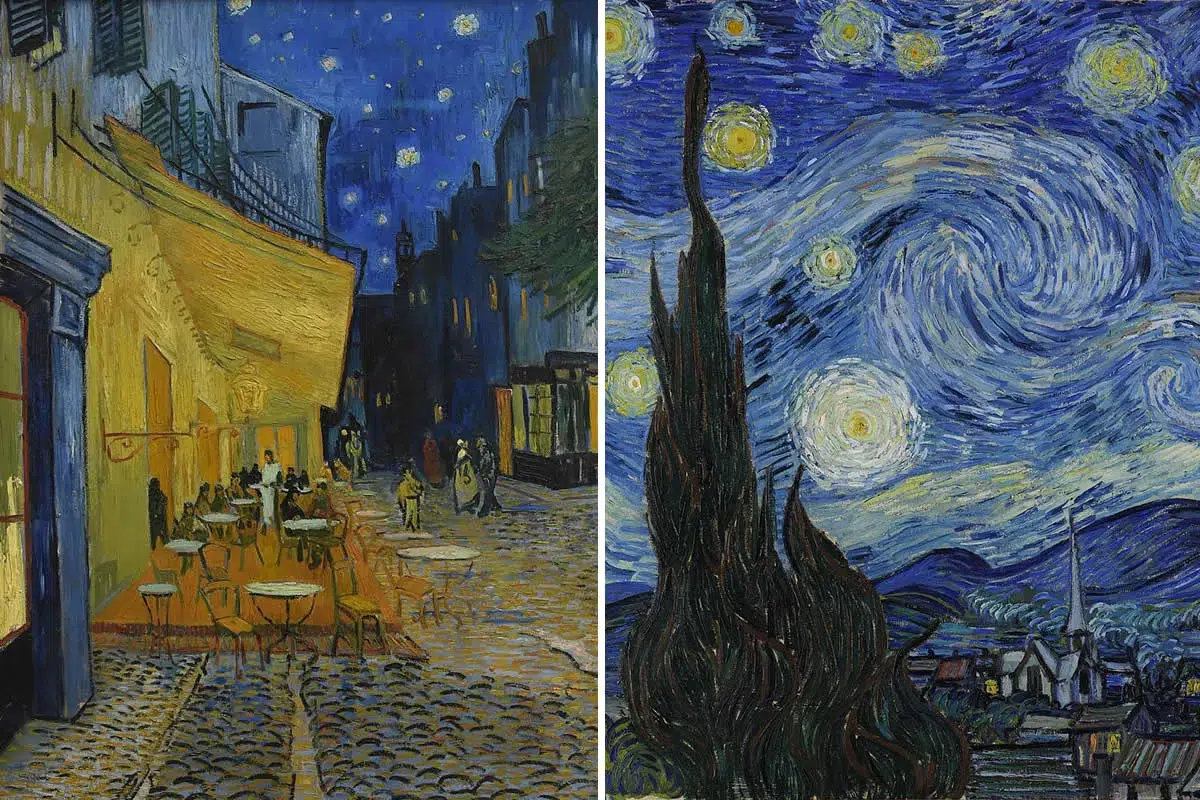
If one painting could define Van Gogh, this would be it. “The Starry Night” isn’t just a view from his asylum window — it’s the visual version of his soul. Those swirling blues, that burning yellow moon, and the hypnotic rhythm of the sky — it’s all energy, emotion, and motion. Painted while Van Gogh was battling his inner storms, this piece captures what words couldn’t.
Many see it as a symbol of hope peeking through chaos. It’s like he poured his insomnia and loneliness into the heavens and somehow made it beautiful. Today, it’s one of the most recognized artworks in the world — a reminder that even in madness, there’s brilliance.
#2. Sunflowers (1888)

Van Gogh painted several versions of “Sunflowers,” but each one glows like bottled sunlight. These weren’t just flowers to him — they were symbols of joy, friendship, and gratitude. He created them while preparing for fellow artist Paul Gauguin’s visit, hoping to fill his studio with warmth and positivity.
What’s wild is how alive the painting feels. The yellows explode with texture and light, and every brushstroke vibrates with emotion. Van Gogh once said that yellow was the color of hope, and you can feel that optimism dancing across the canvas. “Sunflowers” became an icon of cheer and resilience — proof that simple things can carry deep emotion.
#3. Café Terrace at Night (1888)

This painting captures a slice of peaceful solitude wrapped in a dreamy glow. “Café Terrace at Night” shows a cozy café in Arles under a starry sky, filled with life and light. What makes it special? Van Gogh didn’t use black paint — instead, he built the night from blues, greens, and oranges, giving it a magical warmth.
It’s not just about a café; it’s about finding comfort in the ordinary. The painting hums with quiet joy — a reminder that even mundane moments can shimmer with meaning. You can almost hear the soft chatter, smell the coffee, and feel the night air brush your face.
#4. The Bedroom (1888)

“The Bedroom” might look simple — just furniture, walls, and color — but it’s deeply personal. It’s Van Gogh’s sanctuary, his version of peace in a restless world. The uneven lines and bold hues mirror his emotional state, balancing between calm and chaos.
He painted this room in Arles to represent rest and comfort, something he desperately craved. The contrasting colors — blue, yellow, and red — pulse with warmth and tension. You can sense that this was more than a room; it was his dream of stability, painted with a trembling heart.
#5. Irises (1889)
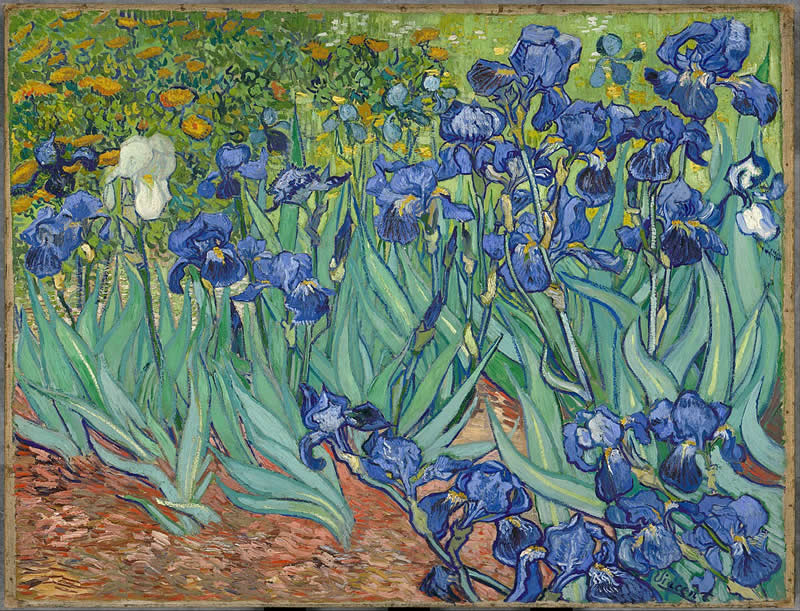
Painted during his stay at the Saint-Rémy asylum, “Irises” bursts with life and motion. The flowers twist and sway like they’re dancing, capturing the vitality of nature even in confinement. Van Gogh believed painting helped him stay sane, and this piece radiates that therapy.
The mix of violet petals and green leaves feels rhythmic, like nature’s heartbeat. Each stroke feels both delicate and fierce — a reflection of Van Gogh’s fragile mental state but also his resilience. “Irises” became one of his most celebrated works, selling for a record-breaking price decades later. Beauty born from pain — that’s Van Gogh in a nutshell.
#6. The Night Café (1888)

“The Night Café” isn’t the peaceful version of night — it’s the haunted one. With its blood-red walls and glowing yellow lamps, Van Gogh captured the dark side of nightlife — loneliness, exhaustion, and human despair.
He once described it as “a place where you can ruin yourself.” The distorted perspective and sharp colors are jarring on purpose. It’s not meant to comfort you; it’s meant to make you feel the emotional grime beneath the surface. This was Van Gogh’s way of showing that beauty and darkness often share the same space.
#7. Wheatfield with Crows (1890)

Painted just weeks before his death, “Wheatfield with Crows” feels like a farewell. The dark sky, stormy blues, and menacing crows flying over golden fields speak volumes without words. It’s often seen as his emotional self-portrait — caught between life and death, peace and turmoil.
The dramatic brushstrokes and wild energy suggest both defiance and acceptance. Some call it a painting of despair; others see courage in it — the final fight of a man who refused to go quietly. Either way, it’s haunting, raw, and unforgettable.
#8. Almond Blossom (1890)

“Almond Blossom” is Van Gogh at his most hopeful. He painted it to celebrate the birth of his nephew, naming it after his brother Theo’s son. The white blossoms against the turquoise sky are like whispers of joy and renewal.
It’s a tender, loving piece — a moment of peace amid chaos. The Japanese-inspired composition and soft colors reveal his fascination with simplicity and purity. It’s proof that Van Gogh could express serenity as beautifully as sorrow. “Almond Blossom” is like a visual lullaby — gentle, bright, and full of love.
#9. Self-Portrait with Bandaged Ear (1889)

Few artists have bared their soul the way Van Gogh did here. After famously cutting off part of his ear, he painted himself with calm eyes and a somber expression. The bandage isn’t just physical — it’s symbolic of his struggle, vulnerability, and resilience.
The muted colors and stillness contrast with his inner chaos. You can almost feel the silence, the weight of recovery, and the longing for peace. This painting isn’t about vanity; it’s about survival. It reminds us that art can be both confession and cure.
#10. The Red Vineyard (1888)
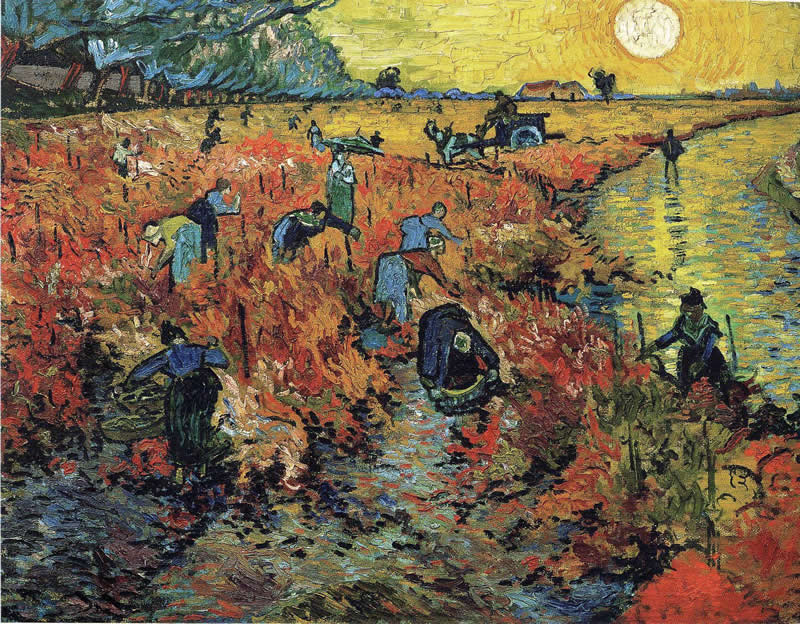
“The Red Vineyard” holds a special place — it’s the only painting Van Gogh sold during his lifetime. The glowing red fields, yellow sun, and workers in the distance form a scene alive with energy and gratitude.
It captures the warmth of labor and the rhythm of nature, mixing light and shadow in perfect balance. You can sense Van Gogh’s love for rural life and human connection. Though it brought him little money, this painting stands as proof that even then, the world recognized a glimpse of his genius.