
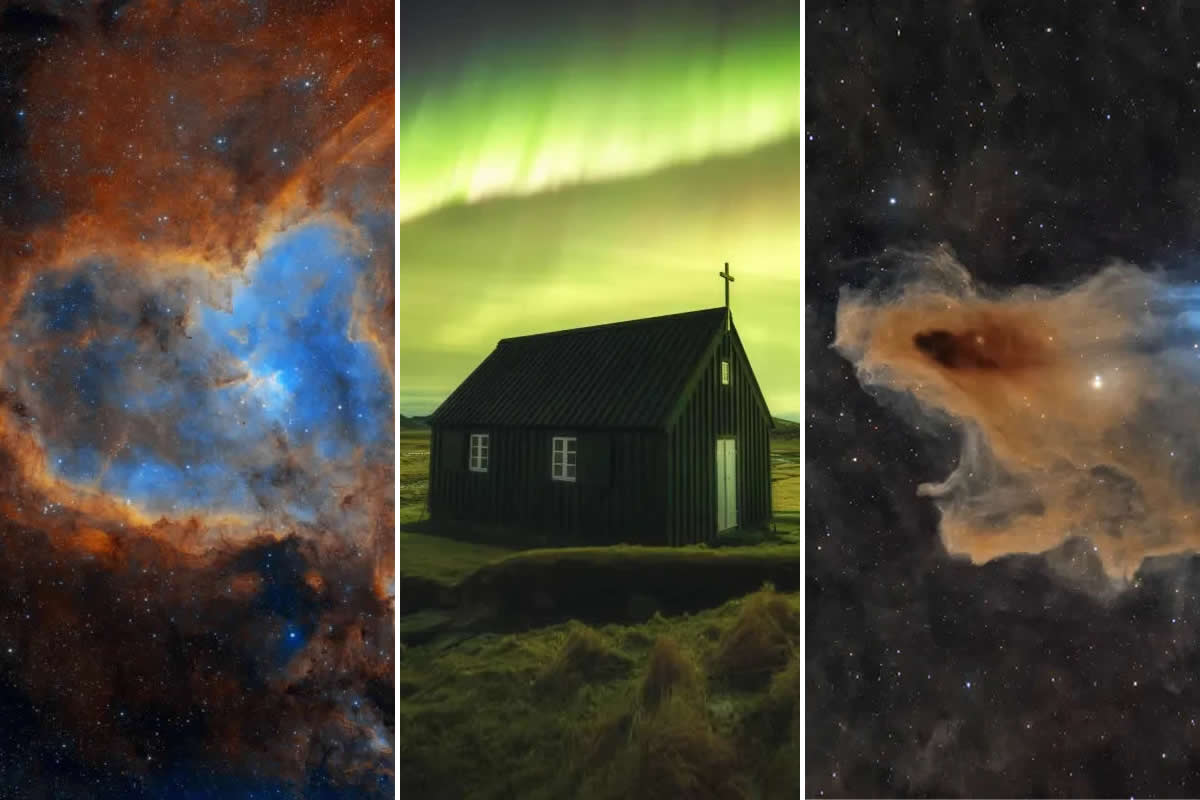
There’s something humbling about looking up at the night sky and realizing how much is happening way beyond our little corner of Earth. Stars are exploding, clouds of cosmic dust are drifting through space, and distant galaxies are quietly doing their thing millions of light-years away. Every year, astrophotographers give us a front-row seat to that spectacle, and the 2026 Astronomy Photographer of the Year competition delivers some seriously jaw-dropping views.
This year’s top honor goes to Ali Alobaidly, whose hauntingly beautiful photograph The Quiet Predator captured the mysterious Shark Nebula, also known as LDN 1235. Located nearly 650 light-years away in the constellation Cepheus, this dark nebula gets its dramatic shark-like appearance from dense clouds of dust that block the light behind them.
The image earned Alobaidly the £10,000 top prize, roughly $13,400, and the top spot in the Stars and Nebulae category. Judge Steve Marsh praised its razor-sharp detail, dramatic contrast, and the remarkable visibility of distant galaxies behind the nebula.
But Alobaidly’s masterpiece is just the beginning. These 33 outstanding winning and recognized photographs reveal a universe packed with mystery, color, texture, and sheer visual drama. From galaxies and nebulae to starscapes and celestial landscapes, each image reminds us that sometimes the most incredible art is already waiting above our heads.
You can find more info abut RMG:
#1. Stars and Nebulae category winner and overall winner: The Quiet Predator by Ali Alobaidly
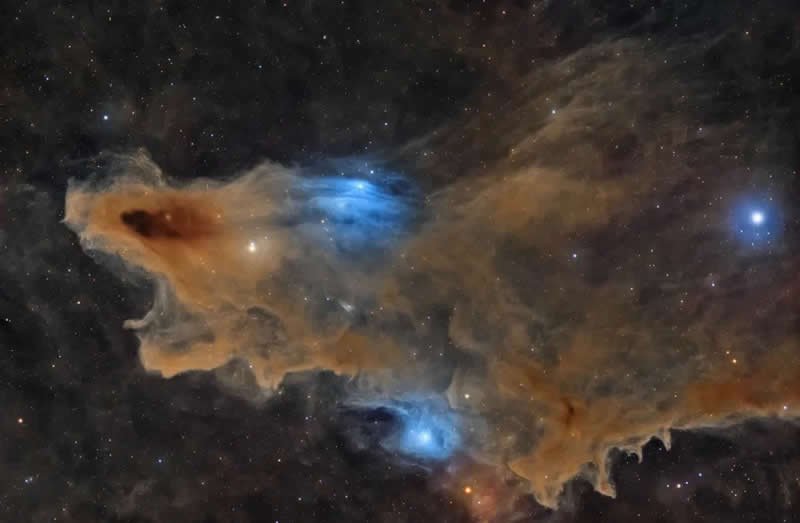
"This image is proof that even in the vacuum of space, the Universe never misses a chance to make things look terrifyingly familiar."
Taken in Jahra Governorate, Kuwait, 21–22 August 2025
#2. Stars and Nebulae – Runner-up: Beyond the Wormhole by Kfir Simon
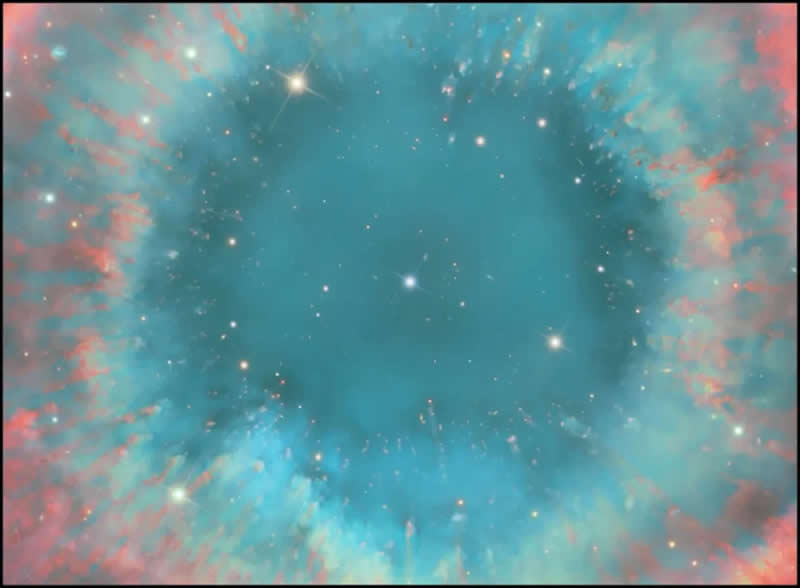
"The picture is a crop of the central core of the nebula and has been processed in order to reveal the tiny galaxies. To my surprise, there are many more than I had imagined."
Taken in Tivoli Southern Sky Guest Farm, Windhoek Rural, Namibia, 23 June 2025
#3. Stars and Nebulae – Highly commended: Abell 85 by Cédric Humbert
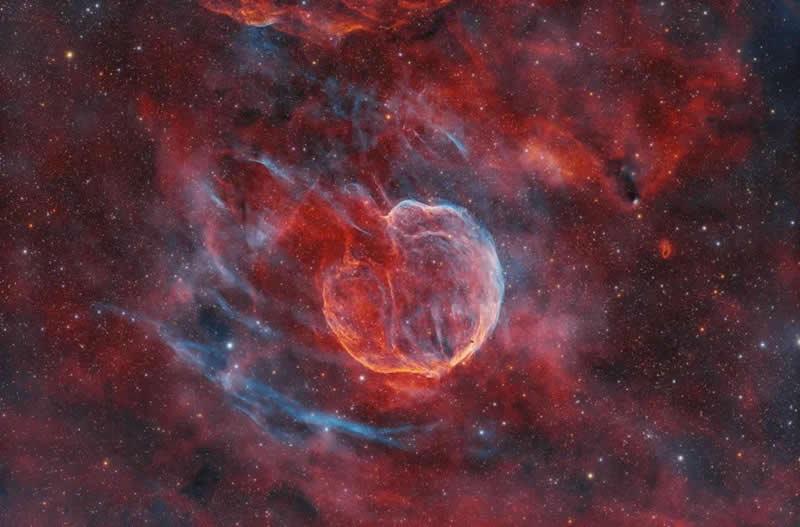
"This image was taken with SHO filters. I primarily wanted to highlight the OIII (doubly ionised oxygen) signal, which was obtained with 30 hours of exposure, in order to achieve a slightly different image, and to work on the S-channel to bring out the filaments of the ‘ball’ of matter."
Taken in Coleman County, Texas, USA, 12 December 2025
#4. Galaxies – Winner: NGC 4753: A Symphony of Dust Lanes in Virgo by Yan Zhipeng and Xinran Li
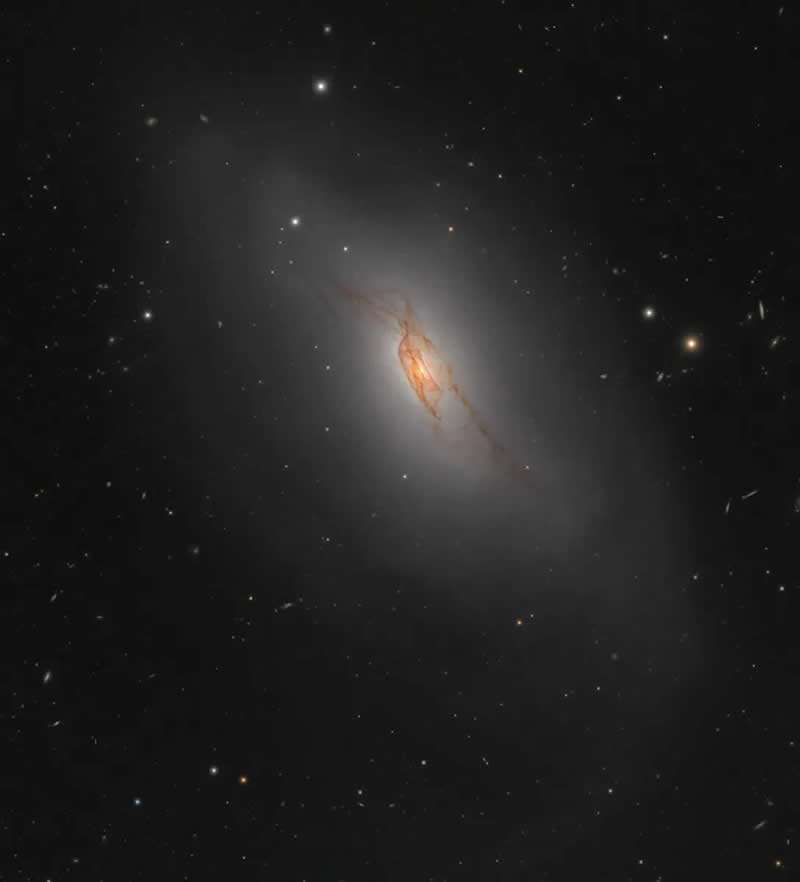
"This image was acquired under the pristine skies of Chile, with more than 10 hours of integration to resolve the intricate dust structures that are often obscured in other images."
Taken in El Sauce Observatory, Río Hurtado, Chile, 6 March 2025
#5. Galaxies – Runner-up: M104: Pure Elegance by Patrick Winkler
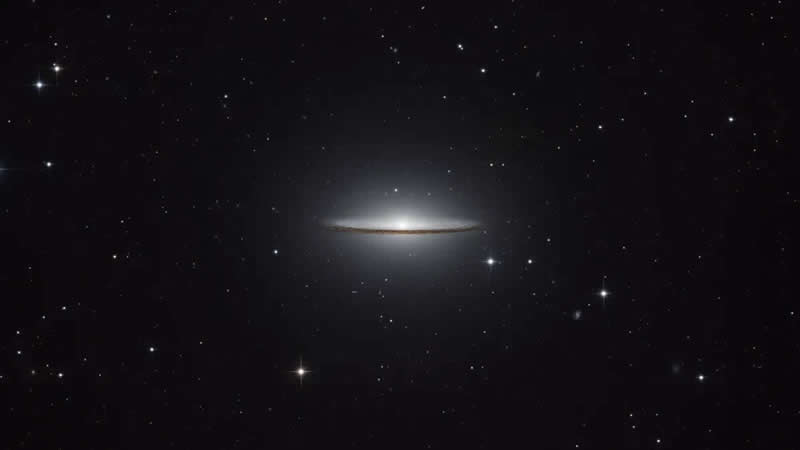
"Its striking appearance is caused by a central bulge that is sharply divided by a dense, dark dust lane that arcs across the galaxy’s disc, creating the illusion of a cosmic hat suspended in space."
Taken in Tivoli Southern Sky Guest Farm, Windhoek Rural, Namibia, 28–29 March and 24–28 April 2025
#6. Galaxies – Highly commended: Wildflowers Across a Neighbouring Galaxy: The Large Magellanic Cloud by Shaoyu Zhang
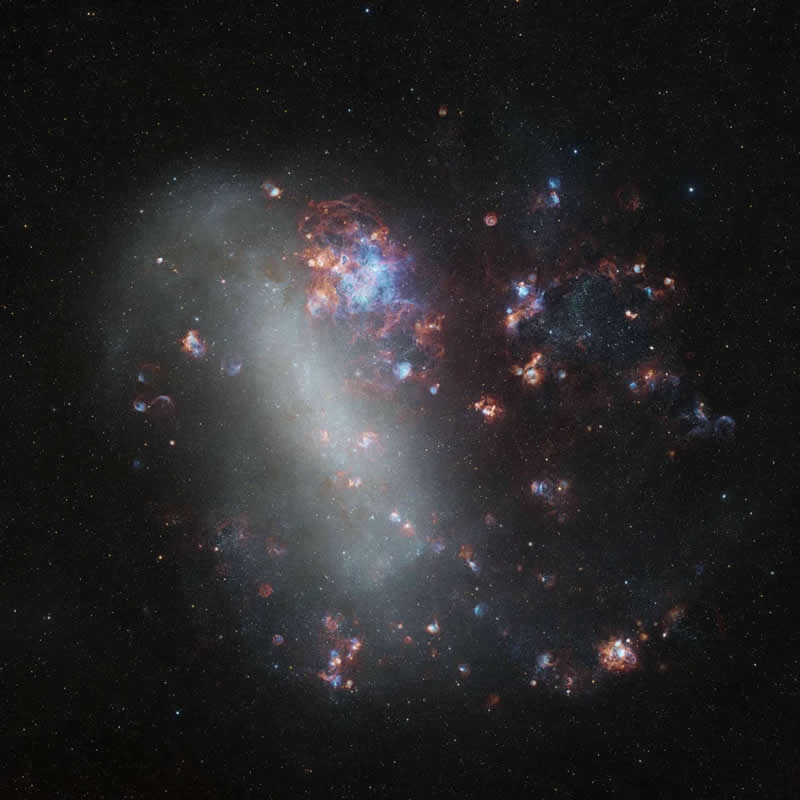
"The ‘wildflowers’ are emission nebulae and remnants – cavities, shells and sharp fronts scattered across the galaxy’s disc that narrowband layers make visible."
Taken in Deep Sky Chile Observatory, Camino del Observatorio, Río Hurtado, Chile, 9–20, 22–25 March 2024, 15, 18–19, 22–25, 27–29 September and 19 October 2025
#7. Skyscapes – Winner: Botswana Star Trail by Stefano Pellegrini
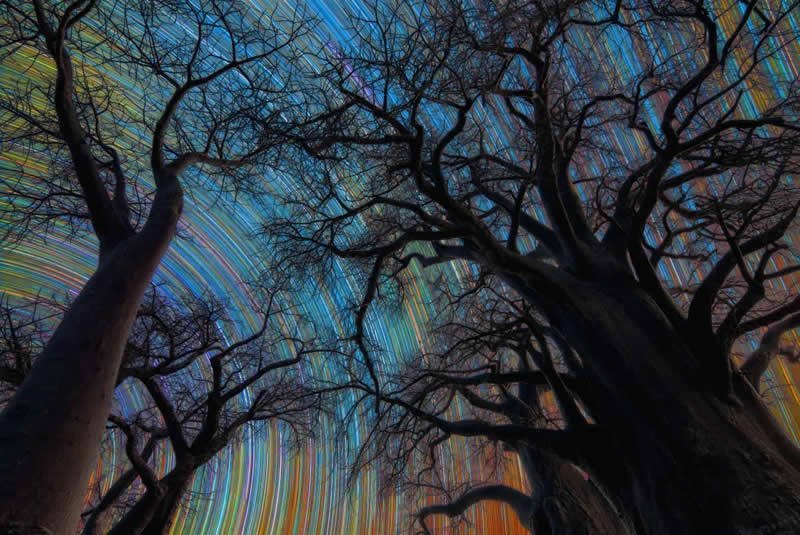
"One thing I wanted to try in Botswana was a star trail. I finally had the perfect opportunity in Nxai Pan, a magical place with huge baobab trees. It was like being inside a gothic cathedral; the old sturdy trees were like columns, with their branches creating vaults and arches."
Taken in Nxai Pan National Park, Botswana, 24 August 2025
#8. Skyscapes – Runner-up: Cosmic Canyon by Tom Rae
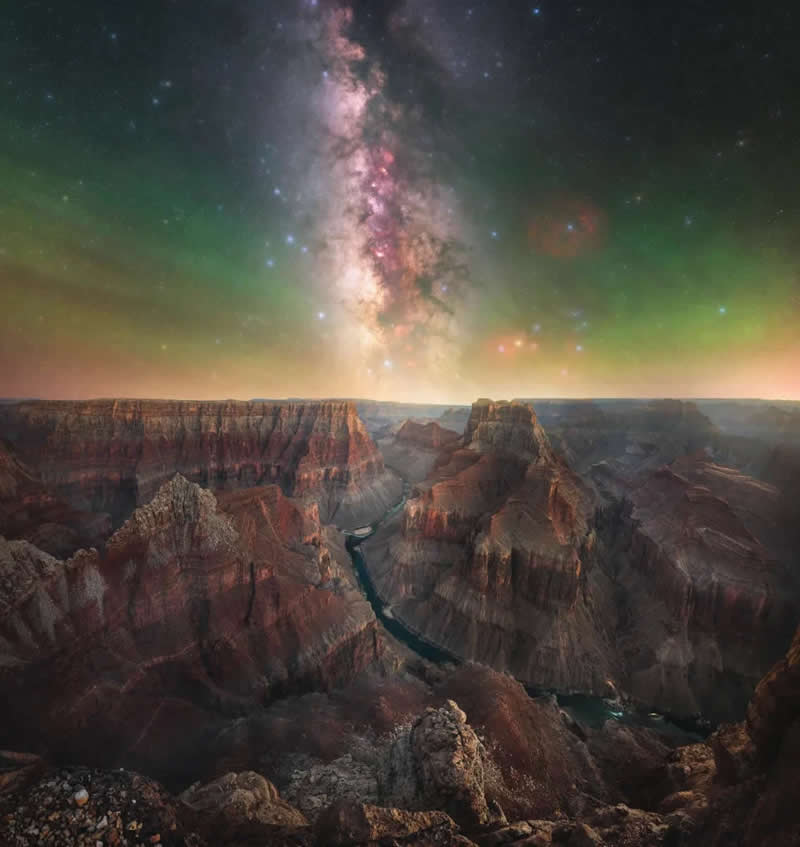
"Above one of the most geologically important points in the Grand Canyon sits the Milky Way core – the brightest region of our galaxy – packed with billions of stars, as well as dust that blocks and scatters their light. In this part of the Grand Canyon, where two ancient rivers collide, millions of years of erosion have revealed some of the oldest exposed rock layers in Arizona. What I like about this scene is the contrast in scale and time captured in the same frame, under genuinely dark, beautiful desert skies."
Taken in Coconino County, Arizona, USA, 30 May 2025
#9. Skyscapes – Highly commended: I Hear the Stars by João Yordanov Serralheiro
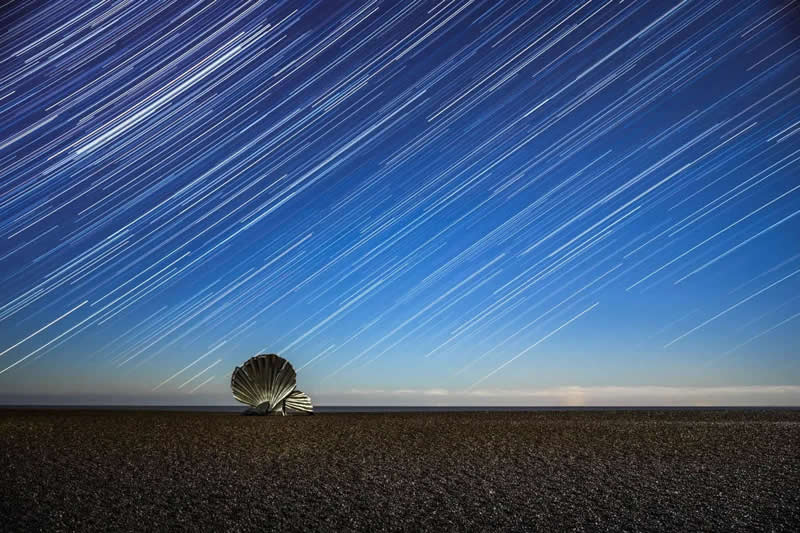
"This image of star trails above the Scallop sculpture on Aldeburgh Beach has been a long time coming while I waited for the right night and conditions. It represents the quiet and peaceful feeling of sitting down by the sea, listening to the waves come and go as time passes by – demonstrated here by the movement of the stars."
Taken in Aldeburgh Beach, Suffolk, England, 30 November 2025
#10. Our Sun – Winner: Active Region 4122 by Miguel Claro
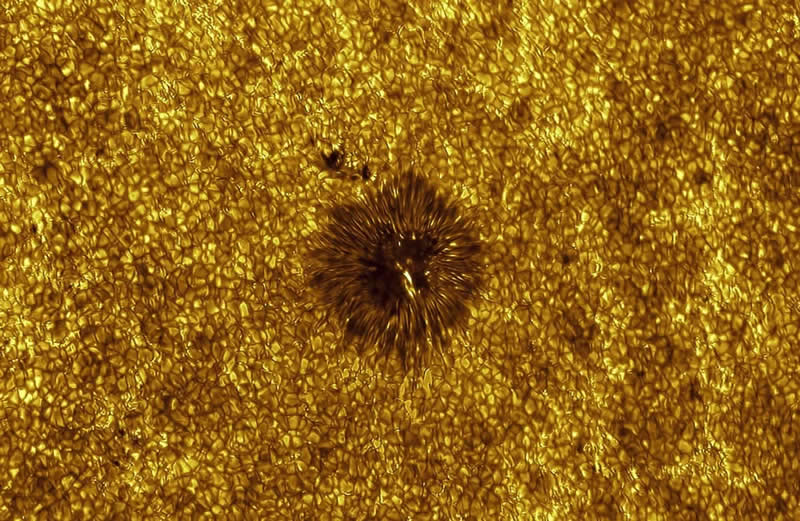
"This image was captured with a new dual-band telescope to try to reveal a greater level of detail in the Sun’s photosphere [visible layer]. Seeing stability [the steadiness of Earth’s atmosphere] is always the deciding factor. After several attempts, a perfect opportunity eventually arose. The excitement that morning was palpable. The temperature was mild, the wind light and there were moments of great seeing – the perfect conditions to try my luck at capturing convection cells [the constantly shifting regions of rising and falling plasma on the Sun’s surface] and the delicate filigree, or bright spots, found between them."
Taken in Reguengos de Monsaraz, Évora District, Portugal, 2 July 2025
#11. Our Sun – Runner-up: Anatomy of the Chromosphere by Peter Ward
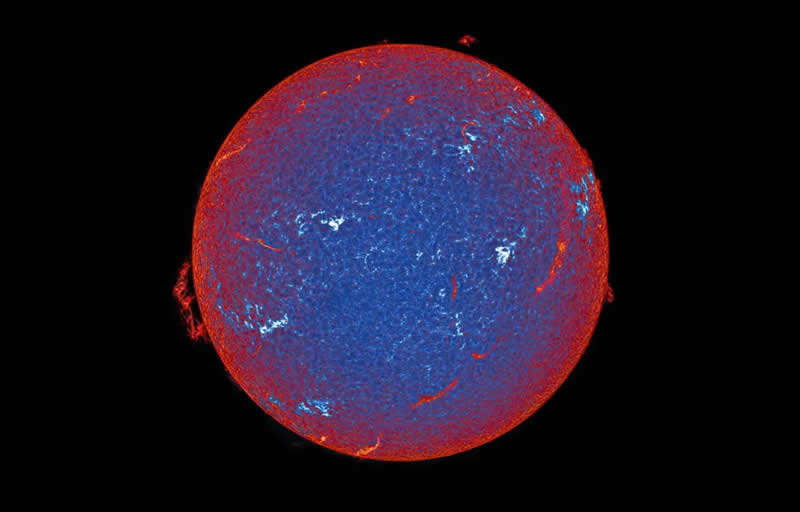
"The layers of the Sun’s chromosphere [the section of the Sun’s atmosphere above its visible surface], are usually best revealed by studying them with one wavelength of light at a time. Here, the results of H-alpha and Calcium-H line imaging are fused into a single, compelling image."
Taken in Barden Ridge, New South Wales, Australia, 11 October 2025
#12. Our Sun – Highly commended: Moody Partial Solar Eclipse © by James McBeath
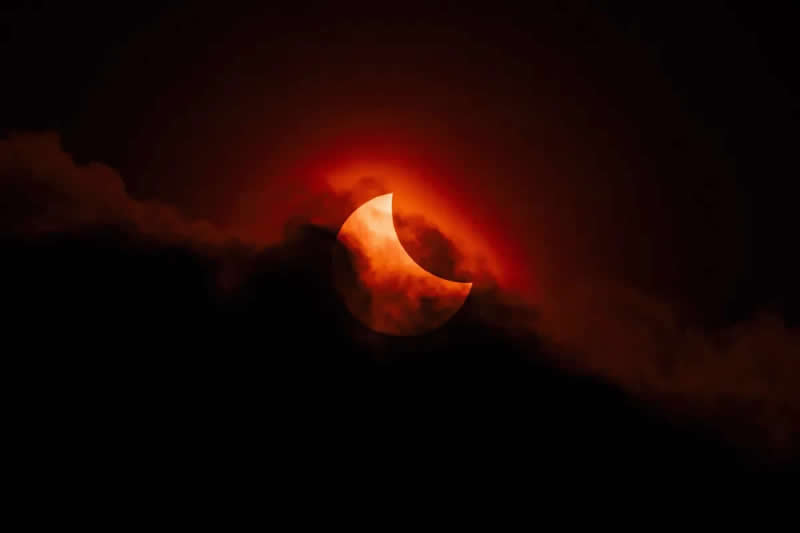
"Here, the partial solar eclipse of 2025 was shot through fast moving clouds on what was a beautiful spring morning. I spent several hours in a local park tracking the eclipse with my camera, showing many passers-by what I was doing and giving them a good view of the eclipse. I ended up with hundreds of shots, but this one, with the clouds framing the Sun perfectly, immediately caught my eye. I am very happy with most of the shots I took that day, but this one is easily the dreamiest."
Taken in Leeds, West Yorkshire, England, 29 March 2025
#13. Our Moon – Winner: Venusian Pearl on the Moon by Petr Horalek
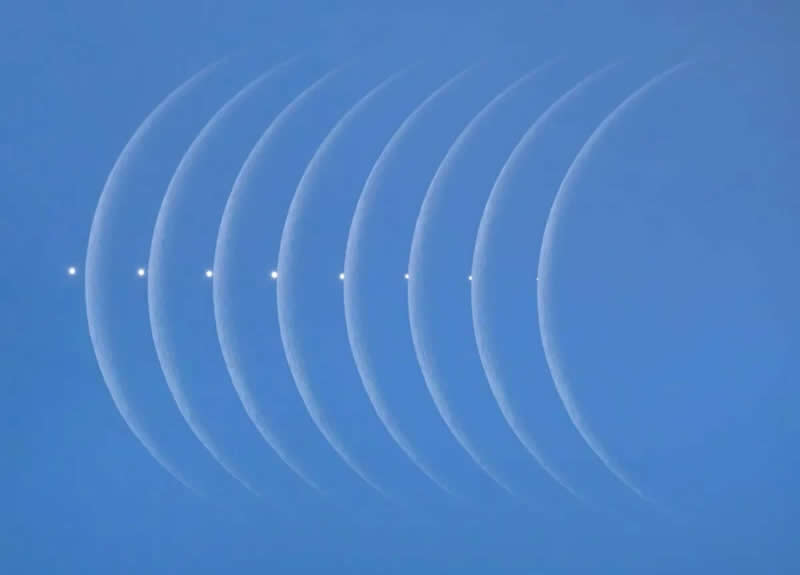
Petr says, "On 19 September 2025, a rare lunar occultation of Venus occurred as the Moon passed in front of the planet in the daytime sky. Venus disappeared behind the crescent Moon at 2.14 p.m. and reappeared just over an hour later. It was a big challenge to find both objects in the sky and produce good shots of this unusual view. Fortunately, the weather was perfect and I was able to do it. The most beautiful moment was when Venus had just started to disappear behind the crescent. It looked like a bright pearl on the lunar limb."
Taken in Ústupky, Seč, Pardubice Region, Czechia
#14. Our Moon – Runner-up: Plato and Vallis Alpes by Raul Cantemir
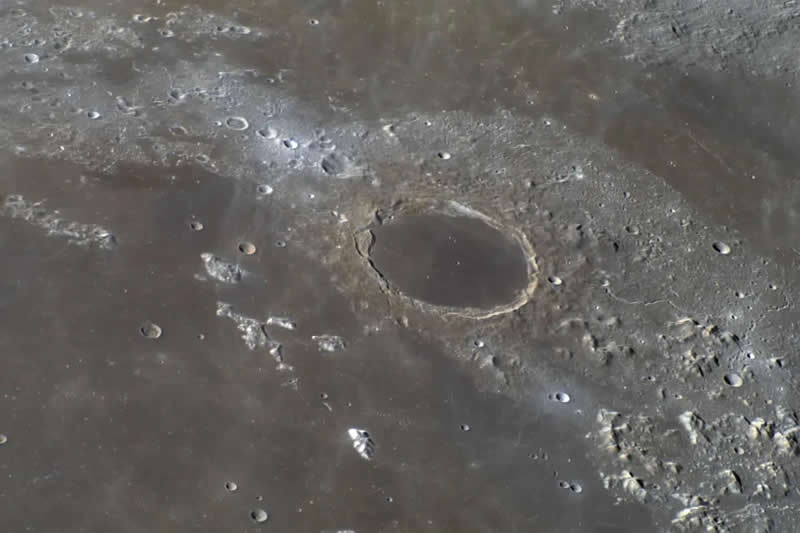
"This exceptionally detailed colour image of the Moon features the prominent crater Plato, which spans approximately 101 km (63 miles) in diameter. Its dark, smooth floor is covered in solidified basalt – a remnant of ancient volcanic activity. Several smaller impact craters can be seen within it, the largest of which measures more than 2 km (1.2 miles) across," says Raul."
Taken in Darmstadt, Hesse, Germany, 13 August 2025
#15. Our Moon – Highly commended: Pythagoras Crater by Tom Williams
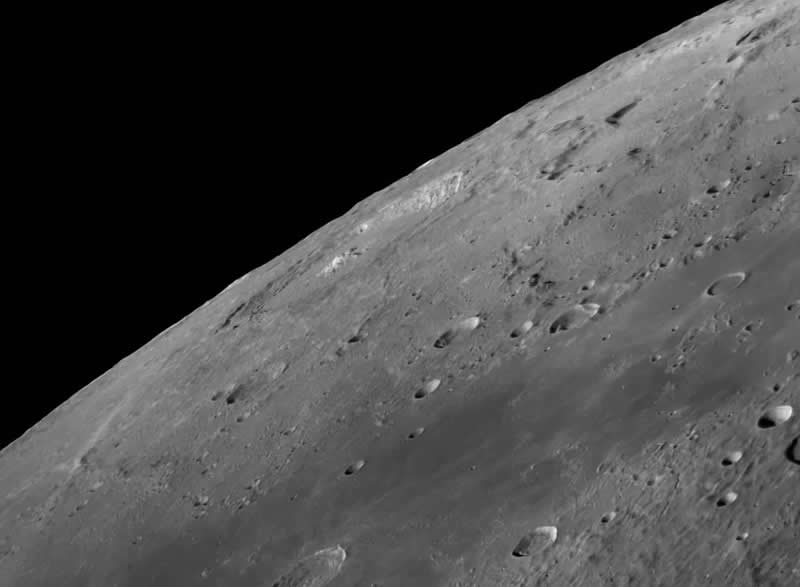
Tom explains, "This image shows a close-up view of the Moon’s north-western limb, featuring Pythagoras Crater and its periphery. A favourable lunar phase meant that the central mountainous rise within the main crater is clearly visible. This double peak ascends to 3 km (1.9 miles) above the surrounding terrain."
Taken in Trowbridge, Wiltshire, England, 15 August 2025
#16. Aurorae – Winner: The Crown by Radoslav Sviretsov
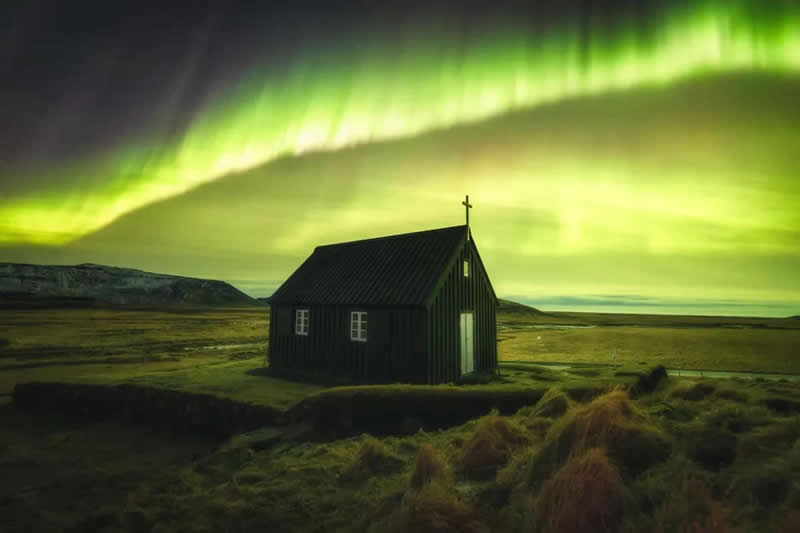
"This small traditional Icelandic church lies between Keflavík and Reykjavík, far from light pollution, a place where the sky remains dark and truly alive."
Taken in Fúlipollur, Krýsuvíkurvegur, Hafnarfjordur, Iceland, 20 January 2026
#17. Aurorae – Runner-up: Aurora Between Two Continents by Phil Halper
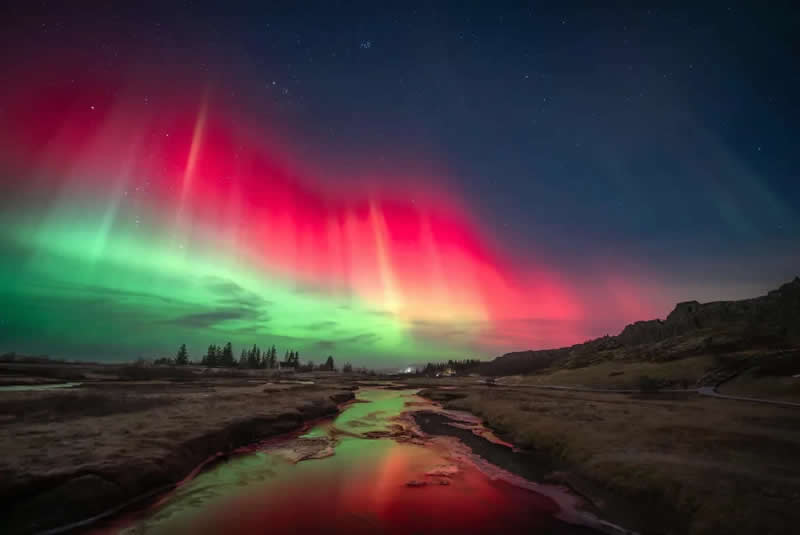
"With just one day’s notice, two friends and I decided to travel to Iceland to take the opportunity to see a powerful display of the Northern Lights. In this image I captured the lights dancing at Þingvellir (Thingvellir) National Park reflecting in the water between the two continental plates of America and Eurasia."
Taken in Kjósarhreppur, Capital Region, Iceland, 12 November 2025
#18. Aurorae – Highly commended: On the Edge of Glory by MaryBeth Kiczenski
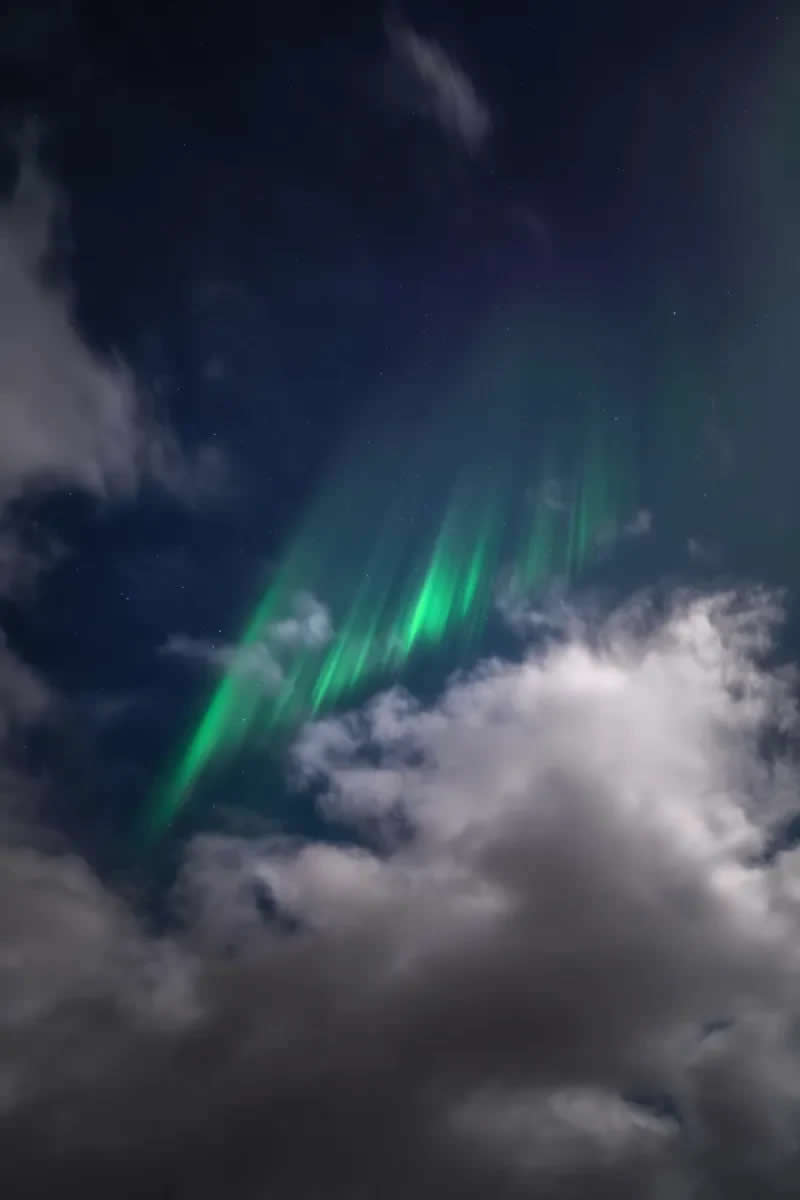
"This is a single image exposure, highlighting the beauty of everything the sky offers. Moonlight and clouds are often overlooked when aurora chasing, but in the Arctic, they can provide a dreamlike quality that is unmatched."
Taken in Skibotn, Troms, Norway, 6 November 2025
#19. Planets, Comets and Asteroids – Winner: Saturnian Equinox by Tom Williams
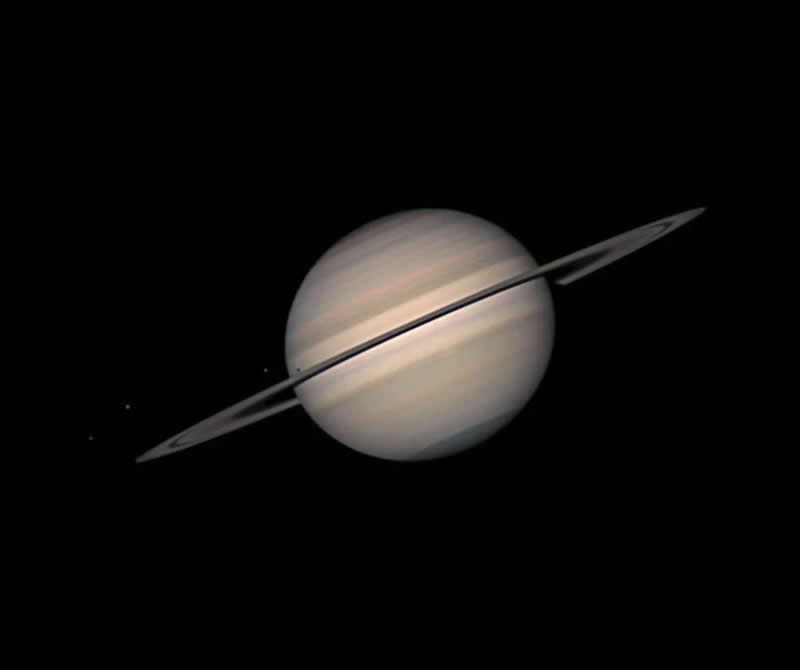
"This striking view was captured a few months after Saturn’s equinox, which marks the start of local spring in the planet’s southern hemisphere."
Taken in Trowbridge, Wiltshire, England, 22 August 2025
#20. Planets, Comets and Asteroids – Runner-up: The Uranian System by Tom Williams
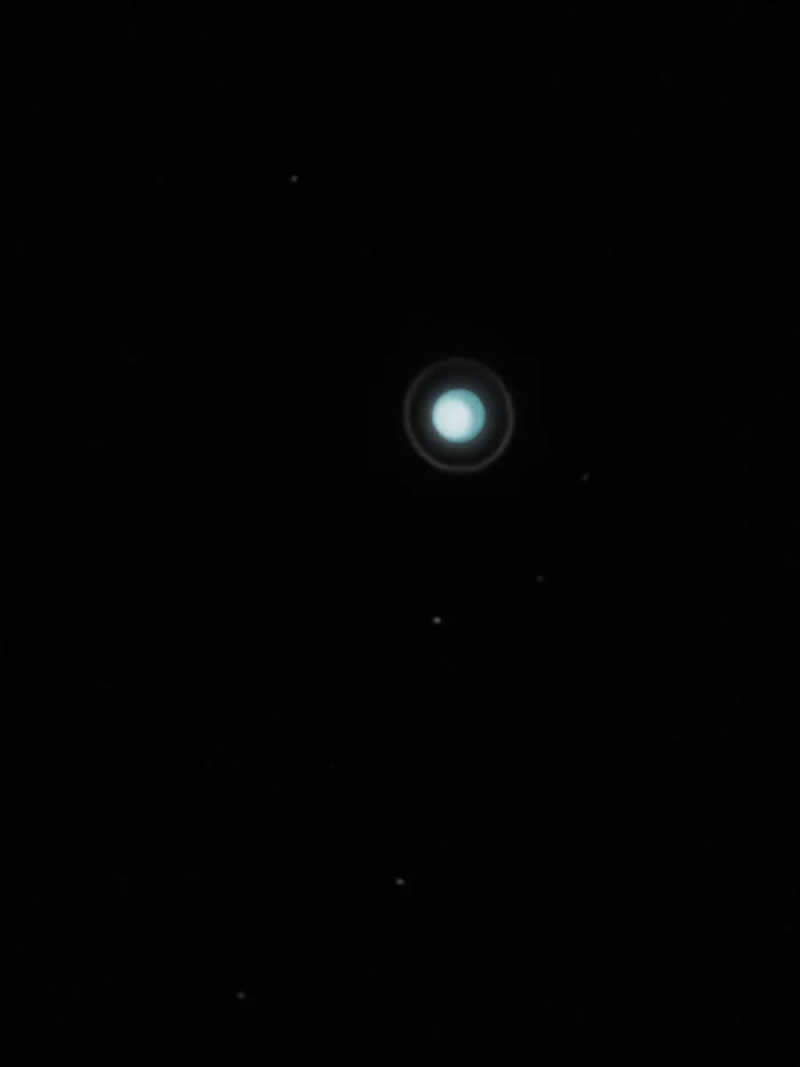
"Utilising both an infrared (IR) pass filter and longer exposures makes it possible to detect not only the moons orbiting Uranus, but also the brightest member of its elusive ring system – the epsilon ring."
Taken in Trowbridge, Wiltshire, England, 11–12 October 2025
#21. Planets, Comets and Asteroids – Highly commended: Comet C/2025 A6 (Lemmon), 28 October by Julien De Winter and Landon Boehm
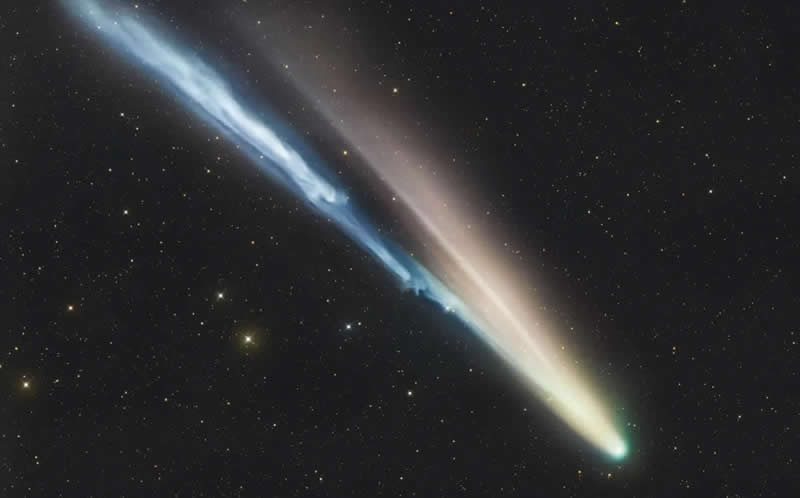
"A few days before it reached perihelion on 8 November, its closest approach to the Sun, the comet was already displaying remarkable activity and offered an extraordinary sight in the night sky."
Taken in Coleman County, Texas, USA, 28 October 2025
#22. People and Space – Winner: A Message From the Ancients by Max Inwood
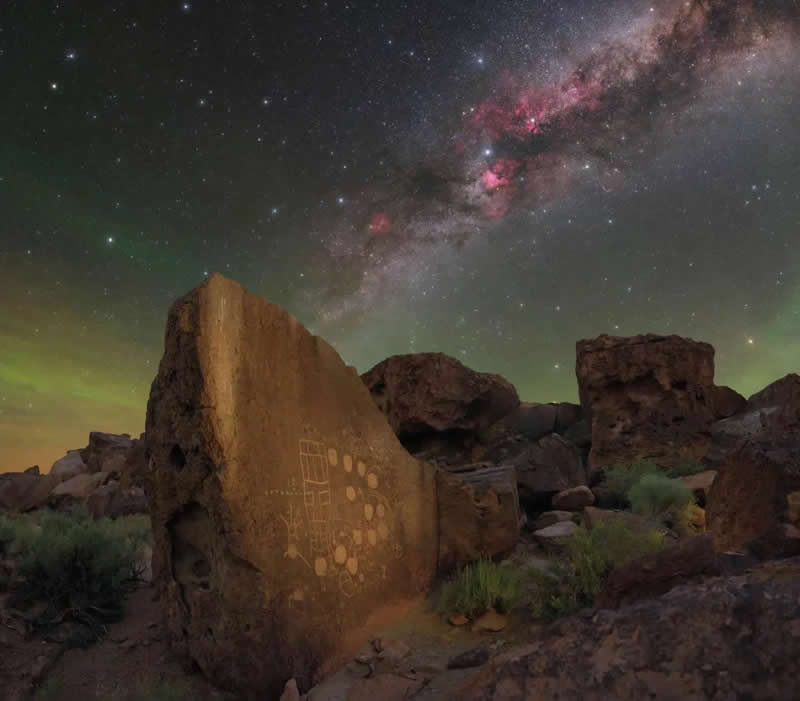
Max explains, "Deep in the desert of California lies a series of ancient petroglyphs: rock art dating back thousands of years. One particular piece known as the 13 Moons caught my attention. This petroglyph is thought to be an ancient calendar depicting the 13 Full Moons that Earth can experience in a year."
Taken in Inyo County, California, USA, 26 June 2025
#23. People and Space – Runner-up: Capture the Night by Dan Zafra
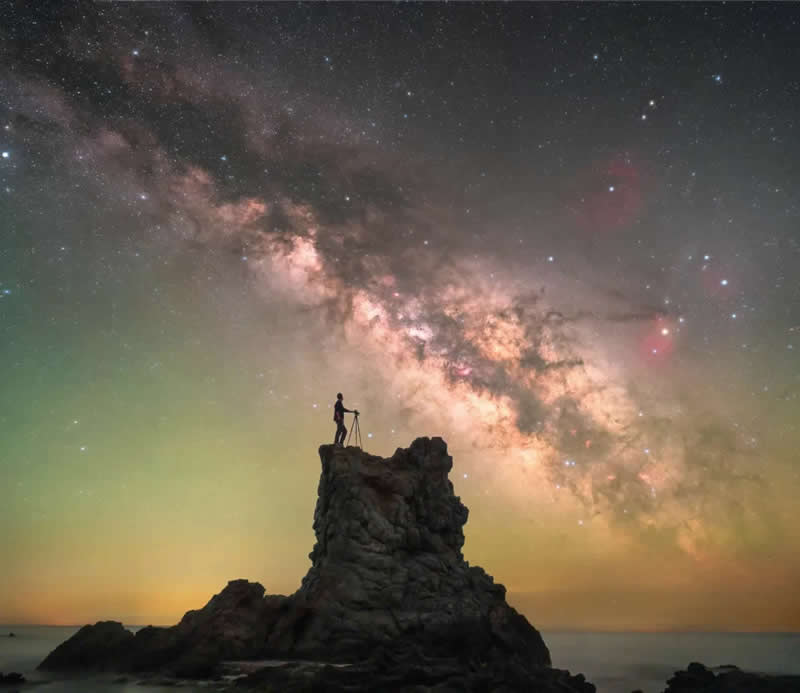
Dan says, "On the volcanic shoreline of Cabo de Gata-Níjar Natural Park, I spent the summer nights looking up from the rocks towards a sky filled with stars. This corner of Spain is a rare refuge from light pollution, a hidden gem where true darkness still survives. The small human presence in the frame is intentional; intended not to dominate the scene, but to belong to it, a quiet connection between Earth and the cosmos.
Taken in Parque Natural del Cabo de Gata-Níjar, Níjar, Almería, Spain, 5 May 2025
#24. People and Space – Highly commended: Golden Moonrise Over Seattle by AJ Smadi
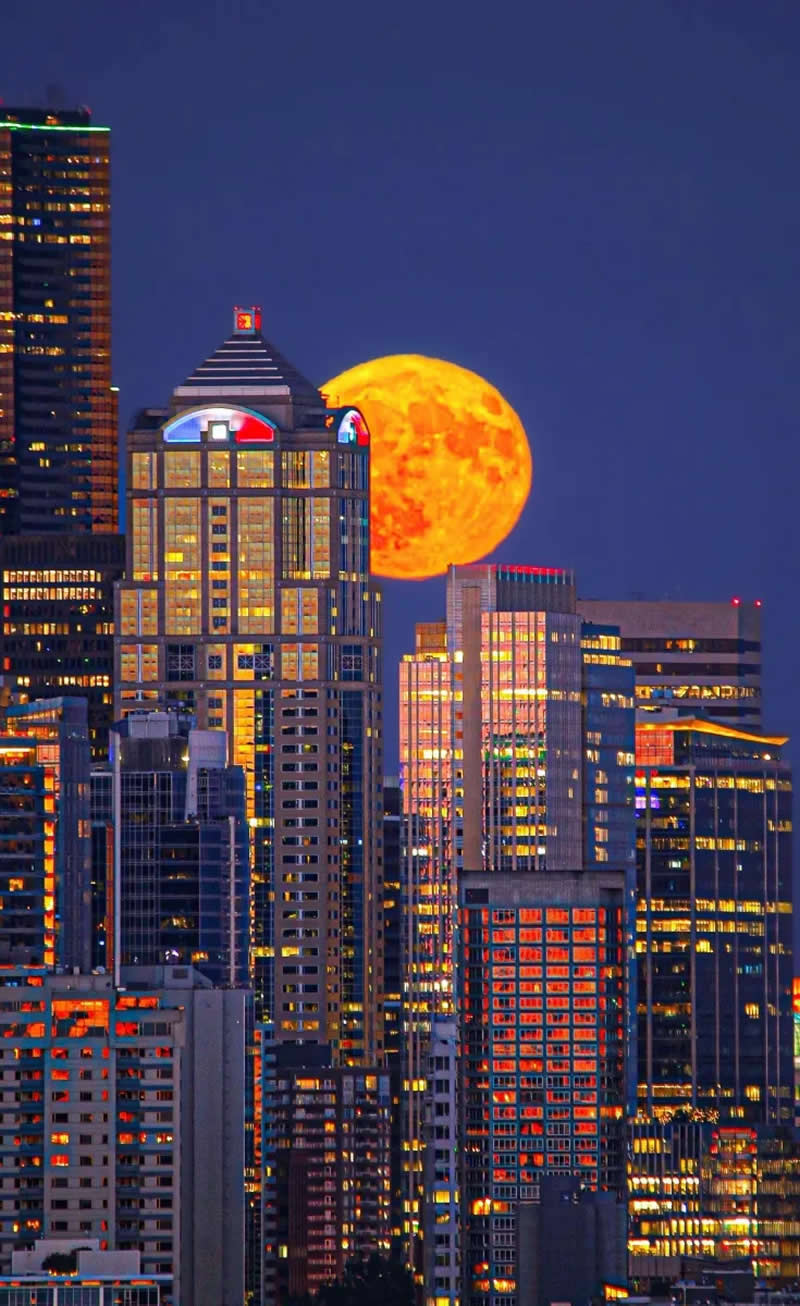
"This picture reveals the city of Seattle, illuminated at twilight during a summer sunset. Above it, the orange Buck Moon is rising. The colour of the Moon reflected in Seattle’s skyline casts a golden light over the entire city, its deep glow adding presence to the image and providing a contrast to the sleek lines of the intricate architecture with its raw and rugged terrain," says AJ.
Taken in Seattle, Washington, USA, 11 July 2025
#25. Best Newcomer – Winner: M1: Echoes of an Ancient Explosion by Haocheng Zhu
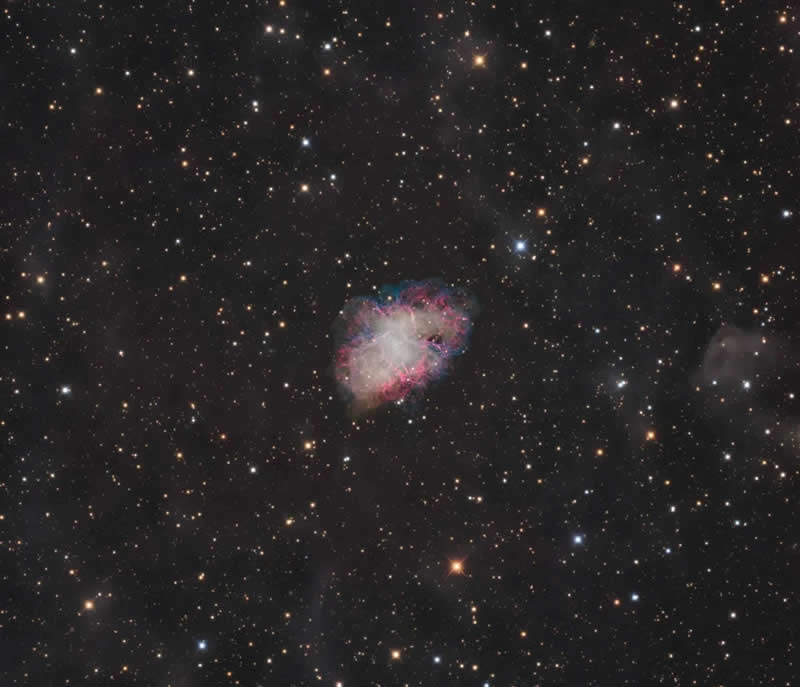
"I began astrophotography less than a year ago and M1 reshaped how I see the night sky. In 1054 CE, during China’s Song Dynasty, astronomers recorded a “guest star” bright enough to be visible even in daylight – a supernova whose remnant we now know as the Crab Nebula. Its tangled filaments still expand through space, carrying the energy of an explosion witnessed nearly 1,000 years ago. What appears faint today was once brilliant to the naked eye."
Taken in Qahar Right Rear Banner, Ulangab City, Inner Mongolia, China, 29 December 2025
#26. Best Newcomer – Runner-up: The Seven Sisters by Tibor Marcsik
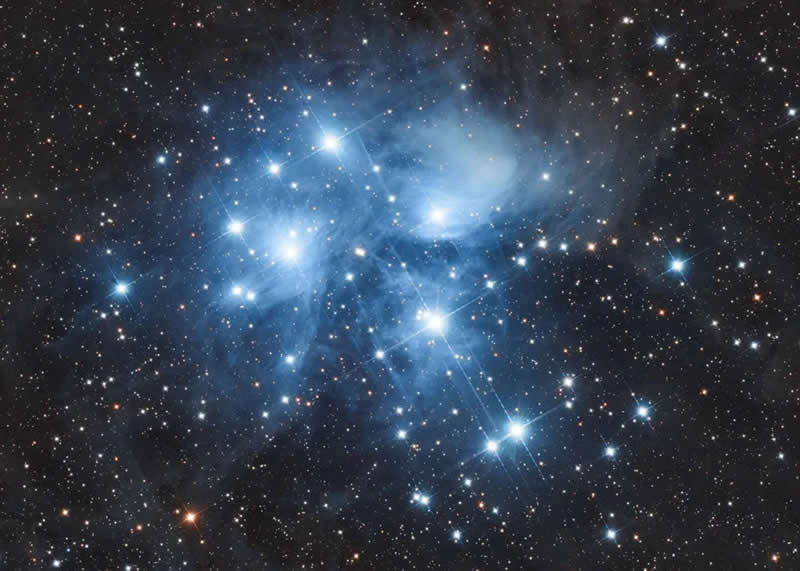
"This image depicts the open cluster M45 (the Pleiades, also known as the Seven Sisters). Taking advantage of the clear conditions in October, I spent two nights photographing this object. To process the photograph, I first calibrated and stacked the individual images. I also removed the stars, which allowed me to better concentrate on the fine details of the nebula. I then merged the images with and without stars in Photoshop."
Taken in Dombóvár, Southern Transdanubia, Hungary, 16 and 20 October 2025
#27. Best Newcomer – Highly commended: Beyond the Stars by James Rider
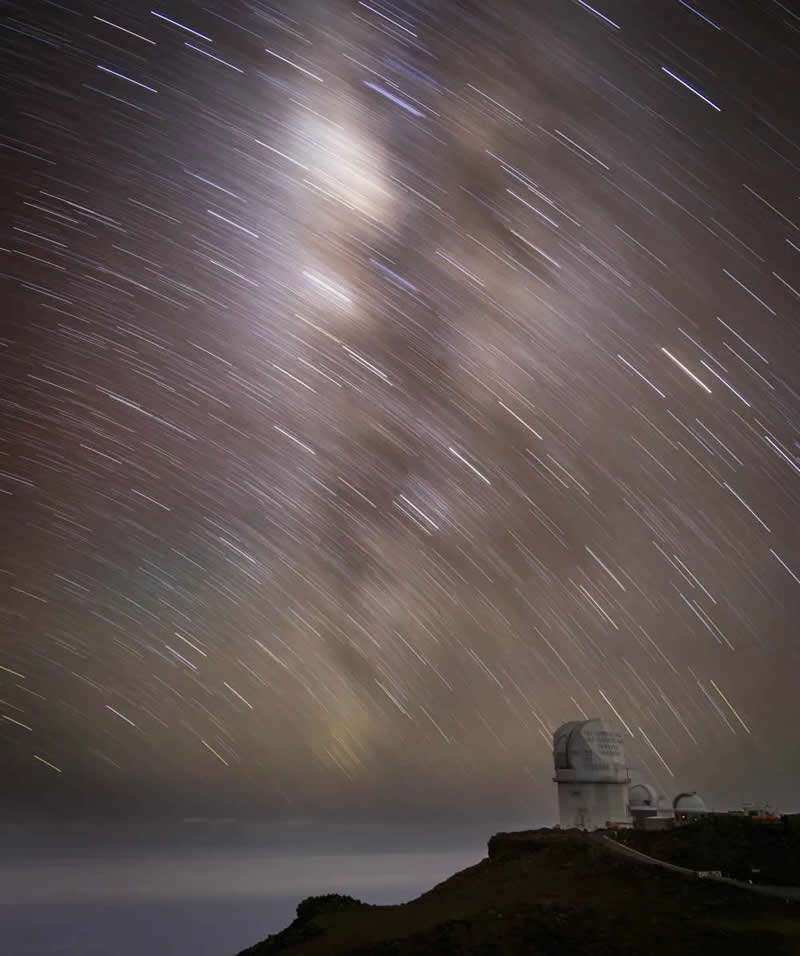
"This image was taken at the top of Haleakalā Peak and shows the Milky Way blurred behind star trails. In the foreground is the Haleakalā Observatory. My aim was to give a sense of the distance of the Milky Way by capturing it in the background of the photograph behind the stars."
Taken in Haleakalā Observatory, Maui, Hawaii, USA, 17 September 2025
#28. Annie Maunder Open Category – Winner: Reverse Astronomy: Mother by Paweł Paweł
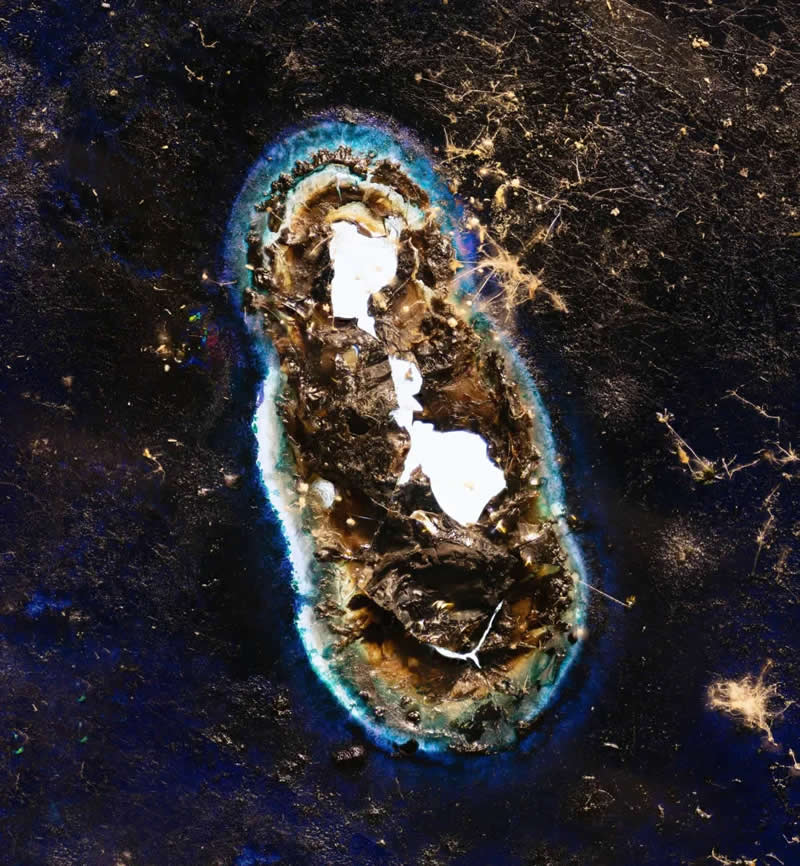
Paweł says, "In this project I worked with analogue light-sensitive material, directing the lens toward the Sun. I subjected the negative to intense radiation, exploring the moment when light begins to physically affect the medium. I am interested in the relationship between the star and the material of the image."
Custom-built, large-format, analogue camera, Tessar f/4.5 250 mm lens, Fujichrome 100 slide film, 3-minute exposure; microscopic re-photography setup.
#29. Young Competition – Winner: Mineral Moon by Nikolaos Strimpoulis
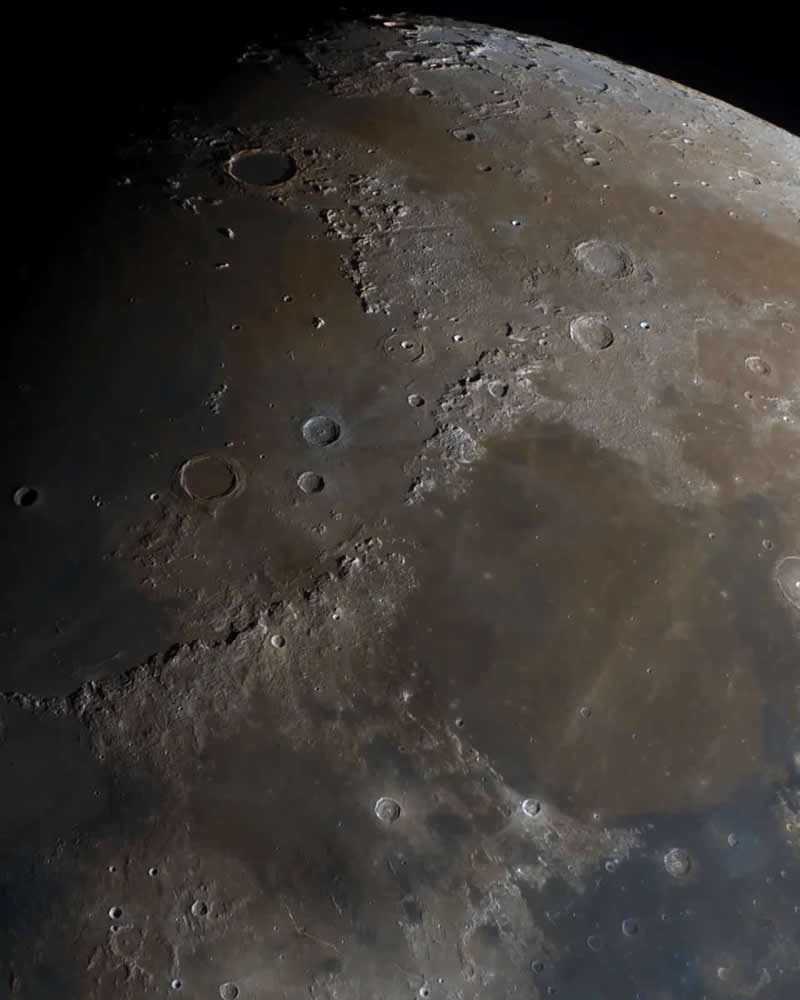
"This image is a close-up of the surface of the Moon, including dark areas (known as maria) and bright areas (known as the highlands)," Nikolaos says. The smooth, dark areas are ancient lava flows, while the rugged highlands have been shaped by billions of years of impacts."
Taken in Palaio Faliro, Athens, Greece, 8 March 2025
#30. Young Competition – Runner-up: M20: The Trifid Nebula by Kaiyan Ma
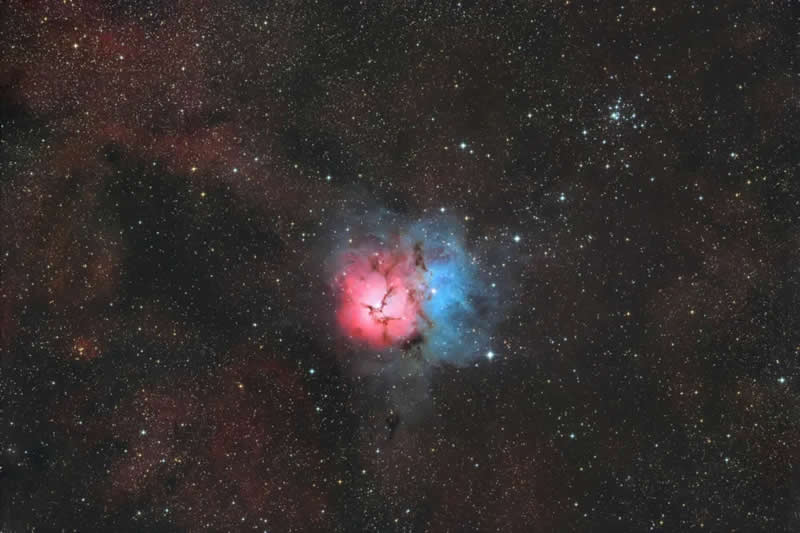
"I needed about three hours of exposure data to capture the faint starlight that has travelled thousands of light years to reach us," Kaiyan recalls. As the red nebula and blue dust gradually emerged on the computer screen, I got the impression of a clover flower blooming in the Universe."
Taken in Zhongtai, Lingtai County, Gansu Province, China, 27 July 2025
#31. Young Competition – Highly commended: The Heart Nebula by Benjamin and Joshua Lawler
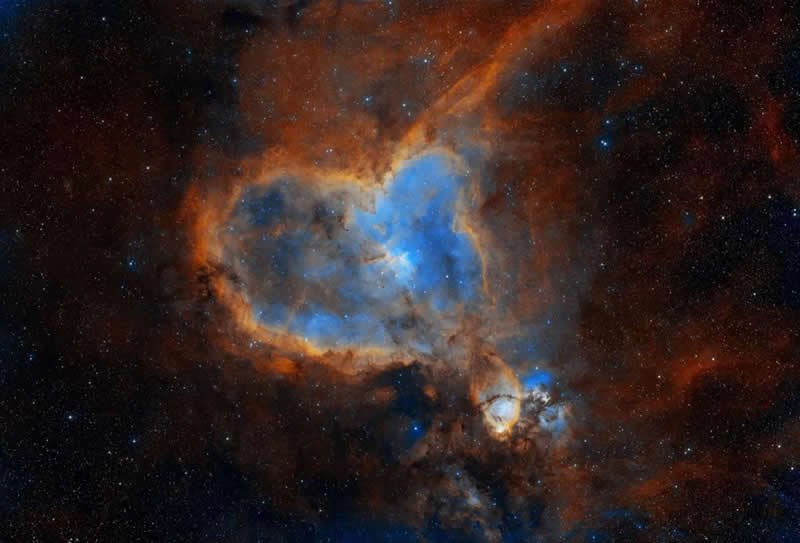
"This was our first attempt at taking a picture using a monochrome camera with seven filters. We decided on the Heart Nebula (IC 1805) as our target, as we had already imaged this with our colour camera setup when we first started," they say."
Taken in Tutbury, Staffordshire, England, 31 December 2025, 2 and 4 January 2026
#32. Young Competition – Highly commended: Celestial Enchantress by Lin Yuchen
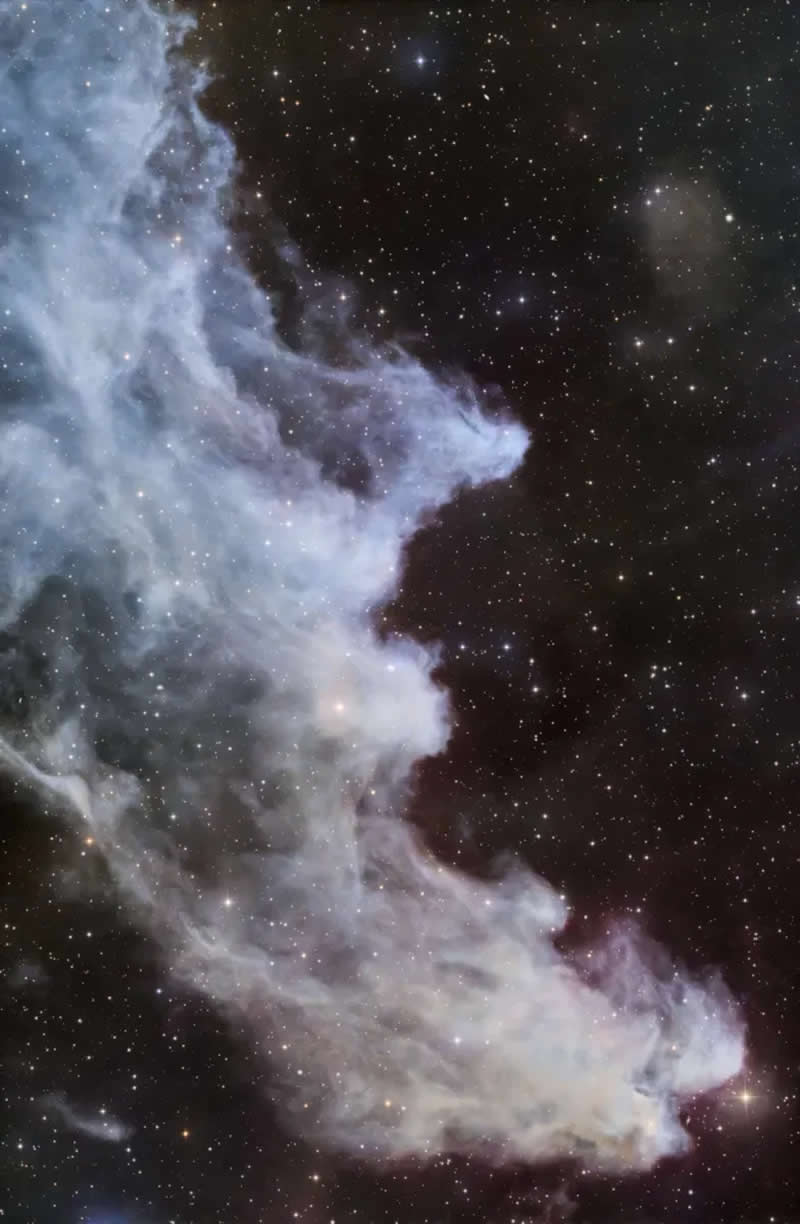
"This deep-space image of the Witch Head Nebula (IC 2118) reveals ethereal blue clouds of gas and dust that form the mysterious silhouette of a celestial sorceress." Lin Yuchen says.
Taken in Nanping City, Fujian Province, China, 15 November 2025 and 14 February 2026
#33. Young Competition – Highly commended: A Sphere of Opposites by Shamiqh Gajdhar
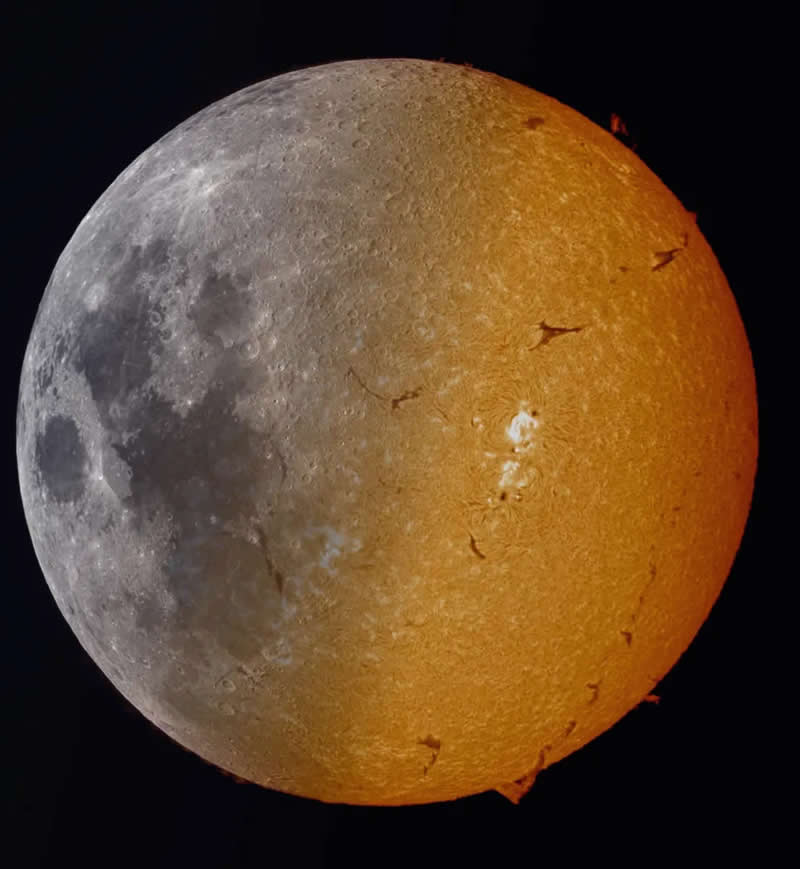
"This image presents a celestial fusion: one half is illuminated by the quiet glow of the Moon and the other by the fiery brilliance of the Sun. Together, they form a single sphere that feels both balanced and powerful, uniting night and day in one frame," Shamiqh explains.
Taken in Al-Balad, Jeddah, Saudi Arabia and Scottsdale, Arizona, USA, 7–8 September 2025 and 25 February 2026
Frequently Asked Questions:
Who won Astronomy Photographer of the Year 2026?
Ali Alobaidly won the 2026 Astronomy Photographer of the Year competition with The Quiet Predator, an extraordinary photograph of the Shark Nebula. His image also won the Stars and Nebulae category.
What is Ali Alobaidly’s winning photograph called?
Ali Alobaidly’s winning photograph is titled The Quiet Predator. It captures the Shark Nebula, a dark nebula whose dense dust clouds create a distinctive shark-like silhouette against the distant stars.
What is the Shark Nebula?
The Shark Nebula, also known as LDN 1235, is a dark nebula located approximately 650 light-years from Earth in the constellation Cepheus. Dense cosmic dust blocks background starlight, creating its dramatic appearance.
What prize did Ali Alobaidly receive?
Ali Alobaidly received a £10,000 prize for winning Astronomy Photographer of the Year 2026. His photograph also earned first place in the competition’s Stars and Nebulae category.
Why is The Quiet Predator photograph special?
The Quiet Predator stands out for its extraordinary detail, sharpness, and contrast. The image reveals the Shark Nebula while keeping distant galaxies visible through the surrounding dust, creating remarkable depth.