
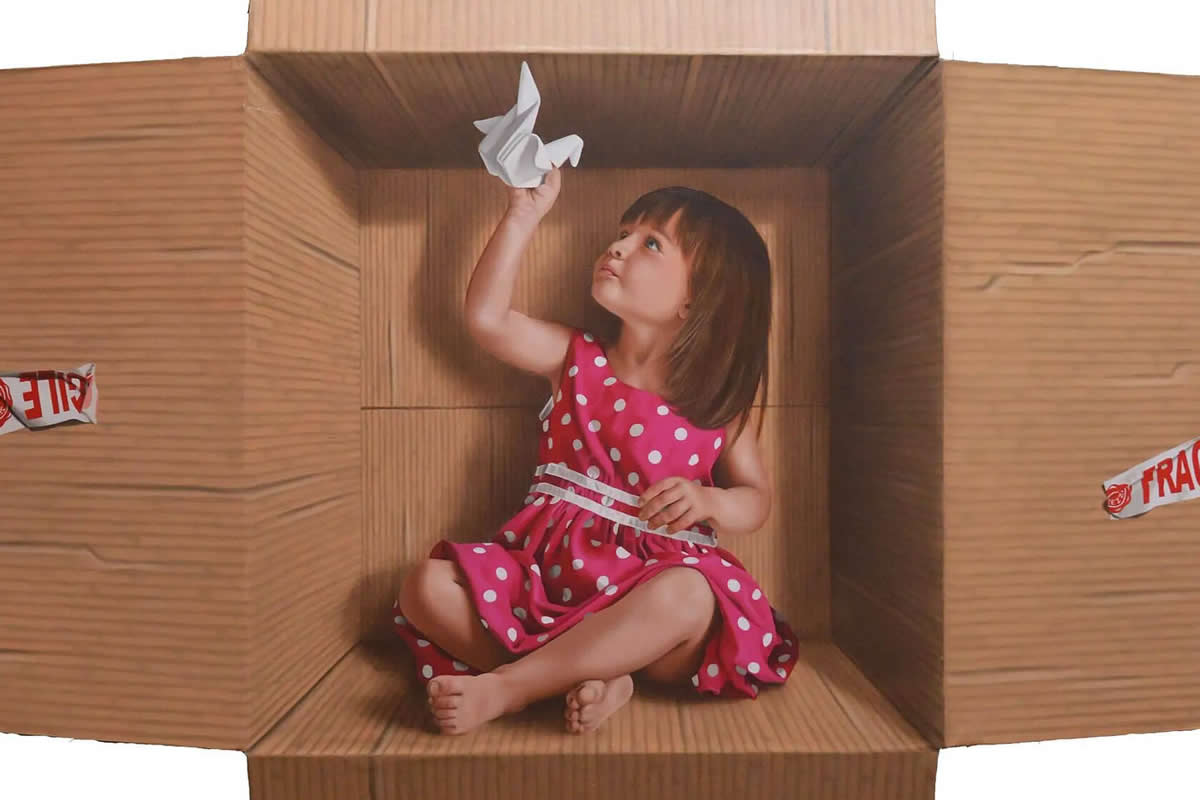
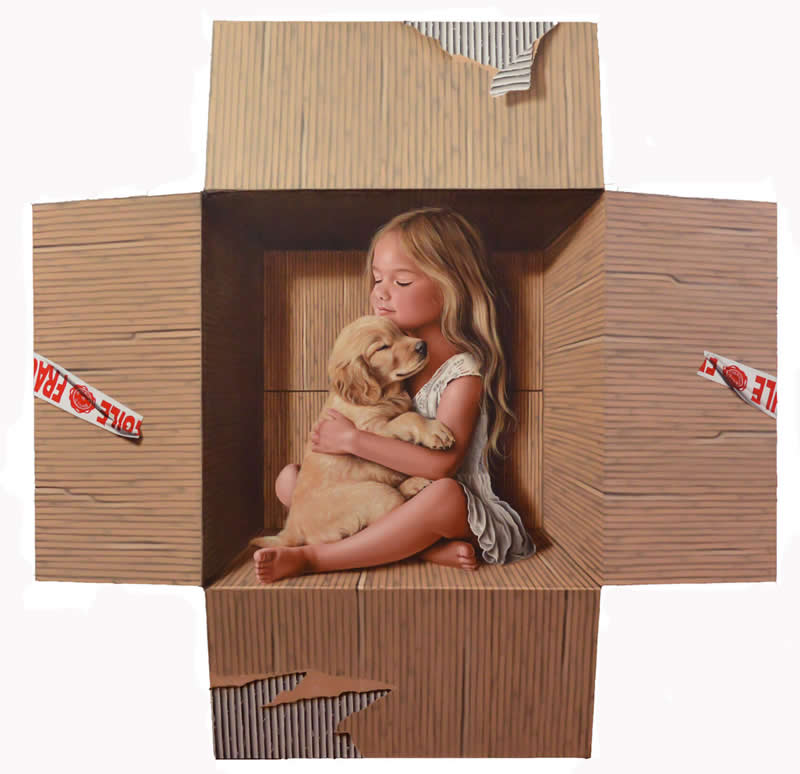
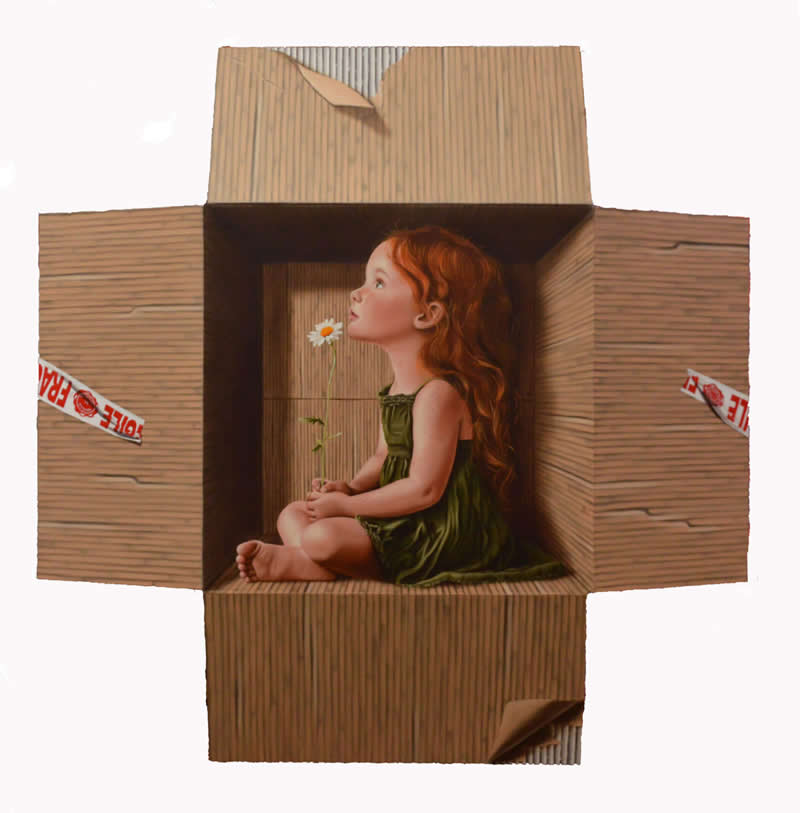
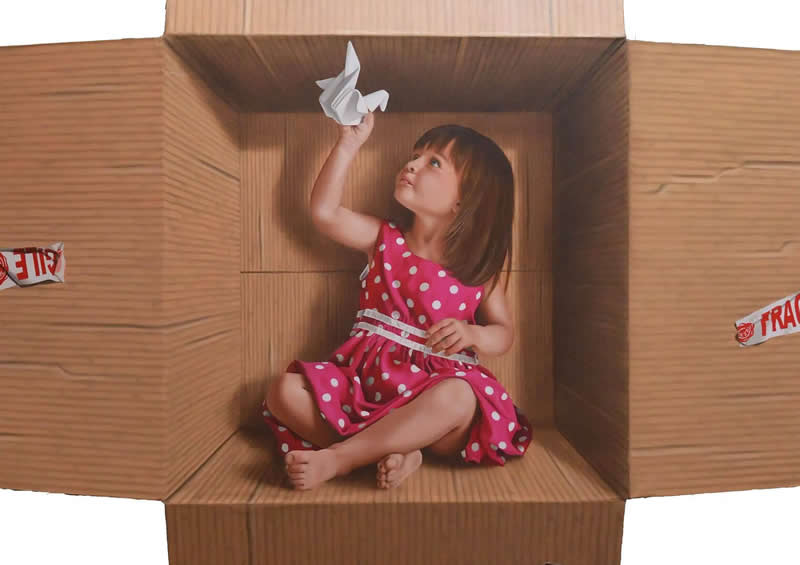
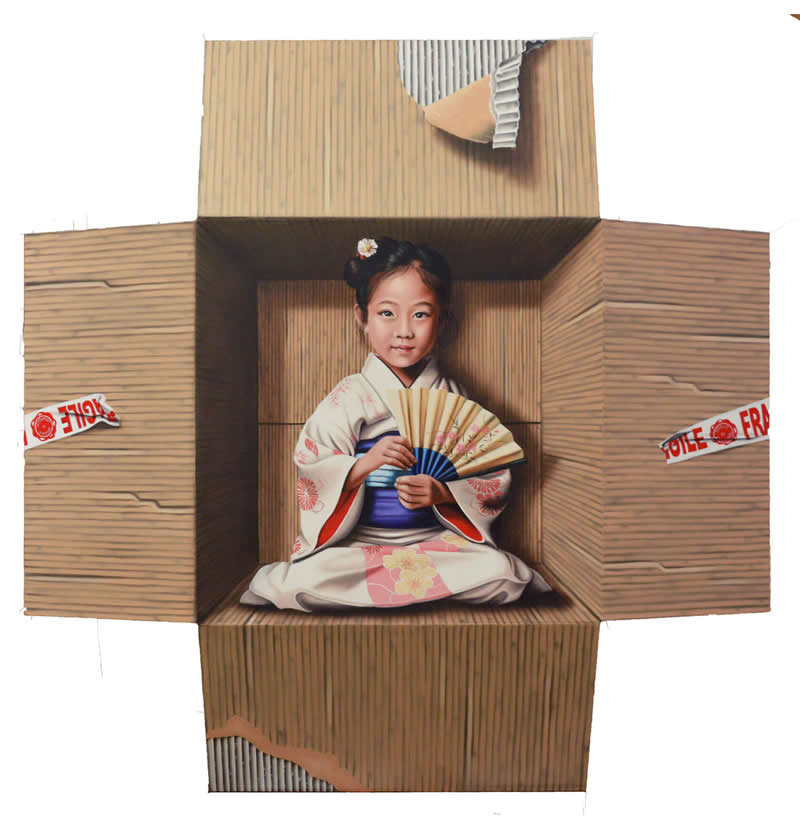
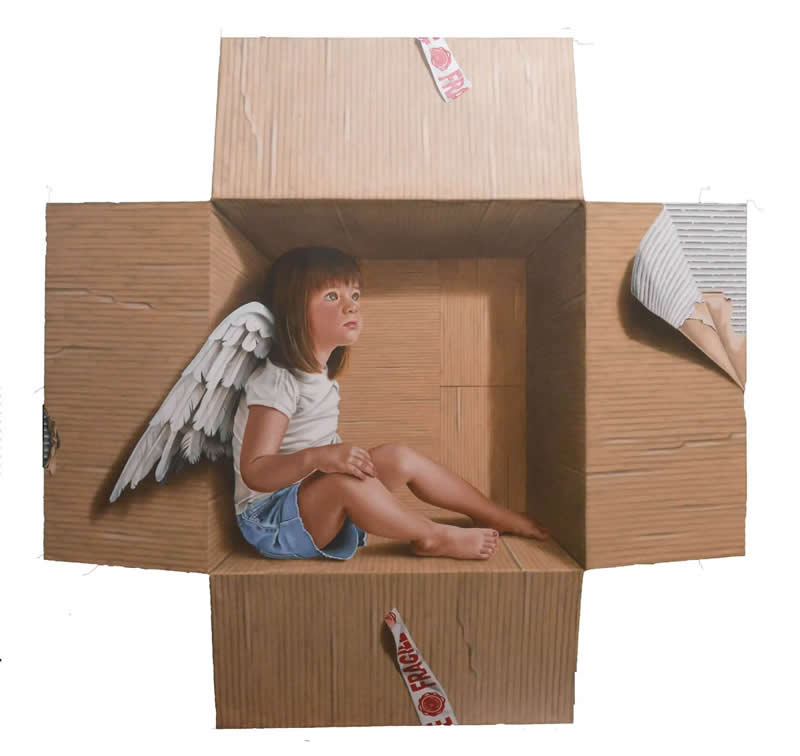
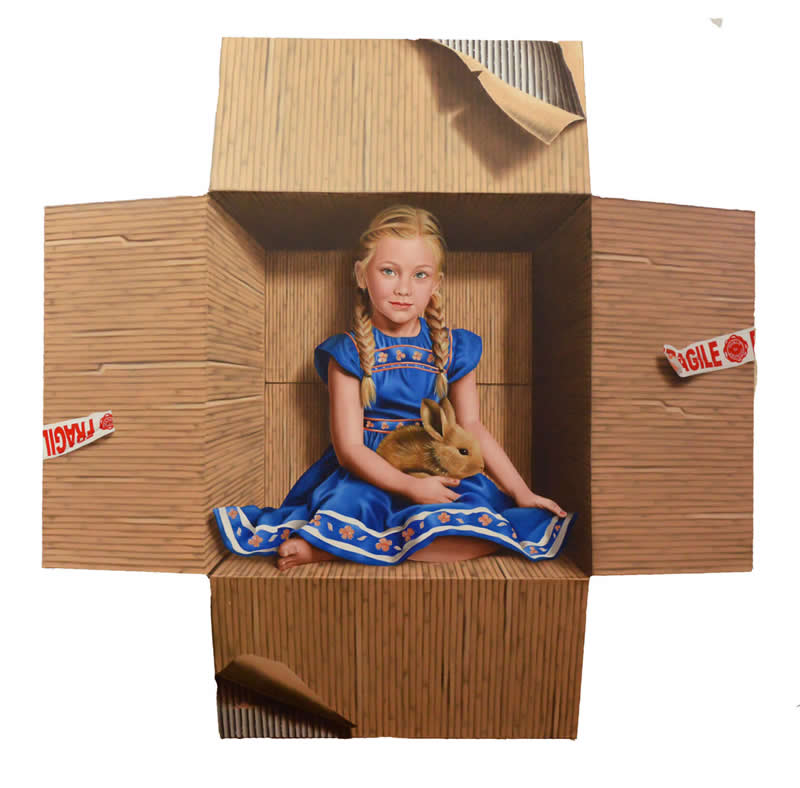
Imagining that a simple cardboard box could contain an entire childhood not the kind of childhood stored in old family albums, but one filled with imagination, quiet afternoons, secret games, and those wonderfully strange moments when a child can turn almost anything into a little universe – is exactly the feeling that lies behind Italian artist Marica Fasoli’s remarkable hyperrealist paintings.
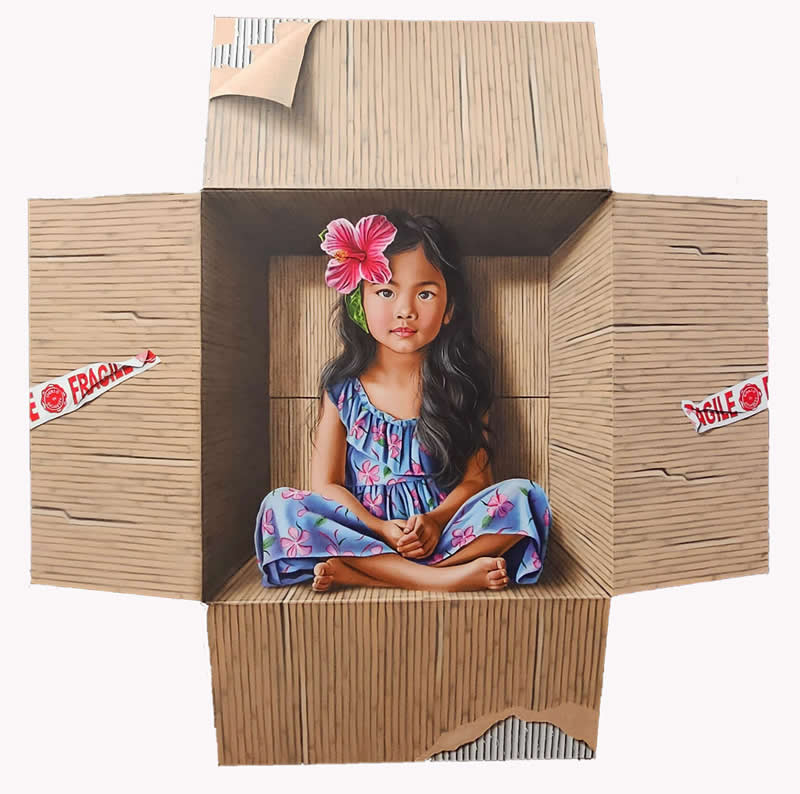
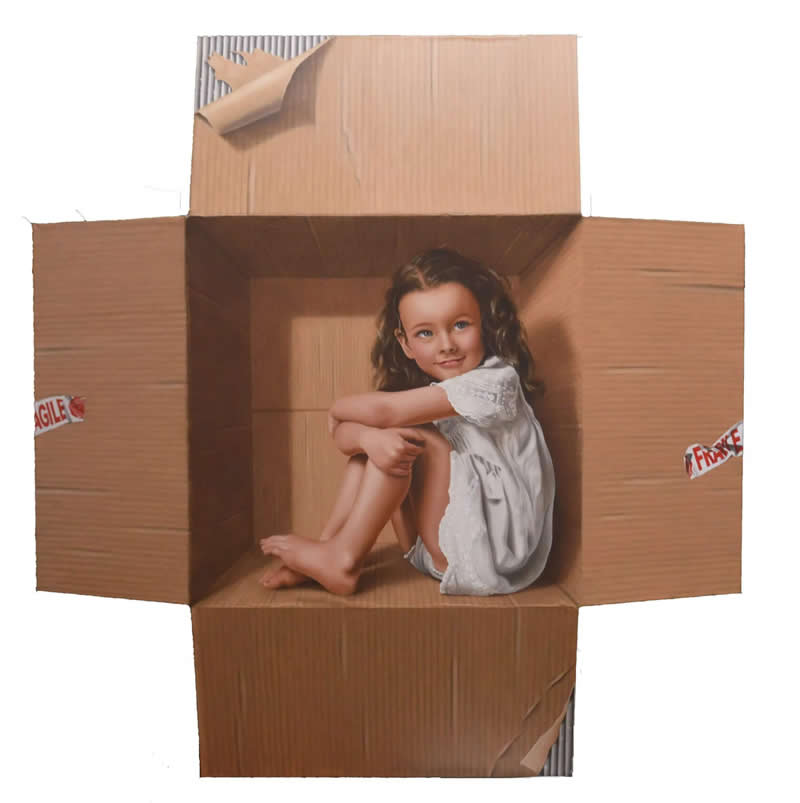
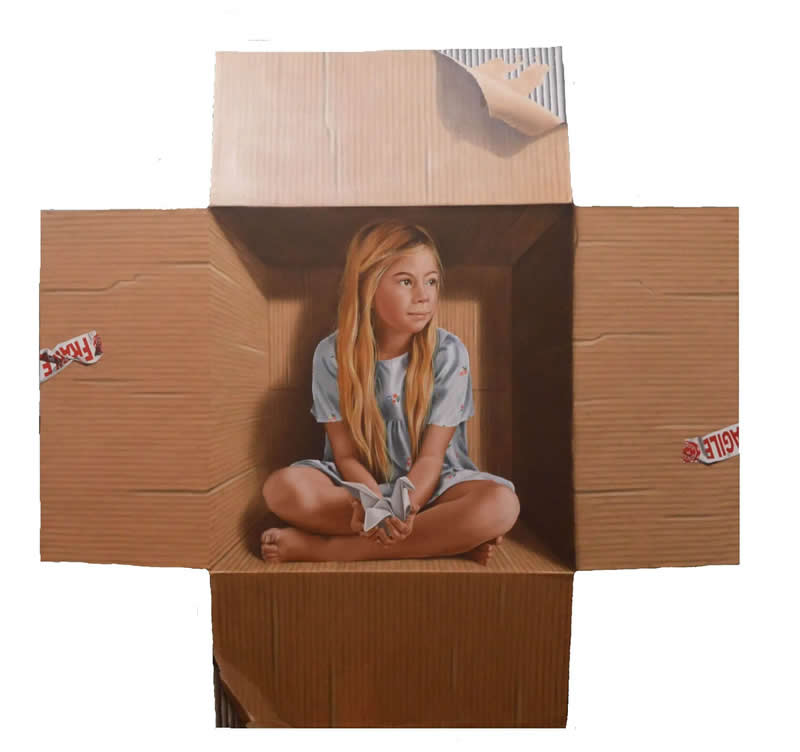
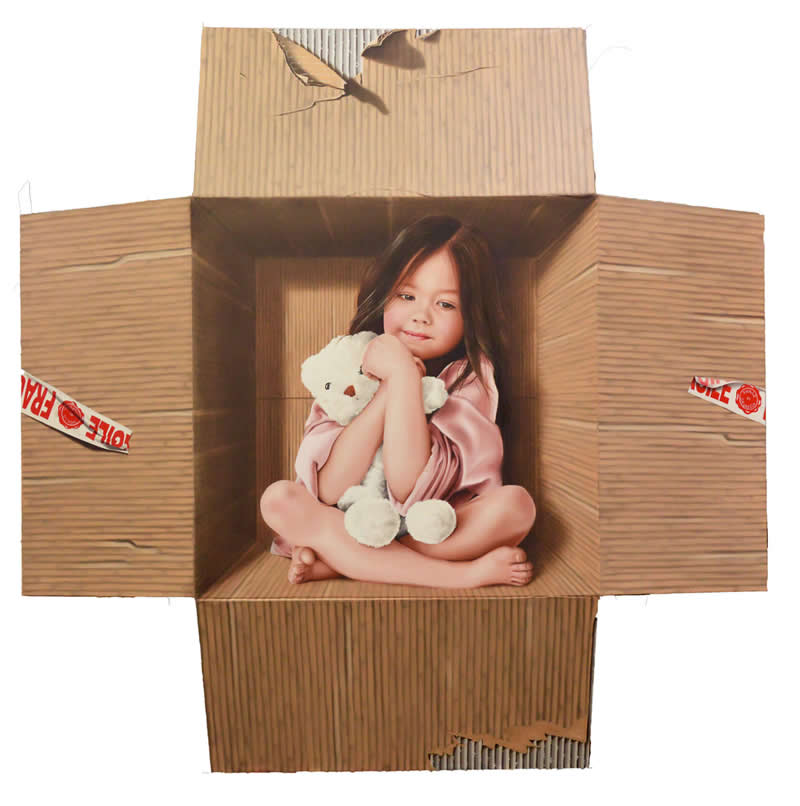
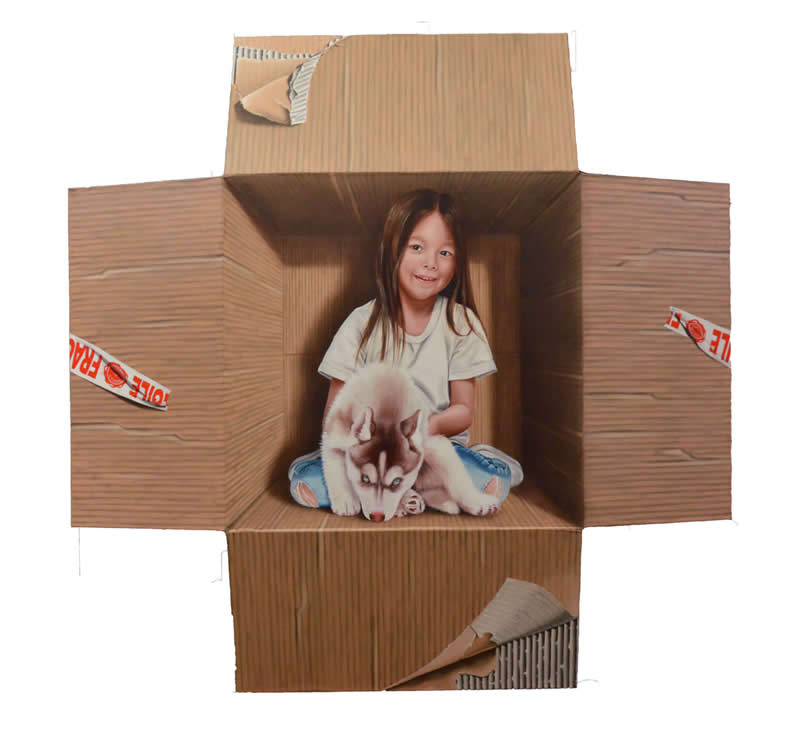
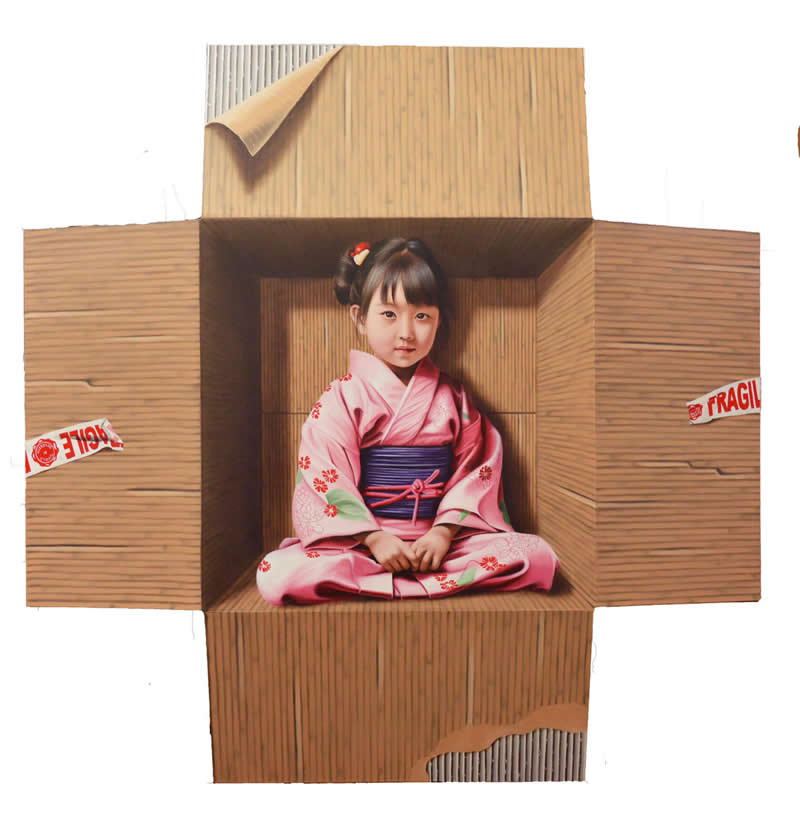
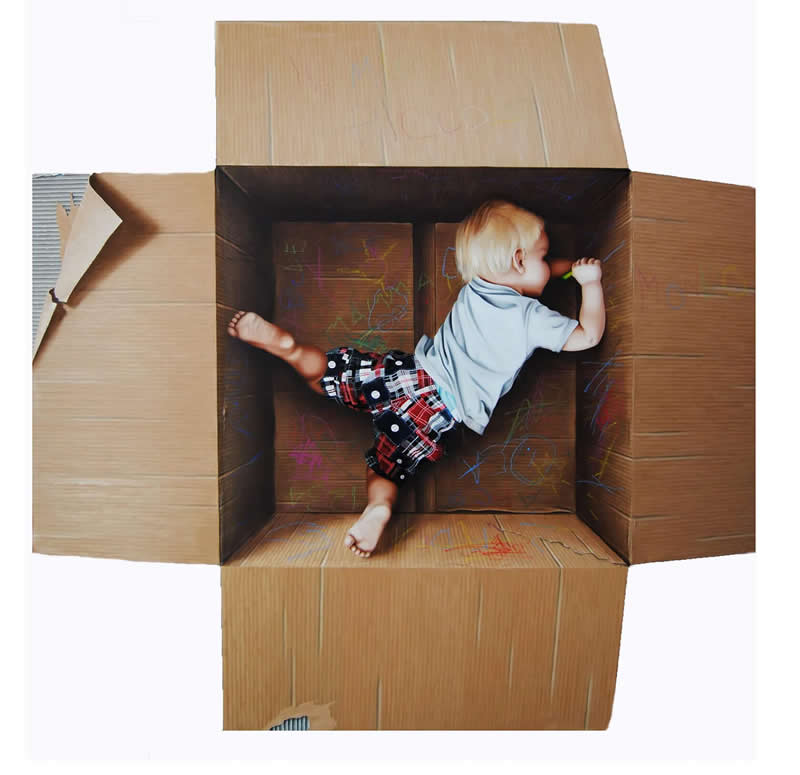
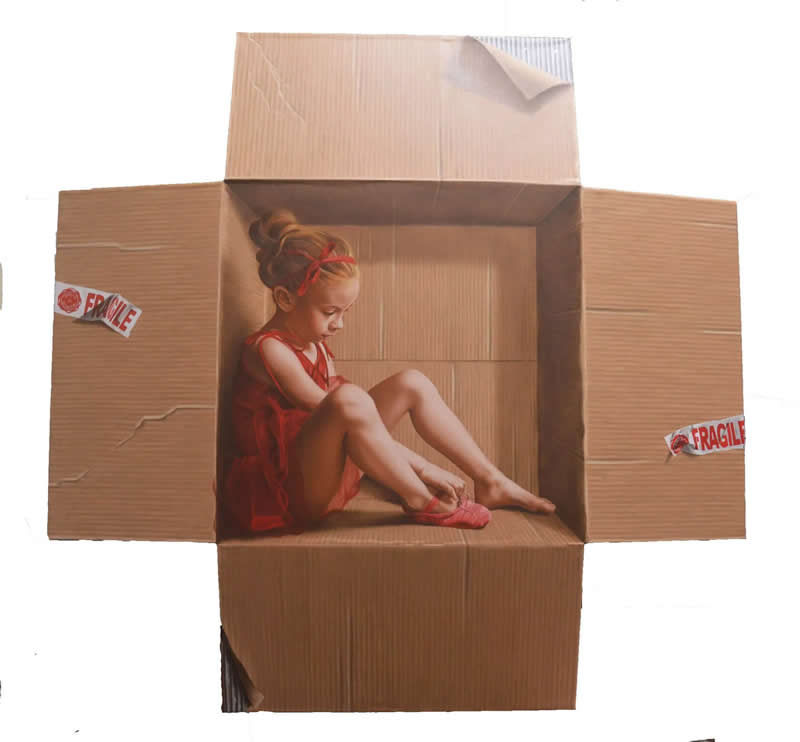
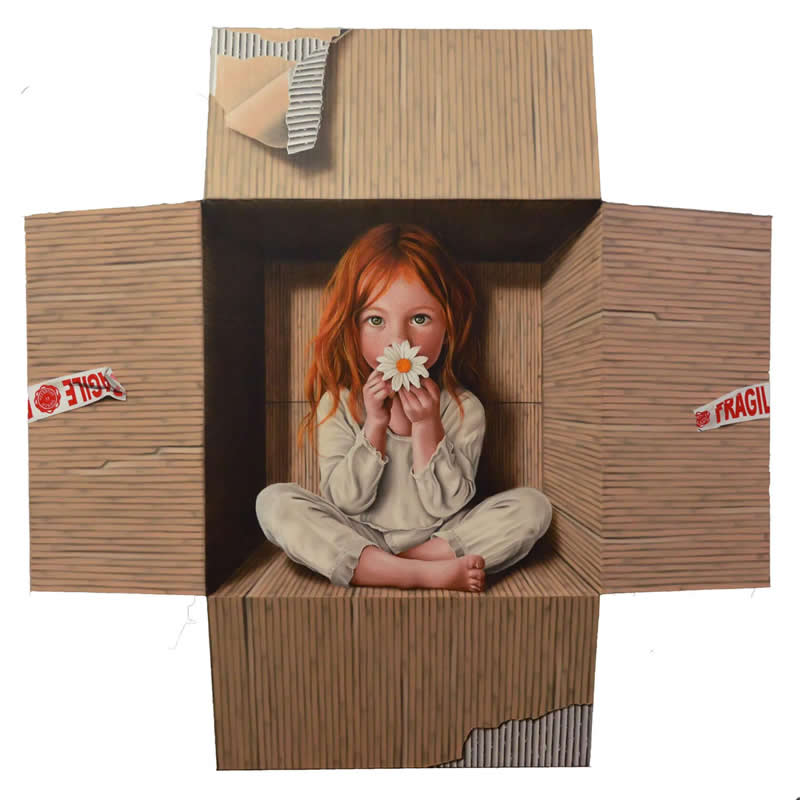
At first sight, her artworks could deceive you: there’s battered cardboard, torn corners, peeling paper, strips of "Fragile" tape, and an open package as if it had been stored in a warehouse for years. It is only when you notice the child inside sitting there, playing, or daydreaming that the simple box turns into something far more personal.
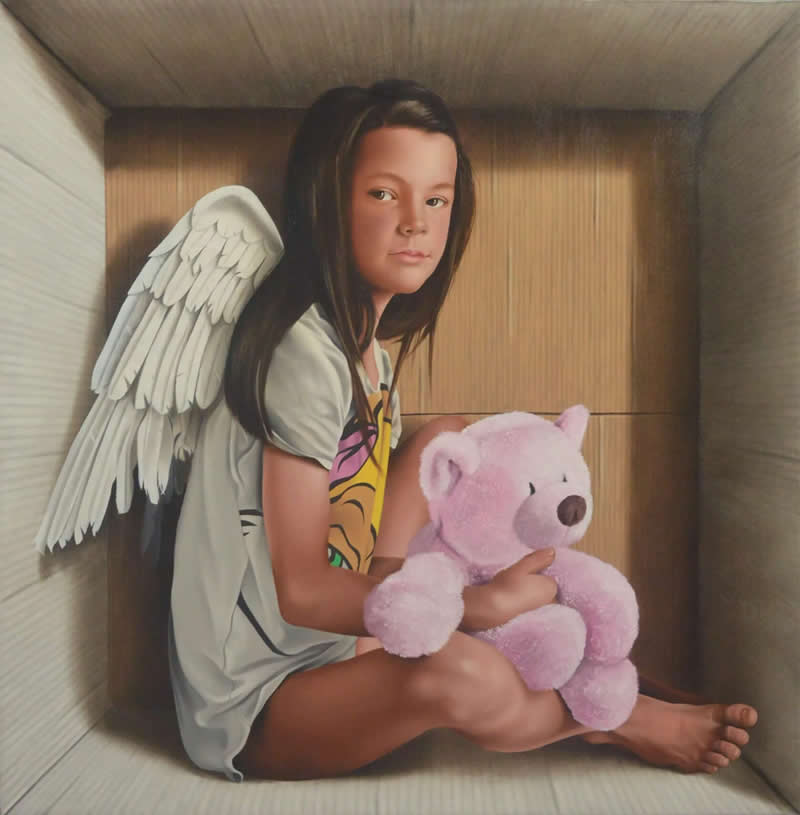
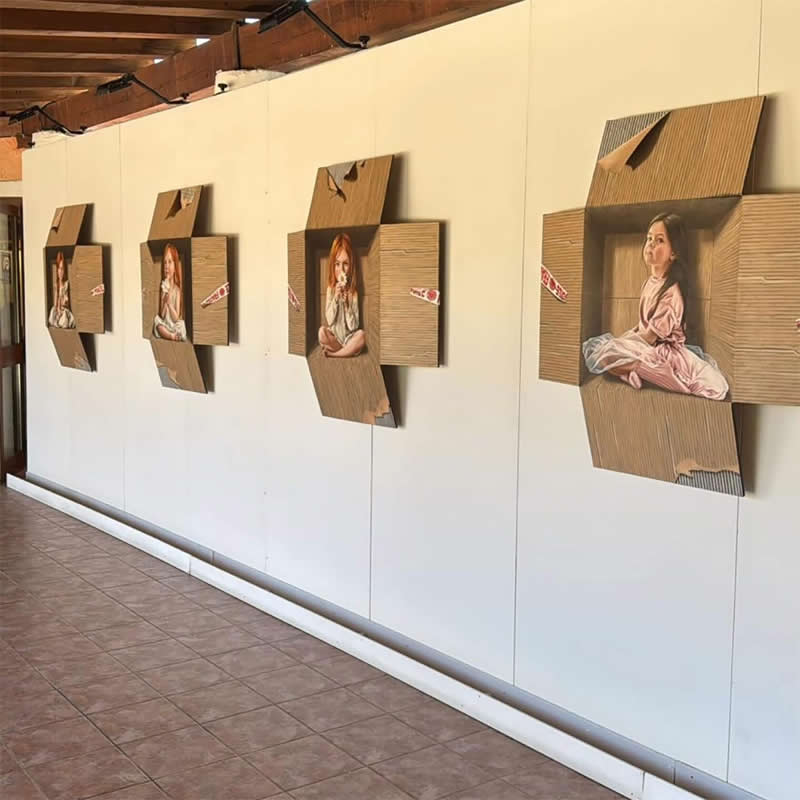
Fasoli doesn’t just paint cardboard boxes; instead she creates realistic little worlds around them by using three-dimensional supports which project physically from the wall. Her careful technique includes reproducing all the details such as the rough ridges of the corrugated cardboard, strands of hair, the folds in clothes, the different skin tones, and the small objects scattered in the scene.
Fasoli was born in Bussolengo, Italy, in 1977 and initially received training in art conservation and restoration before deciding to pursue her own artistic work. One can see the effects of this. Each crease and worn area has been carefully noted, almost as though she is preserving a fleeting childhood memory.
You can find Marcia Fasoli on the web:
#1
#2
#3
#4
#5
#6
When Cardboard Becomes a World of Its Own
There’s a most clever thing about Fasoli’s decision to use cardboard. We normally connect it with moving houses, online deliveries, storage closets, and that one box in the garage which no one is willing to get rid of. But in her hands, it takes on a totally new meaning.
The children are seen within the open packages as if they had come upon secret rooms which were hidden in plain view. Some sit in silence, others play or lose themselves in thought. It is this contrast which makes the paintings so impressive: the rough and damaged packaging looks as though it is temporary, whereas the scenes of childhood appear to be timeless.
Then there’s the small detail: Fasoli depicts torn corrugated cardboard, wrinkles, scratches, peeling paper, and "Fragile" tape with such accuracy that your brain nearly feels the roughness of the cardboard under your fingertips; on closer examination, the illusion becomes even more powerful.
It’s somewhat similar to opening an old moving box only to find something valuable inside. The difference in this case is that the valuable thing is imagination itself.
#7
#8
#9
#10
#11
#12
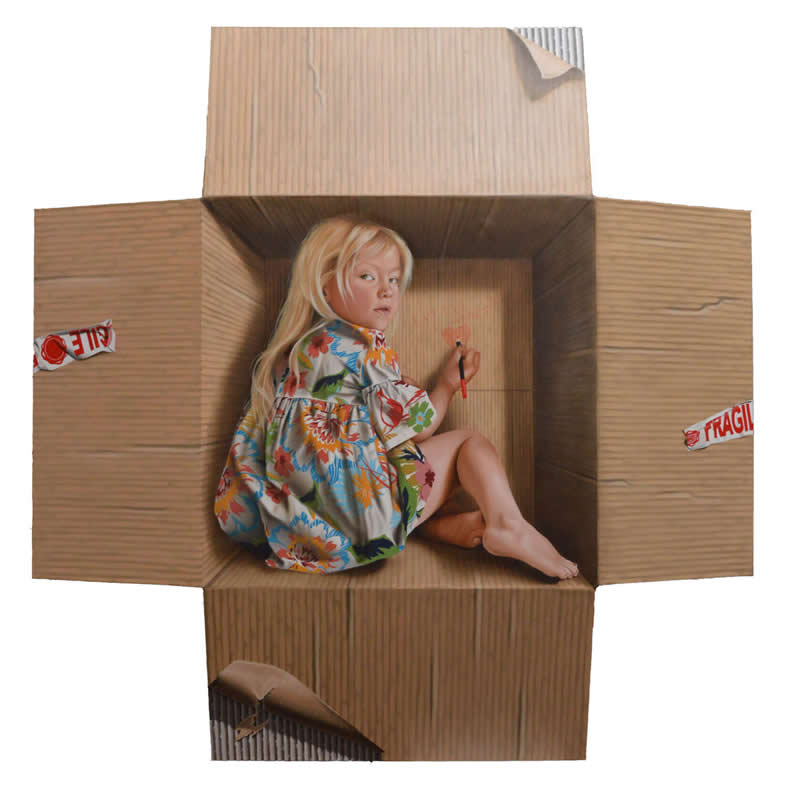
Hyperrealism With a Surprisingly Tender Heart
Fasoli’s work could certainly be taken as a technical display of painting skill, but it is actually the gentle idea he conveys about childhood, memory, and vulnerability that remains with you.
It is entirely understandable that she has trained in art conservation and restoration, given the great care shown in these works. Having worked on paintings, canvases, and historic frescoes before she set up her own practice in the early 2000s, she likely honed her ability to detect texture, aged surfaces, and small visual flaws.
The imperfections matter; the boxes are not smoothed over or made attractive. Instead, they are creased, torn, worn, and wrapped in strips of warning tape. Still, inside them are children caught in peaceful, intimate moments.
What is the point of putting something so delicate in something so fragile? Perhaps that is the whole idea. Childhood can feel precisely that way: precious, temporary, and impossible to keep packaged forever. Fasoli’s cardboard worlds turn that feeling into something you can actually see.
#13
#14
#15
#16
#17
#18
Editor’s Summary
- Hyperrealist detail: Cardboard textures and human figures look remarkably tangible.
- Childhood themes: Children transform ordinary boxes into imaginative personal worlds.
- 3D presentation: Physical cardboard elements extend beyond traditional painted surfaces.
- Italian artistry: Marica Fasoli brings her restoration background into her meticulous technique.
- Fragile memories: The worn boxes beautifully echo the fleeting nature of childhood.