
Article by: Arnab Debnath
The first thing I wrote down in my notebook about Langtang wasn’t a description of a mountain. It was the river.
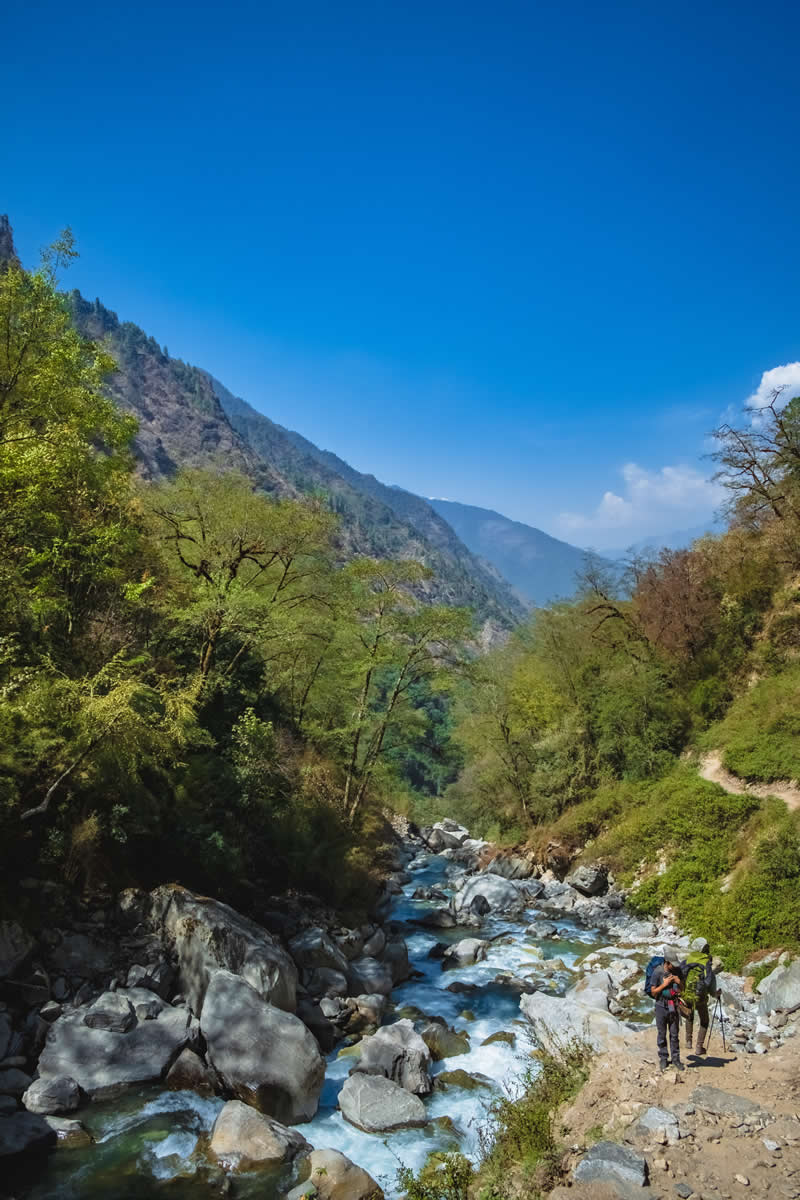
Long before the snow peaks finally broke through the clouds, long before we even understood the terrifying scale of the landscape we were stepping into, we heard the voice of the Langtang Khola. It was hidden deep beneath dense forests and steep valley walls, announcing itself with a constant, thunderous roar. Sometimes sounding distant, sometimes impossibly close. It felt like an invisible guide pulling the four of us deeper into the valley.
When the road finally ended at Syabrubesi, the frantic tempo of urban life dissolved into the quiet, measured pace of the mountains. After a rushed lunch, we began walking. The first few kilometers were a long, dusty track under a blazing afternoon sun. Clouds drifted lazily across distant ridges. Along the way, we passed a returning trekker who smiled knowingly at us. He didn’t say much, but he carried the quiet, enviable peace of someone who had already been up there with the giants. Ahead of us lay four days of climbing. Behind us, the world we knew was already beginning to feel like a distant memory.
By twilight, we reached Bamboo, a tiny cluster of teahouses wedged tightly into a deep, forested gorge. In these narrow mountain creases, darkness arrives instantly. The canopy overhead swallowed the remaining light, leaving us in a world defined entirely by sound. Somewhere in the dark, unseen waterfalls plunged hundreds of feet down sheer rock faces, their crashes blending with the heavy pulse of the river. I remember lying awake listening to it. In the Himalayas, silence rarely means the absence of sound. It just means the beautiful, overwhelming absence of human noise.
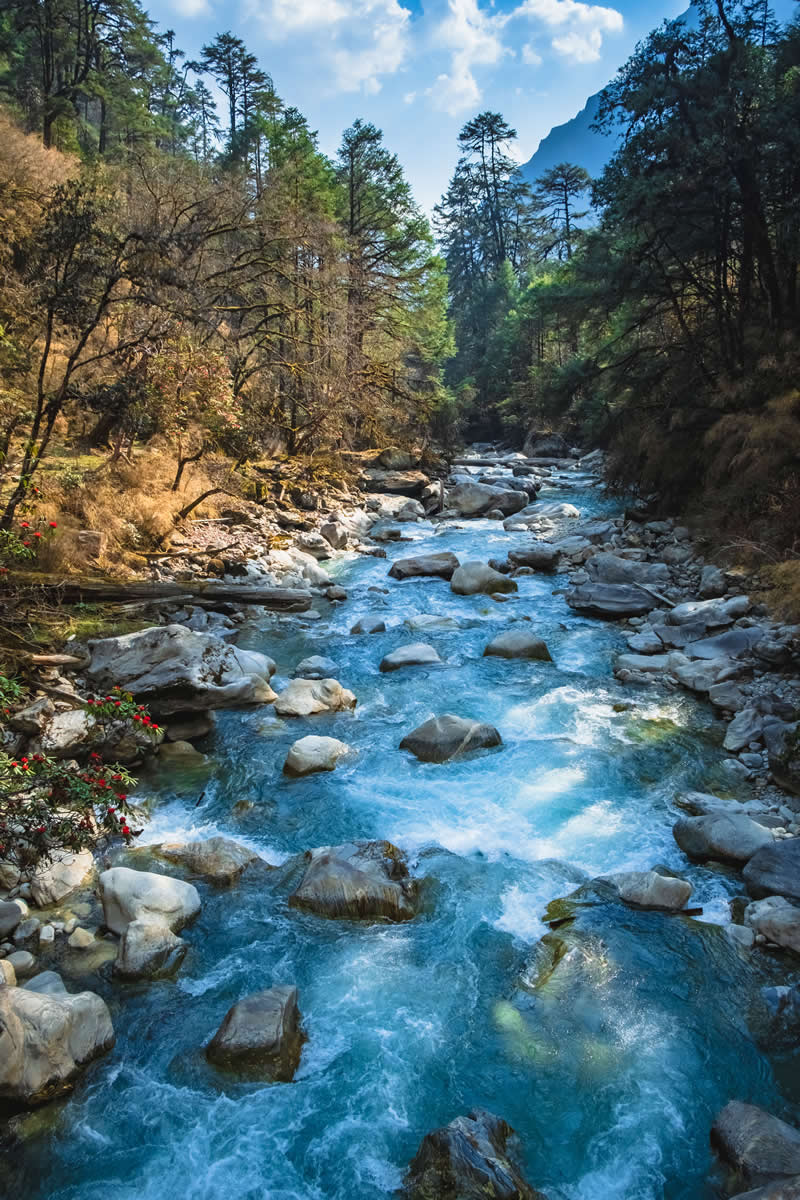
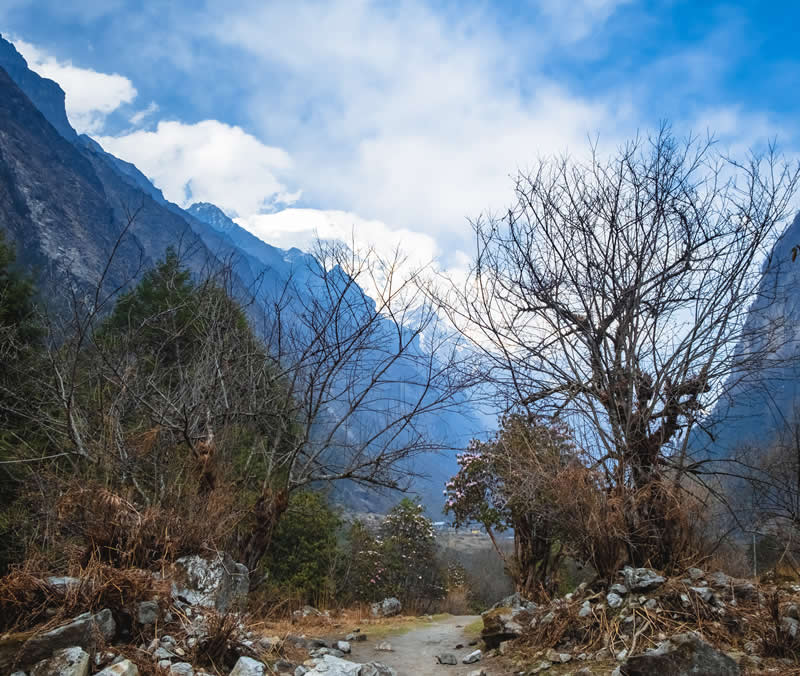
The next morning, the trail tilted sharply upward, carrying us through forests of oak, pine, and moss covered rhododendrons. We crossed swaying suspension bridges over icy, roaring torrents, pausing constantly to look down into the white foam. The river was our constant companion, its turquoise waters rushing over boulders polished smooth by centuries of friction. At this point, we realized the mountains have a way of completely altering your relationship with time. Hours became irrelevant. Distance wasn’t measured in kilometers anymore, but in breath. Progress was counted simply in the rhythmic thud-clack of our trekking poles against the stone.
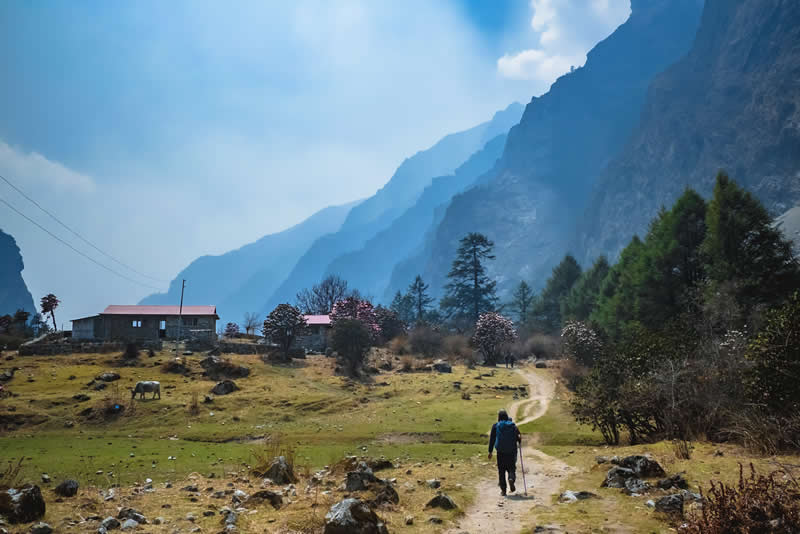
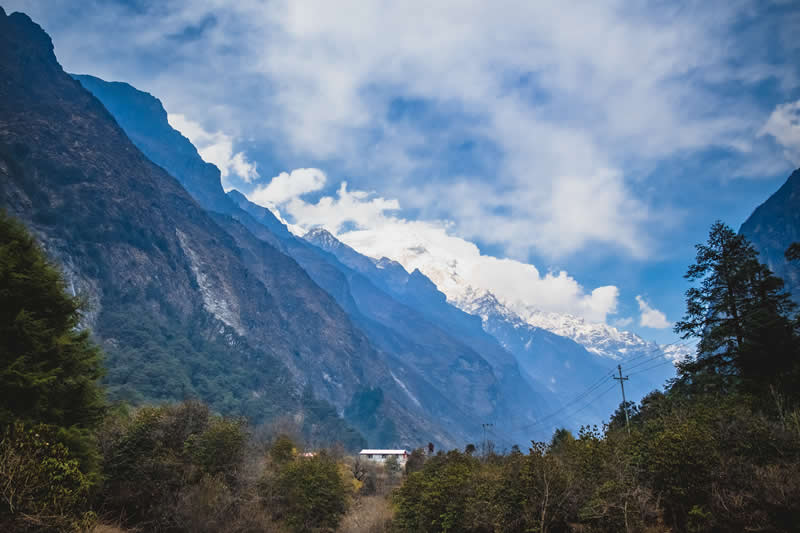
By afternoon, the dense foliage began to open up into the wide meadows of Ghodatabela. For many, this is just an overnight stop. For us, it felt like a profound threshold. The trees were gone. The sky expanded. And there, looming on the horizon, the first true walls of the Himalaya broke through the clouds glistening shields of ice and rock cutting into the thin air.
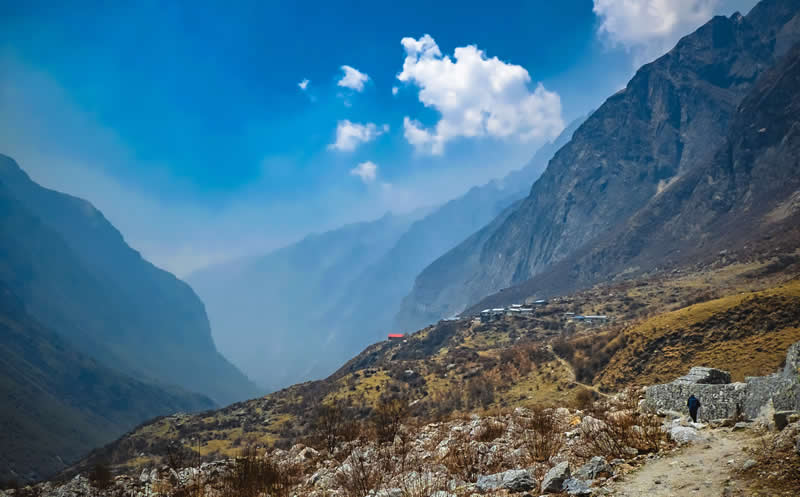
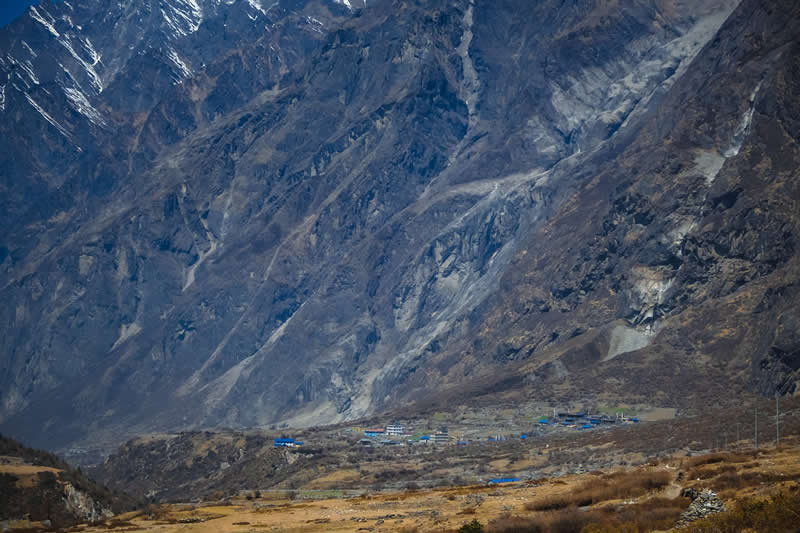
As the valley widened, the wind grew sharp and defensive. The air felt thinner, tasting of stone and cold sky. Then, we walked into the memory of Langtang Village. To walk through this stretch of the trail is to feel a profound, heavy quiet. In April 2015, a catastrophic earthquake triggered a massive avalanche from Langtang Lirung above. A colossal wall of ice and rock flattened the entire settlement in moments, claiming hundreds of lives.
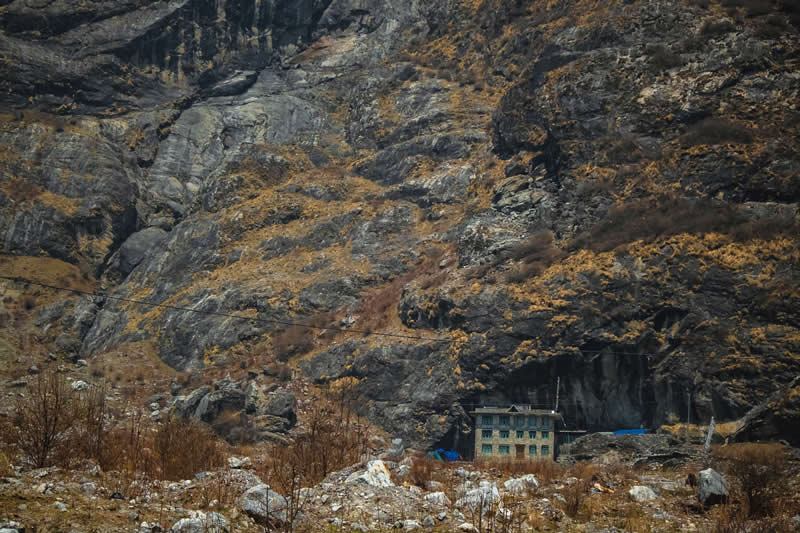
The scars are still staggering to look at a massive, gray boulder field marking where the old village used to be. But one of fellow trekkers stopped and pointed out something that left us entirely speechless! A single, solitary house standing perfectly intact on the edge of the old boundary.
While the avalanche wiped out everything in its direct path, a massive overhanging cliff directly above this specific home had acted as a natural shield, deflecting the catastrophic torrent of rock and ice just enough to leave it untouched. It stands there still an impossible, beautiful symbol of survival.
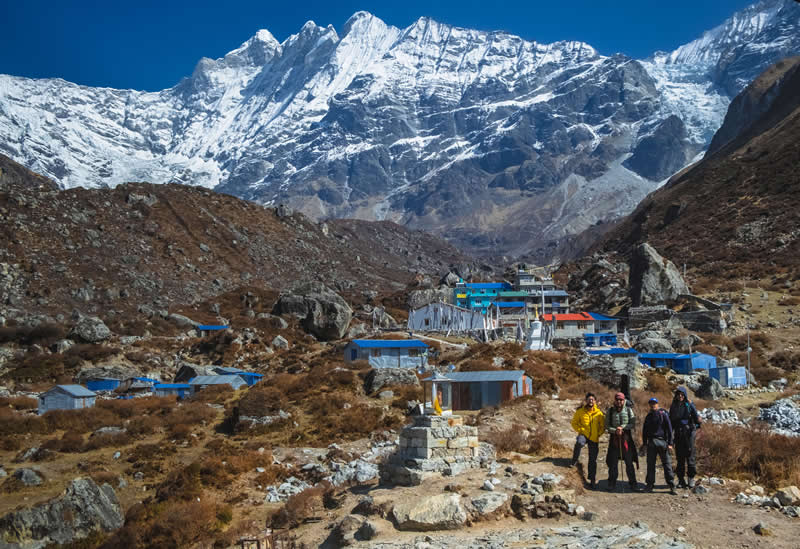
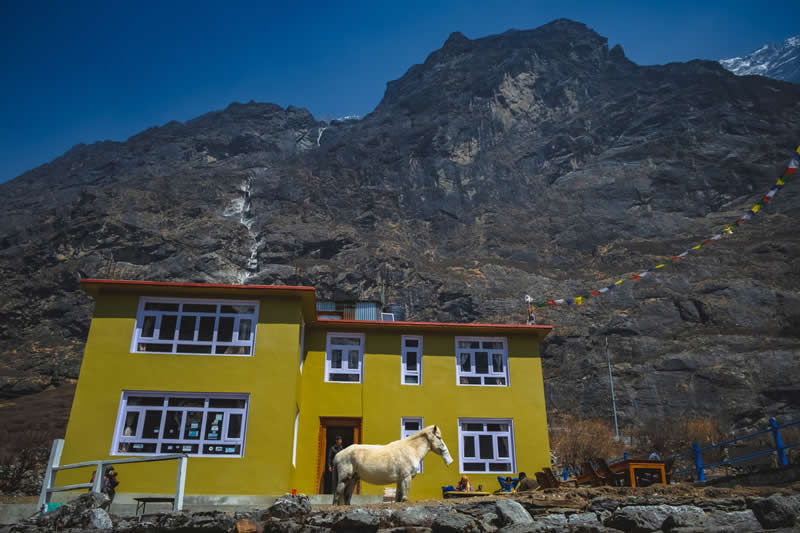
A new village has risen nearby. Blue roofs gleam in the thin sunlight, prayer flags spin in the gale, and daily life continues beneath the same peaks that once unleashed unimaginable force. The story here isn’t just about tragedy; it’s a masterclass in human resilience.
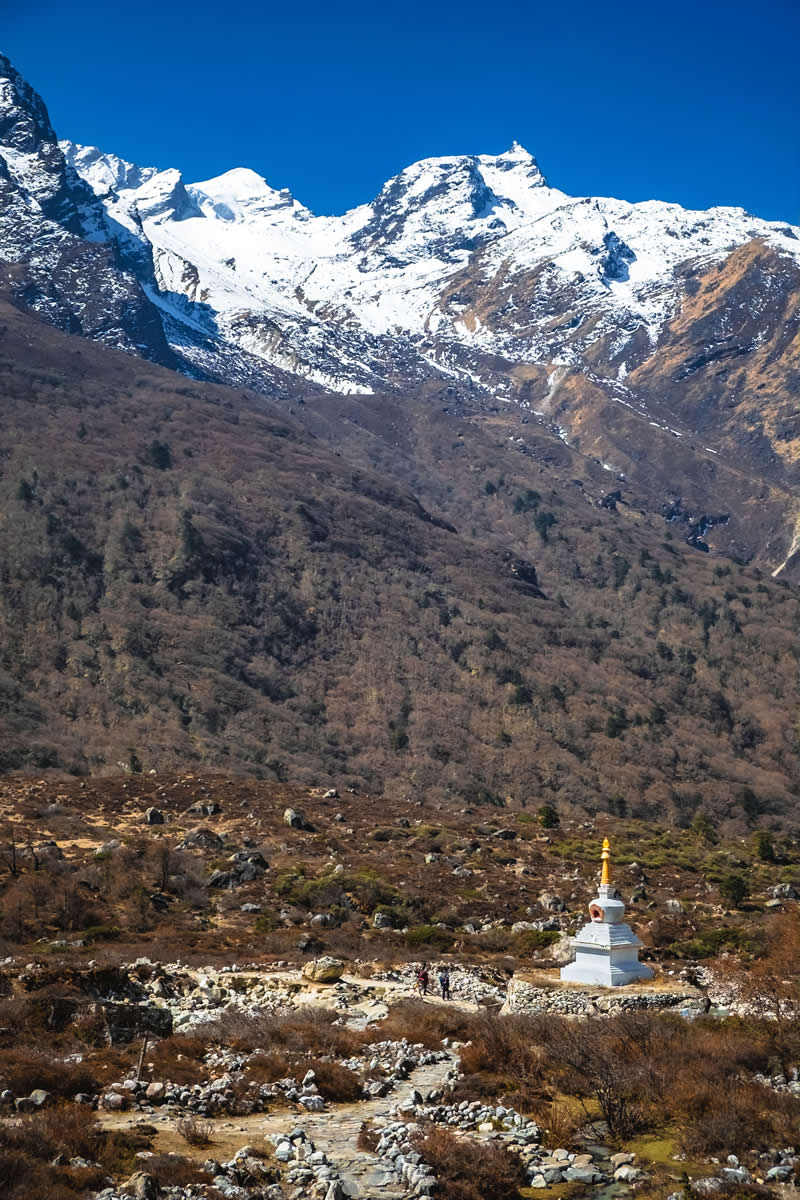
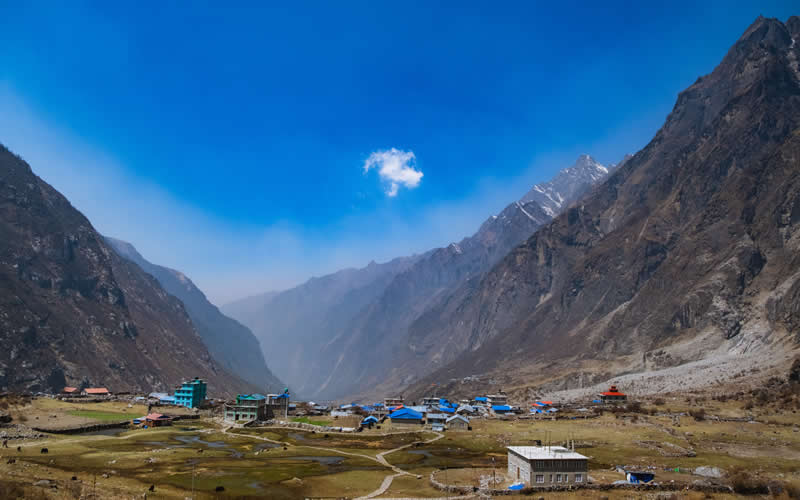
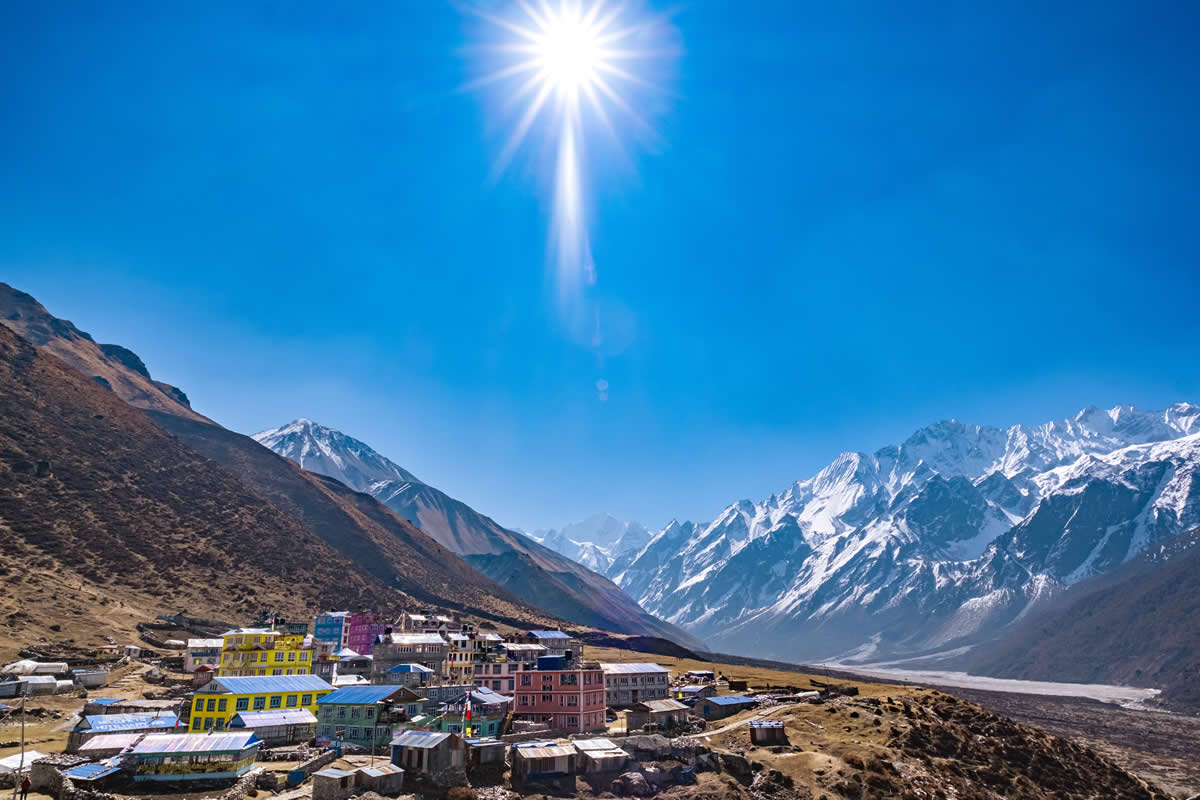
By the third afternoon, we arrived at Kyanjin Gompa, sitting at over 3,800 meters. The settlement feels like an amphitheater of ice, surrounded by glaciers and towering peaks. The atmosphere here is completely different. Steeped in Tibetan Buddhist culture. Prayer wheels turn silently in the wind, and stone walls etched with sacred mantras trace the trails. At this altitude, human presence feels temporary, while the mountains feel like the only permanent reality.
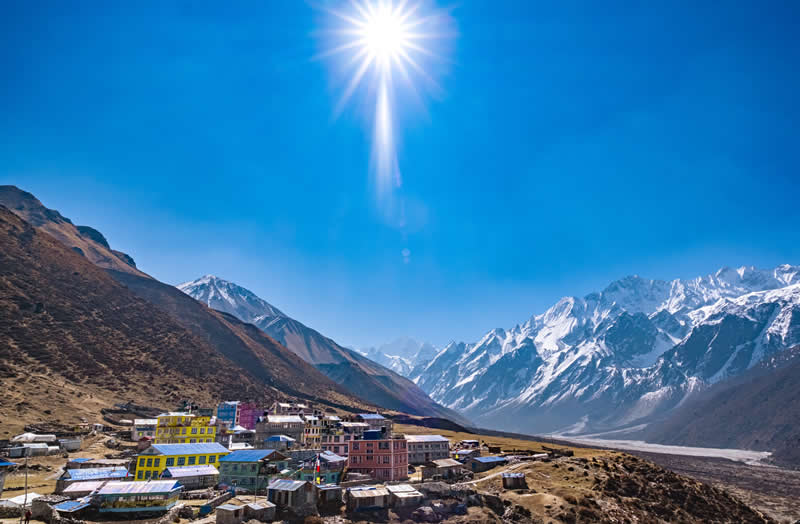
The mountains possess a beauty that heals, but they demand absolute humility. Our plan was to climb Kyanjin Ri before dawn to watch the sunrise, but the night had other plans. In the darkness of our lodge, the altitude hit us like a physical weight. Two of us began to decline rapidly as the early symptoms of Acute Mountain Sickness (AMS) took hold. Shattering headaches, nausea, and a heavy, disorienting fatigue.
By morning, the symptoms had only worsened. The triumphant mood vanished instantly; photography and milestones didn’t matter anymore only safety did. There was no room for ego. We canceled the hike, packed our bags, and immediately began to climb down.
Our descent became a focused race to find thicker air. On the way back to Langtang Village, we stopped at a quiet teahouse and drank freshly pressed buckthorn juice. Almost miraculously, its sharp, vitamin rich tartness began to clear the fog, and our bodies finally started to settle from the AMS. Rejuvenated, we continued down toward Rimche by evening. The change was immediate. The rich, oxygen-heavy forest air welcomed us back like an old friend, and the reassuring roar of the river returned, letting us finally breathe easy.
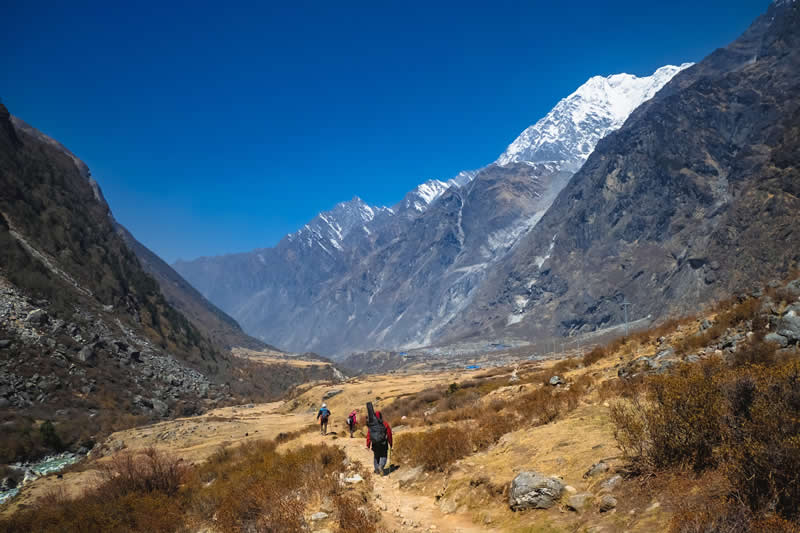
Our final day was a blur of landscapes running in reverse. Bridges, waterfalls, and forest paths passing by like pages turning backward through a well read book. Soon, the dirt path ended, and by afternoon, we were back on the road to Kathmandu.
Stepping out of the vehicle, the transition was a complete sensory shockwave. We returned on the eve of the Nepali New Year. Only twelve hours earlier, we had been wrapping ourselves in the quiet, frozen anxieties of the high valley. Now, we were dropped headfirst into streets overflowing with music, neon lights, and masses of people celebrating. Thamel was pulsing with energy, live bands played late into the night, and crowds filled the roads to welcome another year.
It felt entirely surreal to stand in that crowd, still wearing our dust coated trekking boots and carrying the scent of woodsmoke in our jackets. Travel narratives often focus entirely on the destination or the summit. But looking back at my notes, the memory that remains strongest is the poetry of the entire living landscape following a glacial river into the sky, witnessing a community that refused to be erased by disaster, and learning our own limits beneath peaks that have defined this world for centuries.
Like the Langtang Khola itself, we had entered the valley, been changed by its stones, and now, we had no choice but to keep flowing onward.