
There’s something magical about standing in the exact spot where an artist once set up an easel and transformed an ordinary view into a timeless masterpiece. Have you ever looked at a painting and thought, "I wish I could step right into that scene"? The good news is, in many cases, you actually can. From the colorful gardens of Giverny that inspired Claude Monet to the charming streets, rivers, mountains, and villages captured by Van Gogh, Cézanne, and countless other masters, these breathtaking places still exist today.
For many legendary painters, creating art wasn’t about inventing fantasy worlds; it was about preserving real moments before they disappeared. A quiet lakeside, a sunlit café, or a winding country road became immortal once brush met canvas. Centuries later, travelers can visit these same locations and compare today’s landscapes with the iconic paintings that made them famous. Some places have barely changed, while others reveal fascinating stories of time, culture, and history.
In this collection, you’ll discover 27 world-famous paintings alongside the real-life locations that inspired them. It’s a unique journey where art history meets travel, proving that some of the greatest masterpieces weren’t imagined; they were waiting to be noticed. Whether you’re an art lover, photographer, or curious traveler, these side-by-side comparisons offer a fresh appreciation for both the artists and the remarkable places that sparked their creativity.
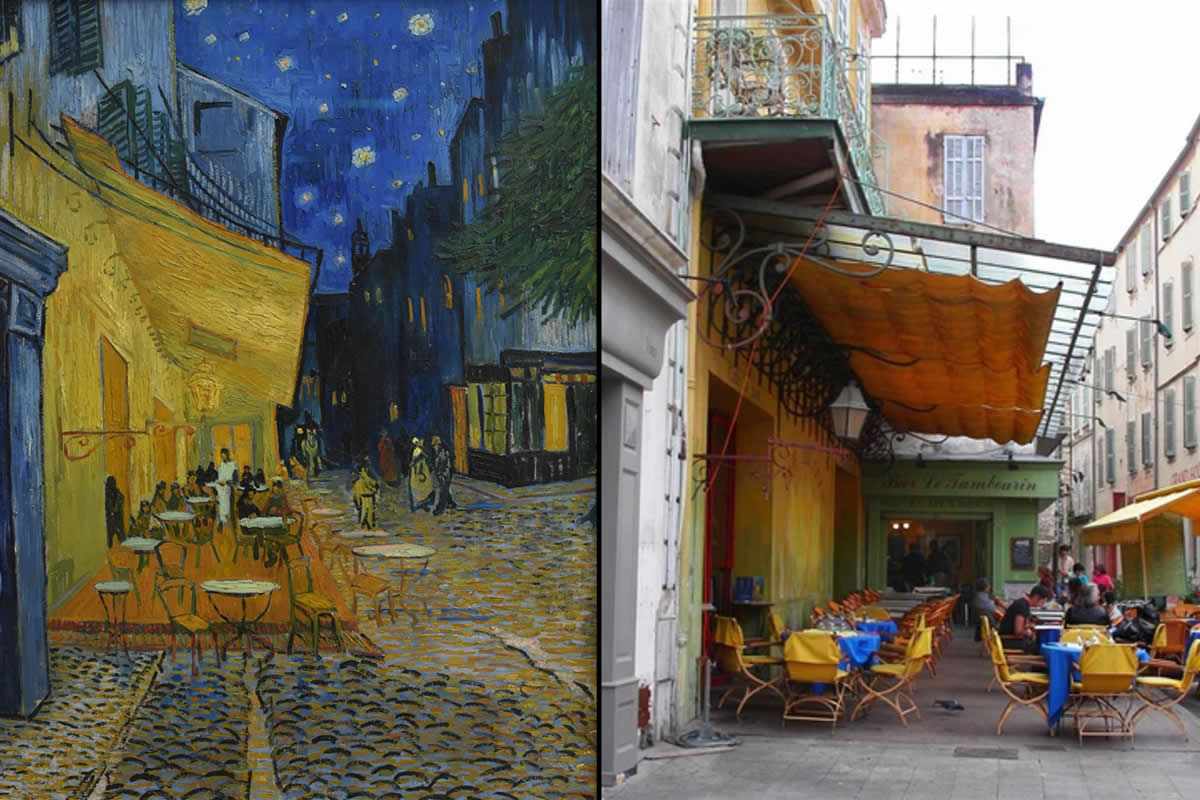
#1. The Night Café by Vincent van Gogh (1888)
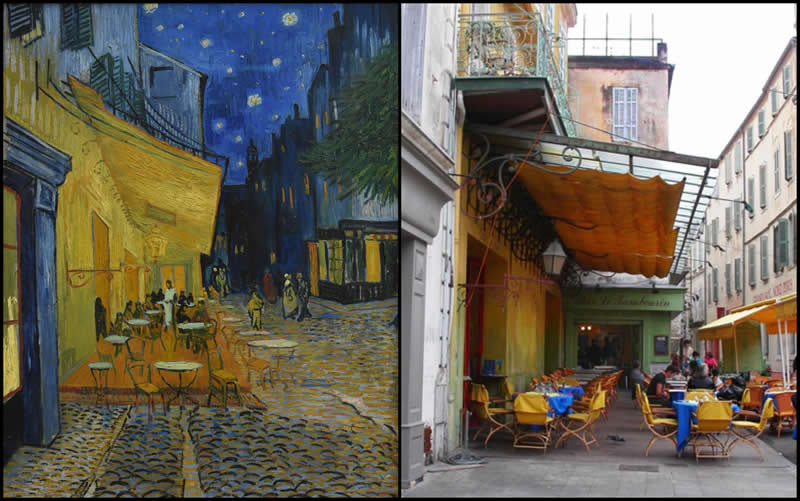
Image Source: The Cultural Tutor
"In some ways van Gogh is more "realistic" than people give him credit for — look at the door in the left foreground, for example. Still, he had an unmatched talent for making relatively ordinary places seem utterly magical."
#2. Sunrise on the Matterhorn by Albert Bierstadt (1880s)
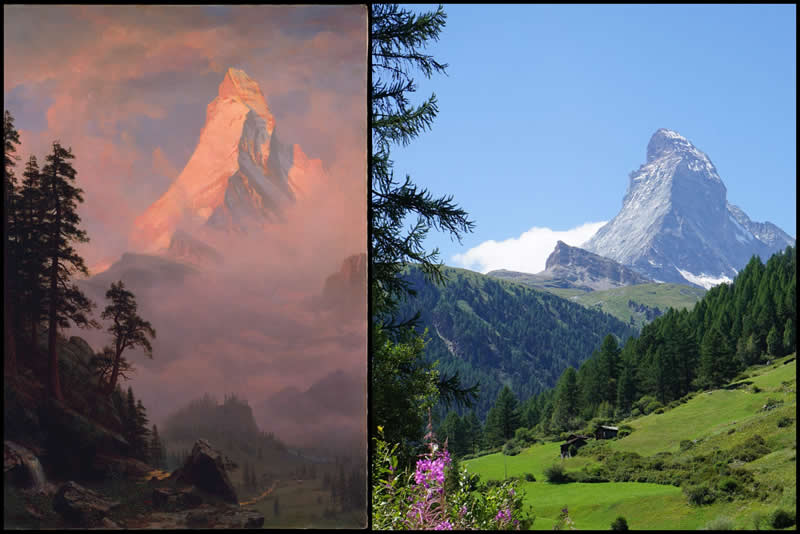
Image Source: The Cultural Tutor
"The most famous mountain in the Alps painted by one of America’s greatest landscape artists. A truthful enough depiction — but notice, again, how Bierstadt has subtly elongated the mountain to make it more dramatic."
#3. Piazza San Marco, Venice by Canaletto (1730)
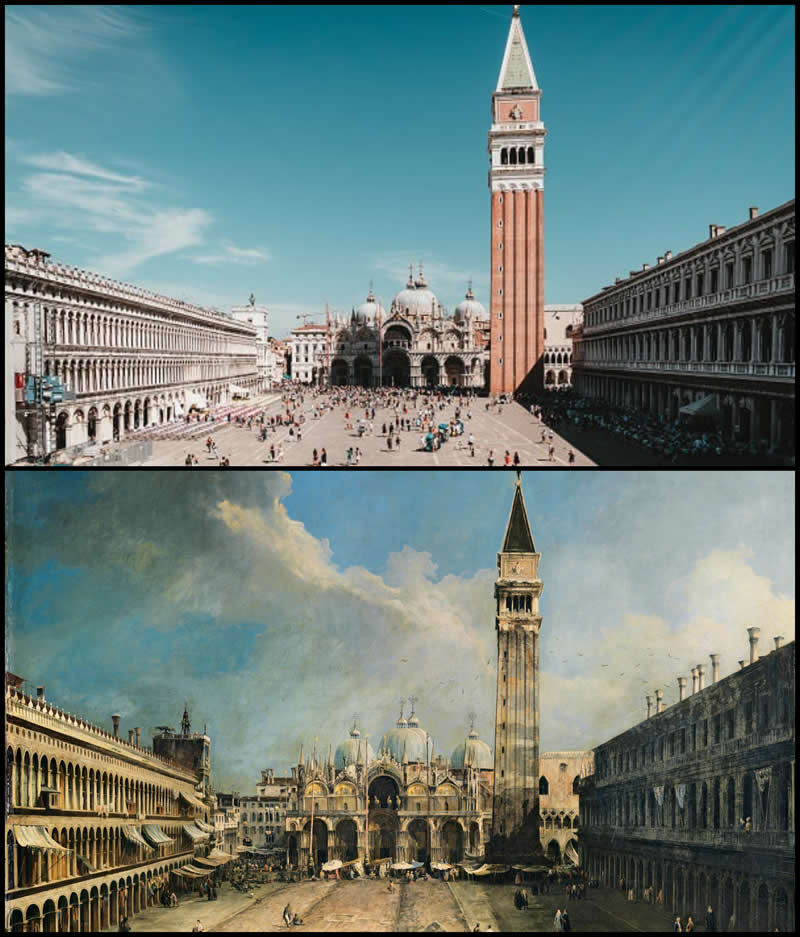
Image Source: The Cultural Tutor
"Not much seems to have changed, but the truth is that between Canaletto painting this picture and the photo being taken, the bell tower collapsed (in 1902) and was rebuilt brick for brick exactly as it had been."
#4. American Gothic by Grant Wood (1930)
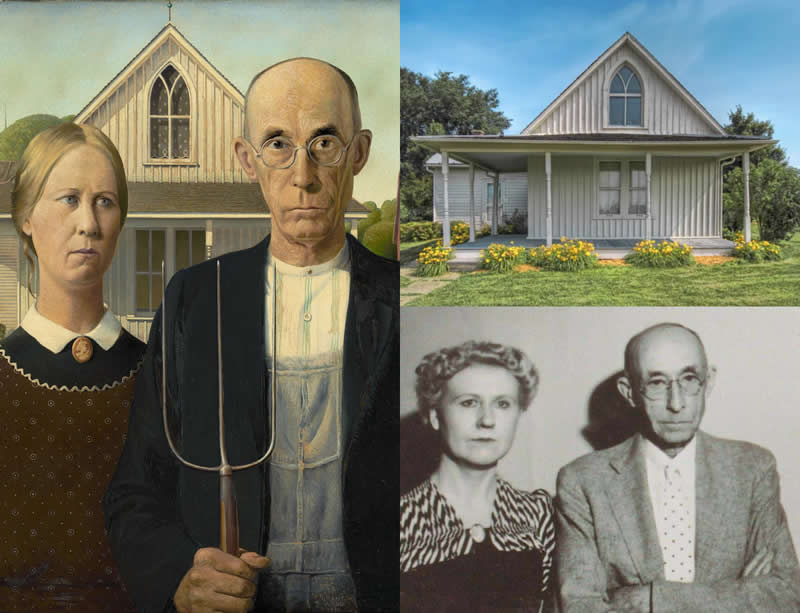
Image Source: The Cultural Tutor
"The house in the background — the Dibble House in Eldon, Iowa — still looks exactly as Wood painted it. But you can see how Wood altered, and almost caricatured, the models: his sister Nan Wood Graham and his dentist Byron McKeeby."
#5. American Gothic by Grant Wood (1930)
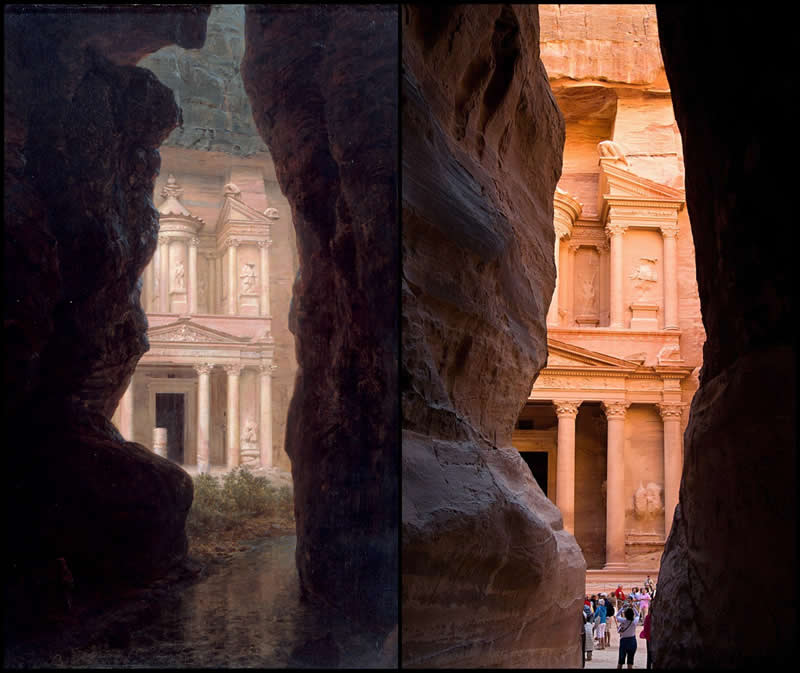
Image Source: The Cultural Tutor
"The house in the background — the Dibble House in Eldon, Iowa — still looks exactly as Wood painted it. But you can see how Wood altered, and almost caricatured, the models: his sister Nan Wood Graham and his dentist Byron McKeeby."
#6. Mont-Saint-Michel by James Webb (1857)
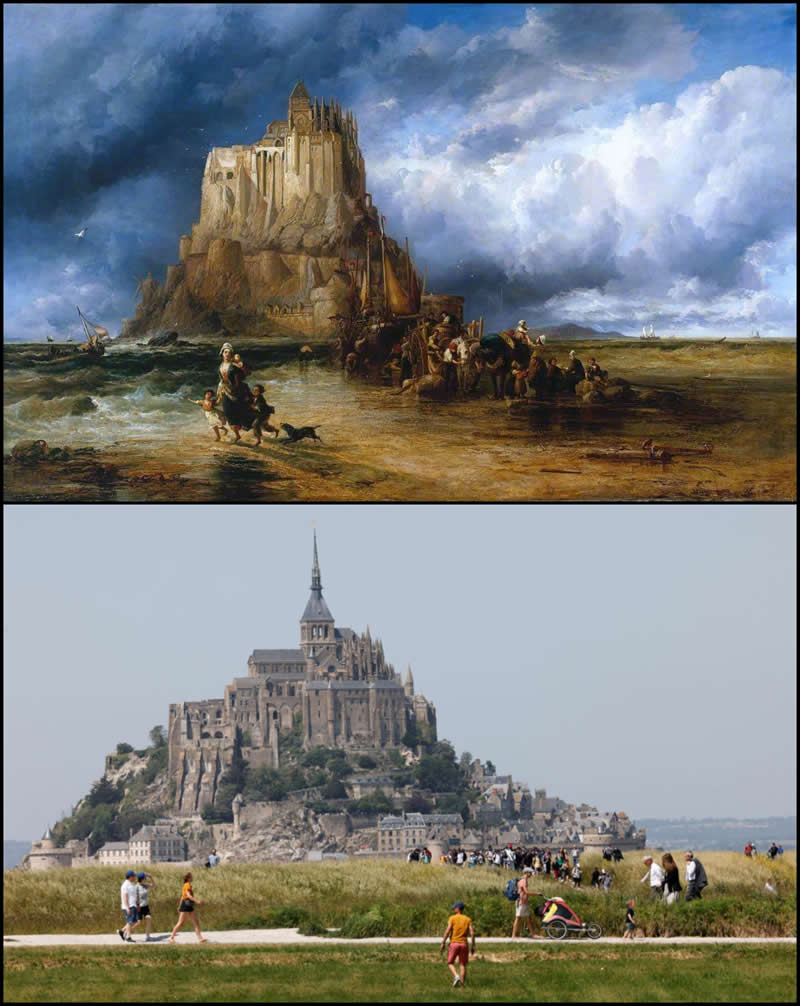
Image Source: The Cultural Tutor
"Notice how Webb has made Mont-Saint-Michel more vertical, elongating the buildings and steepening the hill itself. A common method used by artists to make real places more picturesque."
#7. The Church at Auvers by Vincent van Gogh (1890)
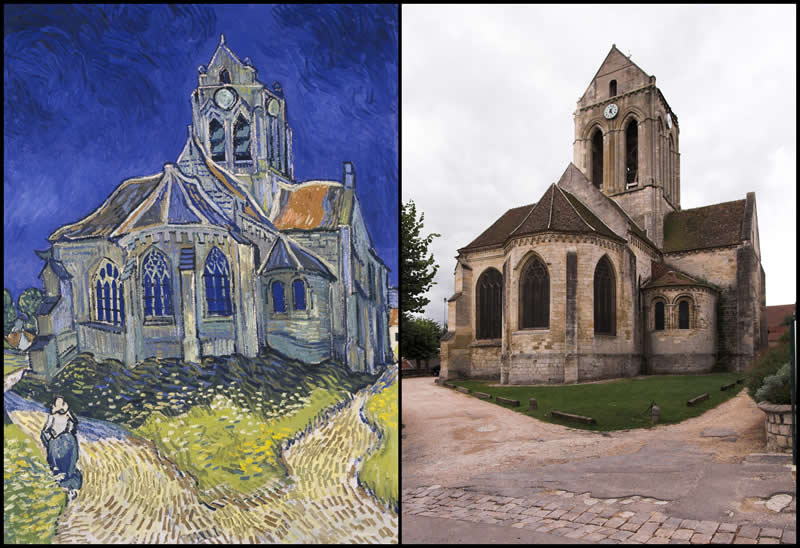
Image Source: The Cultural Tutor
#8. High Street, Oxford by JMW Turner (1810)
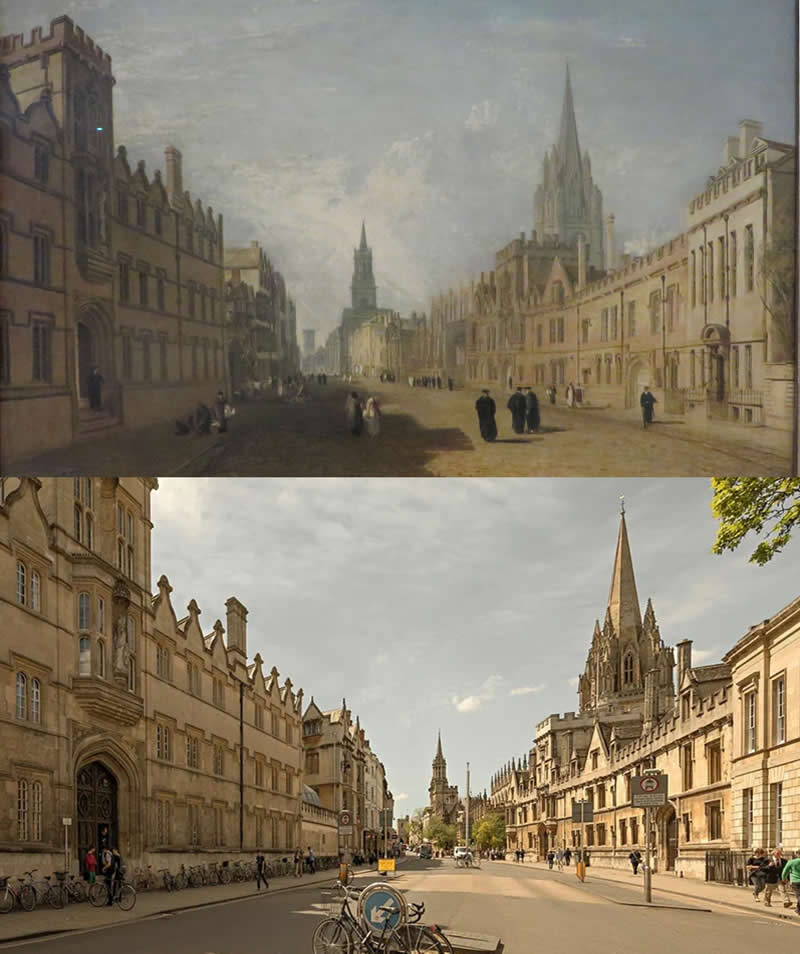
Image Source: The Cultural Tutor
"It’s tempting to say nothing has changed; the buildings of Oxford remain just as they were 200 years ago. But consider the impact of cars and everything they bring with them, like signs and tarmac, on the appearance of the street."
#9. Palazzo Dario, Venice by Claude Monet (1908)
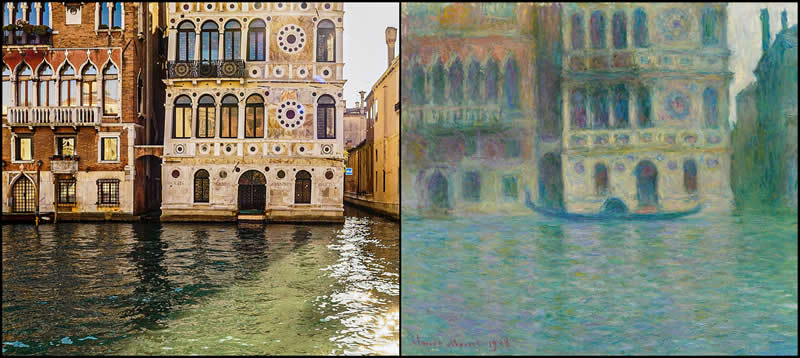
Image Source: The Cultural Tutor
"Monet is hardly known for his "realism", and yet his depiction of the Palazzo Dario is somehow more beautiful, and feels almost more truthful, than any photograph could ever be."
#10. Christina’s World by Andrew Wyeth (1948)
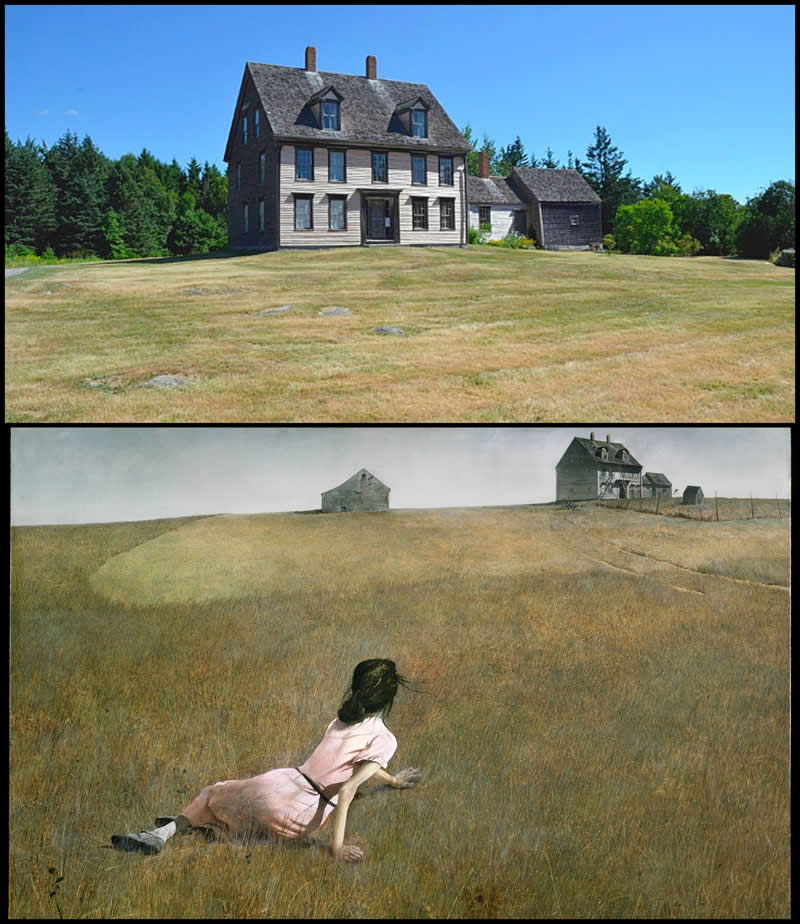
Image Source: The Cultural Tutor
"The Olson House in Maine remains more or less as it did when Andrew Wyeth made his legendary painting. An ordinary, basically inconspicuous building in real life — one transformed into something almost fantastical by Wyeth."
#11. The Little Street by Johannes Vermeer (1658)
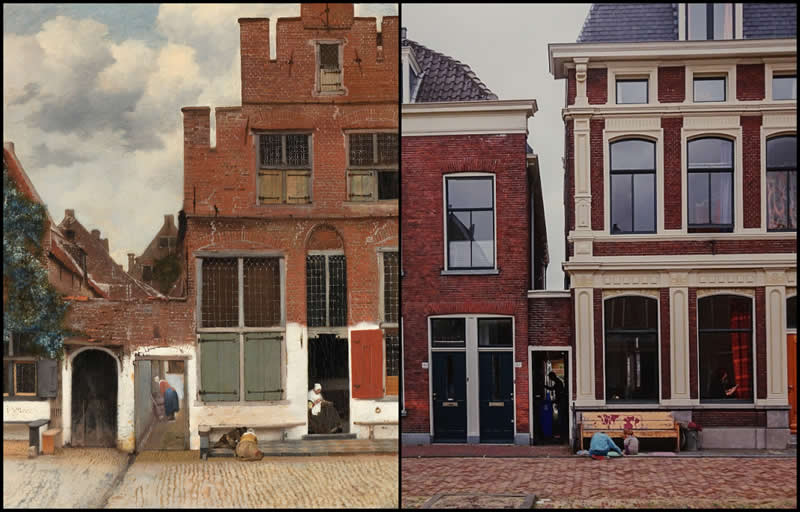
Image Source: The Cultural Tutor
"Little remains of the scene painted by Vermeer in Delft, his hometown — apart from, perhaps, an overwhelming sense of stillness seemingly unique to Dutch architecture and urban design."
#12. Interior of St Peter’s by Giovanni Paolo Panini (1760)
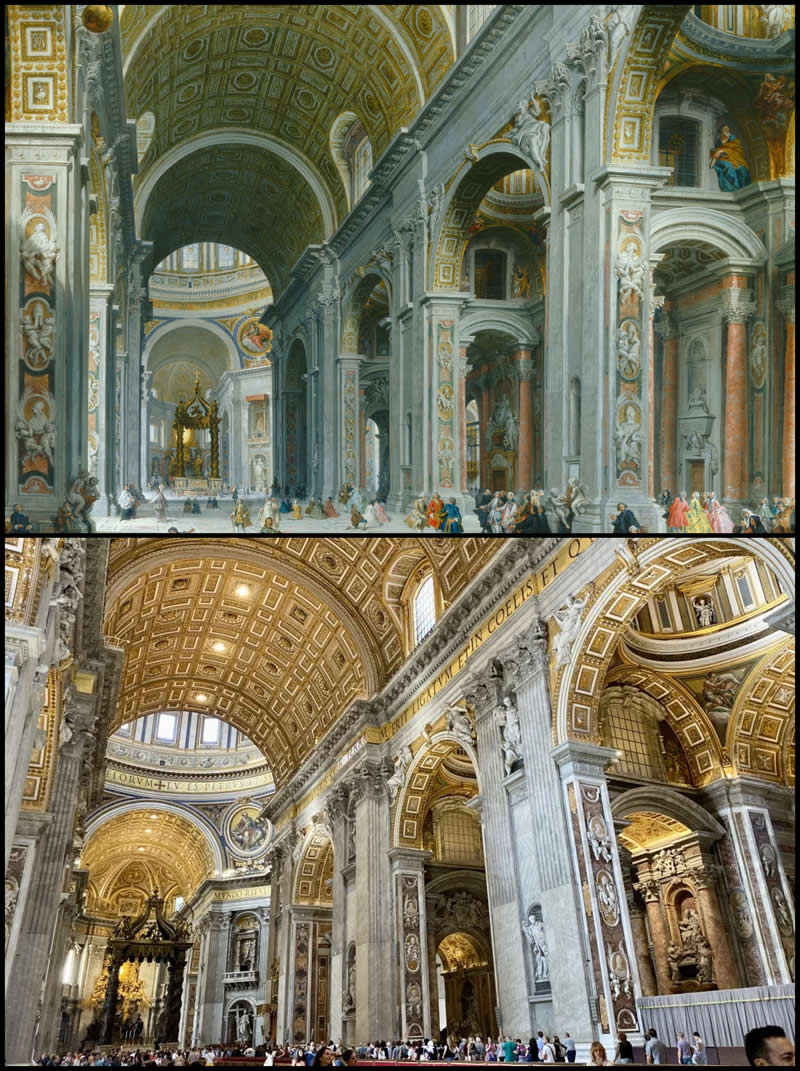
Image Source: The Cultural Tutor
"Little has changed here since 1760, but the curious thing about Panini’s painting — and so much art — is its impossible perspective. Panini’s manipulated view is not something eyes could ever see or cameras capture."
#13. A Moonlit Night on the Bosphorus by Ivan Aivazovsky (1894)
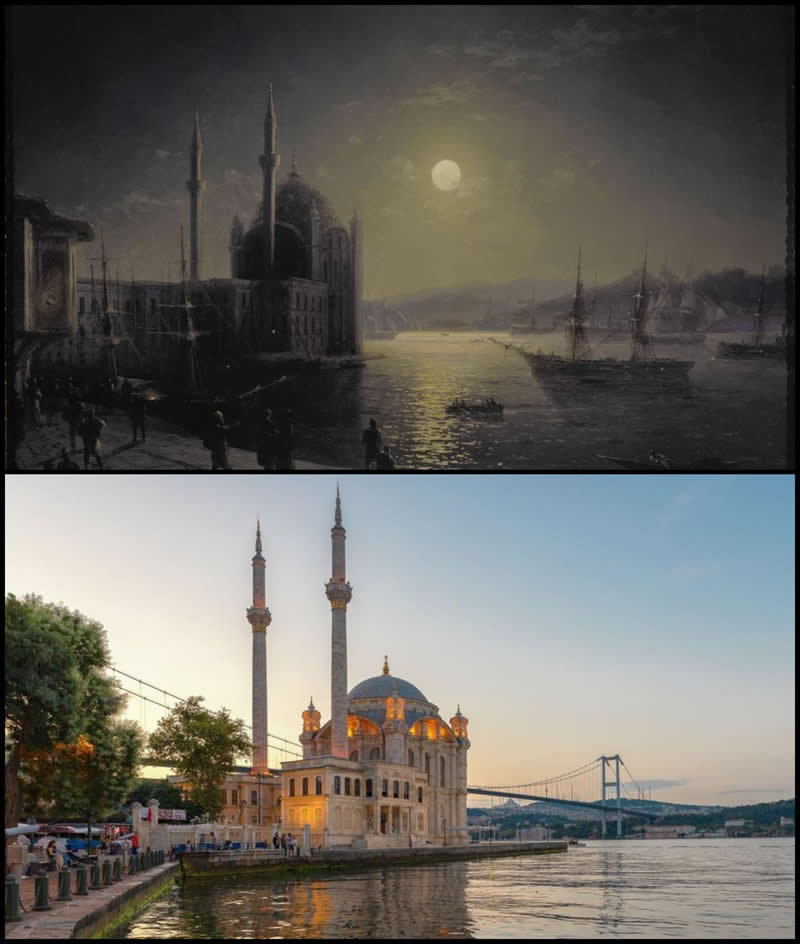
Image Source: The Cultural Tutor
"Another place — Istanbul, called Constantinople in Aivazovksy’s time — where the view is almost identical. With the exception, of course, of the huge Bosphorus Bridge behind the (elongated, again) Ortaköy Mosque."
#14. The Doge’s Palace by Claude Monet (1908)
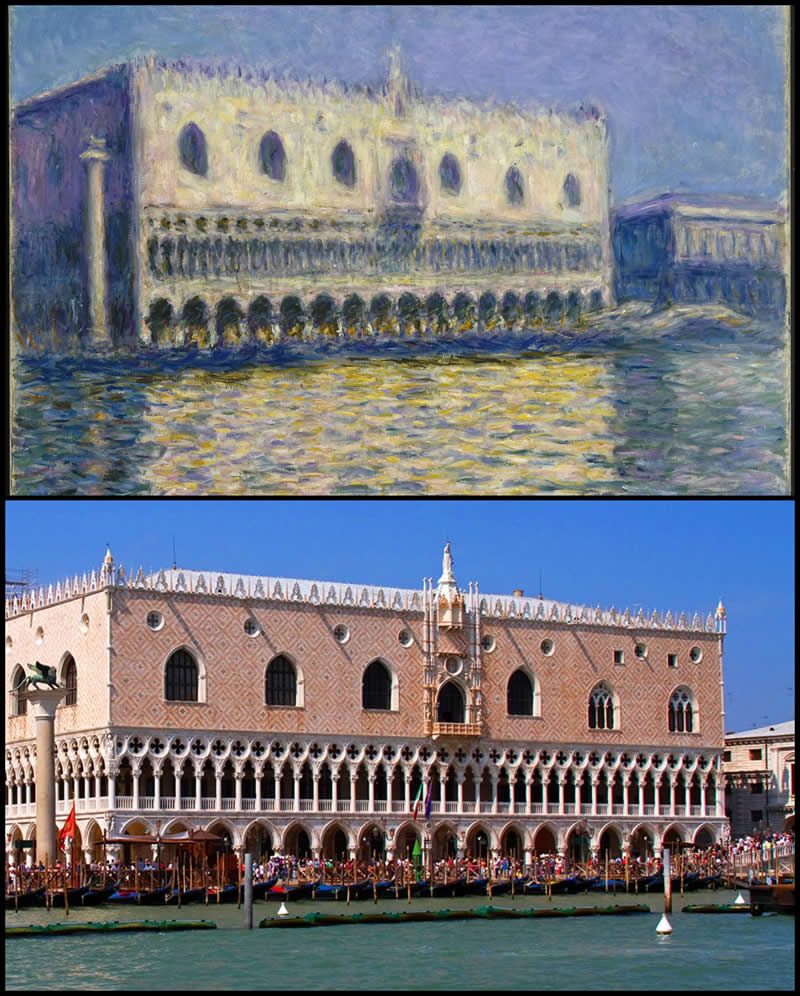
Image Source: The Cultural Tutor
"Perhaps Monet’s disinterest in detail and his love for the effects of light is a drawback here — the delightful arcades of the palace have melted away. And yet, once again, the painting is somehow more captivating than the photo."
#15. Interior of the Church of St Bavo in Haarlem by Pieter Jansz. Saenredam (1648)
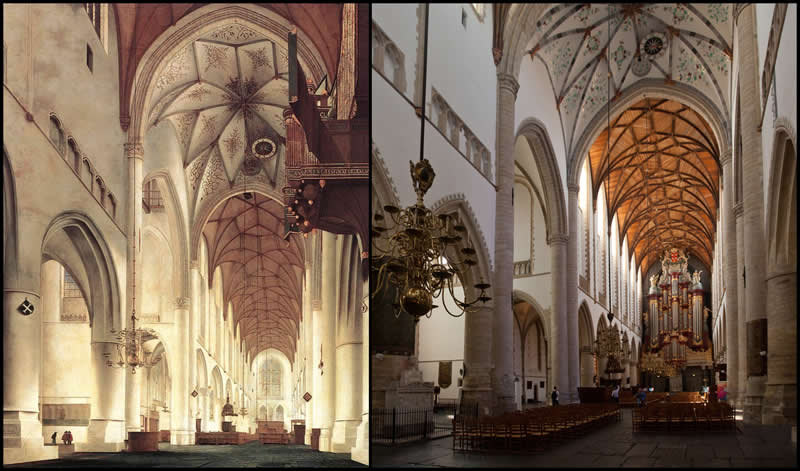
Image Source: The Cultural Tutor
"Saenredam’s highly accurate paintings of church interiors are still used by restorers in their work. The only major change is the colossal 18th century organ — once played by Mozart, no less."
#16. Abside de Notre Dame by Charles Meryon (1854)
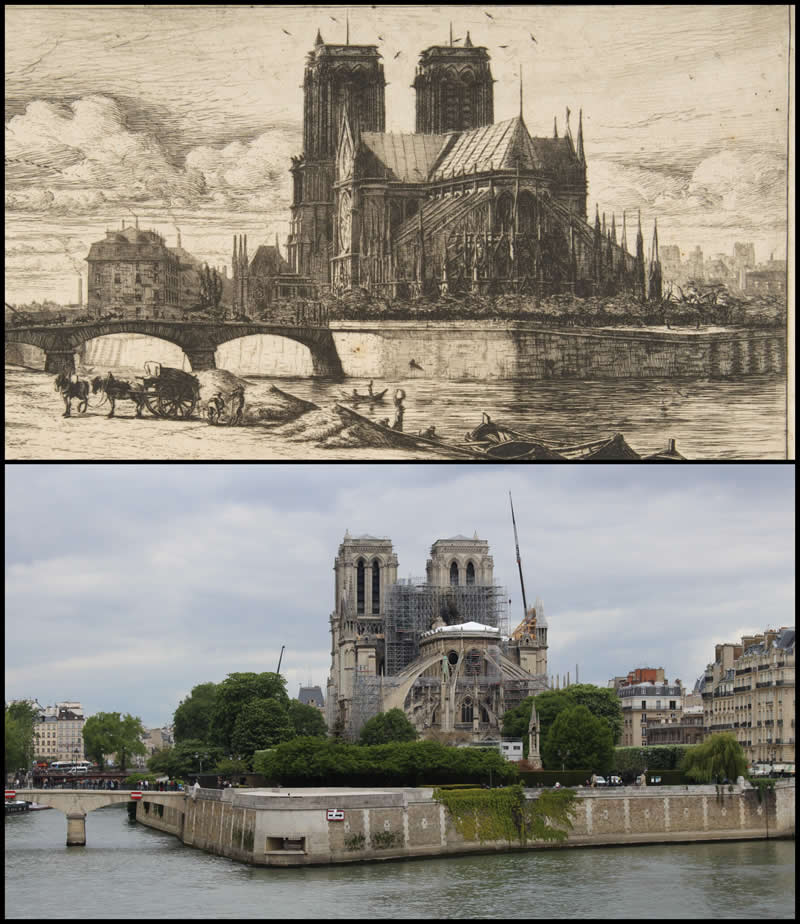
Image Source: The Cultural Tutor
"The peculiar thing about these views is that Meryon painted the Notre-Dame after the original Medieval spire had been taken down and before the new one was added in 1859… which burned down in 2019. Two spireless Notre-Dames."
#17. Starry Night Over the Rhône by Vincent van Gogh (Arles, France)
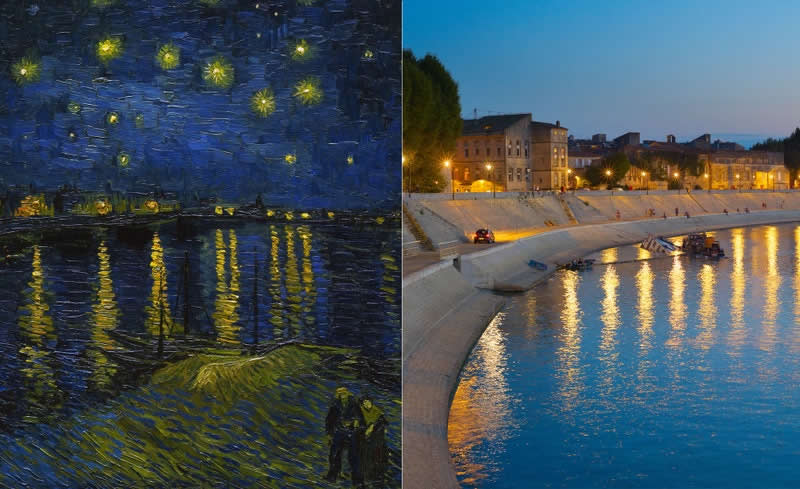
Image Source: Civixplorer
#18. Watercolor by Emanuel Ritter von Stöckler (1877) Basilica of San Vitale in Ravenna, Italy
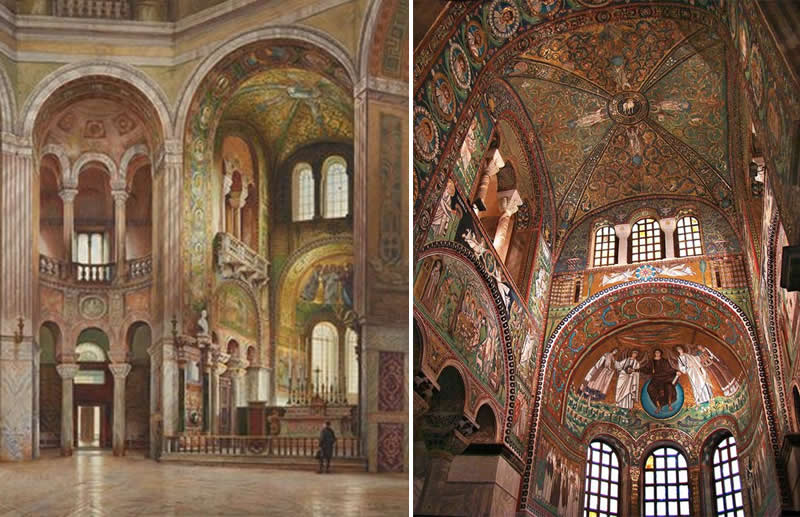
Image Source: Culture Explorer
#19. In Arles. Vincent van Gogh
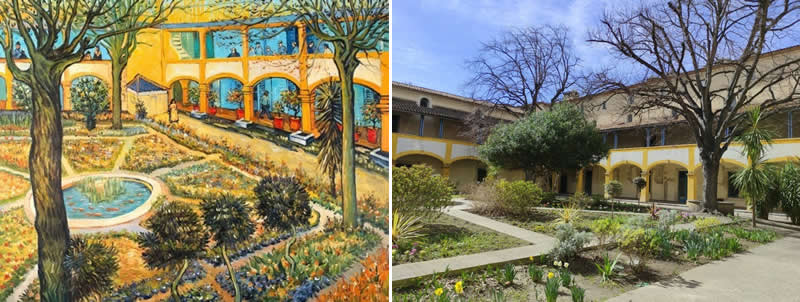
Image Source: Alda Kreiter
#20. Ettore Roesler Franz (1845-1907) of a house in Trastevere, Rome
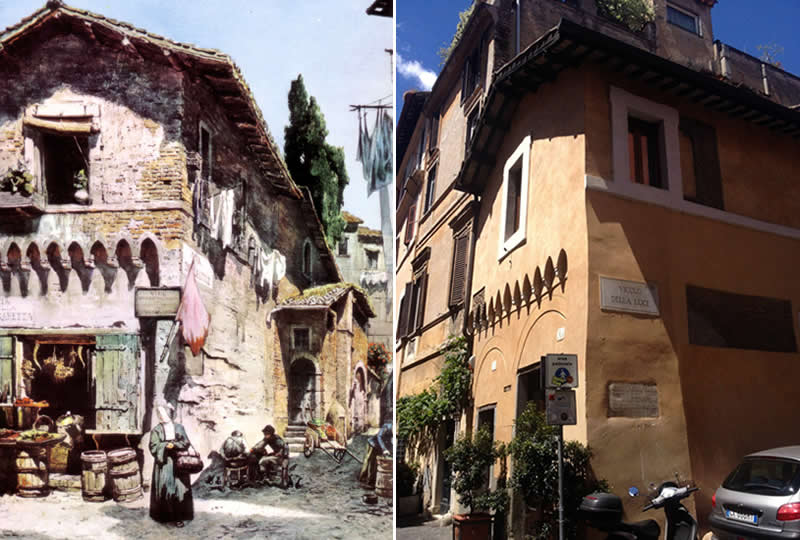
Image Source: The Cultural Tutor
#21. The Trevi Fountain in Rome by Giovanni Paolo Panini
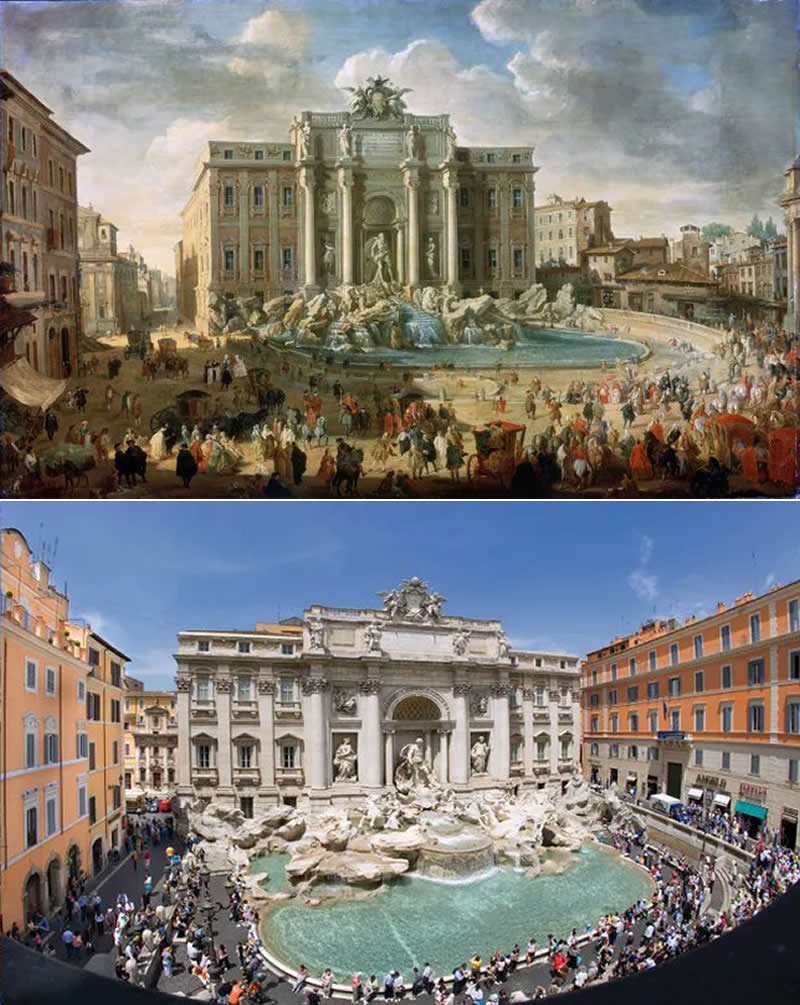
Image Source: The Cultural Tutor
#22. Church Santa Maria de Cadaques in Cadaques by Salvador Dali
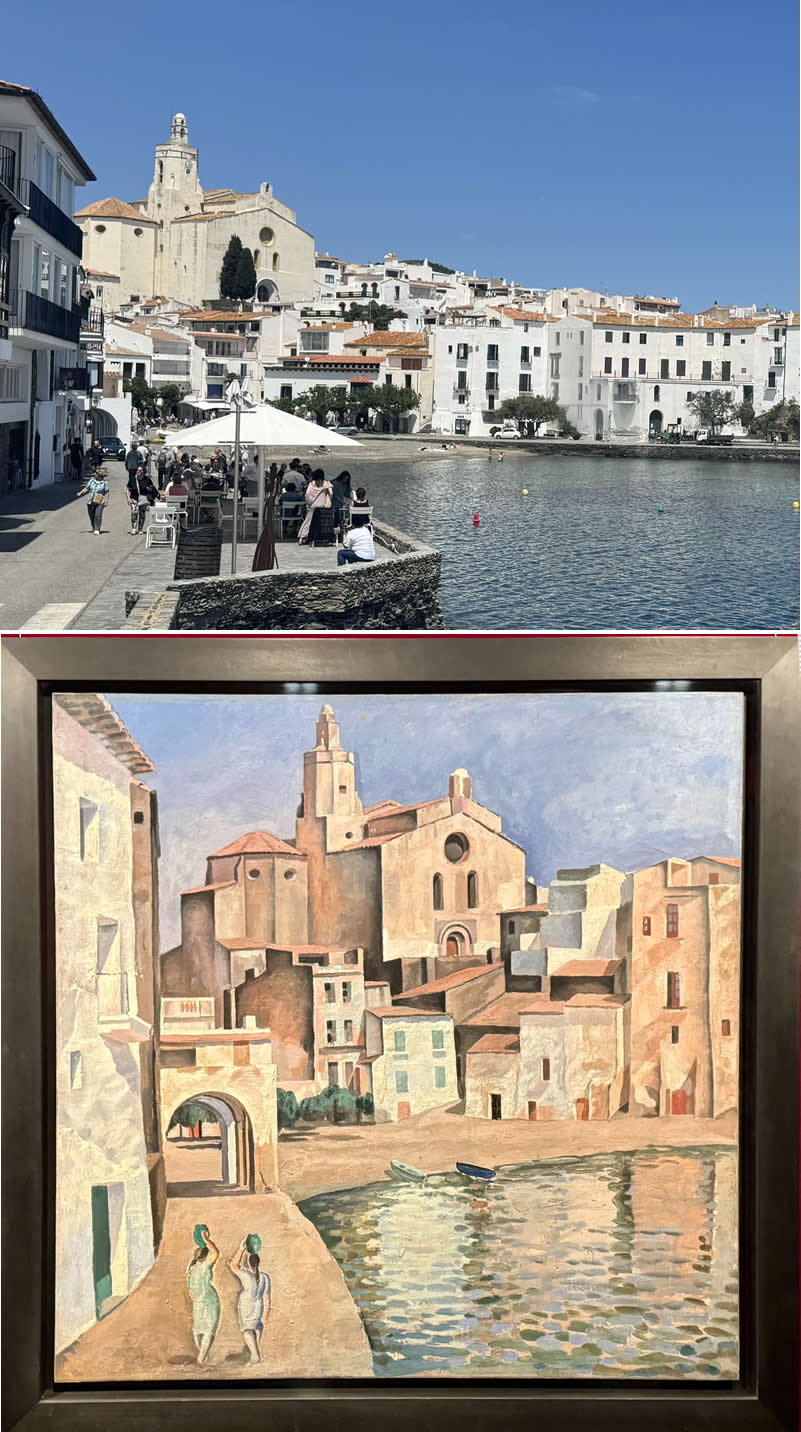
Image Source: Carsten Lincke
#23. A Court In The Alhambra, by Edwin Lord Weeks (1876)
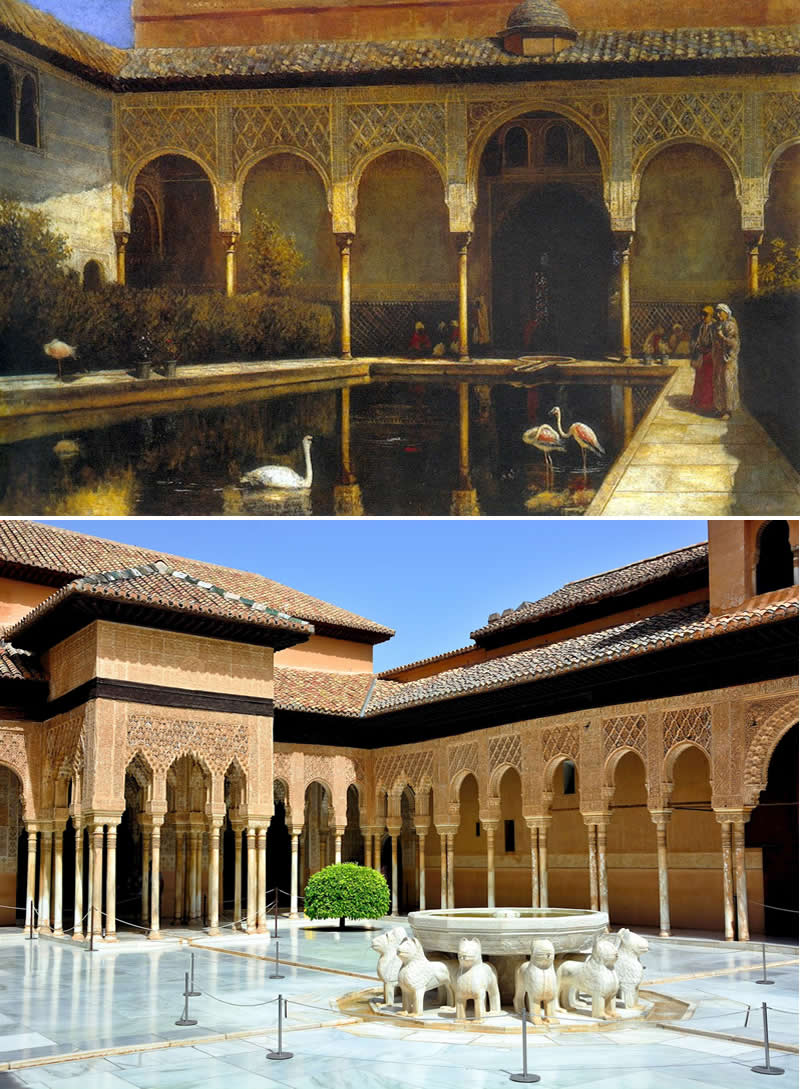
Image Source: Aesthetic Patron
#24. Nadezhda Petrovich
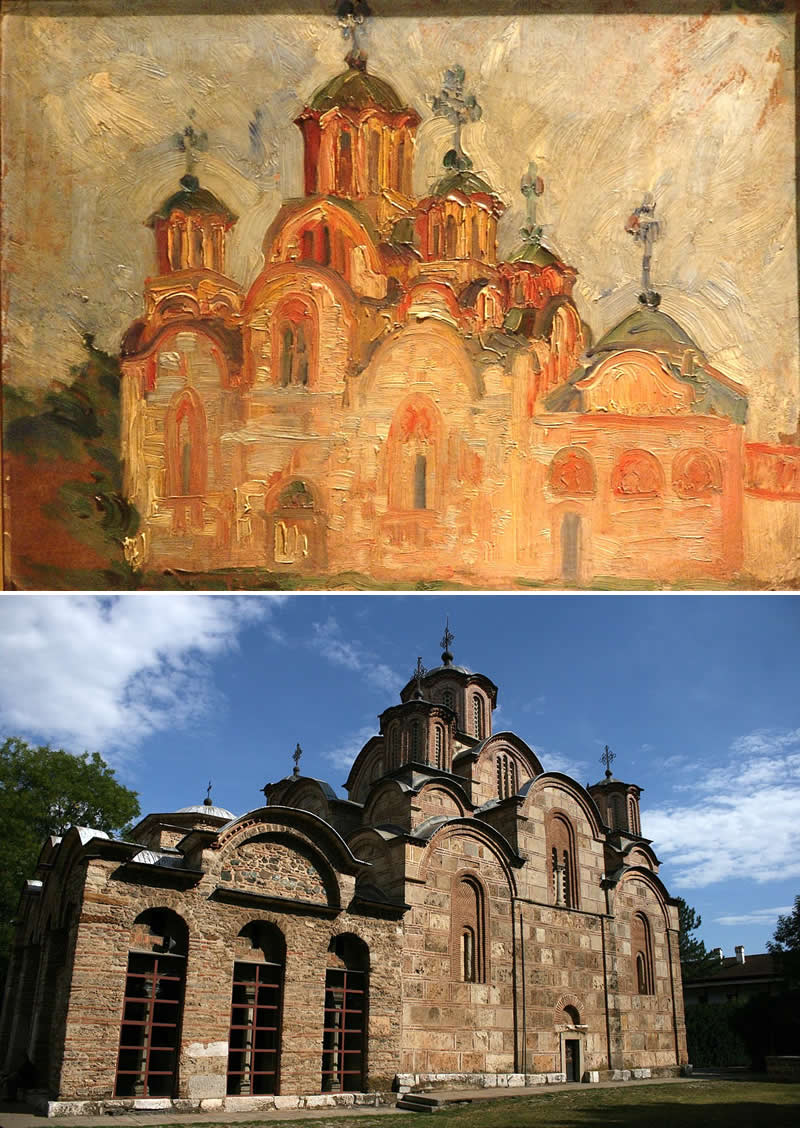
Image Source: Sotona Licno
#25. La Cathédrale de Chartres , Camille Corot, 1830 (Musée du Louvre, Paris)
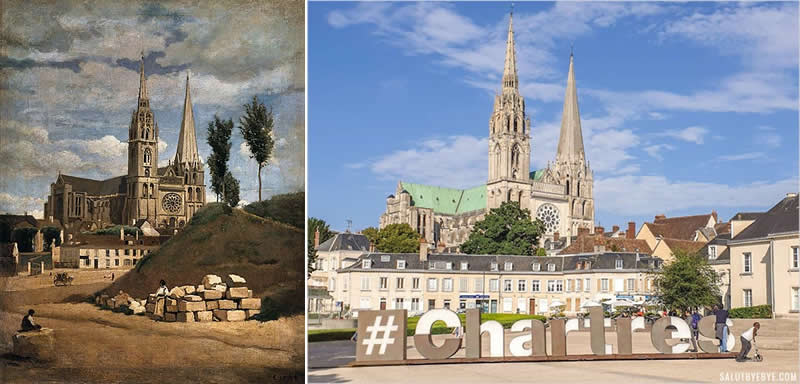
Image Source: Kuru
#26. Lighthouse at Two Lights (1929) by Edward Hopper. Cape Elizabeth lighthouse, Maine USA.
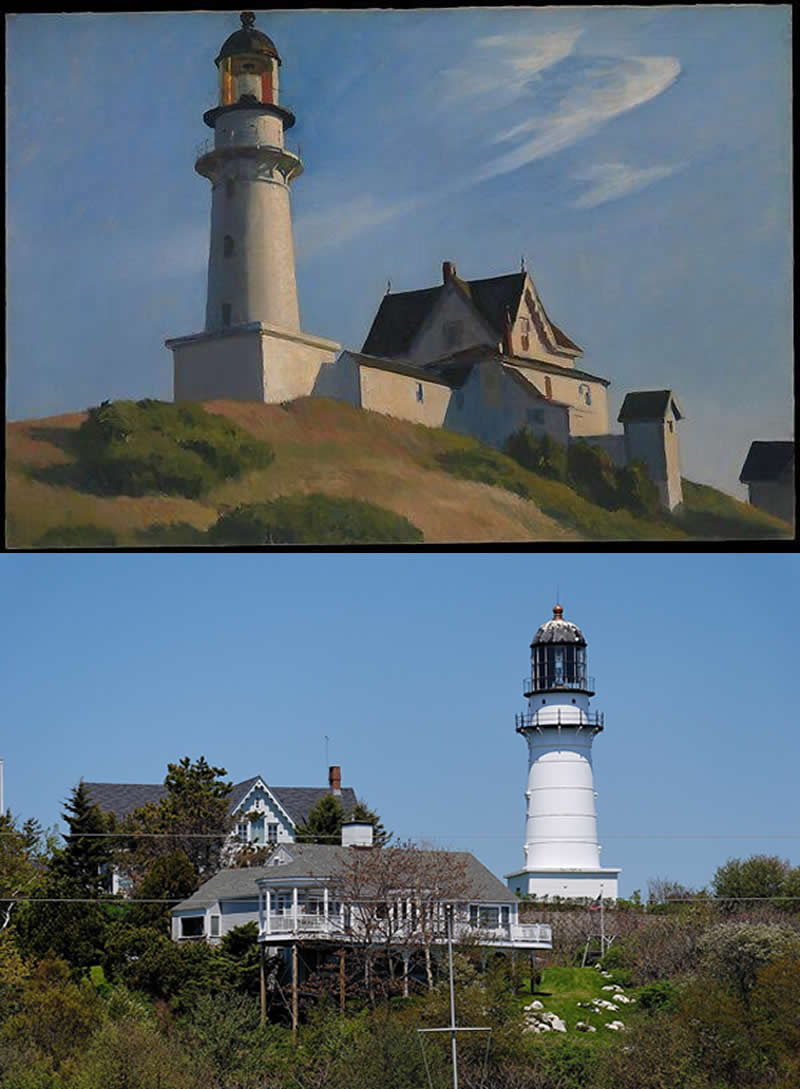
Image Source: Peter Hill
#27. East Wind Over Weehawken (1934) at 1001 Boulevard East at the corner of 49th Street in Weehawken, New Jersey. By Edward Hopper
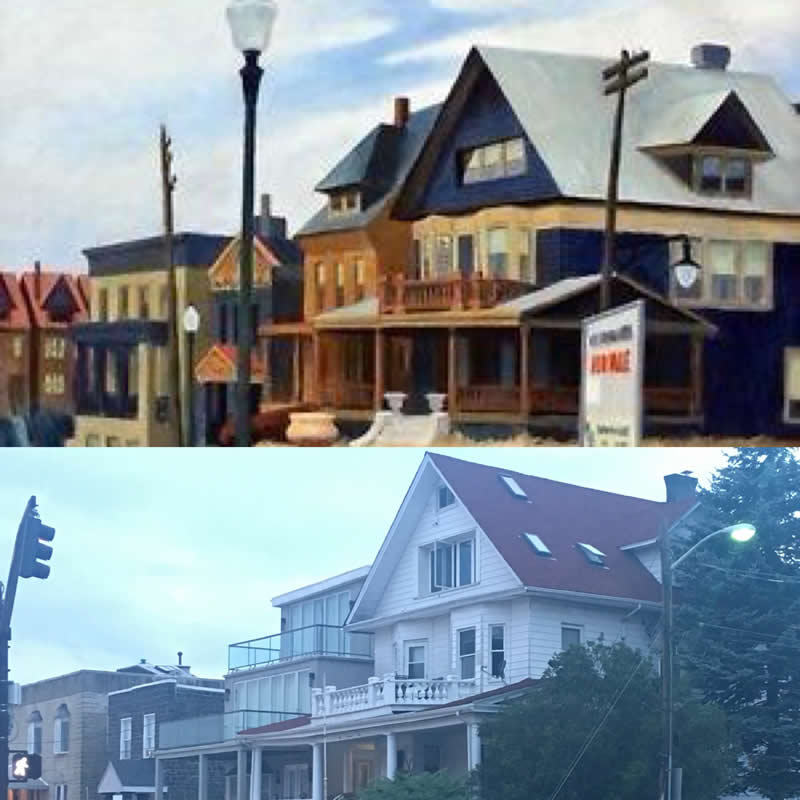
Image Source: Emma Stanton
Frequently Asked Questions:
Can you visit the real-life locations featured in famous paintings?
Yes. Many iconic paintings were inspired by actual places that remain open to visitors today, including Monet’s gardens in Giverny, French villages, Italian canals, and scenic European landscapes that continue to attract art lovers from around the world.
Why did famous artists paint real locations?
Many artists wanted to capture the beauty, atmosphere, and emotion of places they experienced firsthand. Painting these locations preserved special moments in time, allowing future generations to appreciate both the landscape and the artist’s unique perspective.
Which artists are best known for painting real places?
Claude Monet, Vincent van Gogh, Paul Cézanne, Gustav Klimt, John Constable, and Canaletto are among the many celebrated artists who created masterpieces inspired by real gardens, towns, rivers, mountains, and historic cityscapes.
Have these real-life painting locations changed over time?
Some locations remain remarkably similar to how they appeared centuries ago, while others have evolved through urban development and natural changes. Even so, many still preserve the distinctive landmarks and scenery that inspired the original masterpieces.
Why are famous painting locations popular travel destinations?
They offer visitors the rare opportunity to experience art beyond museum walls. Standing where legendary artists once painted creates a deeper connection to history, creativity, and culture, making these destinations unforgettable for travelers and photographers alike.