
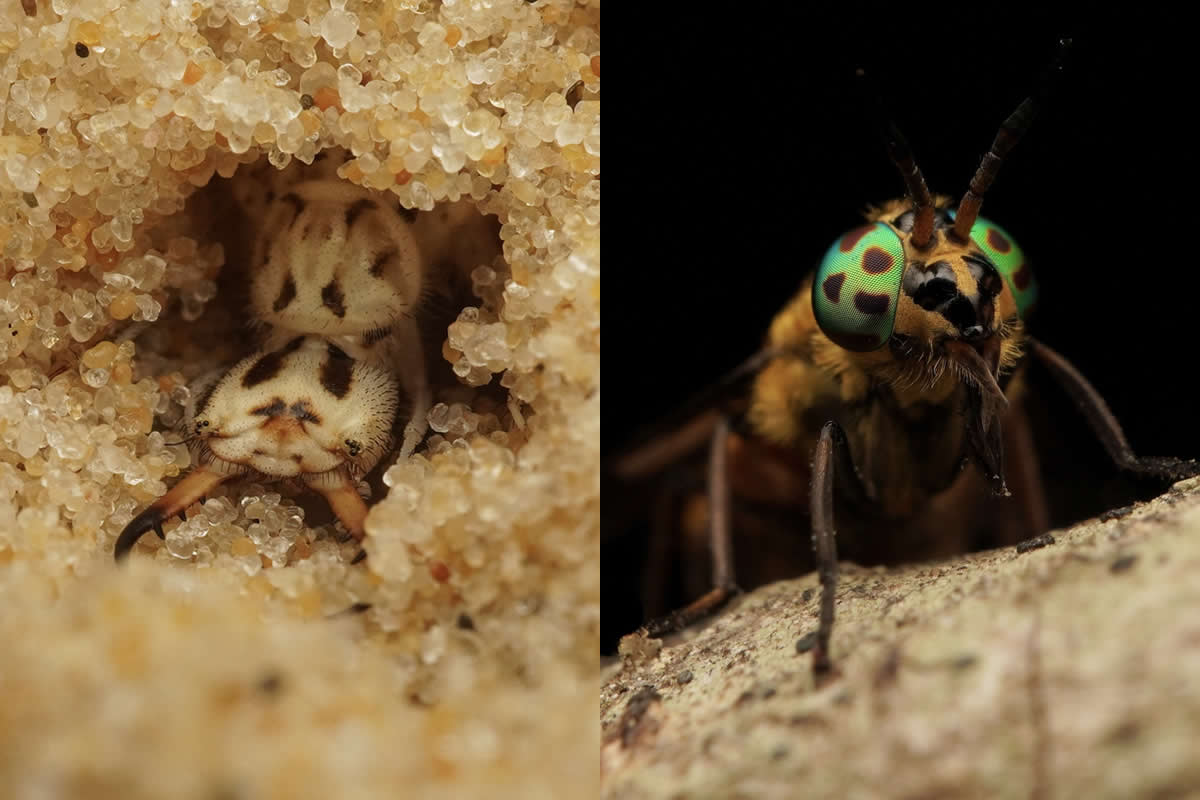
Sometimes, greatness shows up in the most unexpected places—like a sandy beach in France and a kid with a curious eye. At just 12 years old, UK photographer Benji Cook pulled off something extraordinary, capturing a macro image so gripping it earned him a prestigious Royal Entomological Society prize. Yeah, twelve. Let that sink in.
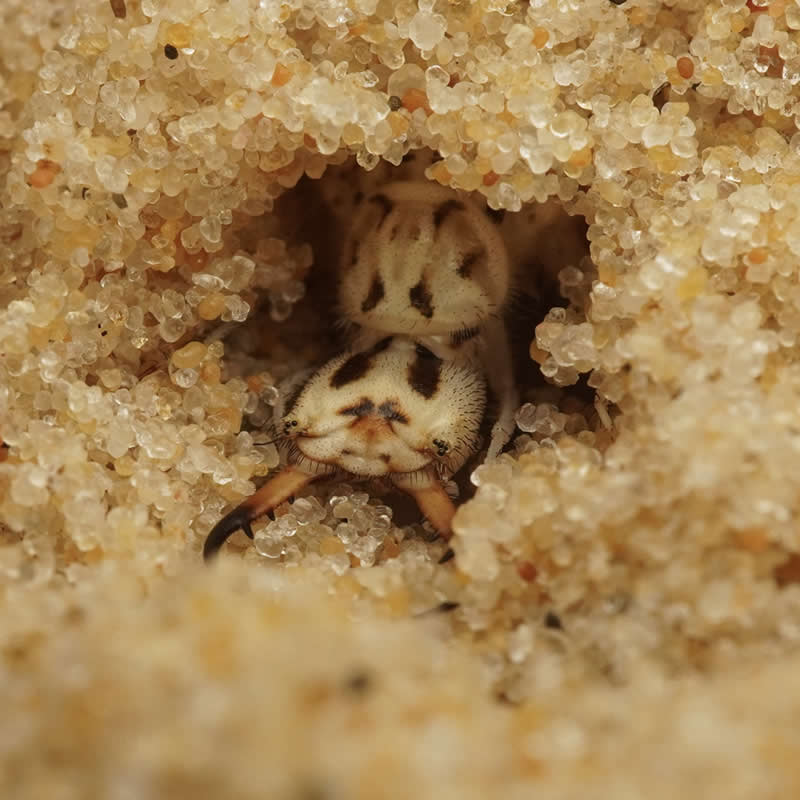
The overall winner of the ‘Under 18’ category is 12-year old Benji Cook for his photo of antlion larvae (Synclisis baetica) taken while he was on holiday in France. The larvae make craters in the sand and lie in wait, perfectly camouflaged, ready to ambush their prey.
Benji took home the Under 18 overall winner title for his hauntingly cool photo of antlion larvae (Synclisis baetica)—tiny predators that dig perfect sand craters and lie in wait like mini sci-fi monsters. The moment didn’t start as a photo shoot. It started with a sandcastle. His sister uncovered the strange creature by accident, called Benji over, and what followed was pure curiosity-driven magic. As Benji described it, they watched as the larva vibrated its abdomen, slid backward into the sand, and vanished—leaving only its head and terrifying jaws exposed.
That split second of behavior, perfectly framed and sharply focused, is what makes the image hit so hard. It’s not just macro photography—it’s storytelling at insect scale.
Judged by a powerhouse panel including zoologist and broadcaster Dr. Tim Cockerill, conservationist Lucia Chmurova, and award-winning macro photographer Matt Doogue, the image stood out in a massive field. The 2025 Royal Entomological Society Photography Competition drew over 3,000 entries from more than 110 countries, the largest turnout in its history.
Run by the UK’s leading insect science charity, the competition celebrates amateur photographers and proves that passion, patience, and sharp observation matter more than age. Benji Cook didn’t just win a prize—he announced the arrival of a serious young talent.
You can find more info:
More Stunning Macro Photos from Benji Cook’s Portfolio
Benji Cook’s growing portfolio reveals a sharp eye for hidden worlds, blending patience, curiosity, and precise macro technique to capture insects with cinematic detail, natural behavior, and storytelling depth beyond his years.
#1. Black-Streaked Dung Beetle
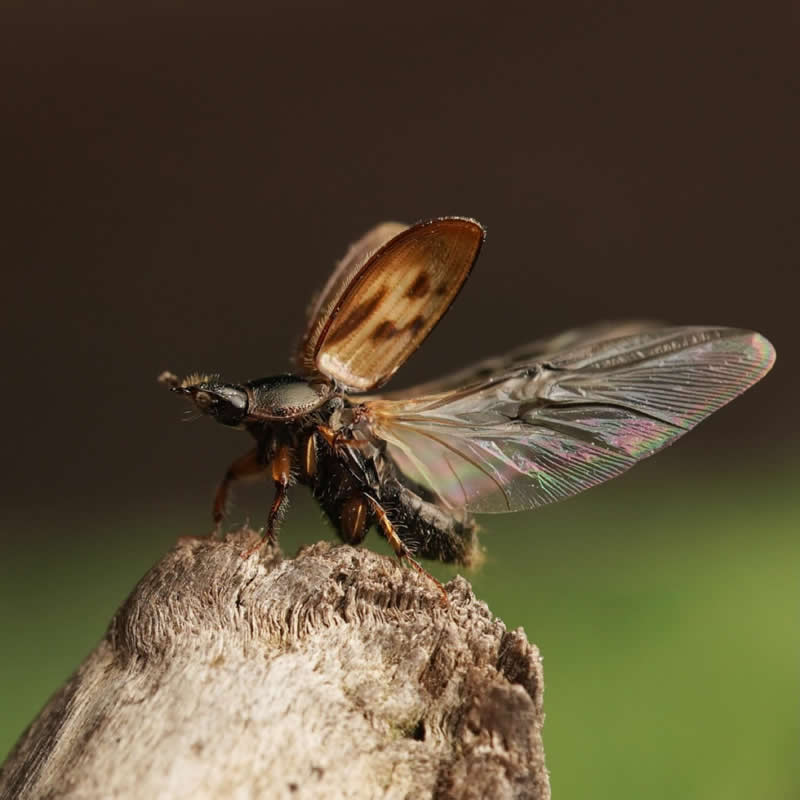
"This dual coloured beetle is a Black-Streaked Dung Beetle (Nimbus Contaminatus). I found this dung beetle in a spider web so I rescued it and, in return, it let me take some amazing pics of it. This is the first time I’ve ever seen this species, so as well as adding it to my mental log, I can also dive deeper into the macroverse.
You may think this is an easy species to identify because of its unique black head and thorax with spotty brown elytra but that is far from the truth. There are actually 13 identified and examined examples in the Nimbus genus, 5 of which all look very similar. The way I identified this one is by looking at the position and number of darker spots and markings on its elytra."
#2. Common Wasp queens
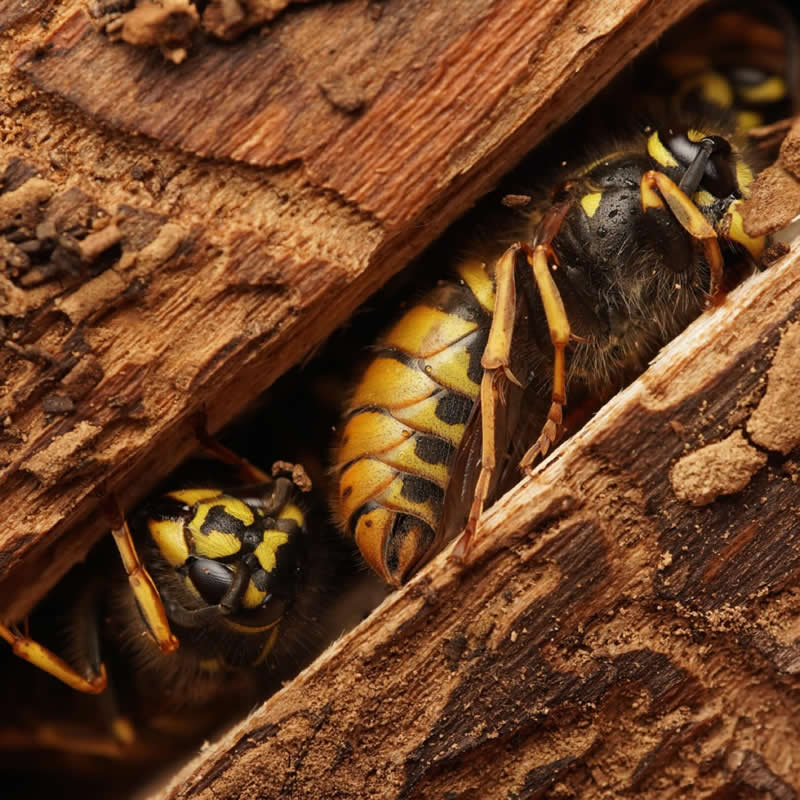
"When I was exploring in my local woods the other day, I lifted a strip of loose bark from a fallen log to take a closer look at the intricate woodworm patterns that were partly revealed, etched into the surface of the wood. As I lifted the bark, I was stunned to discover this small group of sleeping Common Wasp queens (Vespula Vulgaris) sheltering in a crevice of the log, perfectly concealed beneath the bark.
I did some research and apparently, from August to September, the old wasp queens stop producing workers and instead start producing male wasps (drones) and new queens. These new queens then take flight on a warm day shortly after hatching and start looking for drones from a different hive. Unlike bees, which mate while flying, this species of wasp usually mate on a solid surface. After mating, they then find a safe sheltered hiding place, like in a rotting tree, and enter a state called diapause (lowering their metabolism to make them enter a hibernating state to survive through the winter) which is what you can see in this photo."
#3. Juniper Bug
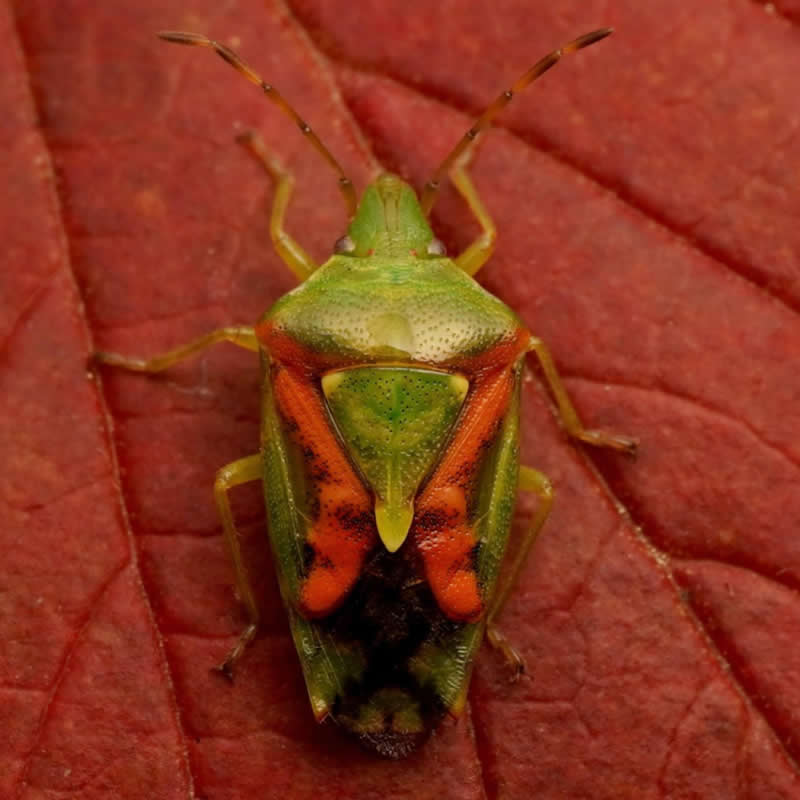
"A couple of days ago, I found this stunning green shieldbug with distinct orangey-red markings on its back – this is a Juniper Bug (Cyphostethus Tristriatus). It was on the ground under a large juniper tree, which makes sense bearing in mind its name. These small shieldbugs only grow to about 9-10.5 mm in size, which is tiny compared to some other shieldbug species."
#4. Splayed Deer fly
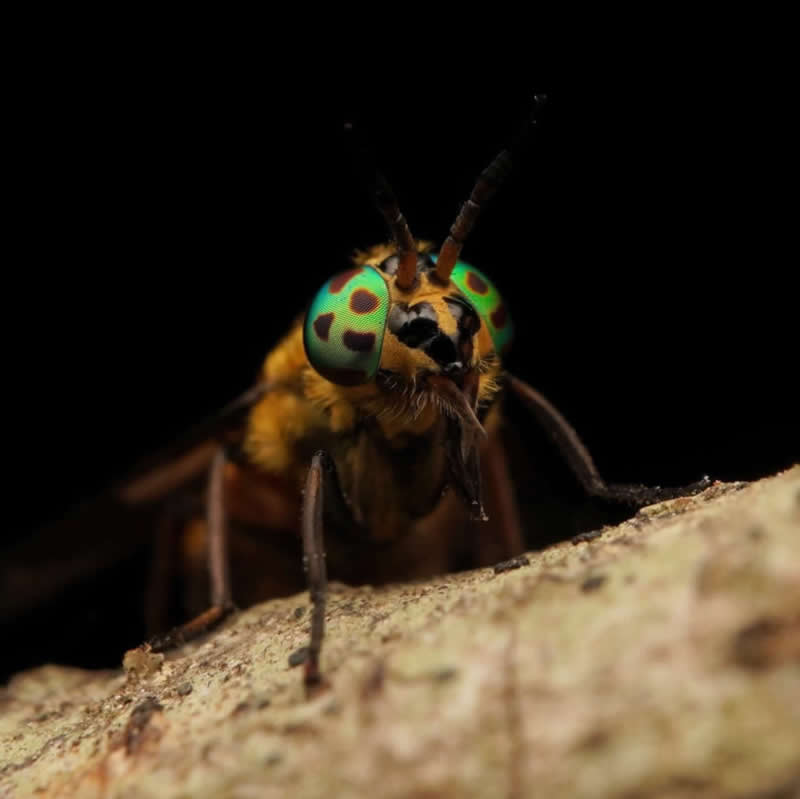
"I’ve wanted to photograph a deer fly’s stunning eyes ever since I started shooting macro, but they’re usually too skittish. One chilly morning whilst on holiday in France, I got lucky and found this blood-sucking beauty resting on a branch, calm enough for a close-up. The eyes of this Splayed Deer fly (Chrysops Caecutiens) are truly incredible – a mesmerising mosaic of emerald, sapphire and gold, punctuated with darker patches that seem to dance across the surface of the eye."
#5. Stag Beetle
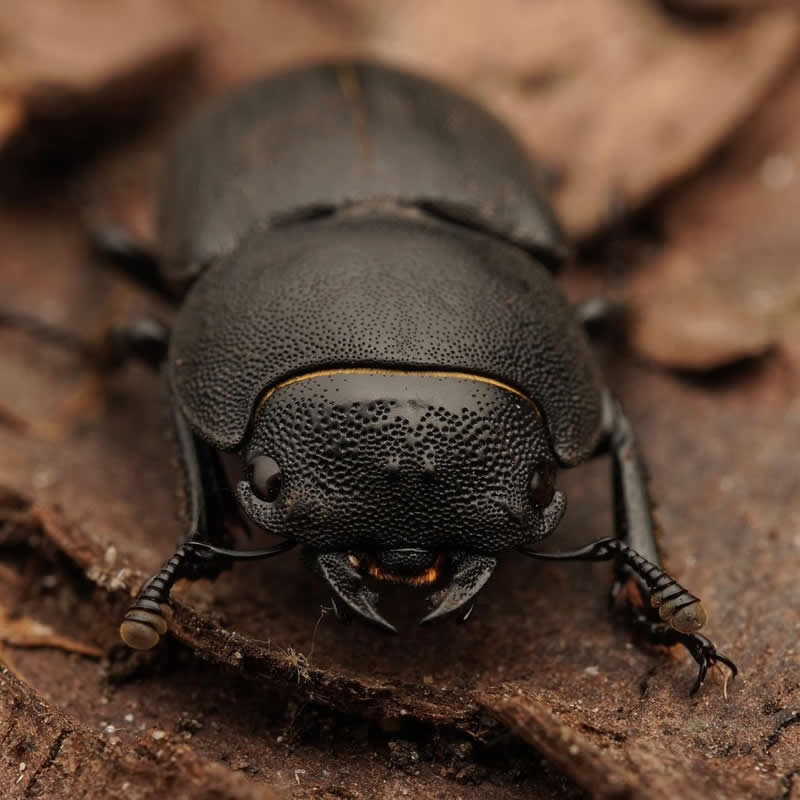
"At first glance you may think this is a female Stag Beetle (Lucanus Cervus) but it’s actually its smaller cousin, the Lesser Stag Beetle (Dorcus Parallelipipedus). I found this matte beetle walking across a rotten tree stump. This beetle stuck around for a while so I got lots of great photos like these two.
These beetles only grow to 2-3cm in length and have small pincers in both the males and females of the species. Unlike Stag Beetle larvae, which feeds on rotting wood under the ground, or the similar in appearance; European Rose Chafer (Centonia Aurata) Larvae, which feeds on compost, the Lesser Stag Beetle larvae prefers ground level rotting wood."
#6. Pill Millipede
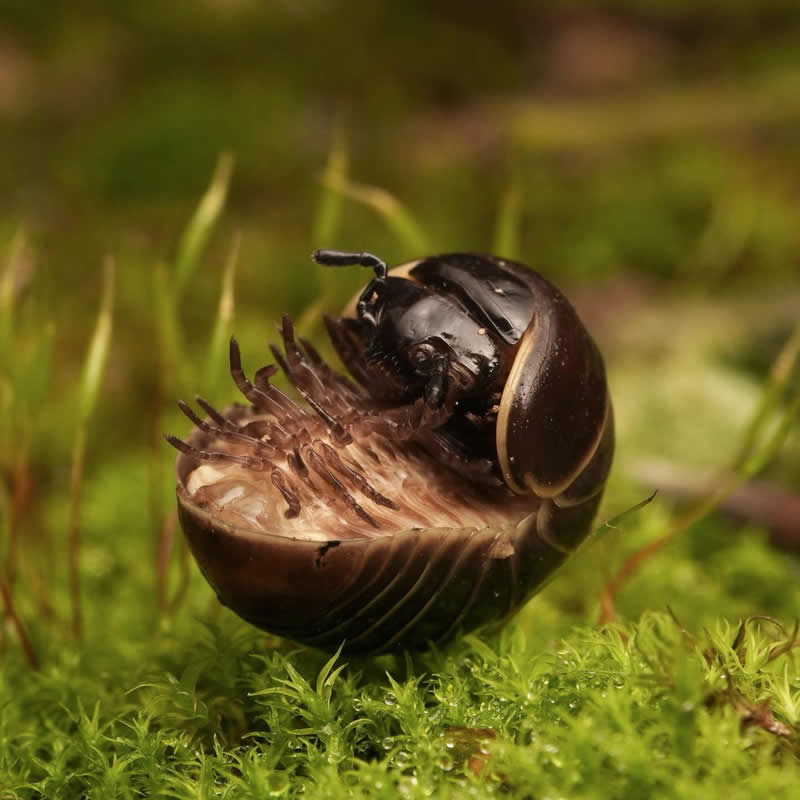
"At first sight, you may think that this is a pill bug, but although that is a good guess, it would be incorrect. This is actually a Common European pill millipede (Glomeris Marginata) and is from an entirely different class of animal to the pill bug.
The pill millipede is from the family myriapod, whereas the pill bug is a type of woodlouse which is a terrestrial crustacean. Both have the ability to conglobate (roll up into a tight ball) but, while they appear superficially similar and have common traits, this is a result of convergent evolution, not from being closely related.
I found several of these roly-poly millipedes on a bit of mossy bark, either rolled up like the third picture or walking with their humpback and lowered head in the second. Like pill bugs, they eat moss, decaying leaves and wood, both species being scavengers and the clean up crew of the natural world."
#7. Harlequin Ladybird
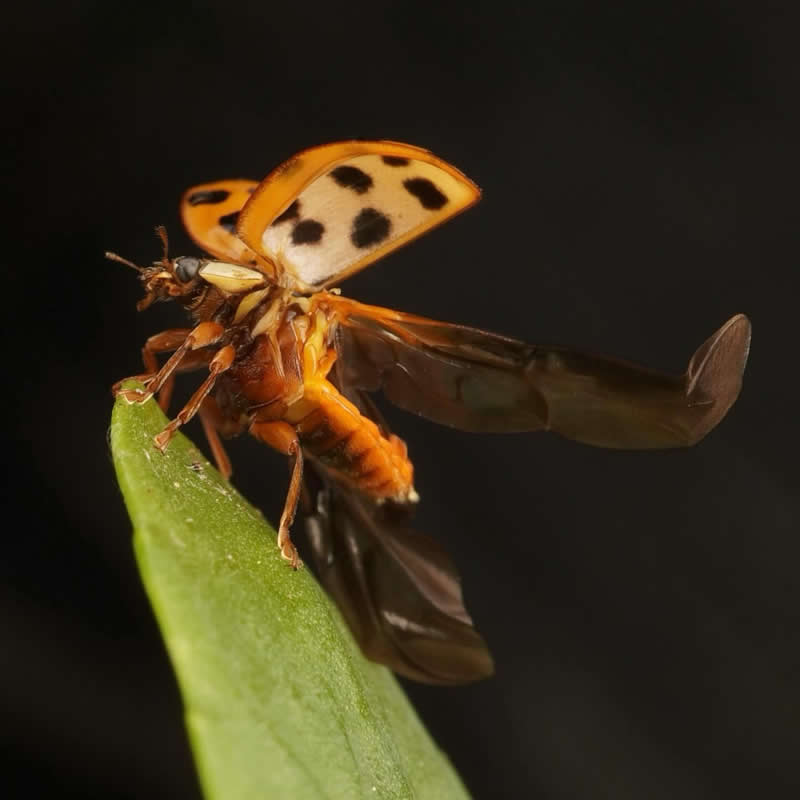
"In September this year, I was exploring the bottom of my garden, camera in hand, on the lookout for interesting bugs to photograph when suddenly a harlequin ladybird (Harmonia Axyridis) flew right in front of me and landed on a leaf by the sandpit. I crept towards it and carefully lowered my camera into position, trying not to startle it.
Just as I started to squeeze the shutter, the ladybird lifted its wing cases and unfurled its delicate, translucent wings. In that split second, I managed to capture this shot just before it took flight, a moment of sheer luck and perfect timing. The vivid orange and black markings, the glint of unfurling wings and sense of motion all came together in a single frame. This image is one of my all-time favourites, a magical moment frozen in time."
#8. Buffalo Treehopper
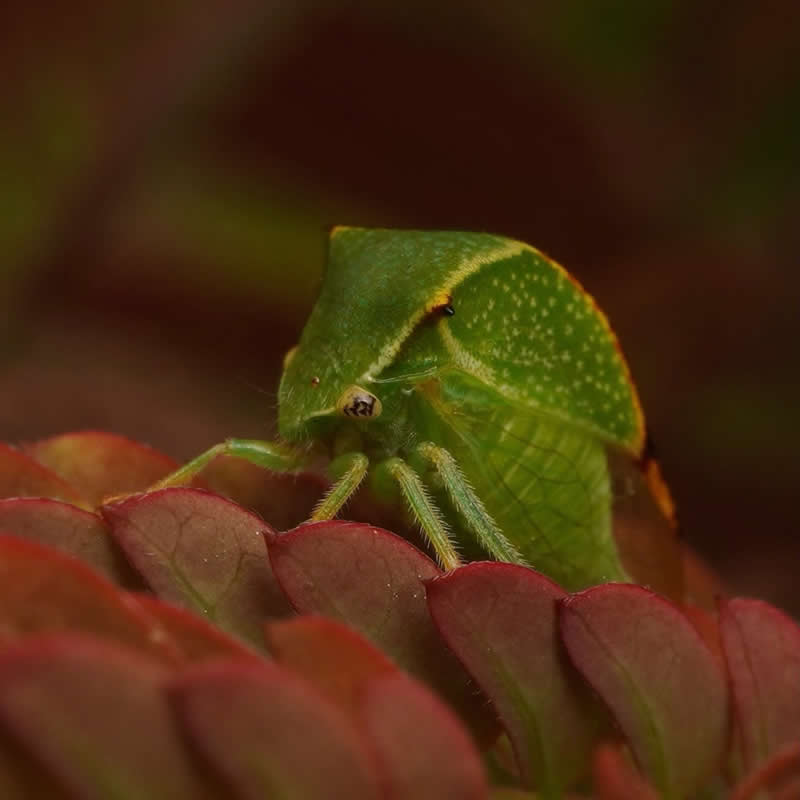
"During our holiday in France this summer, we stayed in a gite in a rural area of central France. Of course, the first thing I did was to head out into the beautiful grounds with my camera to see what wildlife I could photograph. One of my very first finds was this extraordinary little creature: a Buffalo Treehopper (Stictocephala Bisonia).
Treehoppers are masters of disguise, their shapes and colours blending seamlessly with their foliage environment. However, this particular treehopper seemed quite happy to forgo the benefits of its camouflage as I found it perched on a red fern, its emerald body standing out in stark contrast against the scarlet fronds.
As I lowered my camera into position, I was amazed to see the intricate details of this remarkable insect. I’d never seen anything quite like it before! With its large humpbacked pronotum and two pointed horn-like protrusions, it really did bear an unmistakable resemblance to the North American buffalo (bison) which inspired its name."
#9. Female Wasp Spider
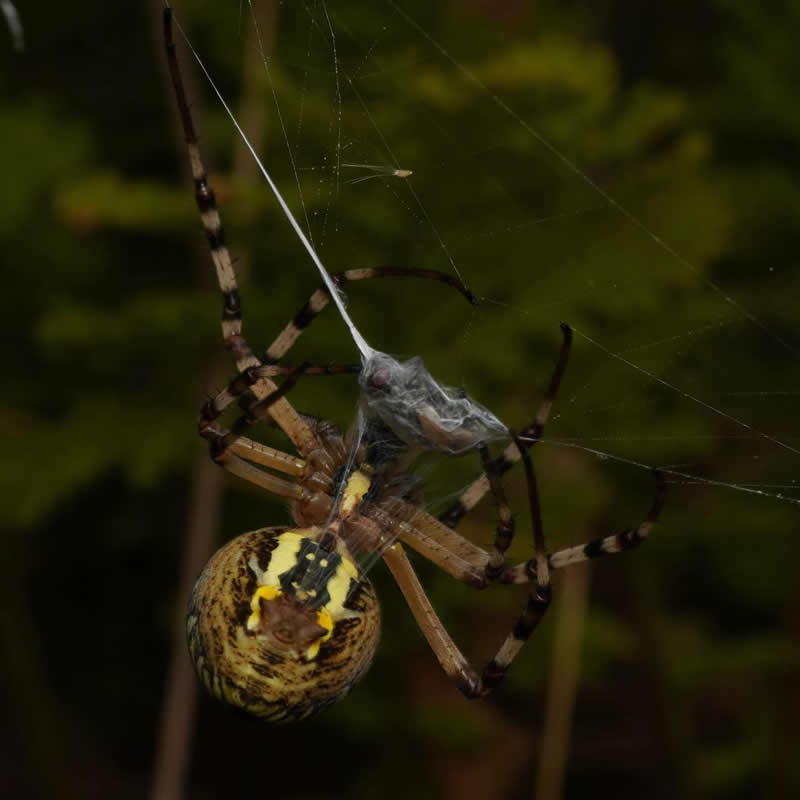
"During our holiday in France this summer, we stayed in a gíte in a rural area of central France. I was excited to discover a stunning female wasp spider (Argiope Bruennichi) which had taken up residence in the grounds, not far from our gite. She had spun a magnificent orb-shaped web with the distinctive zigzag pattern just below the centre For hours on end, she patiently sat in wait, head-down and legs splayed in a perfect X just above the zigzag, hanging motionless like a statue.
I watched and waited, camera at the ready, until a house fly blundered into her web. The spider reacted with lightning speed, surging forward to seize her prey. Her spinnerets whirred into action, spewing out multiple silken threads which fanned out in a fine sheet, rapidly encasing the helpless insect as she spun it round and round, tightening the silk blanket with every turn. The entire sequence took only a few moments so I had to move fast to position the camera and capture this moment in action."
#10. Buff-Tailed Bumblebee
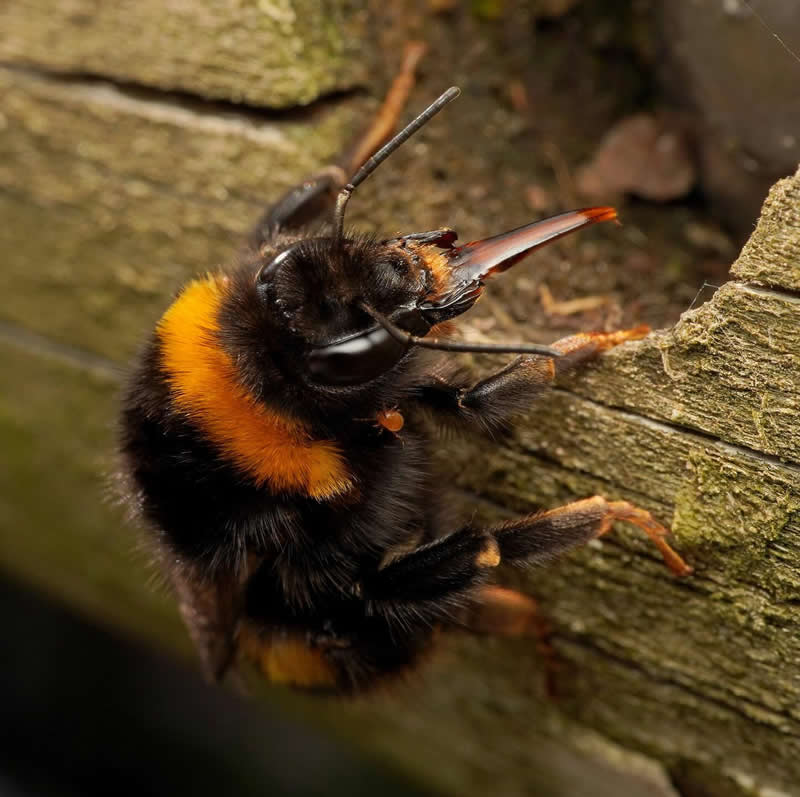
"This big bumblebee is a queen Buff-Tailed Bumblebee (Bombus Terrestris). The queen of this species is distinguished by her cream tail and is also significantly larger than the workers and males which have white tails instead. I found her resting on the climbing frame in our garden probably looking for somewhere to build her nest.
Upon closer inspection, she also has a tiny Bumblebee Miteattached to her thorax. Scroll to the right to see a close-up of the mite."
#11. Canestrini’s Harvestman
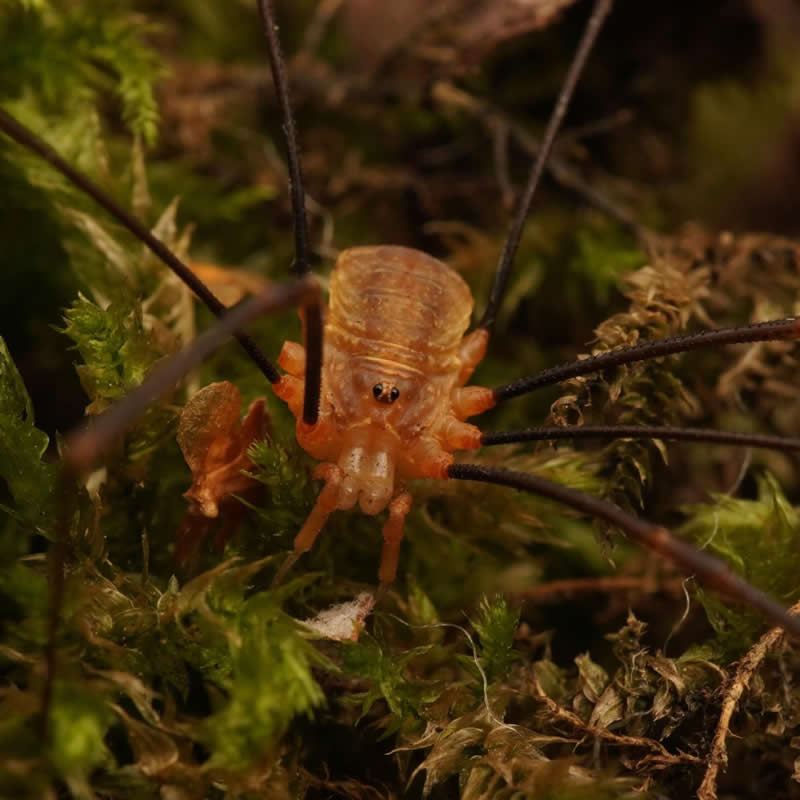
"This 8 legged, alien-like creature is a male Canestrini’s Harvestman (Opilio Canestrinii). I found him at a nearby park scurrying through a thick moss carpet in amongst the trees.
You may think that he is a spider and you are half right; he is an arachnid but not a spider. A spider is an arachnid with a defined head and abdomen while a harvestman is an arachnid with a more primitive fused head and abdomen.
"
#12. Hornet Mimic Hoverfly
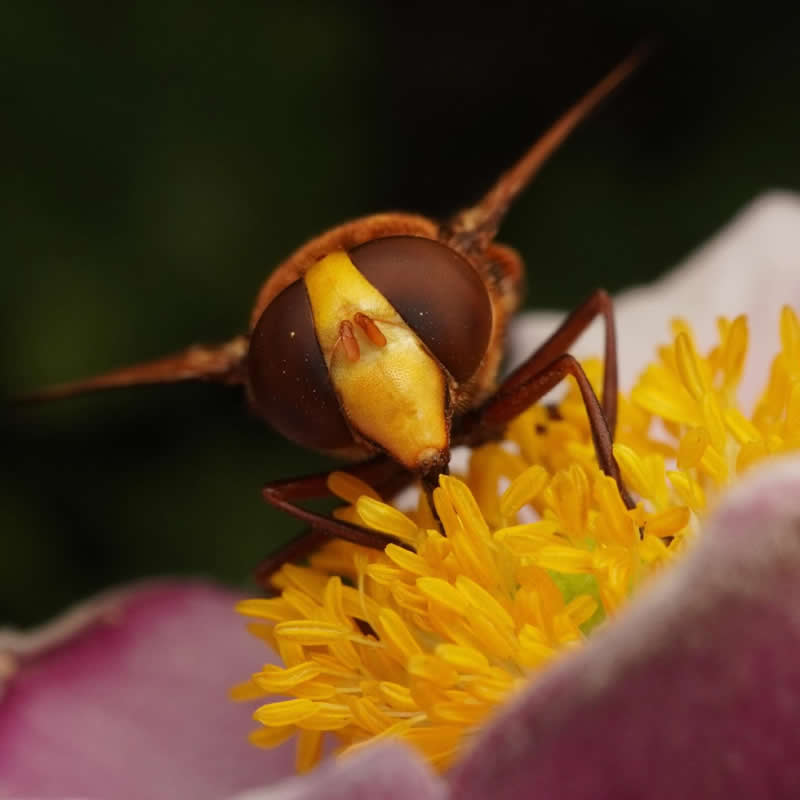
"Is this a European Hornet? NO! This is actually a female Hornet Mimic Hoverfly (Volucelal Zonaria). In almost every way she resembles a hornet, from her colouration to her size; the only differences are the face shape, eye size and shape and antennae.
The males and females are easily distinguished from each other as the males’ eyes come together and touch at the top of their head, whereas the females’ don’t and have a gap in between (as you can see in my photo above)."
#13. Giant House Spider
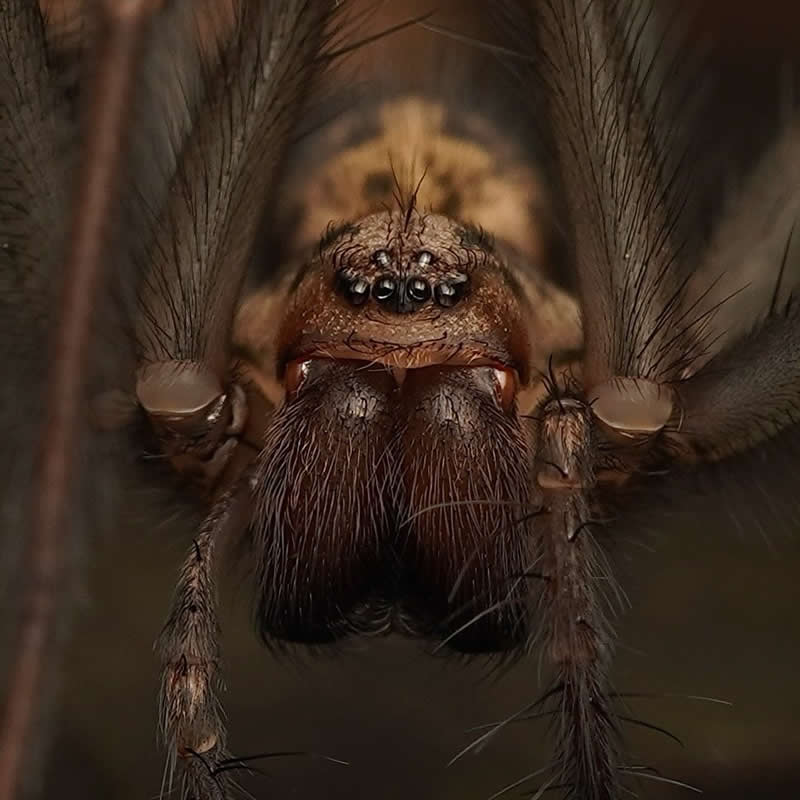
"Meet the Giant House Spider (Eratigena Atrica), a fearsome-looking beast who hides in the shadowy corners of your house and is likely to scurry out in front of you, just when you least expect it, scaring the living crap out of you!
But don’t worry, despite their terrifying appearance, these gentle giants are pretty harmless to humans – they rarely bite people unless they feel threatened and, even if they do bite, the venom is not strong enough to cause any serious harm. They’re actually pretty helpful to have around the house as they offer a free pest control service, catching and eating moths that eat through your clothes; fleas that cause endless misery to your pets; gnats, midges and mosquitoes that suck your blood; and houseflies that stomp on poo and then land on your food."
#14. Tiny Striped Shield Bug Nymph
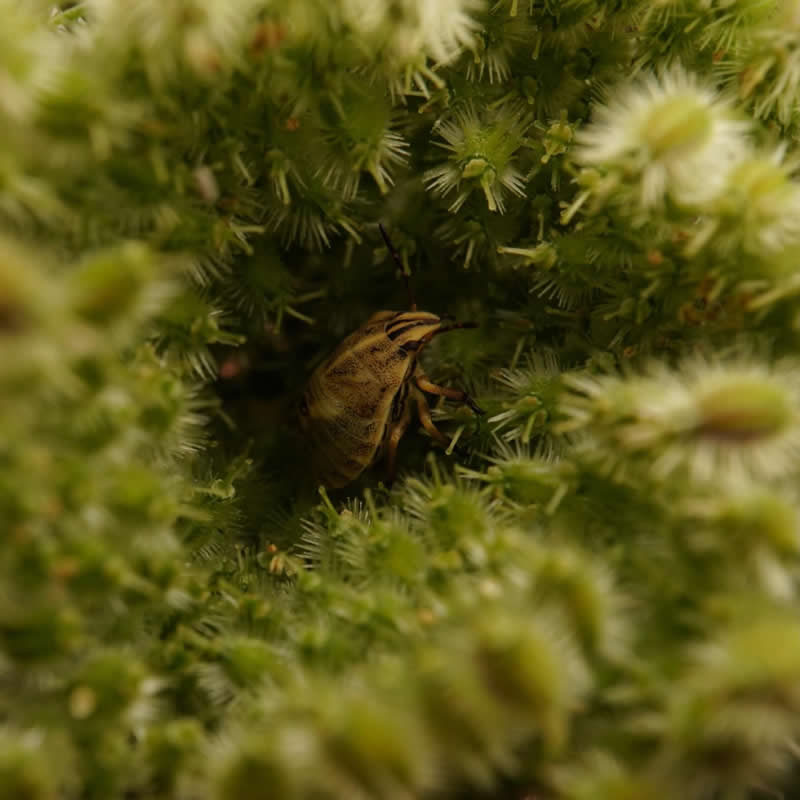
"After going through my pictures I’ve chosen this tiny striped shield bug nymph (Graphosoma Italicum) nestled in what looks like a wreath, that you may hang on your door. This is not a mini wreath but actually a ‘nest’ from a wild carrot (Daucus Carota), also known as ‘Queen Anne’s Lace’ (this is a plant not a bird).
Normally wild carrot have dense clusters of tiny white flowers, with a single purple flower in the middle but these had already fallen away, leaving behind hundreds of bristly seeds on each head. The heads had already begun to dry out and curl inwards, forming concave, nest-like structures which very much resemble the well known decoration."
#15. Barkfly
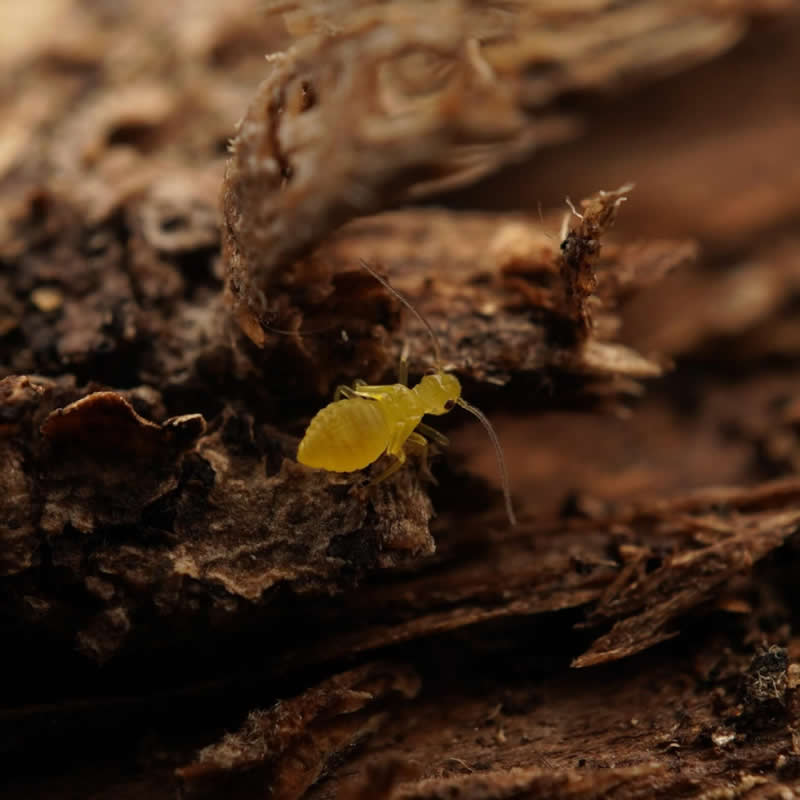
"It’s hard to tell just how miniscule this little creature is from the photo. It’s a Barkfly (Psocoptera) nymph and is only about 1mm in size, almost invisible to the naked eye. Whilst investigating a rotten log at my local park, I was lucky enough to spot this tiny flash of luminous yellow and crouched down to take a closer look through my macro lens.
It only looked like a tiny speck of yellow with my naked eye, but, through the macro lens, I could see all the intricate details of its teardrop-shaped, almost translucent body navigating the nooks and crannies of the rotting log, like a tiny droplet of amber."
In Summary
Who is Benji Cook?
A 12-year-old UK photographer and winner of the Under 18 category at the Royal Entomological Society Photography Competition.
What was his winning photo?
A macro image of antlion larvae (Synclisis baetica) ambushing prey from sand craters.
Where was the photo taken?
While Benji was on holiday in France.
Who judged the competition?
Dr. Tim Cockerill, Lucia Chmurova, and macro photographer Matt Doogue.
Why is this win significant?
It highlights young talent and the global rise of macro and insect photography.