

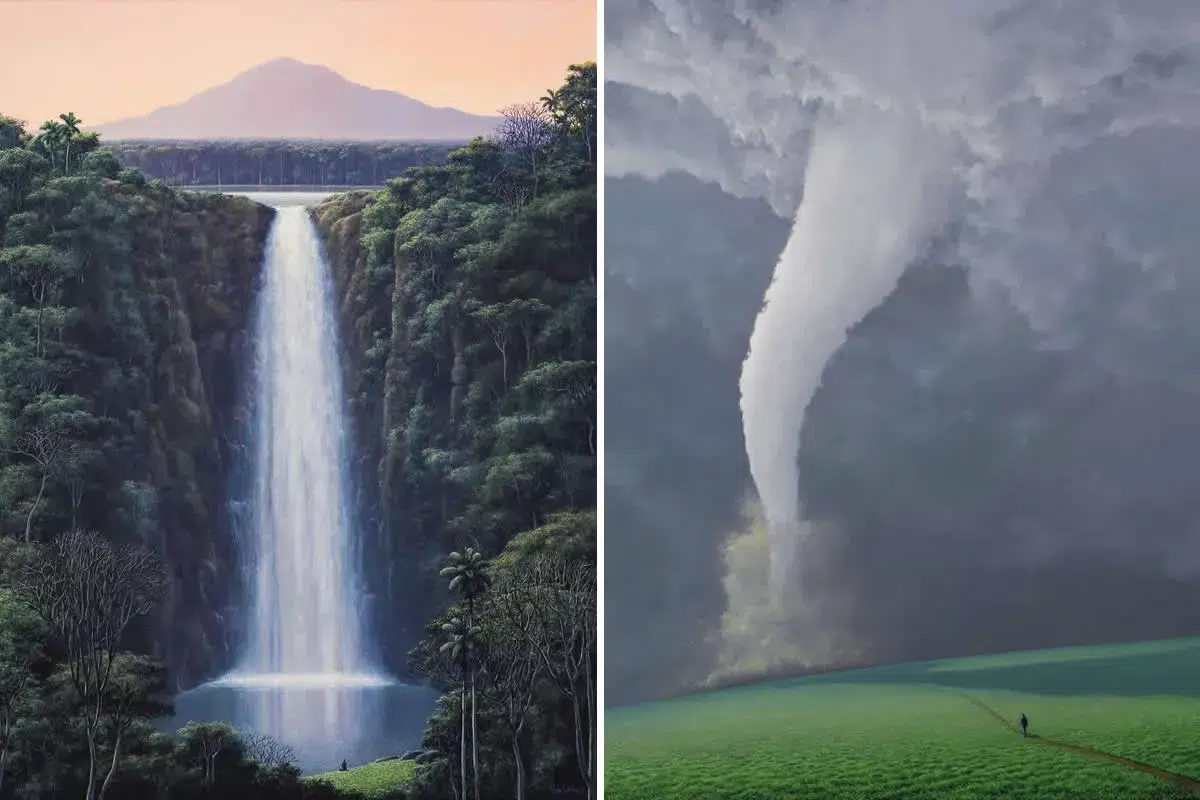
There’s a certain kind of silence that doesn’t feel empty—it feels alive. That’s exactly the space you step into when you encounter the landscape paintings of Tomas Sanchez. His work doesn’t shout for attention. It pulls you in slowly, like a deep breath after a long day, inviting you to pause, reflect, and really see. Born in Cuba and later based in the United States, Sanchez carved his own path at a time when many of his peers were chasing loud movements like Pop Art and Neo-Expressionism. He chose stillness—and that choice changed everything.
In the early 1970s, discovering Andrew Wyeth’s work opened a door for Sanchez. He realized landscapes could be contemporary, cinematic, and deeply emotional. Around the same time, yoga and meditation entered his life, forever shaping his artistic language. Instead of painting what was directly in front of him, Sanchez began painting what lingered within him—memories formed during meditation, emotional impressions of forests, lagoons, waterfalls, and tropical horizons. These landscapes aren’t replicas of nature; they’re internal worlds shaped by awareness and silence.
What makes Sanchez’s paintings so powerful is their dual nature. On one hand, they radiate calm—lush greenery, reflective waters, balanced compositions that feel almost sacred. On the other, his haunting “Landfill” series delivers a gut punch, confronting us with pollution, excess, and humanity’s growing disconnect from the natural world. Together, these bodies of work form a complete conversation: reverence and responsibility, peace and warning.
This collection of 25 landscape paintings isn’t just about beauty. It’s about presence. It’s about understanding our smallness within vast environments—and learning, through art, how to respect and protect what still remains.
You can find Tomas Sanchez on the web:
#1. "El río va” – 2020, Acrylic on linen
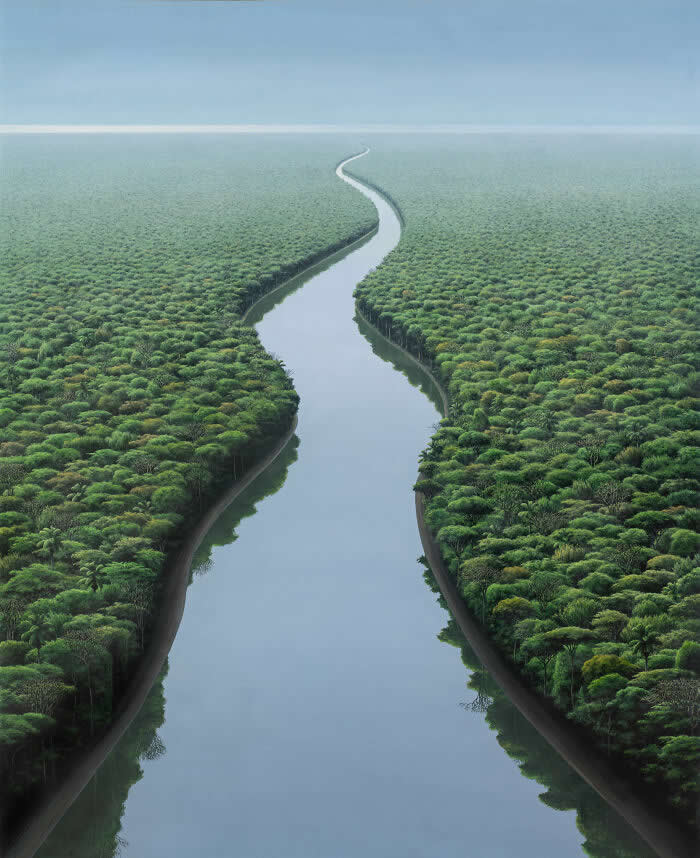
#2. "Buscador de paisajes" – 2005, acrylic on linen
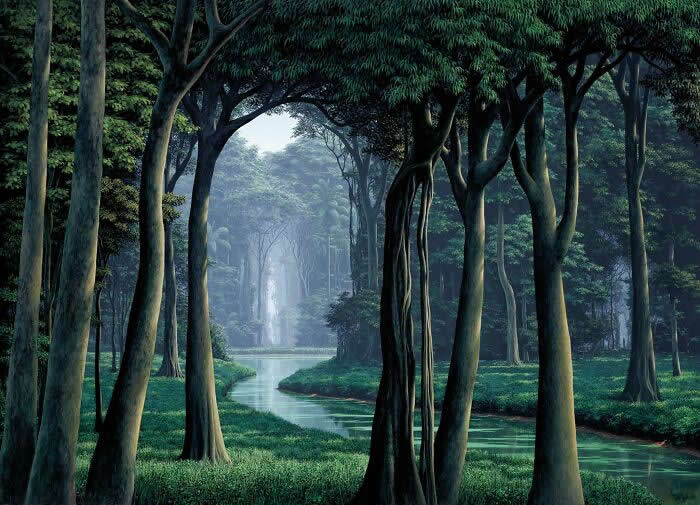
#3. "Contemplador del contemplador" – 1996, tempera on paper
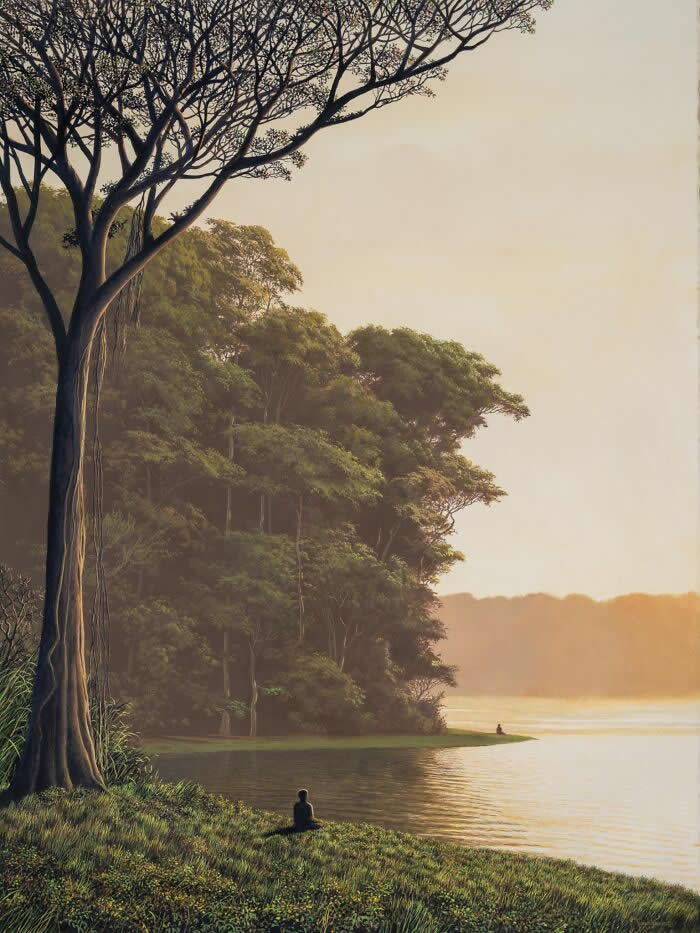
#4. "De la luz a la luz" – 2022, Acrylic on linen
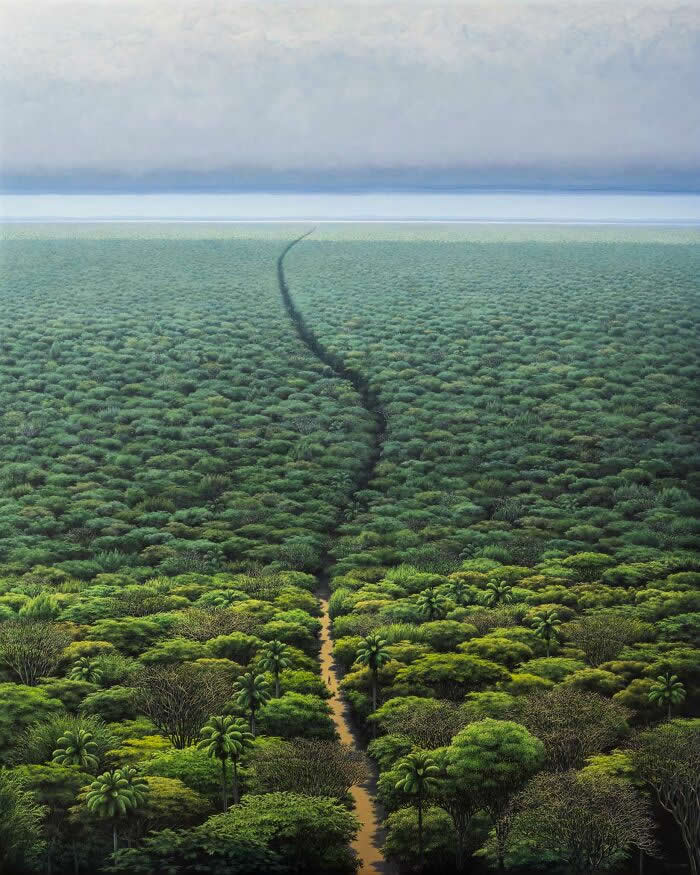
#5. "Llegada del caminante a la laguna" – 1999, acrylic on linen
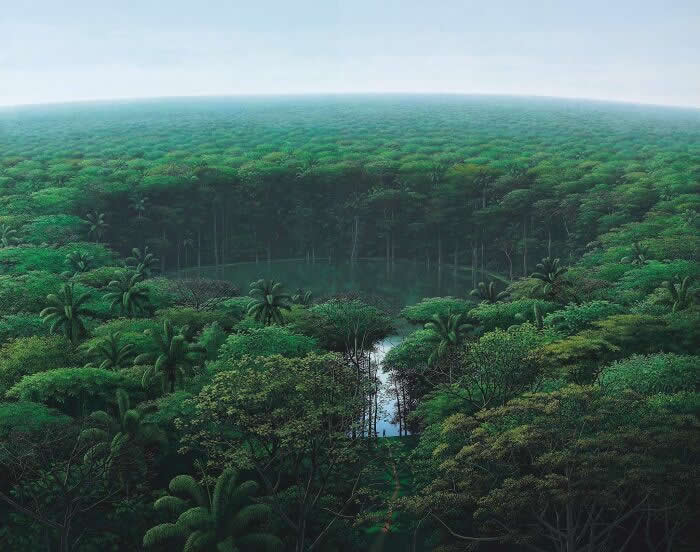
Landscapes Born From Meditation, Not Observation
Sanchez doesn’t paint from direct observation, and that’s where the magic begins. His landscapes emerge from meditation, not from standing in front of a scene with an easel. Hours spent in silence—often inspired by Kashmiri Shaivism—allow emotions, memories, and sensations to rise naturally. These internal experiences then become the foundation of his paintings. That’s why his forests feel endless, his skies feel heavy with thought, and his waters seem to breathe.
Minimalism and conceptualism quietly influence his compositions, but emotion is always the driver. Every tree line, every reflection, every horizon is carefully placed, never random. Sanchez treats composition like a meditative practice itself—intentional, focused, and deeply conscious. The result is work that feels timeless. You’re not just looking at a place; you’re stepping into a mental state where noise fades and awareness sharpens.
#6. "Luz de luna" – 2024, acrylic on linen
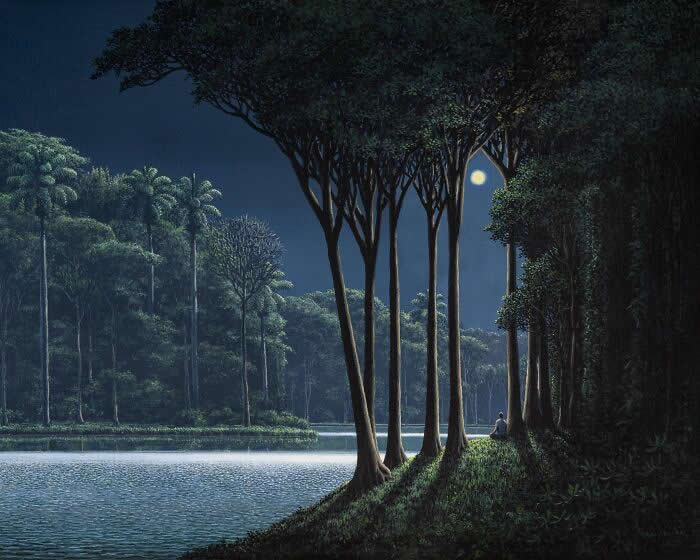
#7. "A veces la gracia parece una cascada" – 2017, acrylic on linen
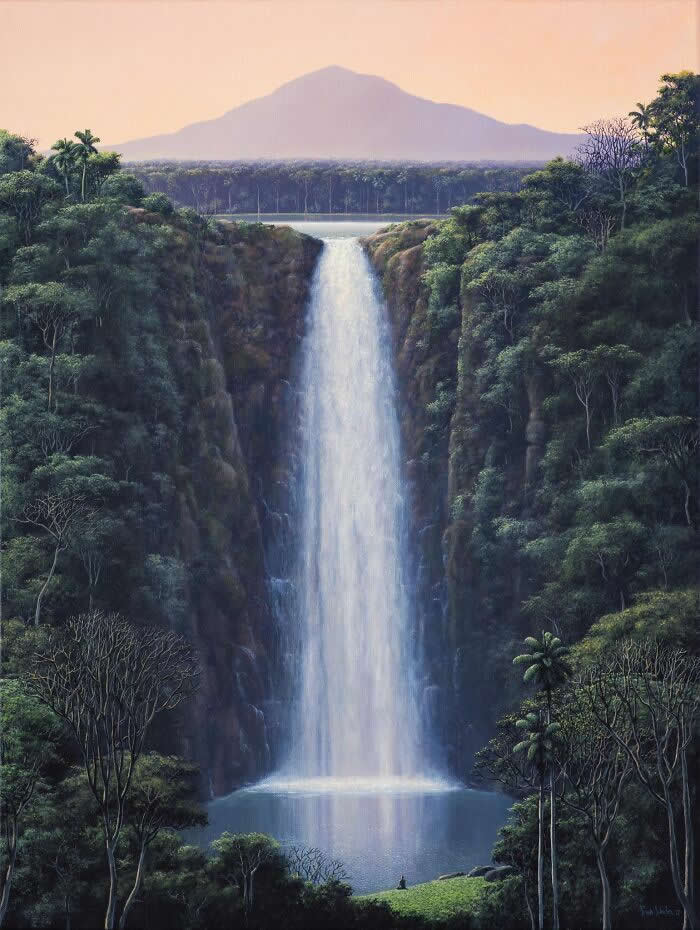
#8. "Cascada como ícono" – 2021, acrylic on linen
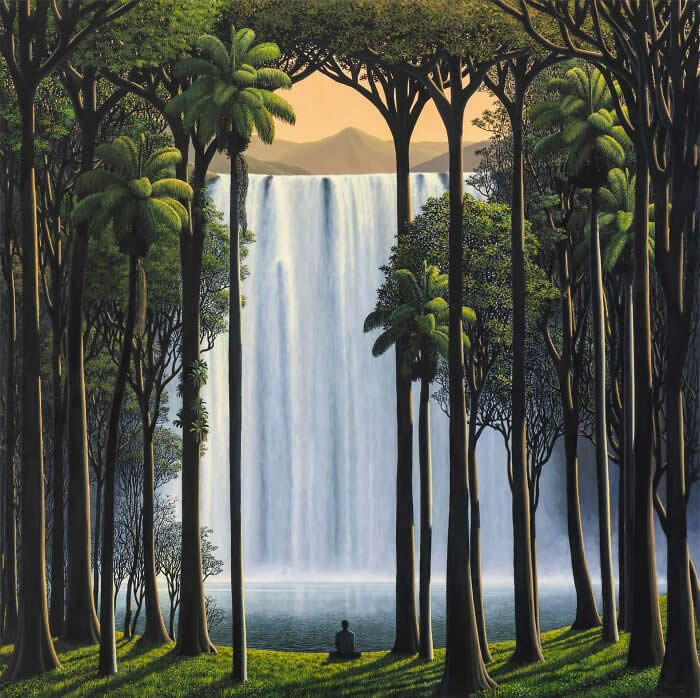
#9. "Desde la cueva del corazón" – 2004, Acrylic on linen
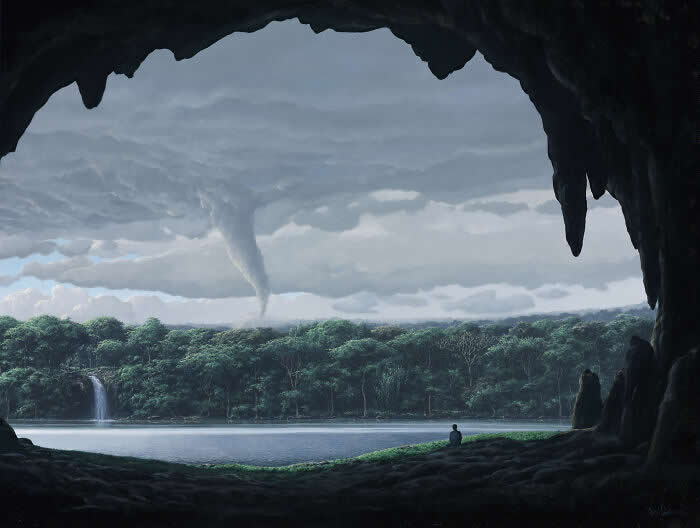
#10. "El testigo" – 2000, oil on linen
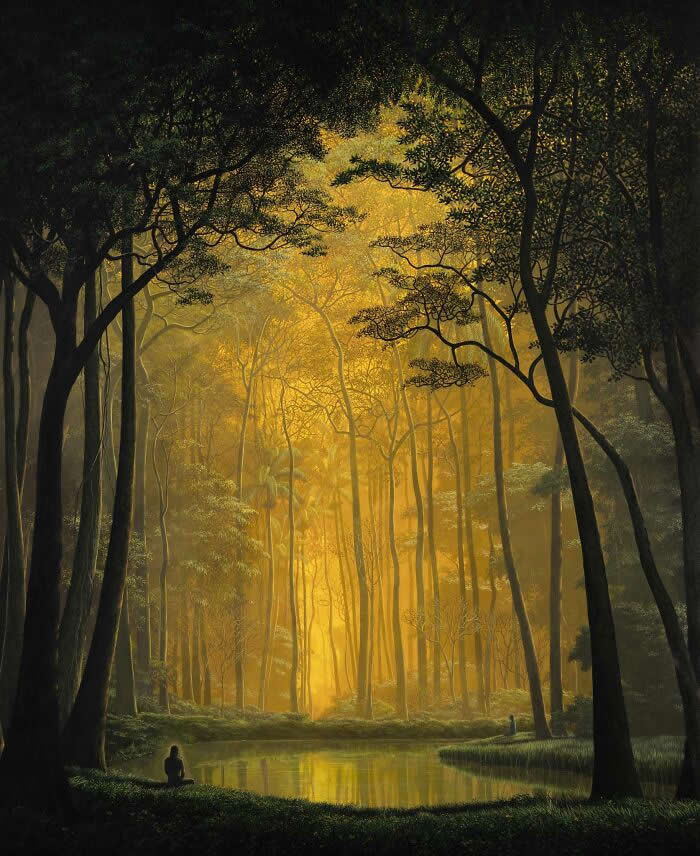
The Witness: Humanity’s Quiet Presence in Nature
If you look closely, you’ll often spot tiny human figures in Sanchez’s paintings—sometimes meditating, sometimes just present. These figures represent “The Witness,” a concept rooted in his meditation practice. They’re not dominating the landscape; they’re humbled by it. Their small scale reminds us of our place within nature’s vastness.
This subtle inclusion shifts the entire narrative. The paintings stop being just about scenery and start becoming philosophical reflections. Sanchez wants viewers to feel that same quiet he experiences when standing near a waterfall or deep inside a forest—when the mind softens and awareness expands. The goal isn’t just emotional impact; it’s consciousness. He hopes viewers walk away with a deeper respect for nature, sensing not ownership, but connection.
#11. "Meditador y laguna escondida en el bosque" – 1995, oil on linen
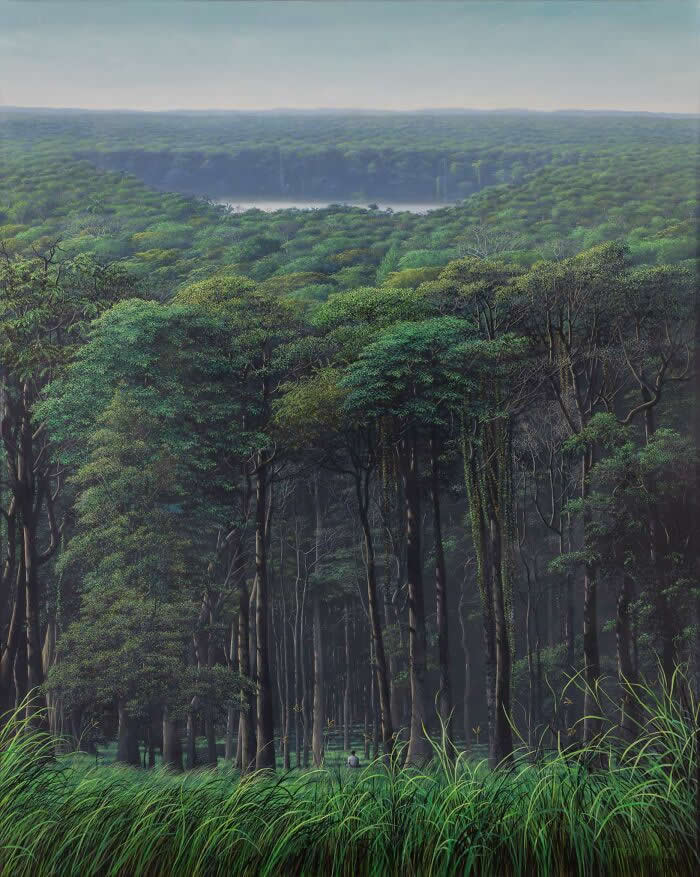
#12. "Inner love" – 2020, acrylic on linen
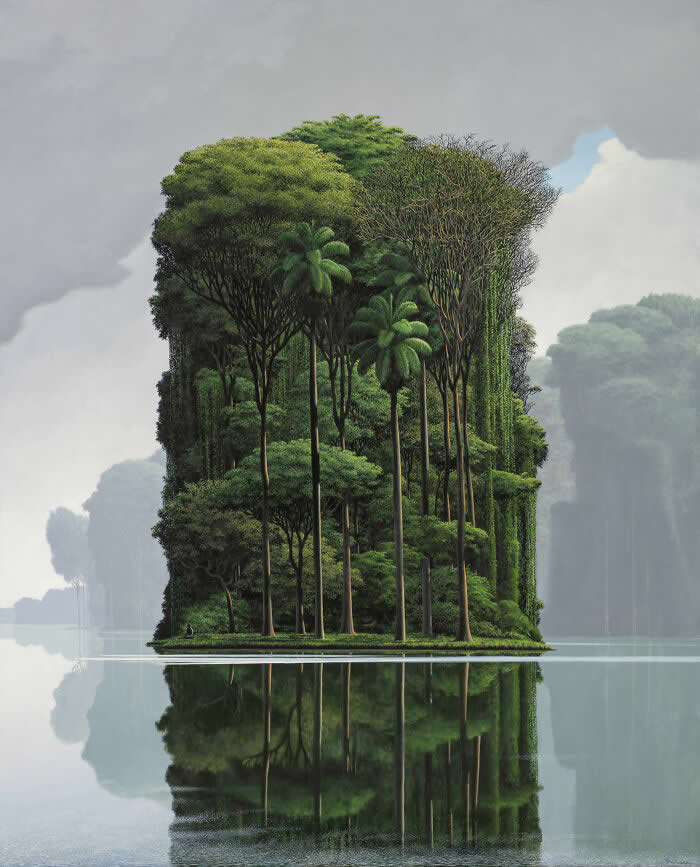
#13. "Light: outside, inside" – 2021, acrylic on linen
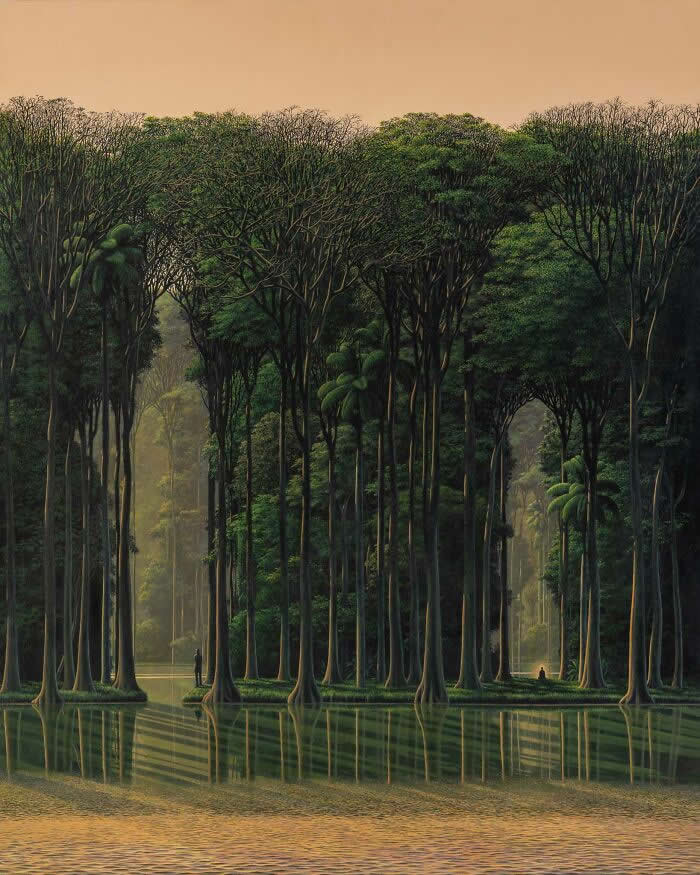
#14. "Pausa a la orilla" – 2020, acrylic on linen
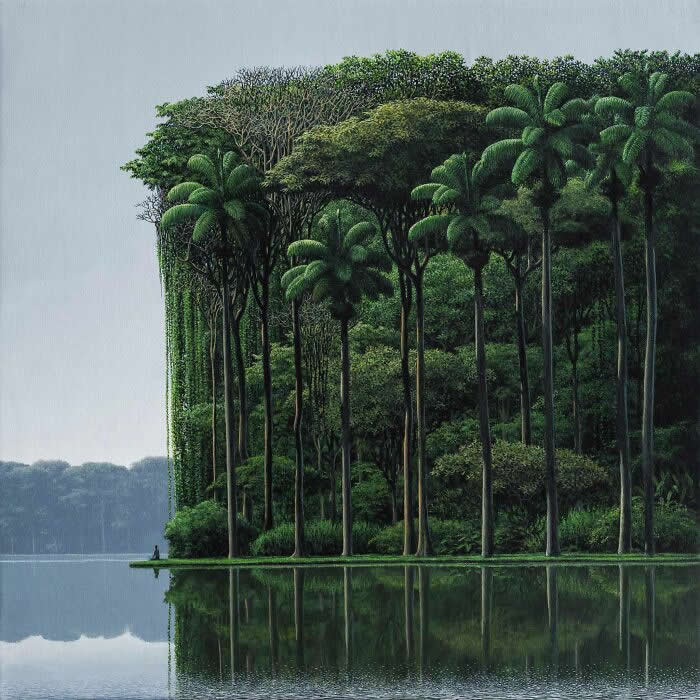
#15. "Relación entre la laguna, la isla y la nube" – 1986, acrylic on linen
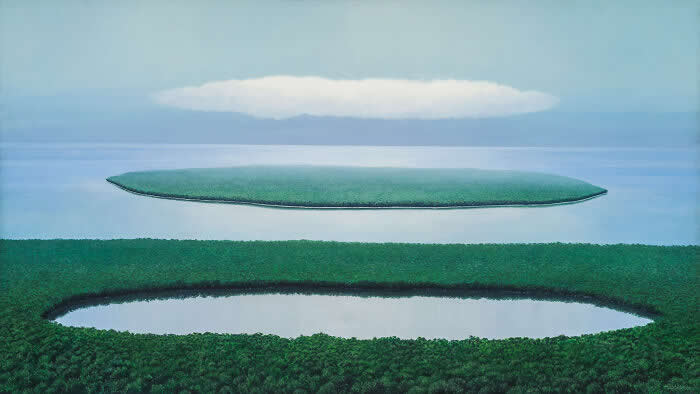
The Landfill Series: When Silence Turns Uncomfortable
Then comes the disruption. Sanchez’s “Landfill” series hits hard because it uses the same meticulous beauty to depict something deeply unsettling. Mountains of trash invade once-pristine landscapes, swallowing nature whole. There’s no exaggeration, no dramatics—just reality, rendered with devastating calm.
This contrast is intentional. By applying the same visual language to pollution, Sanchez forces us to confront the consequences of human behavior. The silence remains, but it’s heavy now. Uncomfortable. Reflective. These paintings aren’t meant to shame—they’re meant to awaken. They remind us that nature’s beauty isn’t guaranteed, and meditation alone isn’t enough without responsibility.
#16. "Meditador, laguna, nube" – 2018, acrylic on linen
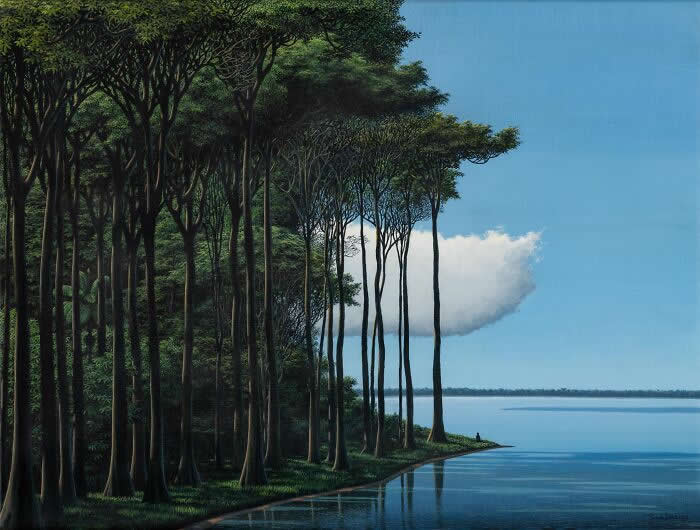
#17. "Adoración" – 2005, oil on linen
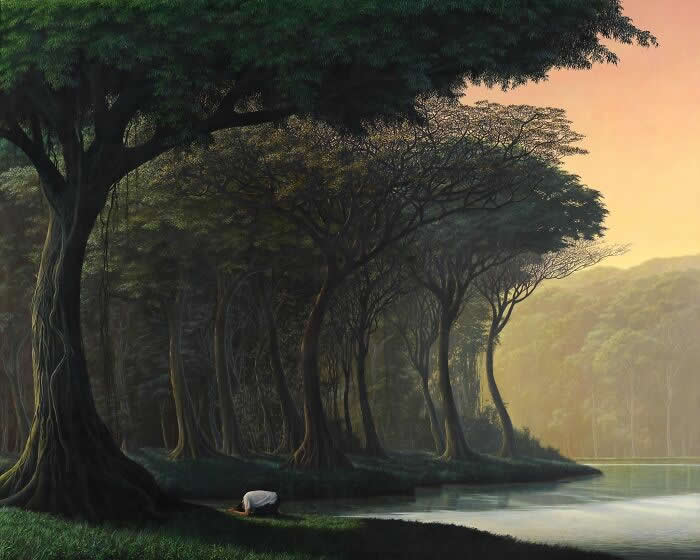
#18. "Self-contemplation" – 2024, acrylic on linen
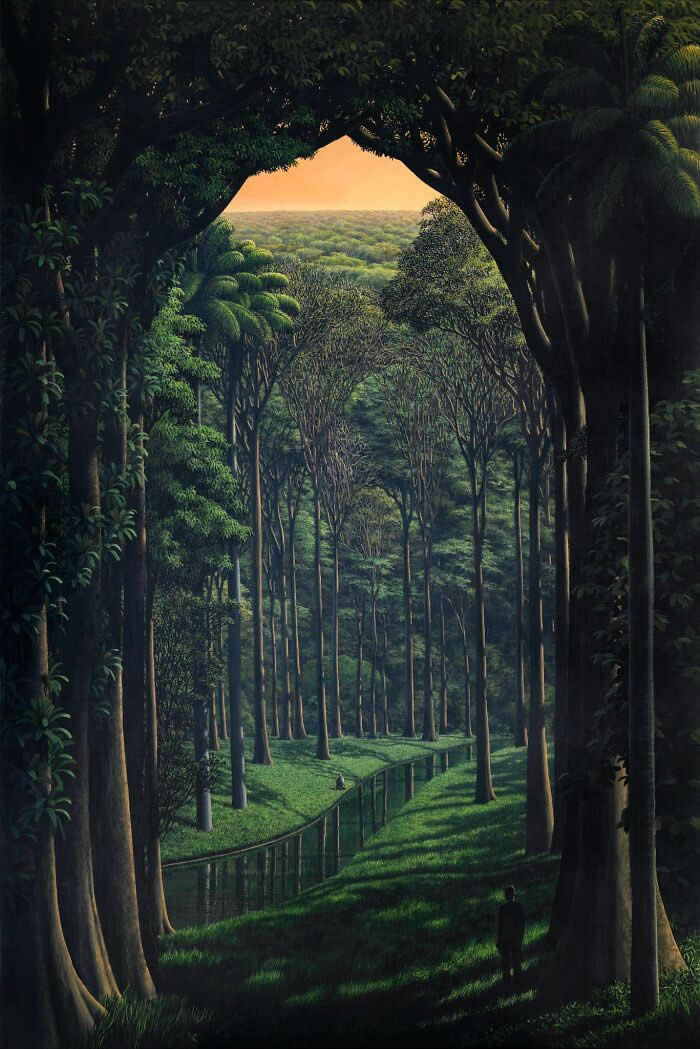
#19. "La batalla" – 2015, acrylic on linen
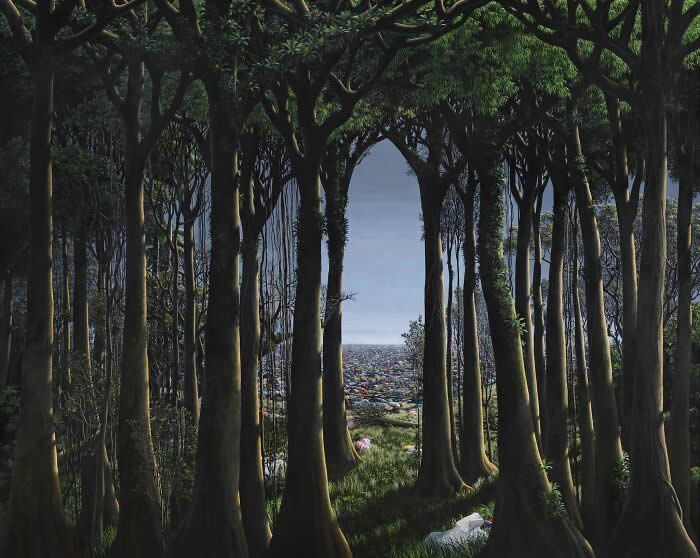
#20. "Camino a la luz" – 1988, acrylic on linen
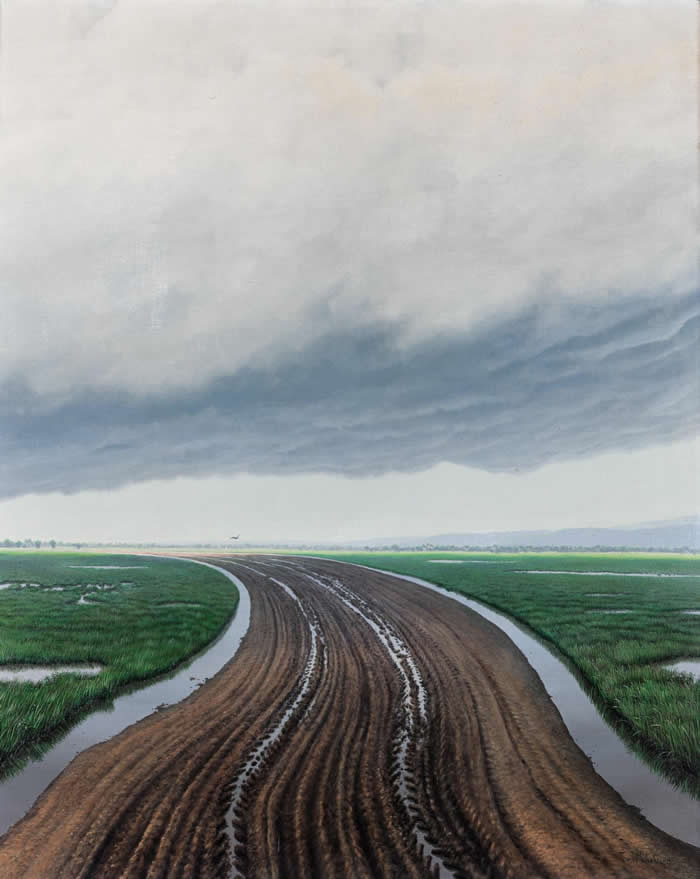
A Never-Ending Dialogue Between Artist and Canvas
Sanchez spends long hours with each painting, wrestling with composition, concept, and emotion. Nothing leaves the studio lightly. In fact, the hardest moment for him is deciding when a piece is finished. That lingering doubt—the feeling that something more could be said—is something he believes many artists across history have shared.
This uncertainty isn’t weakness; it’s honesty. It reflects an artist deeply connected to his inner process, someone who understands that art, like meditation, never truly ends. Each painting becomes a moment in an ongoing dialogue between self, nature, and awareness—and that’s exactly why his work continues to resonate so deeply.
#21. "El reto" – 2001, acrylic on linen
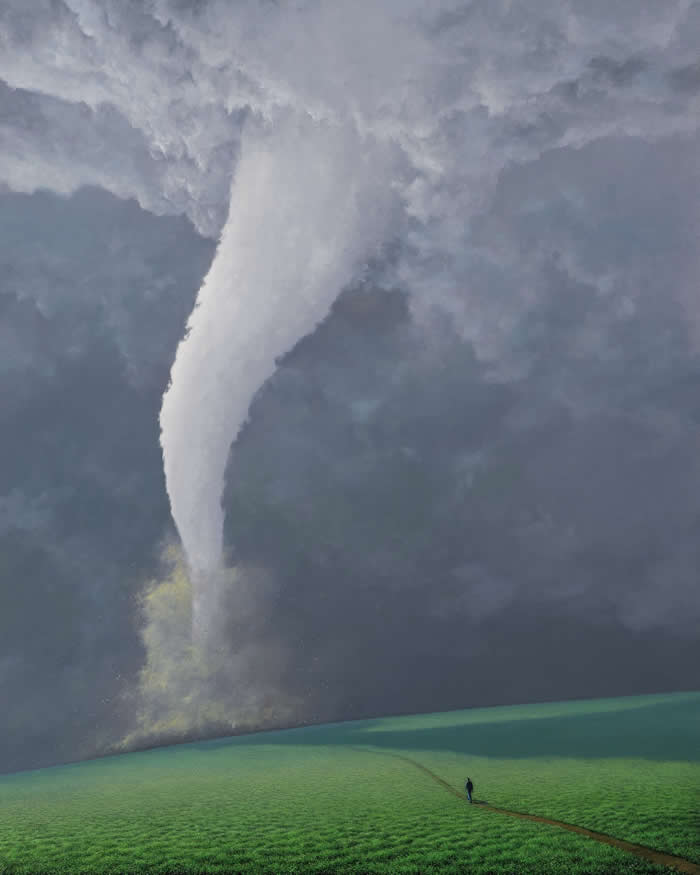
#22. "Meditación entre el camino y el mar" – 1992, oil on linen
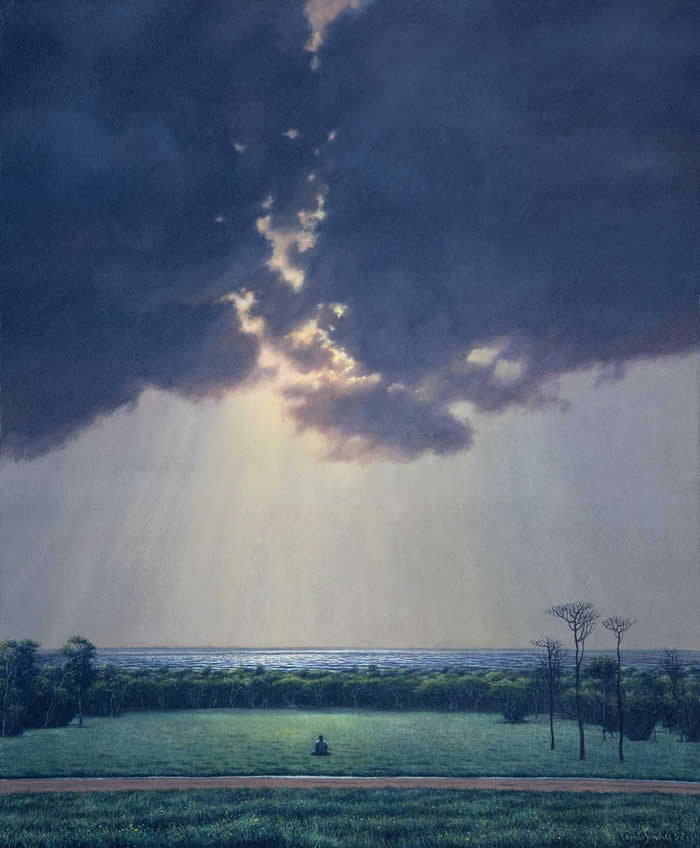
#23. "Contempladores de cascadas" – 1992, acrylic on linen
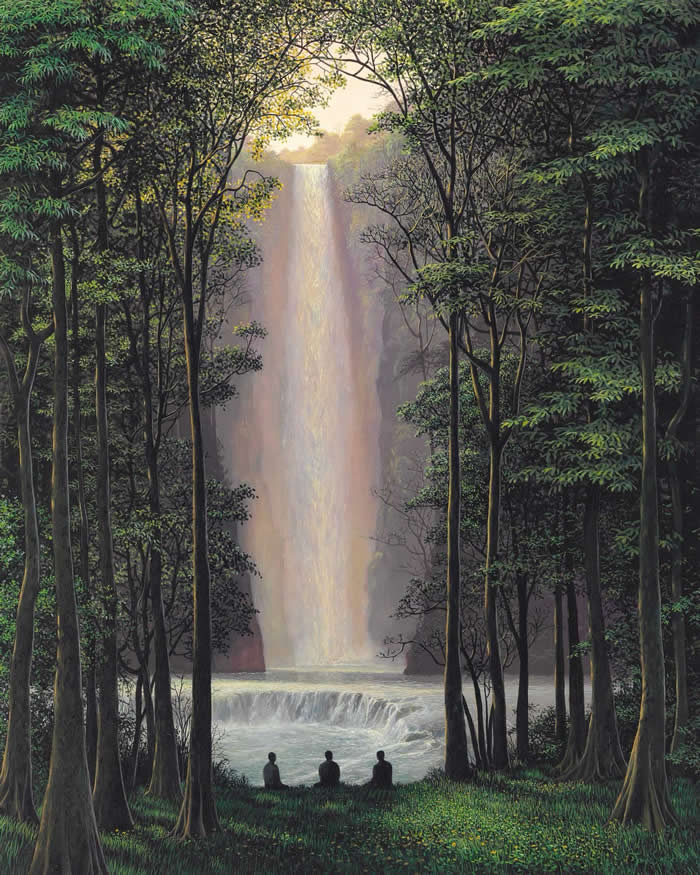
#24. "Discovering the other shore" – 2025, acrylic on linen
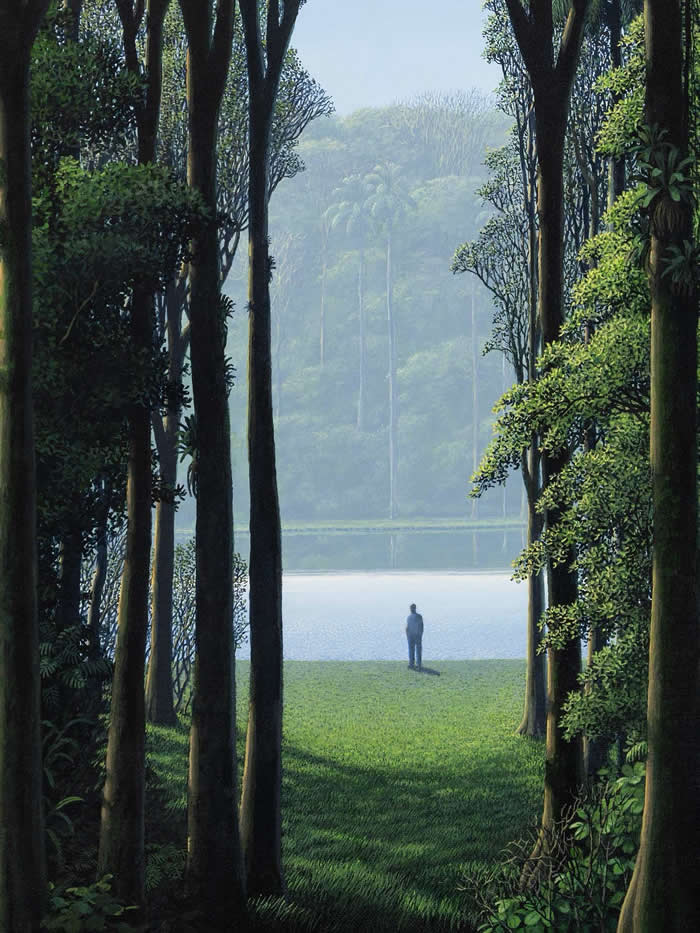
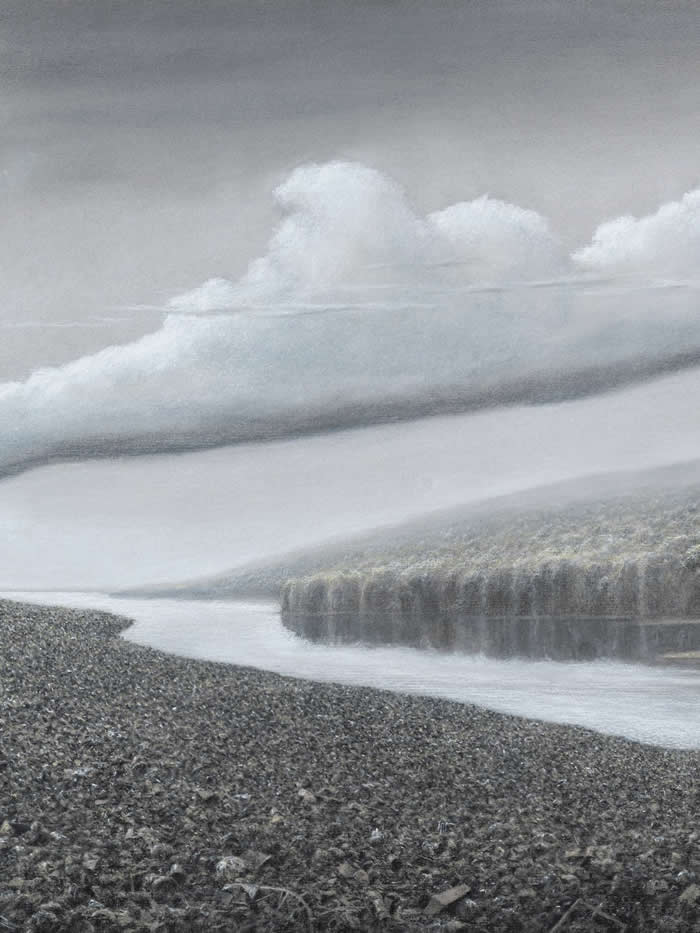
#25. "Río, nube y dos orillas" – 2025, conte pencil on paper
In Summary
Who is Tomas Sanchez?
- Tomas Sanchez is a Cuban-American painter known for meditative landscape artworks exploring nature, spirituality, and identity.
What inspires his landscape paintings?
- His paintings are inspired by meditation, yoga, and internal experiences rather than direct observation of nature.
What is the Landfill series about?
- The Landfill series addresses pollution and environmental destruction, showing trash overtaking natural landscapes.
Why do his paintings feel so calming?
- Their balanced compositions, minimalism, and meditative origins create a sense of silence and inner peace.
What message does his work convey overall?
- Sanchez’s art encourages awareness, humility, and a deeper responsibility to protect and respect nature.
