
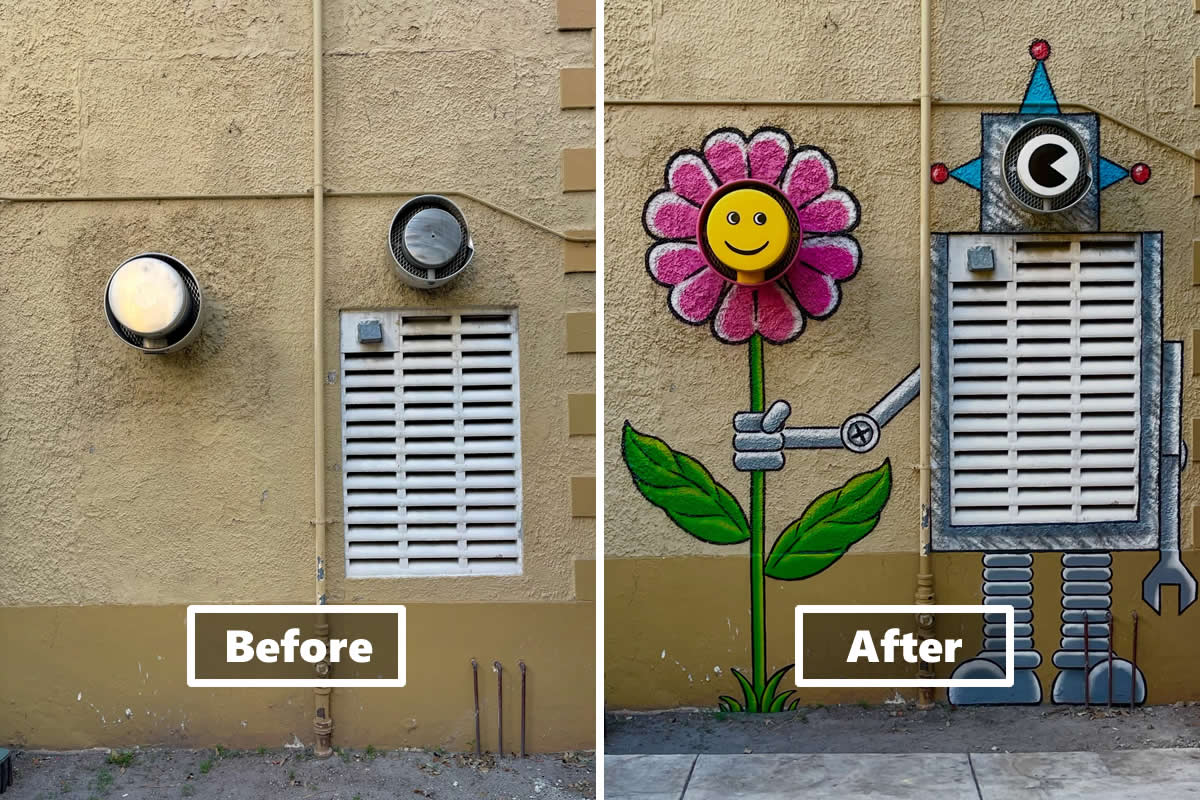
If you’ve ever walked through a city and felt like everything around you was just… gray, dull, and on autopilot, Tom Bob is the artist who flips that switch. His work doesn’t shout from massive walls or hide behind gallery doors—it sneaks up on you. One second you’re staring at a rusty pipe or a forgotten bike rack, the next second you’re smiling at a goofy character that feels like it’s been living there forever. That’s Tom Bob’s magic.
Based in New York, Tom Bob has built a global following by doing something deceptively simple: turning ordinary city objects into playful, colorful street art installations. Pipes become noses, radiators turn into creatures, light sensors transform into eyeballs watching you walk by. His work feels spontaneous, funny, and deeply human—like the city itself decided to crack a joke.
What really sets Tom Bob apart is how his art blends perfectly into its environment. Nothing feels forced. Each piece looks like it was waiting to be discovered, not installed. And that sense of surprise? That’s the hook. You’re not looking for art—it finds you.
In a world dominated by fast scrolling and short attention spans, Tom Bob designs his work to hit instantly. Bold shapes. Simple graphics. Clear emotions. The goal isn’t confusion or complexity—it’s happiness. A quick visual punch that makes your commute lighter and your day better.
Street art is often about rebellion or statements. Tom Bob’s version is about connection. About reminding us that creativity doesn’t need permission—and that even the most boring corners of our cities can still surprise us.
You can find Tom Bob on the web:
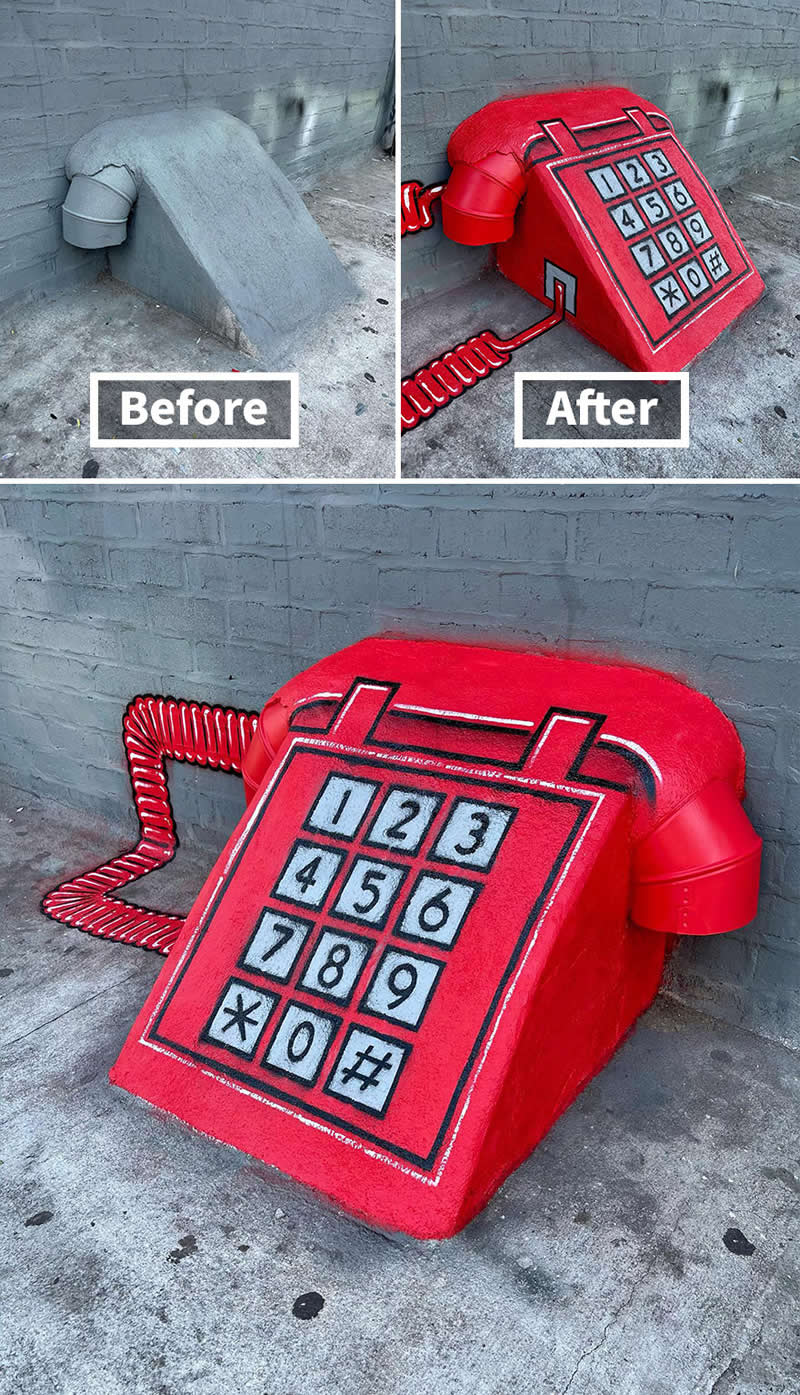
#1. Call Me, New Your City
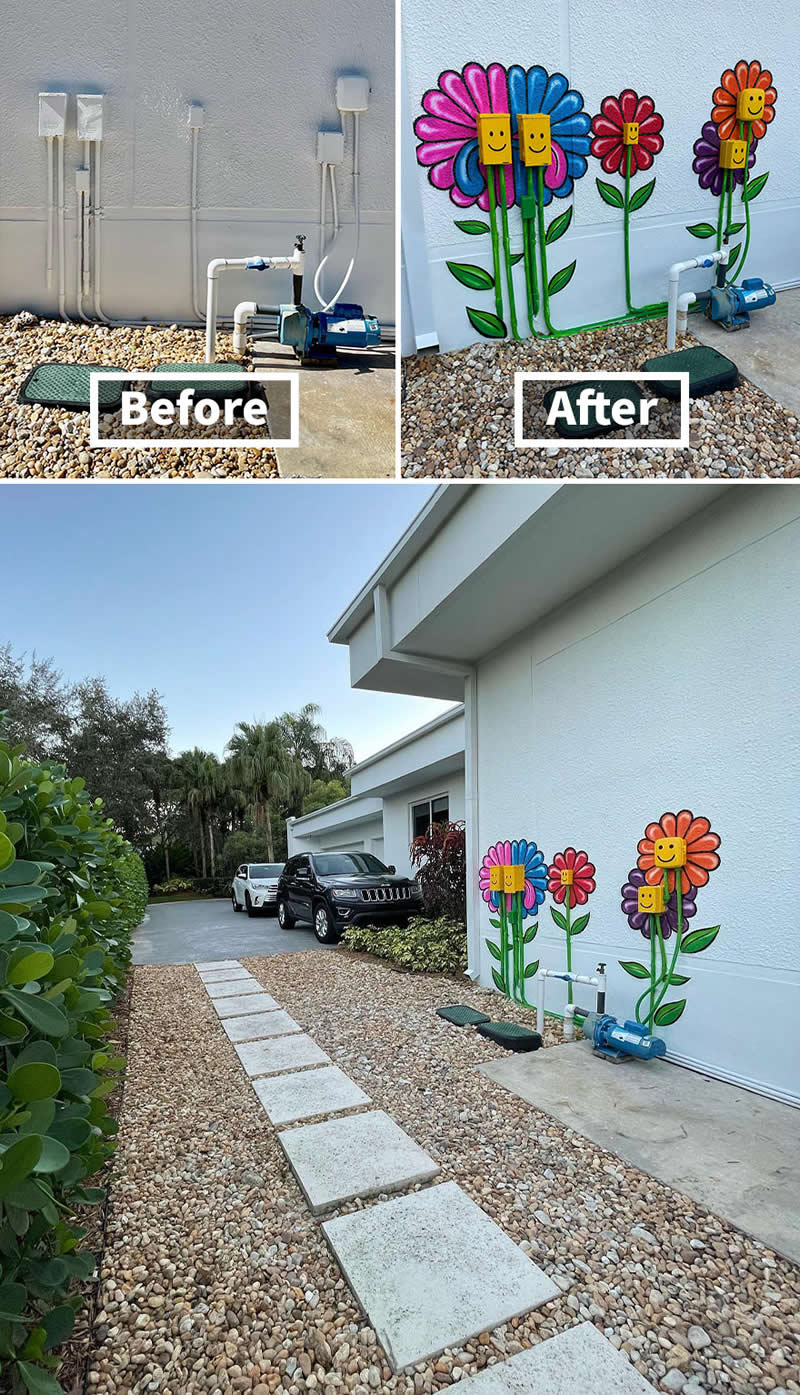
#2. Flower Garden, Pinecrest, Miami, Florida
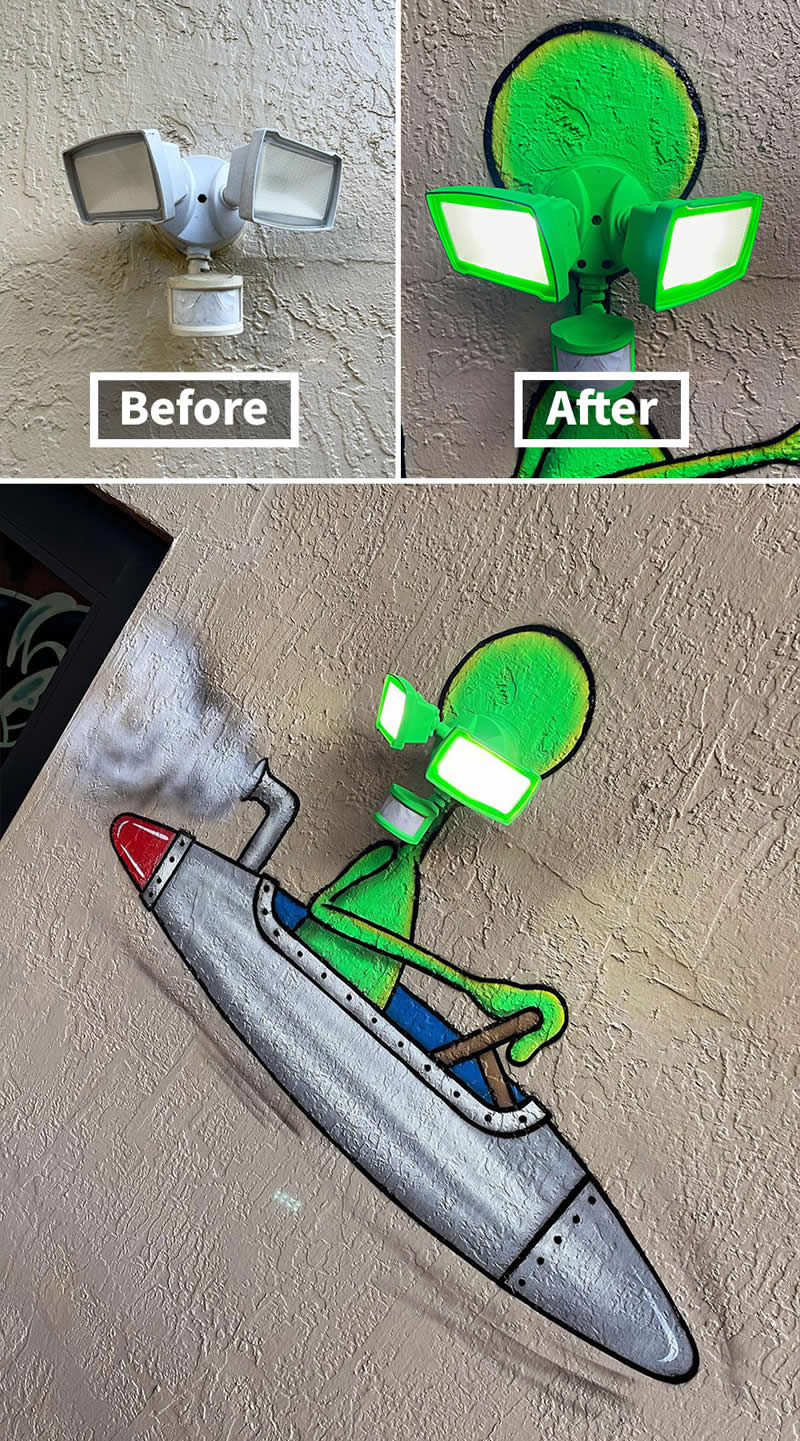
#3. UFO, Pembroke Pines, Miami, Florida
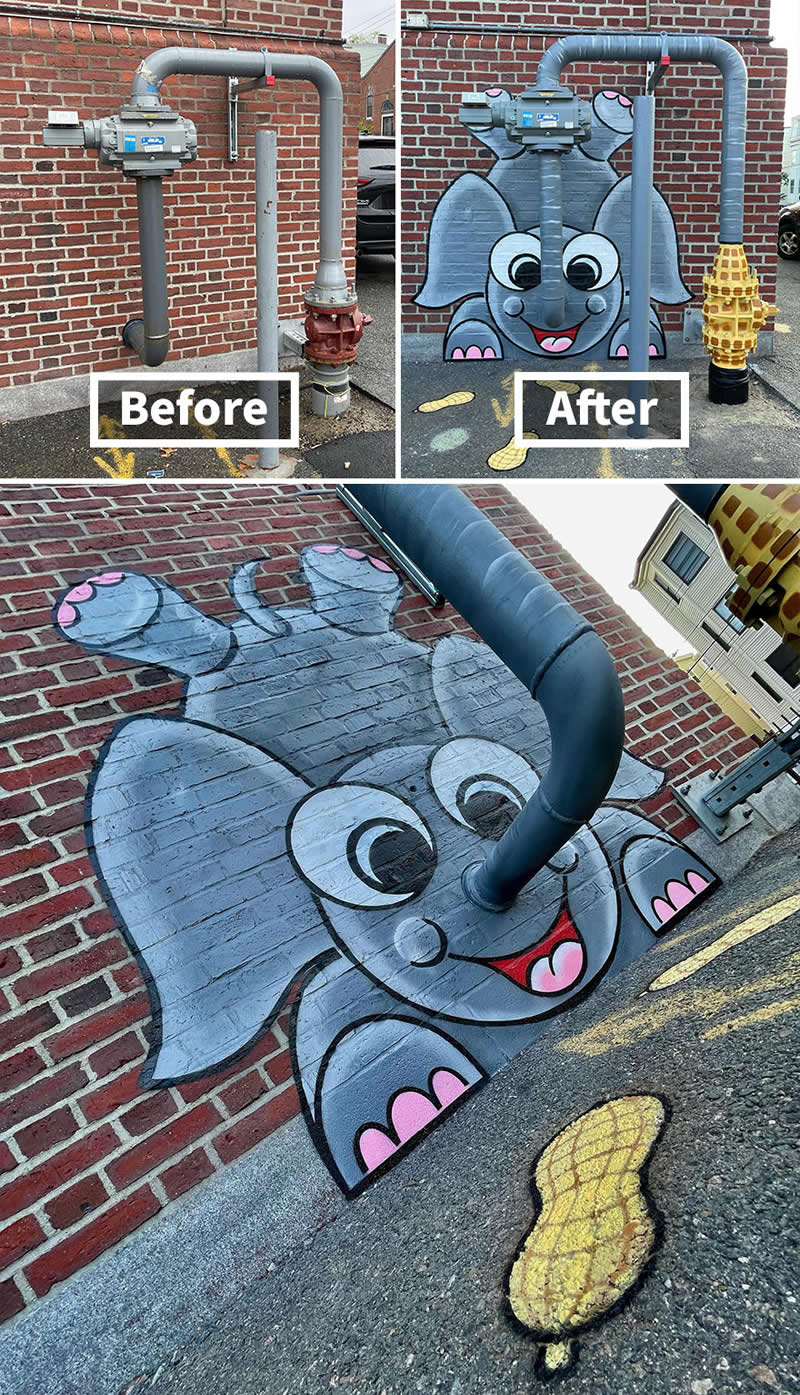
#4. Elephant, Boston, Massachusetts
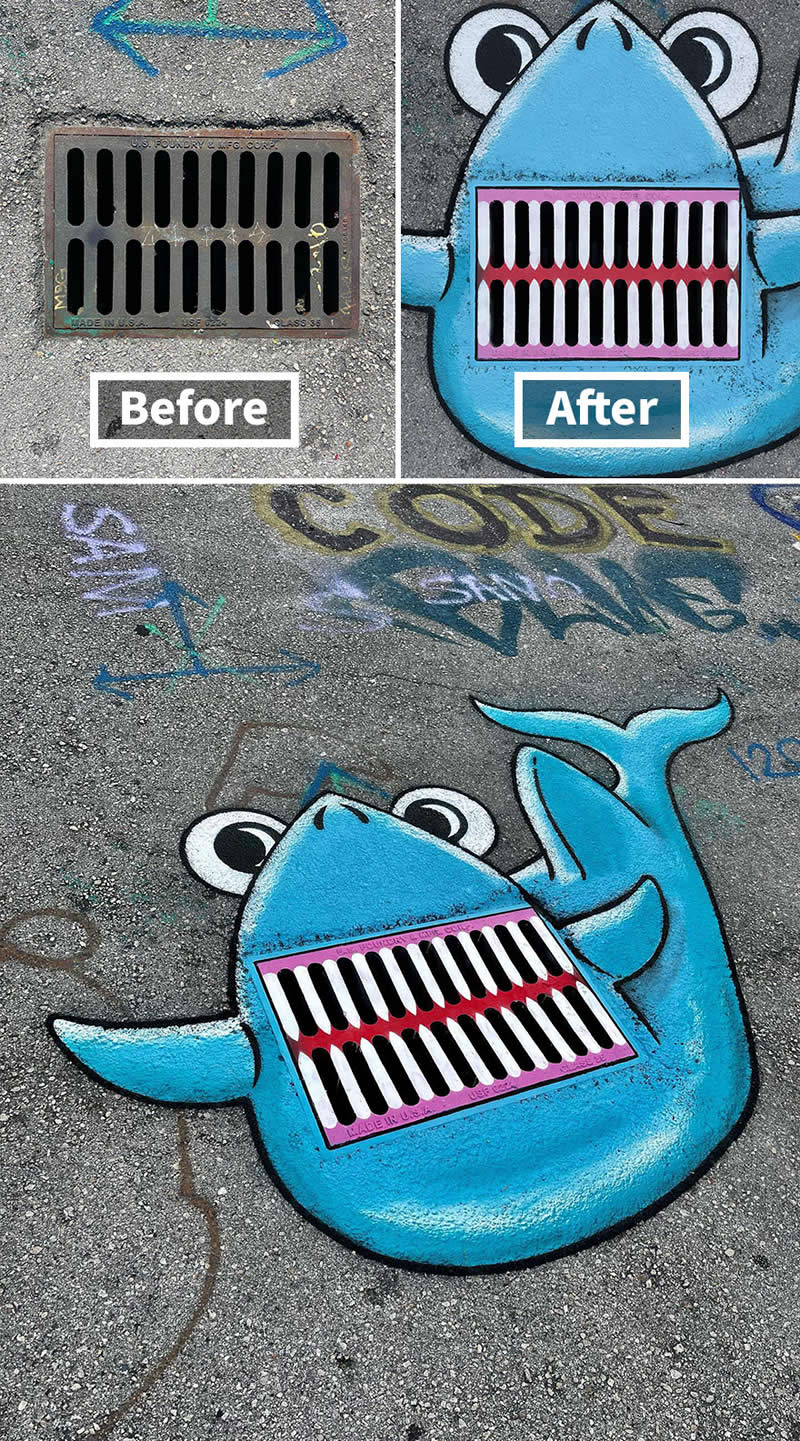
#5. Shark, Wynwood, Miami, Florida
When Pipes, Vents, and Poles Become Characters
Tom Bob doesn’t see pipes as plumbing—he sees potential personalities. Walking through the streets, he treats every overlooked object like a hidden character waiting to be revealed. Sometimes the shape tells him exactly what it wants to be. Other times, he stares at it for days until the idea clicks. He compares this moment to Michelangelo’s belief that David was already inside the marble—he just had to bring him out.
That mindset is what makes his work feel so natural. A bent pipe suddenly becomes a crooked smile. A vent turns into hair. A pole becomes a nose or a spine. The object doesn’t disappear—it becomes part of the joke. That’s why people stop, laugh, and pull out their phones. The art feels discovered, not imposed.
This approach also makes his installations feel permanent, even when they’re not. Once you’ve seen one of his pieces, you can’t unsee the personality hiding in that object ever again.
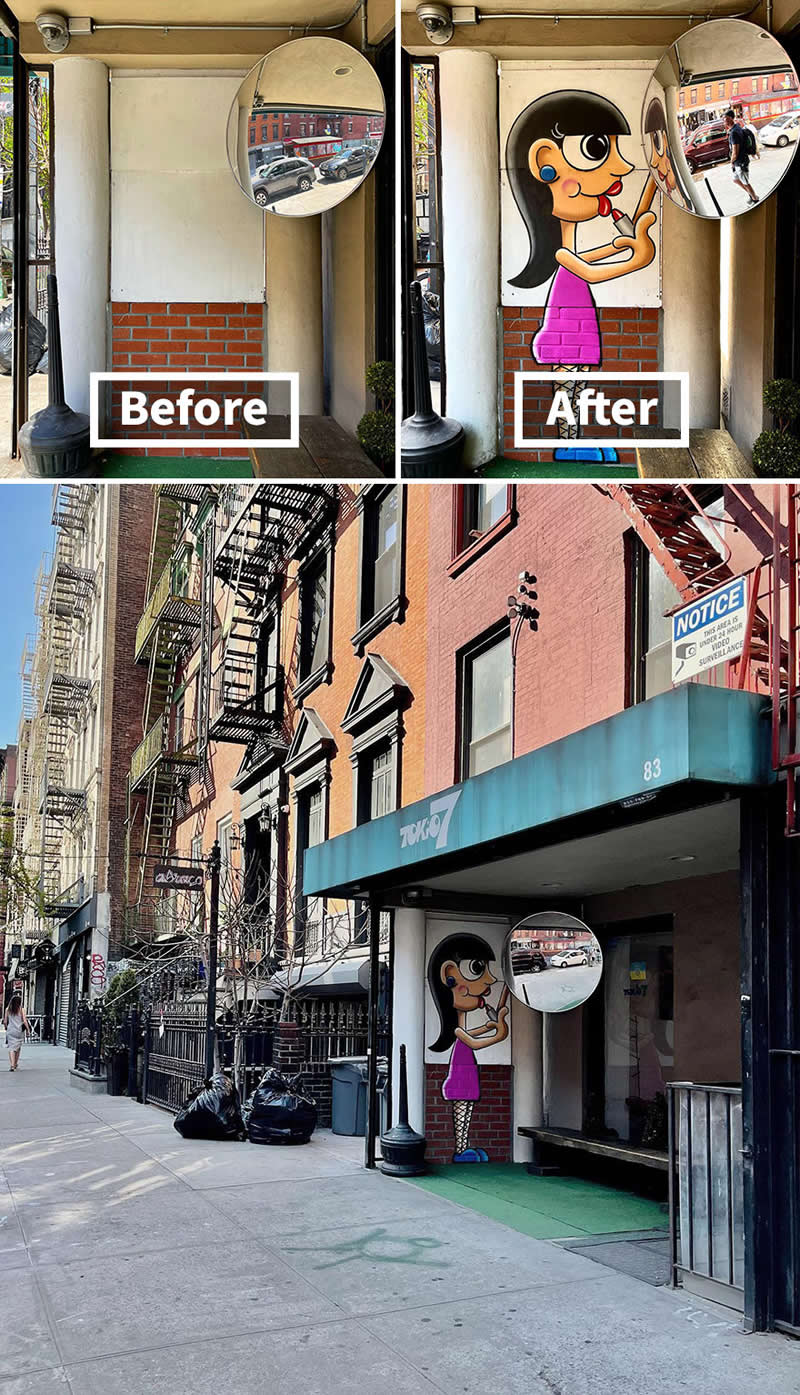
#6. Lipstick Girl, East Village, New York City
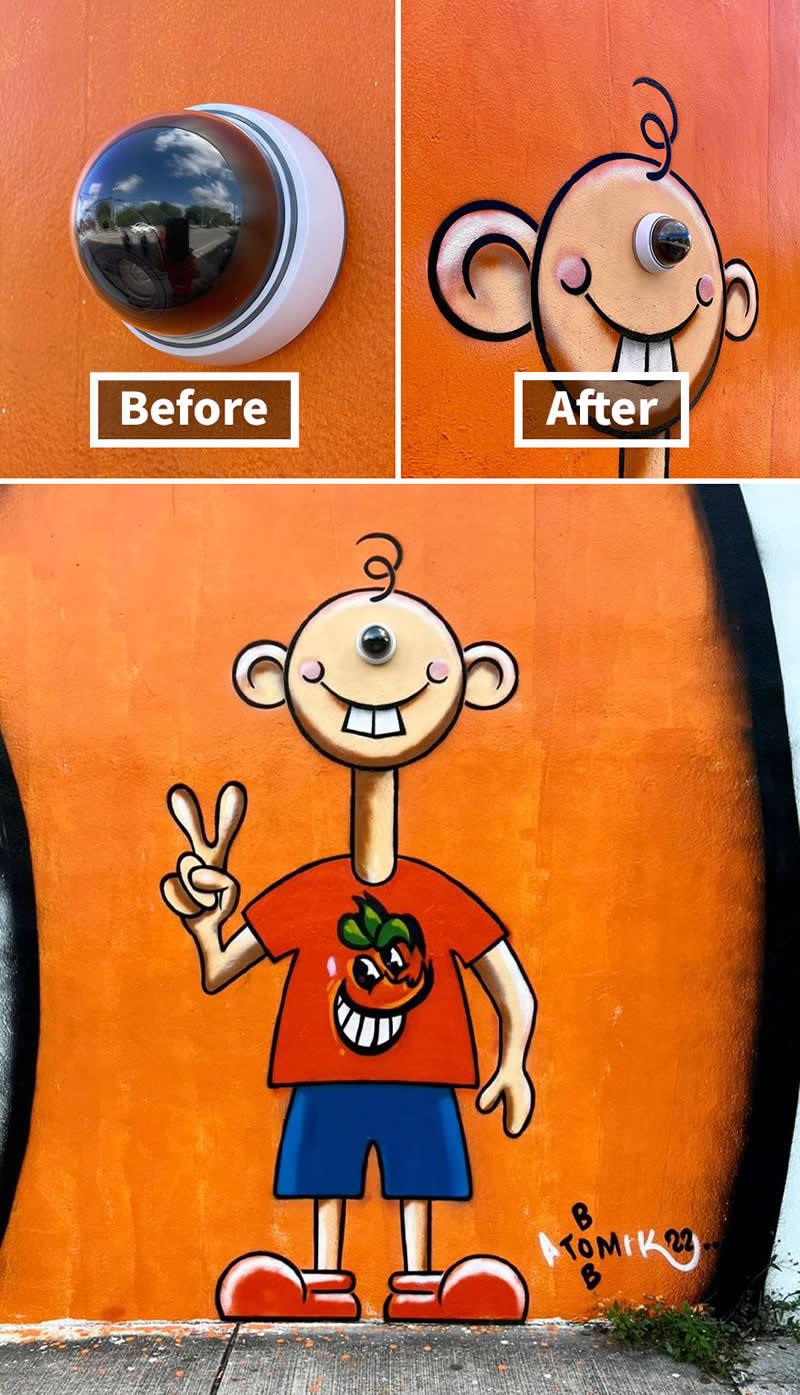
#7. Cyclops, Miami, Florida
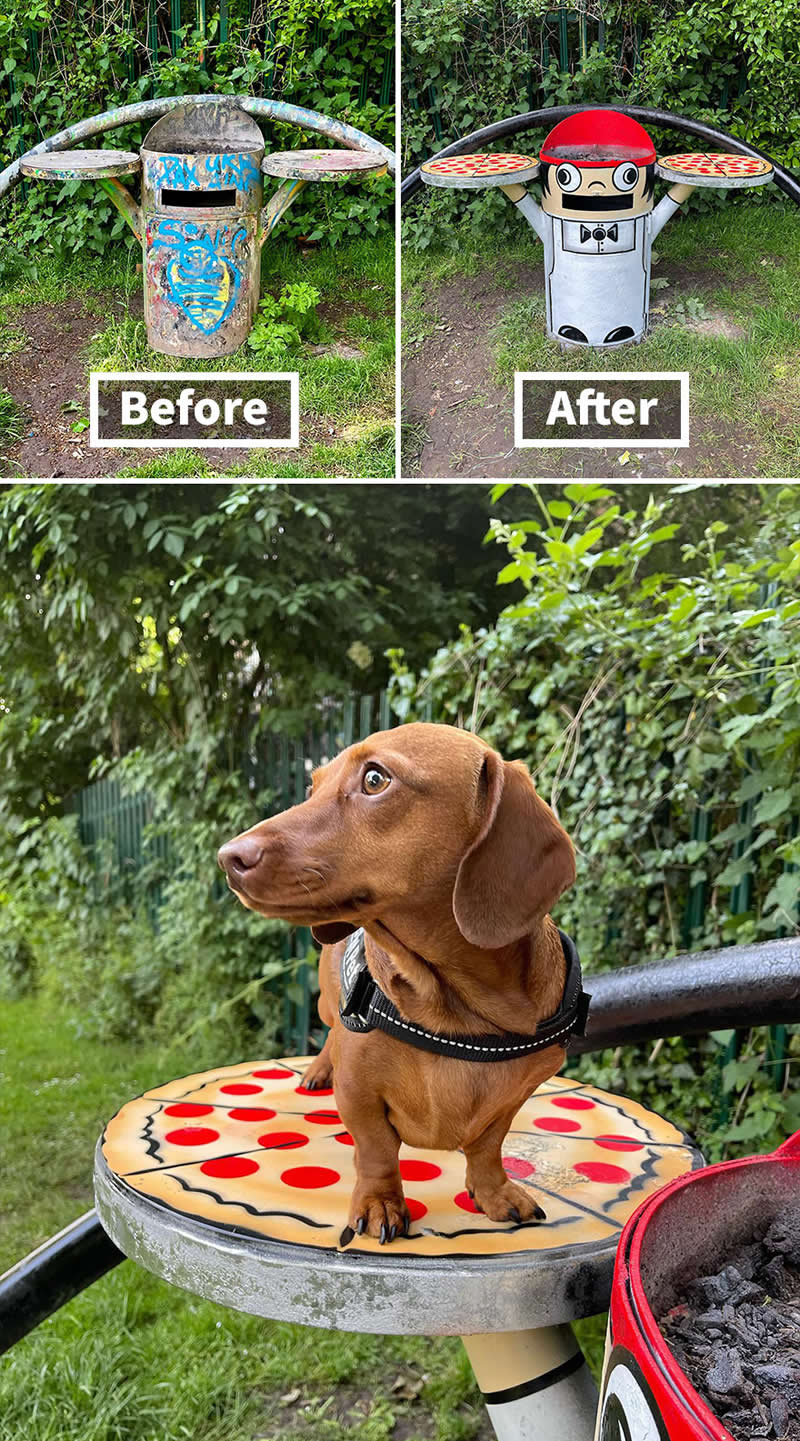
#8. Pizza Time, Bristol England
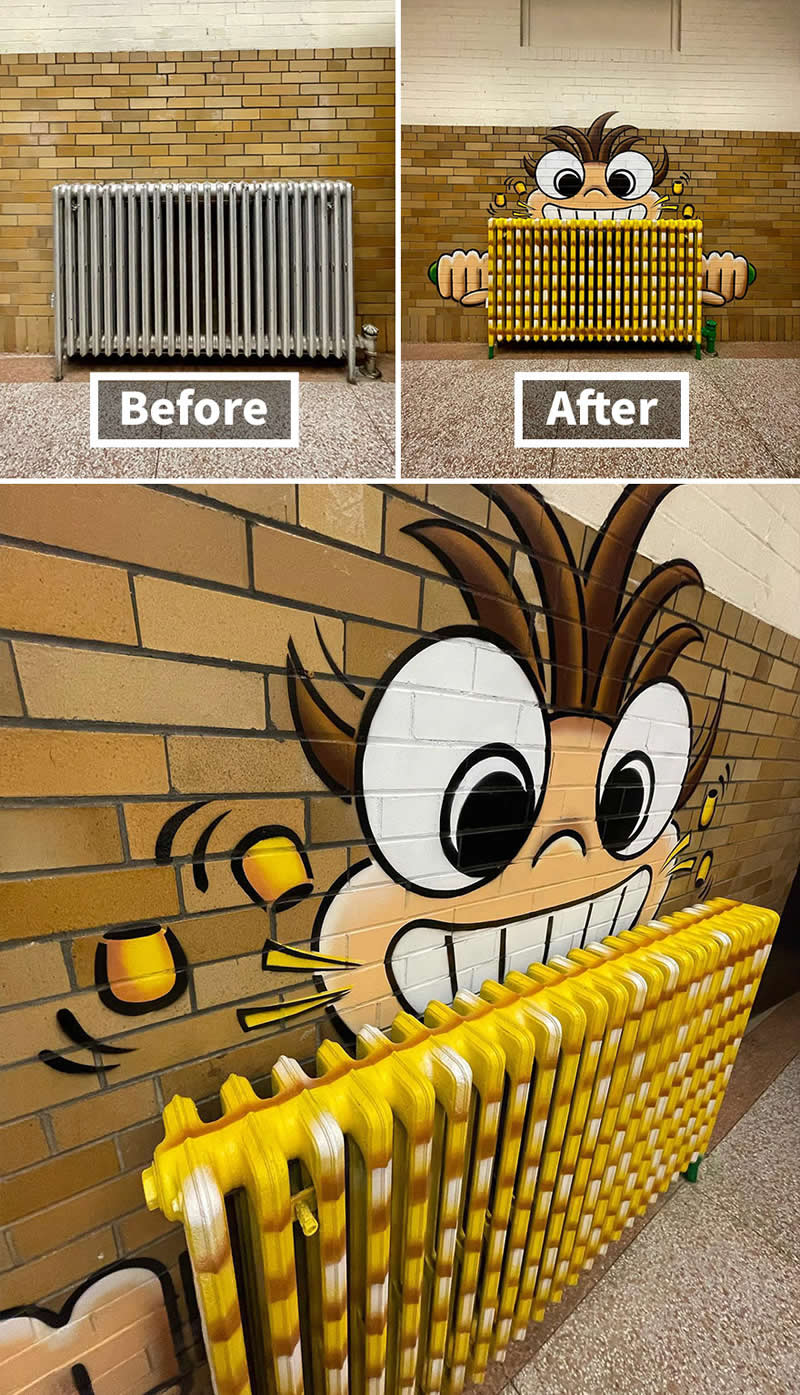
#9. Corn, Boston, Massachusetts
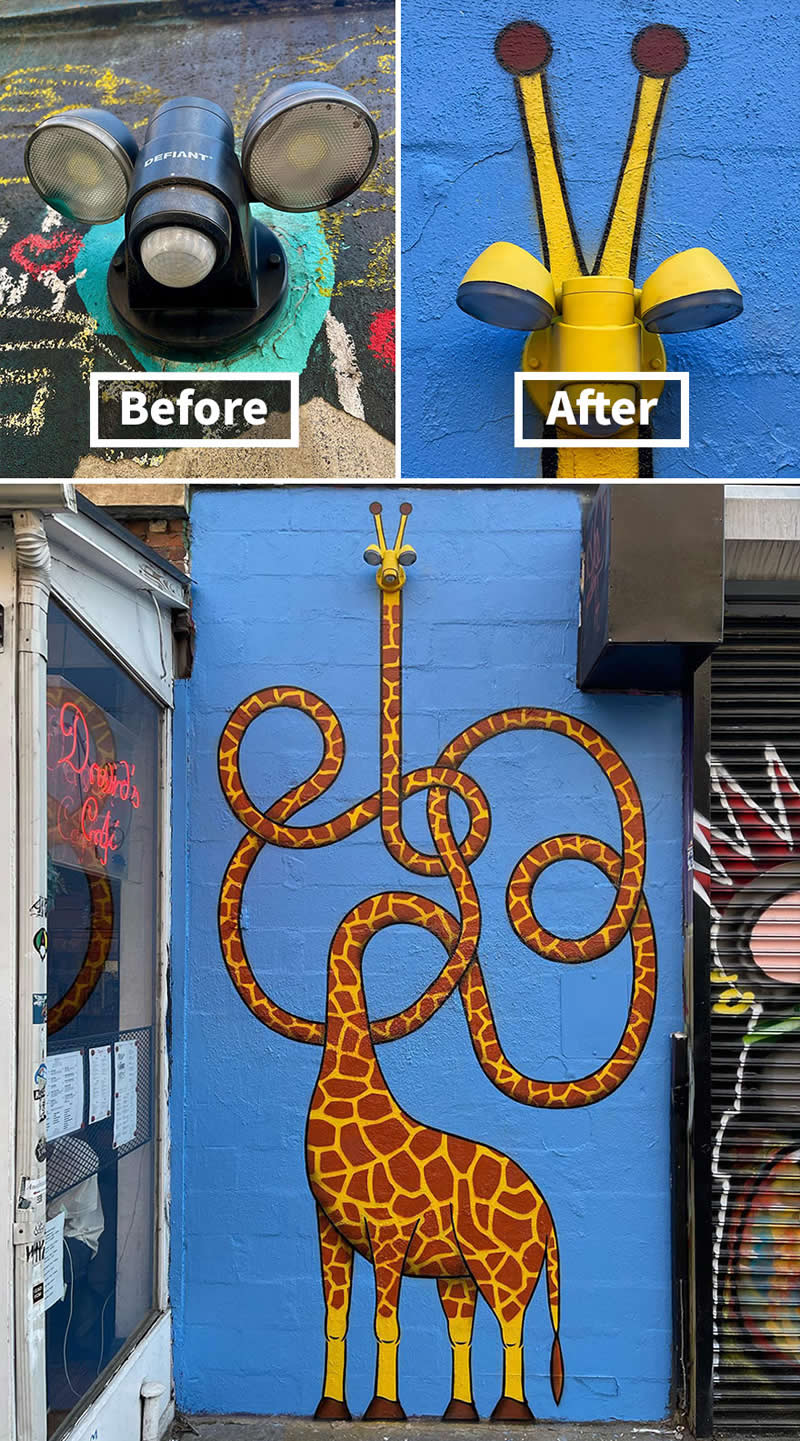
#10. Giraffe, East Village, New York City
The Thrill of Finding the Perfect Urban Canvas
For Tom Bob, location is everything—and also the biggest headache. Unlike studio artists, he can’t just wake up with an idea and execute it instantly. The streets decide what’s possible. During the Covid lockdown, he even scouted cities around the world using Google Maps street view, collecting hundreds of ideas from random urban objects he found online.
But not every idea gets approved. Some cities are open, others are conservative. Some locations welcome creativity, others shut it down fast. That tension is part of the process. And honestly, it’s what makes street art feel alive.
Tom Bob loves neighborhoods packed with murals, graffiti, and public art. To him, street art is the most democratic art form there is—free, accessible, and shared by everyone. That sense of community is exactly where he wants his work to live.
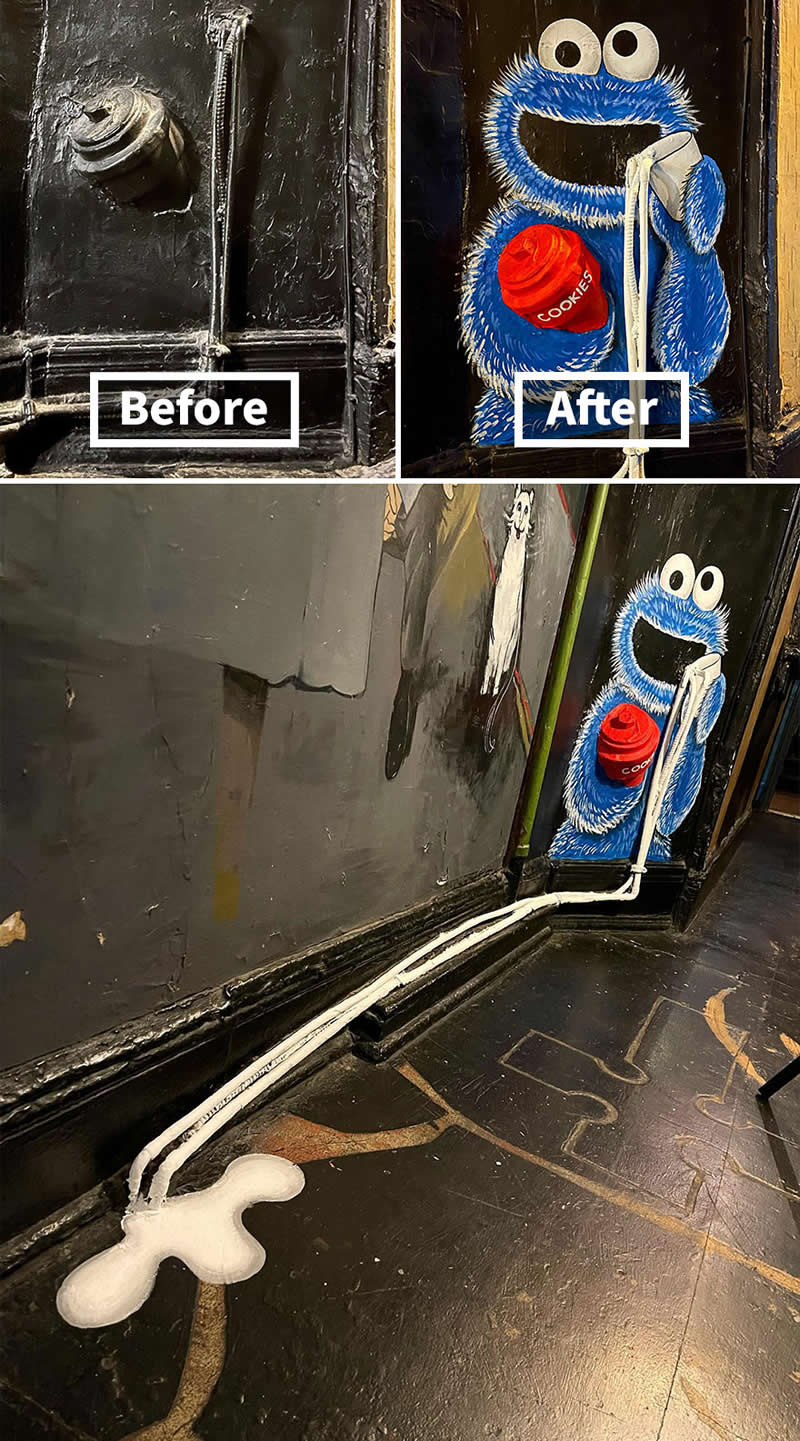
#11. Cookie Monster, New York City
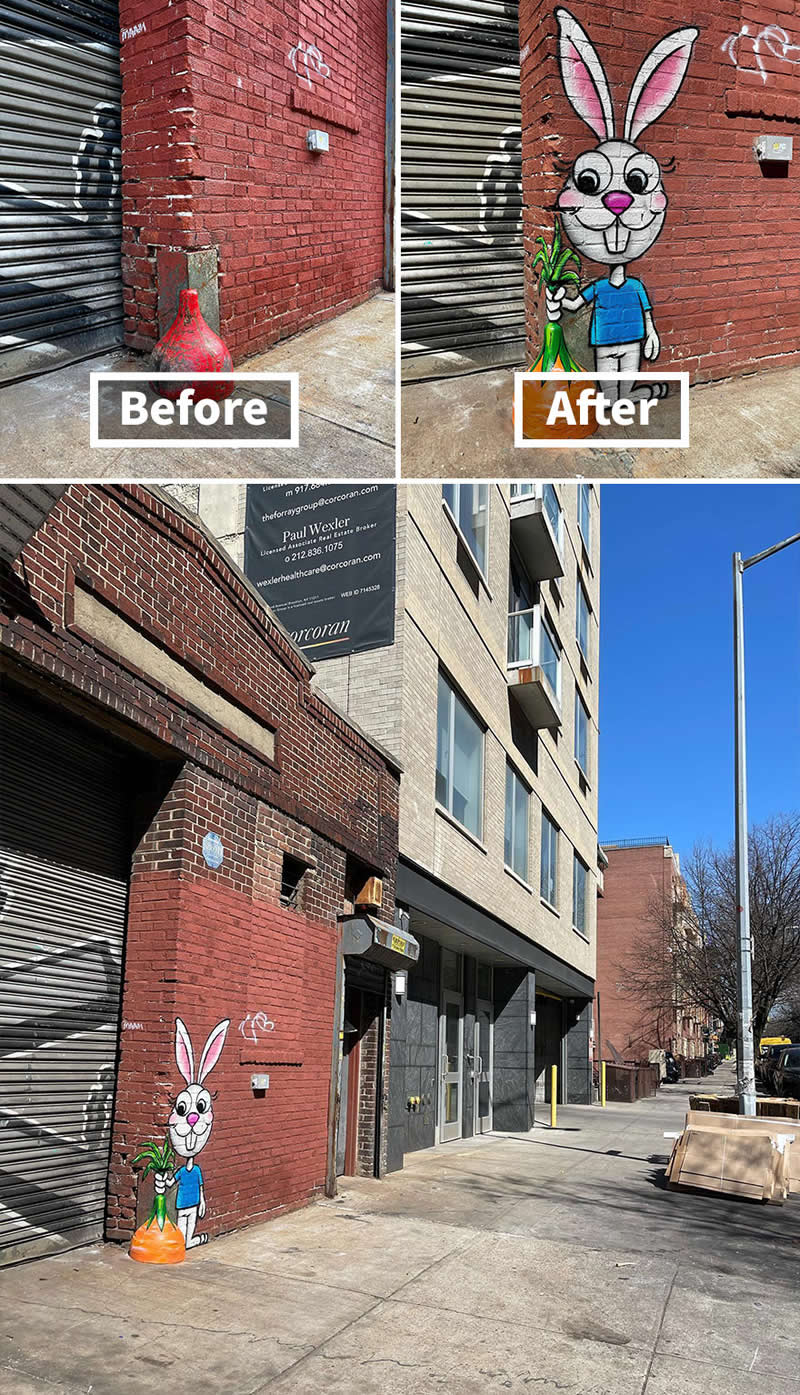
#12. What’s Up, Doc?, Brooklyn, New York City
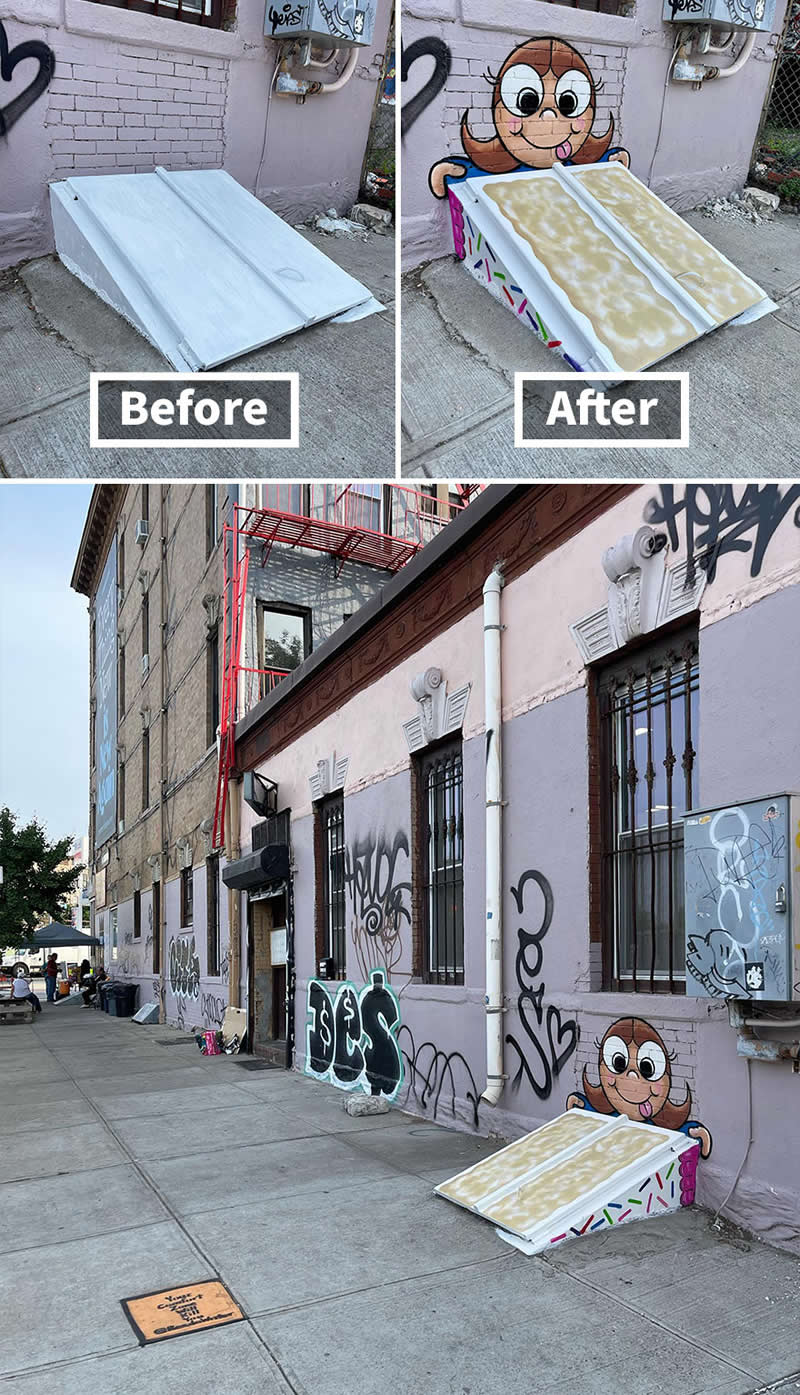
#13. Cake, Brooklyn, New York
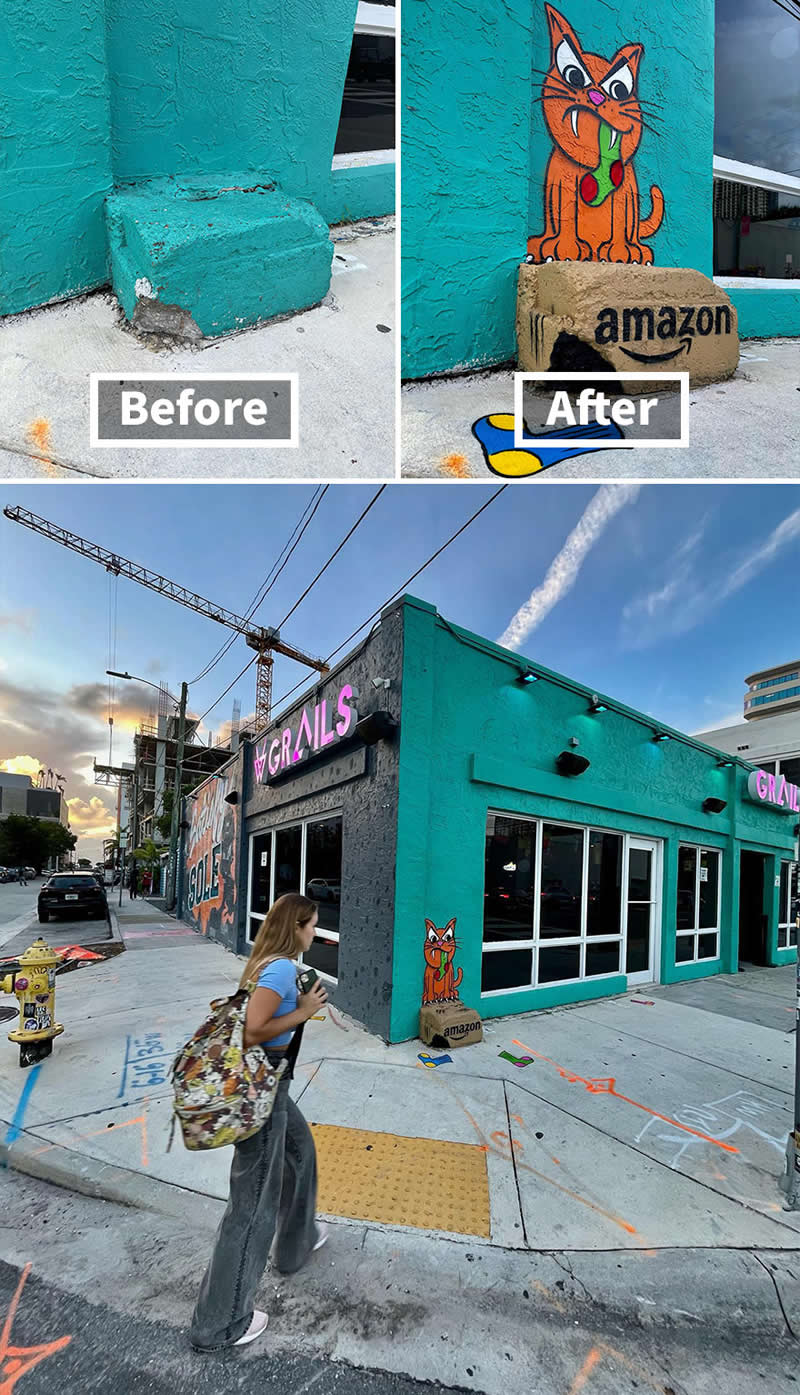
#14. Cat, Wynwood , Miami, Florida
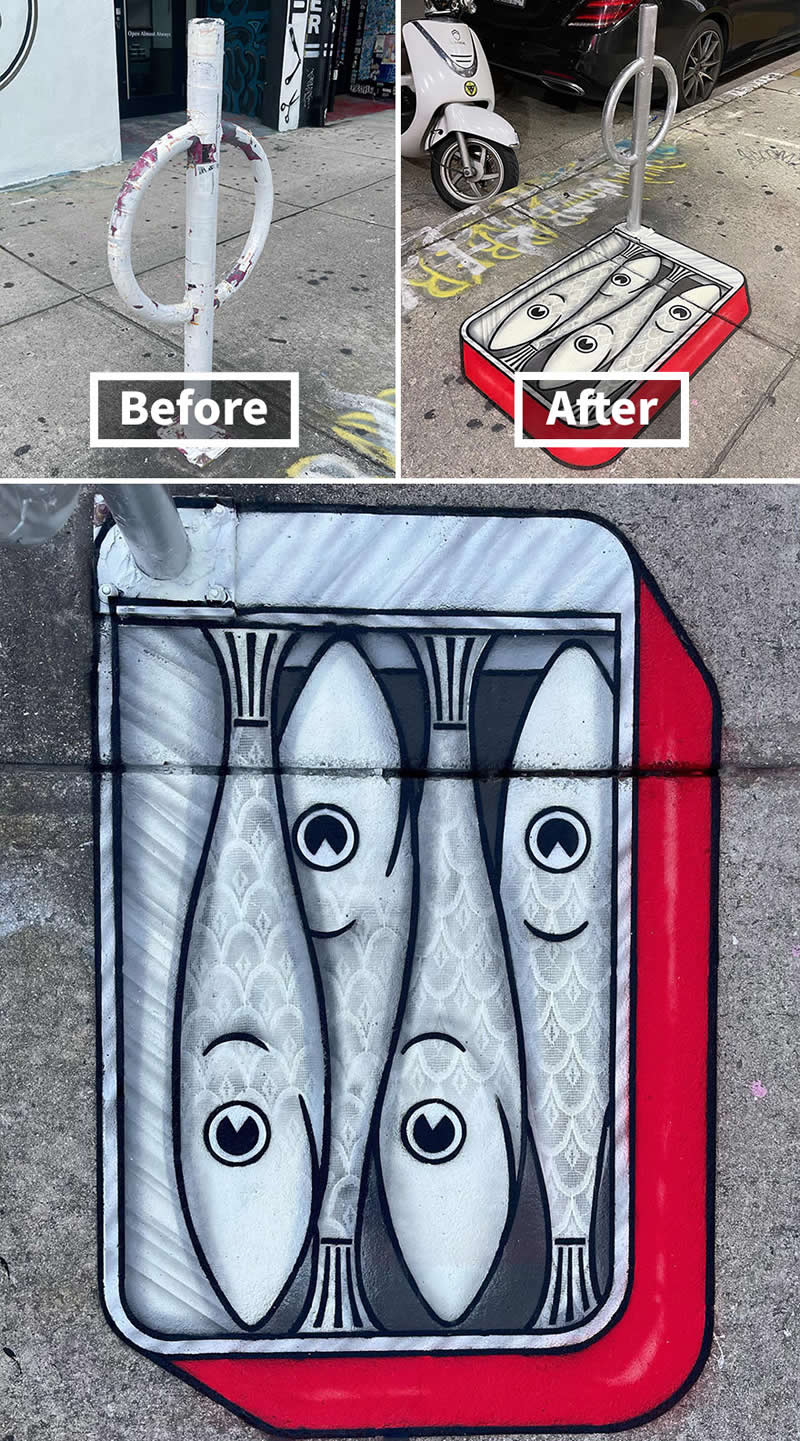
#15. Sardines, Wynwood, Miami, Florida
From Sketchbook to Sidewalk: His Creative Process
Before any spray paint hits metal or concrete, Tom Bob starts with sketches. He measures the object—pipes, vents, sensors—and designs around its exact shape. This isn’t random painting; it’s precise planning disguised as play. Once the idea is locked, he creates stencils and heads out to the streets.
Spray paint is his weapon of choice. Bright colors. Clean lines. No unnecessary detail. His style is intentionally simple, almost like road signs. That’s on purpose. He wants people scrolling on social media to “get it” instantly. One glance. One smile. Mission accomplished.
Emotion matters more than technique here. Tom Bob isn’t chasing shock value—he’s chasing joy. Every piece is designed to make someone’s day just a little better, even if they only see it for two seconds while rushing to work.
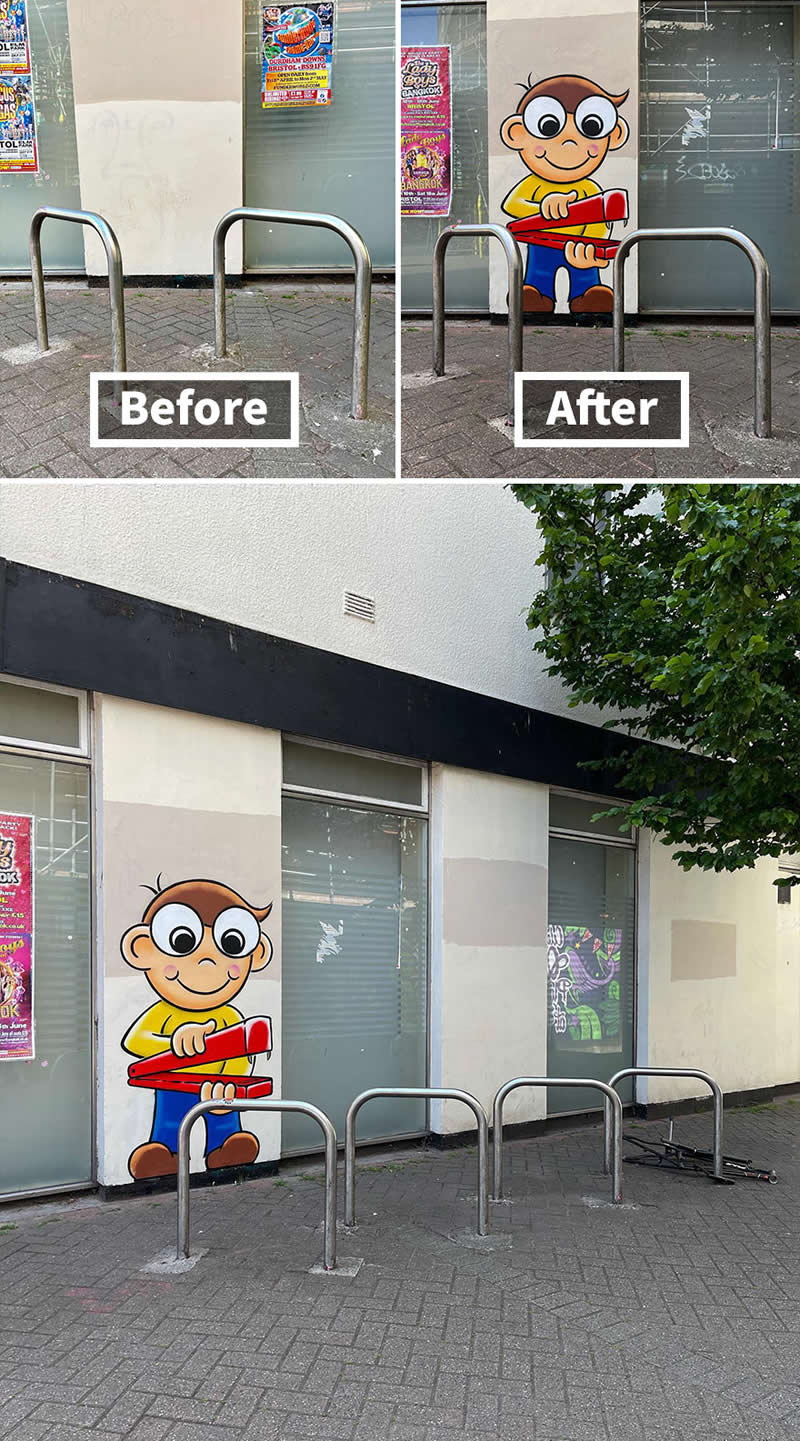
#16. Staple Guy, Bristol, England
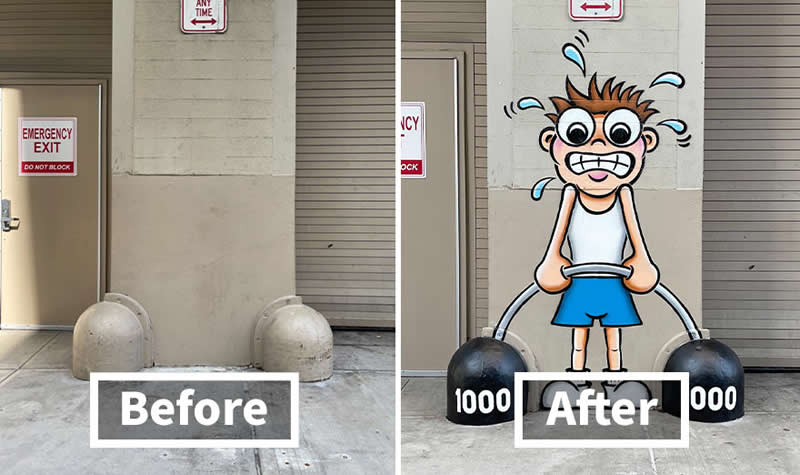
#17. Weightlifter Kid, Chelsea, New York City
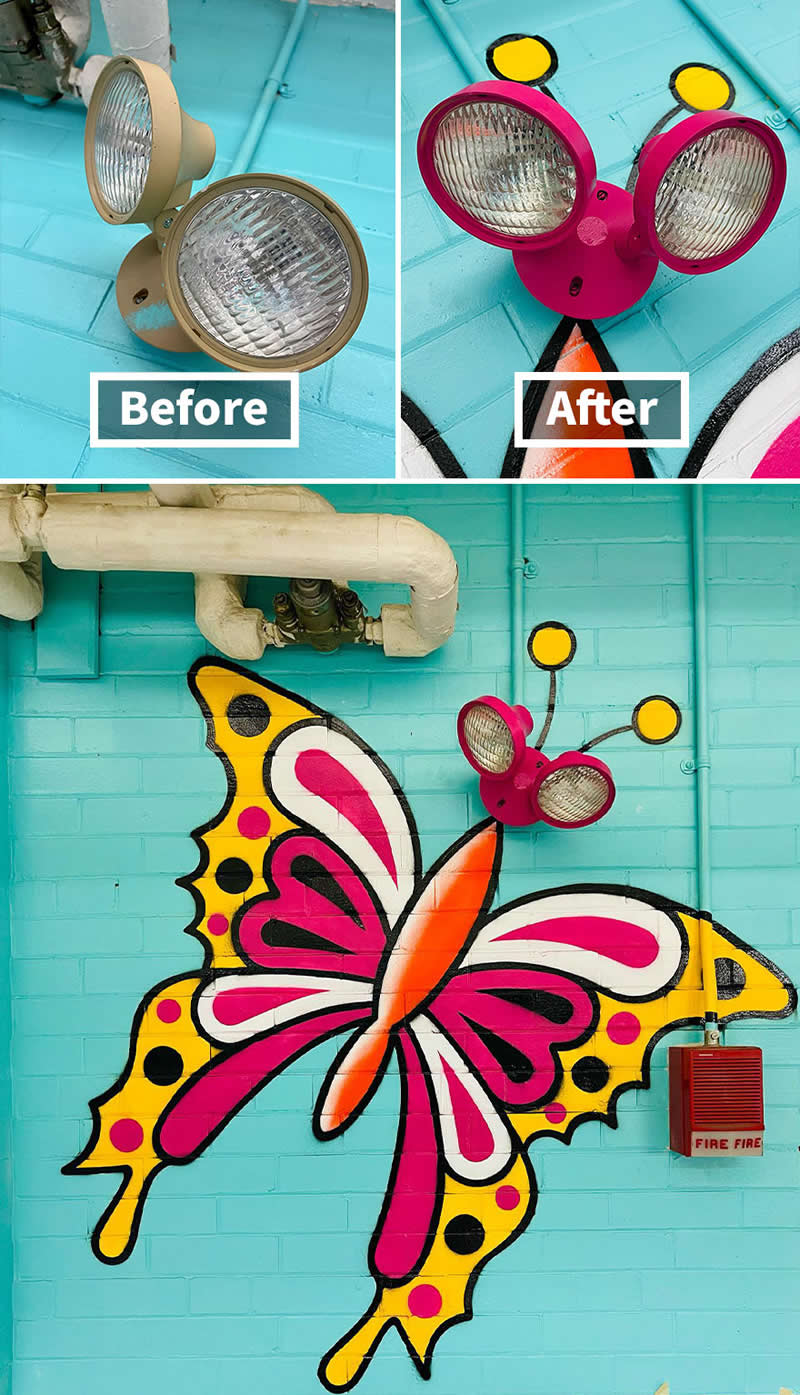
#18. Butterfly, Boston, Massachusetts
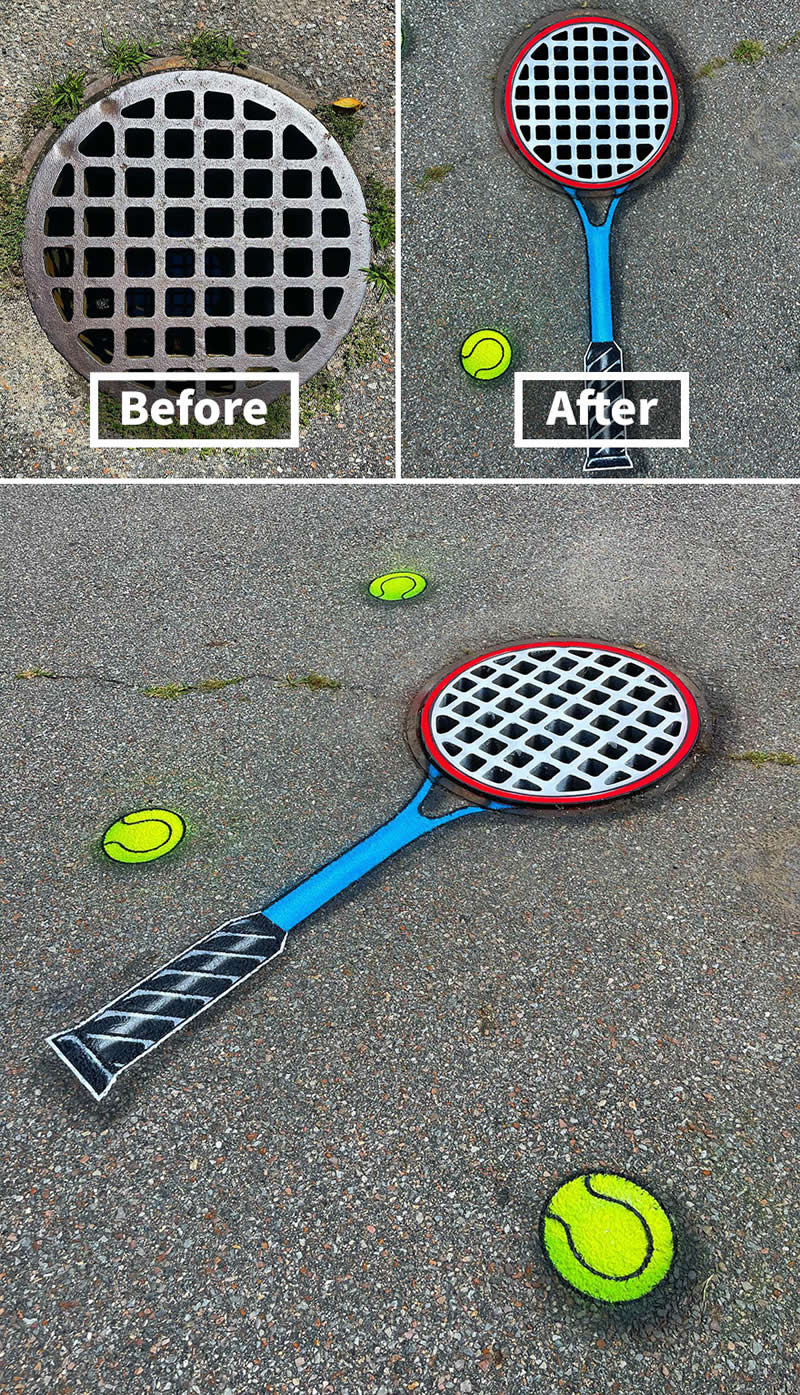
#19. Tennis Racket, New Bedford, Massachusetts
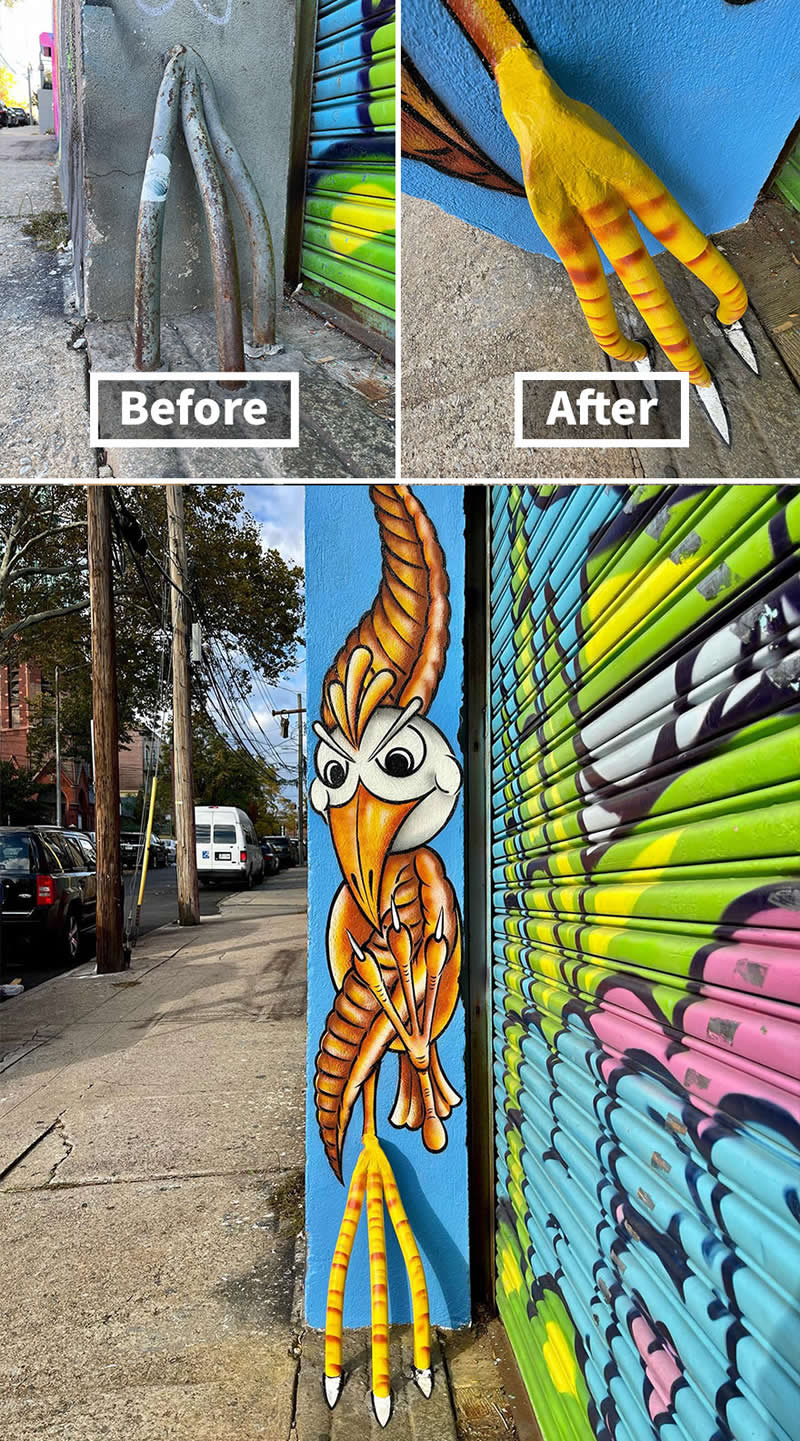
#20. Hawk, Astoria, Queens, New York City
The Real Challenges of Making Art on the Streets
Street art isn’t glamorous behind the scenes. According to Tom Bob, it’s more like camping than painting. Weather can ruin plans. Equipment is heavy. Ladders are awkward. And most of the time, he works alone. Forget one tool, and the whole day can fall apart.
Deadlines add pressure. Locations can change last minute. Permissions can vanish. And if it starts raining? Game over. Unlike a studio, there’s no backup plan waiting indoors.
But that unpredictability is also what gives the work its edge. Each piece is a small victory over chaos. When everything lines up—the weather, the location, the timing—it feels earned. And that struggle is baked into every smiling character he leaves behind.
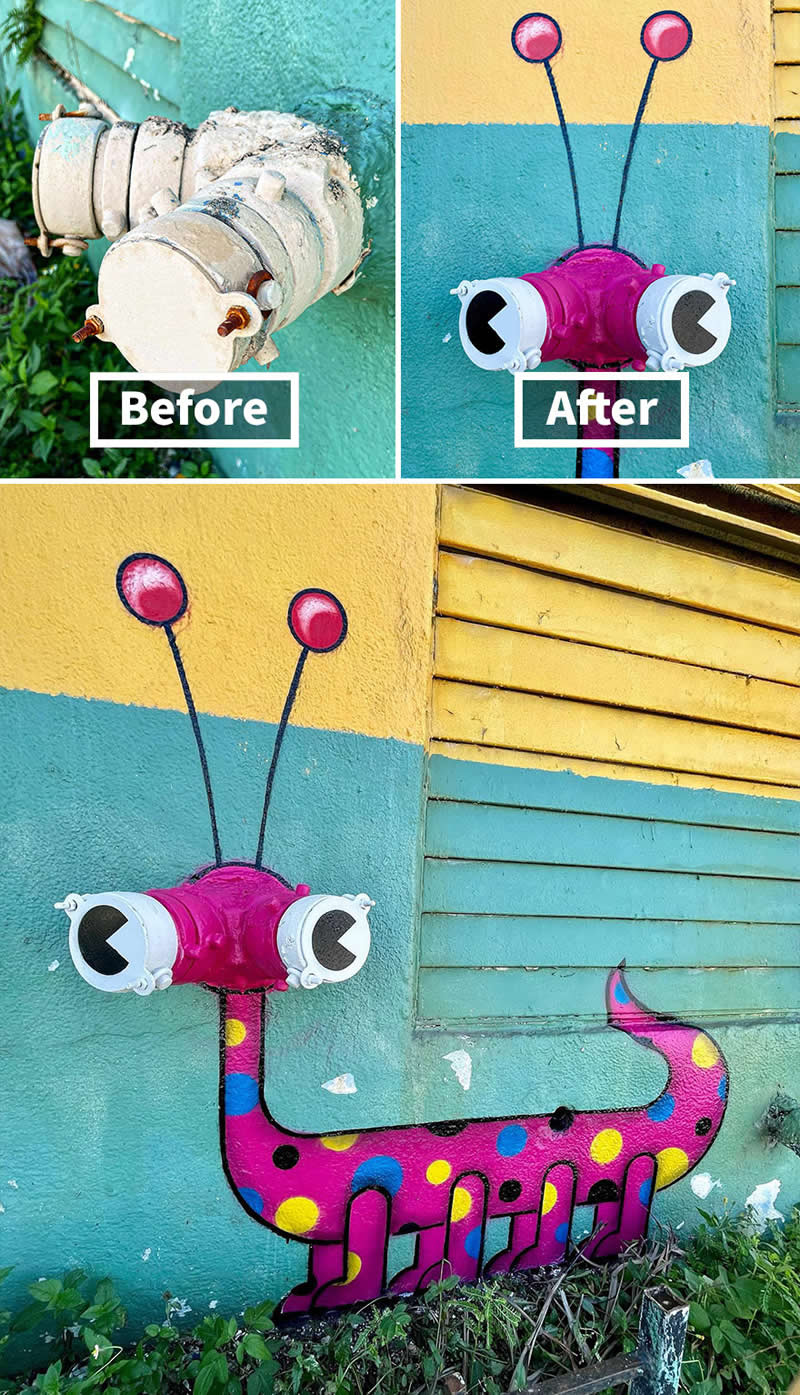
#21. Salamander, Wynwood, Miami, Florida
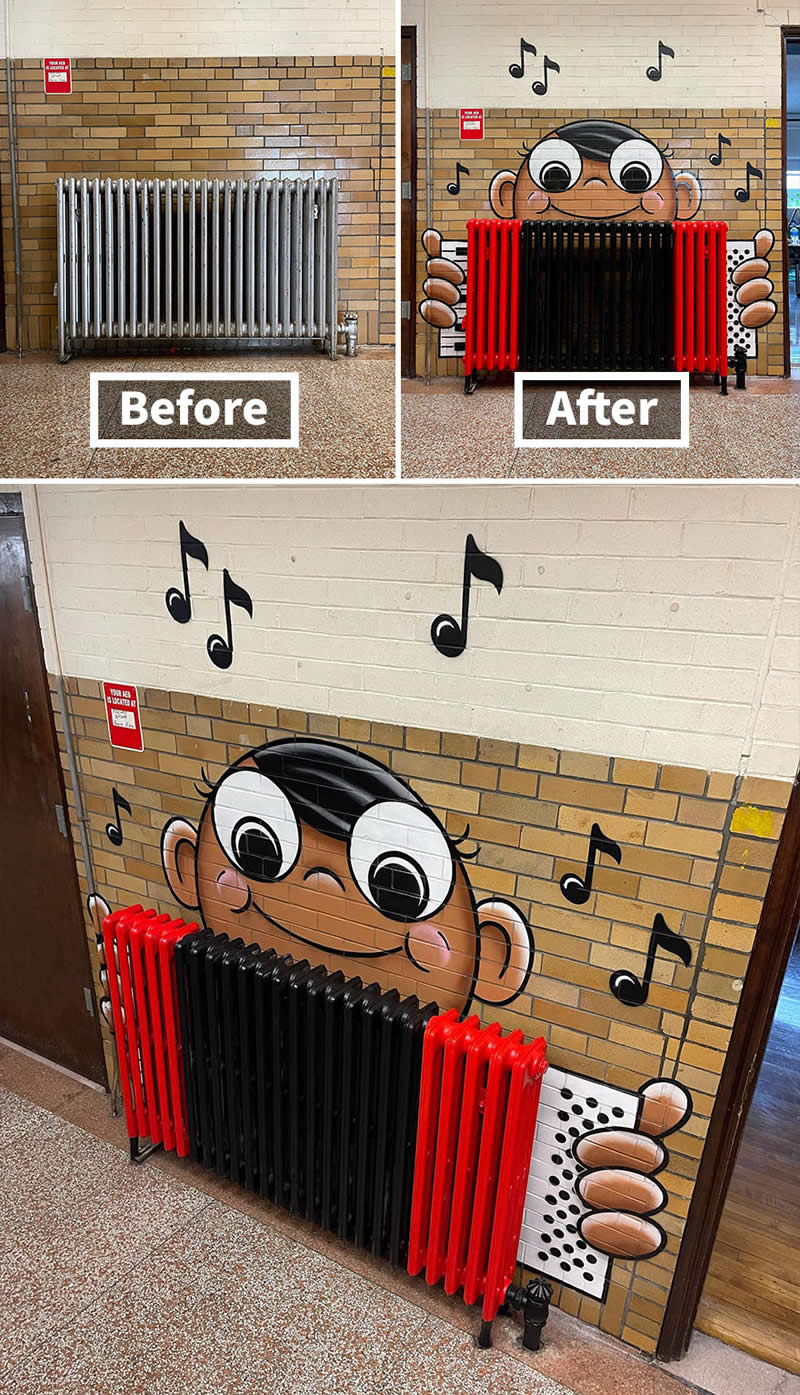
#22. Accordion, Boston,massachusetts
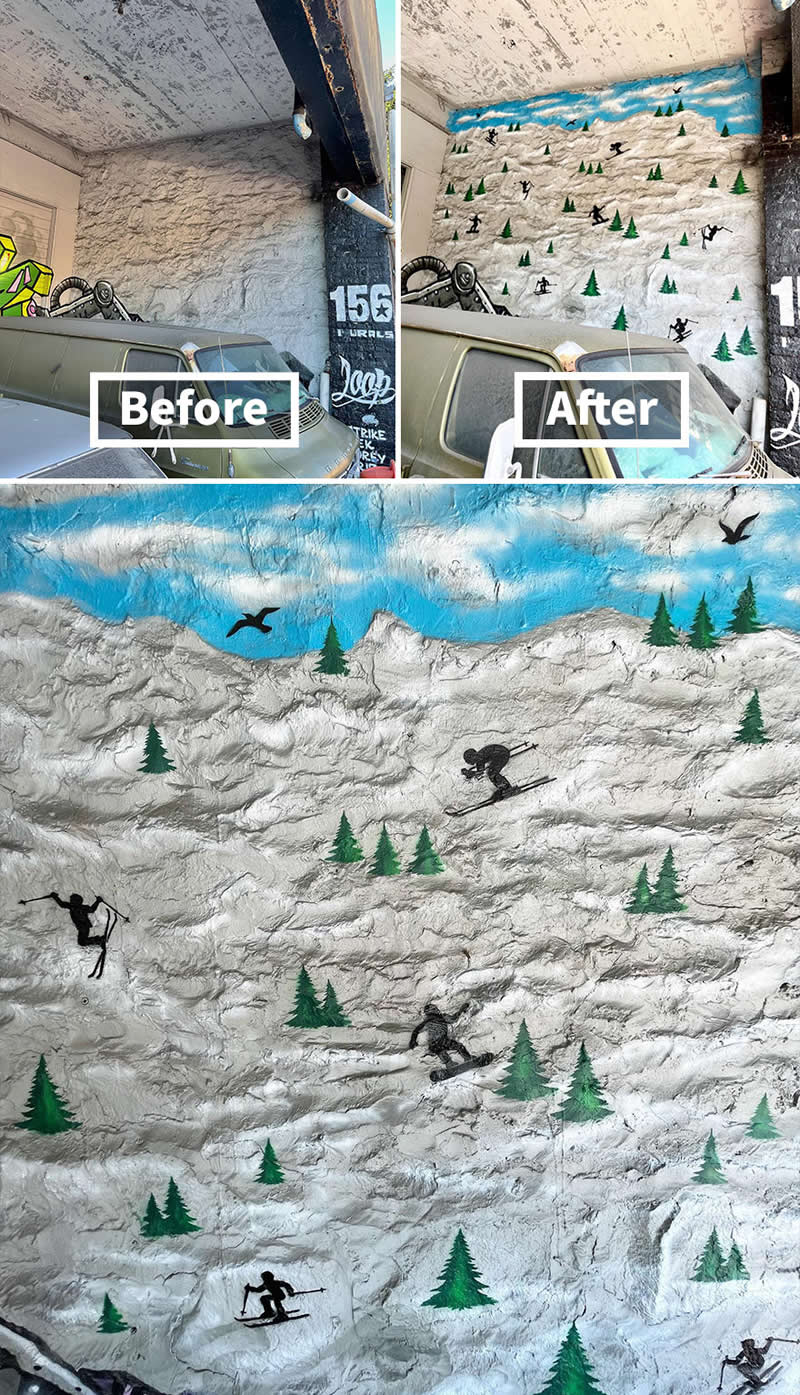
#23. Ski Yonkers, New York City
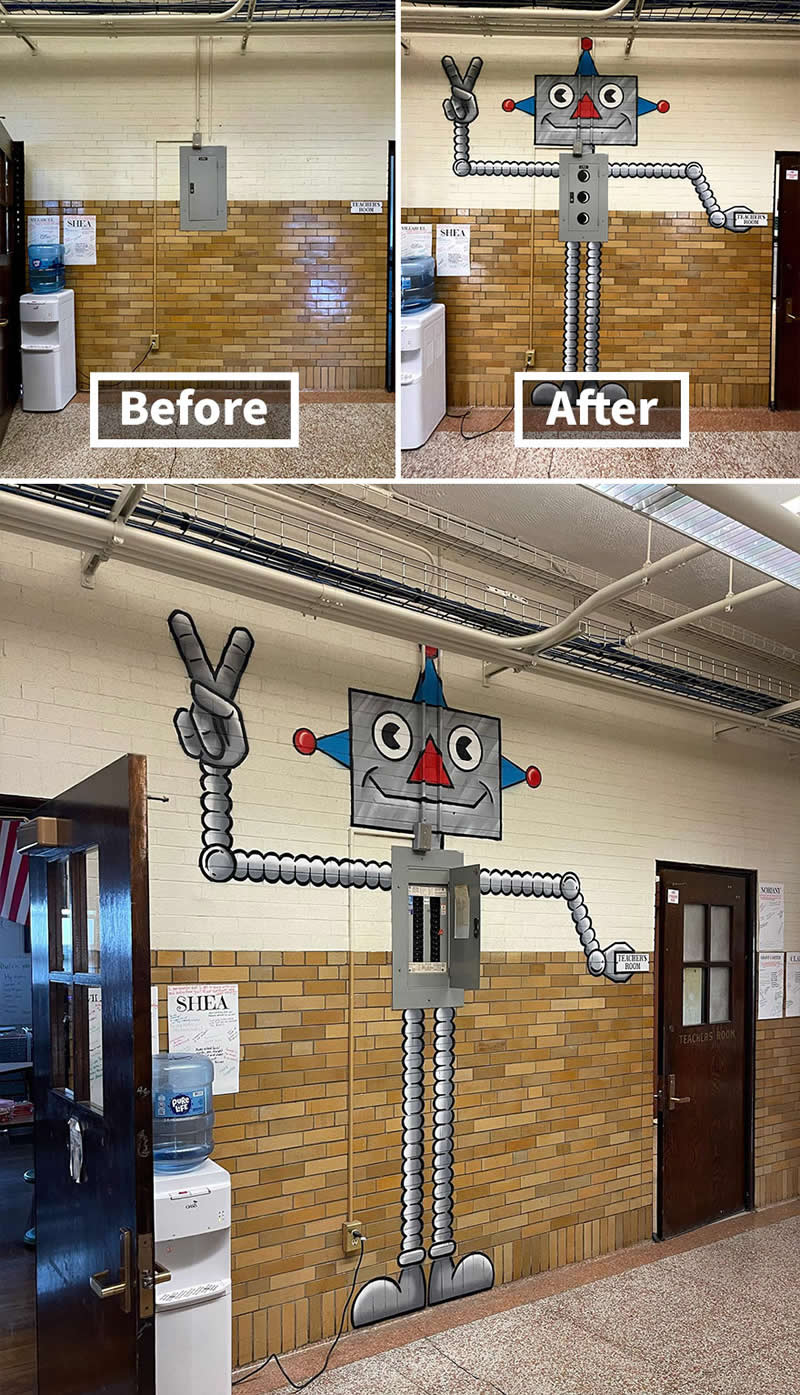
#24. Robot, Boston, Massachusetts
#25. Jump Rope Girls , New Bedford, Massachusetts

Why Tom Bob’s Art Hits So Hard Online and Offline
Tom Bob understands modern attention spans better than most artists. His work is designed for real life and the internet. On the street, it stops you mid-walk. On social media, it stops the scroll. That balance is rare.
The characters are universal. No language barriers. No explanations needed. Just visual humor and instant charm. That’s why his art spreads so fast online—it feels personal even when you’re thousands of miles away.
More importantly, his work changes how people see their surroundings. After spotting one Tom Bob piece, you start looking at every pipe, pole, and vent differently. Suddenly the city feels alive again. And that shift in perspective? That’s the real magic.
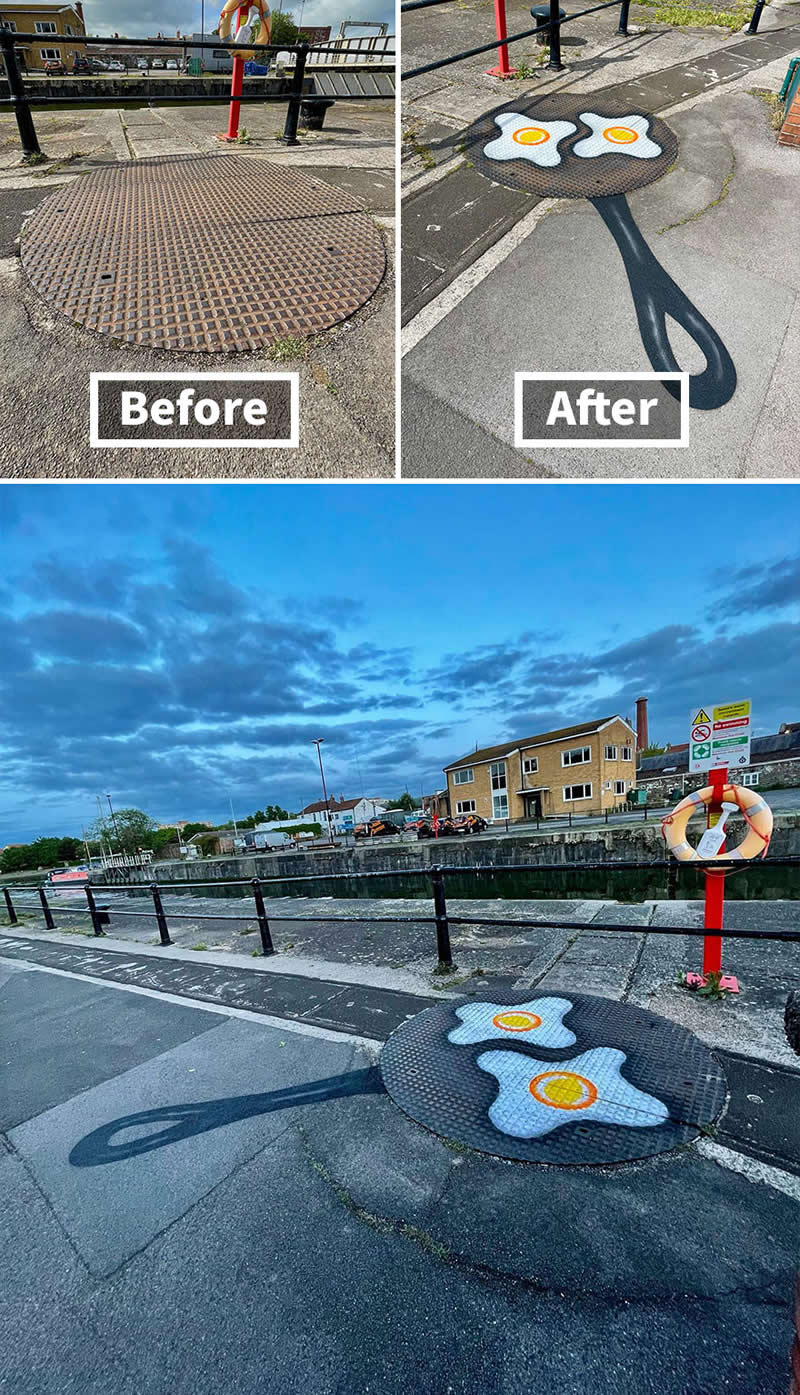
#26. Eggs Over Easy, Bristol, England
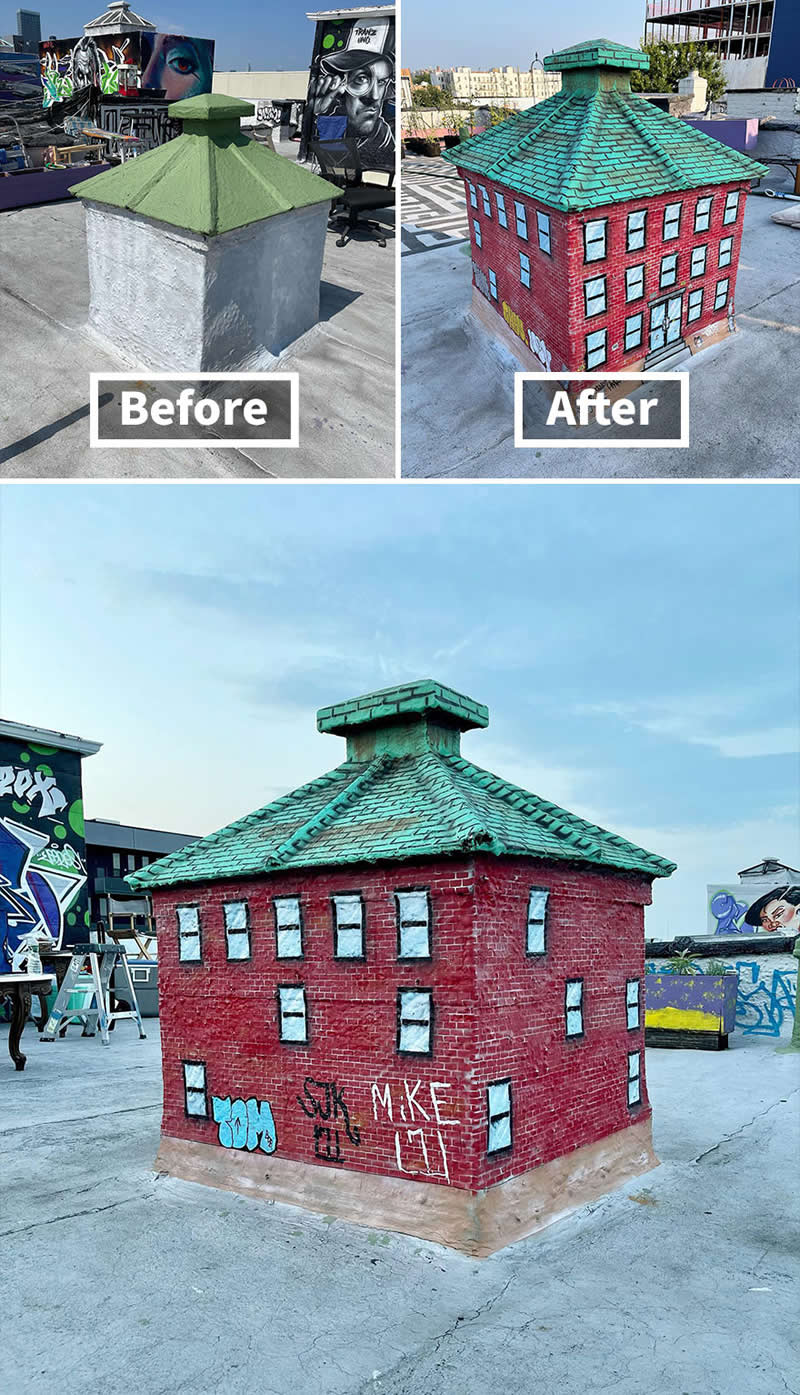
#27. Apartment Building, Queens,new York City
#28. Martha Cooper, Wynwood, Miami, Florida
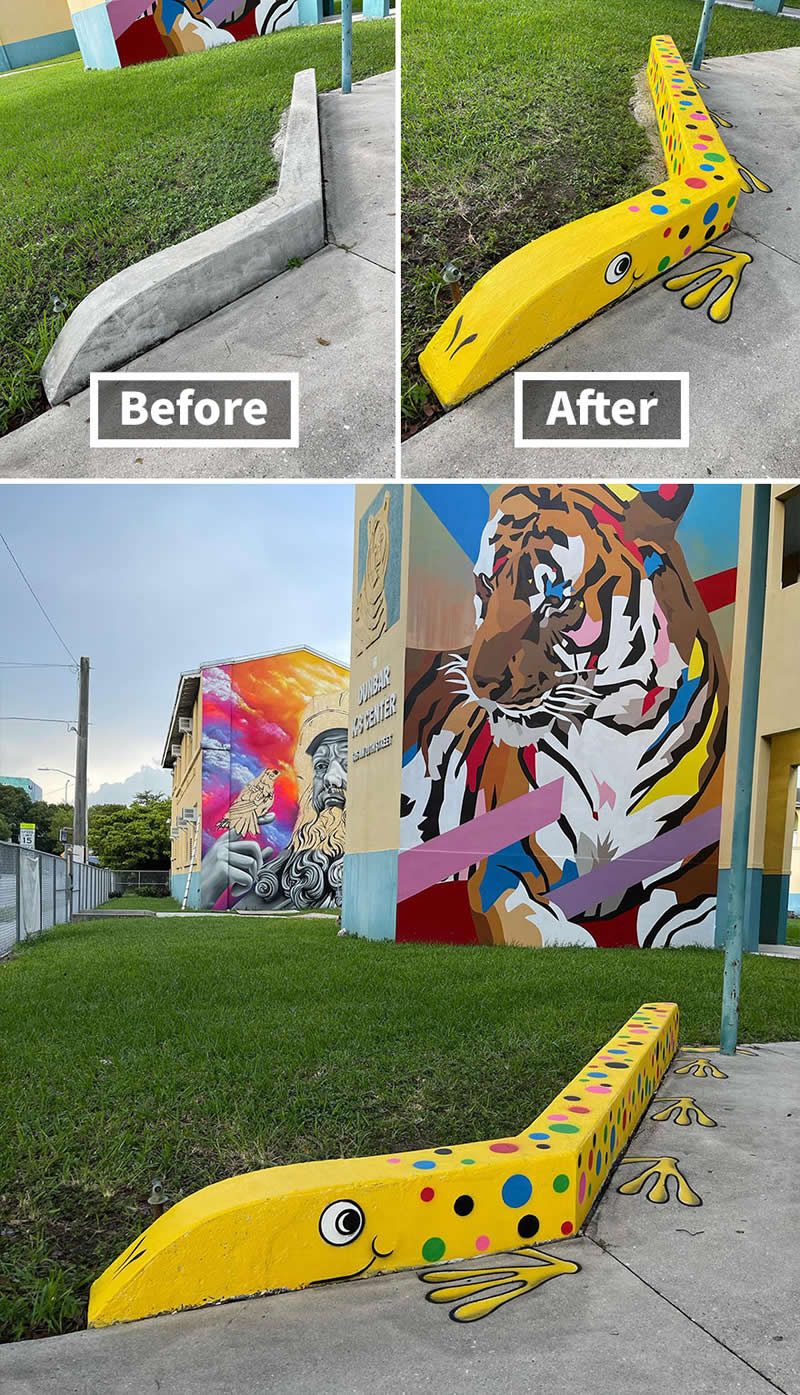
#29. Lizard, Wynwood, Miami, Florida
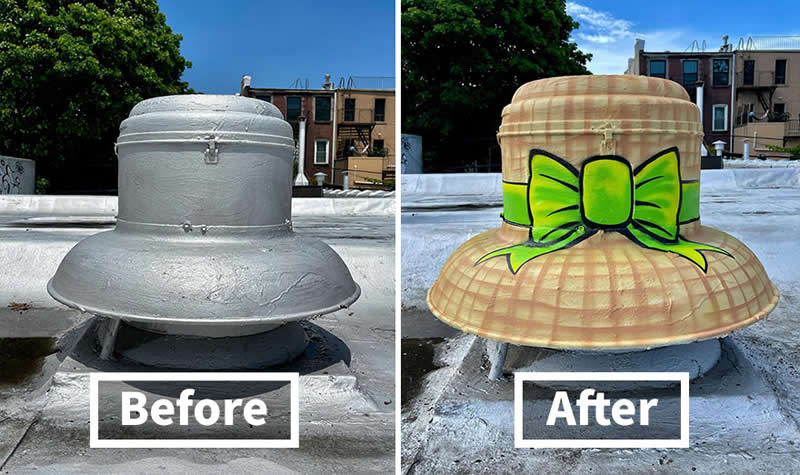
#30. Hat Emoji, Brooklyn, New York City
In Summary
Who is Tom Bob?
- Tom Bob is a New York–based street artist known for transforming everyday urban objects into colorful, whimsical characters.
What makes Tom Bob’s street art unique?
- He incorporates existing city objects—like pipes, vents, and bike racks—directly into his artwork instead of painting over walls.
Where can you find Tom Bob’s art?
- His installations appear in cities around the world, often discovered unexpectedly while walking through neighborhoods.
What emotion does Tom Bob aim to create?
- Happiness. His goal is to make people smile, even if just for a moment during their daily routine.
Why is Tom Bob popular on social media?
- His bold, simple, and instantly readable designs are perfect for fast scrolling and visual storytelling online.