
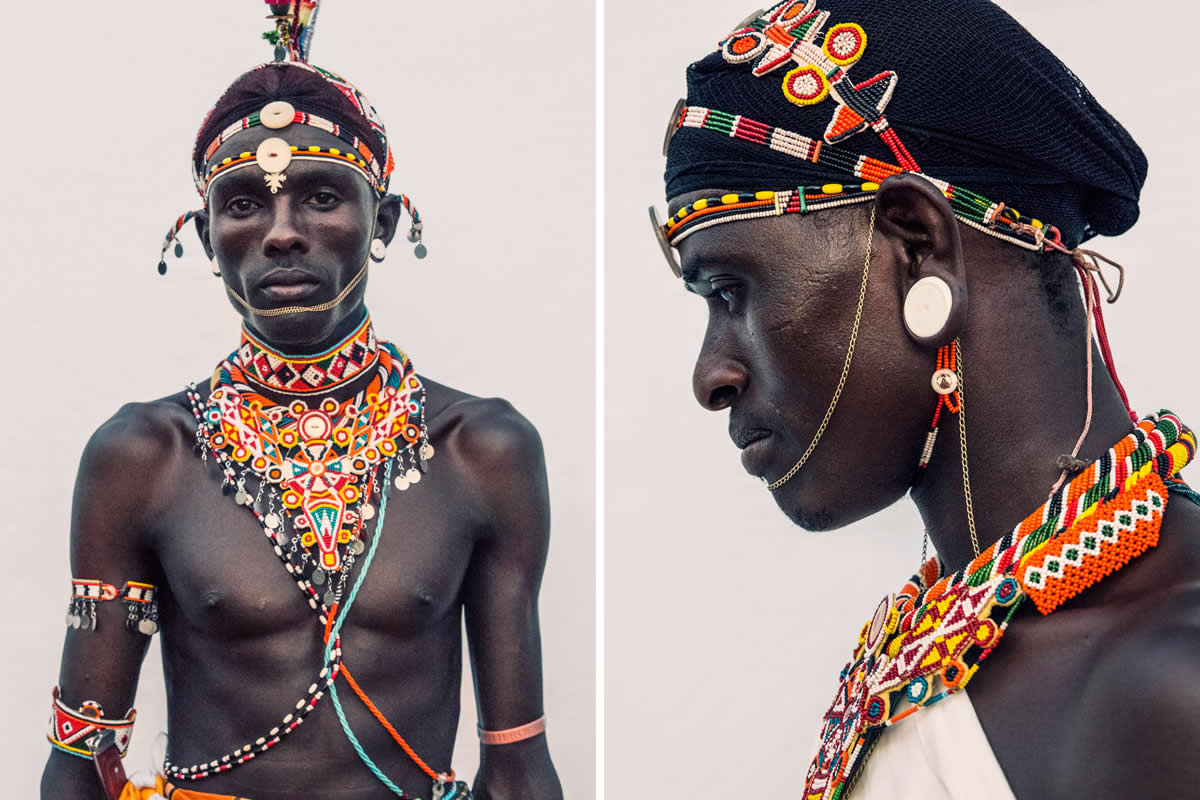
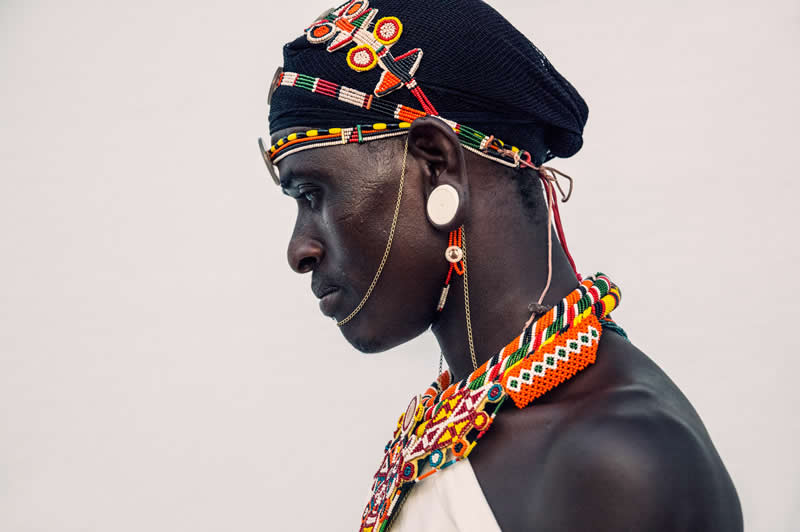
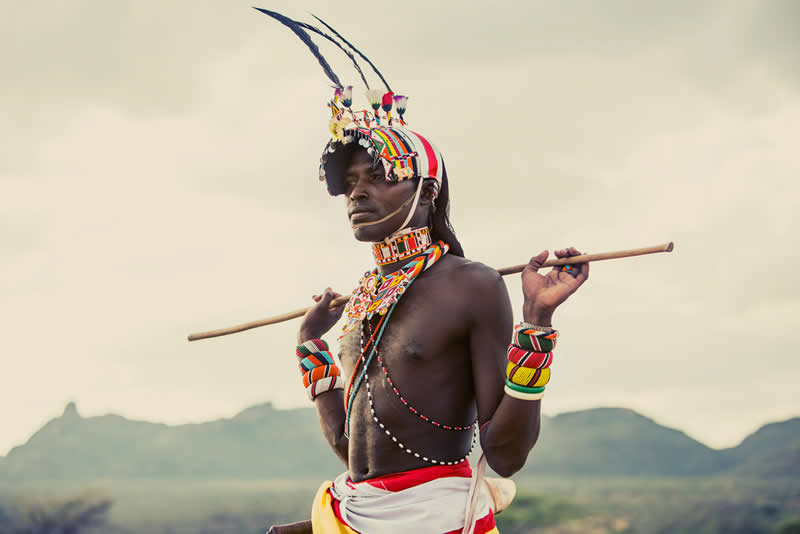
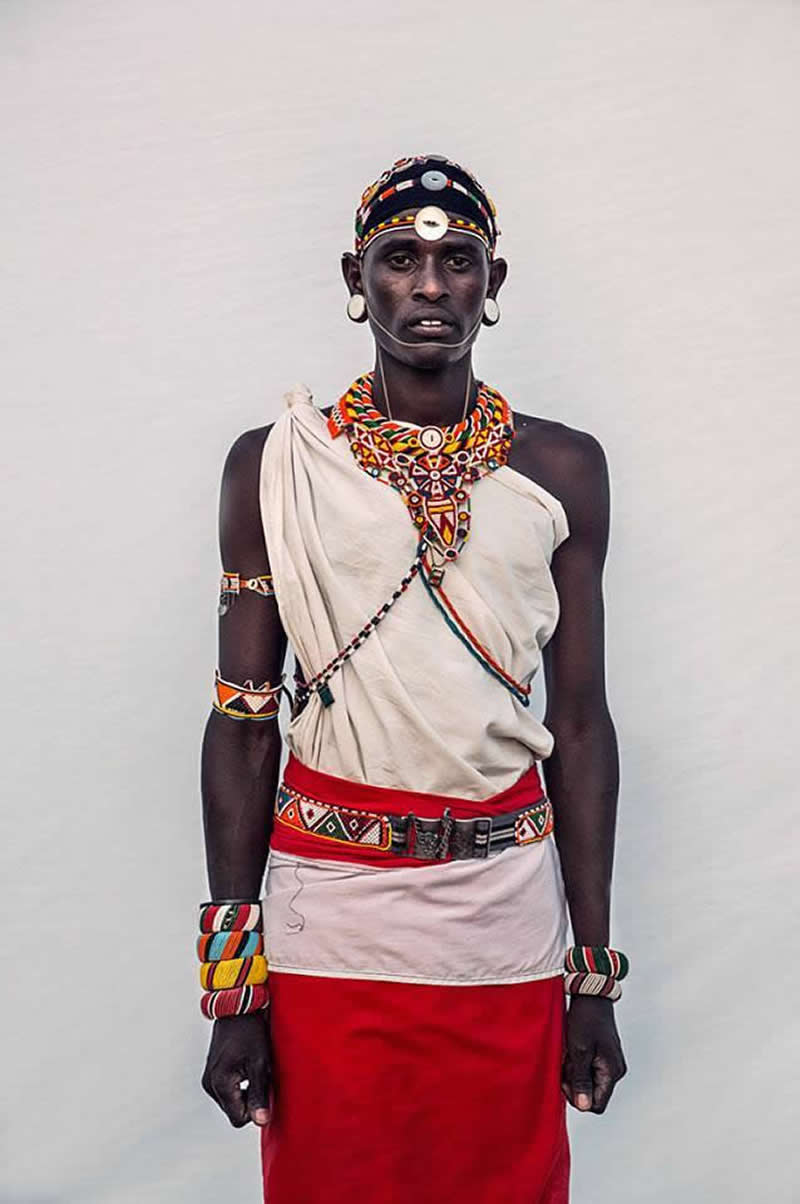
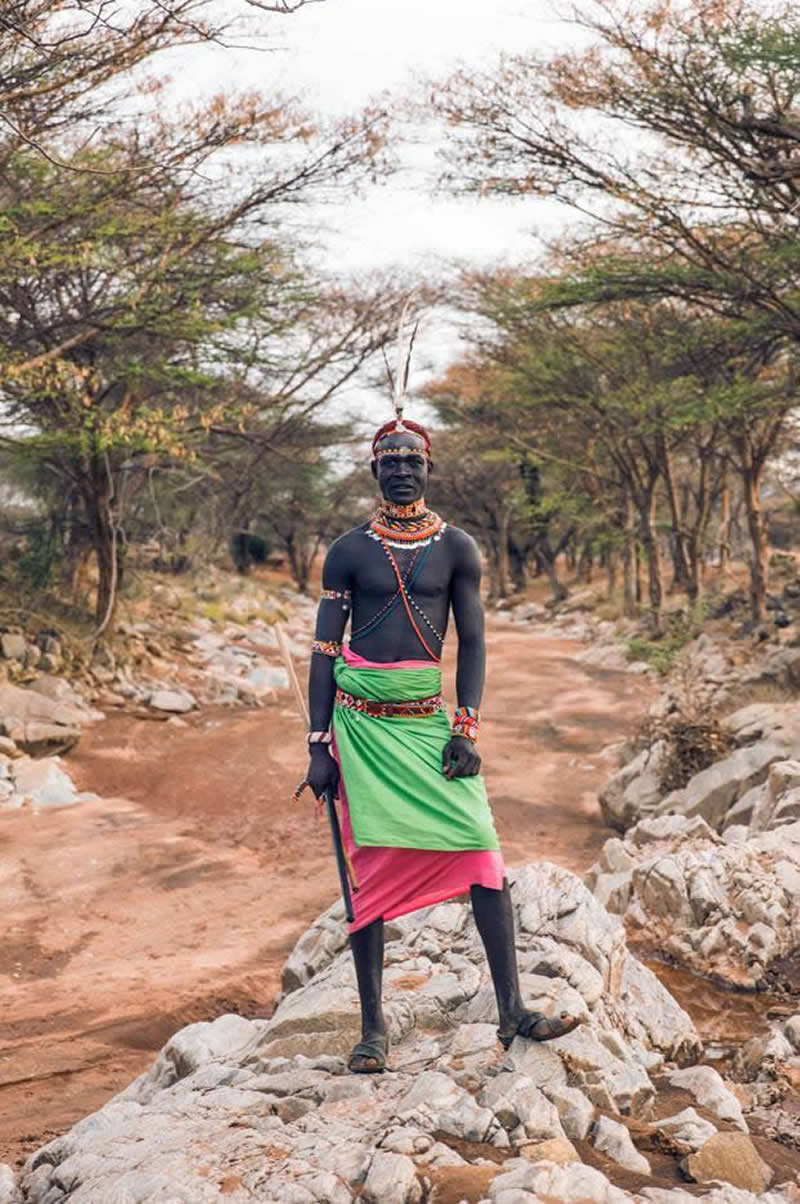
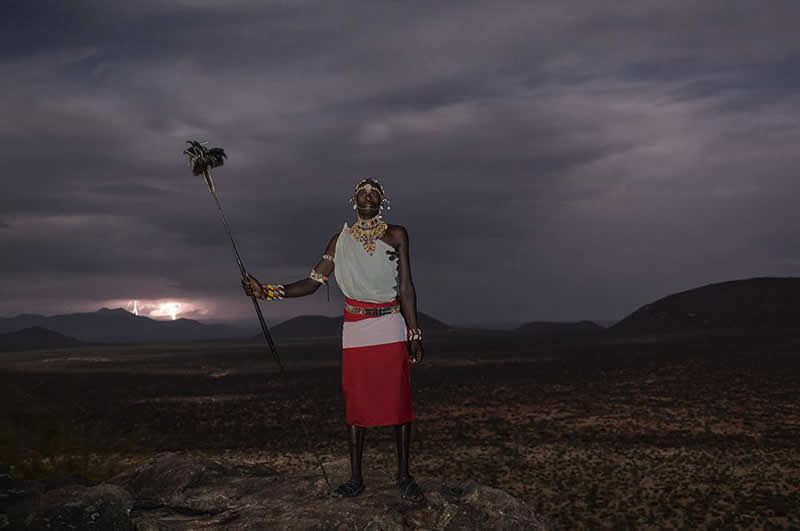
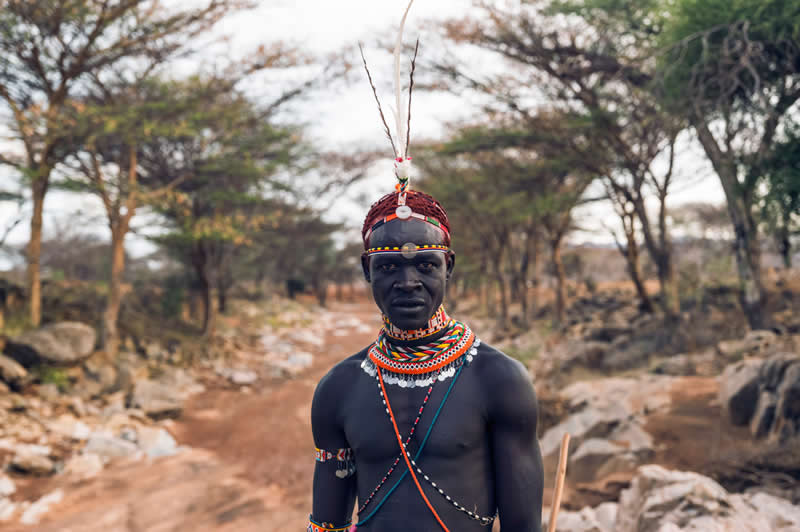
There’s a kind of pride you can’t fake—and when you see it, you feel it. That’s exactly what hits you when you look at the Portraits of Samburu warriors captured by Dirk Rees. These aren’t just photographs; they’re visual statements of identity, resilience, and heritage. Every stare is steady. Every posture is intentional. Every bead, feather, and scar tells a story older than borders and maps.
The Samburu people are a Nilotic, Maa-speaking community whose roots trace back to the plains alongside the Nile River. Centuries ago, pressure from Borana expansion pushed them south, where one group settled near Lake Turkana and became known as the Samburu, while another continued onward to become the Maasai. Though closely related in language, ritual, and belief, the Samburu have remained more traditional, largely due to their remote, arid homeland in northern Kenya.
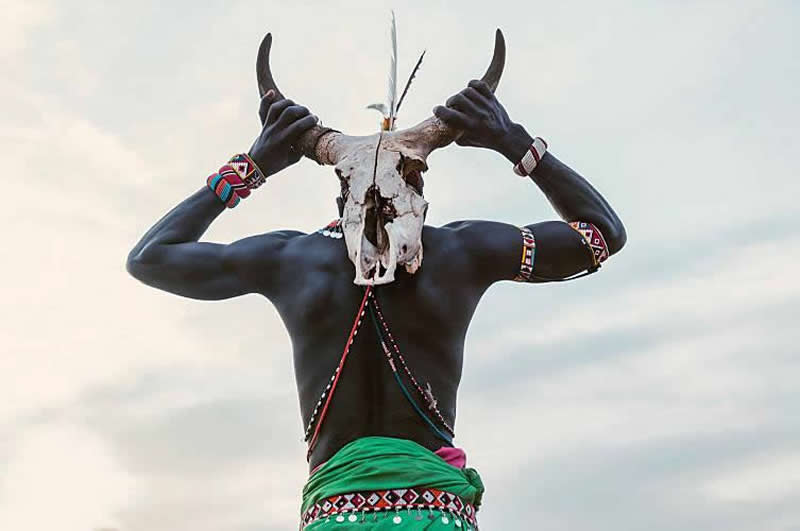
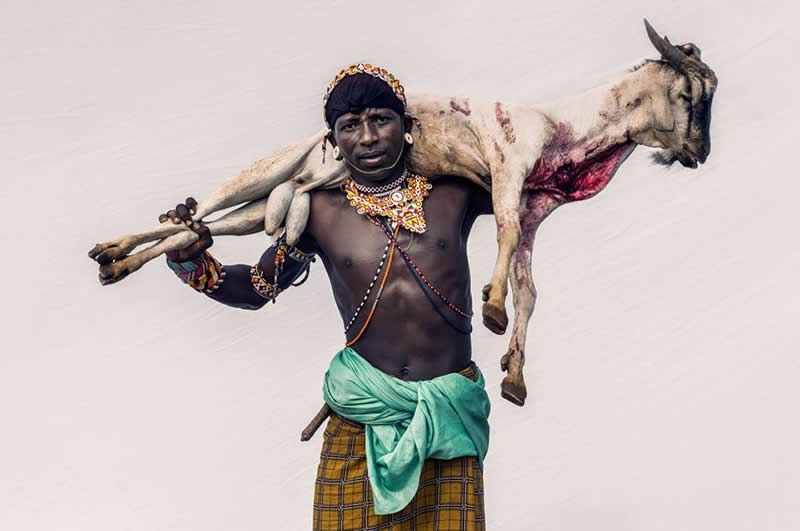
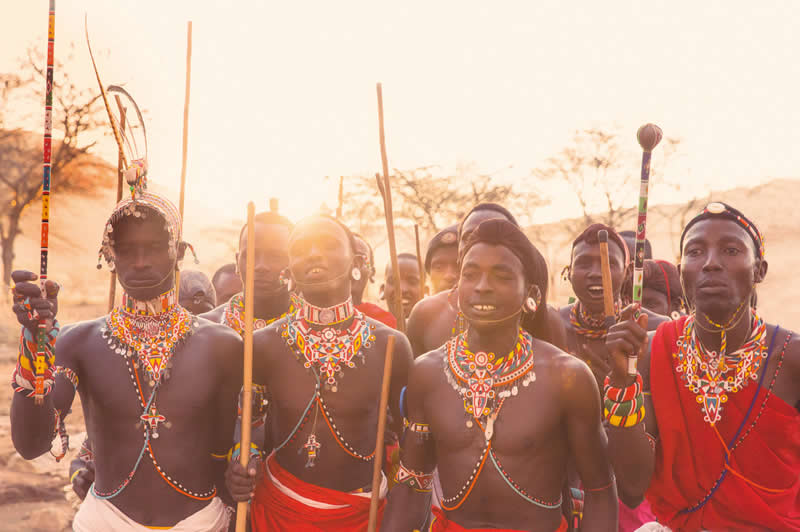
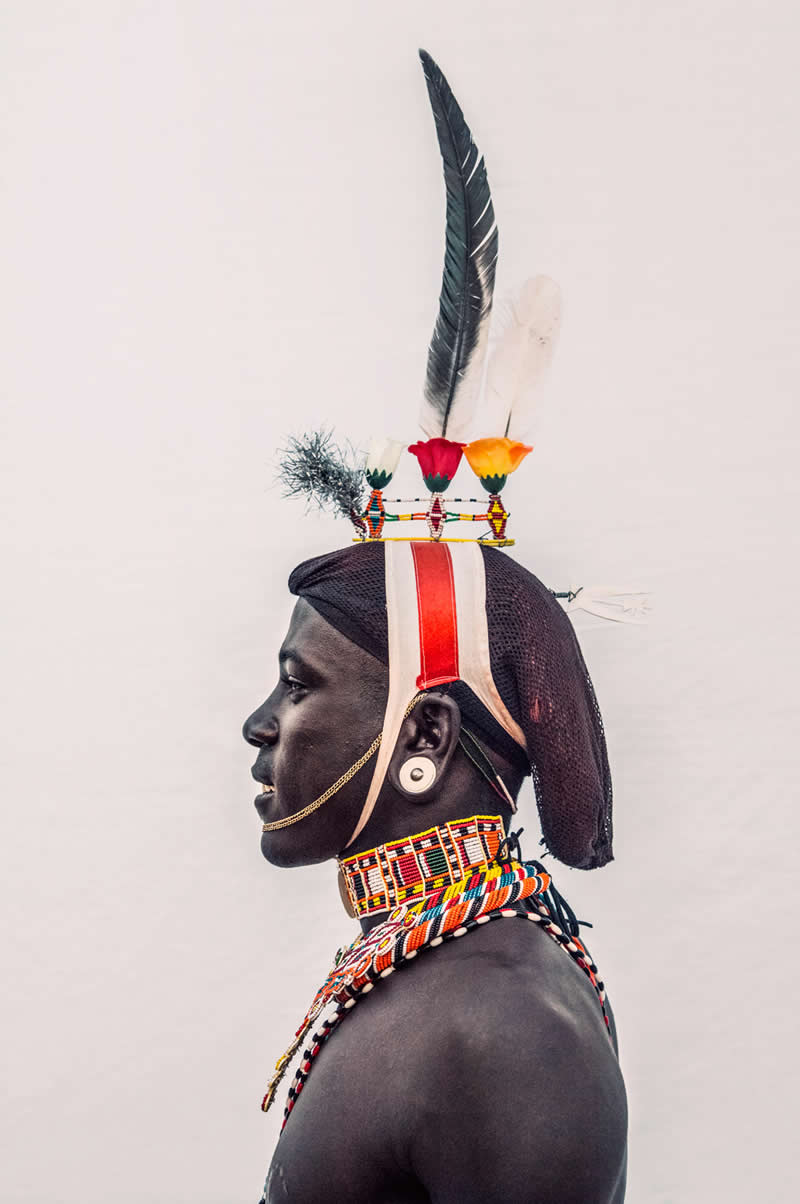
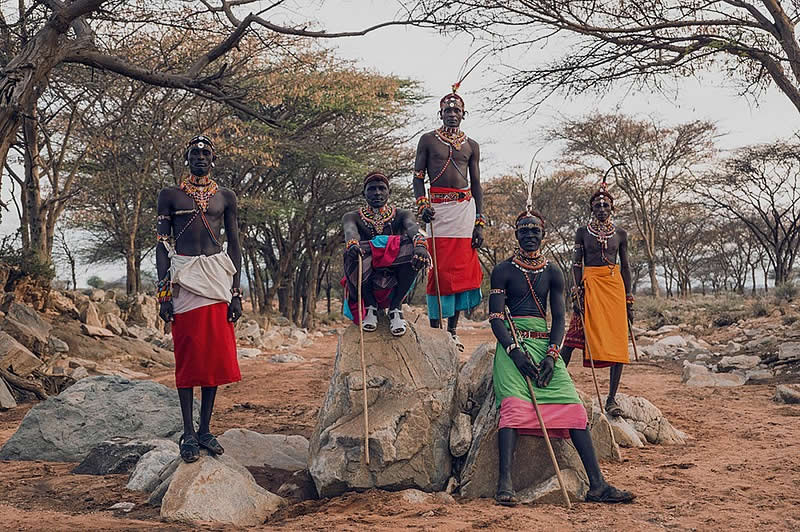
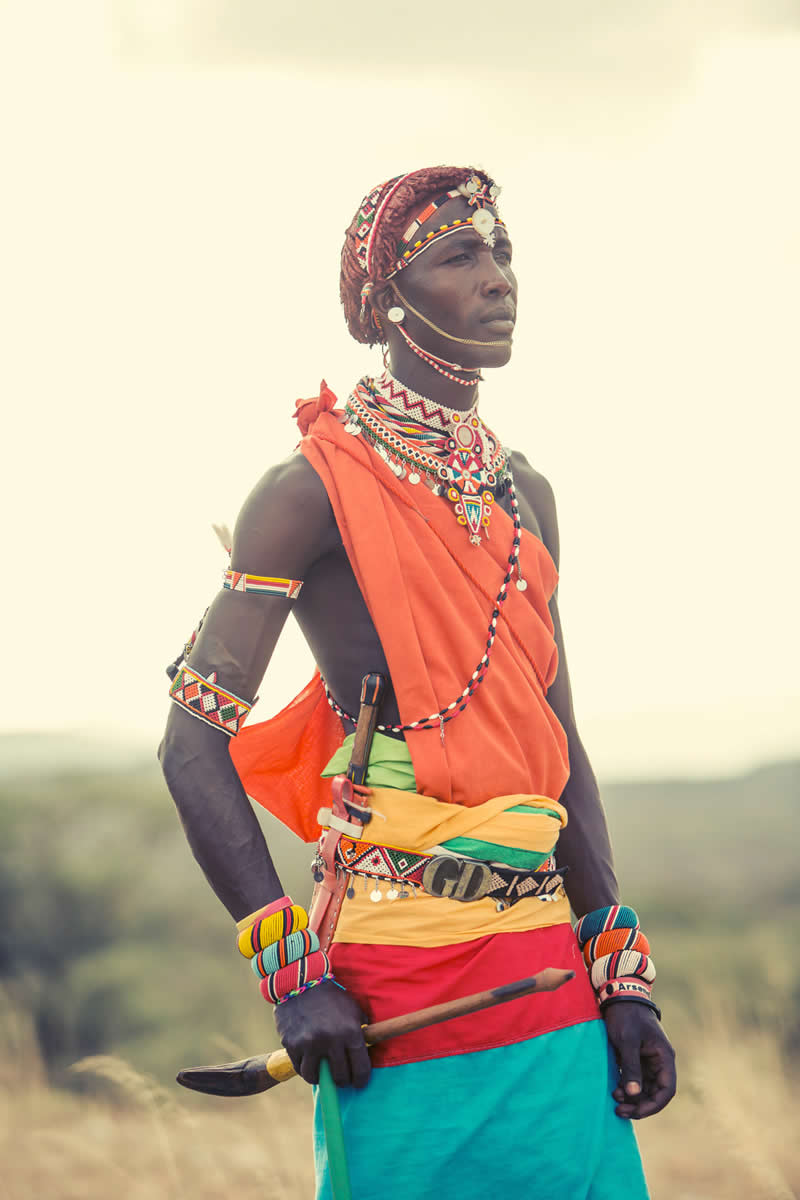
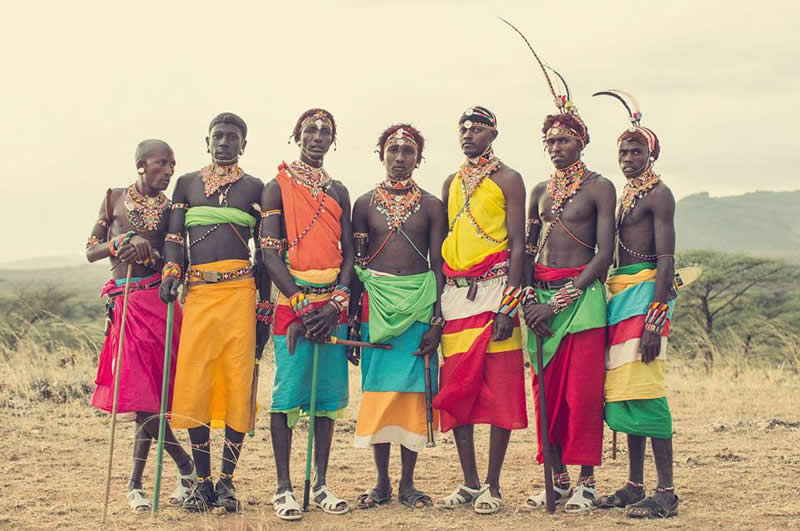
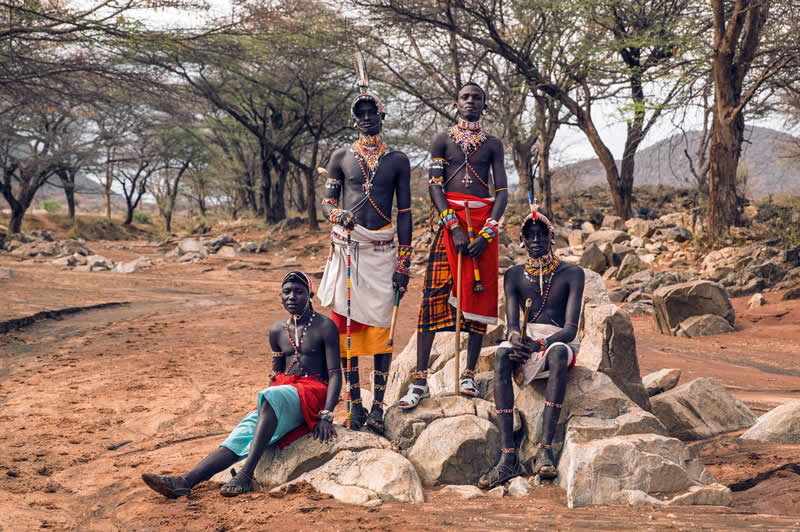
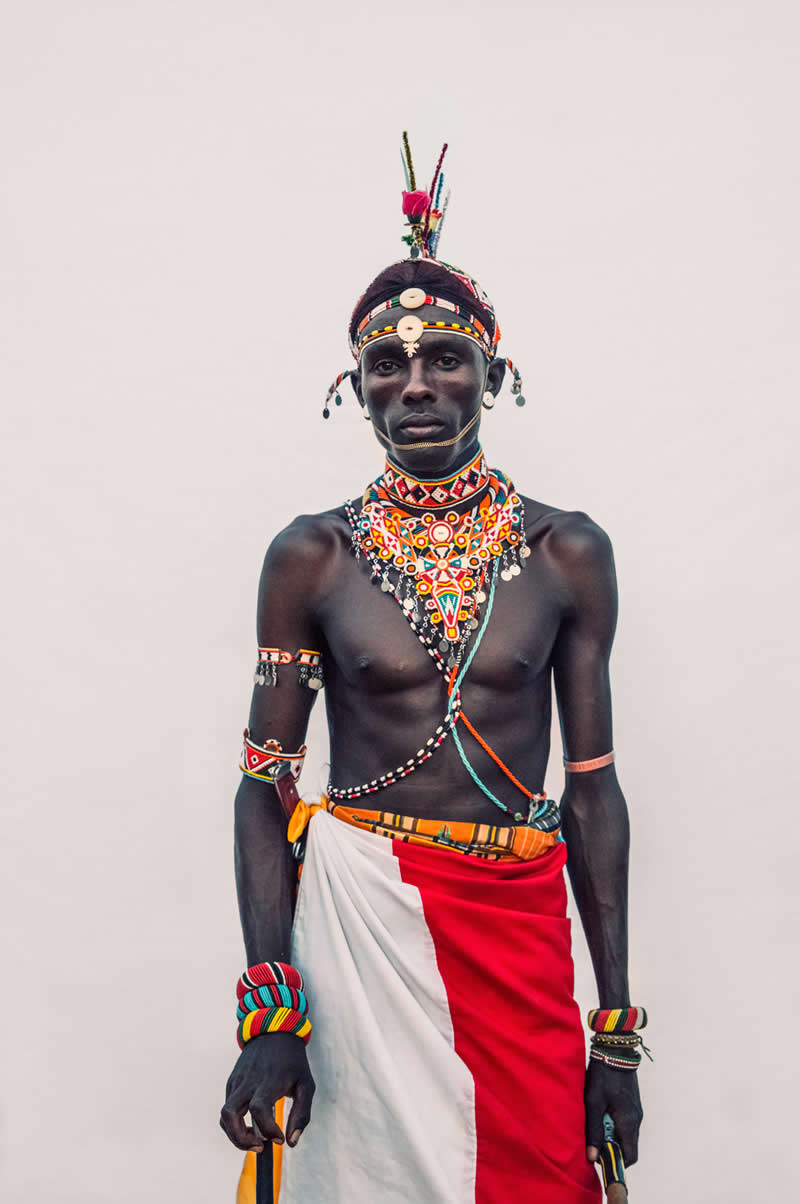
Semi-nomadic pastoralists by nature, Samburu life revolves around cattle, goats, and camels—symbols of wealth, survival, and status. This deep connection to land and livestock shows up in the way warriors carry themselves: grounded, dignified, and unshaken. Their visual culture is equally powerful. Color-coded garments reveal clan identity. Elaborate beadwork covers chests and necks. Men wear feathered headdresses—sometimes mixed with plastic flowers, a modern twist that proves tradition is alive, not frozen.
Through Dirk Rees’ lens, these warriors aren’t exoticized—they’re honored. His portraits balance raw power with quiet grace, turning cultural documentation into fine art that speaks across continents.
You can find Dirk Rees on the web:
#1
#2
#3
#4
#5
The Samburu Warriors: Strength Shaped by Land and Legacy
Samburu warriors don’t wear their strength loudly—it’s embedded in how they stand, look, and exist. Living in one of Kenya’s harshest regions, resilience isn’t optional; it’s survival. The arid landscape demands endurance, and that toughness is mirrored in their presence. These men aren’t performing for the camera—they are the story.
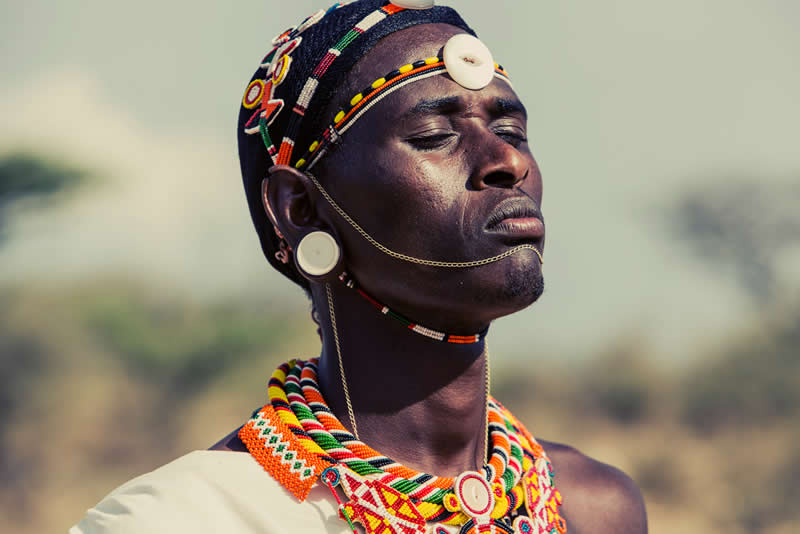
Their attire functions like visual language. Feathered headdresses symbolize status and bravery. Beaded collars and crisscrossed chest strands represent identity, age, and clan. Color choices aren’t random; they’re cultural codes passed down through generations. Even the mix of traditional elements with modern materials like plastic flowers shows how Samburu culture evolves without losing its backbone.
Rees captures this balance beautifully—strength without aggression, pride without arrogance. Each portrait feels timeless, as if the warrior could step out of the frame and walk straight through centuries of history.
#6
#7
#8
#9
#10
Pride Woven in Beads, Feathers, and Ritual
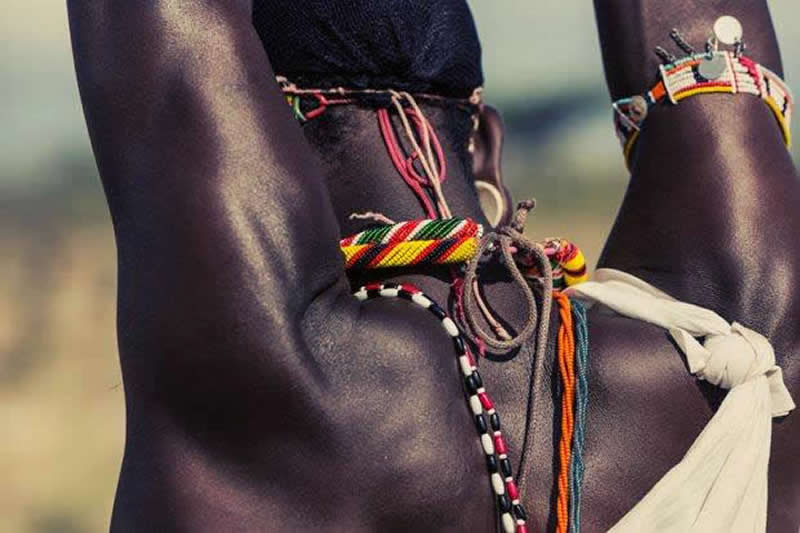
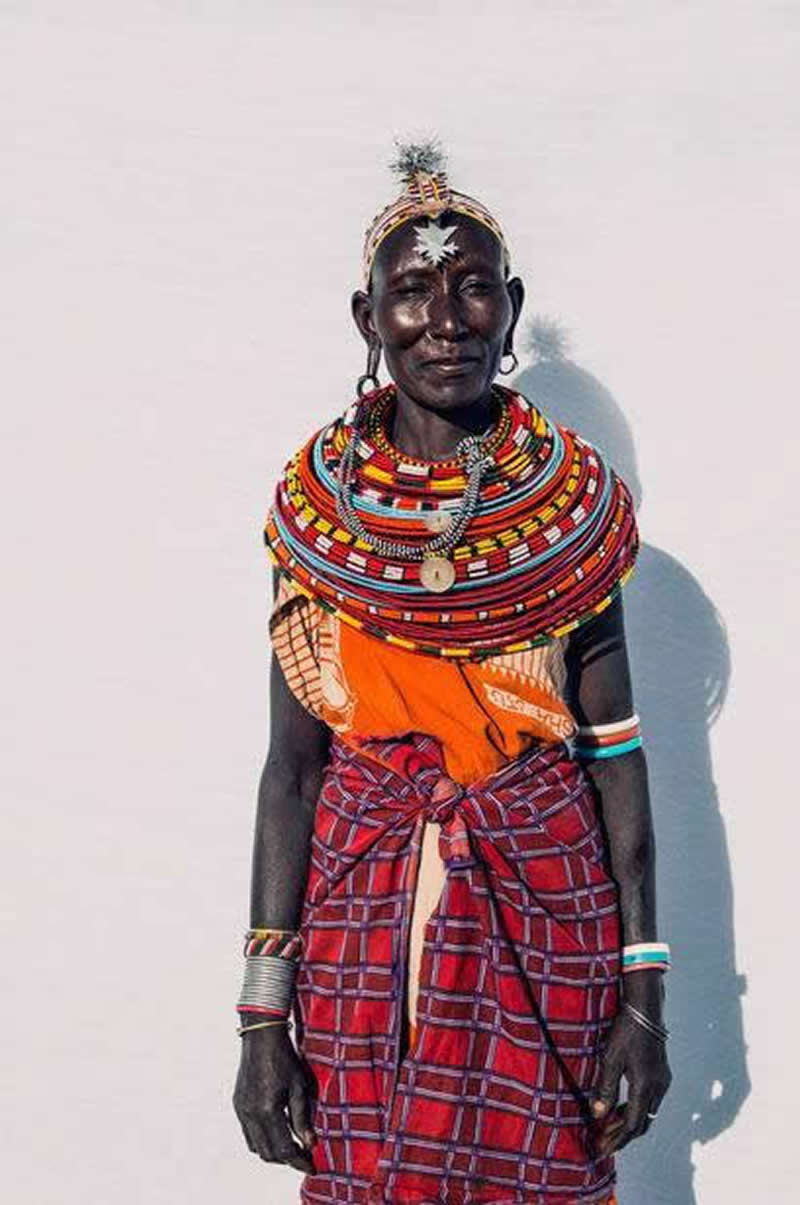
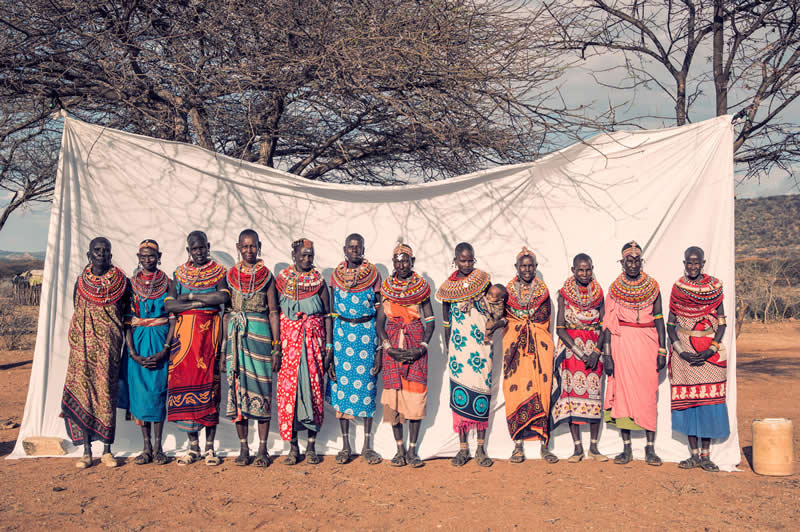
Adornment among the Samburu isn’t about decoration—it’s storytelling. A massive amount of time and care goes into personal presentation, and every detail means something. Men braid their hair and tint it with red ochre. Women keep their hair short and layer circular beaded necklaces around their necks, forming bold, sculptural shapes that command attention.
These visual traditions aren’t surface-level aesthetics; they’re tied to rites of passage, spiritual beliefs, and social roles. You don’t just wear Samburu identity—you earn it. That’s why the pride in these portraits feels so heavy and real. It’s worn like armor, but softer, more human.
Rees leans into this without over-stylizing. His clean compositions let textures, colors, and expressions speak for themselves. The result is portraiture that respects culture while elevating it—images that feel ceremonial, intimate, and incredibly powerful.
#11
#12
#13
#14
#15
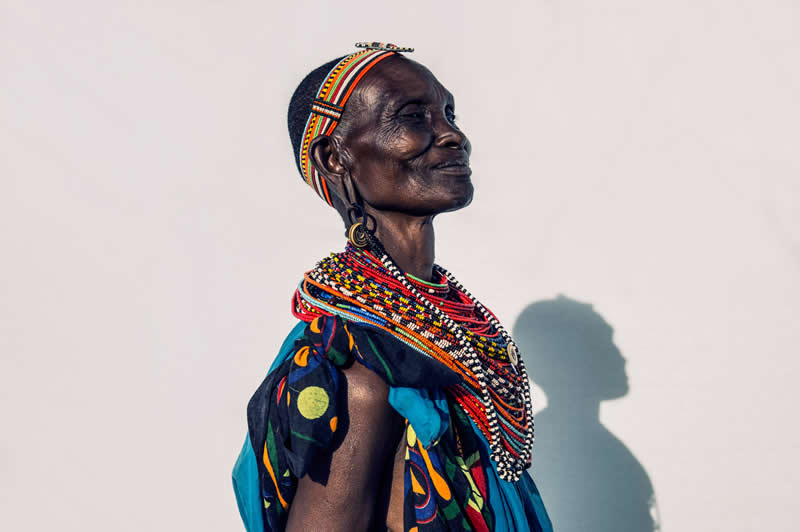
Dirk Rees’ Vision: Documentary Meets Fine Art
Born in Cape Town, raised in Germany, and now based in London, Dirk Rees brings a uniquely Afro-European perspective to his work. Years of traveling across Africa shaped his deep respect for landscape, culture, and iconic tribes—and it shows. His approach blends documentary honesty with fine-art polish, never tipping too far into either extreme.
Rees doesn’t rush his subjects. He gives space. He listens. That patience translates into portraits charged with presence and dignity. You can tell these warriors were seen, not staged. His work for major editorial platforms like GQ, British Journal of Photography, and The Sunday Times reflects that same energy—bold, respectful, and emotionally grounded.
In these Samburu portraits, Rees isn’t just capturing faces. He’s preserving pride, power, and tradition in a world that’s changing fast.
#16
#17
#18
#19
#20
In Summary
Who are the Samburu people?
- The Samburu are a Maa-speaking Nilotic community in northern Kenya, closely related to the Maasai, known for their semi-nomadic pastoral lifestyle.
What makes Samburu warriors visually distinctive?
- Their elaborate beadwork, feathered headdresses, color-coded garments, and symbolic adornments reflect identity, clan, and rites of passage.
Where do the Samburu live?
- They inhabit remote, arid regions of northern Kenya, where cattle, goats, and camels form the foundation of wealth and survival.
Who is Dirk Rees?
- Dirk Rees is a Cape Town–born, Germany-raised photographer based in London, known for documenting African landscapes and tribes with editorial and fine-art depth.
What makes these portraits unique?
- They balance documentary truth with artistic elegance, capturing Samburu warriors with dignity, cultural accuracy, and emotional power.