
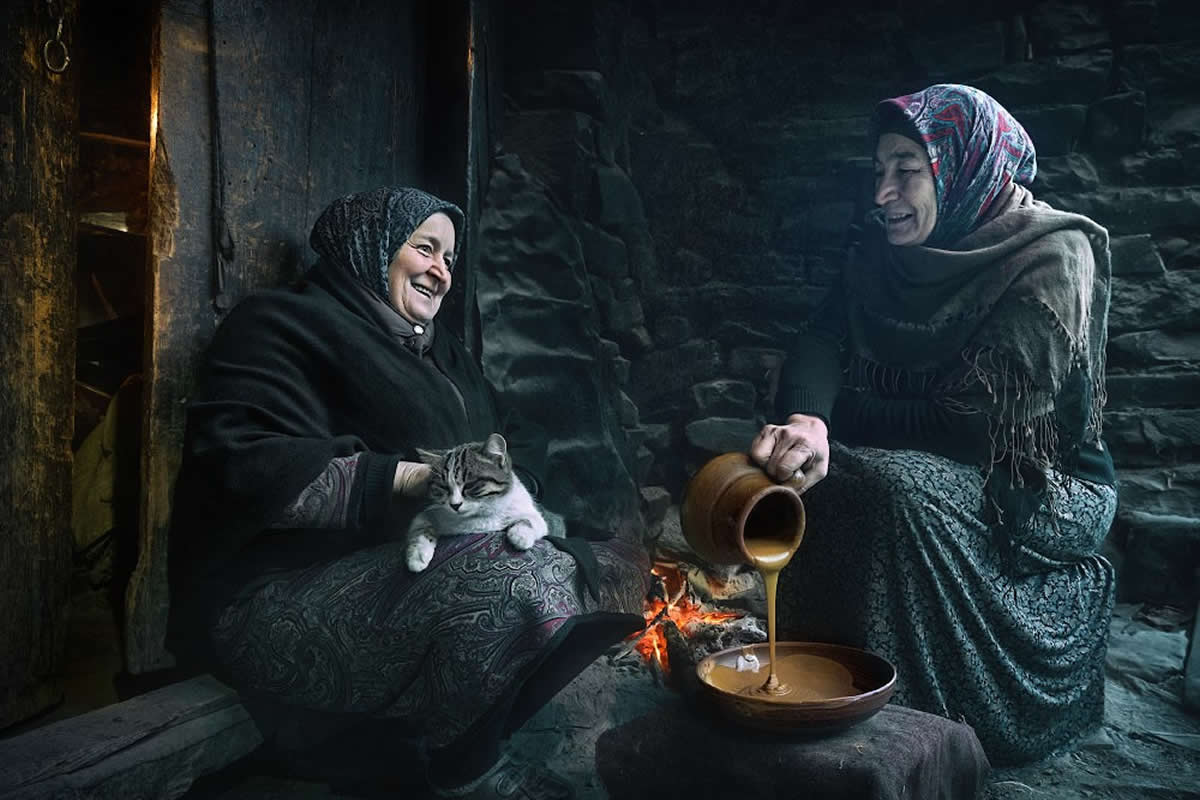
Some photographers chase the world. Andrey Smolnikov chose to stay. While many artists move from country to country searching for new stories, Smolnikov has devoted his entire life to one place—the North Caucasus, the land that raised him, shaped him, and continues to speak through his images. His long-term project, “Botlikh. Between Heaven and Earth,” is not just photography; it’s a quiet promise to preserve memory, culture, and human dignity in a region where mountains scrape the sky and traditions run deep.
Smolnikov photographs exclusively in his native Caucasus, traveling across Chechnya, Ingushetia, North Ossetia, Karachay-Cherkessia, and Dagestan. But these aren’t outsider snapshots. These are images made with trust. He knows the people he photographs. Many are friends. Many have watched him grow as an artist, just as he has watched their lives unfold through seasons, rituals, hardships, and joy.
What makes these photos hit differently is their honesty. There’s no drama for effect, no exoticizing of culture. Instead, Smolnikov captures quiet strength—faces weathered by mountain air, hands shaped by work, eyes filled with history. Each portrait feels grounded, respectful, and deeply human. After photographing his subjects, he often gives them their portraits, completing the circle between photographer and community.
Even more powerful is his commitment to legacy. Smolnikov donates his photographs to the Stavropol State Museum of Local History, where they are archived with precise details—names, places, moments frozen in time. Fifty years from now, these images will still speak. These 35 photographs reveal a world balanced between earth and sky, tradition and time, silence and story.
You can find Andrey Smolnikov on the Web:
#1

#2

#3

#4

#5

#6

#7

#8

#9

#10

Life Rooted in the Mountains of the North Caucasus
The North Caucasus isn’t just a backdrop in Smolnikov’s work—it’s a living force. The towering mountains, winding roads, and isolated villages shape the rhythm of daily life, and his photos reflect that raw connection between people and land. You feel the altitude in every frame. Life here moves slower, tougher, and closer to nature, and Smolnikov captures it without romantic shortcuts.
These images show highlanders standing tall against dramatic landscapes, not posed, not staged—just present. The environment doesn’t overpower the people; it defines them. Smolnikov’s lens respects that balance. He photographs moments that feel suspended in time, where modern life barely whispers and tradition still speaks loud. This is a visual archive of survival, pride, and belonging—where every mountain path carries memory, and every face holds the weight of generations.
#11

#12

#13

#14

#15

#16

#17

#18

#19

#20

Portraits Built on Trust, Friendship, and Shared Roots
What separates Smolnikov’s portraits from typical documentary work is closeness. These are not quick encounters. These are relationships built over years. Growing up in the Caucasus himself, Smolnikov understands the mentality, the silence, the pride, and the unspoken rules. That shared ground creates images that feel intimate rather than intrusive.
His subjects don’t perform for the camera. They simply exist. You see it in relaxed postures, direct gazes, and moments of quiet vulnerability. These portraits carry dignity because they’re made with consent, respect, and familiarity. Smolnikov often returns prints to the people he photographs, turning the act of photography into an exchange rather than a transaction. The result is a body of work that feels deeply personal—portraits created with people, not of them.
#21

#22

#23

#24

#25

#26

#27

#28

#29

#30

Preserving Culture for the Future, One Frame at a Time
Smolnikov’s work goes beyond art—it’s historical preservation. By donating his photographs to a regional museum, complete with detailed descriptions of location and identity, he ensures these stories won’t vanish. Long after trends fade and technology changes, these images will remain as records of real lives lived between heaven and earth.
Each photograph becomes a document of cultural continuity—traditional clothing, daily labor, family ties, and expressions shaped by place. In a world that moves too fast and forgets too easily, Smolnikov slows time down. His archive protects memory, identity, and truth. These photos aren’t just meant to be admired today; they’re meant to matter tomorrow. And that’s what gives them lasting power.
#31

#32

#33

#34

#35