
Article Written by: Ethan Cole
Opening December 12, 2025 | Flowing Space, New York City
Flowing Space will open “The Flavor of Learning”, an immersive exhibition by designer Yuqing Zhang, on December 12, 2025. This forward-looking exhibition introduces ServeUp, Zhang’s award-winning AI-powered training platform that is redefining how the hospitality industry educates its workforce.
By replacing traditional paper manuals and long orientation sessions with conversational AI scenarios, micro‑lessons, and real-time coaching, ServeUp transforms professional training into an intuitive, efficient, and genuinely enjoyable experience. Visitors to the exhibition will learn how interactive design and emerging technology can reshape workplace learning—turning routine job training into an interactive, engaging, and motivating journey.
A Designer at the Forefront of AI Innovation
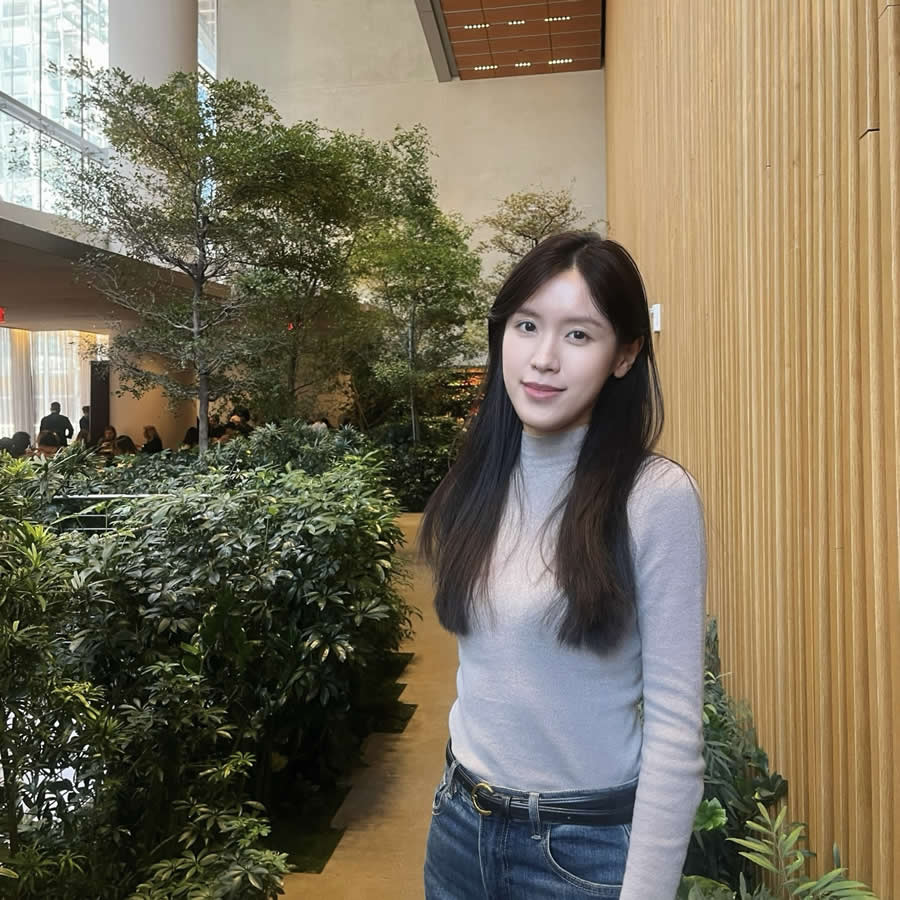
Yuqing Zhang is an AI-driven product designer whose work bridges advanced technology and human-centered design. With a background that spans urban planning and interactive product design, she approaches design as a tool for solving real-world problems with clarity and empathy. Her work spans AI-driven product design, generative AI exploration, and research integrating advanced technology with humanistic design.
Zhang earned her Master’s in Technology Innovation at the University of Washington, where she led experimental design projects focused on the intersection of AI and everyday life. Since graduating, she has continued to explore how AI can make work more accessible, effective, and engaging for people across industries. “The Flavor of Learning” will offer the public a chance to discover her work and vision. Drawing on her international experience and passion for innovation, she demonstrates how interactive design can address challenges in daily life – in this case, the challenge of training and empowering restaurant staff.
ServeUp: Redefining Hospitality Training
At the exhibition’s core is ServeUp, the platform Zhang created to address persistent training challenges in the hospitality industry. Restaurant staff turnover exceeds 75% annually, with front-of-house positions experiencing 41% turnover and back-of-house roles at 43%. Traditional paper manuals and passive video training struggle to engage workers or reduce these rates.
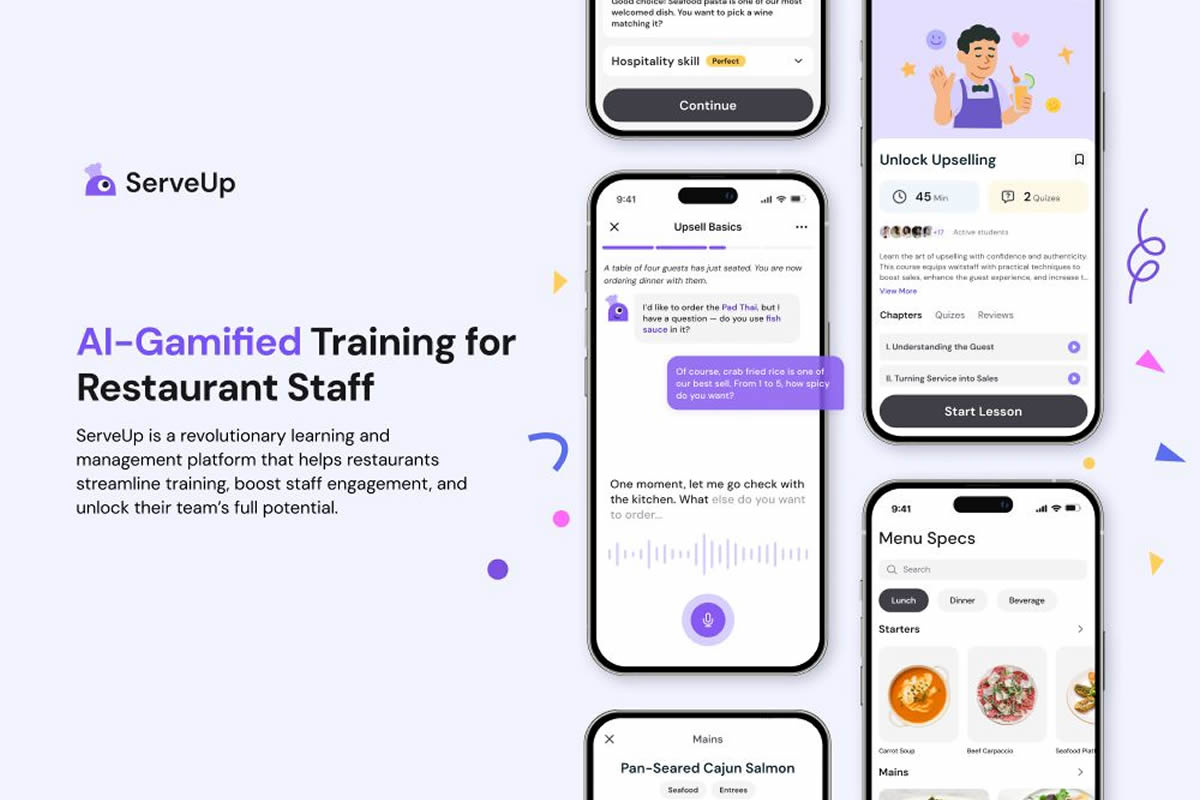
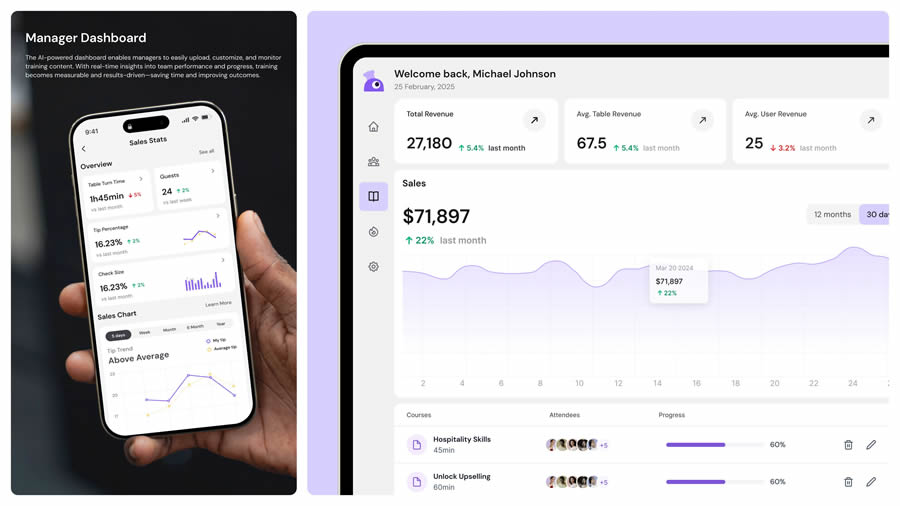
ServeUp reimagines the training experience through an AI-driven, gamified solution that streamlines learning through micro-lessons and AI practice scenarios. The system uses conversational AI to simulate real customer interactions, allowing restaurant staff to practice high-pressure scenarios in a risk-free environment. The Gamified progression system transforms training into an engaging experience, and the manager dashboard provides actionable insights on the team performance. By making the full process of training engaging and personalized, ServeUp aims to empower employees, reduce high staff turnover, and help restaurants build motivated, high-performing teams that deliver better customer service.
ServeUp’s design is deliberately playful and user-friendly. The interface is vivid and colorful, featuring a friendly purple monster mascot who guides users through each module with encouragement and humor. Every detail is crafted to keep learning fun and rewarding.
The platform’s innovative design has gained growing recognition, earning the MUSE Design Gold Award, French Design Award, and International Design Awards in 2025.

Exhibition Experience: Four Immersive Zones
Visitors to “The Flavor of Learning” will embark on a curated journey through the creation and impact of ServeUp.
Upon entry at “The Source of Inspiration”, the exhibition will introduce the real-world problem that sparked the project. Infographics and research visuals will highlight the challenges of modern restaurant training – high turnover, inconsistent service, and costly, ineffective manuals – which motivated Zhang to find a better solution. This opening section will ground visitors in the reality of the issue and set the stage for why an innovative training platform is needed.
Moving into the main gallery, “The World of ServeUp” will unveil the platform’s features and design process. Here, visitors will step into ServeUp’s vibrant universe. Interactive displays and screens will showcase key features of the app: from the AI-driven scenario training where staff can practice customer interactions, to digital flashcards for learning menu items, quick quizzes for knowledge checks, and a gamified rewards system that celebrates progress. An introductory video will walk visitors through a typical user experience, depicting how a new restaurant employee will use ServeUp – starting with a short lesson, engaging in a chat with the AI coach, and earning points or feedback along the way. The space itself will be themed with ServeUp’s distinctive visual language: the friendly purple mascot and colorful interface elements will be brought to life around the room, immersing attendees in the look and feel of the platform. It will be an environment that echoes the product’s playful tone, allowing visitors to feel the joyful approach to learning that ServeUp embodies.
Next, the journey will become hands-on in the Interactive Zone: “Practice with ServeUp”. In this section, visitors will have the chance to try out ServeUp for themselves. Guided by staff, guests will be able to pick up a tablet or phone and engage with a live demo of the training platform. They will, for instance, take on the role of a trainee practicing a scenario – perhaps greeting a virtual customer or handling a mock order – and the AI will respond instantly with natural, conversation-like replies. A short on-screen prompt will explain that “This AI simulates a real customer interaction and responds instantly to what you say,” so visitors understand the context. By speaking or typing as if they were a staff member in training, attendees will experience first-hand how ServeUp makes learning immersive. This playful exercise will likely spark smiles and “aha” moments, as people realize how different training will feel when it’s more like a game than a class. The interactive zone ensures that the exhibition isn’t just something to observe – it’s something to participate in, reinforcing the idea that learning by doing (even virtually) will be more impactful.
The exhibition concludes with a reflective section on the platform’s broader implications. Through concise panels and statements, visitors can explore how improved training contributes to employee confidence, team stability, and better service experiences. The space also emphasizes ServeUp’s sustainable approach—cutting down reliance on printed materials and minimizing waste.
Design That Matters: Social & Environmental Impact
Beyond the technology and design, “The Flavor of Learning” highlights not just technological innovation, but also its potential to create positive social and environmental change.
By digitizing training that would otherwise rely on printed binders and paper handouts, ServeUp helps cut down on waste and reduce the carbon footprint of staff education. The platform’s approach supports environmental sustainability by virtually eliminating the need for printed manuals or disposable quiz sheets. At the same time, ServeUp fosters social sustainability by expanding access to quality training for frontline restaurant workers. In an industry where many employees start with little formal training, this tool will give everyone – from big restaurant chains to small family eateries – a fair chance to learn and improve on the job. Better training leads to increased job satisfaction, improved performance, and more stable teams. Over time, that creates a more stable, inclusive workforce where people feel valued and empowered.
“Better training isn’t just about efficiency,” Zhang notes. “It’s about dignity. When people feel prepared and supported, they perform better and stay longer. That creates ripple effects throughout the entire service experience.”
The exhibition itself will underscore these themes in a setting that invites contemplation. Flowing Space’s serene tearoom atmosphere will allow visitors to slow down and reflect on what they have seen. As they absorb the exhibition, they will be invited to imagine a gentler, more sustainable vision of workplace learning – one where technology and thoughtful design make everyday work more empowering.
As AI reshapes industries from healthcare to education, Zhang’s work demonstrates how these powerful tools can be deployed with user-centered intention and care. For restaurant staff, “The Flavor of Learning” offers a glimpse of training systems that actually work. For designers and technologists, it provides a case study in applied AI that prioritizes user experience over technical complexity. The exhibition opens a window onto a future where improving at workspace can be an experience as enriching as it is efficient – a future that, thanks to designers like Zhang, is just around the corner.