
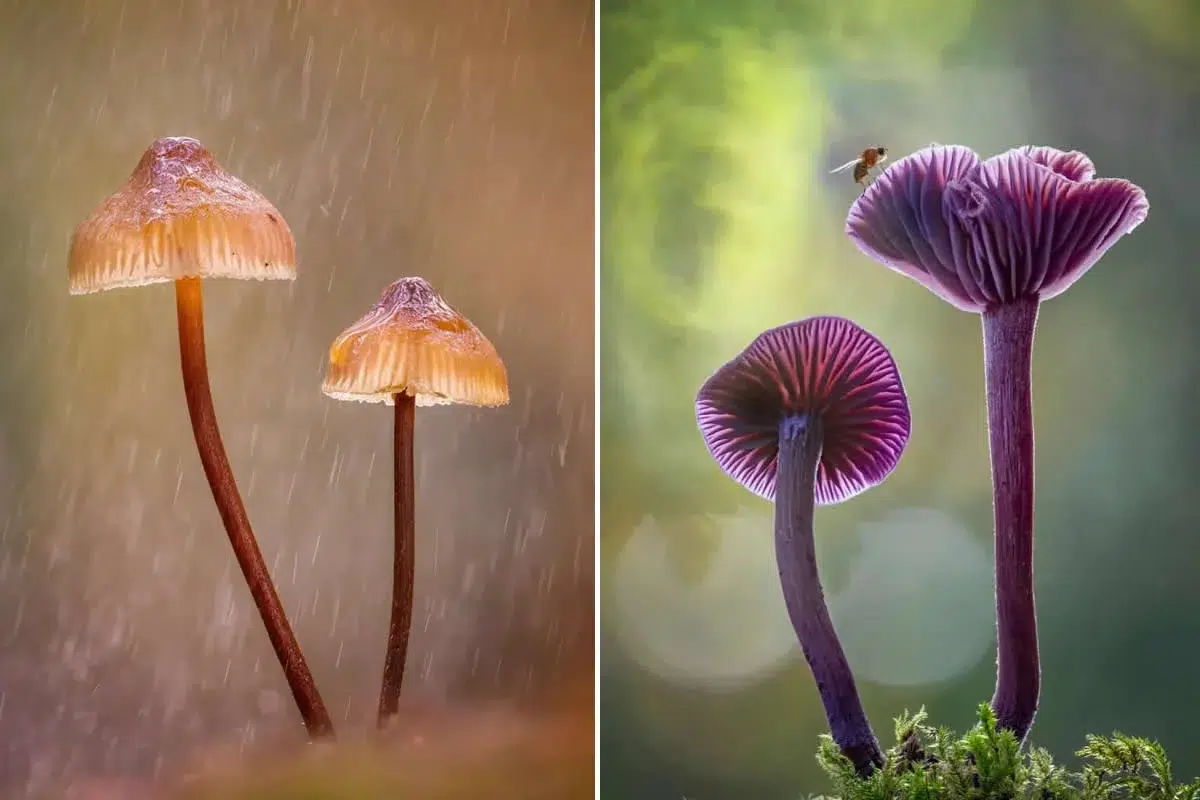
The Close-up Photographer of the Year (CUPOTY) has revealed the fungi and slime moulds shortlist for its eighth edition, showcasing 40 photographs that explore the fascinating details of the natural world. Selected from 15,338 total competition entries, the images highlight the variety of shapes, colors, textures, and patterns found in fungi and slime moulds.
From tiny mushroom formations to unusual slime mould structures, the shortlisted photographs demonstrate how close-up photography can reveal details that often go unnoticed. The collection also highlights the patience, technical skill, and creative vision required to photograph such small subjects.
Founded in 2018 by husband-and-wife photography team Tracy and Daniel Calder in Winchester, UK, CUPOTY celebrates close-up, macro, and micro photography. The competition provides an international platform for photographers to showcase often-overlooked subjects, bringing the smallest details of nature into focus.
You can find more info about CUPOTY:
Hidden World of Fungi and Slime Moulds Through Macro Photography
The CUPOTY 2026 shortlist showcases the incredible diversity of fungi and slime moulds through detailed close-up photography. From unusual shapes and vibrant colors to delicate textures and intricate patterns, these 40 photographs reveal the beauty of nature’s smallest subjects and the skill behind capturing them.
#1. Woodland Shelter by Jay Birmingham
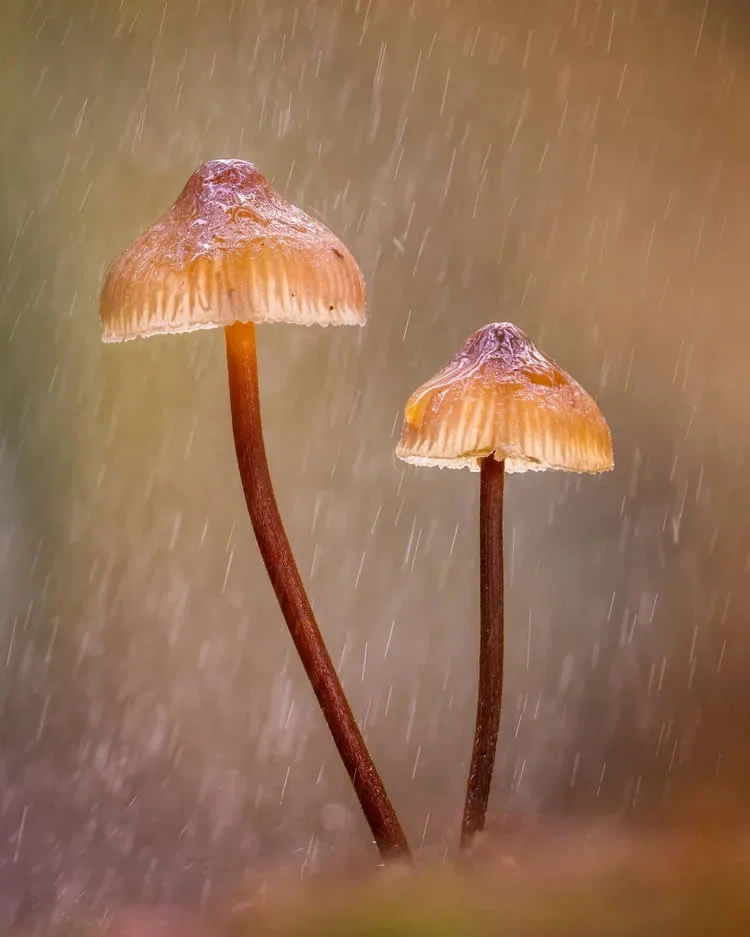
© Jay Birmingham
#2. Myxomycete Cribraria cancellate by Karsten Buch
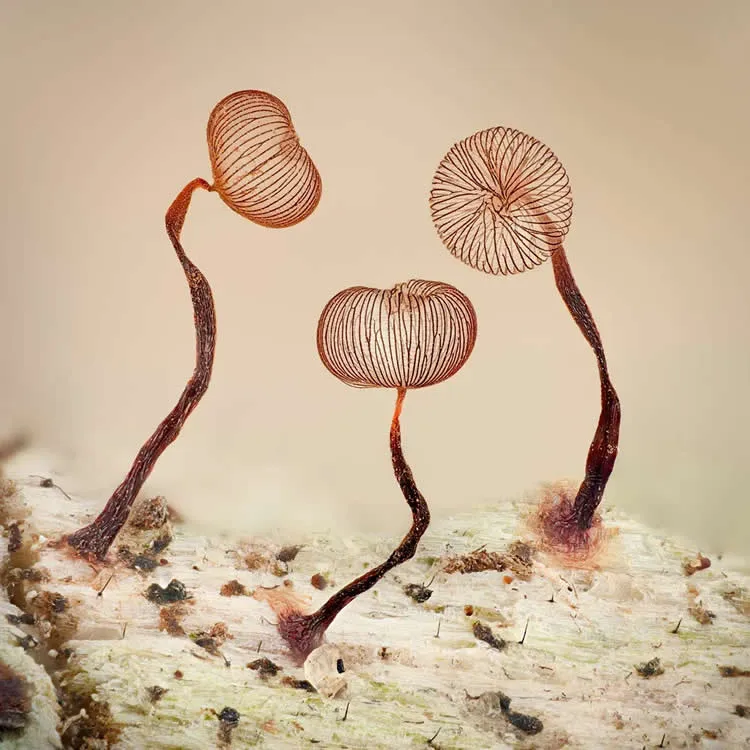
© Karsten Buch
#3. Myxomycete Metatrichia vesparia by Karsten Buch
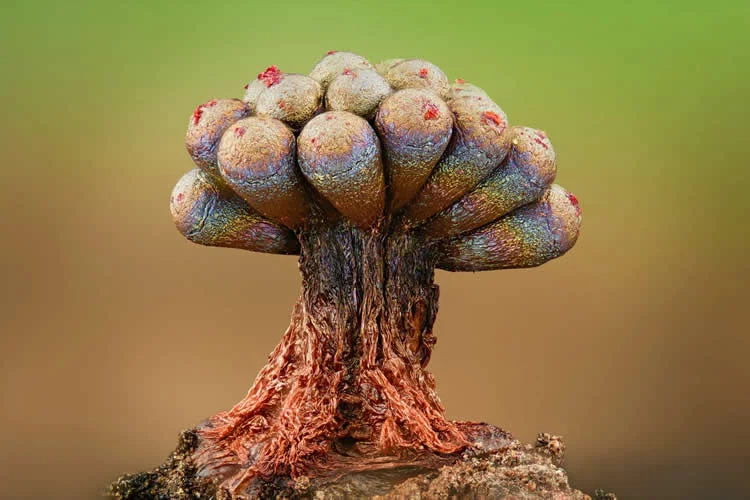
© Karsten Buch
#4. A hill to Die On by Jonathan Appleyard
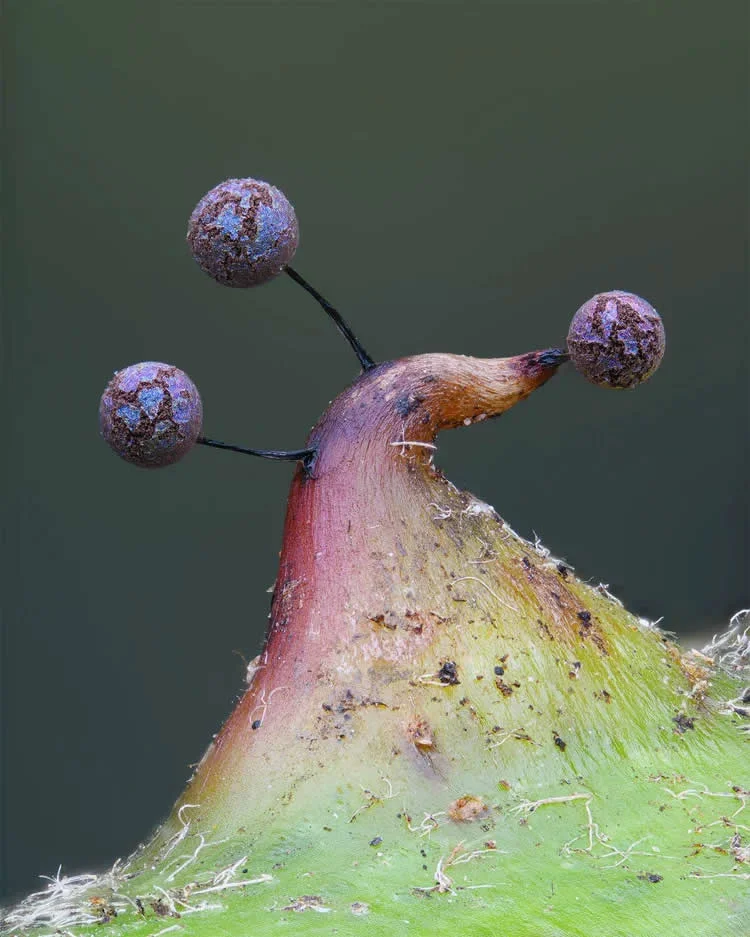
© Jonathan Appleyard
#5. Coprin Pie by Gaël Bastard
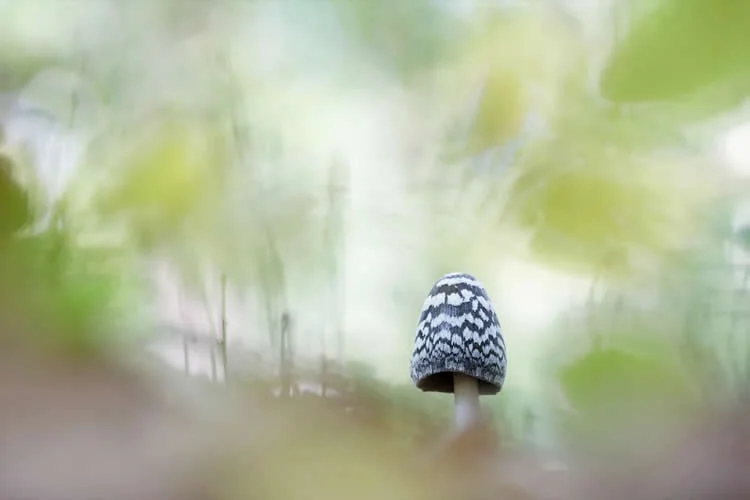
© Gaël Bastard
#6. Fungal by Andres Better
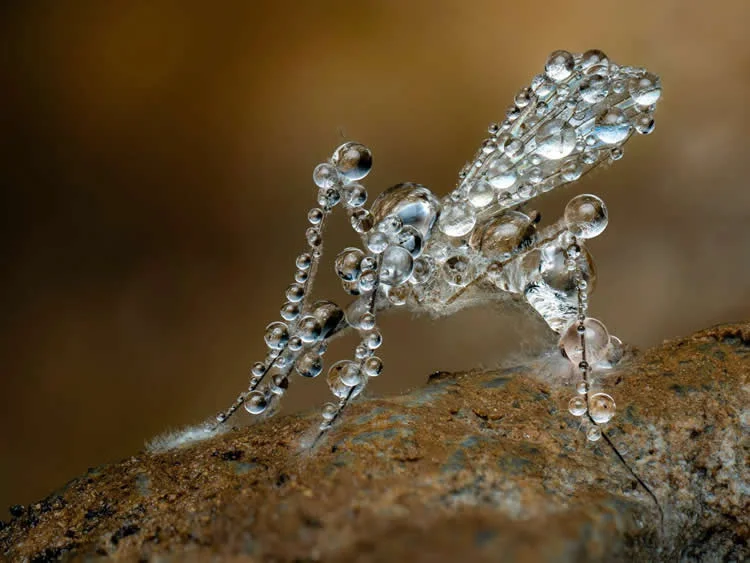
© Andres Better
#7. Blooming Starfish by Marco Chan
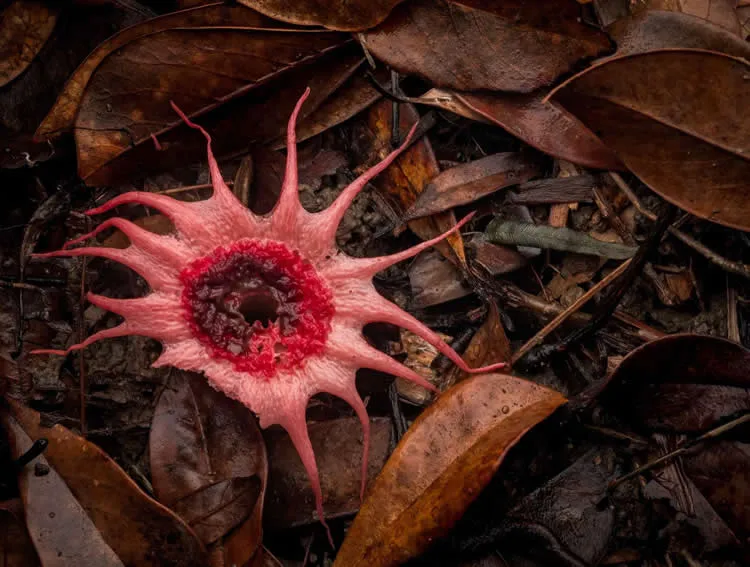
© Marco Chan
#8. Ruby Bonnet by John Dellaert
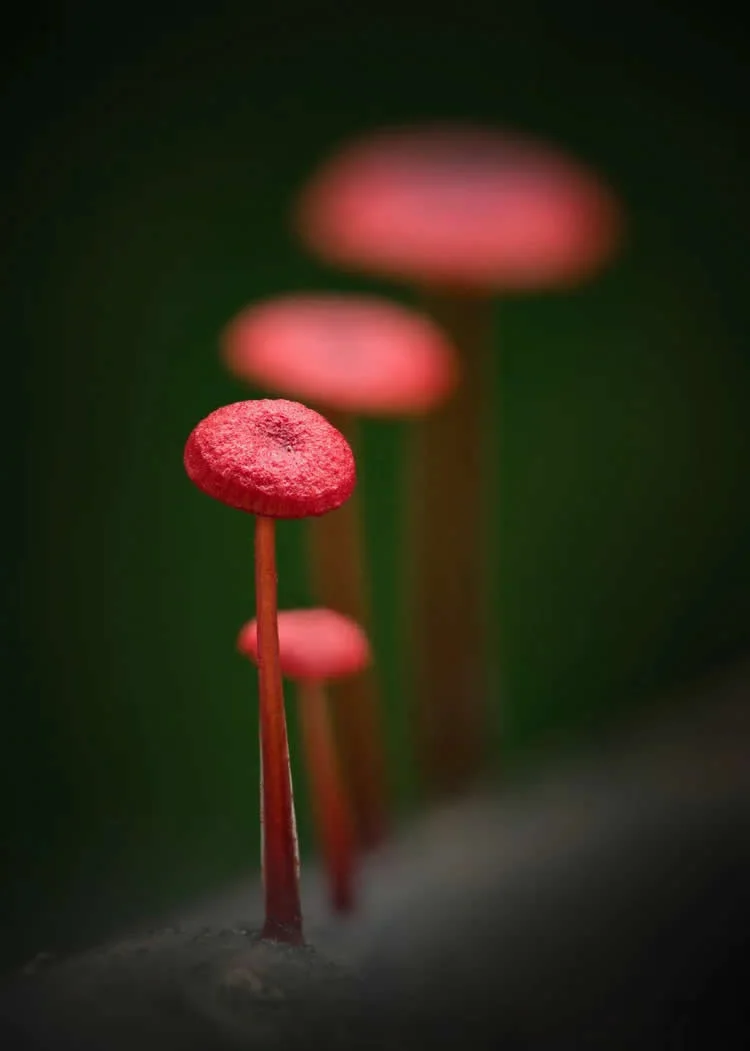
© John Dellaert
Choose the Right Gear for Macro Photography
A good macro setup helps capture the tiny details of fungi and slime moulds. A dedicated macro lens, stable camera support, and controlled lighting make a big difference when photographing these delicate subjects.
- Macro lens: Use a 90mm or 100mm macro lens for detailed close-ups.
- Tripod: Keep your camera steady, especially when using slower shutter speeds.
- Lighting: Use diffusers or flash to control shadows and highlight fine textures.
#9. Ceratiomyxia poroides by Michael DeLola
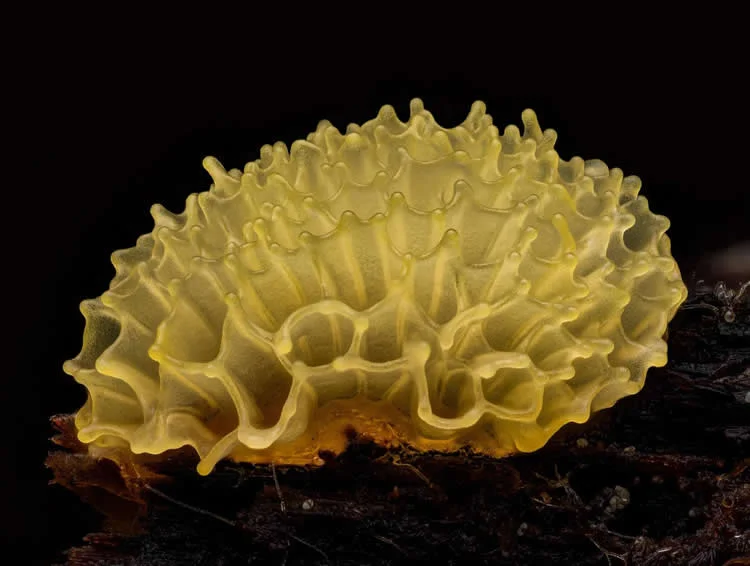
© Michael DeLola
#10. Very Effective Umbrella by Michael DeLola
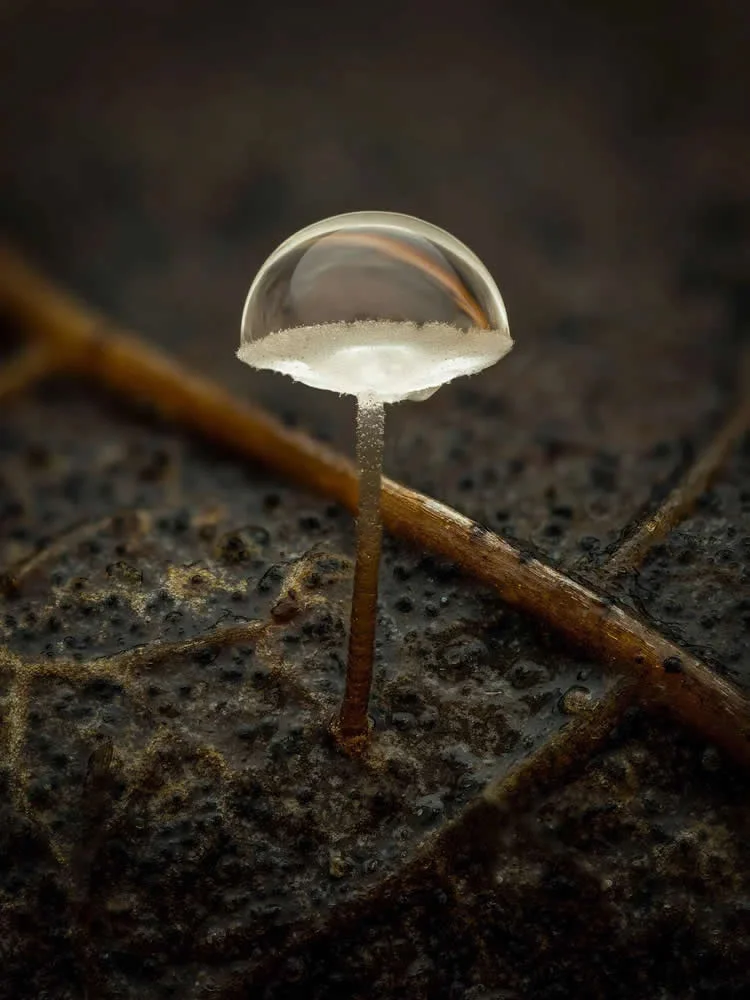
© Michael DeLola
#11. All Alone by Albert Dros
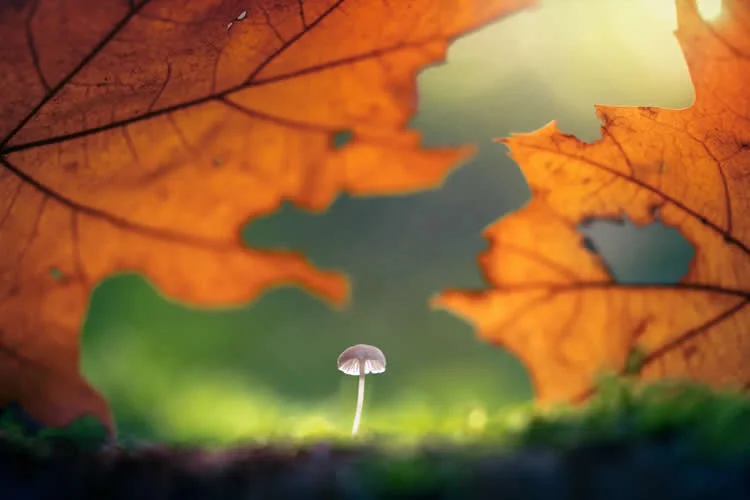
© Albert Dros
#12. Porcelain Dance by Albert Dros
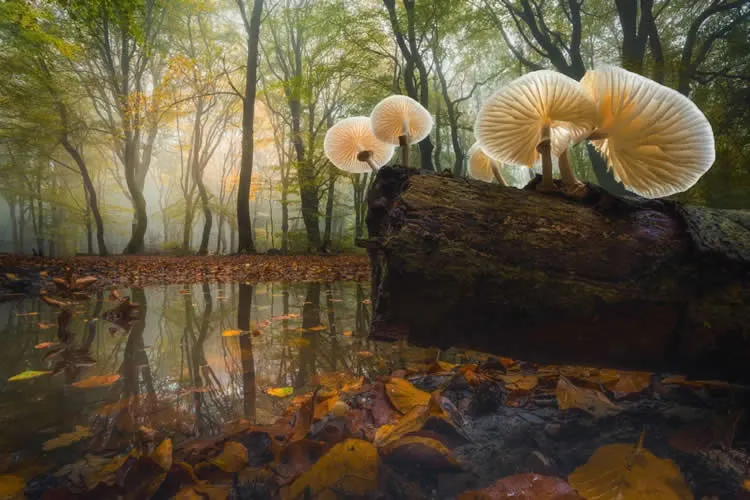
© Albert Dros
#13. Transparencies by José Luis Gigirey
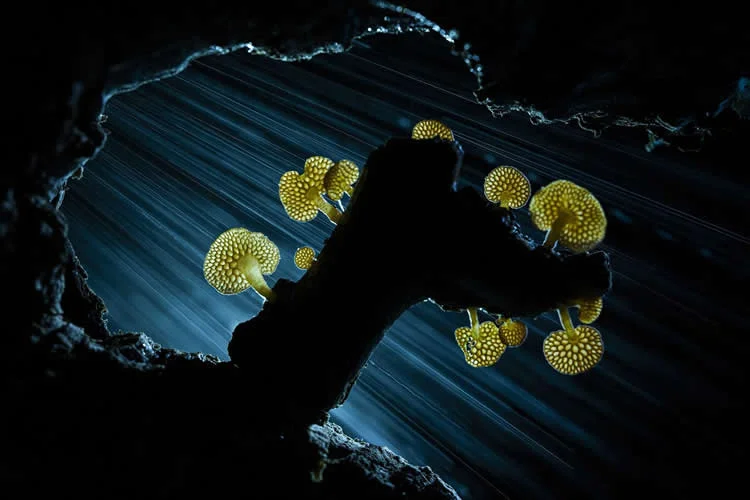
© José Luis Gigirey
#14. Io e Te by Manuela Gortan
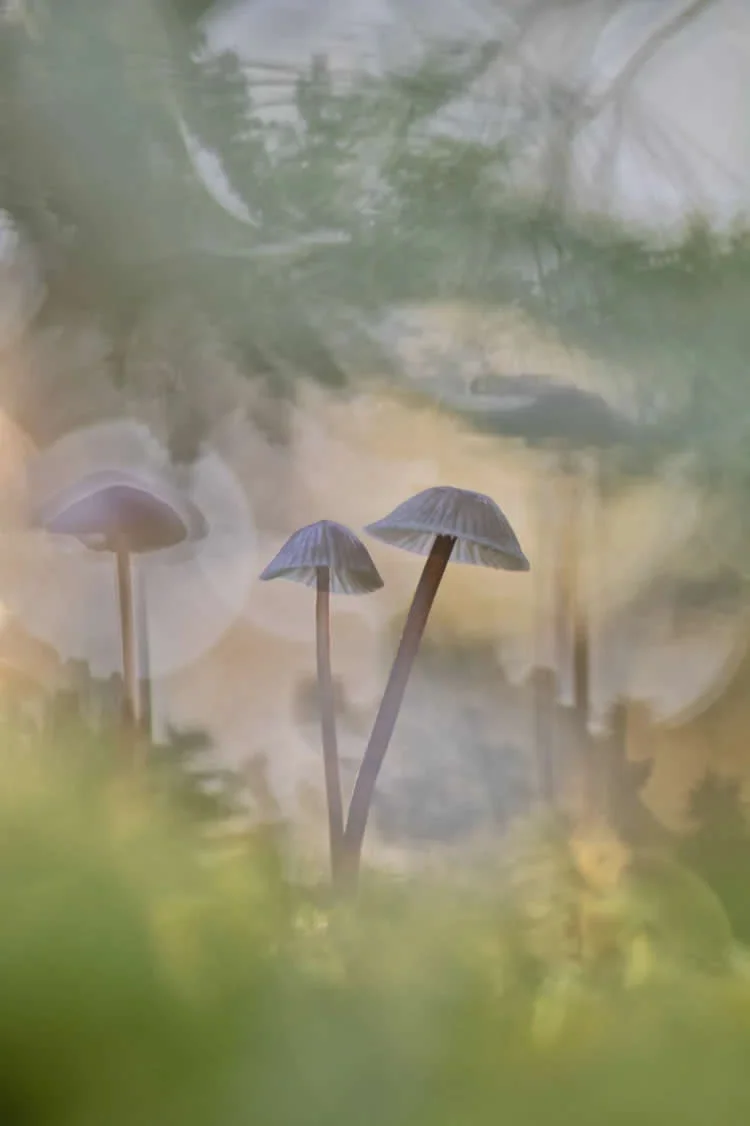
© Manuela Gortan
#15. Infected by Jacek Hensoldt
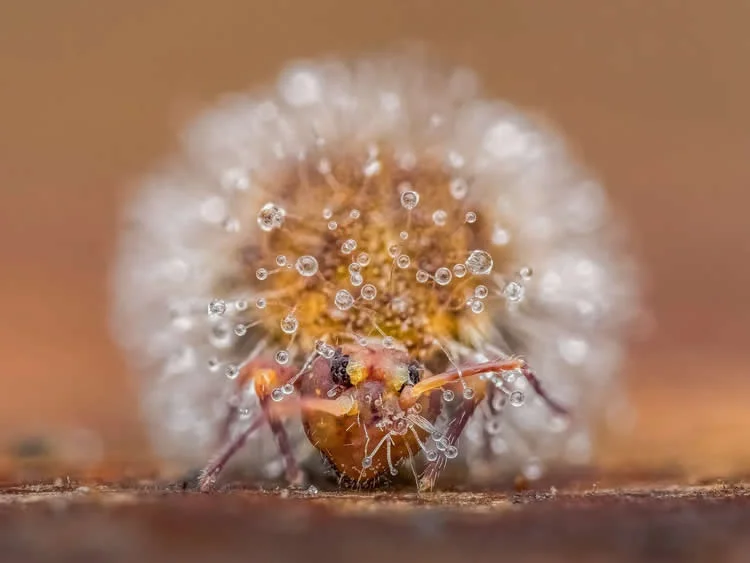
© Jacek Hensoldt
#16. Sunrise and Gums by Joy Kachina
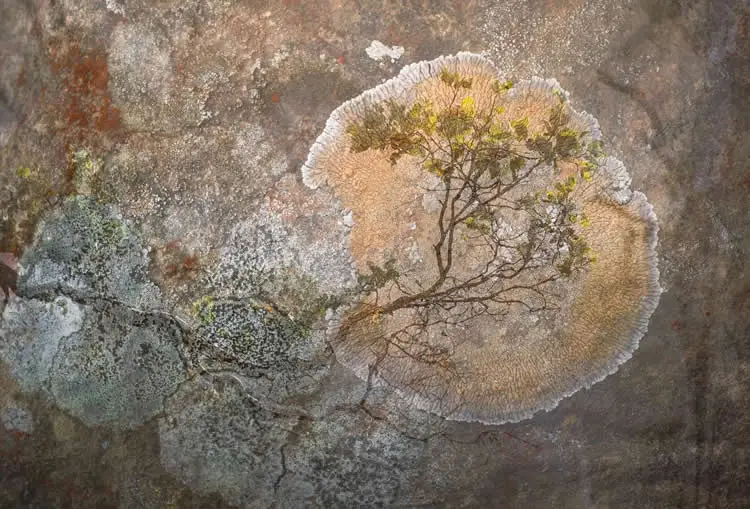
© Joy Kachina
Use Creative Composition to Highlight Details
Strong composition can turn a tiny subject into a striking photograph. Experiment with different angles, framing, and backgrounds to highlight the unusual shapes and structures of fungi and slime moulds.
- Low angles: Shoot at ground level to create a more engaging perspective.
- Clean backgrounds: Use shallow depth of field to separate the subject from distractions.
- Fine details: Focus on patterns, textures, and delicate structures.
#17. Night Lamp by Przemek Kryściak
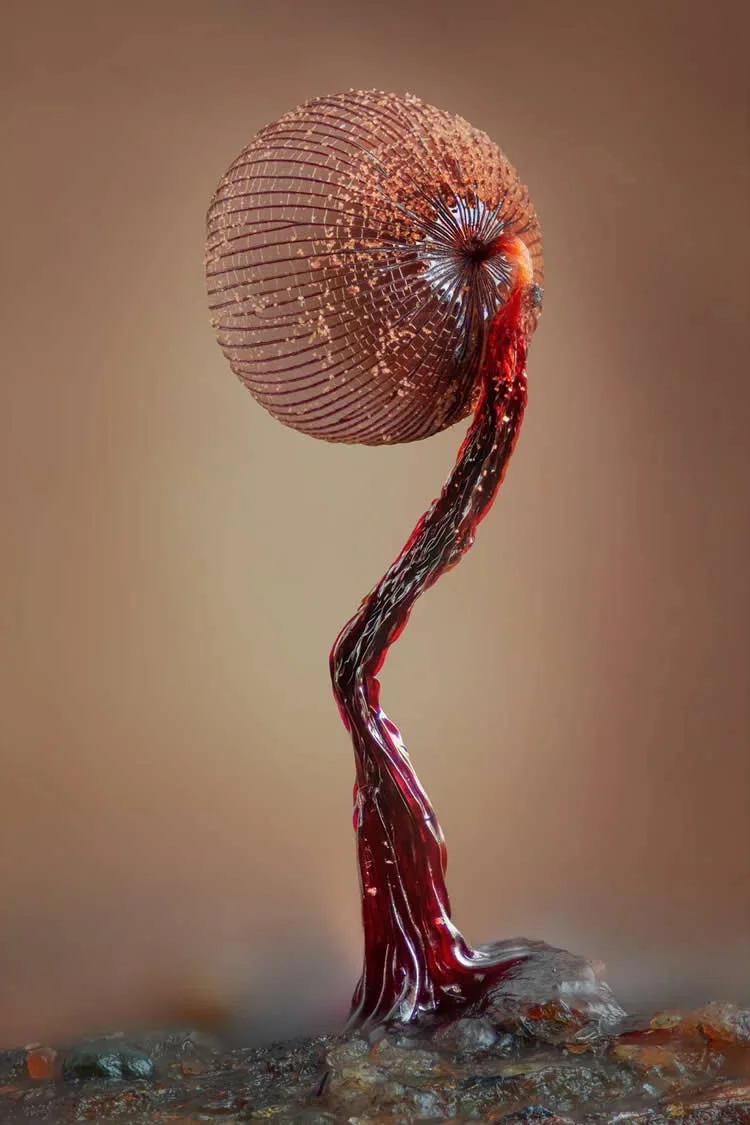
© Przemek Kryściak
#18. Chosen One by Andrey Kuznetsov
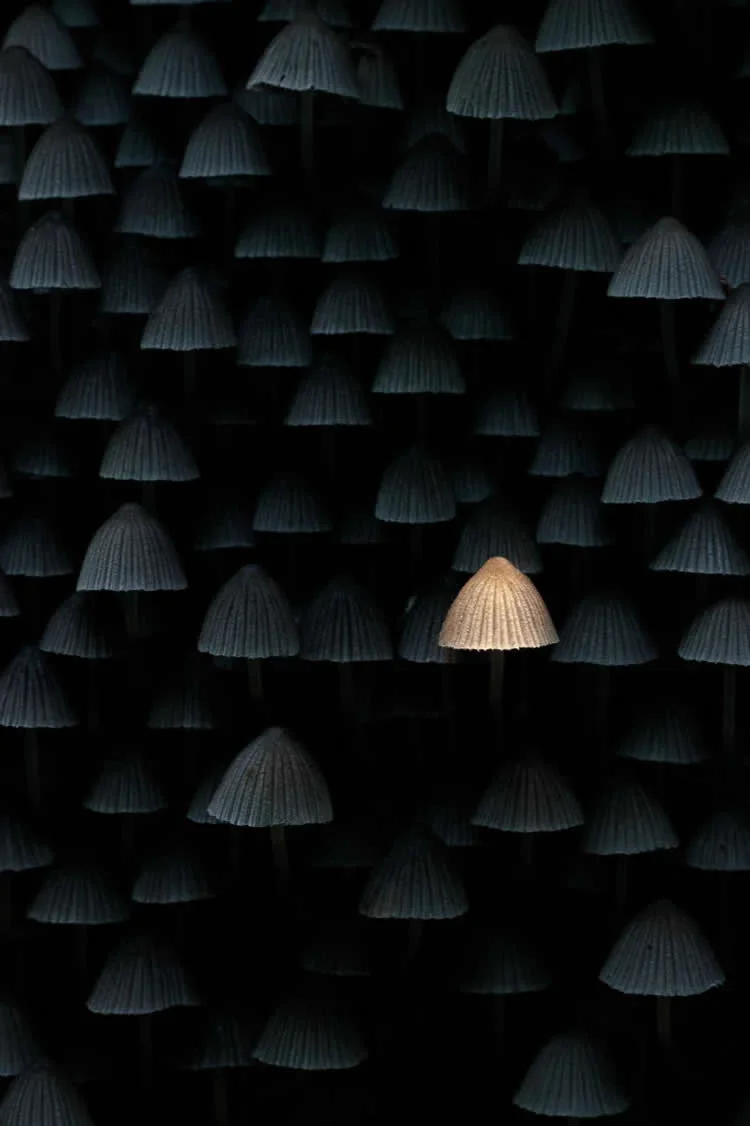
© Andrey Kuznetsov
#19. Eeh… What’s Up Doc by Przemek Kryściak
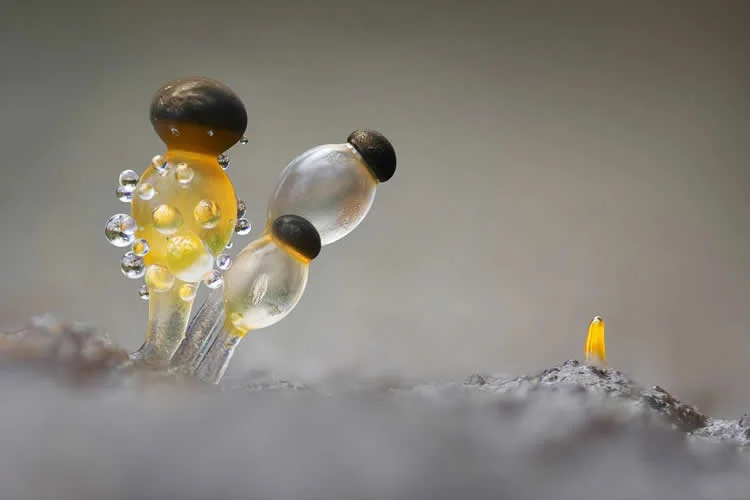
© Przemek Kryściak
#20. Didymium Spores by Julien Labelle
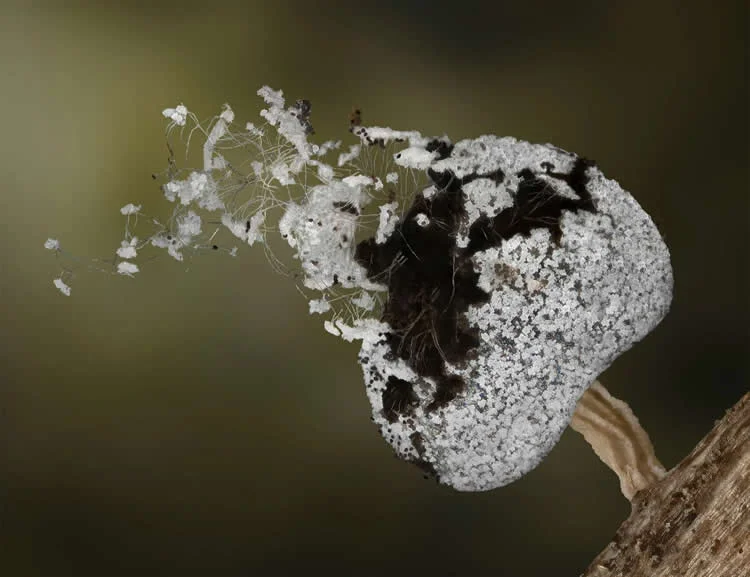
© Julien Labelle
#21. Swaying on the Waves by Arto Leppänen
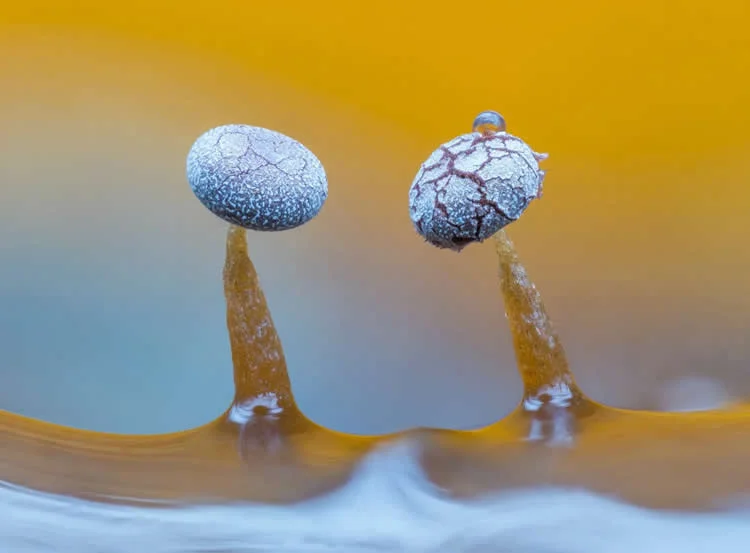
© Arto Leppänen
#22. Snowy Disco Balancing Act by Jeremy Lintott
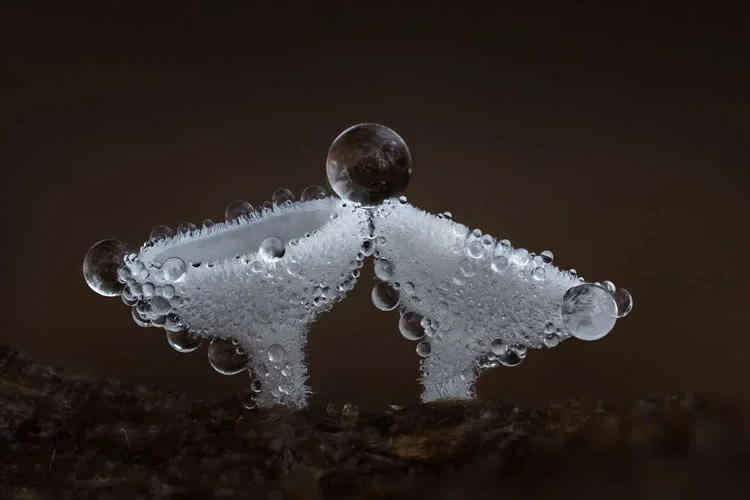
© Jeremy Lintott
#23. Dewy Physarum album by David Myles
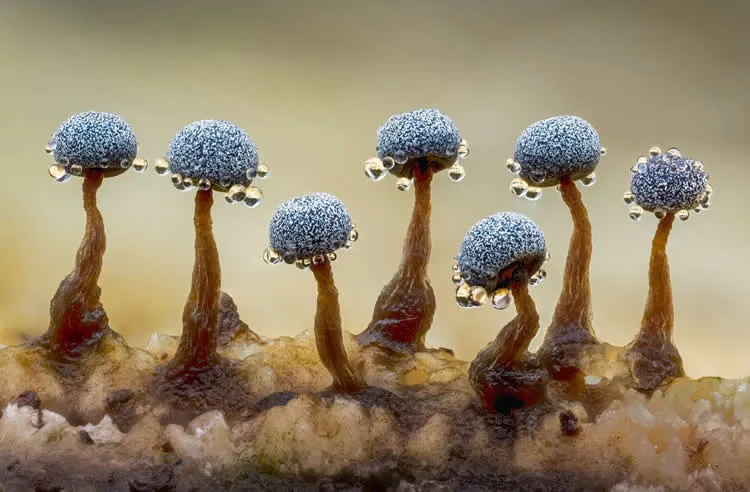
© David Myles
#24. Wrinkled Peaches by Andrew Neal
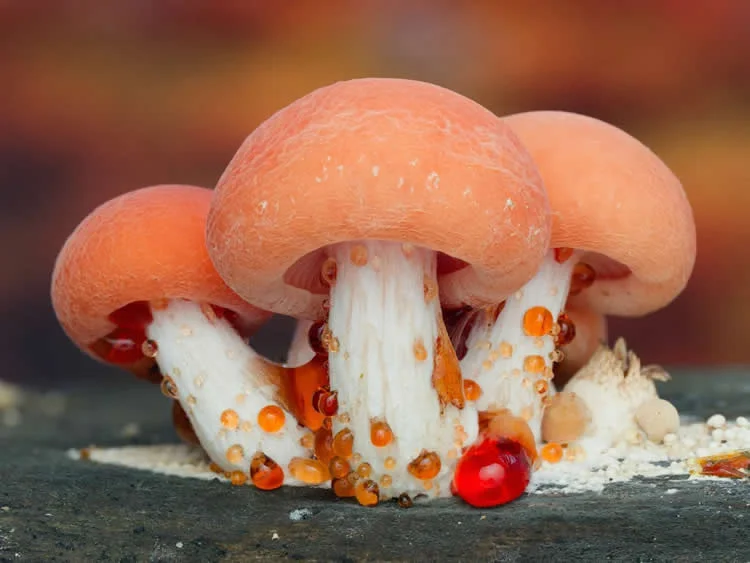
© Andrew Neal
Find the Best Locations and Be Patient
Fungi and slime moulds often grow in damp, shaded environments. Forest floors, fallen branches, moss-covered logs, and decaying leaves are excellent places to explore. Take your time, observe carefully, and revisit promising locations after rainfall.
- Woodlands: Search around moss, fallen trees, and decaying wood.
- After rain: Look for fresh growth and moisture-covered details.
- Patience: Move slowly and inspect small areas before changing locations.
#25. Amethyst Deceivers by Tony North
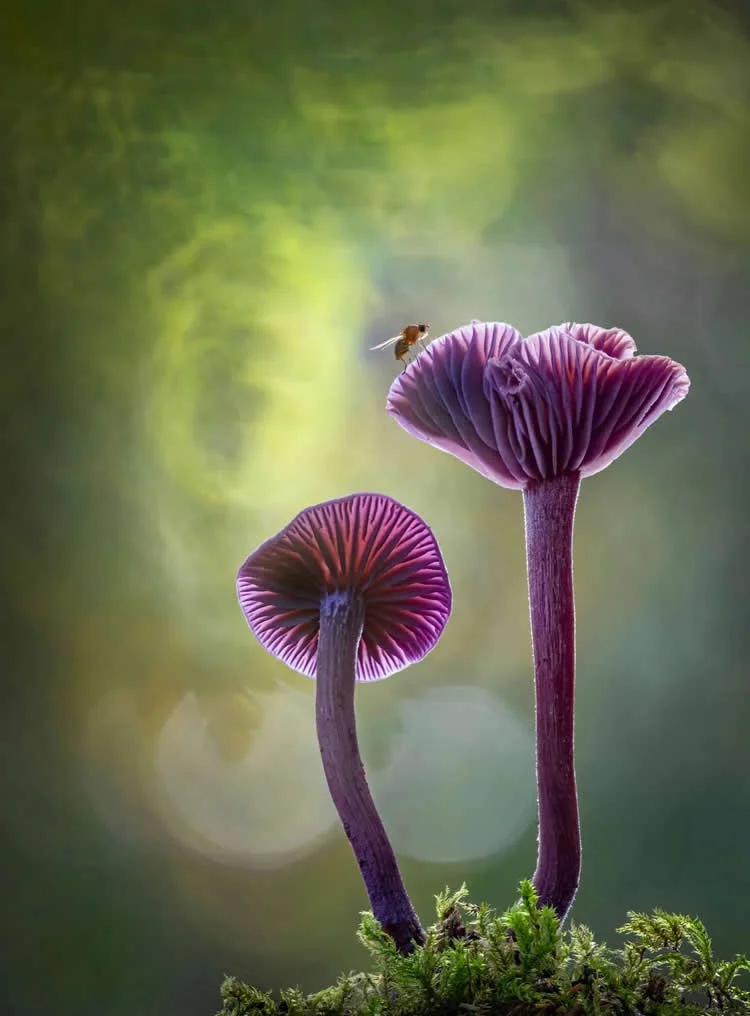
© Tony North
#26. Porcelain Fungus by Tomasz Niedźwiedź
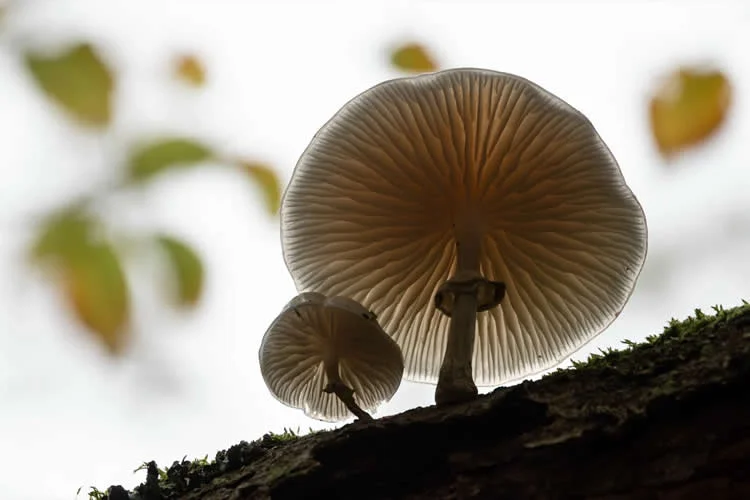
© Tomasz Niedźwiedź
#27. Holly Parachutes by Tony North
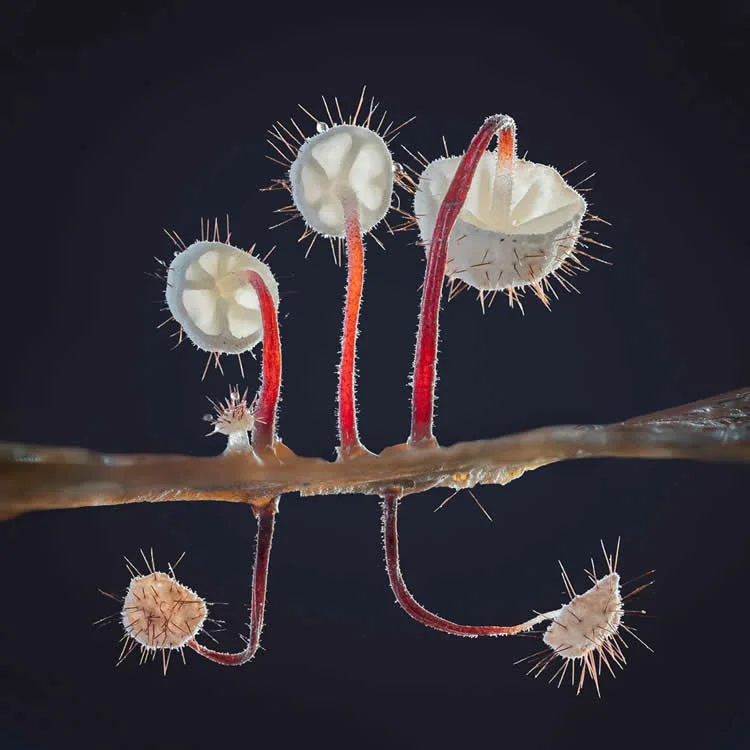
© Tony North
#28. Splitgill by Lukas Pariza
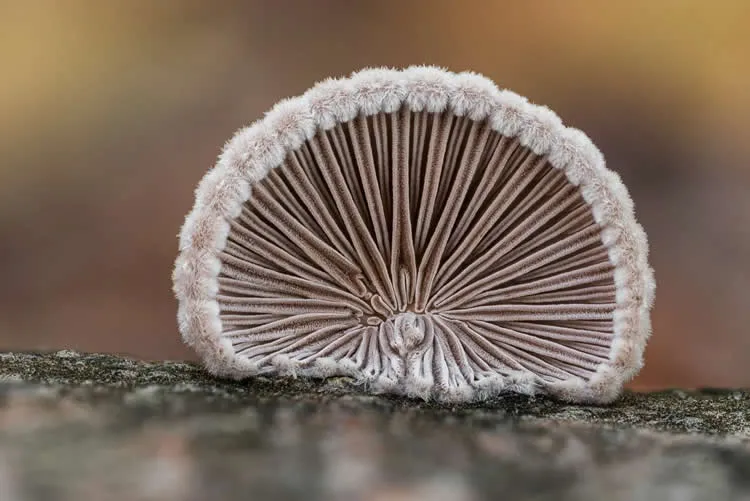
© Lukas Pariza
#29. Where Light Is Born by Cedric Rousseau
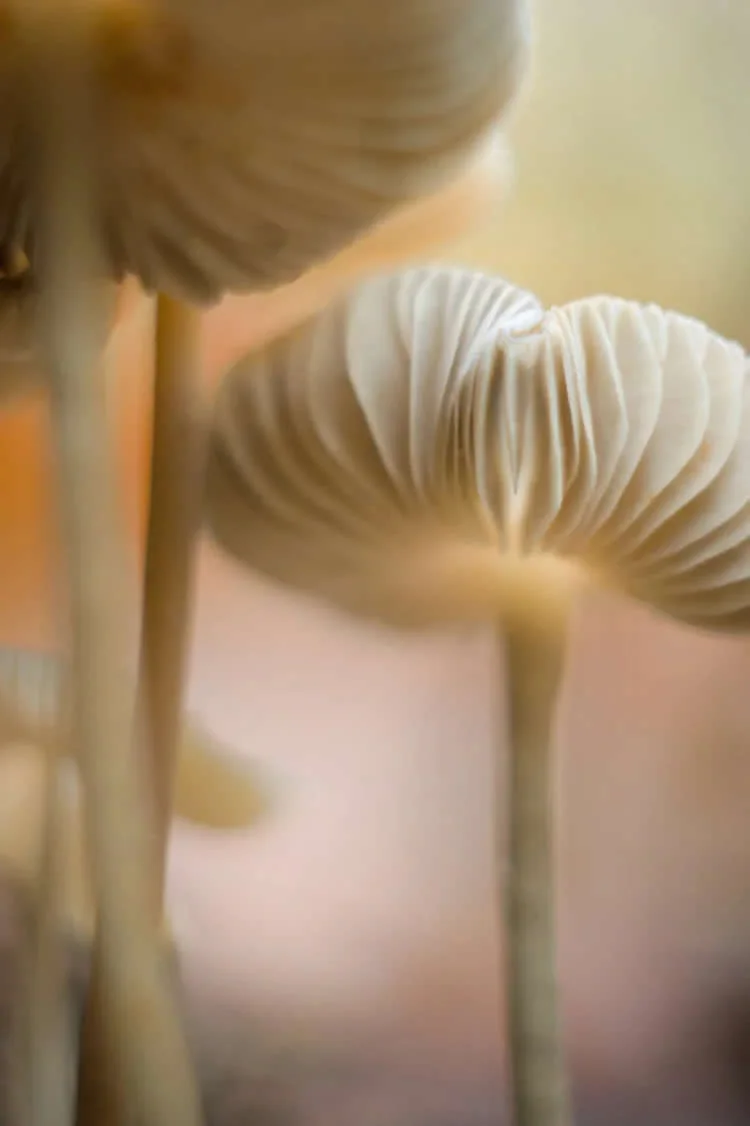
© Cedric Rousseau
#30. Slime Mould Physarum album by Andy Sands
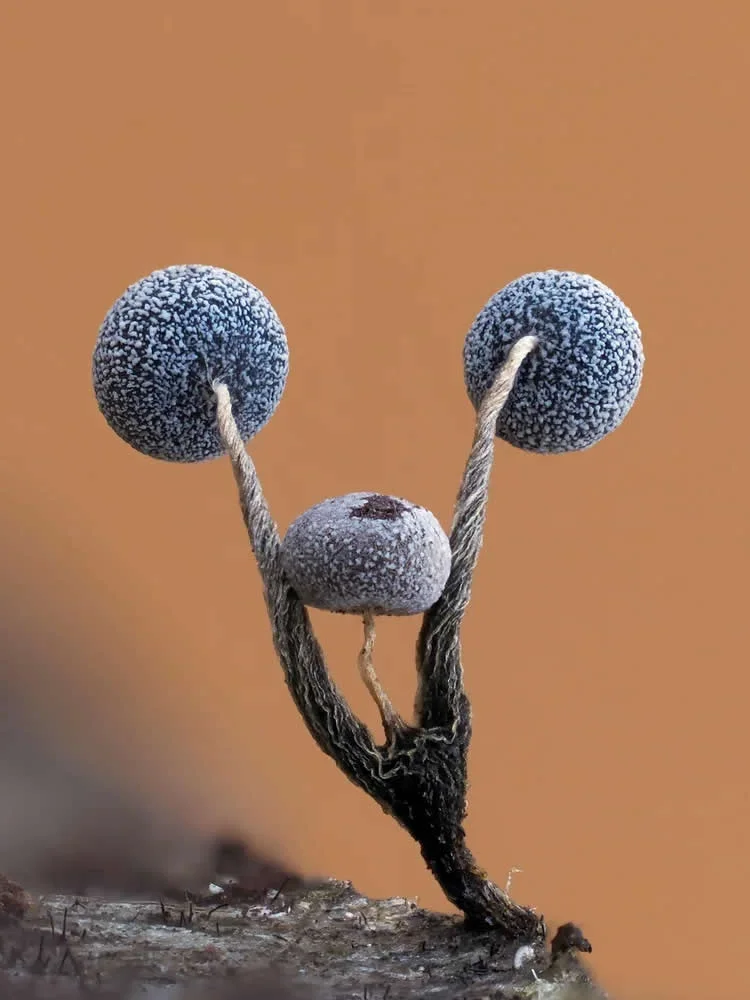
© Andy Sands
#31. Aufwind by Martin Siering
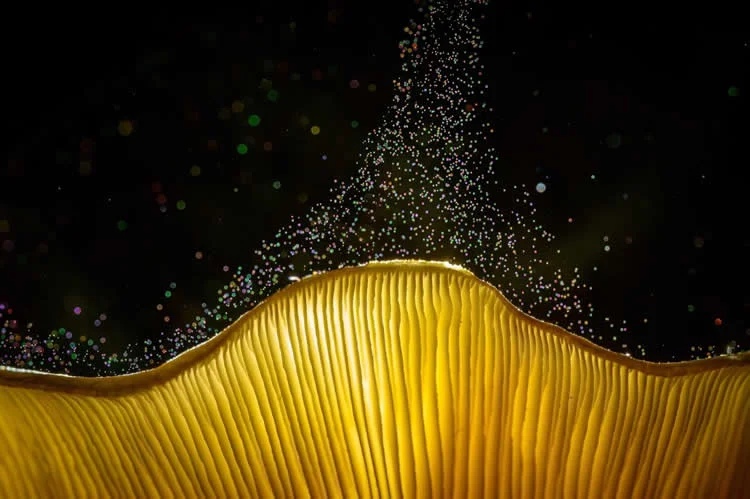
© Martin Siering
#32. Cluster of Comatricha nigra by Kutub Uddin
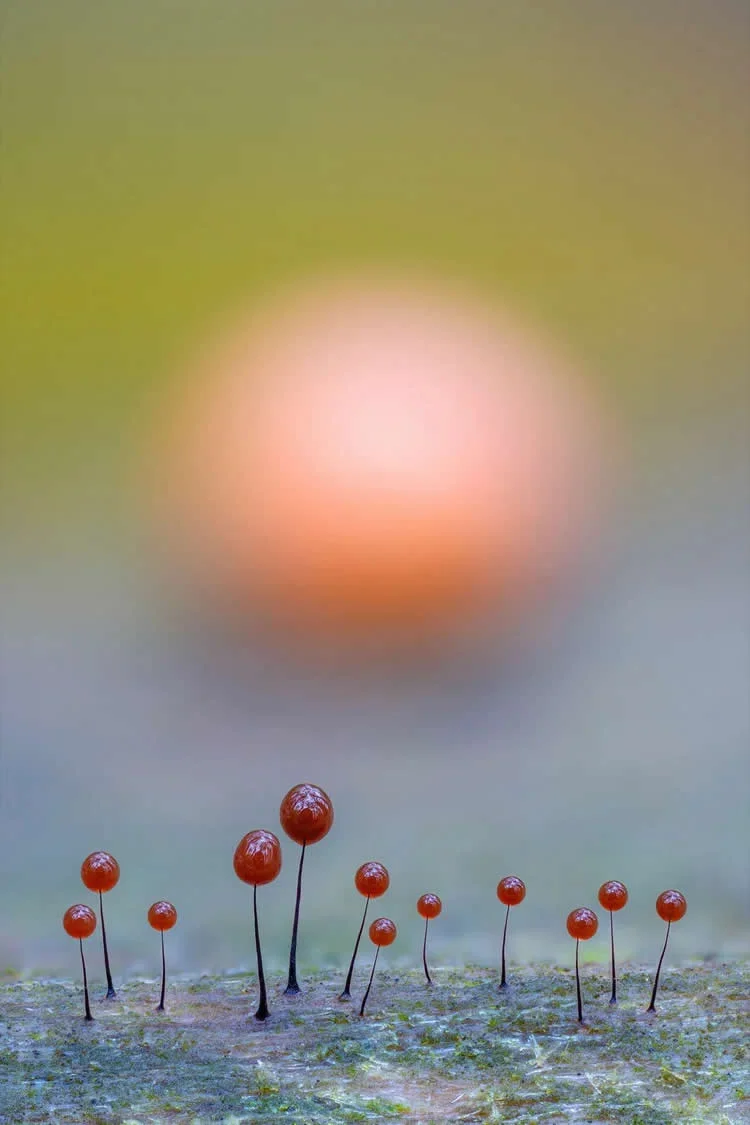
© Kutub Uddin
Experiment With Natural Colors and Light
Fungi and slime moulds display fascinating colors, from bright orange and yellow to delicate white and earthy brown. Good lighting helps bring out these natural details while preserving the textures and subtle tones that make each subject unique.
- Color contrast: Look for interesting combinations between fungi and their surroundings.
- Soft light: Photograph during overcast conditions to avoid harsh shadows.
- Focus stacking: Combine multiple focus points to capture greater detail throughout the subject.
#33. Dusk by Guntis Zebergs
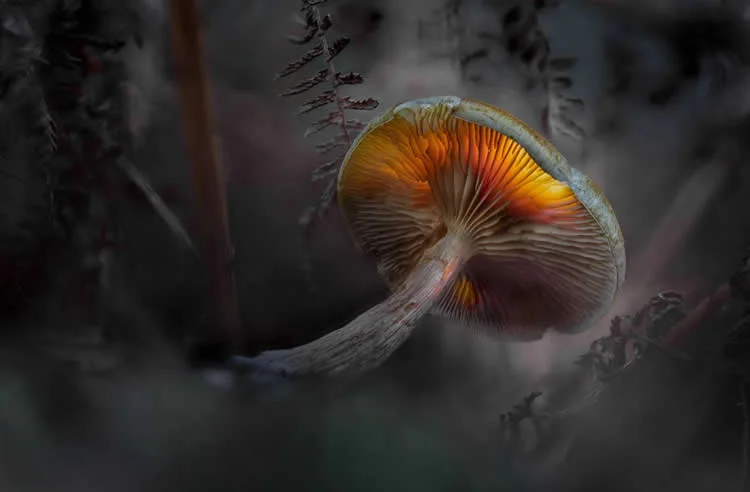
© Guntis Zebergs
#34. Autumn by Felix Wesch
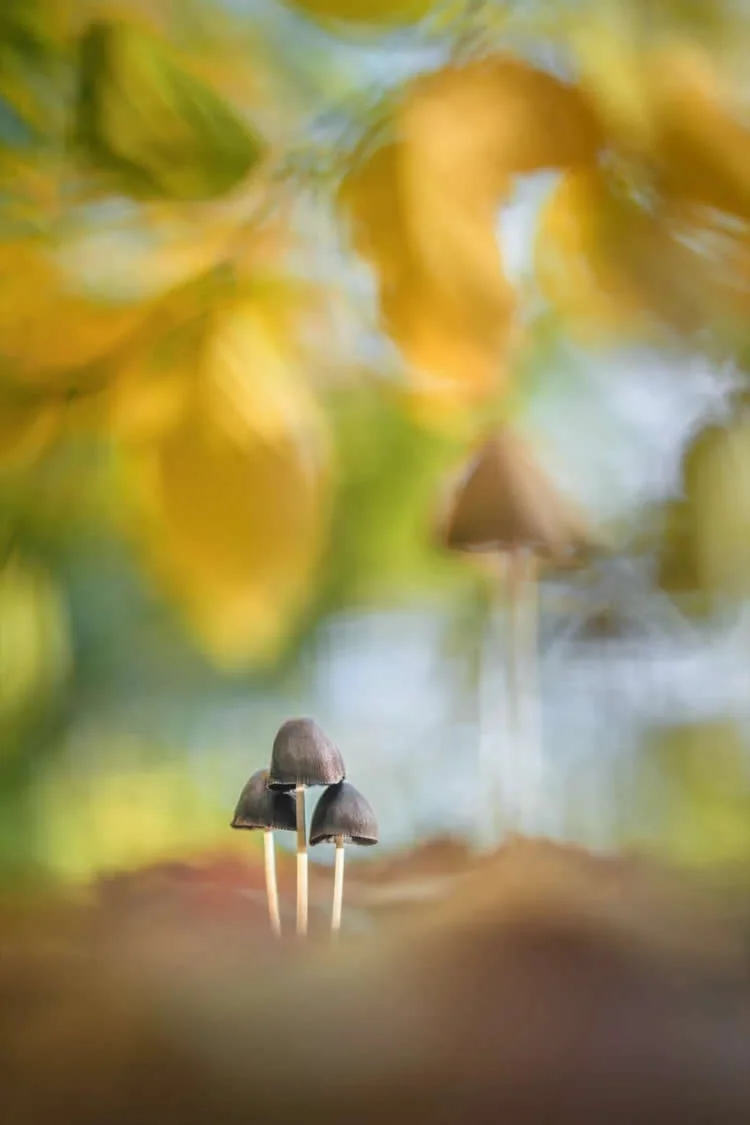
© Felix Wesch
#35. Fungus Meets Slime Moulds by Barry Webb
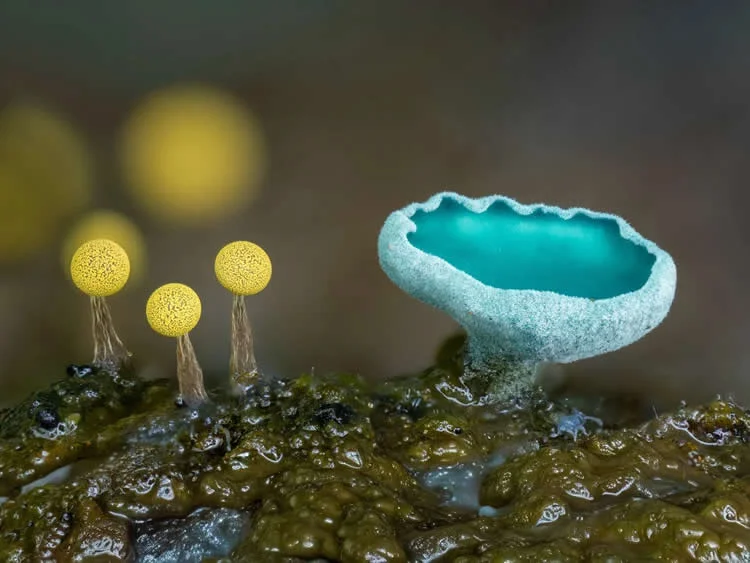
© Barry Webb
#36. Frosted Lamproderma by Barry Webb
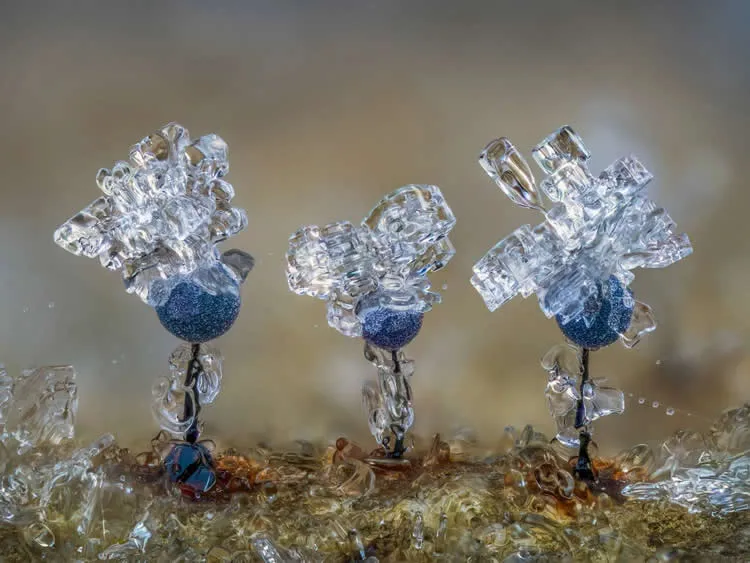
© Barry Webb
#37. Cribraria aurantiaca Huddle by Barry Webb
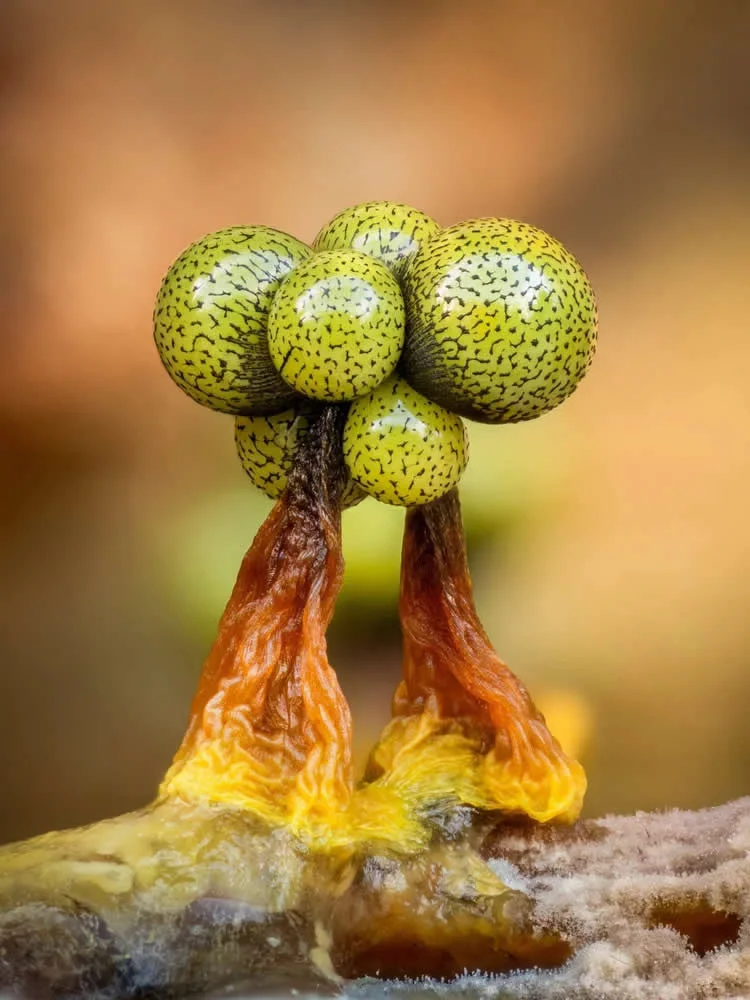
© Barry Webb
#38. Cribraria argillacea Growing Alongside Wolf’s Milk Slime Molds by Kutub Uddin
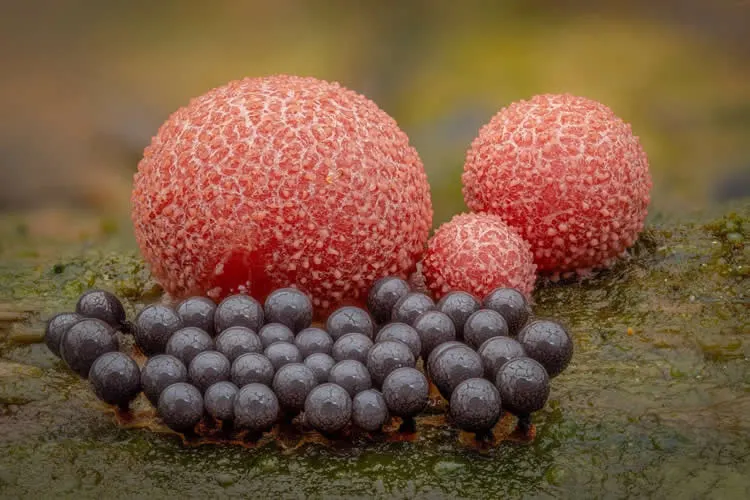
© Kutub Uddin
#39. Guano Blooming by Imre Potyo
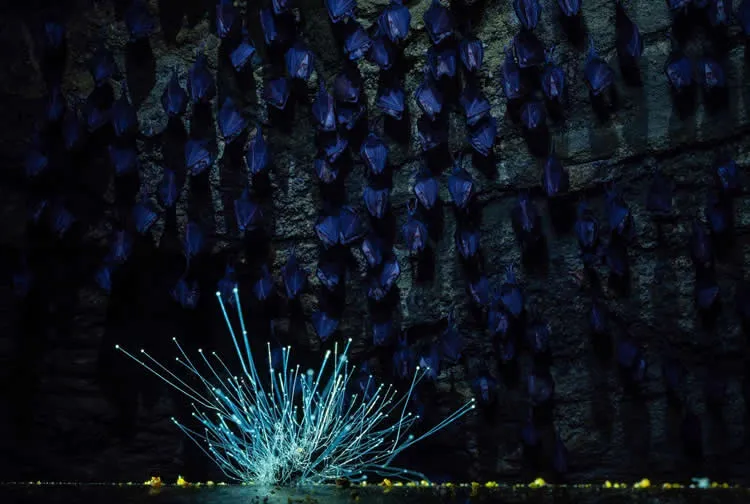
© Imre Potyo
#40. Dance by Przemek Kryściak
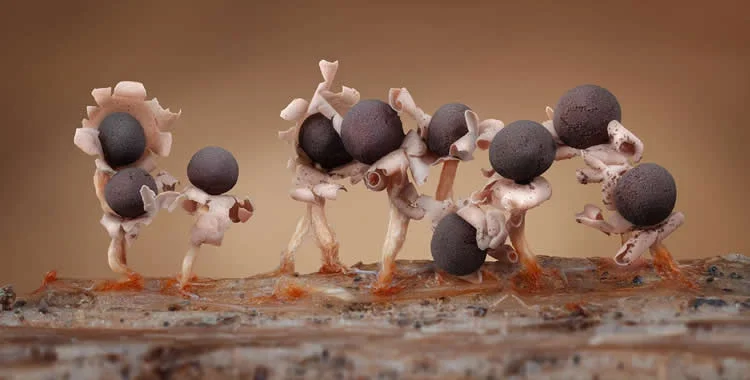
© Przemek Kryściak
Frequently Asked Questions (FAQ):
Fungi and slime moulds are fascinating macro photography subjects, but capturing them takes observation, patience, and a little technical know-how. Here are five useful questions for photographers interested in exploring this tiny world.
What is CUPOTY?
Close-up Photographer of the Year is an international photography competition celebrating close-up, macro, and micro photography.
When was CUPOTY founded?
Tracy and Daniel Calder founded the competition in 2018 in Winchester, UK.
What is macro photography?
It is a photography technique used to capture small subjects with magnified detail, revealing textures and structures often missed by the naked eye.
What equipment is best for fungi photography?
A macro lens, tripod, diffuser, and external flash can help produce detailed images.
Where can photographers find fungi and slime moulds?
Woodland floors, damp forests, mossy logs, fallen branches, and decaying leaves are excellent places to start looking.