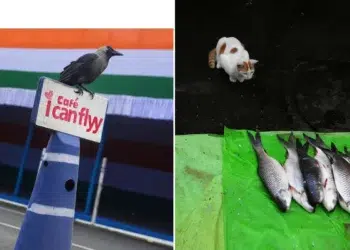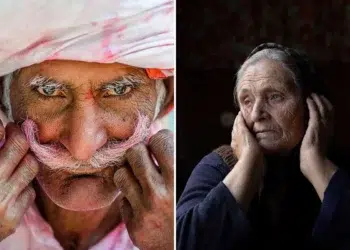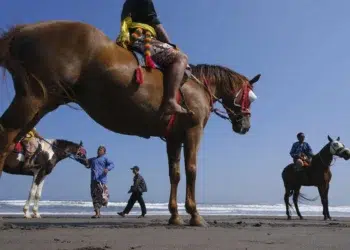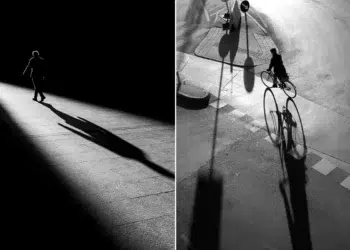

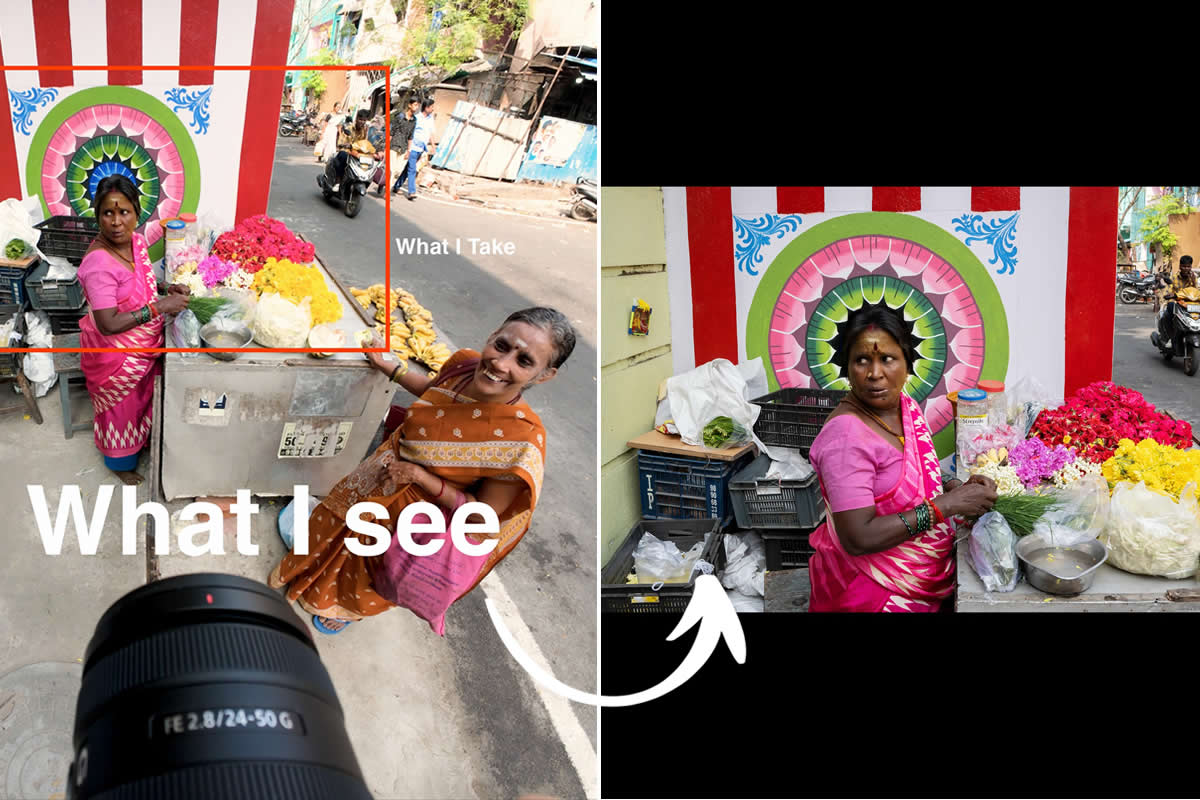
Scroll through Tavepong Pratoomwong’s work, and you instantly get it: this isn’t just street photography, it’s straight-up visual storytelling with a twist. His now-iconic “What I See vs What I Take” series, widely shared under the hashtag, breaks down the magic: chaos in, clarity out.
Born in 1981 in Chanthaburi, Thailand, Tavepong turned to photography as his personal escape and eventually found it to be his signature voice. For him, shooting the streets is like meditation. He slows down, watches everything, and waits for that one perfect moment when reality lines up just right. And boom, that’s the shot.
What makes his work hit different is how he sees. While most people notice random scenes, Tavepong spots hidden alignments, unexpected humor, and poetic coincidences. A dog becomes part of a human silhouette. A mural merges with real life. A simple gesture transforms into a layered story. His framing is tight, his compositions are clean, and his timing? On point.
He’s not just taking photos—he’s editing reality in real time. Through color, geometry, and emotion, he turns everyday life into something unforgettable. It’s proof that great photography isn’t about finding extraordinary places; it’s about seeing ordinary ones differently.
You can find more info about Tavepong Pratoomwong:
#1. What I See vs What I Take: Finding Humor in the Ordinary
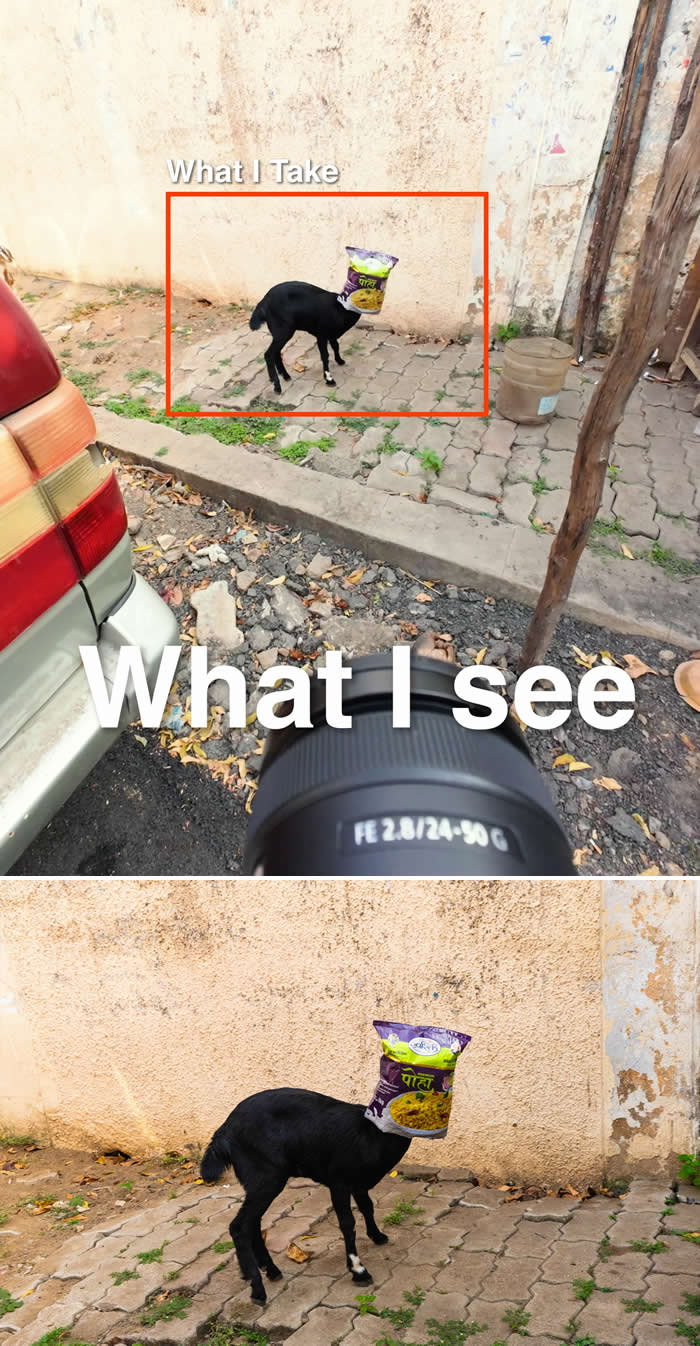
"In a cluttered street scene, Tavepong notices a fleeting, quirky moment—a goat with its head inside a snack bag. By isolating the subject and removing distractions, he transforms chaos into a clean, humorous frame that reveals the magic of truly seeing."
#2. What I See vs What I Take: Framing Chaos into Color and Story
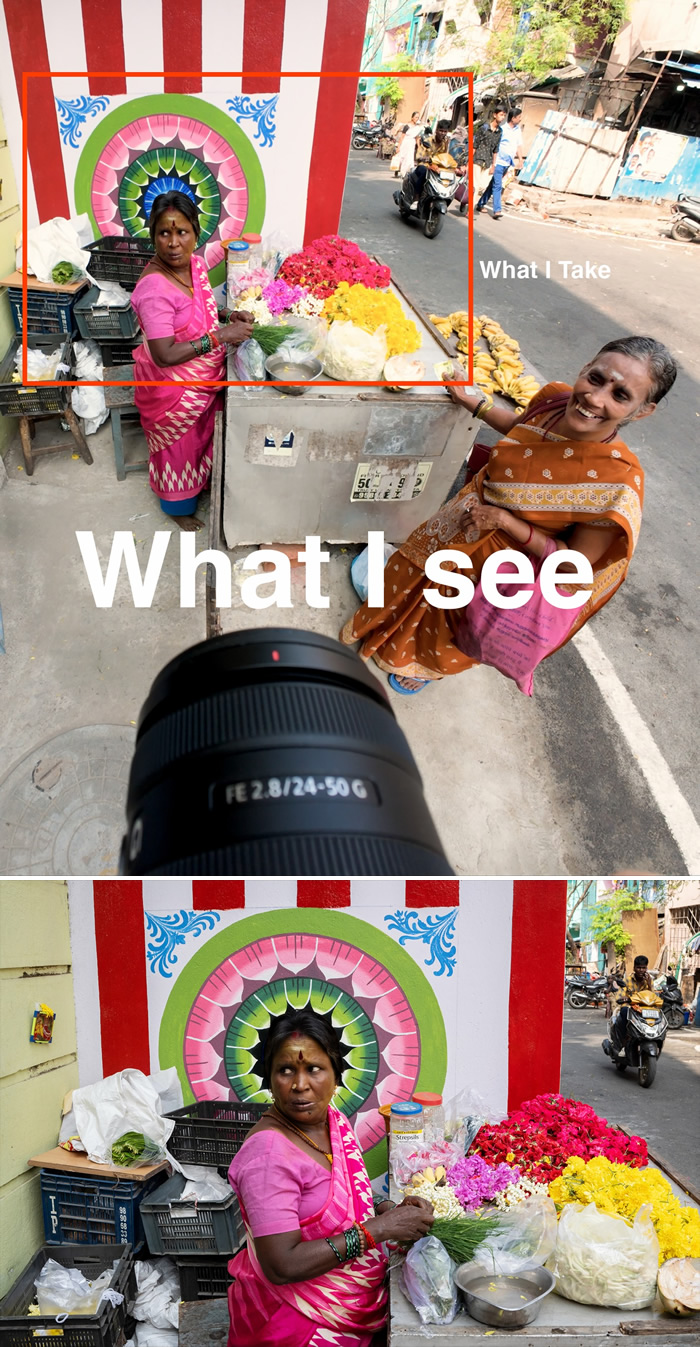
"Amid a busy street in Chennai, Tavepong notices alignment—a flower vendor perfectly framed by a vibrant mural. By stepping closer and excluding distractions, he transforms a chaotic scene into a striking composition where color, expression, and geometry quietly come together."
#3. What I See vs What I Take: Timing Stillness and Motion on the Shore
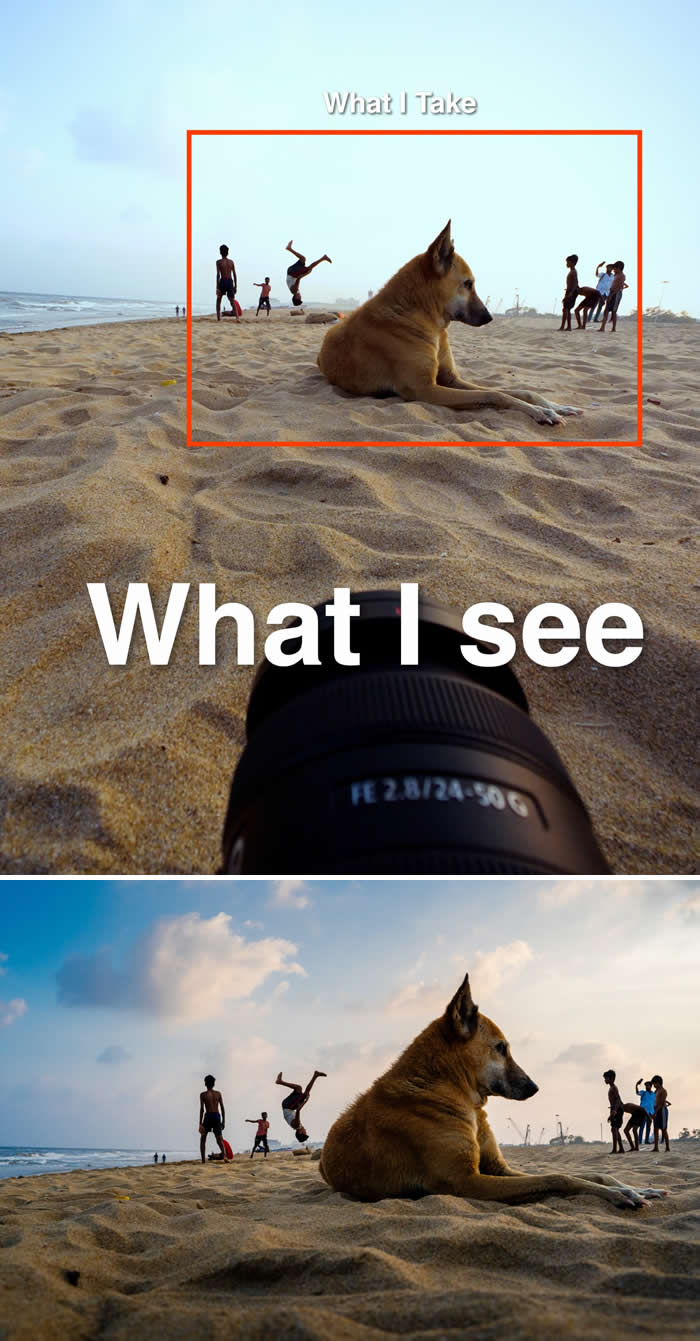
"On a lively beach, Tavepong spots contrast—a calm dog against playful motion. By lowering his angle and timing the leap mid-air, he frames stillness and action together, turning an ordinary scene into a balanced composition filled with rhythm and story."
#4. What I See vs What I Take: Turning a Street Crossing into a Visual Line
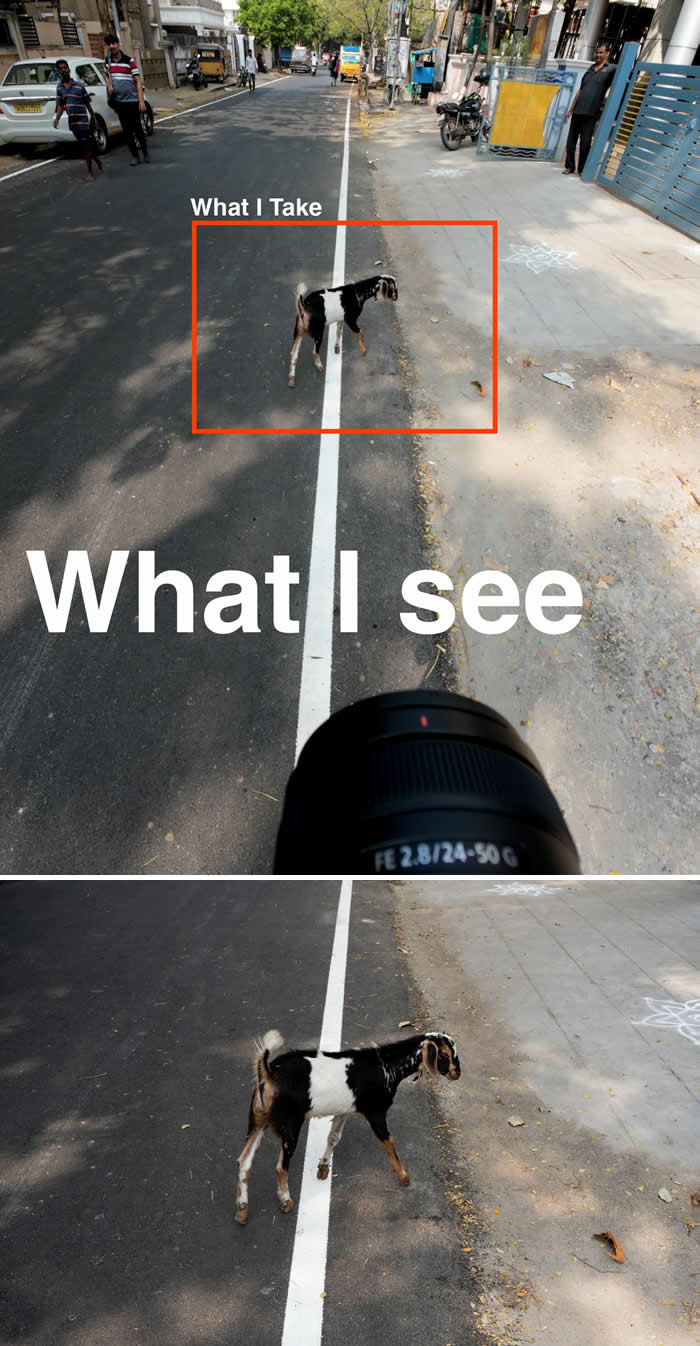
"In a busy street, Tavepong notices a goat perfectly aligned with a road divider. By stepping in and simplifying the frame, he uses the leading line to guide attention, transforming a casual crossing into a clean, graphic composition"
#5. What I See vs What I Take: Aligning the Ordinary into Visual Poetry
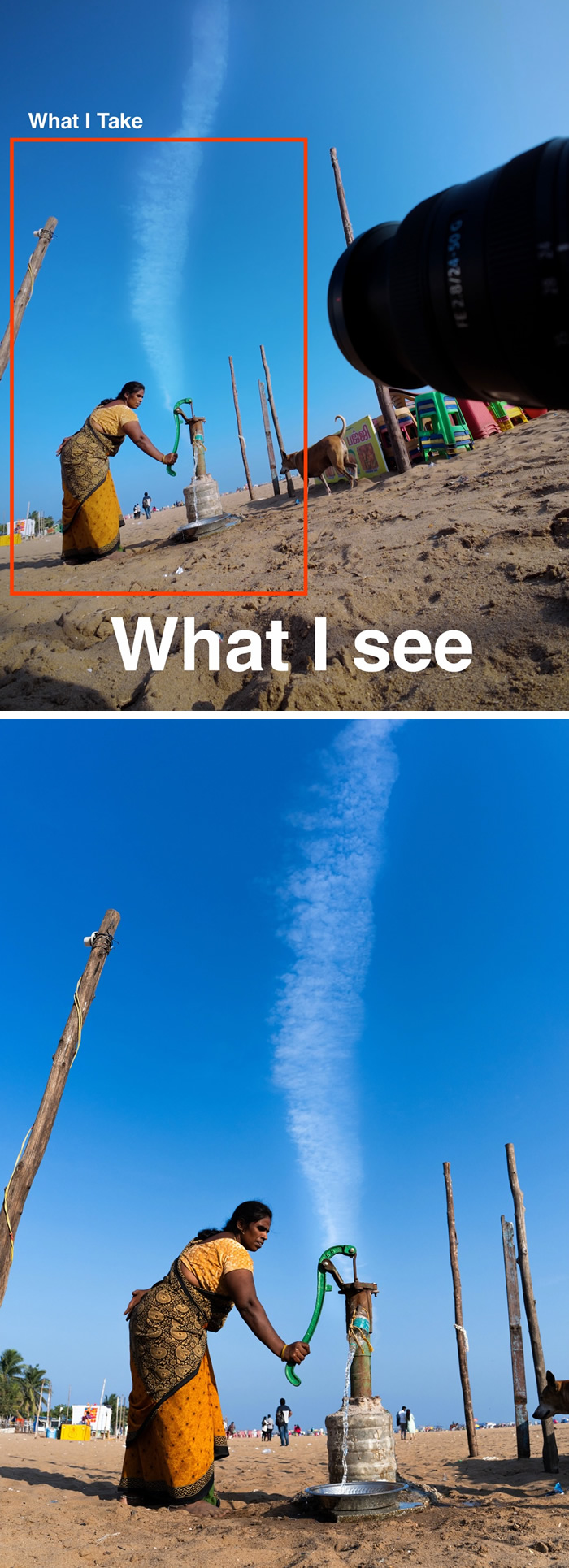
"In one scene, Tavepong notices a perfect alignment—a water pump that appears to connect seamlessly with an airplane’s contrail in the sky. By adjusting his angle and removing distractions, he transforms an ordinary moment into a simple yet powerful composition, as if the two elements were intentionally designed to connect."
#6. What I See vs What I Take: Finding Harmony in Urban Chaos
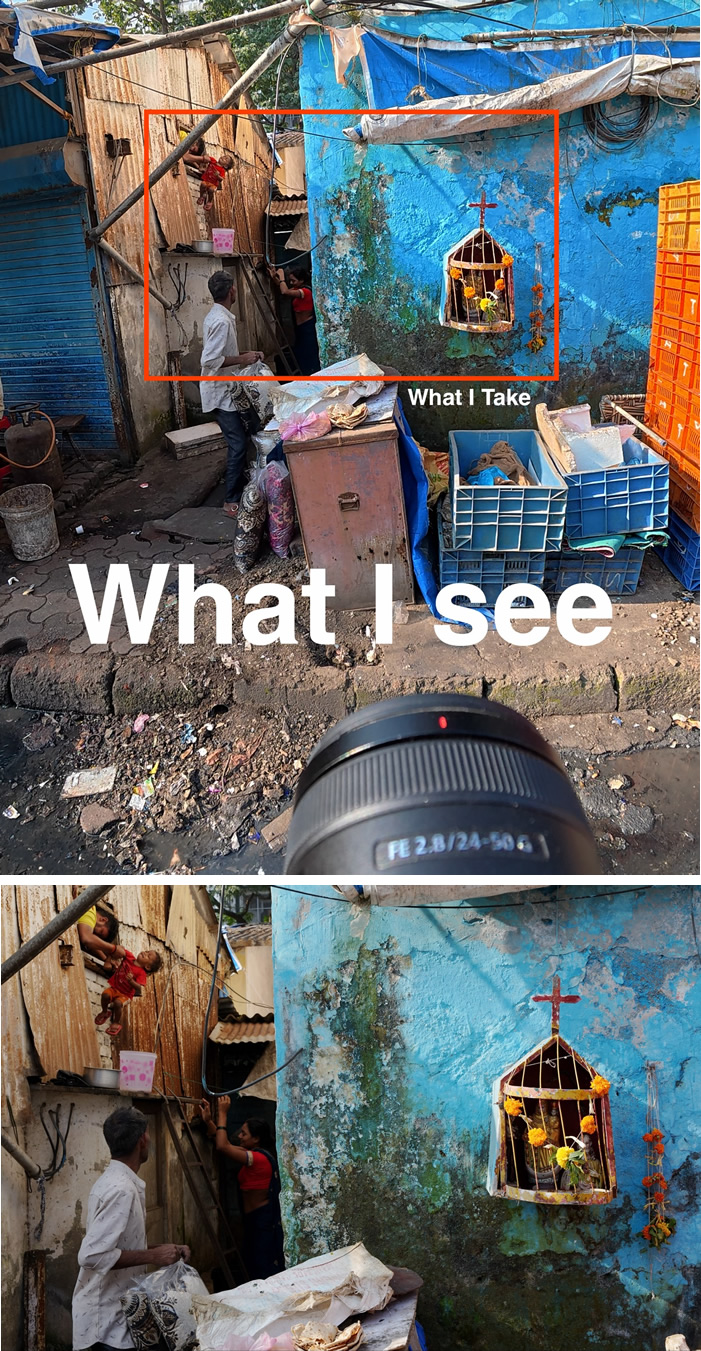
"In a narrow, cluttered alley, Tavepong notices a layered story—people, textures, and a vivid blue wall with a shrine-like window. Inside sits a statue of the Virgin Mary holding Jesus, which playfully echoes a father pulling his child’s arm mid-air in the foreground. By tightening the frame and balancing the elements, he transforms disorder into a structured composition rich with culture and narrative."
#7. What I See vs What I Take: When Shapes and Lives Quietly Align
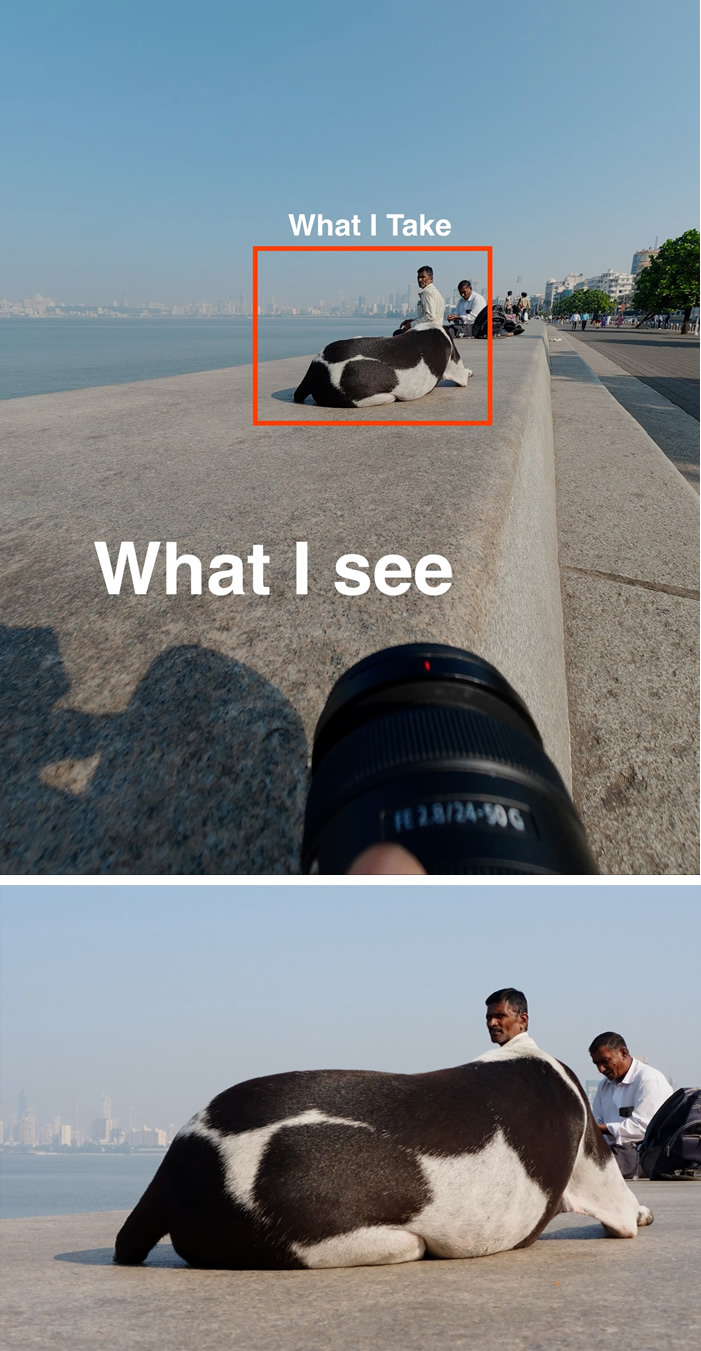
"On a calm waterfront, Tavepong notices a visual illusion—a resting dog’s head perfectly aligning with a man behind it. By shifting position and tightening the frame, he captures a seamless blend of forms, turning coincidence into a clever, minimal composition."
#8. What I See vs What I Take: Turning Motion into a Perfect Illusion
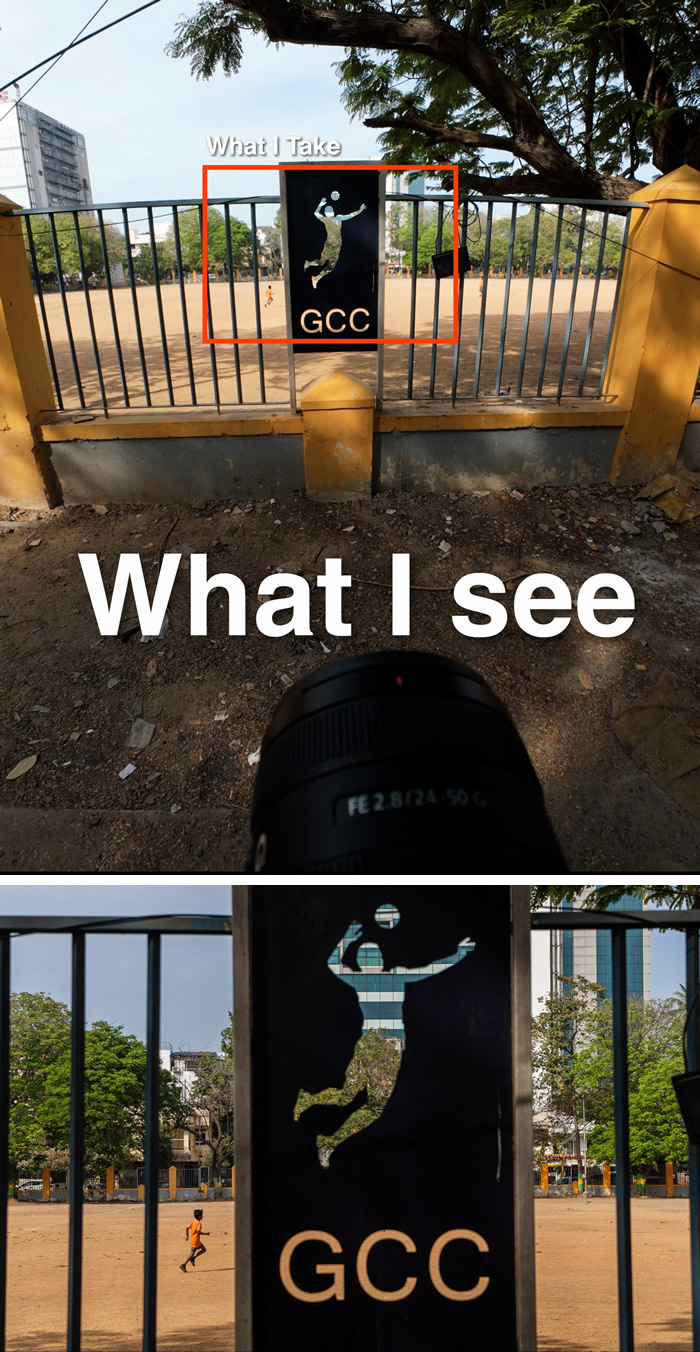
"At a playground fence, Tavepong notices a graphic figure mid-jump. Waiting patiently, he aligns a running child behind it, merging reality with design. By precise timing and framing, he transforms a simple scene into a playful visual illusion."
#9. What I See vs What I Take: Framing the Unexpected Within the Ordinary
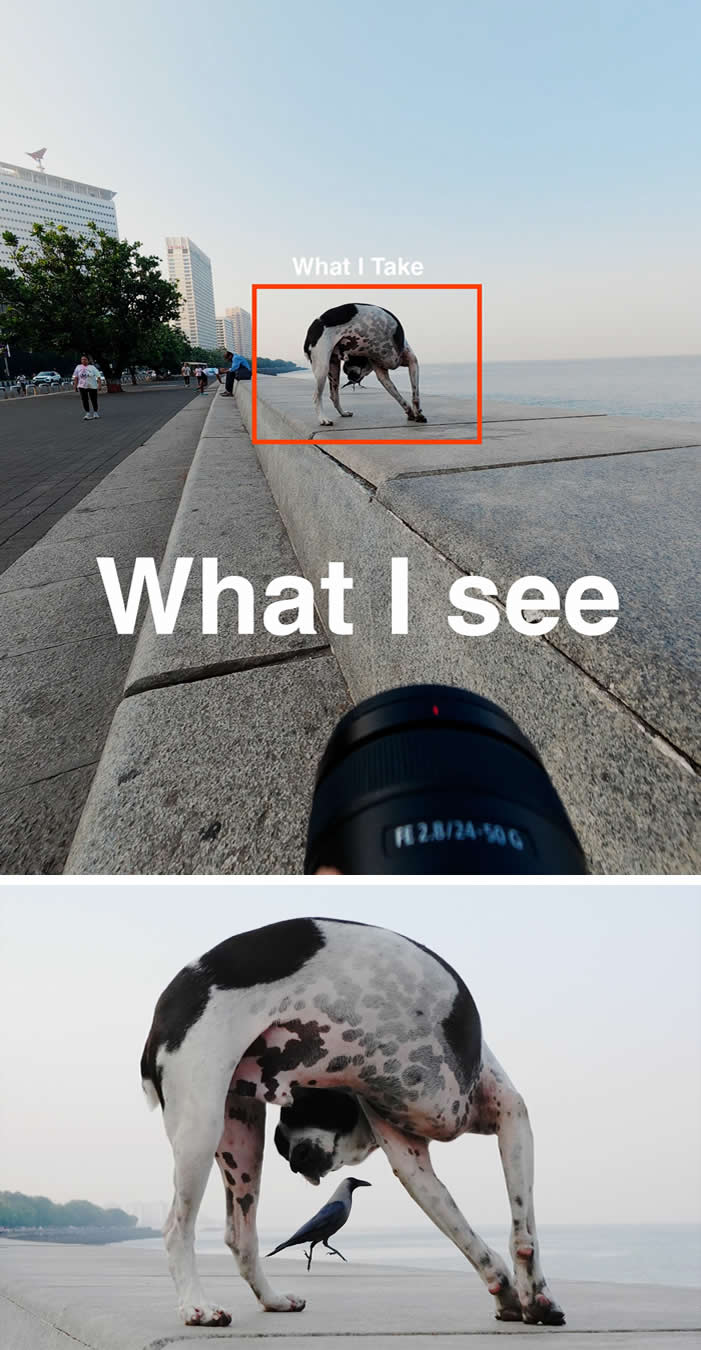
"On a quiet promenade, Tavepong notices a fleeting alignment—a bird perfectly framed beneath a dog. By lowering his angle and waiting for the precise moment, he transforms a casual scene into a witty composition full of surprise."
#10. What I See vs What I Take: Balancing Motion Within the Frame
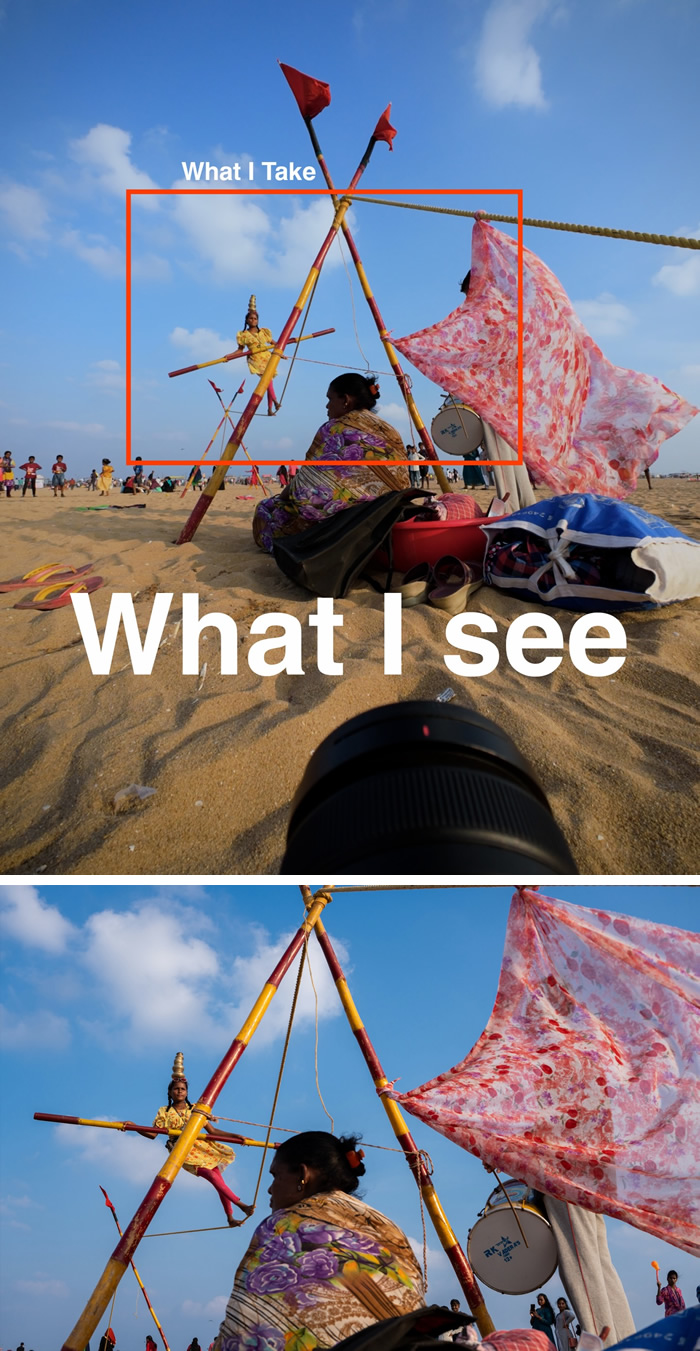
"On a lively beach, Tavepong notices intersecting lines and movement—a performer balanced mid-air within a geometric structure. By adjusting his angle and excluding clutter, he frames action, color, and shape into a dynamic, visually balanced composition."
#11. What I See vs What I Take: Aligning Scale and Story in a Single Frame
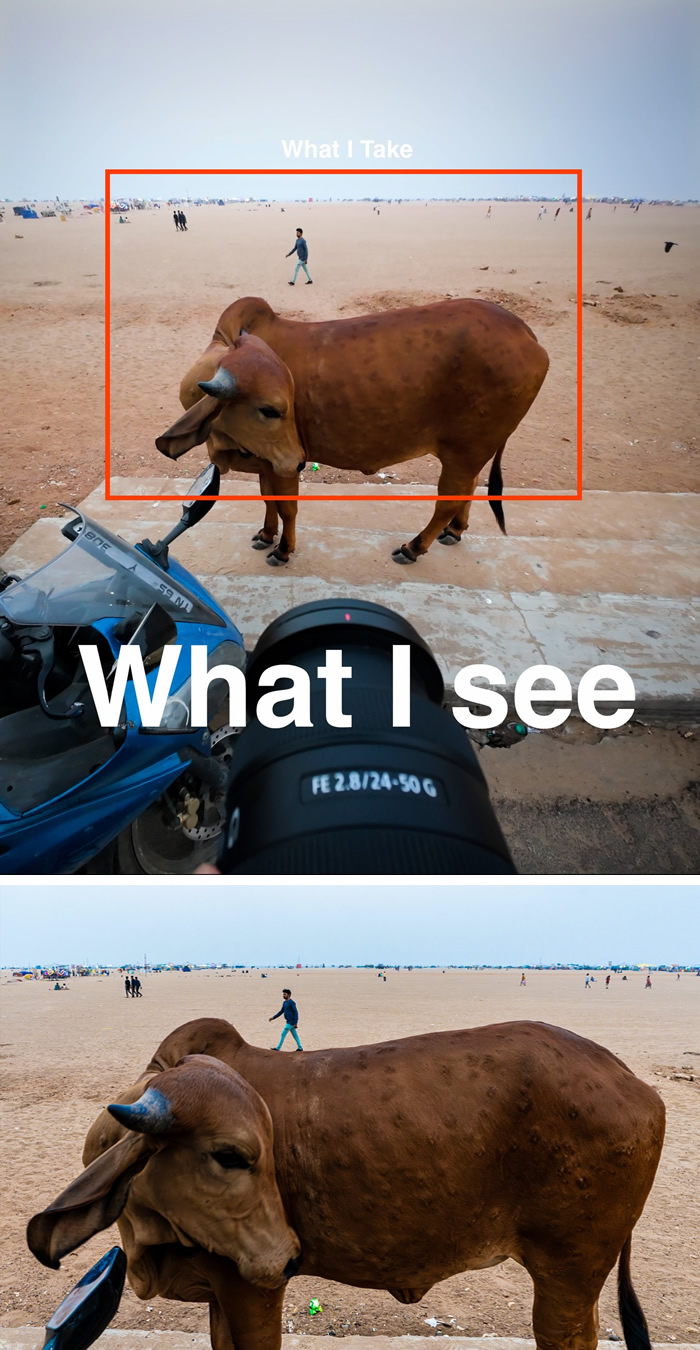
"On an open beach, Tavepong notices contrast—a massive cow and a distant passerby. By stepping closer and aligning the figure along the animal’s back, he transforms depth and scale into a clever, layered composition with subtle humor."
#12. What I See vs What I Take: Discovering Patterns in Imperfection
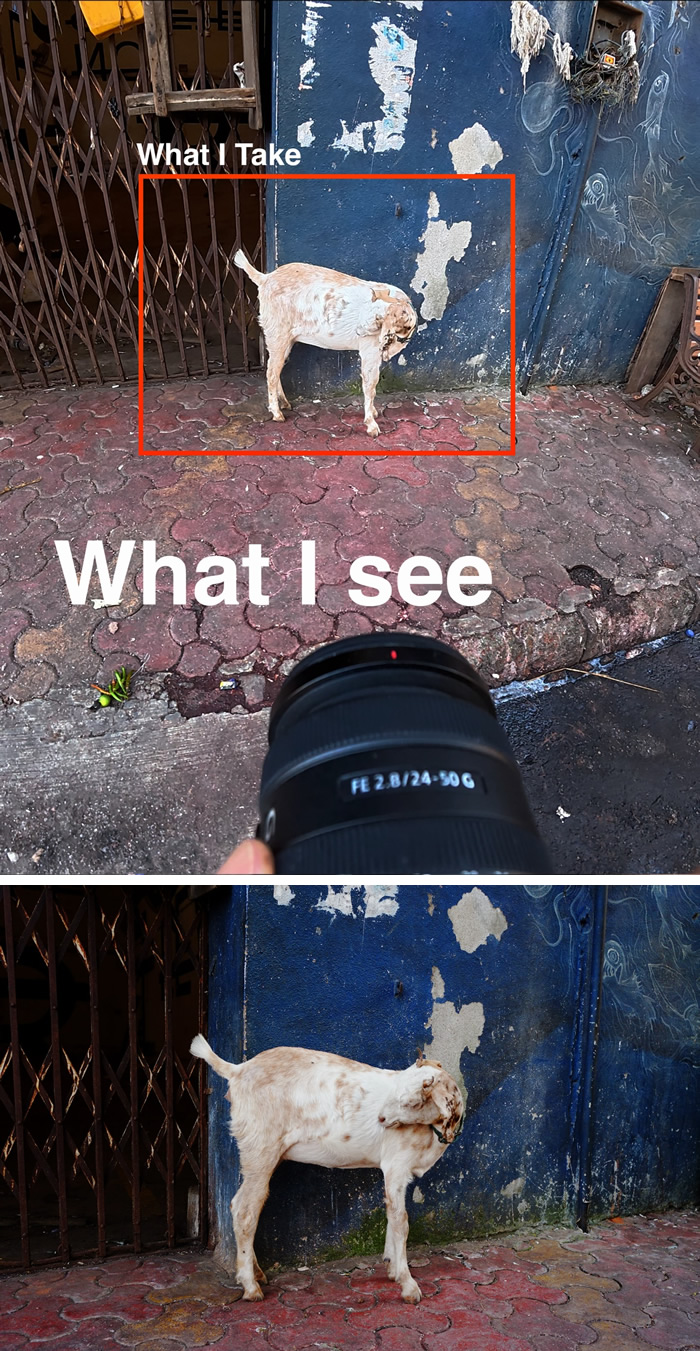
"On a worn street corner, Tavepong notices harmony between a goat and peeling textures. By stepping closer and refining the frame, he removes distractions, turning rough surfaces and subtle colors into a balanced, quietly expressive composition."
#13. What I See vs What I Take: Compressing Distance into a Quiet Dialogue
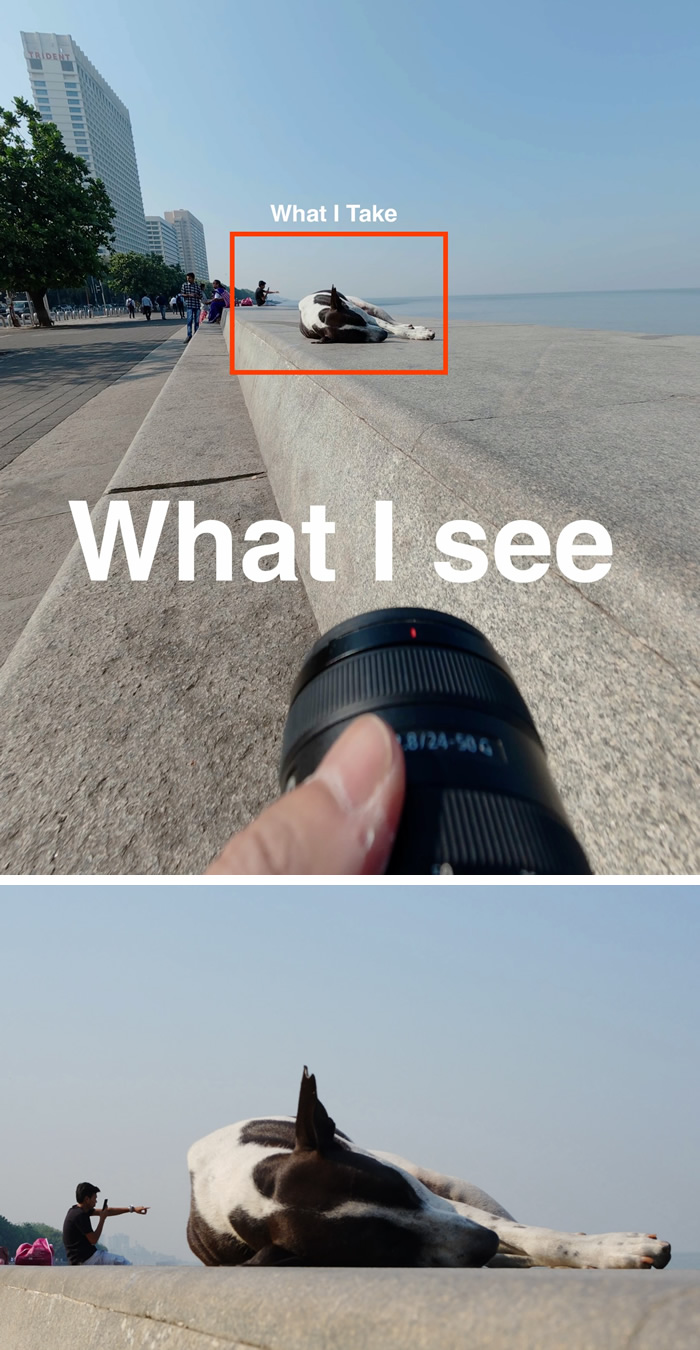
"On a long promenade, Tavepong notices a distant interaction—a man pointing toward a resting dog. By moving closer and compressing perspective, he aligns both subjects, transforming space into a subtle visual conversation filled with calm and curiosity."
#14. What I See vs What I Take: Sculpting Light, Shadow, and Presence
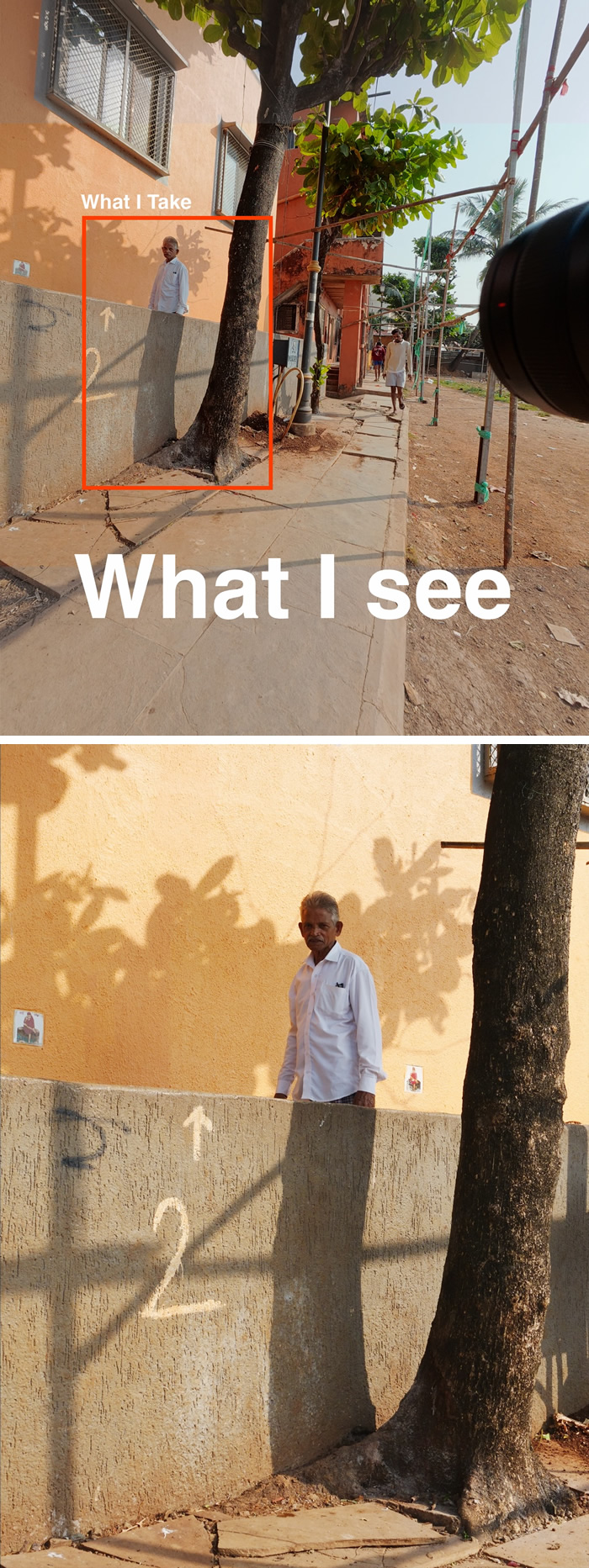
"On a quiet street, Tavepong notices light carving shapes—tree shadows and a man perfectly aligned with a wall. By stepping closer and simplifying the frame, he transforms everyday light into a layered composition of form, contrast, and subtle human presence."
#15. What I See vs What I Take: Timing Humor Within Everyday Moments
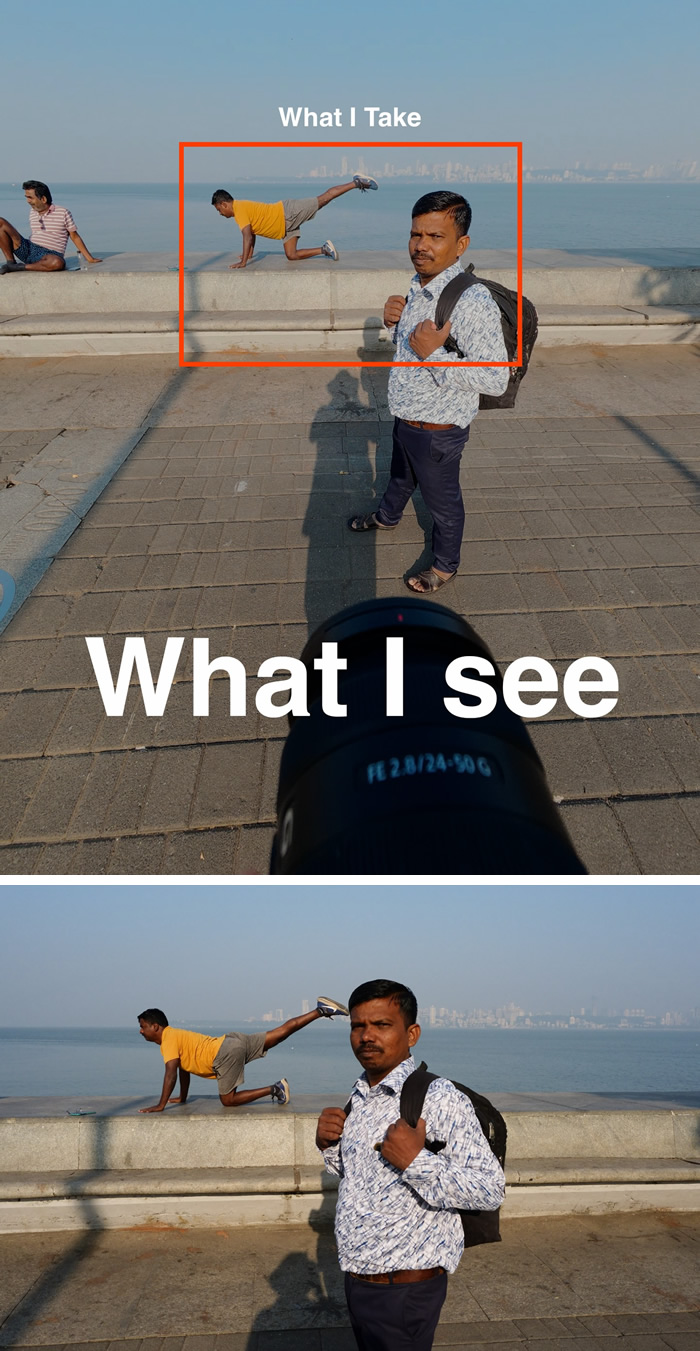
"On a seaside promenade, Tavepong notices a playful gesture aligning behind a passerby. By timing the movement and refining his position, he captures a humorous overlap, turning an ordinary walk into a cleverly layered and engaging composition."
#16. What I See vs What I Take: When Reality Echoes a Simple Number
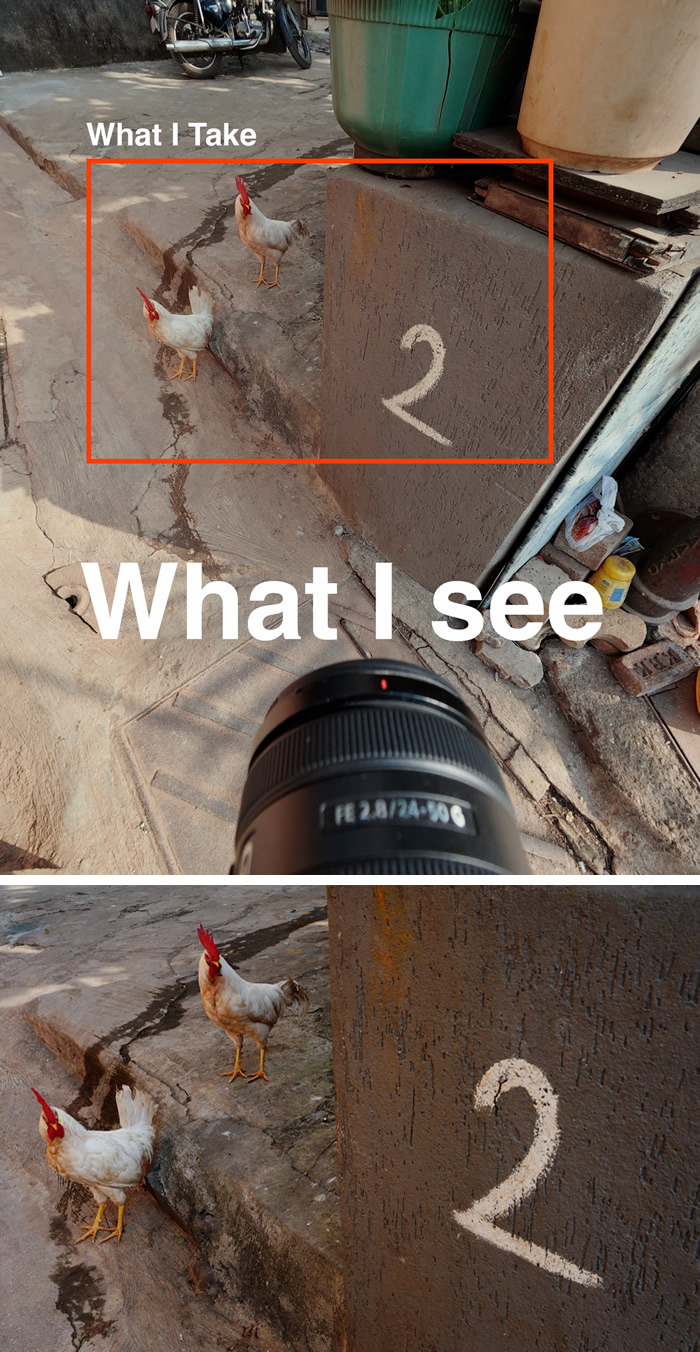
"On a quiet street corner, Tavepong notices two chickens beside a painted number “2.” By stepping closer and refining the frame, he aligns subject and symbol, turning a casual scene into a playful, visually satisfying composition."
#17. What I See vs What I Take: Framing Stories Within Everyday Scenes
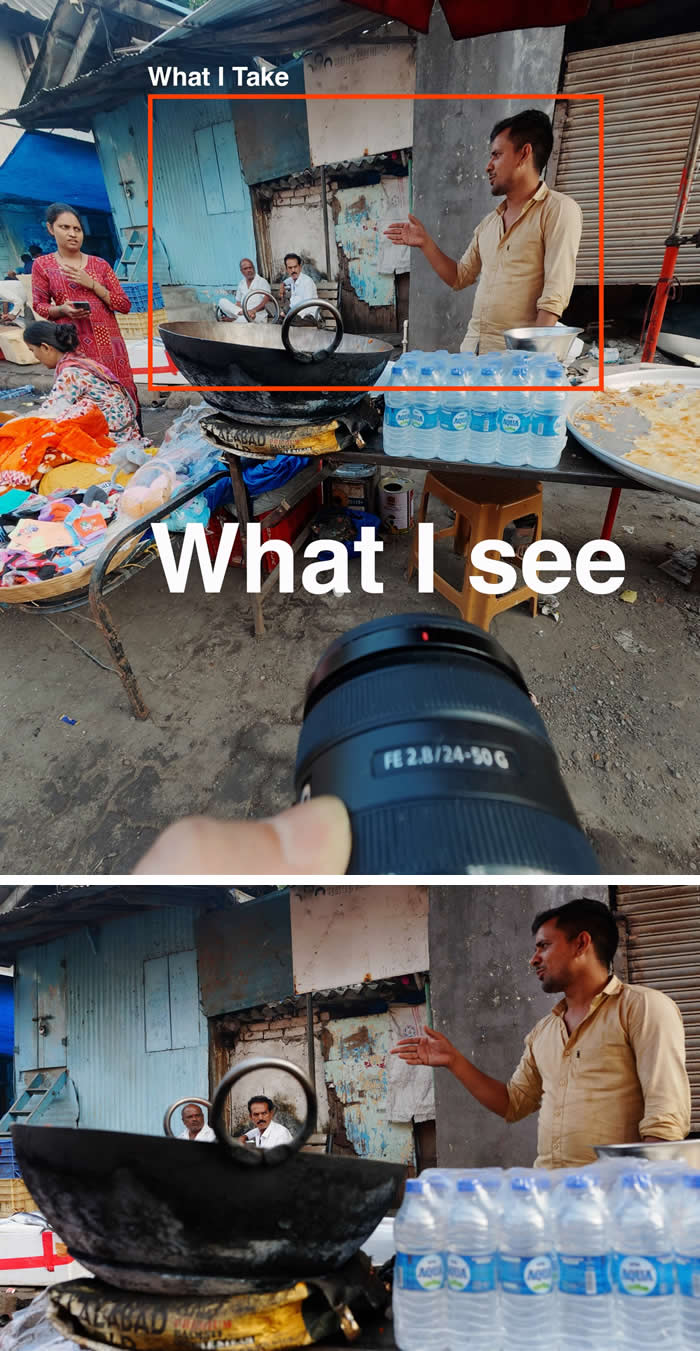
"At a busy street stall, Tavepong notices layers—a vendor, background figures, and a circular handle. By stepping closer and aligning elements, he frames distant faces within the foreground, transforming visual clutter into a focused, storytelling composition."
#18. What I See vs What I Take: Isolating Quiet Moments Within the Noise
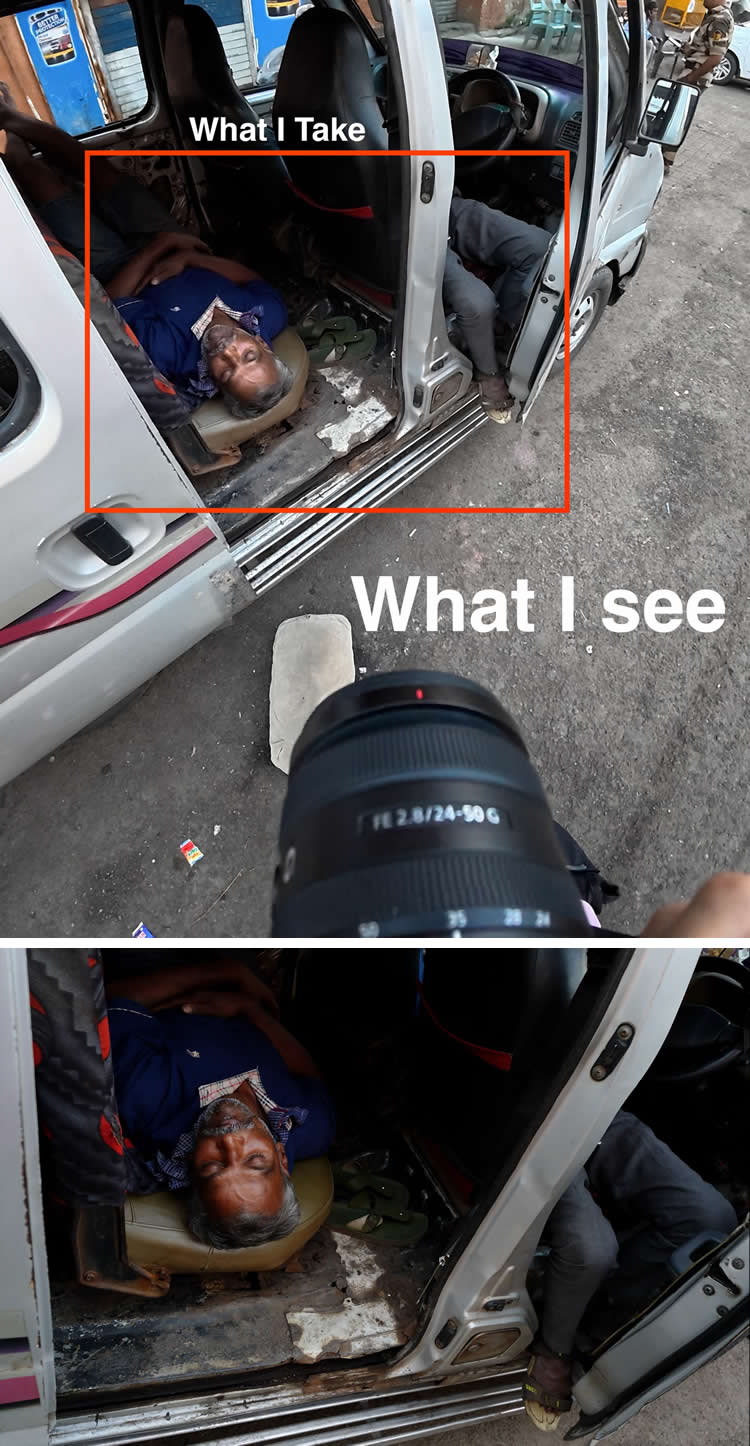
"On a busy street, Tavepong notices a quiet, intimate moment—a man asleep inside a vehicle. By stepping closer and removing distractions, he frames the scene tightly, transforming everyday chaos into a calm, human-centered composition."
#19. What I See vs What I Take: Framing Intimacy Within Open Space
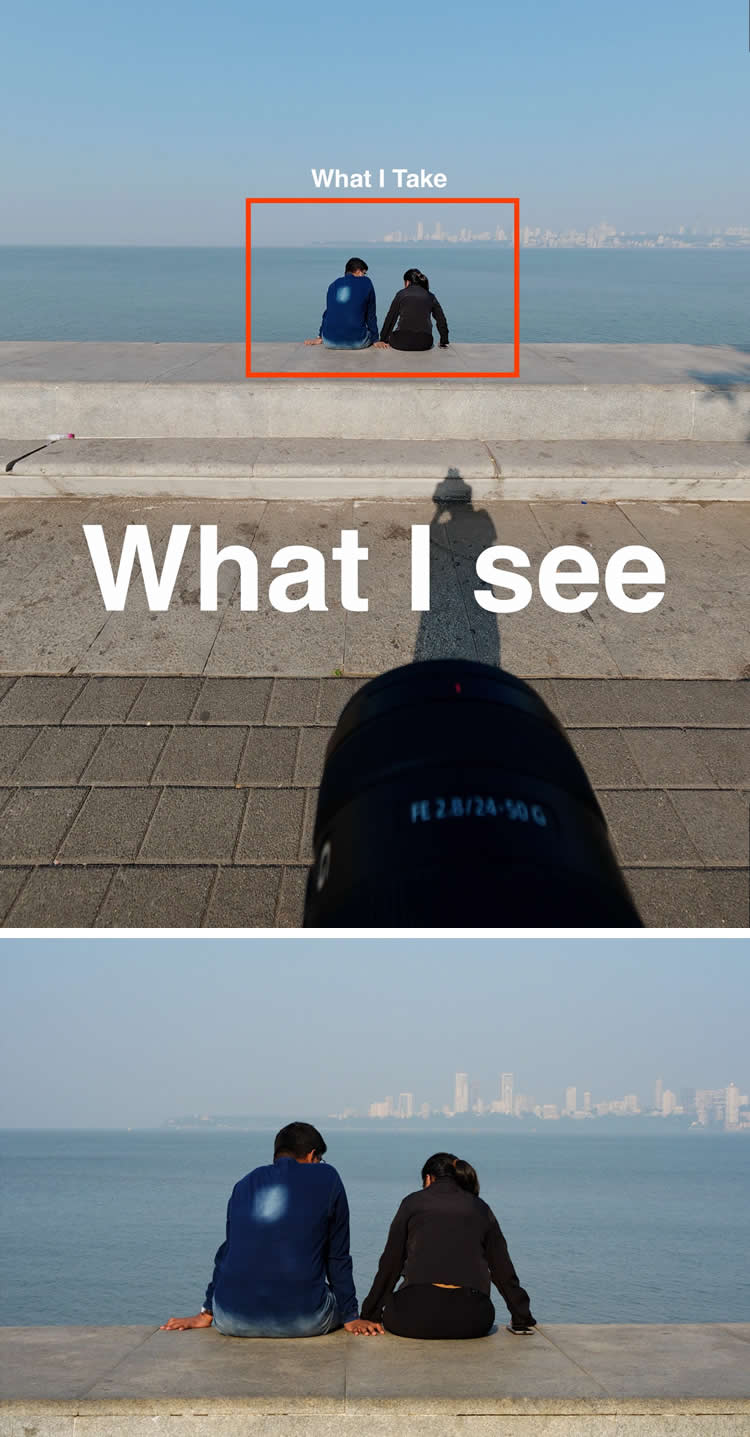
"On a wide, open seafront, Tavepong notices a quiet connection—two figures sitting closely against the vast ocean horizon. He also observes that the man’s shirt features a light blue circular pattern, echoing the tone of the sea, creating the illusion that his body is passing through."
#20. What I See vs What I Take: Finding Balance Within Everyday Play
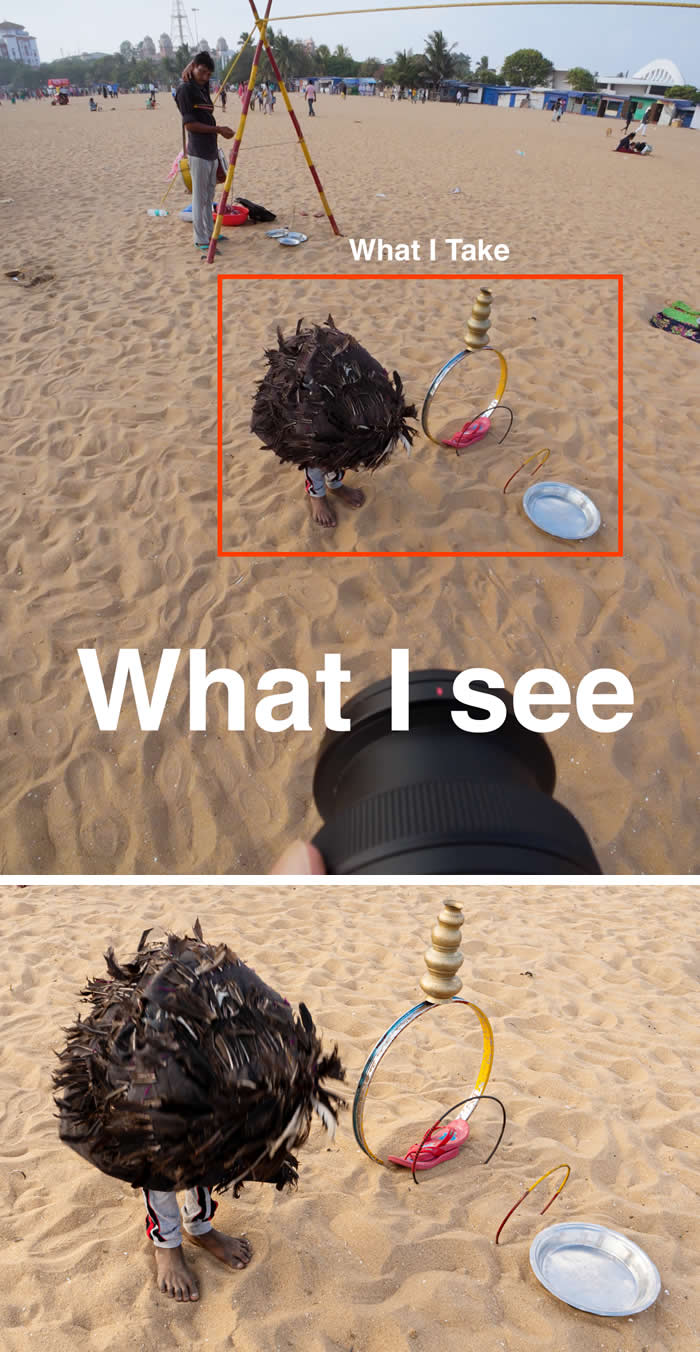
"On a busy beach, Tavepong notices a fleeting balance—a performer aligning objects mid-act. By stepping closer and refining the frame, he removes distractions, turning scattered elements into a focused composition of motion, balance, and playful tension."
121clicks Editor’s Take
Tavepong Pratoomwong’s work feels like a quiet masterclass in seeing. His images prove that photography isn’t about luck—it’s about awareness, patience, and precision. Every frame shows intention, clarity, and a deep understanding of visual storytelling.
- His vision teaches photographers to slow down and truly observe
- Composition and framing are used with razor-sharp precision
- He turns ordinary scenes into extraordinary visual narratives
- Colors, shapes, and alignment are always thoughtfully balanced
- His work inspires photographers to train their eyes, not just their cameras
These photos don’t shout—they whisper brilliance. And honestly, that’s what makes them unforgettable.