

There’s street photography that documents a place—and then there’s street photography that feels like the place. That’s exactly where Roberto Pileri lives creatively. In this series of 25 street photos from Morocco, he doesn’t just show you streets; he drops you right into their pulse. The chatter. The stillness. The color. The rhythm that hums through everyday life.
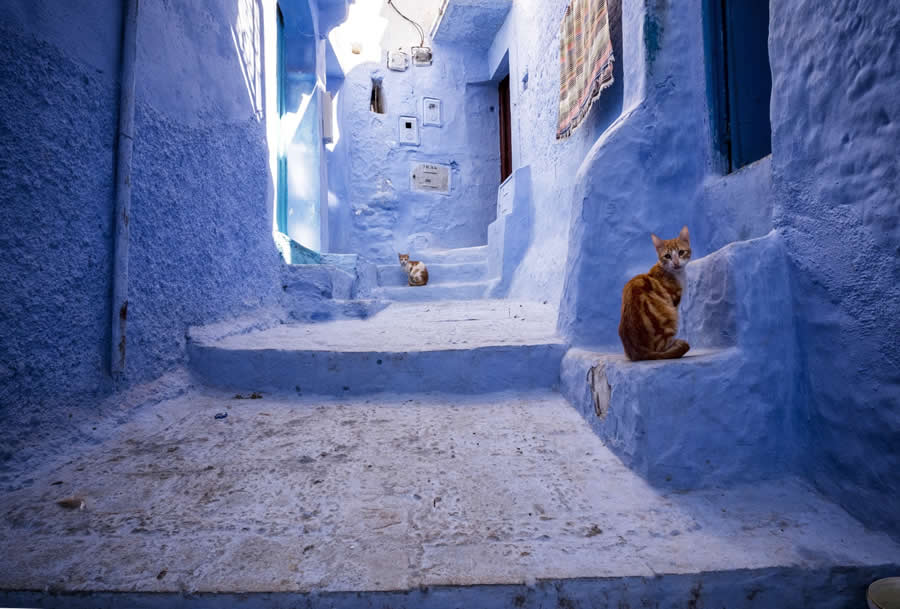
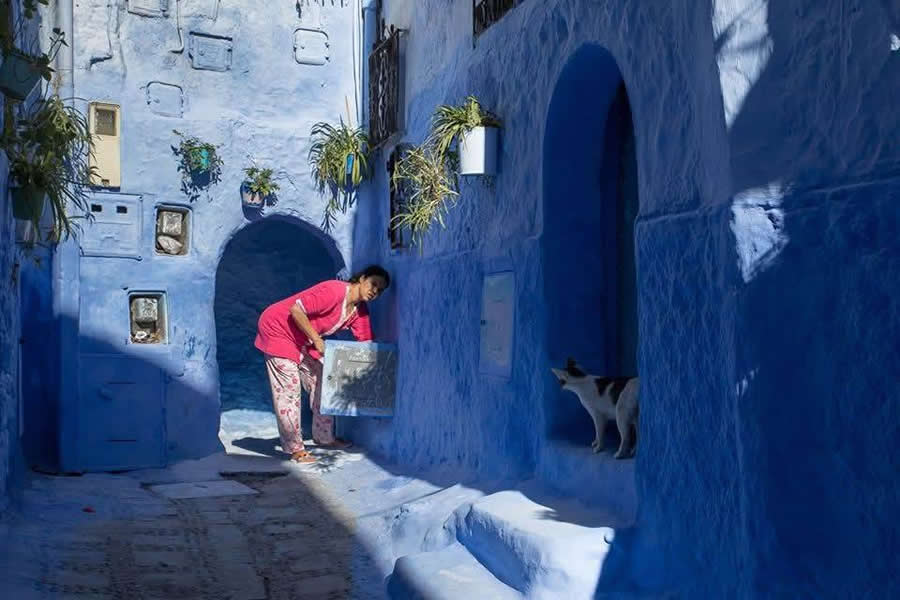
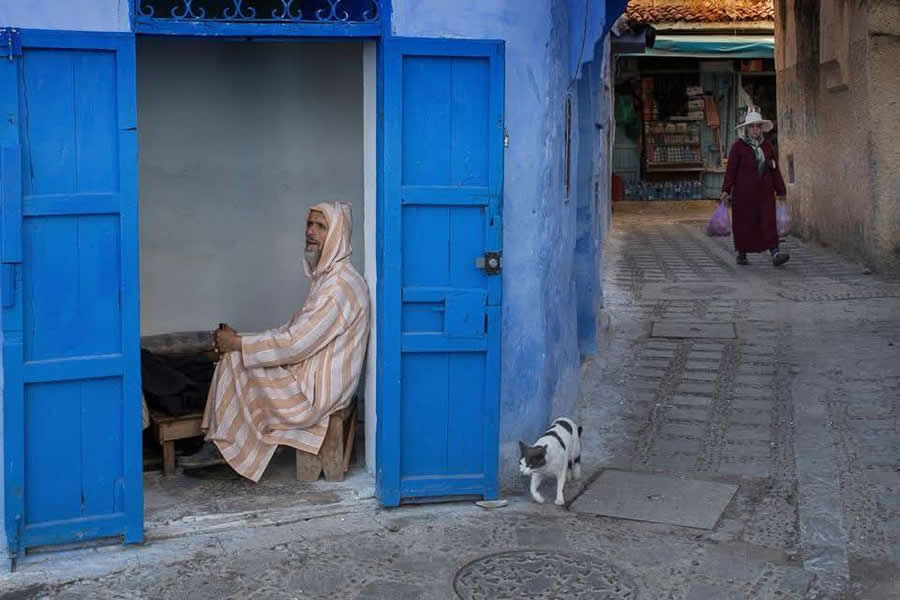
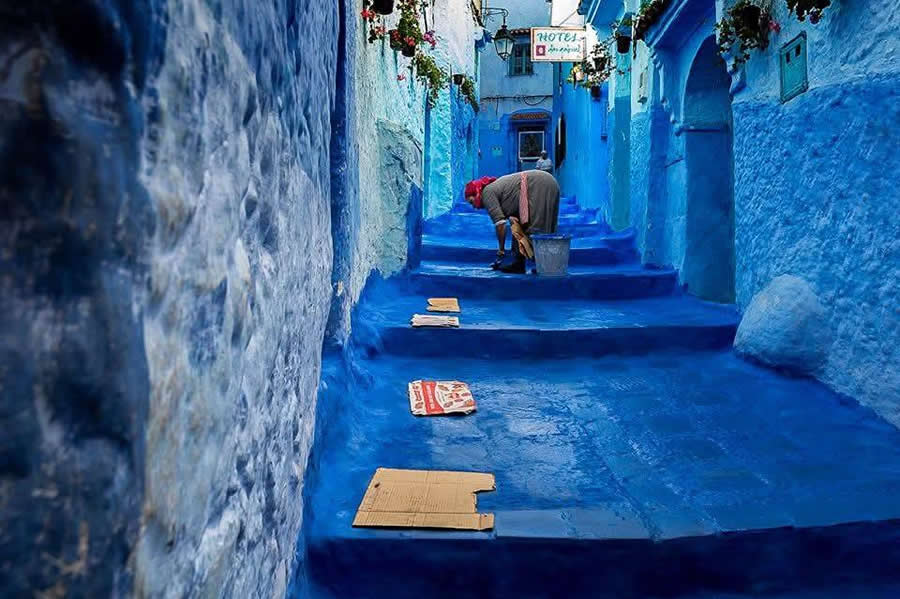
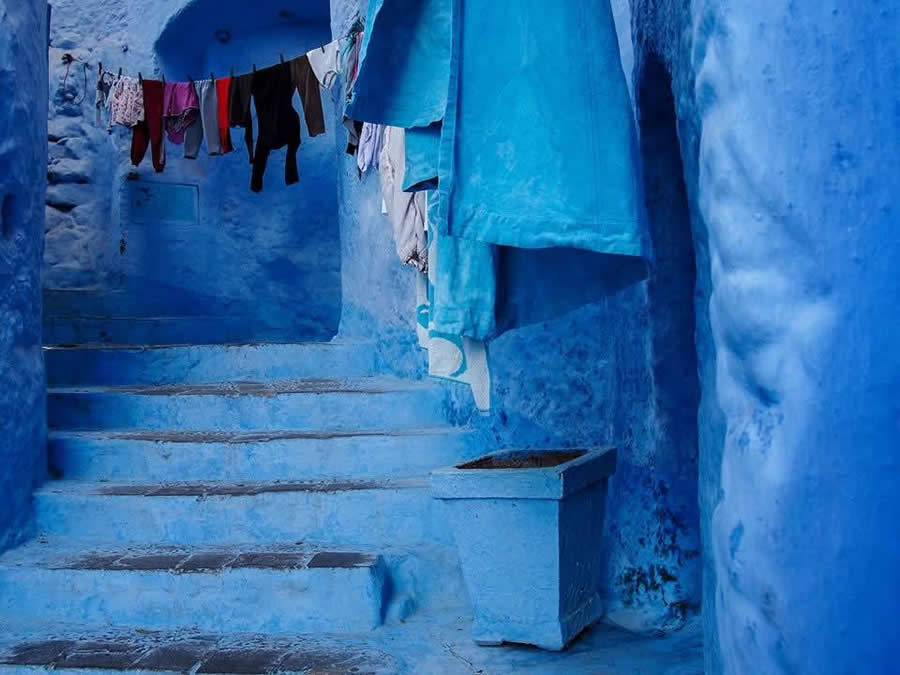
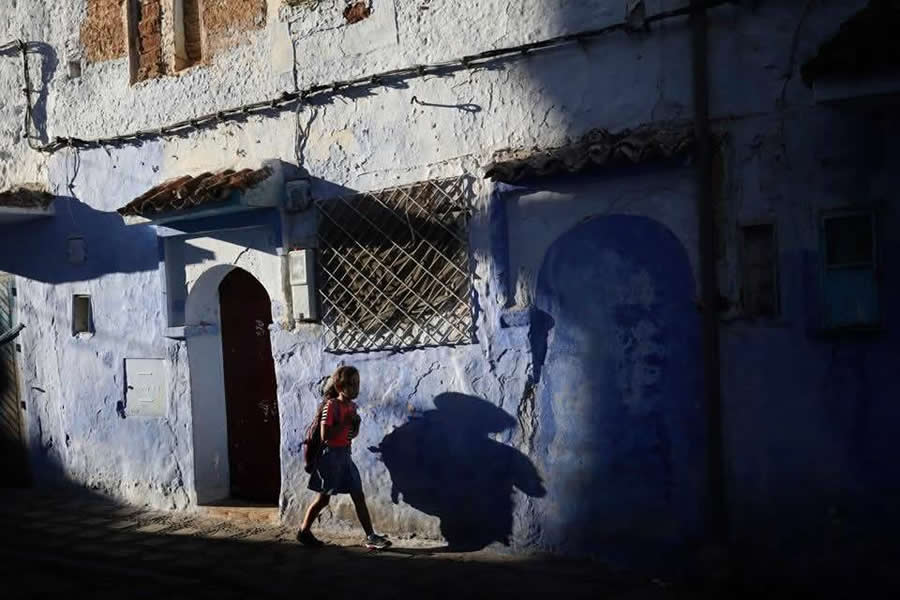
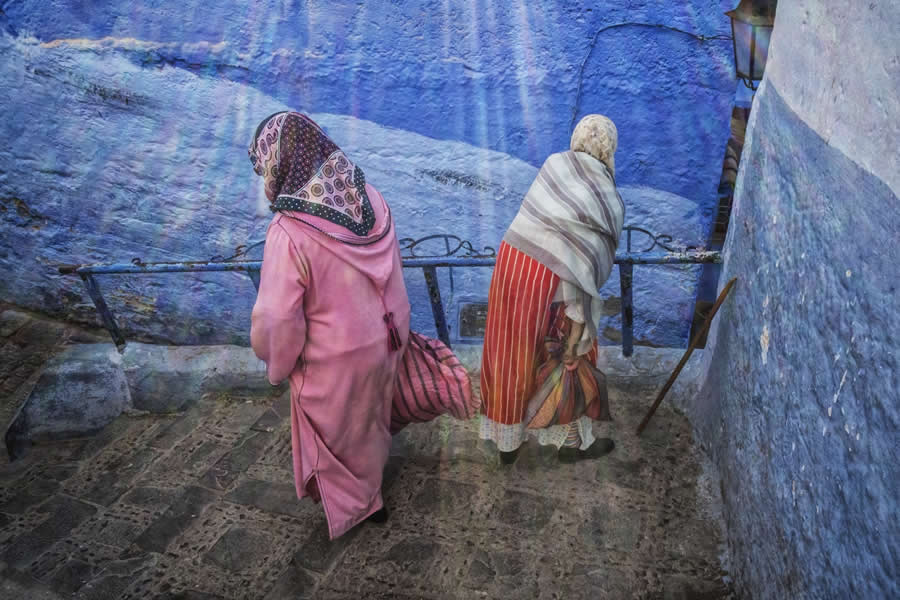
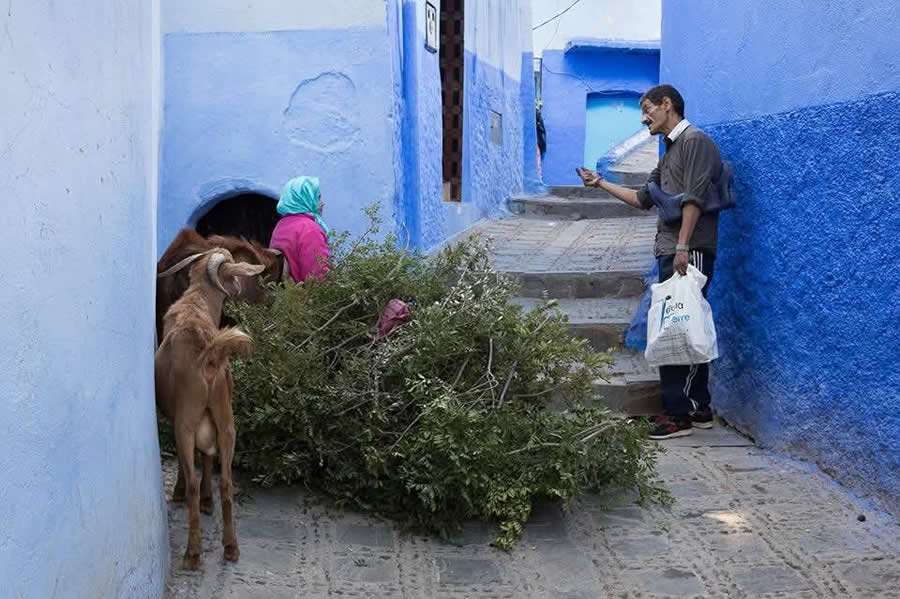
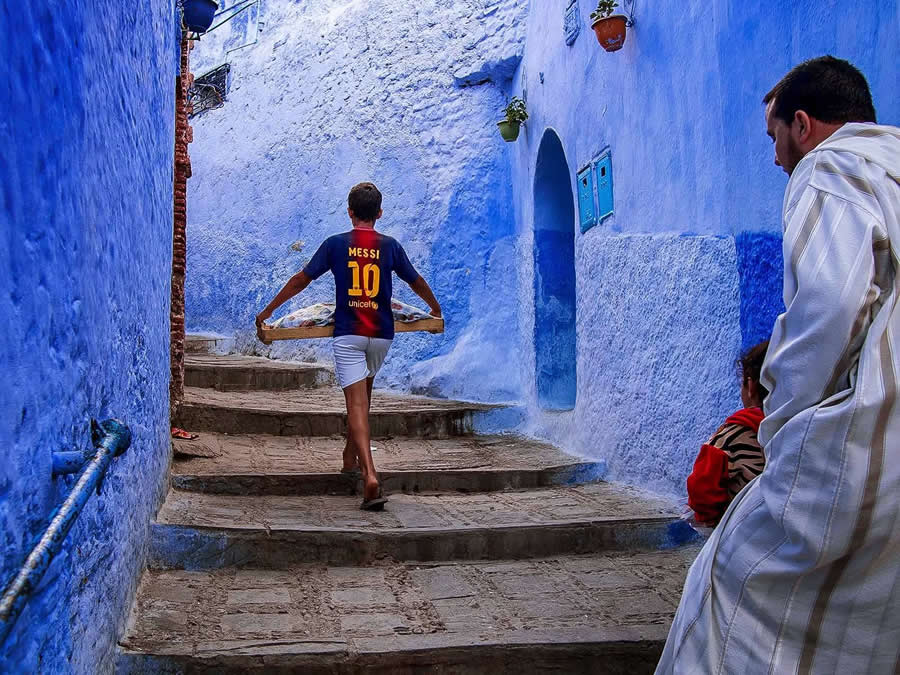
Set largely in the dreamlike blue lanes of Chefchaouen, these images are soaked in atmosphere. Walls painted in endless shades of blue act like a canvas, while people—old men resting, kids darting through alleys, cats stretching in the shade—become brushstrokes of motion and soul. Roberto’s eye is sharp, but his heart is softer. He waits. He watches. He lets moments happen.
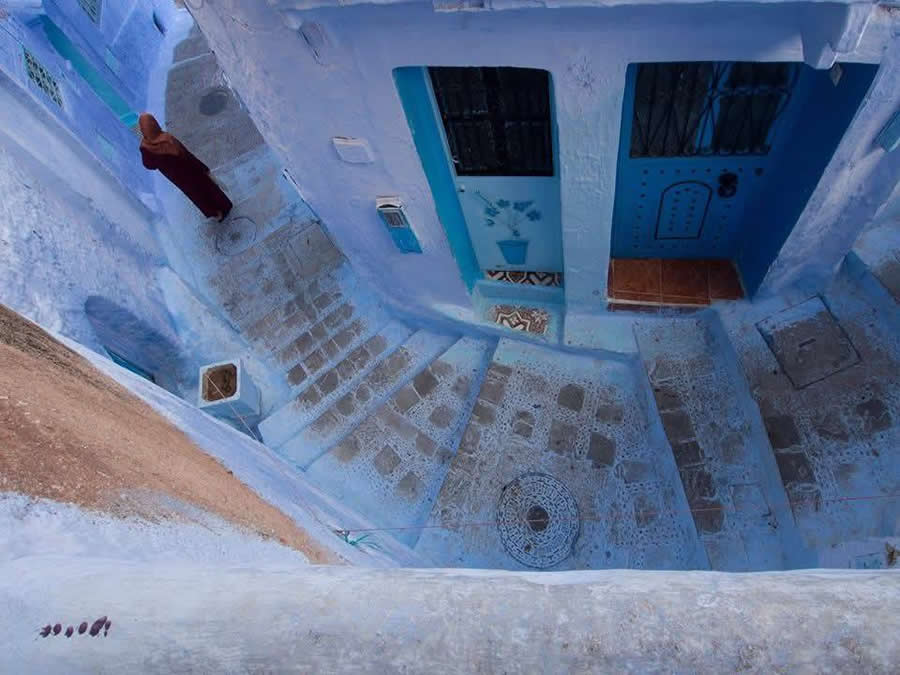
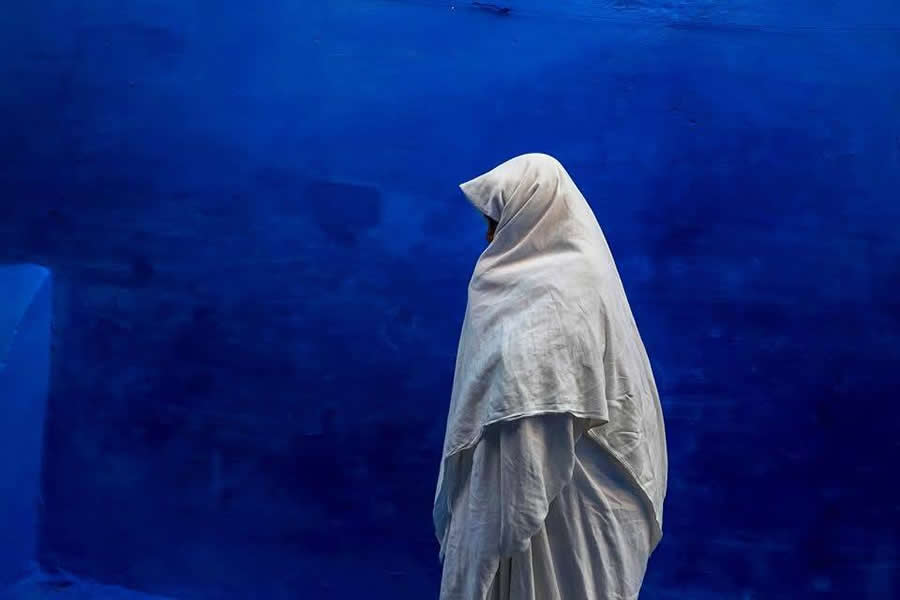
What makes his work hit hard is the balance. Color never overwhelms story. Geometry never feels forced. Every frame is intentional, yet effortless. Top-down angles, clean framing, and strong compositions guide your eye, but it’s the human presence that keeps you there. You start noticing details—the folds in traditional clothing, the way shadows slide across stone, the quiet conversations happening just outside the frame.
This is street photography at its best: patient, curious, respectful. Roberto doesn’t chase spectacle. He finds meaning in routine. In corners. In pauses. These 25 photos prove that Morocco’s streets aren’t just visually stunning—they’re alive with rhythm, culture, and emotion. And Roberto Pileri captures all of it with a storyteller’s instinct and a photographer’s discipline.
You can find Roberto Pileri on the Web:
#1
#2
#3
#4
#5
Chefchaouen’s Blue Streets as a Living Canvas
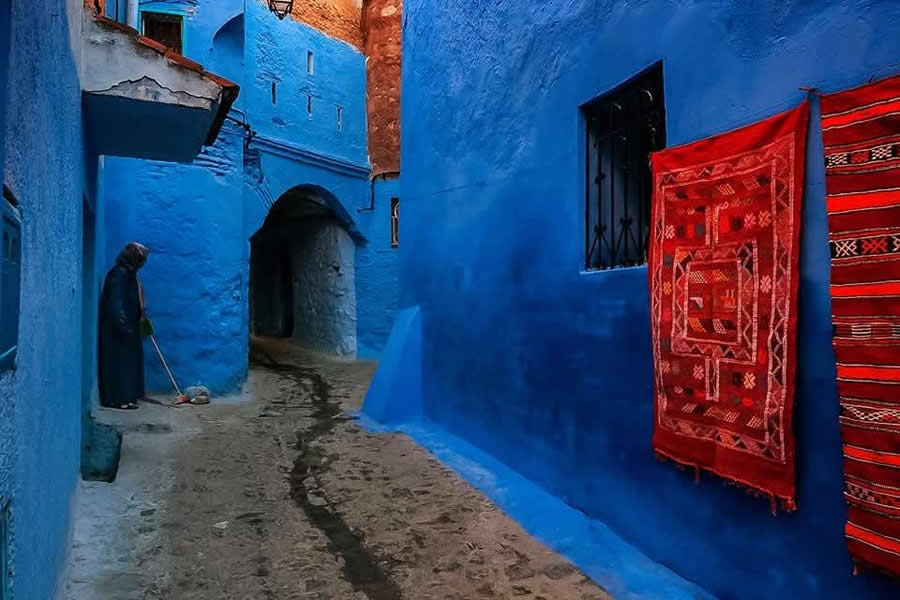
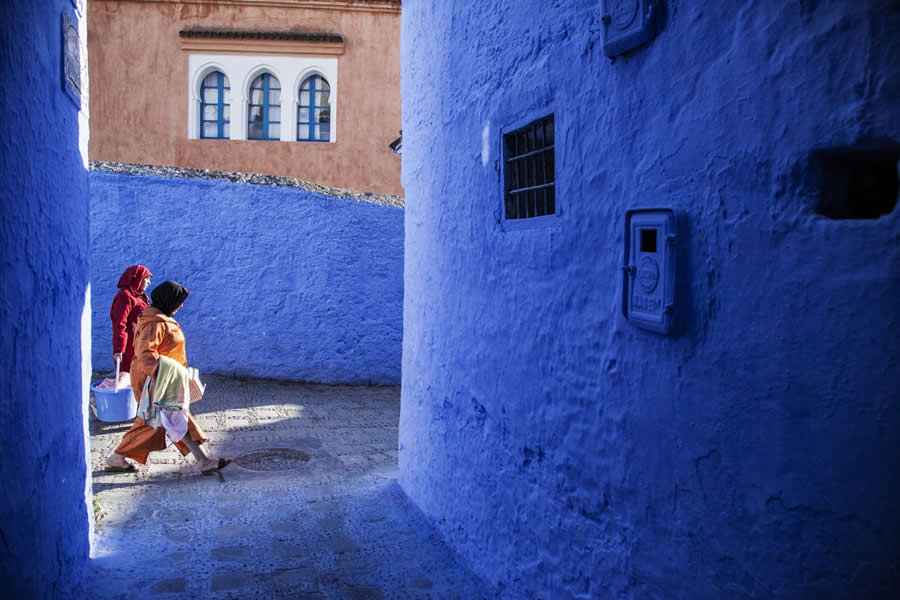
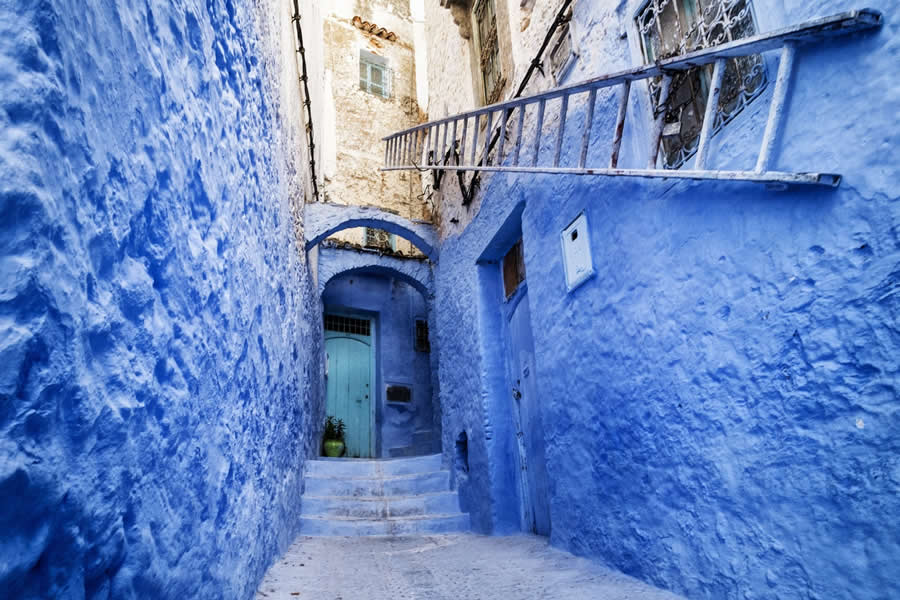
Chefchaouen isn’t just blue—it’s layered. Roberto Pileri uses those iconic walls not as background, but as structure. The lanes twist and climb, creating natural frames where people slip in and out like notes in a melody. Every shade of blue adds mood—cool, calm, reflective.
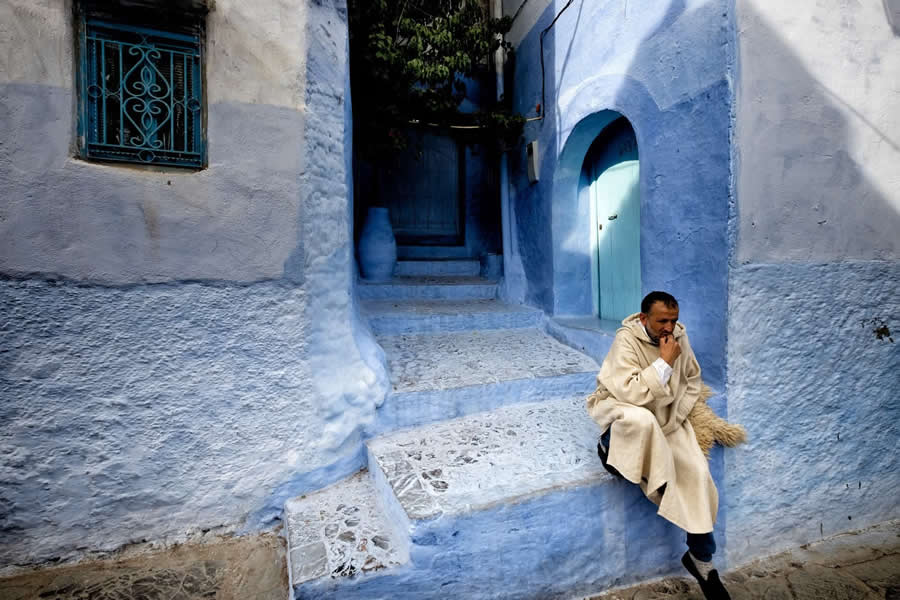
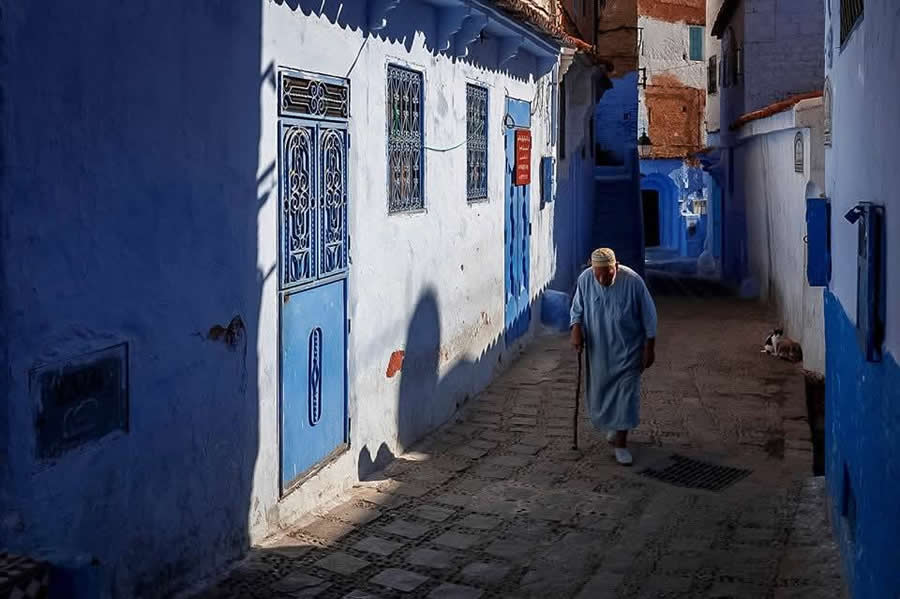
What’s wild is how he uses space. Wide angles stretch the scene, making lone figures feel poetic instead of small. A man leaning against a wall. A child running downhill. A cat frozen mid-step. The color holds everything together, while life moves freely inside it.
These images don’t feel staged. They feel found. Like Roberto stumbled onto moments that were already perfect—and simply had the sense to click the shutter at the right second.
#6
#7
#8
#9
#10
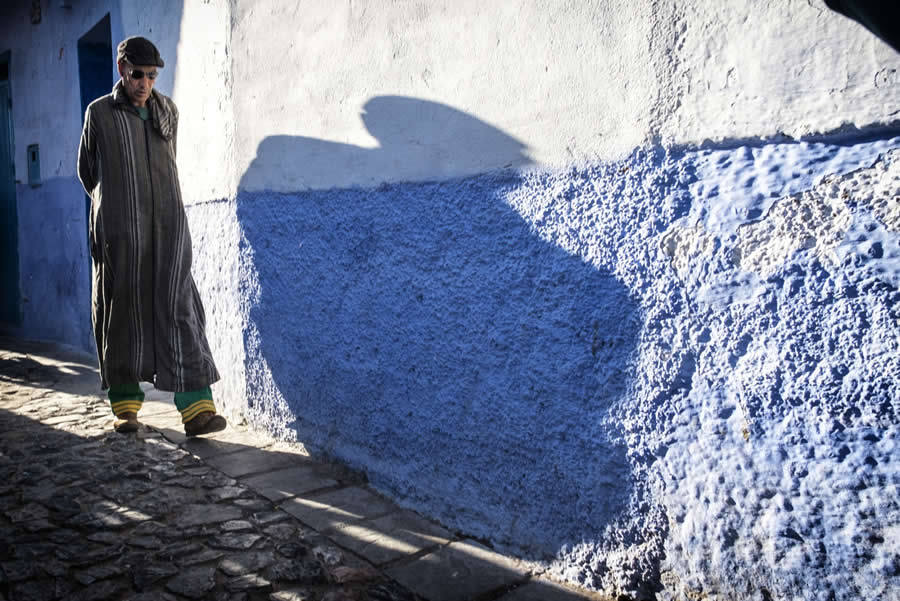
Everyday Life, Caught Mid-Beat
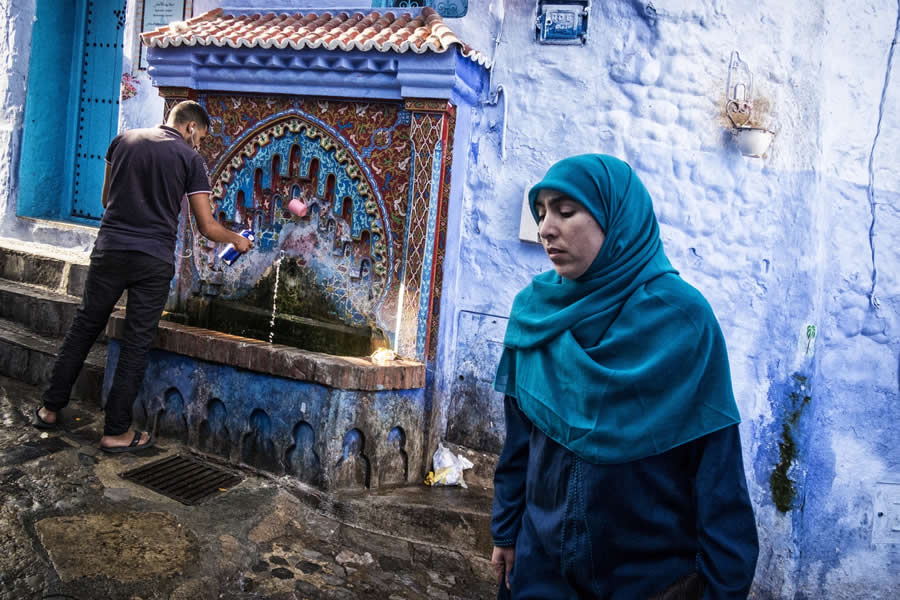
The real magic in Roberto’s Morocco street photography is the everyday stuff. People chatting in corners. Older men sitting quietly, watching time pass. Kids owning the streets like playgrounds. Nothing dramatic—yet everything meaningful.
He captures moments between moments. Conversations that feel private but universal. Gestures that tell stories without faces. You can almost hear the laughter, the footsteps, the low hum of daily life moving forward.
There’s a deep respect in how he photographs people. No rush. No invasion. Just presence. The camera becomes invisible, and the result is honesty. These photos remind you that street photography isn’t about stealing moments—it’s about recognizing them.
#11
#12
#13
#14
#15
Geometry, Framing, and Perfect Timing
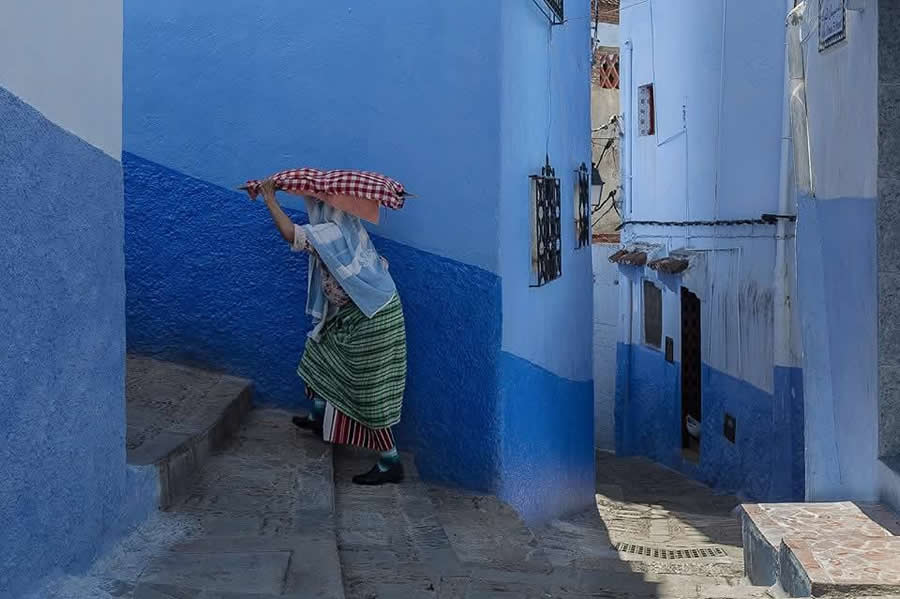
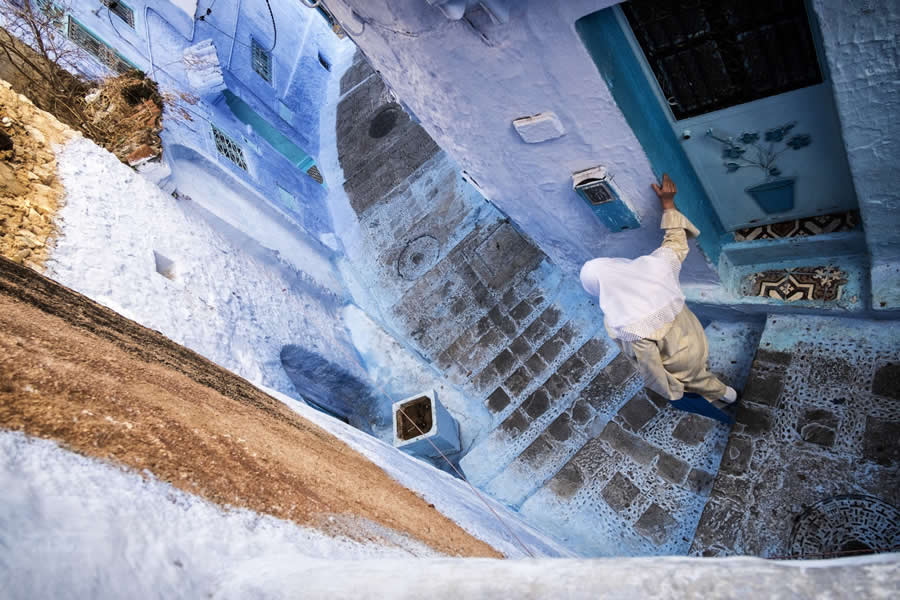
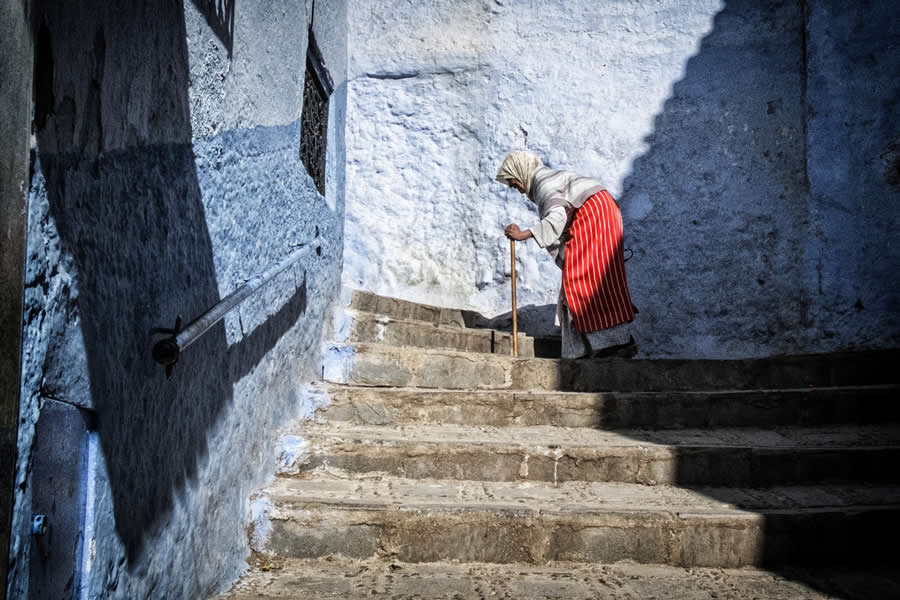
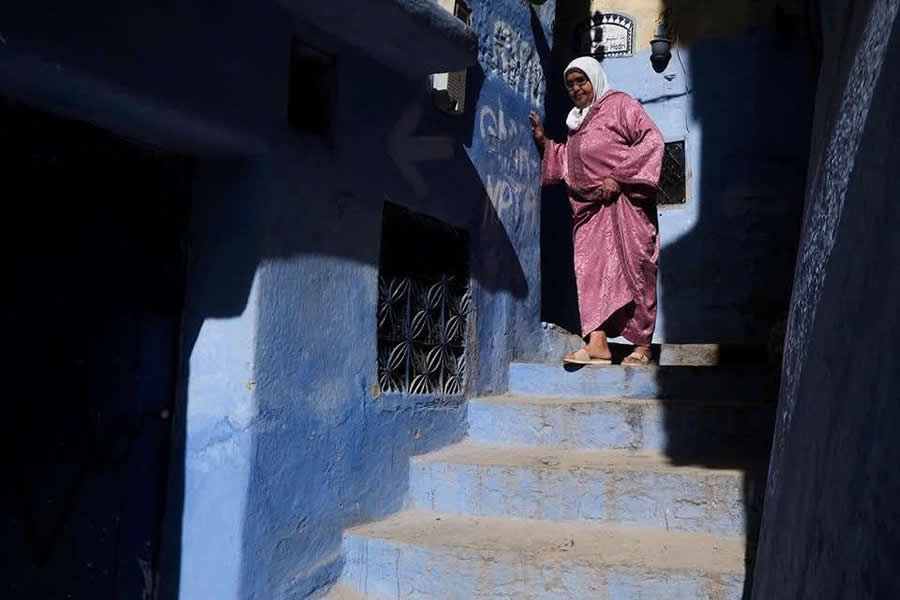
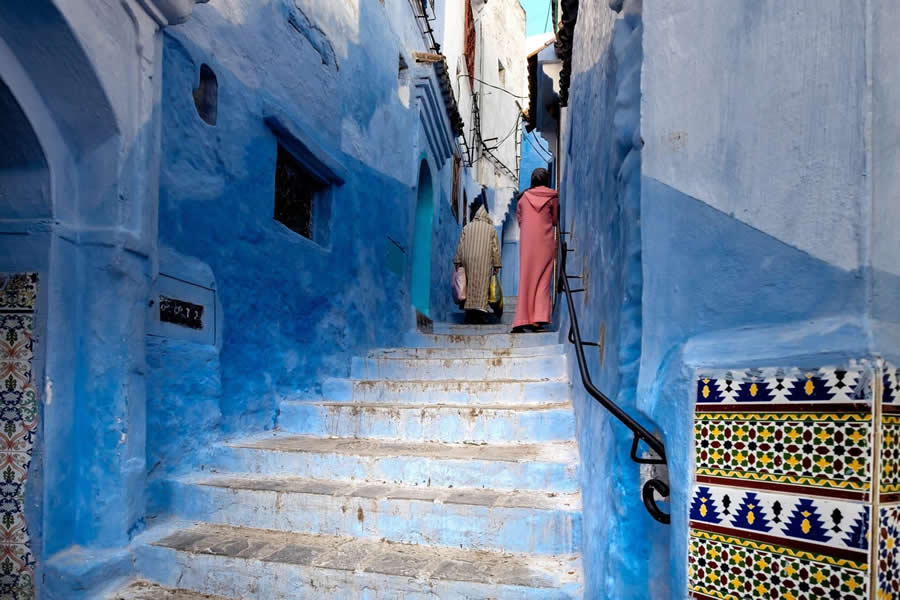
Roberto’s compositions are clean, but never cold. Geometry plays a huge role—stairs cutting diagonally, doorways boxing in subjects, shadows slicing through frames with precision. Everything lines up, but nothing feels stiff.
Top angles add drama. Leading lines pull you deeper. Negative space gives the eye room to breathe. And then—right when the frame feels complete—someone walks into it. That’s timing. That’s instinct.
Each photo feels like a small lesson in composition. Not flashy tricks. Just solid fundamentals executed with taste. This is street photography that rewards attention. The longer you look, the more you notice how perfectly everything fits.
#16
#17
#18
#19
#20
Culture, Clothing, and Color in Motion
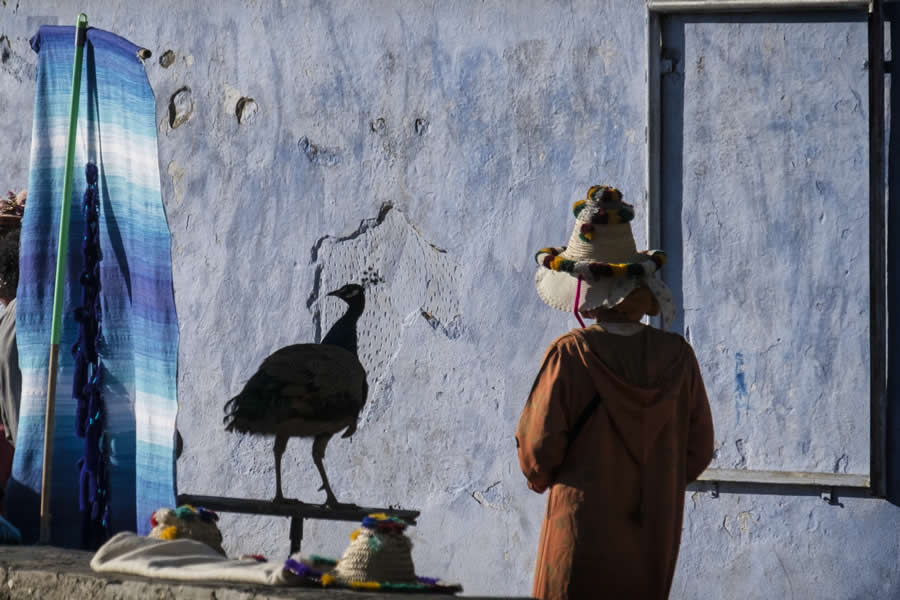
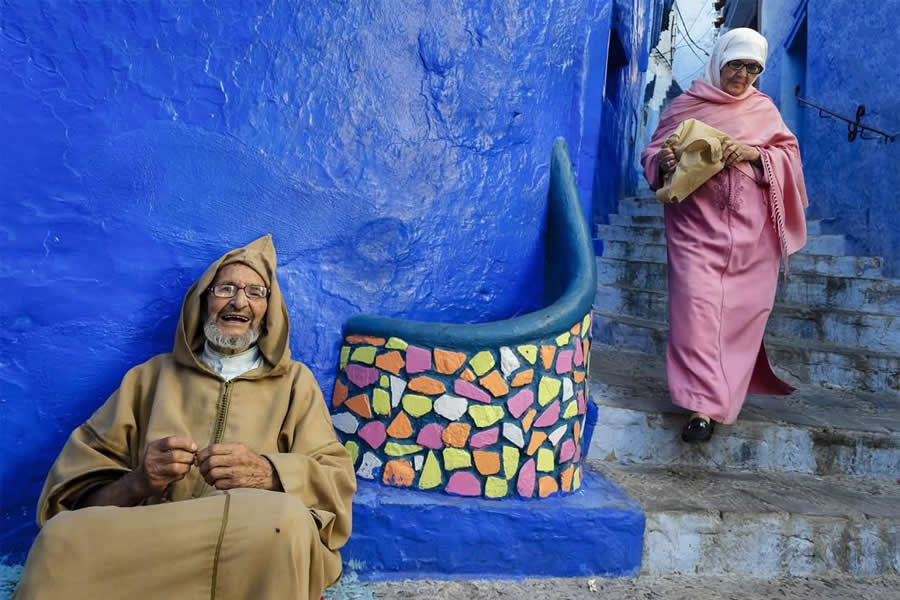
Clothing becomes part of the rhythm in these photos. Traditional garments pop against blue walls. Textures and patterns add contrast without chaos. Culture isn’t explained—it’s shown.
Older people carry history in their posture. Kids bring energy. Even animals feel like characters, perfectly placed in the frame. Shadows stretch and bend, adding depth and mood.
What ties it all together is color discipline. Roberto never lets color run wild. It’s controlled, intentional, and expressive. Every frame feels finished, like a visual sentence that ends exactly where it should. This is Morocco seen with patience, respect, and serious artistic control.
#21
#22
#23
#24
#25
In Summary
Who is Roberto Pileri?
- Roberto Pileri is an Italian photographer known for colorful, story-driven street photography that captures everyday life, people, and culture with strong composition and emotion.
Where were these Morocco street photos taken?
- Most of the photos were captured in Chefchaouen, Morocco, a city famous for its blue-painted streets, narrow lanes, and vibrant daily life.
What makes Roberto Pileri’s street photography unique?
- His work stands out for its use of bold color, clean geometry, thoughtful framing, and patient observation, turning ordinary street moments into powerful visual stories.
Why is Chefchaouen popular for street photography?
- Chefchaouen offers striking blue walls, dynamic light, textured streets, and rich cultural life, making it a perfect setting for expressive street photography.
What subjects appear in these street photos?
- The photos feature everyday moments—locals chatting, older people resting, kids playing, cats roaming, shadows falling across walls, and cultural clothing in motion.
What can photographers learn from Roberto Pileri’s work?
- Photographers can learn the importance of patience, strong composition, using color intentionally, and respecting everyday life as a powerful storytelling tool.
Is this style suitable for beginner street photographers?
- Yes. Roberto Pileri’s work shows that mastering basics like framing, timing, and observation matters more than complicated gear or dramatic scenes.